Cassagneres Ryan ST-R Replica

A replica of the 1930s Ryan can be built from original manufacturer’s drawings.

Top speed: 140 mph
Cruise: 120 mph
Stall: 42 mph
Range: 350 nm
Rate of climb: 850 fpm
Takeoff dist: 525 ft
Landing dist: 1000 ft
Service ceiling: 17,500 ft
Engine: Menasco C-4/D-4, 125 hp
HP range: 125-160 hp
Fuel capacity: 24 USG
Empty weight: 1023 lb
Gross weight: 1575 lb
Height: 6.9 ft
Length: 21.5 ft
Wing span: 30 ft
Wing area: 124 sq.ft
Seats: 2
Undercarriage: tailwheel

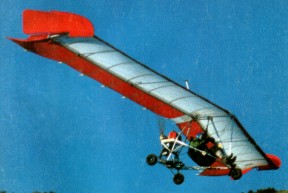
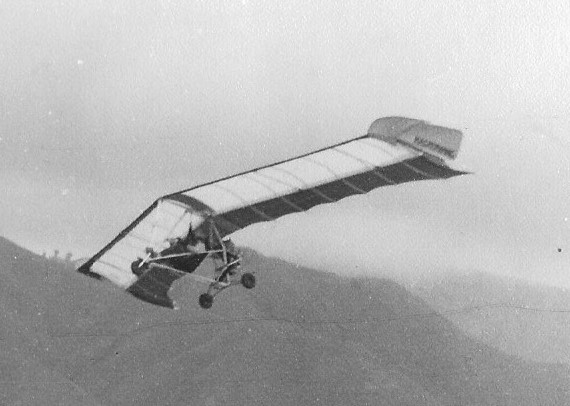
Cascade Ultralights Kasperwing 180

Kasperwing 180BX

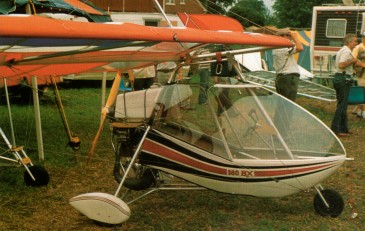
Designed by Witold Kasper and Steve Grossruck. The 180B model has a sturdier undercarriage. Control is pitch by weight shift, yaw and roll by differential wingtip rudders through control wheel. Kasper wingtips function both as ailerons and rudders to control roll and yaw through butterfly steering yoke. Rigid type undercarriage with balloon tire suspension and steerable nosewheel. Option includes shock system, bungee-operated. The 180BX is a flying wing motorglider monoplane. Control system operates independently of for¬ ward speed. Pilot module fully encloses pilot, improves handling and performance, offers year-round flying. Powered by a Zenoah G-25B with electric starter and a 2.49:1 reduction unit to 54/30 propeller, the landing gear is a rigid type, using balloon tire suspen¬sion or optional shock system. The 180C features a fully enclosed cockpit, 3 axis cxontrols with spoilers, and single-surface wing.

180
Engine: Zenoah G25B1, 23hp.
Wingspan: 10.67m.
Length: 3.86m.
Empty wt: 79 kg.
MAUW: 186kg.
Range: 137km.

180A

180B
Engine: Zenoah 242cc G-25B, 23 hp.
Prop: 54 x 27 with 2.49:1 reduction drive.
Landing gear: Aluminium tubing.
Empty wt: 215 lbs
Gross wt: 465 lbs
Payload (full std fuel): 220 lb.
Fuel cap: 5 USGal.
Wingspan: 35 ft.
Length: 12ft 8in.
Height: 90in.
Wing area: 180 sq ft.
Aspect ratio 6.8.
Wing loading: 2.6 lb/sqft.
Power loading: 20 lb/hp.
Wheel base: 62 in.
Vne: 60mph.
Max cruise: 45 mph.
Normal cruise: 38 mph.
Stall: 22 mph.
Best climb rate: 900 fpm.
Takeoff roll: 50 ft.
Ldg roll: 50 ft.
Glide ration: 10:1.
Sink rate: 200 fpm.
Static thrust 170 lbs.

180BX
Engine: Zenoah G25B, 23hp @ 6500 rpm.
Static thrust 170 lbs.
Wingspan 35 ft.
Wing area 180 sq.ft.
Aspect ratio 6.8.
Length 12 ft 8 in.
Empty weight 220 lbs.
Usable payload 250 lbs.
Wing loading 2.61 lbs/sq.ft.
L/D 12:1.
Cruise speed 48 mph.
Stall speed 22-26 mph.
Approach speed 30 mph.
Flare speed 14 mph.
Liftoff speed 16 mph.
Takeoff roll 75 ft.
Climb rate 600 fpm.
Fuel capacity 5 USG.

180C
Engine: Rotax 277, 28 hp.
Prop: Ritz 60 x 27.
Fuel cap: 5 USG.
Wingspan 35 ft.
Wing area 180 sq.ft.
Empty weight 238 lbs.
Max wt: 525 lbs.
Cruise speed 50 mph.
Stall speed 22 mph.
Vmax: 60 mph.
Climb rate 800 fpm.
Takeoff roll 75 ft.
Ldg roll: 30 ft.

Cascade Ultralights Kasperwing

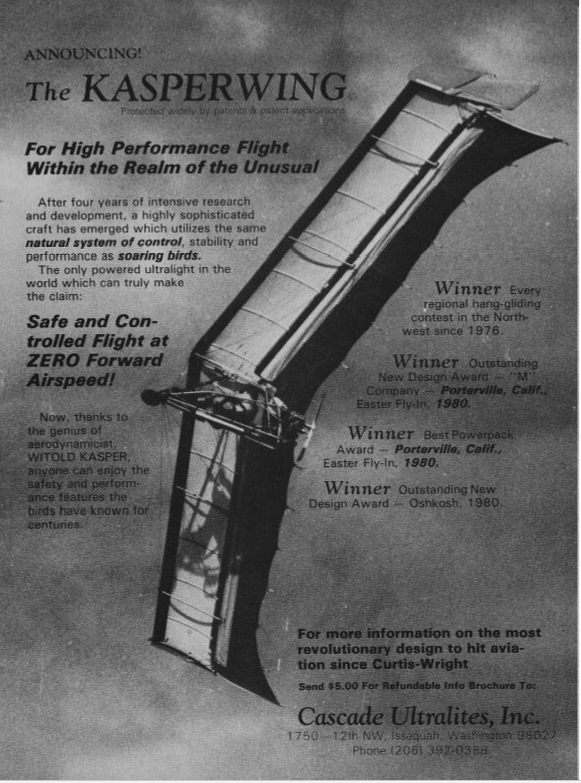
Witold Kasper never got his designs into production and it was left to someone else to harness the potential of Kasper’s “vortex lift” theory. Steve Grossruck, a US hang-glider designer, applied the Kasper wingtip controls to a Fledge hang-glider and found himself with a wing that would not stall or spin. It was also stable about all three axis at all speeds, and had a sink rate of 160 fpm with a 150 lb pilot. In keeping with the Kasper “vortex lift’ theory, the wing could be flown with hands-off stability in a vertical descent. Yaw and roll control proved to be totally independent of the craft’s forward speed.

Cascade Ultralights Kasperwing Article

The theory proven, it was decided to add power – initially with a 250cc Honda Odyssey of 23hp but later with a 242cc Zenoah 23hp engine. A special harness was designed to further realise the potential flight performance predicted by Kasper’s theories. The harness allowed faster weight shifting and enabled the pilot to make the precise trim changes required for vertical descents and safe landings.
This ability to “mush” down or fly below the stall without spinning or dropping its nose provides an ability to “parachute” vertically at about 600-800 fpm riding on a span-wise vortex of air which shears off at the leading edge of the wing, forming a low pressure area.

In 1980 the Kasperwing was the outstanding new design at Oshkosh and hang-glider versions have consistently won contests in the Northwest American States. The Kasperwing is the only microlight that is still controllable at zero forward speed. It then flies in a so-called “mush” without risk of spinning or loss of control. The rate of descent, 900 feet per minute, is rapid, but the experienced pilot can translate to forward momentum at any time during such a descent.

Engine: 242 cc123 hp Zenoah G-25B 1-cylinder two-stroke
Wing Span: 34 ft
Wing Area: 180 sq. ft
Length: 12 ft 8 in
Cruise speed: 35 – 45 mph
Stall speed: 18 – 22 mph
Max. rate of climb: 550 – 650 fpm
Empty weights: 150 lb
Max. pilot weight: 220 lb
Fuel consumption: 1 USG/hr
Range: 85 miles.

Engine: Rotax 277.
Prop: 152 cm.
Wing span: 10.67m.
Length: 3.86m.
Weight: 111 kg.
Fuel cap: 19 lt.
Cruise: 39 kts.
Stall: 20 kts.

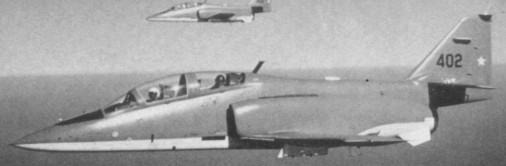
CASA C-101 Aviojet / E.25           

Designed by Construcciones Aeronauticas SA with collaboration from MBB and Northrop, the prototype of the CASA C 101 Aviojet made its maiden flight on 27 June 1977. A tandem two seat basic and advanced trainer with light attack capability, the C-101 is powered by a Garrett TFE731 2 25 non afterburning turbofan. The Aviojet features six pylons and a gun pack under the rear seat with either a single 30 mm DEFA cannon or two 12.7 mm machine guns.
The Garrett AiResearch TFE731 turbofan combines with a large integral fuel capacity to provide a seven hour endurance

CASA C-101 Aviojet Article

Spain’s CASA C 101 Aviojet has the Spanish air force designation E.25, entering service in 1980. An armed version has been exported to Honduras (4) and Chile (60).
Four versions of the Aviojet single-turbofan tandem-seat trainer have been built. The C.101EB was the initial trainer variant for the Spanish Air Force, production of which was completed during 1985.

An export trainer version, the C.101BB (operated by Chile as the T-36 Halcon), has an uprated engine and provision for arma¬ment on underwing hardpoints, while the C.101CC, (operated by Chile as the A-36 Halcon), is a light-attack aircraft with a further uprated engine offering 19.l3kN thrust. Weap¬ons options for the C.101CC include an under-fuselage 30mm DEFA cannon pod, rocket and gun pods underwing, together with bombs and AGM-65 Maverick ASMs.

The C-101BB armed export model differs from the C-101EB primarily in having a Garrett AiResearch TFE 731-3-1J turbofan rated at 3700 lb / 1658 kg rather than the 3500 lb / 1588 kg TFE 731-2-2J, and provision for interchangeable ventral packs containing either one 30mm DEFA 553 cannon or two 12.7mm M3 machine guns, six underwing pylons, an optical weapons sight and an armament control system. The -3 turbofan was first flown in the second Aviojet prototype in February 1981.
Announced in 1984, the C.101DD enhanced training version first flew on May 20, 1985. The CC.101DD Aviojet has the more powerful engine of the C.101CC combined with a major avionics upgrade which includes a Ferranti headup display weapons aiming computer, a Ferranti FIN 1100 altitude and heading reference system, a radar warning receiver, and flare/chaff dispensing pods. A reconnaissance pack and laser target designator are optional for both the C.101CC and DD versions.

C-101
Engine: 1 x Garrett TFE731-2-25 turbofan
Max Take-off weight: 5600 kg / 12346 lb
Empty weight: 3350 kg / 7386 lb
Wingspan: 10.6 m / 34 ft 9 in
Length: 12.25 m / 40 ft 2 in
Height: 4.25 m / 13 ft 11 in
Wing area: 20.0 sq.m / 215.28 sq ft
Max. speed: 685 km/h / 426 mph
Ceiling: 12500 m / 41000 ft
Range w/max.fuel: 3800 km / 2361 miles
Range w/max.payload: 370 km / 230 miles
Armament: 1 x 30mm cannon, 2000kg of weapons
Crew: 1-2

C.101CC Aviojet
Engine: 1 x Garrett TFE731-5.
Installed thrust: 19.2 kN (21kN).
Span: 10.6 m.
Length: 12.5 m.
Wing area: 20 sq.m
Empty wt: 3340 kg.
MTOW: 6300 kg.
Warload: 2250 kg.
Max speed: 769 kph.
Initial ROC: 1500 m / min.
Ceiling: 12,800 m.
T/O run: 560 m.
Ldg run: 480 m.
Fuel internal: 2410 lt.
Range/Endurance: 3700 km / 7 hr.
Combat radius lo-lo-hi: 520 km.
Armament: 1 x 30 mm or 2 x .5 in.
Hardpoints: 6.

CASA C-101EB Aviojet
Engine: 1 x Garrett TFE731-2-2J turbofan, 3,550lb thrust.
Length: 40.19ft (12.25m)
Width: 34.78ft (10.60m)
Height: 13.94ft (4.25m)
Maximum Speed: 478mph (770kmh; 416kts)
Maximum Range: 2,485miles (4,000km)
Rate-of-Climb: 4,900ft/min (1,494m/min)
Service Ceiling: 41,010ft (12,500m; 7.8miles)
Armament: 1 x 30mm DEFA cannon or 2 x 12.7mm M3 machine guns.
Up to 4,890lbs of external ordnance
Accommodation: 2
Hardpoints: 6
Empty Weight: 8,378lbs (3,800kg)
Maximum Take-Off Weight: 12,346lbs (5,600kg)

Carter 1911 biplane

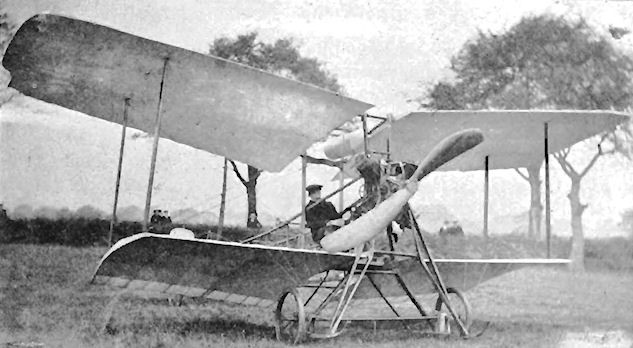
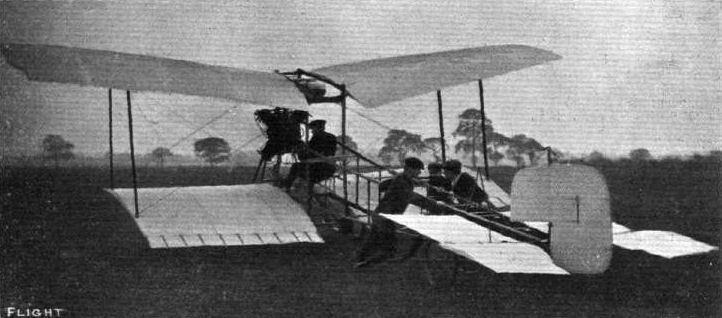
In the UK in 1911 Mr. Carter was out on the new machine and with the engine running fairly well, the machine made a few hops. The machine is of the biplane type of very short span, with the upper planes of slightly greater span than the lower ones. There is no elevator in front, but that position is occupied by the engine and propeller. The engine is an 8-cyl. made by the Nonpareil Motor Fitting Co. at Birmingham. At present it gives about 60-hp, but when properly tuned up it is expected to reach about 80-hp Mr.Carter succeeded in getting the biplane off the ground for short distances.

Mr. Carter was also out with his biplane after having made a few alterations to the tail. The machine rises very rapidly, in one case getting off the ground in 15 ft. but no extended flights were made owing to the fact that the engine was not running up to form.

Carpenterie M 81 Butterfly

The M 81 uses mixed wood and steel construction, all covered in heat-shrunk Dacron.

Engine: Rotax 912, 80 hp
Wing span: 9.6 m
Wing area: 15.5 sq.m
MAUW: 450 kg
Empty weight: 255 kg
Fuel capacity: 40 lt
Fuel consumption: 15 lt/hr
Max speed: 150 kph
Cruise speed: 120 kph
Minimum speed: 65 kph
Climb rate: 3 m/s
Seats: 2
Price (1998): 30,000 DM
Kit price (1998): 20,000 DM