First flew in 1994 the LMK.1 Oryx side-by-side two-seat monoplane, offered as a kit.
1 engine
Castillo-Miltgen Blériot Biplane

To compensate for their high elevation Jose Ciceron Castillo and Paul Miltgen converted an original Blériot monoplane into a biplane, here shown at the fields of the Polo Club, north of Bogota, Colombia in 1911.
Castaibert VI
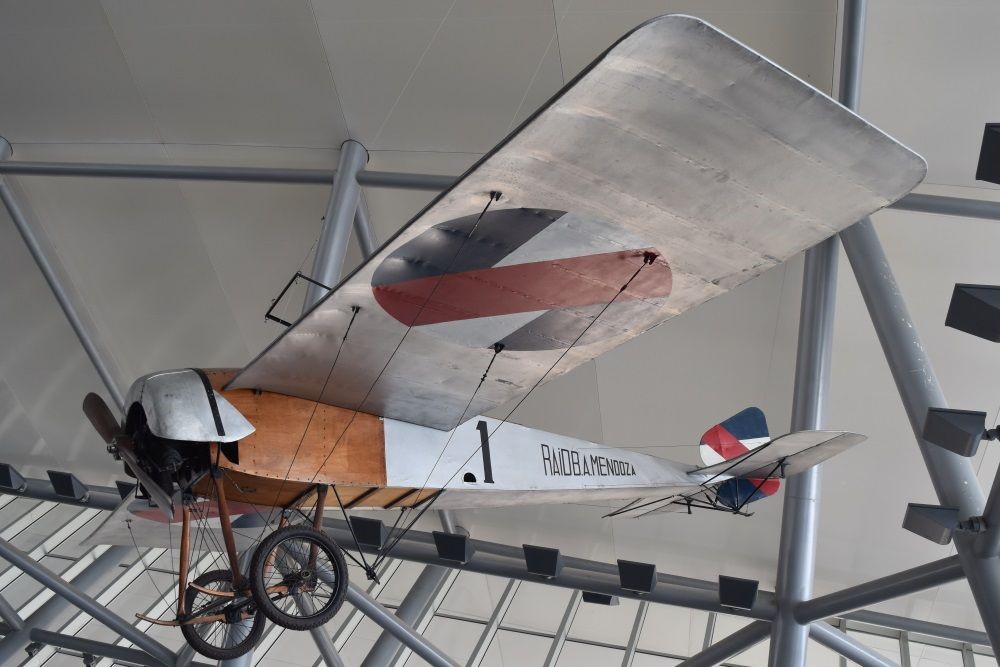
Built in 1915, this plane was used by J.M Boiso Lanza to fly from Buenos Aires and Montevideo the 18th July 1916. The engine was 100 HP
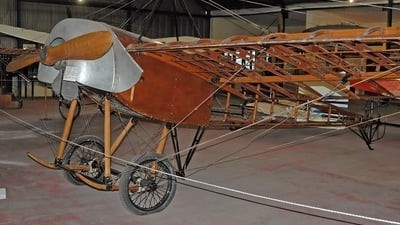
Castaibert V
Built in 1914. One delivered to Uruguay.
Castaibert IV
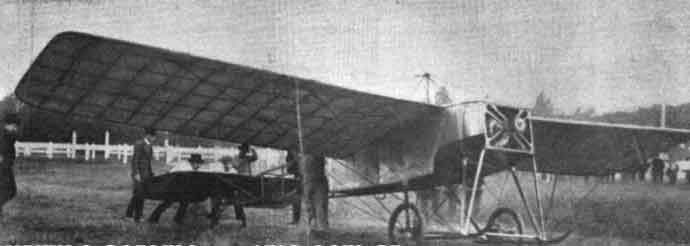
Built in 1913. Four were delivered to the Escuela Militar de Aeronáutica in Uruguay.

Castaibert 1912 Bleriot type
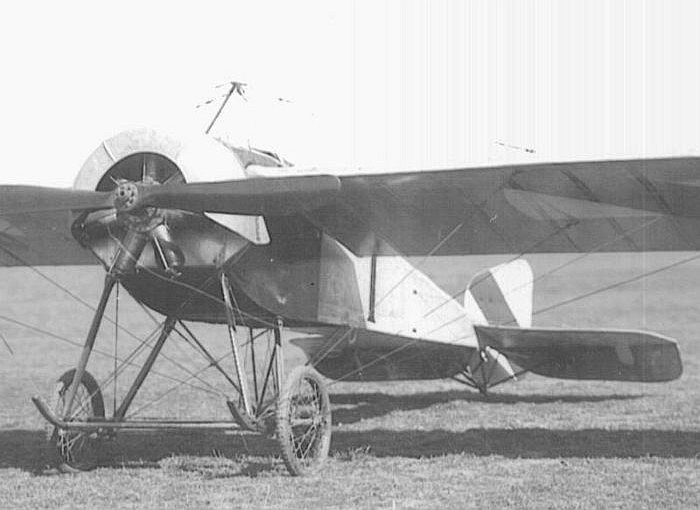
Built by Pablo Castaibert, the 1912 Castaibert Bleriot type monoplane reportedly flew well.
Engine: Gnome, 50 hp
Span: 30 feet (9.35 m.)
Area: 194 sq. ft. (18 m².)
Length: 28 feet (8.47 m.)
Total weight: 617 lbs. (280 kgs.)
Speed: 50 mph / 80 kph
Castaibert 1911 Bleriot-Hanriot type
The Castaibert II was Pablo Castaibert’s second aircraft, powered by a 25 hp (19 kW) Anzani 24.5hp 3-cyl fan engine and reached 46.5 miles per hour (75 km/h). Built by Pablo Castaibert, the 1911 Castaibert Bleriot-Hanriot type monoplane reportedly flew well.
Engine: Anzani, 25 hp / 19 kW
Span: 29 feet (8.80 m.)
Area: 206 sq. ft. (19-20 m².)
Length: 26½ feet (8.15 m.)
Total weight: 705 lbs. (320 kgs.)
Speed: 75 km/h (47 mph, 40 kn)
Castaibert Monoplano 1910-I
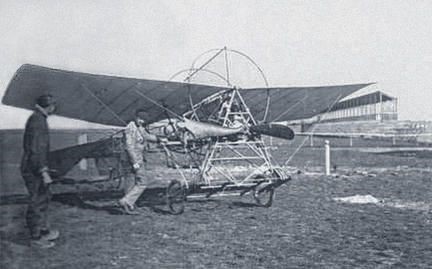
Pablo Castaibert’s monoplane 1910-I was modelled on the Santos-Dumont Demoiselle. Fitted with a 35 hp Anzani, it was not able to fly. It is claimed that the machine would not fly because of a balance problem that could not be resolved after several modifications although it was probably also due to the absence of flight experience by Castaibert himself. At the end of 1910 Castaibert saw a Blériot flying which prompted him to switch designs resulting in his rather more successful series of monoplanes.
Cassutt III / National Aeronautics Cassutt IIIM

The cassutt 111 M Sport Racer was designed as a Formula 1 racing aircraft by Tom Cassutt, an airline pilot, built in 1954, and is mid-wing. The Cassutt is a single place, full cantilever, high performance aircraft. It is fully aerobatic and meets the specifications for competitive racing, “G” loading, safety characteristics and visibility.
The airframe is basically a welded chrome moly steel tube structure, the fin being built integral with the fuselage. Similarly, the full span ailerons, tailplane, rudder and elevators are welded steel tube and fabric covered members. The area of the cockpit is skinned with aluminium alloy sheet or molded fiberglass cowlings from the cockpit forward. A sheet metal spine decking rounds off the sharp apex of the fuselage behind the cockpit.

The wing is one piece of constant chord and incorporates 18 built up ribs spruce, 3 ply laminated main spar, solid leading edge and rear spar and covered with a 45 degree bias ply skin. Truss ribs are built of spruce with skins comprised of four sheets of 3 ply plywood. The ultimate load factor is +-12g. The undercarriage consists of a spring steel one piece main gear bolted to the fuselage with four bolts and a steerable tailwheel. A 9 Imp gallon fuel tank is located behind the firewall. Full span ailerons driven by two push rods within the fuselage.
Stabilizer and elevator are one piece tube assembly. Stabilizer mounts to longeron with four bolts and elevator mounts to stabilizer with three hinges. The length, height and width of the canopy and cockpit can be altered as desired during construction as required to fit the builder.

As part of a scheme to introduce this kind of air racing in Britain, Airmark Ltd built in 1969 their first Airmark/ Cassutt 111 M. Powered by a 95 hp RollsRoyce/Continental engine it has a maximum level speed of 196 mph (315 km/h).

Powered by the Continental 0-200, 100 H.P. engine, it cruises at 185-200 MPH at approximately 6 gallons per hour.

Racing Model
Engine Continental 0-200, 100 hp
Wing span 15 foot
Wing cord 54 inch
Wing area 67.5 sq.ft
Wing loading 12.6 lbs/sq ft.
Fuselage length 16 feet
Overall height 4 feet
Cockpit length 4 ft 6 in
Fuel capacity 15 USgallons
Range 450 miles
Empty weight 500 lbs
Gross Weight 850 lbs
Top speed 200-230 mph plus
Cruising speed 190 mph plus
Stall speed 68 mph
Climb rate 1500 ft/min
Take-off dist: 450 ft.
Landing dist: 650 ft.
Service ceiling: 16,000 ft.
G load limit 8
G load ultimate 12
Seats: 1.
fully aerobatic.
Landing gear: tail wheel.
National Aeronautics Cassutt IIIM
Engine: Continental O-200, 100 hp
HP range: 100-200 hp
Wing span: 15 ft
Wing area: 66 sq.ft
Length: 16 ft
Empty weight: 550 lb
Gross weight: 950 lb
Fuel capacity: 15 USG
Cruise: 200 mph
Stall: 65 mph
Range: 520 sm
Rate of climb: 2000 fpm
Takeoff dist: 600 ft
Landing dist: 800 ft
Seats: 1
Cockpit width: 22 in
Landing gear: tailwheel
IIIM
Engine: Continental, 90 h.p.
Span: l4’11”.
Length: 16’ 0”.
Wing Area: 66 sq. ft.
Empty Weight: 516 lb.
Max Weight: 730 lb.
Wing Loading: 11 lb/sq.ft.
Max Speed: 190 mph.
Cruise Speed: 150mph.
Stall Speed: 70 mph.
Initial Climb: 2,600 fpm.
Range: 200 miles.
IIIM
Engine: 1 x Continental C-95, 95 hp.
Wing span: 14 ft 0 in (4.54 m).
Length: 16 ft 0 in (4.88 m).
Height: 4 ft 3 in (1.3 m).
Max TO wt: 830 lb (376 kg).
Max level speed: 207 mph (333 kph).
Sport Model
Engine Continental 0-200, 100 hp
Wing span 17 foot
Wing cord 54 inch
Wing area 76.5 sq.ft
Wing loading 11.1 lbs/sq ft.
Fuselage length 16 feet
Overall height 4 feet
Cockpit length 4 ft 6 in
Fuel capacity 15 USgallons
Range 450 miles
Empty weight 500 lbs
Gross Weight 850 lbs
Stall speed 65 mph
Climb rate 2000 ft/min
G load limit 7
G load ultimate 11
Top speed 200 mph plus
Cruising speed 190 mph plus
fully aerobatic.
Engine: Continental O-200
Wing span: 4.57 m
Wing area: 6.28 sq.m
MAUW: 400 kg
Empty weight: 250 kg
Fuel capacity: 53 lt
Max speed: 440 kph
Cruise speed: 300 kph
Minimum speed: 105 kph
Climb rate: 12.5 m/s
Seats: 1
Plan price (1998): $125
Kit price (1998): $11,850

Cassutt II

The Cassutt Formula One racer and sports plane is a little midwing that commonly wrings 200 mph plus out of 85-hp engines. This speedy ship performs well using either Continental, Lycoming or Volkswagen engines. Its construction uses a welded steel-tube fuselage, wood wings and flat spring-steel landing gear. Professionally designed for racing, aerobatics and sport use, the Cassutt is stress¬ed to l2Gs.
Gross Wt. 800 lb.
Empty Wt. 500 lb.
Fuel capacity 15 USG.
Wingspan 15 ft 0 in.
Length 16 ft.
Engine 85-hp Continental
Top speed 235 mph.
Cruise 180 mph.
Stall 62 mph
Climb rate 2000 fpm.
Takeoff run 600 ft.
Landing roll 525 ft.
Range 600 nm

