
During 1931-33 the company produced several experimental models, and aircraft to special requirements, mostly racers. The first was the CPW-6 two-place endurance racer powered by a Pratt & Whitney Wasp engine of 420 hp.
During 1931-33 the company produced several experimental models, and aircraft to special requirements, mostly racers. The first was the CPW-6 two-place endurance racer powered by a Pratt & Whitney Wasp engine of 420 hp.

Cessna rolls out its first six-passenger plane, the Model CW-6, on November 1, 1928.
In November 1928 the CW-6 was flown. A six-seater powered by a 164kW Wright Whirlwind J-5 radial engine, it appeared at the 1929 Auto Show in Wichita.

The aircraft first flew in November 1928, powered by a 220 hp (164 kW) Wright Whirlwind J-5 radial engine.
The aircraft was displayed at the 1929 Auto Show in Wichita, Kansas.

The CW-6 was in Mexico when the revolution started, and the Mexican Air Force confiscated it and used it as a bomber against the rebels. When the revolution was crushed the Mexican Government formally purchased the CW-6.
A scaled-down four-seat version, the Cessna DC-6, was also developed.
Engine: 1 × Wright J-6 Whirlwind, 300 hp (220 kW)
Wingspan: 43 ft 4 in (13.21 m)
Height: 8 ft 2 in (2.49 m)
Wing area: 296 sq ft (27.5 sq.m)
Length: 29 ft 4 in (8.94 m)
Empty weight: 2,175 lb (987 kg)
Gross weight: 3,950 lb (1,792 kg)
Fuel capacity: 80 US gal (67 imp gal; 300 L)
Maximum speed: 148 mph (238 km/h; 129 kn)
Cruise speed: 120 mph (193 km/h; 104 kn)
Range: 610 mi (530 nmi; 982 km)
Service ceiling: 17,500 ft (5,300 m)
Rate of climb: 900 ft/min (4.6 m/s)
Crew: 1
Capacity: 5 passengers

A three-seat version of the Model A was known as the Model BW, of which 13 were built with a 164kW Wright J-5 engine. The first Model BW rolled off the production line in March 1928.
Although the Model BW was a four-seater, it was restricted to three persons as the weight of the 220 hp Wright J-5 produced a forward centre of gravity problem.
The Depression caught up with Cessna in 1930, forcing the factory to suspend production.

The first Cessna design to enter series production was the Cessna Model A, the first of a long and immensely successful line of high-wing monoplanes. A four-seater of mixed wood and steel-tube construction with fabric covering, the type was built in several versions with different engines.

The first Cessna A-series aircraft was delivered to Edwin A. Link of Pittsburgh, Pa., on February 28 for $6,500.
Type certification is issued for the Model AA on August 27 1928.
14 of the Model AA were manufactured with an 89kW Anzani, one of the Model AC with a 97kW Comet, three of the Model AF with a 112kW Floco/Axelson, four of the Model AS with a 93kW Siemens-Halske, and 48 of the Model AW powered by a 125-hp / 93kW Warner Scarab.

The model AW was produced between 1928 and 1930, introduced at the 1928 National Races, and won the Class “A” Transcontinental Air Derby. Forty AW were delivered to the Curtiss Flying Service.

At least one AW model was converted to take the Continental 220 engine.

AW
Engine: Warner Scarab, 110 hp
Wingspan: 40 ft 6.5 in
Length: 23 ft 8.5 in
Height: 7 ft 4 in
Wing area: 224 sq.ft
Empty weight: 1250 lb
Loaded weight: 2300 lb
Max speed: 128 mph
ROC: 700 fpm
Ceiling: 18,000 ft

Clyde Cessna remained with Travel Air Manufacturing Company for two years but found his own interests gravitating toward monoplane designs while his partners were more interested in biplane designs. When he proposed a monoplane design without wing struts, his Travel Air associates dismissed the idea, claiming it was folly. This prompted Clyde to resign from the company and build a fully cantilevered wing monoplane on his own. This aircraft, known as the Comet, inspired him to start a new business focused on monoplanes.
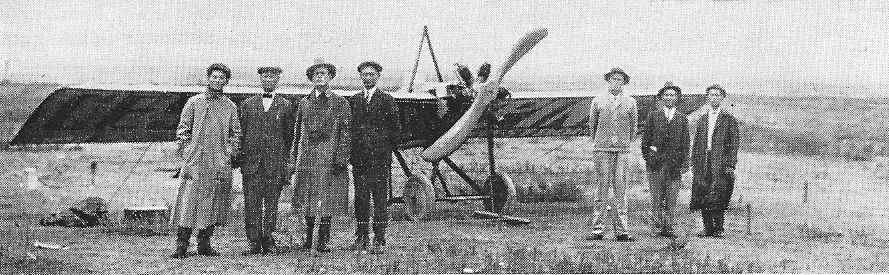
Clyde Cessna built 15 aircraft between 1911 and 1925. The first aircraft built in Wichita, Kansas, in 1917, was powered by a 60 hp Anzani engine.
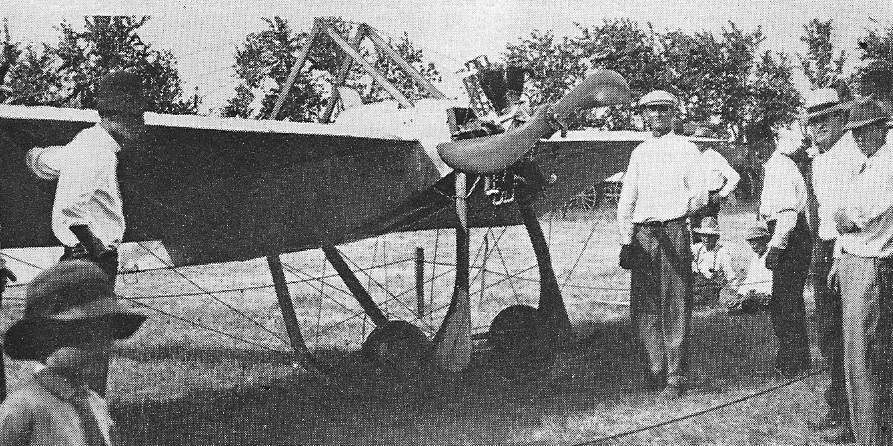
Clyde Cessna built 15 aircraft between 1911 and 1925. The 1914 model was powered by a 60 hp Anzani engine.
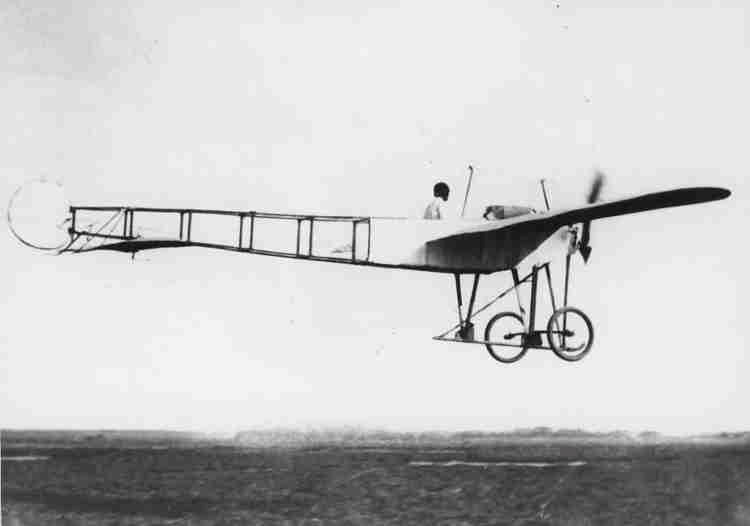
In 1911, finding inspiration from the American version of the Bleriot XI, Clyde created his first monoplane using linen and spruce. This initial creation was known as the “Silverwing,” and was powered by an Elbridge 4 cylinder motorboat motor with 40 hp.
Cessna CG-1 Silverwing Article
For the first test flights, Clyde headed to the Great Salt Plains in Oklahoma, located next to the Salt Plains National Wildlife Refuge. Unfortunately, his first flight attempt ended in a ground loop and a $100 repair bill. Clyde was not discouraged, however, and climbed back into that cockpit time after time, attempting to fly another thirteen times. And though each time was a failure, he managed to walk away relatively unscathed.
Finally, he became airborne on the thirteenth attempt in the Silverwing, though he managed to stay airborne for only a short time before he crashed into a stand of trees while attempting to turn the aircraft.
“I am going to make this thing fly. Do you hear me? I am going to make this thing fly and then I am going to set it afire and I’ll never have another thing to do with airplanes. Automobiles and farm machinery – that’s what I’m going to stick to” Clyde said after crashing the Silverwing.
Thankfully, he didn’t carry through on this threat, and he went back to work. His meticulous planning and continual improvement of his design finally paid off.
In December 1911, Clyde Cessna completed a 5-mile flight, including a successful landing back at his point of departure. Thanks to this success, the many people who had been scoffing at his attempts to fly did an about-face, celebrating his success and even calling him “The Birdman of Enid.” Riding the success of the Silverwing, Clyde decided to leave his career in the automotive industry and devote his full attention to aviation.
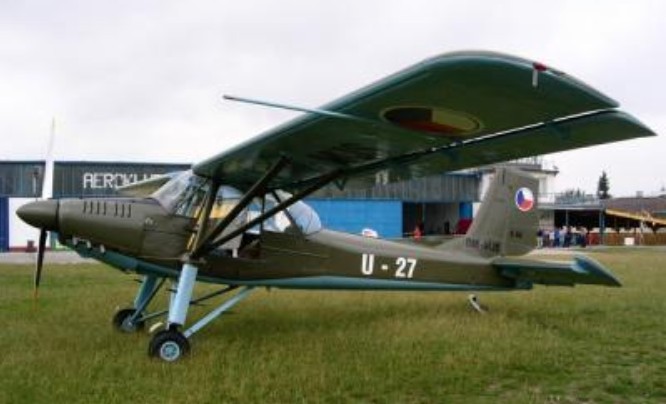
A three/four-seat light STOL monoplane, designed for use as an agricultural aircraft and glider towing. Each wing carries a full-scan one-piece leading-edge slat, and double-slotted flaps are fitted between the cabin and the ailerons.
First flown 1955 production deliveries began in March 1956, and remained in production until 1960.
The L-60 Brigadýr resembles much the Mráz J-65 ‘Èáp’ (Czech version of the Fiesler Fi 156 ‘Storch’), because it was designed and built in the same factory.
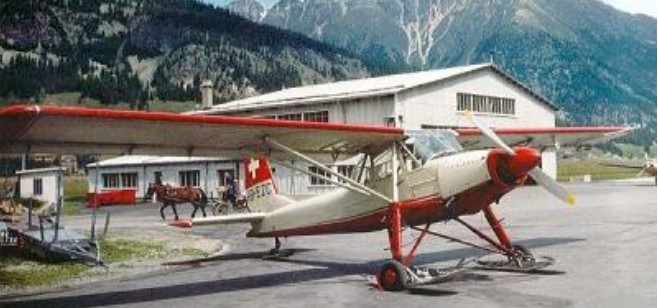
The agricultural L-60 utilised a 92 Imp.Gal. tank in the rear cockpit, or a hopper for 660 lb of dust.
A military air observation post and liaison model with RSI-6 and RPK-10 radio, full blind-flying equipment and provision for a machine gun, was supplied to the Czech Air Force.
A total of 400 were built.
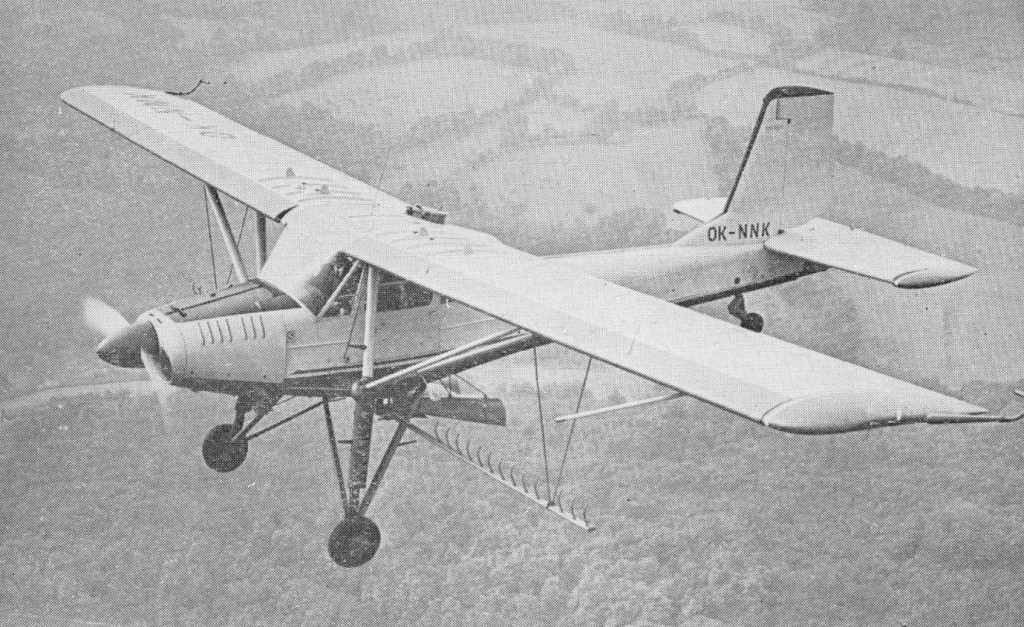
Engine: Praga Doris M 208 B, 220 hp
Wingspan: 45.801 ft / 13.96 m
Wing area: 261.565 sqft / 24.3 sq.m
Length: 28.018 ft / 8.54 m
Height: 8.858 ft / 2.7 m
Max take off weight: 3120.1 lb / 1415.0 kg
Weight empty: 2194.0 lb / 995.0 kg
Max. speed: 120 mph
Cruising speed: 94 kts / 175 km/h / 109 mph at SL
Service ceiling: 14764 ft / 4500 m
Climb to 3280 ft:4.3 min
Wing load: 11.89 lb/sq.ft / 58.00 kg/sq.m
Range: 486 nm / 900 km
Crew: 1+3
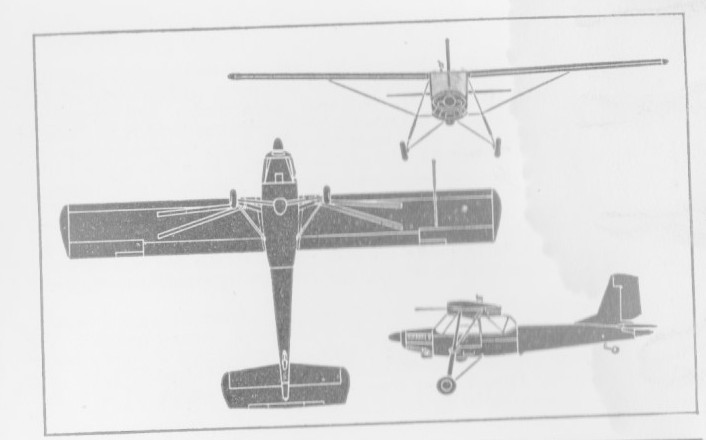

A basic trainer, the Czechoslovak Letov L.8 is also known as the TOM-8 after the bureau design chief Ing. Karel Tomas. Of all-metal construction the Letov L.8 has a cantilever wing with split metal flaps, which like the nosewheel-type retractable undercarriage, is electrically operated by way of a 1,500-watt generator situated in the fuselage.
Ing. Tomas designed the L.8 round the six-cylinder, horizontally opposed, piston, 235-h .p. M-208-C which is also known as the Praga Doris C. The Doris C is a development of the 220-h.p. (3,000 rpm) Doris B flat-six. The two-blade metal airscrew (V.421) has variable pitch and the hub is covered by a pointed metal spinner. The powerplant engine cowling has a triple entry intake – the centre one being the carburettor air intake.
The Letov L.8 is fully aerobatic and is equipped for night flying and instrument training. Light bombs can be mounted under each wing. Gunnery instruction is also catered for.

The prototype Letov L.8 is finished in light grey and has the Czech air force markings on the wings and the fin/rudder. On each side of the rear fuselage is the large serial number “K-01” painted in black.
The Czech air force planned to replace the standard piston-engine basic trainer (the Letov-built C.2B – the Czech version of the wartime Arado Ar 96B) with the Letov L.8.


