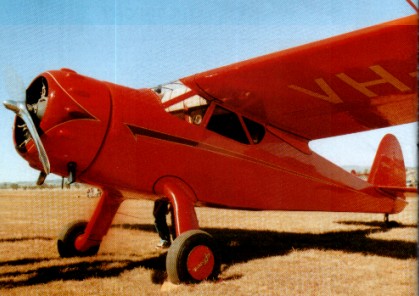
Cessna introduced the Cardinal in late 1967 as an all new design, fixed-gear model, aimed at producing a better model 172 with a performance closer to the more powerful model 182. The number 172 was assigned to the Cardinal early in its development, and there was actually thought that it might replace the Skyhawk. But the Cardinal’s number was increased to 177, and any plan to drop the Skyhawk was halted. The engine in the Skyhawk was upgraded, from a 145 horsepower Continental to a 112kW / 150 hp Lycoming O-320-E21D. This engine was also used in the Cardinal, resulting in commonality between the two. There were mechanical problems with such things as the flaps, and there was a major problem with handling qualities. Some of the airplanes were broken on landing, and it became clear that the Cardinal’s stabilator (Cessna’s first and last) was a bit sensitive for pilots used to other Cessnas. There were indications too, that the stabilator could stall under some circumstances, resulting in hard hits on the runway. All Cardinals were recalled for modifications and the primary fix was the addition of an inverted slot in the stabilator. With the 1969 model, the Cardinal’s horsepower was increased to 180, and to make it fly better at low speeds led the manufacturer to recontouring the singlespar semi-laminar airfoil section to provide a more rounded, conventional leading edge (a “modified 2400 series.”). This was a major and very successful redesign, making the 1970 and subsequent Cardinals very different machines from those of the first two model years. In 1970, Cessna began offering two versions of the airplane: one with retractable gear and a 200 hp engine, plus a 180 hp, fixed gear version. In 1971 Cardinal II and Cardinal RG II versions appeared, these differing by having more comprehensive equipment as standard. The 1972 models differ externally from those of the previous year by a more more efficient prop blade section (Clark Y airfoil section) and by a boarding assist step. On 1971 models it is a round strut below each door opening, with a step at the bottom. For 1972 the step is welded to the gear leg so it goes out of the slipstream when, the gear is retracted. Between them, these two changes are credited by Cessna with making the 1972 RG a full five mph faster in cruise than the 1971 models. On the floor is a simple fuel selector system, an on-off valve which feeds from both of the 25-gallon wing tanks, but does not give you the option of draining one at a time. In 1976 the Model 177 was withdrawn, the Cardinal becoming regarded as the basic model of the remaining four versions. Two years later the Cardinal also disappeared, the Cardinal II being renamed the Cardinal Classic. Over 1000 were sold in the first year but sales fell and a total of only 2500 were completed by the time the design was dropped in 1978.
The 1977 new Cardinal was priced at US$32,600; Cardinal II, US$35,350, and Cardinal H with “Nav Pac,” US$39,200.
Total production of the retractable undercarriage 177RG reached 1366 by 1978 when it was replaced by the 172RG Cutlass. Of all Cardinals delivered, about half were sold in the late 1960s, rather than the 1970s.
In 1958 Cessna brought into production the Model 175. This was in effect the latest version of the Model 172 with a number of improvements (free-blown windscreen, glassfibre speed fairings, etc) and a 131kW GO-300-C geared engine driving a constant-speed propeller. In 1959 a de luxe version of the Model 175A was introduced as the Skylark, but the Model 175 / Skylark type was dropped from production in 1963.
In 1964 the Franklin Engine company or Syracuse, NY, offered a 180 hp Franklin engine conversion with a compact cowl and trim spinner. This gave significant increases in speed, rate of climb and glide ratio. Conversions could be done in the field or factory.
1960 Cessna 175 Skylark Engine: Continental O-300C, 175 hp @3200@SL TBO: 1200 hr Fuel Type: 100/100LL Propeller: Fixed 76-inch Landing Gear type: Tri/Fixed Max ramp weight: 2350 lb Gross weight: 2350 lb Landing weight: 2350lb Empty weight, std: 1325 lb Useful load, std: 1025 lb Useful load, as equiped: 877 lb Payload, full std. fuel: 767 lb Usable fuel, std: 43 USgal Wingspan: 36 ft. Overall length: 25 ft. Height: 8 ft. 5 in. Wing area: 174 sq. ft Wing loading: 13.5 lbs./sq. ft Power loading: 13.4 lbs./hp Wheel track:8 ft. 4 in. Wheel size: 6.00 x 6 in Seating capacity: 4 Cabin doors: 2 Cabin width: 40 in Cabin height: 44 in Baggage capacity:120 lb Cruise speed 75% power @ 7,500 ft.: 122 kt Max range (w/ reserve): 75% power: 417 nm Fuel consumption (@ .48 lbs./hp/hr sfc) 75% power: 10.5 Fuel consumption (@ .48 lbs./hp/hr sfc) 65% power: 9.1 Fuel consumption (@ .48 lbs./hp/hr sfc) 55% power: 7.7 Vso: 44 kt Best rate of climb (SL): 850 fpm Service ceiling: 15,900 ft Takeoff ground roll: 735 ft Takeoff over 50-ft. obstacle: 1340 ft Landing ground roll: 590 ft Landing over 50-ft. obstacle: 1155 ft
1960 Cessna 175A Skylark Engine: Lycoming 0-320 B-2A, 160-hp TBO: 2000 hr Fuel type:100 LL Propeller: Sensenich 74 DM-0-60/74 Landing gear type: Tricycle steel spring Cessna’s Land-O-Matic with steerable nosewheel Max ramp weight: 2350 lb Gross weight: 2350 lb Landing weight: 2350 lb Empty weight, std: 1338 lb Useful load: 980 lb Usable fuel – std: 42 USgal Payload, full std. fuel: 712.9 lb Wingspan: 36 ft. Overall length: 26 ft. 6 in. Height: 9 ft. 6 in. Wing area:175 sq. ft Wing loading: 14.1 lbs./sq. ft Power loading: 13.4 lbs./hp Wheel size: 6.00 x 6 in Seating capacity: 4 Cabin doors: 2 Cabin width: 40 in Cabin height: 48 in Baggage capacity: 120lb Cruise speed: 107 kts Cruise speed, 75% power: 105 kt Max range (w/ reserve): 489 nm Fuel consumption: 8.5 to 9.0 USgph Vs: 54kt Vso: 46 kt Best rate of climb: 800 fpm Best rate of climb at 8000 ft: 400 fpm Service ceiling: 15,900 ft Takeoff ground roll: 842 ft Takeoff over 50-ft. obstacle: 495 ft Landing ground roll (ft.): 600 Landing over 50-ft. obstacle: 1175 ft
Cessna took a model 170B, gave it a tricycle undercarriage and a new squared fin and rudder, and called it a model 172. First built in 1955, the 172 entered production in 1956. In 1956 some 1,170 Model 172s were sold, compared with 174 of the Model 170B, whose production was terminated.
A new swept fin and rudder introduced in 1960 gave the CE-172A, followed by the near identical 1961 172B (989 produced) and 1962 172C. The Skyhawk version of this airplane appeared in 1961, with a complete paint job, gyro panel powered by an internal vacuum system, and speed fairing on the wheels. The “economy” 172 was been available each year since, although the Skyhawk accounted for most of the sales. The “omnivision” windows produced the 172D in 1963, a new engine in 1968 (150 hp Lycoming O-320-E2D), conical wingtips in 1970, tubular steel gear legs in 1971; new wing with modified aerofoil in 1973 for improved slow-flight characteristics, through to the 172P. A shorter nose strut gave improved vision over the nose for taxiing from in 1967. The Clark Y airfoil section was introduced for its propeller in 1974, and a quieter cabin with slightly re-shaped rudder in 1976.
Cessna 172P
A more luxurious version was marketed as the Skyhawk II.
The 1977 Cessna Skyhawk/100 was powered by a 100 octane engine a 160 hp Lycoming O 360 H is 10 horsepower stronger, cruises two knots faster and burns slightly less fuel than the old Skyhawk. The Hawk XP (extra-performance) was first introduced by Reims Aviation in France (as the Reims Rocket). Based on the 172N but with a more powerful motor and different colour, which were about the sole distinguishing features. Introduced in the US in 1977 as the R172K Hawk XP.
The Hawk XP’s engine is basically the same as that used in the Cessna 337, where it is rated at 210 hp. What happened to 15 of its horses? They are still in there, but FAA noise standards preclude their use the Hawk XP’s engine turns 2,600 rpm for take-off instead of the 2,800 that is the norm on the 337. The airframe is identical to the Skyhawk’s from the firewall aft. There are some differences inside. A prop control, cowl flap control and rudder trim have been added. Preselect for the flaps is standard on the Hawk XP, and the fuel selector arrangement is slightly different from the Skyhawk’s. For fuel, the Hawk XP has as standard, tanks that are offered as optional long range tanks in the Skyhawk, 49 USG of usable fuel. In 1982 the 180 horsepower Hawk XP became the 172Q Cutlass, though differing greatly from the retractable undercart 172RG which was also marketed as the Cutlass. Introduced in 1980 the 172RG Cutlass used the same retractable undercarriage system already in use in the models R182 and 210. The new Cutlass was designed to appeal to businessman who wanted a model 172 with a higher cruising speed.
Cessna 172RG
Versions available in 1982 included the Model 172 Skyhawk and Skyhawk II, the Cutlass RG and Cutlass RG II which is basically a Model 172 with retractable landing gear.
Cessna 172RG Cutlass
The Model 172 also appealed to the US military and in July 1964 the US Air Force ordered 170 standard Cessna 172Fs powered by 134kW Continental O-360 engines for the Air Academy, and these were designated T-41A. To be used for the first 30 hours of flight instruction the unit cost was $7292. Deliveries began in September 1964.
T-41A
In August 1966, the US Army bought 255 Model R172Es fitted with the more powerful 157kW IO-360D fuel injection engine, as the T-41B Mescalero. These were followed by similarly powered T-41Cs for the US Air Force, and export version, designated T-41D, for a number of other air forces under the Mutual Air Programme. Total production of the military T-41 series reached 864 built between 1963-83.
A large number of older 172s have been up-graded by an Avcon conversion to 180 hp. A 180hp Lycoming O 360 Superhawk conversion results in an increase in cruise speed by 12 knots, reduces takeoff roll by some 50 percent and improves the rate of climb by 100 percent. Payload is increased by 120 lbs. Both the S and R models are fitted with the same Lycoming 180-horsepower fuel injected engine, but the 172R is de-rated to operate at a lower RPM with a slightly smaller propeller, and so produces 160 horsepower. As a result the 172S can carry a higher payload but the higher horsepower engine uses more fuel and consequently range suffers although other performance characteristics (at maximum all up weight) are similar. The first 172R was delivered on 18 January 1997.
In the air the Skyhawk SP handling is similar to other models of 172, although you definitely notice the extra horsepower when four are on board and baggage and fuel are up to the allowable limits. The increased acceleration on take off, while slight, is also noticeable. The increased performance allows a better short field performance, and flight is quiet and comfortable thanks to increased attention paid to soundproofing in the cabin. The CE-172SP Skyhawk comes with leather seats and trim.
The FAA and the European Aviation Safety Agency (EASA) certified the Cessna Turbo Skyhawk JT-A with next-generation Garmin G1000 NXi avionics after more than five years of development.
Cessna Turbo Skyhawk JT-A
Manufacturer Textron Aviation in Wichita, Kansas said the new model, equipped with the Continental CD-155 turbodiesel engine, has exceeded initial performance targets including improved maximum range. The Turbo Skyhawk JT-A is a factory option that includes an integrated powerplant, propeller and cockpit upgrade package.
Final performance figures include an improved range of 963 nautical miles, an increase of 78 nautical miles over original estimates and a 50 percent improvement over the gasoline-powered Skyhawk, a takeoff distance of 1,320 feet and a max climb rate of 767 feet per minute. Max speed is 134 knots.
The 155 horsepower turbodiesel Continental CD-155 includes direct fuel injection and a dual channel Fadec driven by a single power lever for around $450,000 in 2017.
1957 Cessna 172 Engine: Continental O-300, 145 hp TBO: 1800 hrs Fuel Type: 100/100LL Propeller: McCauley/Fixed Landing Gear type: Tri/Fixed Max ramp weight:2200 lb Gross weight: 2200 lb Landing weight:2200 lb Empty weight, std: 1260 lb Usable fuel: 37 USgals Wingspan: 35 ft. Overall length: 25 ft. Wing area:159 sq. ft Wing loading: 13.8 lbs./sq. ft Power loading: 15.2 lbs./hp Wheel size: 6 in. Seating capacity: 4 Cabin doors: 2 Cabin width: 44 in Baggage capacity:50 lb Cruise speed 75% power: 108 kts Cruise speed 65% power: 101 kts Cruise speed 45% power: 98 kts Max range (w/ reserve) 75% power: 395 nm Max range (w/ reserve) 65% power: 420 nm Max range (w/ reserve) 45% power: 440 nm Fuel consumption 75% power: 8.0 USgph Fuel consumption 65% power: 7.5 USgph Fuel consumption 45% power: 7.1 Usgph Estimated endurance (65%) (hrs): 3.9 Stall speed (flaps up): 54 knots Stall speed (flaps down):50 knots Best rate of climb: 660 fpm Service ceiling: 13,300 ft Takeoff ground roll: 950 ft Landing ground roll: 600 ft
1958 Cessna 172 Skyhawk Engine: Continental O-300A, 145 hp@SL TBO: 1800 hrs Fuel type: 80/100/100LL Propeller type: Fixed pitch Landing gear type: Tri./Fixed Max ramp weight:2200 lb Gross weight: 2200 lb Landing weight:2200 lb Empty weight, std: 1260 lb Usable load, std: 940 lb Payload, full std. fuel: 688 lb Usable fuel, std: 42 USgal Wingspan: 36 ft. Overall length: 25 ft. Height: 8 ft. 5 in. Wing area:174 sq. ft Wing loading: 12.6 lbs./sq. ft Power loading: 15.2 lbs./hp Wheel size: 6.00 x 6 in Seating capacity: 4 Cabin doors: 2 Cabin width: 40 in Cabin height: 45 in Cruise speed 75% power: 108 kt Fuel consumption: 8 USgph Vso: 50 kt Best rate of climb, SL:660 fpm Service ceiling: 13,300 ft Takeoff ground roll: 950 ft Takeoff over 50-ft. obstacle:1650 ft Landing ground roll: 600 ft Landing over 50-ft. obstacle: 1115 ft
Cessna Skyhawk 172 Engine: Continental O-300C, 145 hp@SL TBO: 1800 hrs Fuel Type: 80/87 Propeller: McCauley FP/76 Landing gear type: Tri/Fixed Max ramp weight:2200 lb Gross weight: 2200 lb Landing weight: 2200 lb Empty weight, std: 1325 lb Useful load, std: 875 lb Payload, full opt. fuel: 623lb Usable fuel, std: 42 USgal Wingspan: 36 ft. Overall length: 26 ft. 6 in. Height: 8 ft. 11 in. Wing area:174 sq. ft Wing loading: 12.6 lbs./sq. ft Power loading: 15.2 lbs./hp Wheel size: 6.00 x 6 in Seating capacity: 4 Cabin doors: 2 Cabin width: 41 in Cabin height: 44 in Baggage capacity: 120lb Cruise speed 70% power @ 8,000 ft.: 113 kt Cruise speed 50% power @ 10,000 ft: 87 kt Stall speed (gear, flaps down): 44 knot Best rate of climb (SL): 730 fpm Service ceiling: 15,100 ft Takeoff ground roll: 780 ft Takeoff over 50-ft. obstacle:1370 ft Landing ground roll: 680 ft Landing over 50-ft. obstacle: 1115 ft
Cessna 172B Engine: 145hp TBO: 1800 hr Fuel type: 100LL Propeller type: Fixed Landing gear type: Tri./Fixed Gross weight: 2200 lb Empty weight, std: 1325 lb Useful load, std: 875 lb Payload, full std. fuel: 623 lb Useful fuel, std: 42 USgal Wingspan: 33 ft. 2 in. Overall length: 26 ft. 5 in. Height: 8 ft. 6 in. Wing area:159 sq. ft Wing loading: 13.8 lbs./sq. ft Wheel size: 6.00 x 6 in Seating capacity: 4 Cabin doors: 2 Cabin width: 44 in Cabin height: 50 in Baggage capacity:50 lb Cruise speed 75% power: 114 kt Cruise speed 65% power: 108 kt Cruise speed 55% power: 101 kt Max range (w/ reserve) 75% power: 515 nm Max range (w/ reserve) 65% power: 542 nm Max range (w/ reserve) 55% power: 568 nm Fuel consumption 75% power: 8.0 USgph Fuel consumption 65% power: 7.5 USgph Fuel consumption 55% power: 7.0 USgph Estimated endurance (65%): 5.6 hr Vs:46 kt Vso:51 kt Best rate of climb (SL): 730 fpm Service ceiling: 15,100 ft Takeoff ground roll: 875 ft Takeoff over 50-ft. obstacle:1370 ft Landing ground roll: 600 ft Landing over 50-ft. obstacle: 1115 ft
CE-172F Engine: 145 hp Continental O-300-C Wingspan: 36 ft 2 in Length: 26 ft 6 in Height: 8 ft 11 in Wing area: 174 sq.ft Empty weight: 1264 lb Loaded weight: 2300 lb Max speed: 138 mph Cruise 75%: 130 mph ROC: 645 fpm Range: 595 mi
CE-172J Engine: Lycoming, 150 hp.
CE-172M Engine: Lycoming O-320-E2D, 150 hp. TBO: 2000 hr Propeller: Const. spd. Landing gear type: Tri/Fixed Gross weight: 2300 lb Empty weight, std: 1370lb Useful load, std: 930lb Fuel: 38 USgal Wingspan: 35 ft. 10 in. Overall length: 26 ft. 11 in. Height: 8 ft. 10 in. Wing area:174 sq. ft Seating capacity: 4 Cabin width: 39.5 in Cabin height: 48 in Baggage capacity:120 lb Cruise speed 75% power: 120 kt Cruise speed 65% power: 115 kt Max range (w/ reserve) 75% power: 600 nm Max range (w/ reserve) 65% power: 640 nm Fuel consumption 75% power: 8.0 USgph Fuel consumption 65% power: 6.8 USgph Stall speed (gear, flaps down):43 knot Best rate of climb: 645 fpm Service ceiling: 13,100 ft Takeoff ground roll: 865 ft Landing ground roll: 520 ft
CE-172N Skyhawk Engine: Lycoming O 320 H2AD, 160 hp. TBO: 2,000 hrs. Prop: fixed pitch, 75 in. dia. Length: 26 ft. 11 in. Height: 8 ft. 9 in. Wingspan: 35 ft. 10 in. Wing area: 174 sq.ft. Wing loading: 13.2 lb/sq.ft. Power loading: 14.4 lb/hp. Seats: 4. Empty weight: 1,589 lb. Useful load: 711 lb. Payload with full fuel: 411 lbs. Max ramp wt: 2,307 lbs Gross weight: 2,300 lb. Usable fuel capacity: 50 USG/300 lbs. Maximum rate of climb: 770 fpm. Service ceiling: 14,200 ft. Maximum speed: 125 kts. Max cruise, 75% power (2,650 rpm) at 8,000ft: 122 kts. Econ cruise, 61 % power (2,500 rpm) at 10,000 ft: 114 kts. Duration at max cruise: 5.3 hrs. Duration at econ cruise: 7.1 hrs. Max range: 750 nm. Stalling speed, clean: 50 kts. Stalling speed, full flaps: 44 kts. Takeoff dist 50ft obstacle: 1,440 ft. Landing dist 50ft obstacle: 1,250 ft.
CE-172P Engine: 1 x Lycoming O-320-D2J, 160 hp. TBO: 2000 hrs. Prop: McCauley 2 blade, fixed pitch 72 in. Seats: 4. Length: 26.9 ft. Height: 8.8 ft. Wingspan: 35.8 ft. Wing area: 174 sq.ft. Wing aspect ratio: 7.4. Max ramp wt: 2407 lbs. Max take off wt: 2400 lbs. Standard empty wt: 1427 lbs. Max useful load: 980 lbs. Max landing wt: 2400 lbs. Wing loading: 13.8 lbs/sq.ft. Power loading: 15 lbs/hp. Max useable fuel: 372 lbs. Climb rate: 700 fpm @ 76 kts. Climb gradient: 555 ft/nm. Rate of climb @ 8000 ft: 330 fpm. Service ceiling; 13,000 ft. Max speed: 123 kts. Cruise @ 65% power @ 8,000ft: 112 kts. Fuel flow @ 65% power @ 8,000ft: 46 pph. Endurance @ 65% power @ 8,000ft: 7.8 hr Stalling speed clean: 51 kts. Stall speed flaps down: 46 kts. Turbulent air penetration speed: 99 kts. Fixed undercarriage.
CE-172 Hawk XP Engine: Teledyne Continental IO 360 K, 195 hp. TBO: 2,000 hrs. Prop: constant speed, two blade, 76 in. Length: 27 ft. 2 in. Height: 8 ft. 10 in. Wingspan: 36 ft. Wing area: 174 sq. ft. Wing loading: 14.7 lb/sq.ft. Power loading: 13.1 lb/hp. Seats: 4. Useful load: 932 lb. Payload with full fuel: 638 lbs. Gross weight: 2,550 lbs. Max ramp wt: 2,558 lbs. Usable fuel: 49 USG/294 lbs. Max usable fuel: 66 USG Maximum rate of climb: 870 fpm. Service ceiling: 17,000 ft. Max speed: 133 kts. Max cruise, 80% power (2,550 rpm) at 6,000 ft: 130 kts. Cruise 75% power; 129 kts / 149 mph. Econ cruise, 50 % power, 10,000 ft: 101 kts. Duration at max cruise: 4.2 hrs. Duration at econ cruise: 6.5 hrs. Max Range; 635 nm / 731 sm. Fuel 65% power; 9.0 US Gal/hr. Stalling speed, clean: 53 kts. Stall speed, full flap: 46 kt. Undercarriage; Fixed tricycle. Seats: 4. Take-off 50ft; 1,360 ft. Landing 50ft; 1,345 ft.
CE-R172K Hawk XP Engine: Teledyne-Continental IO-360-K, 195 hp. Prop: CS 76”. Max wt: 2550 lbs. Useful load: 1001 lbs. Max speed: 134 kts. Cruise (80% pwr @ 5500 ft): 131 kts. Range @ 80% pwr: 485 nm. Max range: 595 nm. ROC sl: 870 fpm. T/O 50ft: 1360 ft. Ldg 50 ft: 1270 ft. Stall: 46-53 kts. Fuel cap: 52 USG.
Cessna 1998 172SP Skyhawk Engine: Lycoming IO-360-L2A, 180 hp TBO: 2000 hr Fuel type: 100/100LL Propeller: McCauley Fixed Landing gear type: Tri/Fixed Max ramp weight: 2558 lb Gross weight: 2550lb Empty weight, std: 1650 lb Landing weight: 2550 lb Useful load, std: 900 lb Payload, full std. fuel: 577 lb Usable Fuel: 53 USgal Wingspan: 36 ft. 1 in. Overall length: 26 ft. 11 in. Height: 8 ft. 11 in. Wing area: 175.5 sq. ft Wing loading: 14.7 lbs./sq. ft Power loading: 14.2 lbs./hp Seating capacity: 4 Cabin doors: 2 Cabin width: 39.5 in Cabin height: 48 in Baggage capacity: 120 lb Cruise speed 75% power @ 8,000 ft: 124kt Cruise speed 65% power @ 12,000 ft: 119 kt Cruise speed 45% power @ 12,000 ft: 109 kt Max range (w/ reserve) 75% power: 475 nm Fuel consumption 75% power: 9.5 gph Fuel consumption 65% power: 8.6 USgph Fuel consumption 55% power: 7.3 USgph Estimated endurance (65% power with 1-hr. reserve): 5 hrs. 30 mins. Stall speed (gear, flaps down) (s): 47 knot Best rate of climb: 820 fpm Service ceiling: 14,000 ft Takeoff ground roll: 810 ft Landing ground roll: 550 ft Takeoff over 50-ft. obstacle:1630 ft Landing over 50-ft. obstacle: 1335 ft Wheel size: 6.00 x 6 in
CE-172RG Engine: 1 x Lycoming O-360-F1A6, 180 hp. TBO: 2000 hrs. Prop: McCauley 2 blade, constant speed 76.5 in. Seats: 4. Length: 27.4 ft. Height: 8.8 ft. Wingspan: 35.8 ft. Wing area: 174 sq.ft. Wing aspect ratio: 7.4. Max ramp wt: 2658 lbs. Max take off wt: 2650 lbs. Standard empty wt: 1591 lbs. Max useful load: 1067 lbs. Max landing wt: 2650 lbs. Wing loading: 15.2 lbs/sq.ft. Power loading: 14.7 lbs/hp. Max useable fuel: 62 USG/372 lbs. Climb rate: 800 fpm @ 84 kts. Climb gradient: 581 ft/nm. Rate of climb @ 8000 ft: 465 fpm. Service ceiling: 15,200 ft. Max speed: 145 kts. Cruise @ 65% power @ 8,000ft: 129 kts. Fuel flow @ 65% power @ 8,000ft: 53 pph. Endurance @ 65% power @ 8,000ft: 6.8 hr. Cruise, 75% power at 6,000 ft, (23 inches and 2,500 rpm): 136 kts. Fuel flow at 75 % power: 10 gph. Endurance at 75% power, no res: 6 hrs. Stalling speed clean: 54 kts. Stall speed flaps down: 50 kts. Turbulent air penetration speed: 106 kts. Retractable nose wheel undercarriage.
Avcon 180 CE-172 Engine: 1 x Lycoming O-360-A1A, 180 hp. Prop: CSU. Seats: 4. Wing loading: 13.1 lb/sq.ft. Pwr loading: 12.8 lb/hp. Max TO wt: 2300 lb. Empty wt: 1289 lb. Equipped useful load: 946 lb. Payload max fuel: 718 lb. Range max fuel / 75% cruise: 523 nm/3.2 hr. Service ceiling: 19,500 ft. 75% cruise: 134 kt. Cruise (23in x 2400 rpm): 113 kts. Stall: 42-50 kt. 1.3 Vso: 55 kt. ROC: 1100 fpm. Min field length: 500 ft. Fuel cap: 228 lb.
Cut¬lass II Engine Avco Lycoming O 360 A4N, 180 hp. Prop McCauley, 2 blade, fixed pitch, 76 in. dia. TBO 2,000 hrs. Length 26.9 ft. Height 8.9 ft. Wingspan 36 ft. Wing area 174 sq. ft. Max ramp weight 2,558 lbs. Max takeoff weight 2,550 lbs. Standard empty weight 1,513 lbs. Max useful load 1,045 lbs. Max landing weight 2,550 lbs. Wing loading 14.7 lb/sq.ft. Power loading 14.2 lb/hp. Max usable fuel 62 USG/372 lbs. Max rate of climb, sea level 730 fpm. Max rate of climb, 8,000 ft 405 fpm. Max operating altitude 17,000 ft. Max speed at sea level 124 kts. Cruise, 75% power at 8,000 ft. 122 kts. Fuel flow at 75% power 10.1 USG/hr. Endurance at 75% power, no reserve 6.1 hrs. Stalling speed, clean 50 kts. Stalling speed, flaps down 40 kts. Turbulent air penetration speed 105 kts.
CE-172Q II Engine: 1 x Lycoming O-360, 180 hp.
Cessna 1997 172R Skyhawk Engine: Lycoming IO-360-L2A, 160 hp TBO: 2000 hr Fuel type:100/100LL Propeller: Fixed McCauley 2 blade 75 in Landing gear type: Tri/Fixed Max ramp wt: 2457 lb Gross weight: 2457 lb Landing weight: 2450 lb Empty weight, std: 1600 lb Useful load, std: 857 lb Useable fuel: 53 USgal Wingspan: 36 ft. Overall length: 26 ft. 11 in. Height: 8 ft. 11 in. Wing area:175.5 sq. ft Wing loading: 14.1 lbs./sq. ft Power loading: 15.4 lbs./hp Seating capacity: 4 Wheel size: 6.00 x 6 in Cabin doors: 2 Cabin width: 39.5 in Cabin height: 48 in Baggage capacity: 120 lb Cruise speed 75% power: 122 kt Cruise speed 65% power: 116 kt Max speed SL: 123 kt. Vne: 163 kt. Vno: 129 kt. Max range (w/ reserve) 75% power: 580 nm Max range (w/ reserve) 65% power: 615 nm Fuel consumption 75% power: 9.2 USgph Fuel consumption 65% power: 8.1 USgph Estimated endurance (65% power with 1-hr. reserve): 5 hrs. 30 mins. Stall speed (gear, flaps down): 47 knot Best rate of climb: 720 fpm Service ceiling: 13,500 ft Takeoff ground roll: 945 ft Landing ground roll: 550 ft Takeoff over 50 ft. obstacle: 1685 ft Landing over 50 ft. obstacle: 1295 ft
2006 Cessna 172S Skyhawk SP Engine: Lycoming IO-360-L2A, 180 hp@SL TBO: 2000 hr Fuel type:100/100LL Propeller: 76 in. McCauley Landing gear type: Tri./Fixed Max ramp weight: 2558 lb Gross weight: 2550 lb Landing weight: 2550 lb Empty weight, std: 1663 lb Useful load, std: 895 lb Payload, full std. fuel: 577 lb Useful fuel, std: 53 USgal Wingspan: 36 ft. 1 in. Overall length: 27 ft. 2 in. Height: 8 ft. 11 in. Wing area: 174 sq. ft Wing loading: 14.7 lbs./sq. ft Power loading: 14.2 lbs./hp Wheel size: 6.00 x 6 in Seating capacity: 4 Cabin doors: 2 Cabin width: 40 in Cabin height: 48 in Cruise speed @ 8500 ft: 75% power: 124kt Max range (w/45 min. reserve) 75% power: 516 nm Max range (w/45 min. reserve) 45% power: 638 nm Vso: 48 kt Best rate of climb (SL): 730 fpm Max operating altitude: 14,000 ft Takeoff ground roll: 960 ft Takeoff over 50-ft. obstacle:1630 ft Landing ground roll: 575 ft Landing over 50-ft. obstacle: 1335 ft
2009 Cessna Skyhawk 172S Engine: Lycoming IO-360-L2A, 180 hp@SL TBO: 2000 hr Fuel type: 100LL Propeller t: FP McCauley Landing gear type: Tri./Fixed Gross weight: 2558 lb Max takeoff weight: 2550 lb Empty weight, std: 1717 lb Useful load, std: 841/833 lb Usable fuel, std: 53 Usgal / 318 lb Payload, full std. fuel: 523lb Wingspan: 36 ft. 1 in. Overall length: 27 ft. 2 in. Overall height: 8 ft. 11 in. Wing area: 174 sq. ft Wing loading: 14.7 lbs./sq. ft Power loading: 14.2 lbs./hp Baggage capacity: 30 cu. ft Seating capacity: 4 Cabin doors: 2 Cabin width: 39.5 in Cabin height: 48 in Vso: 47 kt Best rate of climb, SL: 730 fpm Service ceiling: 14,000 ft Cruise speed 75% power : 126 kt Fuel consumption, 75% power (gph): 9.7 Takeoff ground roll: 945 ft Takeoff over 50 ft. obstacle: 1633 ft Landing ground roll: 550 ft Landing over 50 ft. obstacle: 1335 ft
Reims Cessna F.172M
Reims Cessna FR.172 Rocket
CE-172 (Floatplane) Engines: Lycoming, 150 hp. Wing span: 35 ft 10 in (10.92 m). Length: 27 ft 0 in (8.23m). Height: 9 ft 11 in (3.02 m). Max TO wt: 2220 lb (1007 kg). Max level speed: 108 mph (174 kph).
Cessna T-41 Mescalero Engine: 1 x 10⁸kW (145hp) Continental O-300-C Propeller: 2-blade fixed pitch. Maximum Speed: 139mph / 224kmh / 121kts Maximum Range: 640miles (1,030km) Rate-of-Climb: 645ft/min (197m/min) Service Ceiling: 16,995ft (5,180m) Accommodation: 2 + 2
The Cessna 170 first appeared on the American market in 1948 as a four-seat version of the earlier all-metal two-seat Cessna 120 and the four-seat Cessna 140. The 140, which had been lengthened, had extra windows fitted as well as having an electric starter motor installed. The first 170 had a fabric-covered wing, two wing struts on each side, and a vertical tail.
Metal covered wings, and one wing strut in place of two and a new dorsal fin, were introduced on the 1949 model 170A, and the model was improved in 1952 as the all-metal 170B (2,907 built) with L-19 type flaps, followed later by the CE-170C.
The 1953 CE-170B featured a number of new features including a redesigned and lengthened engine cowl. The 1955 version featured enlarged rear windows, an additional flap position (10 degrees) and revised tailwheel steering.
In 1955 the company developed the Model 172, which was essentially a Model 170B with detail improvements and the tailwheel landing gear replaced by a spatted tricycle unit.
Cessna 170
The 170’s 145-hp Continental delivers 65 percent power at 5,000 feet pressure altitude turning 2,450 rpm, and produces 120 mph true using only eight USG per hour. Since later model Cessnas, with a similar engine, cruise at 2700 rpm, the 170’s recommended cruise setting should extend engine life.
In 1956 some 1,170 Model 172s were sold, compared with 174 of the Model 170B, whose production was terminated.
CE-170B
By the time production ceased in 1957, 5,174 Cessna 170s had been built.
170B Engine: Continenal O-300, 145 hp@2700@SL TBO: 1800 hrs Fuel type: 80/87 Autogas STC Propeller: McCauley two-blade fixed Max ramp weight:2200lb Gross weight: 2200 lb Landing weight: 2200 lb Empty weight, std: 1220 lb Useful load, std: 980 lb Payload, full std. fuel: 728 lb Usable fuel: 37 USgal Wingspan: 36 ft. Overall length: 25 ft. Height: 6 ft. 5 in. Wing area:174.6 sq. ft Wing loading: 12.6 lbs./sq. ft Power loading: 15 lbs./hp Wheel size: 6.00 x 6 in Seating capacity: 4 Cabin doors: 2 Cabin width: 40 in Cabin height: 48 in Baggage capacity:120lb Cruise speed 75% power @ 5,000 ft: 114kt Cruise speed 65% power @ 7,500 ft: 109 kt Cruise speed 55% power @ 7,500 ft: 102 kt Vne: 160 mph. Max range (w/ reserve) 75% power: 325 nm Max range (w/ reserve) 65% power: 376 nm Max range (w/ reserve) 55% power: 437 nm Fuel consumption 75% power: 9.6 USgph Fuel consumption 65% power: 8.3 USgph Fuel consumption 55% power: 7.0 USgph Estimated endurance (65%): 3.7 hr Stall speed (flaps up): 50knot Stall speed (flaps down):45 knots Best rate of climb (SL): 660 fpm Service ceiling: 14,000 ft Takeoff ground roll: 650 ft Landing ground roll: 460 ft
1976 CE-170B Engine: 145 hp Continental C145-2 Wingspan: 36 ft 0 in Length: 24 ft 11.5 in Height: 6 ft 7 in Wing area: 174 sq.ft Empty weight: 1205 lb Loaded weight: 2200 lb Max speed: 143 mph Cruise: 75%: 121 mph ROC: 690 fpm Service ceiling: 15,500 ft Normal range: 590 mi
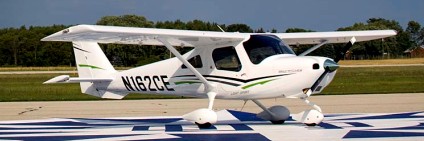
Cessna registered 94 C-162 Skycatchers in 2012. The former S-LSA being a Primary Aircraft, the first such in 20 years. The switch allows it to be sold in Europe once it meets certification standards and allows a higher gross weight there: The S-LSA version was hamstrung by low payload. Sport pilots can still fly it, but must stick with the limitations of the license (no night flying, 10,000 feet max altitude etc.). Price 2012: US$149,900.
Cessna CE-162 SkyCatcher Engine: Teledyne Continental O-200D Time Between Overhauls: 2,000 hr Wingspan: 30 ft (9.14 m) Length: 22 ft 10 in (6.95 m) Exterior Height 8 ft 4 in (2.53 m) Max Ramp Weight: 1,320 lb (599 kg) Max Takeoff Weight: 1,320 lb (599 kg) Max Landing Weight: 1,320 lb (599 kg) Usable Fuel Capacity: 144 lb (65 kg) Typically-Equipped Empty Weight: 830 lb (376 kg) Useful Load: 490 lb (222 kg) Maximum Payload: 490 lb (222 kg) Full-Fuel Payload: 346 lb (157 kg) Maximum Cruise Speed: 118 ktas (219 km/h) Certified Ceiling: 15,500 ft (4,724 m) Takeoff Distance: 1,250 ft (381 m) Landing Distance: 1,040 ft (317 m) Rate of Climb at Sea Level: 890 fpm (271 mpm) Range: 470 nm (870 km) Cabin Height 46.8 in (1.19 m) Cabin Width 44 in (1.12 m) Cabin Length 5 ft 9 in (1.76 m) Seating Capacity 2 Baggage Capacity 22 cubic ft (0.6 cubic m)
In 1977 the Cessna 150 range was replaced on the production lines by the basically similar Cessna Model 152. It was introduced with the intention of providing an airplane that burns 100-octane fuel with lower sound levels, better fuel consumption, and an increased payload. The Lycoming “Blue Streak” O-235 engine produces 81kW / 110-hp at a low 2,500 rpm, plus installation and a one piece upper cowling changes to reduce engine noise and vibration, together with a McCauley propeller of a modified blade section. A marked improvement is the increase in maximum useful load by over 100 pounds to 589. With full fuel, the 152 has 433 pounds of payload for people, baggage, and/or accessories. Contributing to the useful load is an unusable fuel quantity of only 1-1/2 gallons. Cessna’s 69-inch prop teams with the derated engine to produce more efficient climb and cruise performance at a reduced RPM. There’s also a 28 volt electrical system.
The 152 Aerobat is also available. It meets requirements for aerobatic maneuvers of 6Gs positive and 3Gs negative load. The an improvement included a system that injects fuel evenly into all four cylinders for prompt ignition and even combustion. With the 152’s optional fuel tanks, it can cover 794 miles while traveling at 122 mph at 7,000 feet and carrying a useful load of 1,101 pounds. Cessna offered a training version for the first time in 1981; the Trainer included a package price for the most frequently ordered avionics and accessories for training purposes. Main gear tires are 15-6.00 x 6 to reduce frontal area and save weight. Spinning is approved in both the standard and aerobatic models. Between 1977 and 1986 the aircraft was available in four versions; the standard Model 152, the slightly heavier Model 152 II with a package of factory installed avionics and omni-directional light beacon, the further improved Model 152 Trainer with other improvements including an intercom system and transponder, and the Model 152 Aerobat with the same aerobatic capabilities as the 150 Aerobat. When production ceased in 1986, 7,482 Model 152 and Aerobats had been produced including 640 built under licence in France by Reims Aviation.
Reims Aviation in France built 89 FA152 Aerobats for the European market, similiar to the 315 that Cessna produced. Custom Aircraft Conversions of Texas provide a bolt on conversion to tail wheel configuration. The tail cone is beefed up with an inner sleeve, the same main gear, leaf or tube, is retained, and a Scott tailwheel is fitted. It was claimed that the cruise improved by 9 mph and the rate of climb by 65 fpm.
Model 152 Standard Engine: 1 x Avco Lycoming O-235-N2C, 81kW Max Take-off weight: 757 kg / 1669 lb Empty weight: 501 kg / 1105 lb Wingspan: 9.97 m / 32 ft 9 in Length: 7.34 m / 24 ft 1 in Height: 2.59 m / 8 ft 6 in Wing area: 14.59 sq.m / 157.05 sq ft Max. speed: 202 km/h / 126 mph Ceiling: 4480 m / 14700 ft Range: 1158 km / 720 miles
CE-152 Engine: 1 x Lycoming O-235-L2C, 110 hp. TBO: 2000 hrs. Prop: McCauley 2 blade, fixed pitch 69in. Length: 24.1 ft. Height: 8.1 ft. Airfoil: NACA 2412. Wingspan: 33.2 ft. Wing area: 160 sq.ft. Wing aspect ratio: 6.7. Max ramp wt: 1675 lbs. Max take off wt: 1670 lbs. Standard empty wt: 1112 lbs. Max useful load: 563 lbs. Max landing wt: 1670 lbs. Wing loading: 10.5 lbs/sq.ft. Power loading: 15.2 lbs/hp. Fuel capacity (standard): 26 USG/156 lbs. Fuel capacity (optional): 39 USG /234 lbs. Climb rate: 715 fpm @ 67 kts. Climb gradient: 649 ft/nm. Rate of climb @ 8000 ft: 380 fpm. Service ceiling; 14,700 ft. Max speed: 110 kts. Max cruise speed (75% @ 8,000 ft): 107 kt. Range @ max cruise (45 min res): 350 nm. Duration @ max cruise (no res): 4.2 hrs. Cruise @ 65% power @ 8,000ft: 95 kts. Fuel flow @ 65% power @ 8,000ft: 31 pph. Endurance @ 65% power @ 8,000ft: 6.8 hr. Economy cruise (45% @ 10,000 ft.): 80 knots. Range @economy cruise (45 min res): 415 nm. Stalling speed clean: 48 kts. Stall speed flaps down: 43 kts. Turbulent air penetration speed: 104 kts. Fixed undercarriage. Max X-wind: 12 kt. Max range: 690 nm. Takeoff dist. 50 ft obstacle: 1340 ft. Landing dist 50 ft. obstacle: 1,200 ft. Seats: 2. Baggage capacity: 120 lbs.
CE-A152 Aerobat Engine: Lycoming O-235-L2C, 110 hp. TO dist: 725 ft. ROC: 715 fpm. Cruise: 107 kt. Useful load: 589 lb.
In 1957 the model 140 jigs (last used in 1953) were renovated and used for a new tricycle undercarriage trainer, the model 150, first flying in September 1957. Available from 1959 the early model 150s had aluminum tail cones that slope uninterrupted from the wings to the base of their squared tails, and were powered by an 80 hp / 75kW Continental O-200 engine, the installation of dual controls being optional. The airplane was sold in three different versions (standard, trainer, and commuter varying only in deluxe extras), the most elaborate of which, the Commuter, listed for $8,545 in 1959. Just over 2,000 square tails were built 1959 to 1963. At 1,500 pounds, the square tails grossed out 100 pounds lighter than later models. Those 150s cruised faster and farther, climbed better and flew higher than their progeny. In 1961 the main gear was shifted aft two inches, thereby solving an earlier tail heaviness on the ground. The 1964 model marked the beginnings of cosmetic refinements. The 150C introduced a ‘family seat’ for one or two children of 80 kg maximum. The 150 now offered “Omni Vision” as the CE-150D. The airplane’s tail cone was cut down and a rear window was added. The gross weight rose to 1,600 pounds, increasing the useful load by 80 pounds and the luggage compart¬ment capacity by 40 pounds to 120. Accompanying performance changes were lowered speeds, ranges and ceilings. Retaining the vertical tail surfaces of the earlier models this, the rarest of all the 150s, was built for only two years. Two years later, Cessna increased their trainer production five fold, and 150 prices decreased by 10 percent. Electric flaps were added, and the tail was swept back with the introduction of the CE-150F. Accord¬ing to some mechanics, workmanship on the new, cheaper model was sloppy, so that 1966 airplanes require more maintenance. By the next model year, the maintenance problems had been solved, and the panel was redesigned to group the primary instruments in front of the pilot. The top of the panel was squared off, thereby increasing visibility. That airplane was listed for $9,950 in 1967.
Cessna C-150H
In 1970, Cessna introduced the Model A150K Acrobat, a 150 with structural changes to allow aerobatics. It is rated at +6G to -3G, which permits most standard acrobatic maneuvers such as snap rolls, barrel and aileron rolls, Cuban eights, loops, etc. Empty weight of the Aerobat is slightly higher than the standard 150, and speed is reduced by two mph. Total production struggled to reach 1200.
Since then the changes have been largely cosmetic with new spinner, wheel fairings, dorsal fins, and engine types. Identified as models l50F to 150M, built until 1977 and the introduction of the model 152.
Cessna C-150H
The 150’s 100 hp Continental 0-200 A had an original TBO of only 600 hours, but that number had doubled by 1964 and tripled by 1969.
Production at Wichita was boosted by licence production in France, Colombia, and Argentina. All French Rheims built CE-150s had the 130hp Rolls-Rotce Continental engine fitted as standard.
D-EDVR Reims-Cessna F.150 M 1363
Production began in August 1958 and by the time it ended during 1977 a total of 23,836 had been built, this figure including 1,754 built in France by Reims Aviation under the designation Reims F-150.
CE-150 Engine: 1 x Continental O-200-A, 100 hp. Wingspan: 32 ft 8.5 in / 0.97 m Length: 23 ft 0 on / 7.01 m Wing loading: 10.2 lb/sq.ft. Pwr loading: 16 lb/hp. Gross wt: 1600 lb. Empty wt: 990 lb / 458 kg Equipped useful load: 554 lb. Fuel cap: 135/210 lb. Payload max fuel: 344 lb. Range max fuel/75% pwr: 579nm/5.5hr. Range max fuel / 55% pwr: 734 nm/ 7.7 hr. Service ceiling: 12,650 ft / 3850 m 75% cruise: 102 kt / 117 mph / 188 kph 55% cruise: 96 kt. Stall: 42-46 kt. 1.3 Vso: 55 kt. ROC: 670 fpm / 204 m.min Min field length: 1385 ft. Seats: 2.
CE-150 Commuter Engine: 1 x Continental O-200-A, 100 hp. Wingspan: 33 ft 2 in / 10.11 m Length: 23 ft 9 in / 7.24 m Wing loading: 10 lb/sq.ft. Pwr loading: 16 lb/hp. Gross wt: 1600 lb. Empty wt: 1060 lb / 480 kg Equipped useful load: 480 lb. Fuel cap: 135/210 lb. Payload max fuel: 270 lb Baggage cap” 120 lb / 54 kg Range max fuel/75% pwr: 584nm/5.5hr. Range max fuel / 55% pwr: 742 nm/ 7.7 hr. Service ceiling: 12,650 ft / 3850 m 75% cruise: 102 kt / 117 mph / 188 kph 55% cruise: 97 kt. Stall: 42-46 kt. 1.3 Vso: 55 kt. ROC: 670 fpm / 204 m.min Min field length: 1385 ft. Seats: 2
CE-A150 Aerobat Engine: 1 x Continental O-200-A, 100 hp. Seats: 2. Wing loading: 10.2 lb/sq.ft. Pwr loading: 16 lb/hp. Gross wt: 1600 lb. Empty wt: 1076 lb. Equipped useful load: 478 lb. Payload max fuel: 268 lb. Range max fuel/75% pwr: 579nm/5.5hr. Range max fuel / 55% pwr: 734 nm/ 7.7 hr. Service ceiling: 14,000 ft. 75% cruise: 105 kt. 55% cruise: 96 kt. Stall: 42-46 kt. 1.3 Vso: 55 kt. ROC: 670 fpm. Min field length: 1385 ft. Fuel cap: 135/210 lb.
CE-150D Engine: 100 hp Continental O-200-A Wingspan: 33 ft 6 in Length: 21 ft 7 in Height: 7 ft 10 in Wing area: 160 sq.ft Empty weight: 970 lb Loaded weight: 1600 lb Max speed: 125 mph at SL Cruise 75%: 122 mph at 7500 ft ROC: 670 fpm Service ceiling: 12,650 ft Max range: 565 mi at 99 mph
CE-A150L Aerobat Engine: Continental O-200A, 100 hp. Prop: McCauley 69 in. Pwr loading: 16.0 lb/hp. Wing span: 33 ft 4 in. Wing area: 156.9 sq.ft. Wing loading: 10.2 lb/sq.ft. Length: 23 ft 9 in. Height: 8 ft. 0 in. Seats: 2. Baggage cap: 120 lbs. Category: Normal / Utility / Aerobatic. Max wt (aerobatic): 1600 lbs. Empty wt: 1040 lbs. Fuel cap: (std) 26 USG, (Optional aux): 38 USG. Max cruise: 140 mph. Maneuvering speed: 118 mph. Stall: 48-55 mph. T/O dist: 735 ft, (50 ft: 1385 ft). Ldg dist: 445 ft (50 ft: 1075 ft). ROC: 670 fpm. Service ceiling: 14,000 ft. Endurance / Range: (std fuel) 6.1 hr / 580 sm, (Optional aux fuel) 9.4 hr / 900 sm. Design load: +6 / -3 G.
CE-A150M Aerobat Engine: Continental O-200-A.
Reims Cessna F.150 Commuter
Reims Cessna F.150L
Reims Cessna FRA.150L
FRA 150L Aerobat Engine: RR-Continental, 130 hp. Cruise: 100 kt.
The Cessna Model 120 prototype, first flown on 28 June 1945, was a two-seat cabin monoplane with a strut-braced high-set wing. The structure was all-metal, except for fabric-covered wings, the landing gear was of fixed tailwheel type introducing cantilever spring steel main units, and the enclosed cabin provided two seats side-by-side and dual controls as standard. Powerplant a 80 hp / 63kW Continental engine, and the higher power of this unit by comparison with competing types, plus a low price tag, ensured that Cessna gained an unexpectedly large measure of sales success. New for Cessna were the all-metal fuselage and spring steel undercarriage designed by Steve Wittman of EAA fame. The wing was fabric covered and featured rounded wingtips.
The Model 120, a basic aircraft, was complemented by a ‘de luxe’ Model 140 which provided as standard manually actuated trailing-edge flaps, extra cabin windows behind the doors and a full electrical system. Cessna’s 140 was a deluxe version of the 120 model when both debuted in 1946. With a few cabin refinements, the 140 had a starter, generator, battery, and manually operated plain-hinge flaps. Both were powered by the Continental C85-12 of 85-hp, but the 140 could accept the 90-hp Continental.
CE-140
A total of 2,164 120s were produced by Cessna before this model was phased out in 1948. The side-by-side two-seat 140 continued in production with a choice of the 85-hp or 90-hp engine.
CE-140A
Introduced in 1949 as the 140A, the 90-hp version had a metal skin in place of fabric covering on the wings. It featured single wing struts in place of the earlier “Y” struts. More than 5,500 140s and 140As were built before the series was permanently discontinued in 1950.
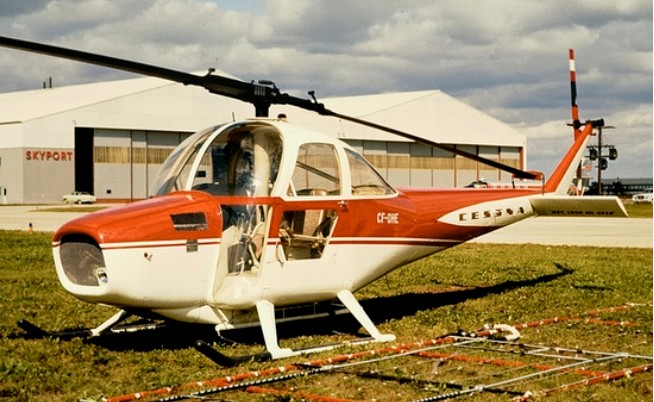
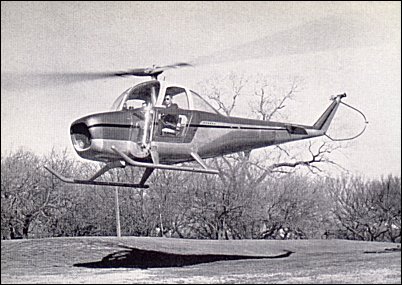
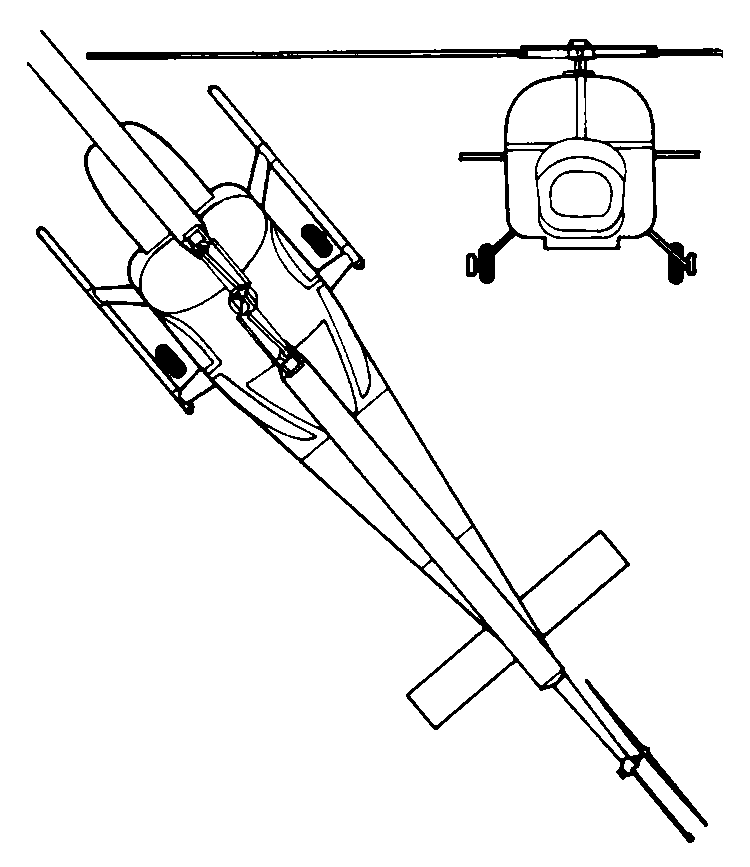
Cessna acquired the patents and rights owned by Seibel, Seibel himself becoming chief designer of the Cessna Helicopter Division. Shortly after its 1952 acquisition of the Seibel Helicopter Company, Cessna undertook development of a light helicopter it designated the CH-1. A test vehicle first flew in July 1953, with a refined model – the CH-1 – airborne a year later. The CH-1 was of all-metal construction, and the two-bladed rotor was designed by Seibel. The rotor blades are attached to the hub by light-weight stainless steel L-shaped angles, which carry the blades’ centrifugal load: the short leg takes up the loads due to blade weight, the long leg the bending load caused by drag. As in the Seibel helicopter, this assembly not only provides angle movement for changing blade pitch but also eliminates trunnions, thrust bearings, hinges, etc. The 260hp Continental supercharged engine is placed in the front of the fuselage driving the two-bladed main and anti-torque rotors via a shaft which passed between the two forward seats. Seating was provided for a pilot and up to three passengers in a cabin.
The first prototype flew in July 1953, receiving FAA type certification in 1955. In 1955 a CH-1 successfully landed on, and took off from Pike’s Peak, Colorado, at a height of 4300 metres. By May 1957 the Skyhook held three world altitude records in several weight classes by climbing to close on 30,000 feet.
Cessna CH-1 Skyhook
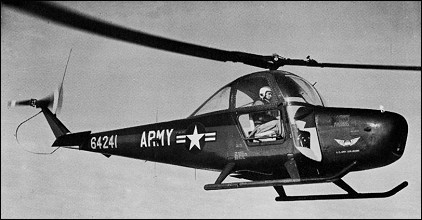
In 1957 the Army purchased ten examples of the advanced commercial model CH-1B for test and evaluation. These machines, serials 56-4236 through -4245, were allocated the designation YH-41 Senecas. Capable of a 90 knot cruise, it could range over 350 miles with an auxiliary tank and lift 800 lbs on the sling.
The Army’s evaluation of the YH-41 showed it to be an excellent high altitude performer, though the type’s limited payload and rather complex maintenance requirements precluded its large scale procurement by the Army. The ten YH-41’s were eventually relegated to miscellaneous flight test duties, most having to do with high-altitude helicopter operations, and in 1962 the surviving aircraft were redesignated NH-41A’s.
In 1960 the Skyhook was introduced to the civil market, becoming the first helicopter to receive single pilot IFR approval from the FAA. Production began in 1961 with three CH-1A (four seat) versions being offered at the same price, US$79,000.00. The price, US$20,000.00 more than Cessna’s most expensive fixed wing single at the time, proved the stumbling block. Competing Hiller E4 and Bell 47J models were available US$10,000.00 cheaper. After several million dollars and a decade of development, Cessna only sold 23 before ceasing production in 1962 and, in an unprecedented move, purchased them all back and scrapped them; a move followed by the United States Army shortly therafter. Only one survives, at the United States Army Museum at Fort Rucker, Alabama.
The final pre-war Cessna four-seat models were the C-145 and C-165 Airmaster. By the time their manufacture ceased in 1941, production had comprised 34 C-165s and three of the C-165D, powered respectively by 123kW and 130kW versions of the Warner Super Scarab.