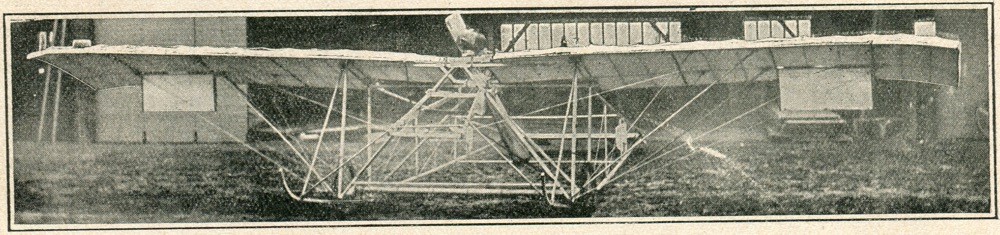
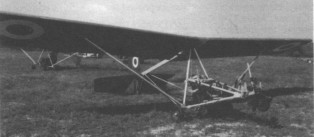
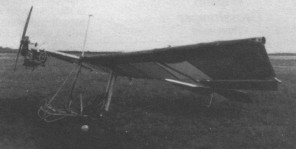
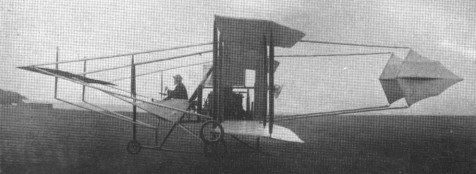
The Collyer-Lang “Otasel” single-seater monoplane tested at Brooklands between November 1910 and February 1911, only achieving brief hops. It was a pusher with twin rear booms, with the pilot seated ahead of the wings between the two front skids. Inset single acting ailerons provided lateral control, and twin rudders within the booms and a tail mounted elevator comprised the other control surfaces. The engine was a 30hp WLA (Adams) motor.
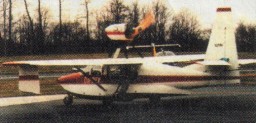
The Dipper Amphibian is a two-seat amphibian of metal and glassfibre construction (first flown 1982). A plans only design, not in production.
Reports that the boat hull of the Aqua II was used in the homebuilt Collins W-7 Dipper, flown August 28, 1982 as N25WC, are incorrect. The Collins Dipper project was converted from a damaged Cessna 150 and had a new boat hull fitted below the fuselage. The boat hull was designed by the Aqua designer Meredith Wardle and was about 92% in size of the Aqua II boat hull.
Engine: Lycoming O-360, 180 hp. HP range: 150-180. Speed max: 124 mph. Cruise: 120 mph. Range: 520 sm. Stall: 48 mph. ROC: 1400 fpm. Take-off dist: 600 ft. Landing dist: 800 ft. Service ceiling: 18,000 ft. Fuel cap: 39 USG. Weight empty: 1060 lbs. Gross: 1760 lbs. Height: 9.33 ft. Length: 25.33 ft. Wing span: 33.33 ft. Wing area: 160 sq.ft. Seats: 2. Landing gear: retractable nose wheel.
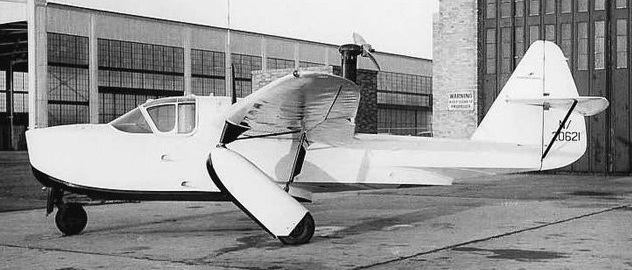
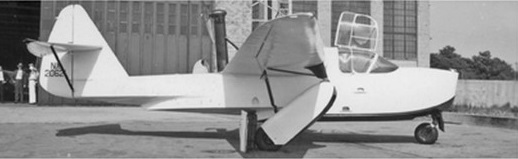
Spencer and ex Sikorsky engineer Vincent A. Larsen designed the single engine SL-12C amphibian in 1969. It was a two-place, high wing monoplane. The main wheels located in rearward-retracting wing floats; motor in hull drove the prop on a shaft above the fuselage.
First flying in May 1939 registered NX20621, piloted by Percy Spencer, flight tests exposed so many problems with the design and construction that the plane was dismantled after logging 10 hours, and the company reorganized as Colgate-Larsen.
Colgate-Larsen Aircraft Corporation succeeded Spencer-Larsen Aircraft Corporation around 1940, continuing its work at Amityville, Long Island, NY, on novel-design small four-seat amphibian flying-boat, the CL-15 (formerly SL-15).
Spencer leaves Spencer-Larsen in September 1940 and starts the work on his own S-12 Air Car amphibian design.
Engine: Menasco D-4, 150 hp Wingspan: 40 ft Length: 27 ft 10 in
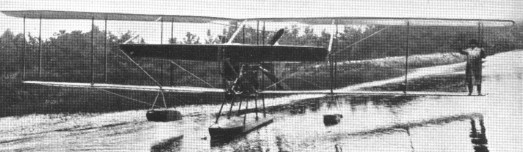
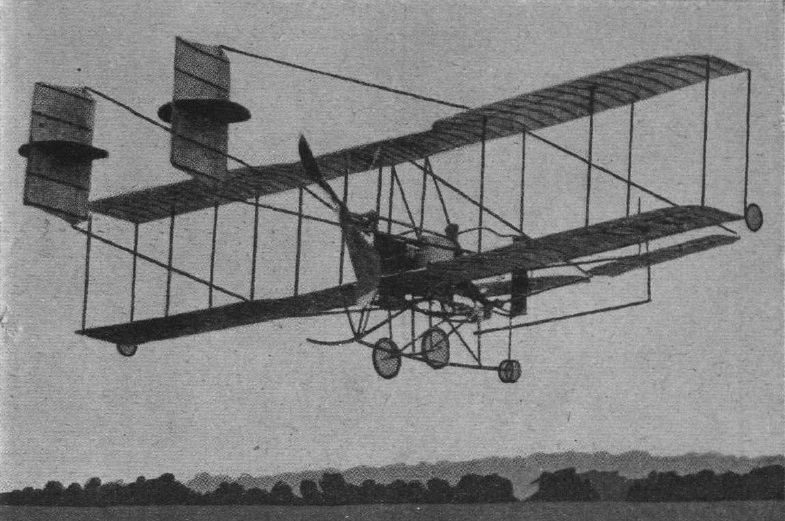
Using personal funds and a borrowed airship shed, Cody built a huge sturdy pusher biplane of 52 foot span, weighing 1,200 pounds. Size and strength were Cody trademarks; he was observed tying knots in bracing wires with his bare hands and was the only one able to spin the biplane’s 50 hp V8 to life. A reporter took one look and dubbed it “the Flying Cathedral.” The nickname stuck. While he had seen pictures of American and French machines, Cody saw no reason to alter his kite with an engine concept, which, by the way, he carried entirely in his head. There were no blueprints or lists of materials because Cody had never learned to read and write. (He eventually mastered a huge “S.F. Cody” for official paperwork, holding the pen like a trowel.) The finished product included a shock-mounted landing gear with steerable tailwheel, ground adjustable wing camber and propeller pitch plus ailerons, this being the first aircraft to use separate surfaces for banking. Cody did not invent ailerons, but he was the first to make practical use of them. Oddly enough, he abandoned them later in favor of wing warping. In the summer of 1908, Cody’s aircraft was towed to Laffan’s Plain, a rough, rolling pasture surrounded by trees. One up¬hill run to test the controls left a 234 foot gap in the tire tracks, a greater distance than the Wright’s first hop, but Cody dismissed it as “just a jump.” On October 16, with reporters watching, he gave it full throttle, rose quickly to 40 feet and flew 1,390 feet, crashing when he dragged a wingtip in an attempt to avoid some trees. The big man emerged from the pile of bamboo and linen bruised but smiling. The illiterate genius had become the first man to fly an airplane in England.
Winner of the 1912 War Office military trials at Salisbury Plain was Cody’s Cathedral, which collected a total of £5,000 prize money, but was clearly of no use to the newly formed Royal Flying Corps and was not put into production.
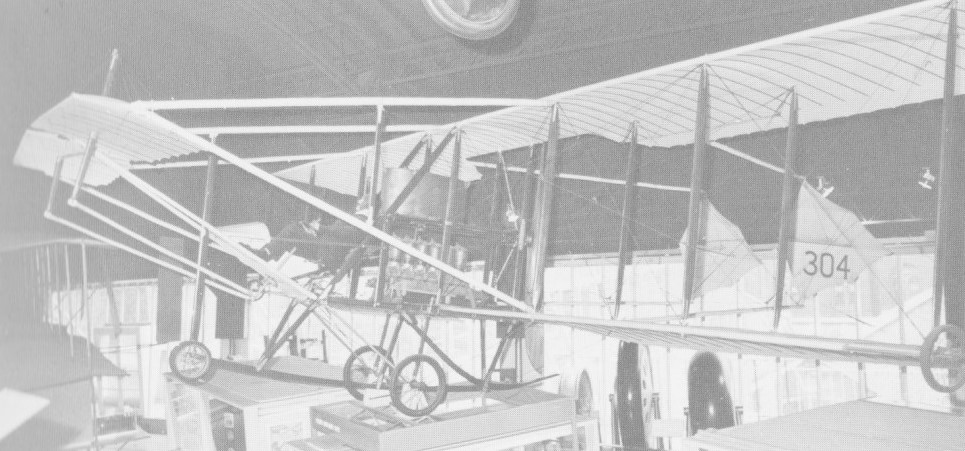
One example, built in 1912 at Farnbough, was similar in configuration to the 1911 Biplane and was again evaluated for military application. It was evaluated by the Army at Cambridge in September 192 and subsequently purchased. The Army number 304 was allocated.
304 at Science Museum, South Kensington
It was little flown and passed to the Science Museum in 1913.
Engine: Austro-Daimler, 120 hp. Span 43 ft Length 34 ft. 4 in Wing chord 5 ft. 6 in Wing area 430 sq. ft Weight, empty about 1,900 lb Weight loaded 2,680 lb Max. speed 73 mph. Stalling speed 48.5 mph Take off run 960 ft Range 336 miles.
Army 304 Engine: Austro-Daimler, 120 hp. Span 52 ft Length 44 ft Weight loaded 2,900 lb Max. speed 65 mph.