Cody Army Aeroplane No.1 / Cody 1 / Cody II / Cody III

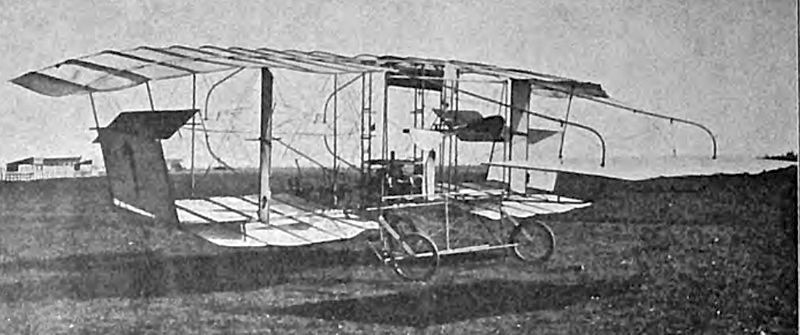
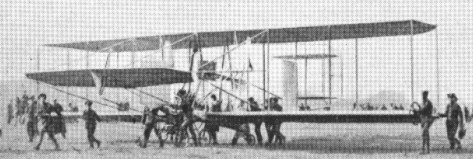
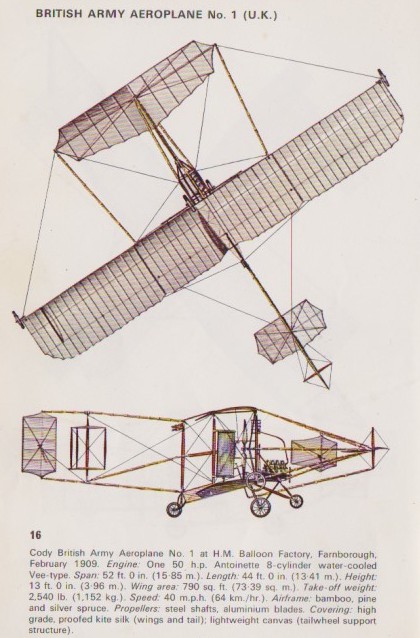
The next step was to build a full size piloted version of the glider. In December 1907, Cody began to build his first biplane at Farnborough, and since Nulli Secundus was rebuilding (to emerge as Nulli Secundus II the following summer) he was allowed to use her 50 h.p. Antoinette engine to power the machine of bamboo and wire. He arranged it to drive two pusher propellers; the result looked something like the Wright biplane.
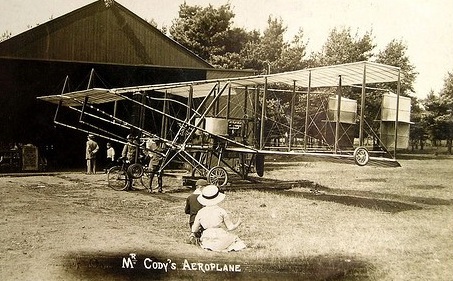
It was in this aircraft that Cody made his first hops in May, 1908, on Laffan’s Plain. On October 5 or 16th 1908 he made the first official flight in a piloted aeroplane in Great Britain a measured distance of 496 yards at a height of 50-60 ft over Laffan’s Plain (it lasted 37 seconds), Farnborough, and this was the first powered aeroplane flight in Britain; but Cody was American at the time, and did not take out naturalisation papers until 1909.
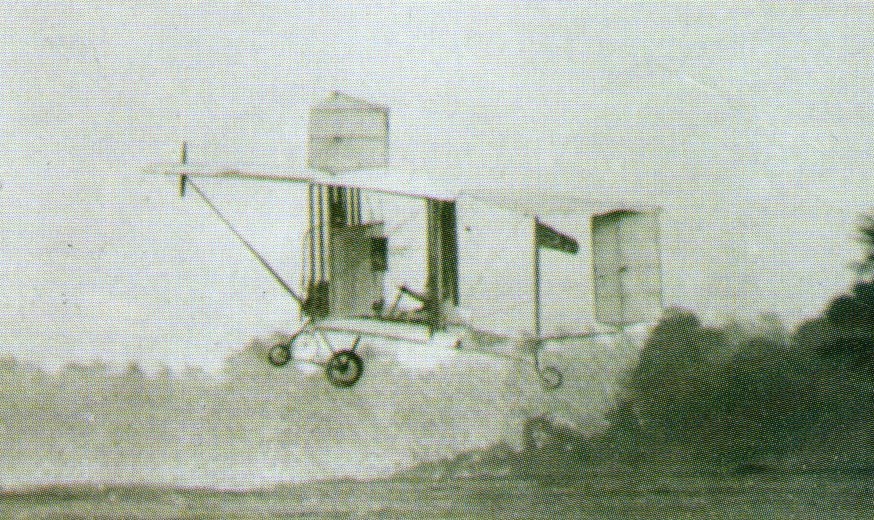
Cody Army Aeroplane No.1A

Cody 1 – Initial Prototype; fitted with Antoinette 50 hp. Later, with ailerons
Cody 2 – Revised Cody 1 airframe
Cody 3 – Cody 2 prototype fitted with ENV Type F engine of 60 horsepower.
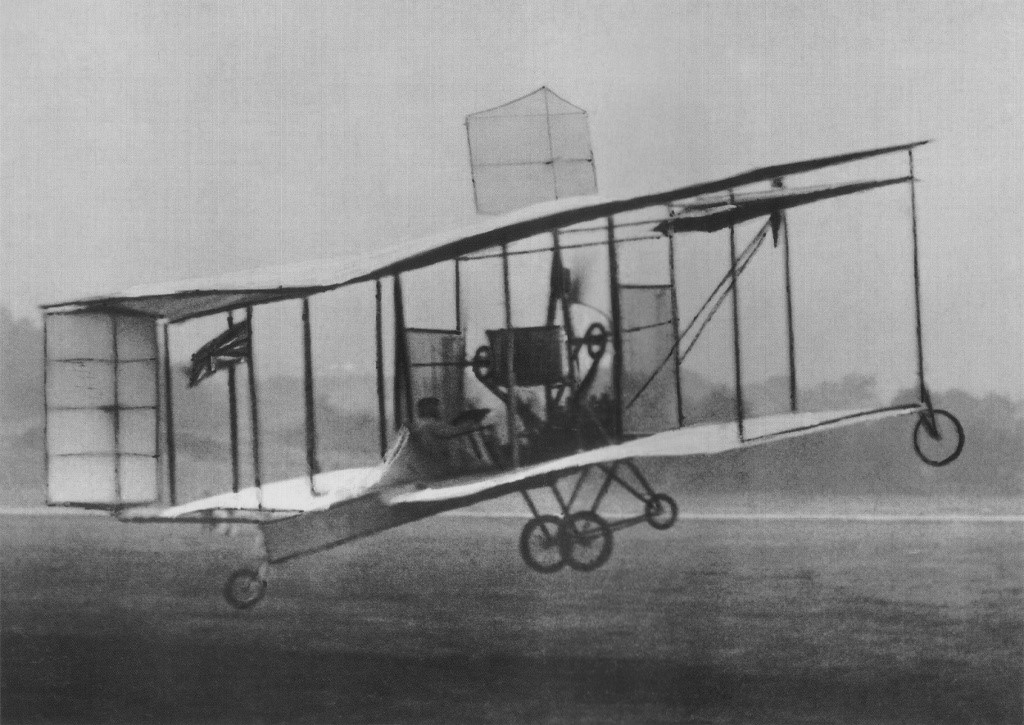
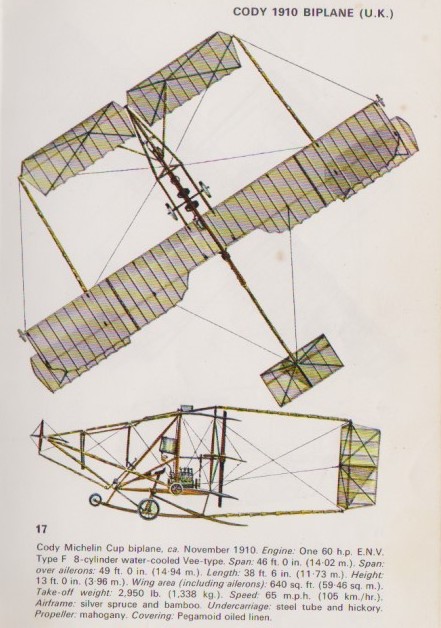
The Cody II was a Michelin Cup machine in which he flew 4 3/4 hours on December 31, 1910 to win the trophy. Clear differences to the earlier machine were the one large propeller installed at the rear in place of the two forward propellers and a 60 hp Green engine fitted in place of the ENV.
Cody II

The Michelin Cup machine in which he flew 4 3/4 hours on December 31, 1910 to win the trophy. Clear differences to the earlier machine were the one large propeller installed at the rear in place of the two forward propellers and a 60 hp Green engine fitted in place of the ENV.
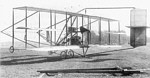
1910 Cody No. II

Gallery

Engine: 1 x Antoinette, 50 hp
Length: 38.48ft (11.73m)
Wingspan: 52.00 ft (15.85m)
Height: 13 ft (3.96m)
Maximum Take-Off Weight: 2,950lbs (1,338kg)
Maximum Speed: 65mph (105kmh; 57kts)
Accommodation: 1

1910 Cody No. II
Span: 46′
Length: 38’6″
Cobioni-Lazzaroni Monoplane

Henri Cobioni quit motorcycle racing in September 1909 and built this little monoplane at his home in Moutier/Münster, Switzerland. He had to collect money for the engine, which was installed in about March 1910. Flight testing took place at the “Allmend” of Thun, where Cobioni could make a few hops, but finally crashed the machine in June 1910. After that he entered the Caproni school and qualified for the Swiss FAI-brevet No.15 in August 1911. The construction of this first monoplane is credited to Eng. Emilio Lazzaroni from Milano, who together with Cobioni patented the machine and founded the company “La Société Jurassiene d’Aviation”, which was quickly dissolved after the Cobioni’s crash.

Cobianchi Brescia

Mario Cobianchi was a Bolognese designer and draftsman, who had Sicilian-born engineer Franz Miller build his 1909 Brescia biplane, powered by a 100 hp Miller engine. It was originally intended to have both a helicopter-like propeller on the top wing and a pusher propeller in the rear.

Even after being modified several times, it never did get off the ground except for a few brief hops. After being strengthened and modified from its original state, it was entered in the Circuito Aereo Internazionale di Brescia, Brescia, Italy, September 8th – 20th 1909, but it still didn’t fly.

Cobalt Co50 Valkyrie / Centauri Aircraft Co Co50 Valkyrie

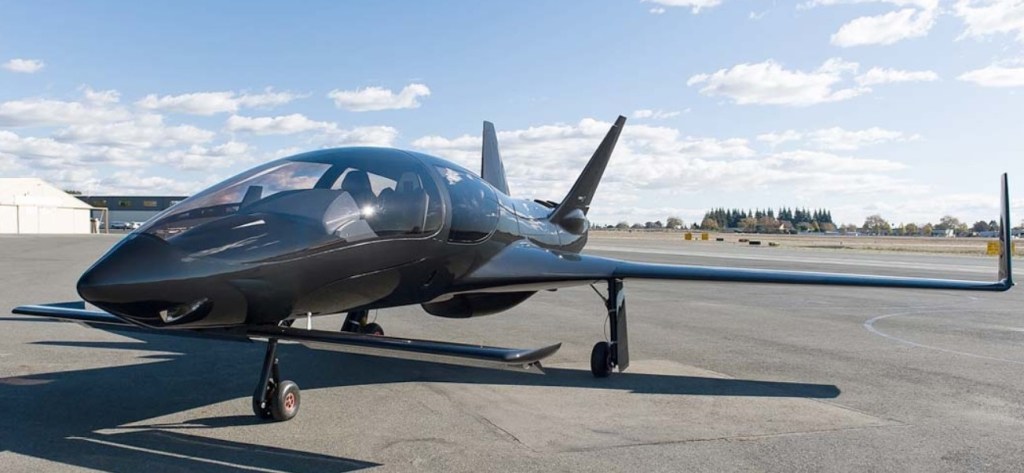
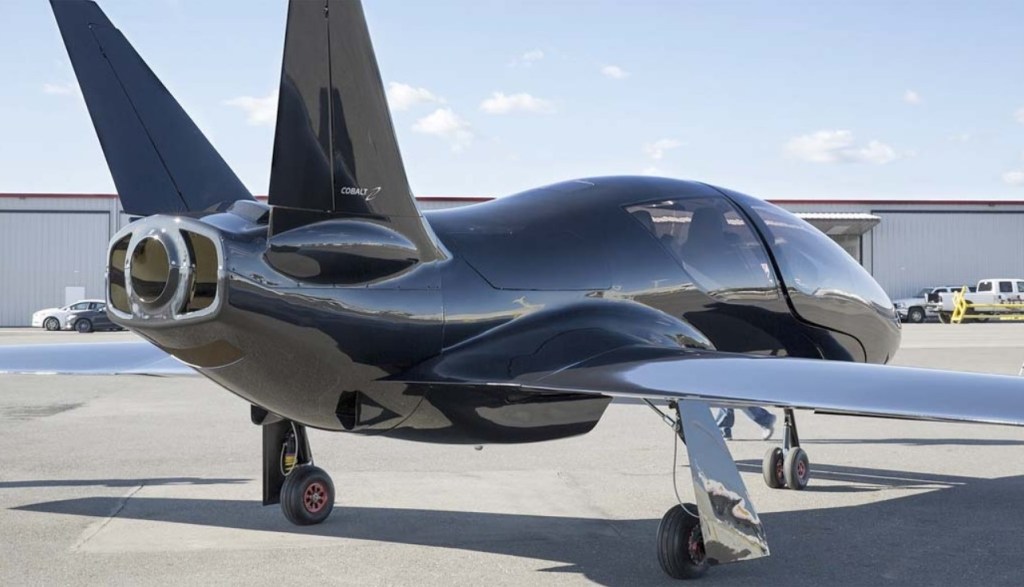
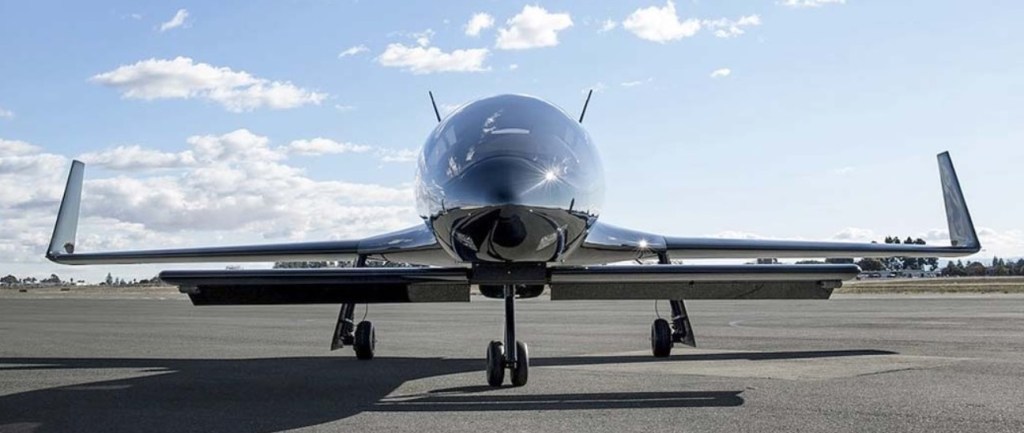
The Cobalt Co50 Valkyrie is a single-engine, four to five-seat homebuilt aircraft, arranged in a canard, pusher configuration.

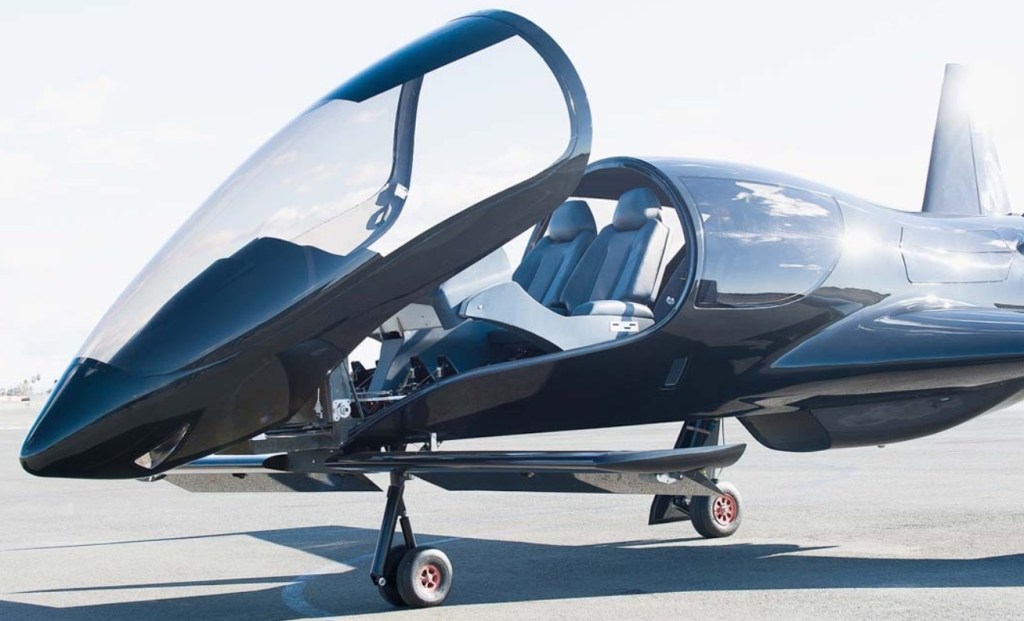
The composite design incorporates retractable landing gear, a pusher engine configuration, a canard, twin vertical stabilizers and automatic airbrakes. A ballistic parachute is provided as an option. Passenger entry is by a large forward fold down door.

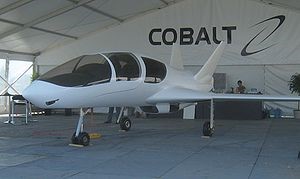
incomplete prototype

The airframe is made of AGATE carbon composites, Carbon-Nomex material is used in the design of rudders and flaps, the design of retractable landing gear is made of aluminum and steel alloys, Hartzell variable pitch propeller blades are aluminum.

First flown in January 2015, the light aircraft was intended for private ownership and was initially being developed by Cobalt Aircraft of San Francisco, California, United States, but the company ceased operations in July 2018 and the design was then being developed by the Centauri Aircraft Company.

The second prototype Co50 was crashed in September 2017 following a loss of aileron effectiveness in flight on a flight test at Castle Airport. The pilot was landing the aircraft using rudder and thrust only when lift was lost at an altitude of about ten feet. The aircraft impacted the ground, the right main landing gear leg separated and the wing was damaged. The pilot was not hurt.

Initially the Co50 was to be sold as a kit for amateur construction, but the manufacturer intended to eventually achieve type certification. Certification was unlikely to occur before 2018, not least due to the electronics Cobalt has chosen being untested for aircraft use.

Reportedly seven were built.

Co50
Engine: 1 × Continental TSIOF-550-D, 350 hp (260 kW)
Wingspan: 30 ft (9.14 m)
Length: 30 ft (9.14 m)
Height: 10 ft (3.05 m)
Max takeoff weight: 3,417 lb (1,550 kg)
Fuel capacity: 109 U.S. gallons (410 L; 91 imp gal)
Cruise speed: 250 kn (290 mph, 460 km/h) maximum cruise at FL250
Range: 1,434 nmi (1,650 mi, 2,656 km) economy cruise at FL220
Service ceiling: 25,000 ft (7,600 m)
Time to altitude: 12 minutes to 10,000 feet
Crew: one
Capacity: three or four passengers

Coavio srl – Italia DF 2000

2017 T4 and 2024 T3 aluminium-construction entirely spiked and stuck. Rivets are used only in the no-structural joints.

DF 2000
Stall: 32 kt / 37 mph / 60 kmh
Cruise: 105 kt / 121 mph / 195 kmh
VNE: 130 kt / 149 mph / 240 kmh
Empty Weight: 285 kg / 628 lbs
MTOW Weight: 450 kg / 992 lbs
Glide Ratio: 12
Take-off distance (50ft obstacle): 390 ft / 120 m

Coates SA.II Swalesong

The Coates Swalesong SA.II was designed and built by J.R.Coates. A low-wing monoplane with tricycle undercarriage, two-seater, side-by-side, under a rearward sliding canopy. It was of all-wood construction.

The prototype, G-AYDV, c/n SA.II, PFA.1353, made its first flight from Panshanger, Rush, Green, UK, on 10 September 1973, powered by a converted Lycoming PC-60 GPU.

Wingspan: 26.05 ft
Length: 19.00 ft

Coandă 1910 Thermojet

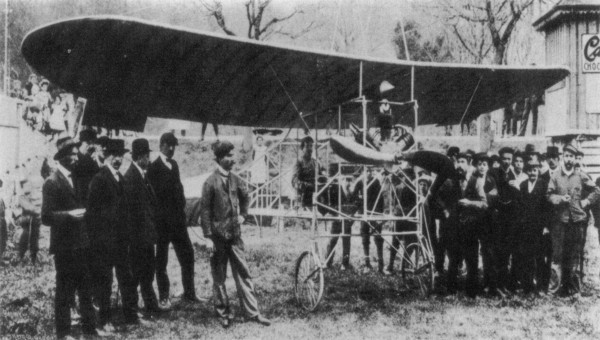
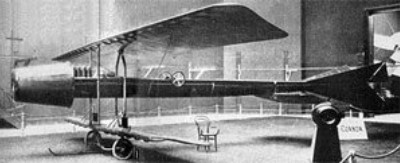
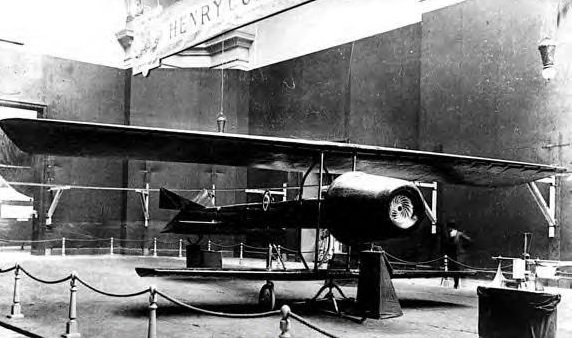
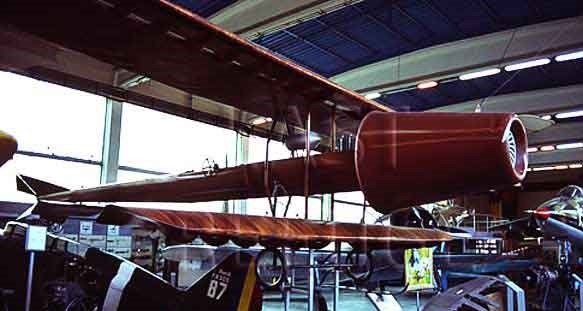
With the support of the engineer Gustave Eiffel and the scholar Paul Painlevé, who helped him to obtain the necessary authorizations, Henri Marie Coandă made preliminary aerodynamic experiments and built, in the body shop of Joachim Caproni, the first jet-powered aircraft, actually a jet plane. This invention by Romanian inventor Henri Coanda amazingly appeared in 1910 as the world’s first jet-propelled aircraft. The “Coanda 1910”, as it came to be known, was showcased at the Paris Second International Aeronautical Exhibition and was a technological marvel for its time. Before its time, the Coanda design fell into relative obscurity.

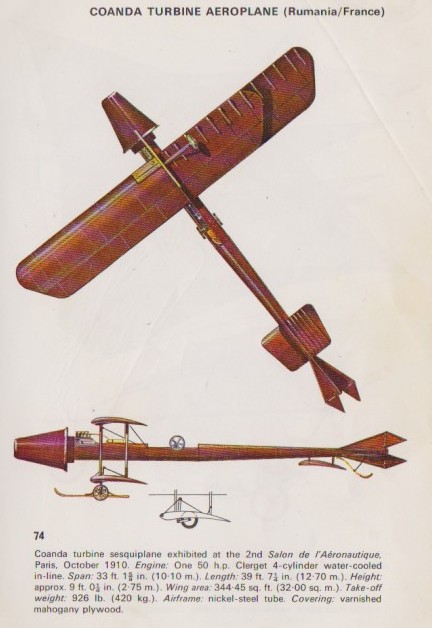
The Coanda 1910 was of a traditional aircraft design of a sesquiplane layout, with front-mounted engine. The “jet” engine was mounted at the extreme front of the thin fuselage, made up mostly of wood covered over with fabric (along with struts and wiring) and possibly some metal added to the wings. The pilot was to sit behind the engine in an open-air cockpit with very little protection. The undercarriage was fixed just under the lower wing and featured two wheels and complimented with a landing skid. The tail section ended in a cruciform-type arrangement.

In terms of its “jet” powerplant, the Coanda 1910 featured a combination of piston engine and jet engine power – relying on internal combustion. The traditional combustion engine provided power to a compressor to generate compressed air. The compressed air was then mixed with fuel, ignited and forcibly extracted from special chambers mounted on either side of the fuselage. The resulting force of the expelled reaction was to provide forward momentum for the aircraft.

The Coanda 1910 achieved a single short flight in an accidental way. While ground testing the engine with Henri Coanda at the controls, the powerplant forced the plane airborne for a short time. As Henri himself was not a pilot by trade, he quickly lost control of the aircraft and crashed to the ground throwing him clear of the burning wreckage (though not without slight injuries). Despite the loss of the machine, Henri noted an effect occurring with the expelled gases and how they seemed to conform to the sides of his aircraft. This observation alone would lead Henri to research that would span decades more in what would eventually culminate in the “Coanda Effect”.

It is said that Gustave Eiffel told him: “Young man, you were born 30 years too early!” In the end, Henri Coanda’s 1910 invention was never furthered into practical use.

replica

Engine: 1 x 4 cylinder in-line water-cooled, 50hp, driving a compressor for 450 lb of thrust.
Length: 41.01ft (12.5m)
Width: 33.79ft (10.30m)
Accommodation: 1
Maximum Take-Off Weight: 926lbs (420kg)