Vought TBU / Consolidated TBY Seawolf

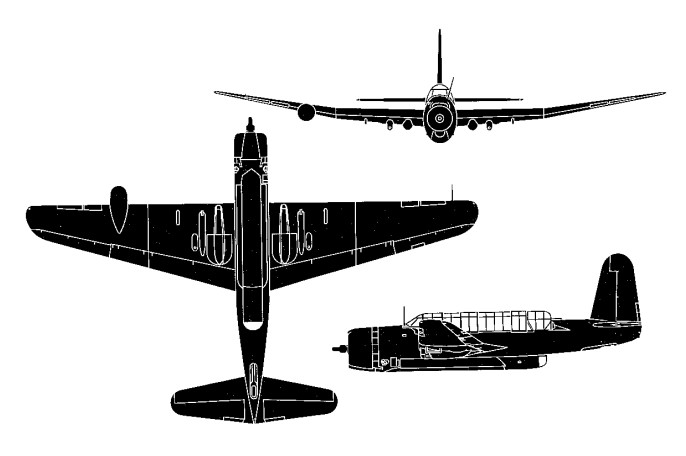
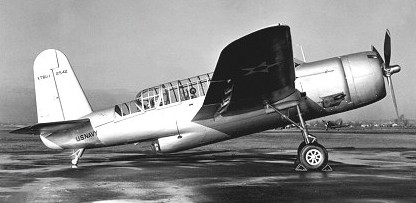
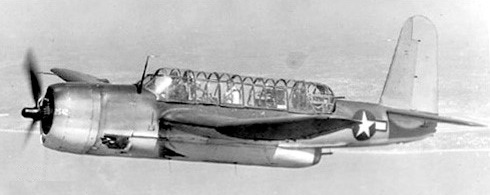
First flying on 22 December 1941 as the Vultee XTBU-1 2542 as a competitor and contemporary to the very similar TBF Avenger, the Sea Wolf was subject to substantial delays.

Vought XTBU-1 2542

A United States Navy torpedo bomber, because of more vital Vought F4U contracts, production of 180 units was assigned by the government to Vultee (Consolidated) in Sep 1943 as the TBY-2.

The type never saw combat; only 180 of the type were built before cancellation.

TBY-2
Engine: 1 x P&W XR-2800-20, 1850hp
Wingspan: 17.36 m / 56 ft 11 in
Length: 11.96 m / 39 ft 3 in
Height: 4.73 m / 15 ft 6 in
Useful load: 5743 lb
Max. Speed: 492 km/h / 306 mph
Cruise: 165 mph
Stall: 77 mph
Ceiling: 8296 m / 27200 ft
Range: 2422 km / 1505 miles
Armament: 4 x 12.7mm + 1 x 12.7mm machine-guns, 907kg of bombs
Seats: 3

Consolidated P-30 / PB-2 / A-11

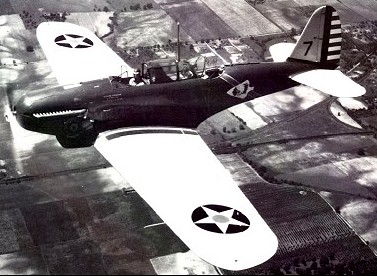
By May 1932 the service had decided to explore the basic Y1P design further. The Y1P-27 and Y1P-28 variants, to be powered by Pratt & Whitney Wasp engines of different marks, were seriously contemplated but never built. Four 503kW supercharged Curtiss V-1710-57 Conqueror-powered service-test machines were completed as P-30s and later machines were redesignated PB-2 (for pursuit, biplace). The basic design, after being allocated several designations, became the principal USAAC two-seat fighter between world wars.

By 1934, flight tests of the P-30 were under way, the aeroplane carrying an officer/pilot and enlisted man/gunner. Gunners found their semi-open perch aboard the P-30 uncomfortable and, at high altitude, very cold. Heavy clothing, required to keep the gunner from freezing, seriously impaired his effectiveness. For this and other reasons, the P-30 was never effective at high altitude, the very regime where USAAC doctrine called for it to fly and fight. Development of the parallel A-11 attack aircraft was suspended after delivery of four airframes and some airmen argued that the P-30, too, had reached the limit of its usefulness. But on 6 December 1934, the Army placed a firm contract for a production batch of 50 P-30As and made plans for the 1st Pursuit Group at Selfridge Field, Michigan, to operate the type. The operational machines received the 522kW Curtiss V-1570-61 powerplant. They became a familiar sight in war games at USAAC aerodromes during the 1930s.
A single P-30A was built as a single-seater and competed without success in the 1936 fighter competition which produced the Curtiss P-36 Mohawk. Shortly after the P-30A entered service, the ‘pursuit bi-place’ category was closed, surviving P-30 airframes becoming PB-2s and the single-seat P-30A becoming the PB-2A. This heavy and heavily-armed fighter was to take in one further designation in an unbuilt variant, XP-33, before passing into history. A few PB-2As (former P-30As) are thought to have remained in service as late as the eve of Pearl Harbour.

P-30A
Engine: 522kW Curtiss V-1570-61
Take-off weight: 2560 kg / 5644 lb
Empty weight: 1953 kg / 4306 lb
Wingspan: 13.39 m / 43 ft 11 in
Length: 9.14 m / 29 ft 12 in
Height: 2.51 m / 8 ft 3 in
Wing area: 27.59 sq.m / 296.98 sq ft
Max. speed: 442 km/h / 275 mph
Cruise speed: 346 km/h / 215 mph
Ceiling: 8530 m / 28000 ft
Range: 820 km / 510 miles
Armament: 2 x 7.62mm fixed machine-guns + 1 x 7.62mm machine-gun in the rear
Consolidated Y1P-25 / Y1A-11

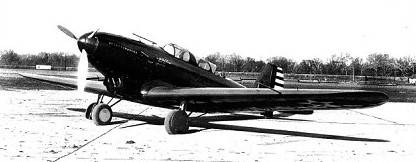
The P-25 was externally almost a replica of the Lockheed P-24 but slightly larger and heavier. One of Robert Wood’s design engineers moved from Lockheed to Consolidated and retained the goal of creating a fast, two-seat tandem fighter to replace the Berliner-Joyce P-16. The US Army Air Corps in 1932 was sufficiently interested to order two Consolidated Y1P-25 airframes, although the second was soon given the attack function and redesignated Y1A-11. A cantilever low-wing monoplane of all-metal construction (unlike its partly wood Lockheed forbear), the Y1P-25 had retractable landing gear, the familiar Curtiss Conqueror engine, and a rearward-facing machine-gunner. The engine was supercharged, making possible a top speed of 398km/h at 4500m.
First flown in 1932, the Y1P-25 crashed on 13 January 1933 and was written off. The Y1A-11 was also lost that same month. But in its short test life the Y1P-25 had shown sufficient promise for the USAAC to seek further development. Indeed, by May 1932 the service had decided to explore the basic design further. The Y1P-27 and Y1P-28 variants, to be powered by Pratt & Whitney Wasp engines of different marks, were seriously contemplated but never built. Four Conqueror-powered service-test machines were completed as P-30s (see separate entry) and later machines were redesignated PB-2 (for pursuit, biplace) (see separate entry). The basic design, after being allocated several designations, became the principal USAAC two-seat fighter between world wars.

Take-off weight: 2318 kg / 5110 lb
Empty weight: 1763 kg / 3887 lb
Wingspan: 13.36 m / 43 ft 10 in
Length: 8.94 m / 29 ft 4 in
Height: 2.62 m / 8 ft 7 in
Wing area: 27.87 sq.m / 299.99 sq ft
Max. speed: 398 km/h / 247 mph
Cruise speed: 290 km/h / 180 mph
Ceiling: 8230 m / 27000 ft
Range: 933 km / 580 miles
Armament: 2 x 7.62mm fixed machine-guns + 1 x 7.62mm in the rear

Consolidated TW-8 / PT-1 Trusty

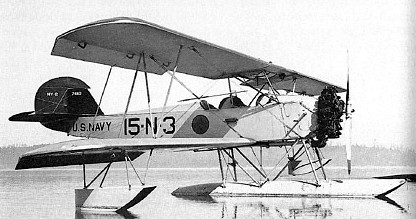
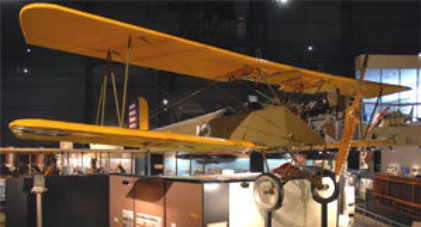
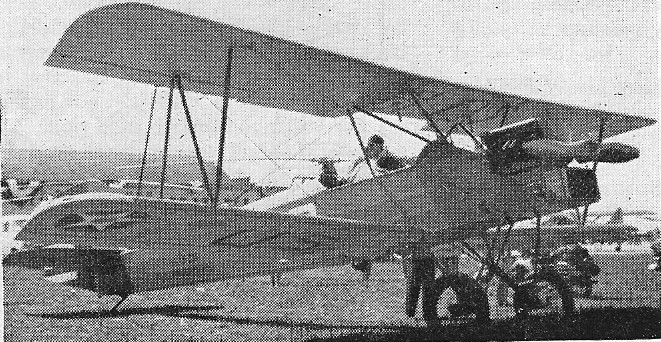
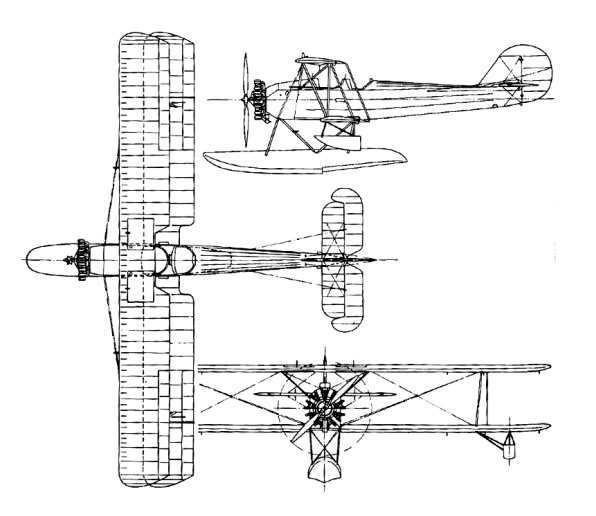
Improvements to the Dayton-Wright Company TW-3 design continued and included the removal of the engine cowling (for improved forward cockpit visibility) and a redesigned fuselage in a slimmer form with tandem instructor/student seating (this model being known as the “Camel” for the visible bump appearing between the two seating areas). The Camel was evaluated under the (unofficial) designation TW-8 and accepted into service as the PT-1 with 221 being delivered beginning 1924 and replacing the TW-3’s in service. The PT-1 represented the first aircraft purchase of the Army Air Service since the closing shots of World War One.

The PT-1 was a biplane aircraft with a simple two-wheel undercarriage, an engine mounted at the front of the design, a traditional tail section and twin side-by-side seating for instructor and student. The aircraft featured a choice of a Clerget or Le Rhone engines. The PT 1 basic trainer included innovations like a fuselage framework from welded chrome molybdenum steel. Because of it was so sturdy and dependable, it was nicknamed “Trusty”.

The PT-1 would eventually be replaced itself by the Consolidated PT-3 from 1928 onwards.

Hollywood’s Paul Mantz owned PT-1E A.C.26-233 two-seater which appeared in the film ‘One Man Mutiny’.

PT-1E A.C.26-233

Consolidated PT-1 Trusty
Engine: 1 x Wright-Hispano E 8-cylinder water-cooled Vee, 180hp.
Length: 27.76ft (8.46m)
Width: 34.45ft (10.50m)
Height: 9.84ft (3.00m)
Empty Weight: 1,806lbs (819kg)
Maximum Take-Off Weight: 2,577lbs (1,169kg)
Maximum Speed: 92mph (148kmh; 80kts)
Cruising speed: 68 kt / 126 km/h
Maximum Range: 350miles (563km)
Rate-of-Climb: 690ft/min (210m/min)
Service Ceiling: 13,448ft (4,099m; 2.5miles)
Accommodation: 2

PT-1E
Engine: Wright V-720, 180 hp

Consolidated TW-3

The Dayton-Wright Company TA-3 (designated with an “A” for its air-cooled engine operation) was delivered by request with an uprated Le Rhone engine of 110 horsepower. Still further evaluation models were ordered, this time with the requested Wright-Hispano I V-8, 150 horsepower engine of increased power (designated TW-3 with the “W” standing for its water-cooled engine process) finally culminating in an official order by the USAAS.
Production rights for the trainer were secured by the newly-created Consolidated Aircraft Company (established by Reuben Fleet of the Gallaudet firm) as General Motors was reviewing their commitment to aircraft production in a post-war world and would eventually shut down operations at Dayton-Wright altogether. The TW-3 was delivered by 1923 and became the first notable variant of the “Trusty” production line.

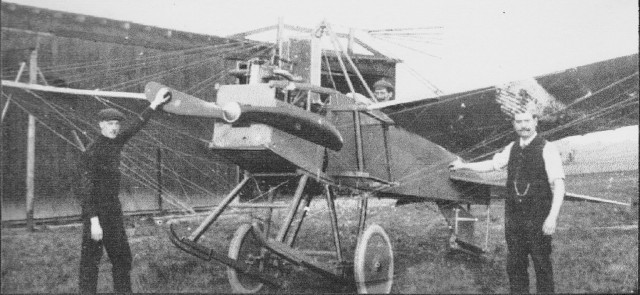
Condor Flugzeugwerft 1912 biplane

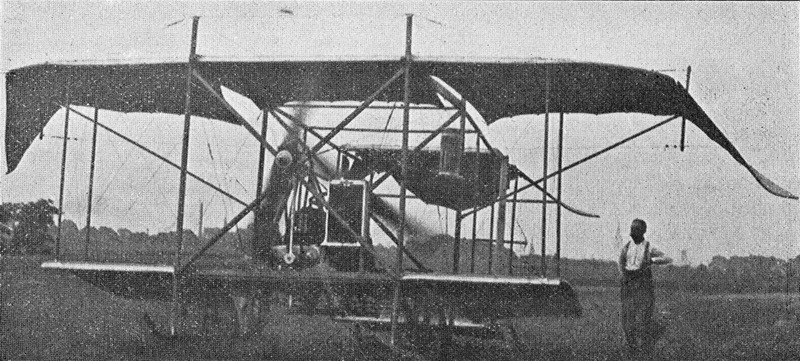
This 1912 design is claimed as the third design of Kommissar Hans von Klösterlein from Cologne (Cöln).

The design was built by the Condor Flugzeugwerft and according to Flugsport a 60 PS Basse & Salve engine was fitted. This is a single engine machine, where the engine drive two propeller – set on a rod fore and aft – via a chain.

The machine hopped or flew a little on the military exercise field on the Merheimer Heide in Köln-Merheim.