The Convair Model 106 Skycoach was an experimental four-seat light aircraft, designed and built by the Stinson Division of Convair. The Model 106 was a four seat cabin aircraft with a pusher engine, fixed spatted tricycle undercarriage and twin tail booms flanking the propeller. The three passengers and pilot sat in a cabin in the fuselage nacelle, which also housed the pusher 230 hp (170 kW) Franklin 6A8-225-B8 six-cylinder horizontally-opposed piston engine, driving a cooling fan and pusher propeller.
First flown in April 1946 (pilot: Bill Martin), flight testing was carried out at San Diego, but performance was found to be unexceptional. With a maximum speed of only 142 mph (123 kn; 229 km/h) the Model 106 was outclassed and Convair abandoned development, scrapping the sole prototype, (regn. NX40004, msn. 1), in 1947.
Model 106 Skycoach Engine: 1 × Franklin 6A8-225-B8, 230 hp (170 kW) Maximum speed: 142 mph (229 km/h; 123 kn) Crew: 1 Capacity: 3 passengers
After the end of the War, in 1946 Ted Hall and Tommy Thompson from the Consolidated Vultee Aircraft designed and built the two-seat Convair Model 116.
Convair Model 116
Convair Model 116
This prototype completed 66 test flights, and Hall designed another model, named the 118 (or the Convair Car). Two prototypes were built.
Convair Model 118
Convair Model 118
Consolidated Vultee bought rights to the original roadable design by their own Chief Development Engineer, Ted Hall. His creation was unusual in that the car portion looked exactly like a scaled down conventional automobile of the period, though suspended beneath its self contained ‘flight module’. The automobile had a streamlined glassfibre body with four seats, and was powered by a 26 hp Crosley car engine.
Where the ConvAircar also differed from previous roadables was that the company planned to sell only the car part, for $1500. Aircraft modules with 190 hp Lycoming aero engines would be rented out by the hour or day when the owner wanted to go flying. Convair spent $800,000 on building two prototypes at their San Diego plant and gearing up for a planned production run of 160,000 ConvAircars. The 725 lb auto-plane prototype first flew during November 1947. All went well until the third test flight, late in November 1947. The ConvAircar took-off with minimal gasoline in its tanks. The ConvAircar ran out of fuel and was wrecked, and shortly afterwards Convair ran out of enthusiasm.
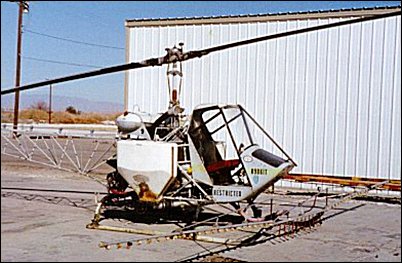
In 1959, Continental Copters Inc. of Fort Worth, Texas, developed and produced a specialised single-seat agricultural aircraft based on the Bell Model 47G-2. Payload is increased by deletion of unnecessary structure and equipment. Known as the El Tomcat Mk.II, this aircraft flew for the first time in April 1959 and received an FAA supplementary type certificate soon afterwards. An improved variant, the El Tomcat Mk.III, made its maiden flight in April 1965 as an improved version of the Mk.II, and subsequent variants were progressively introduced. The Tomcat Mk.III weighs empty 540kg and 1105kg loaded. The El Tomcat Mk.IIIA was flown in January 1966 with 200hp Franklin 6V4-200-C32, 210hp 6V-335-A or a 235hp 6V-350-A engine. The El Tomcat Mk.IIIB of 1967 had a still lower and repositioned windscreen, modified glassfibre nose, lower cabin roof and a 6V-350 engine. The Mk.IIIC of 1968 was an improved version with a 200-235hp 6V4-200-C32, 6V-335-A or 6V-350A engine and was first flown in May 1968. The Mk.V (first flown in June 1968) entered production in 1968 with a 220hp Lycoming VO-435-B1A engine (empty weight 620kg and maximum weight 1105kg), followed by the improved Mk.V-A with a 260hp VO-435-A1F engine and a folding jump-seat to permit carriage of a flagman to distant work sites. The latest version is the 265hp VO-435-BlA-engined Mk.V-B.
El Tomcat Mk.II
El Tomcat Mk.III Empty weight: 540kg Loaded weight: 1105kg
El Tomcat Mk.IIIA Engine: 200hp Franklin 6V4-200-C32, 210hp 6V-335-A or 235hp Franklin 6V-350-A
El Tomcat Mk.IIIB Engine: Franklin 6V-350
El Tomcat Mk.IIIC Engine: 200-235hp Franklin 6V4-200-C32, Franklin 6V-335-A or Franklin 6V-350A
El Tomcat Mk.V Ngine: 220hp Lycoming VO-435-B1A engine Empty weight: 620kg Maximum weight: 1105kg
El Tomcat Mk.V-A Engine: 260hp VO-435-A1F Disc loading: 2.6 lb/sq.ft. Pwr loading: 9.42 lb/hp. Max TO wt: 2450 lb. Empty wt: 1420 lb. Equipped useful load: 991 lb. Payload max fuel: 817 lb. Range max fuel/ cruise: 81 nm/ 1.3 hr. Service ceiling: 10,500 ft. Max sling load: 844 lb. Cruise speed: 65 kt. Working endurance: 1.5 hr. ROC: 1500 fpm. HIGE: 5900 ft. HOGE: 1400 ft. Fuel cap: 174 lb. Seats: 1.
El Tomcat Mk.V-B Engine: 265hp VO-435-BlA
Mk.VI-B Engine: Lycoming TVO-435-B1A, 260 hp. Seats: 1. Disc loading: 2.6 lb/sq.ft. Pwr loading: 10.9 lb/hp. Max TO wt: 2850 lb. Empty wt: 1490 lb. Equipped useful load: 1321 lb. Payload max fuel: 1147 lb. Range max fuel/ cruise: 50 nm/ 0.8 hr. Service ceiling: 10,500 ft. Max sling load: 1194 lb. Cruise speed: 65 kt. Working endurance: 1.5 hr. ROC: 1800 fpm. HIGE: 5900 ft. HOGE: 1400 ft. Fuel cap: 174 lb.
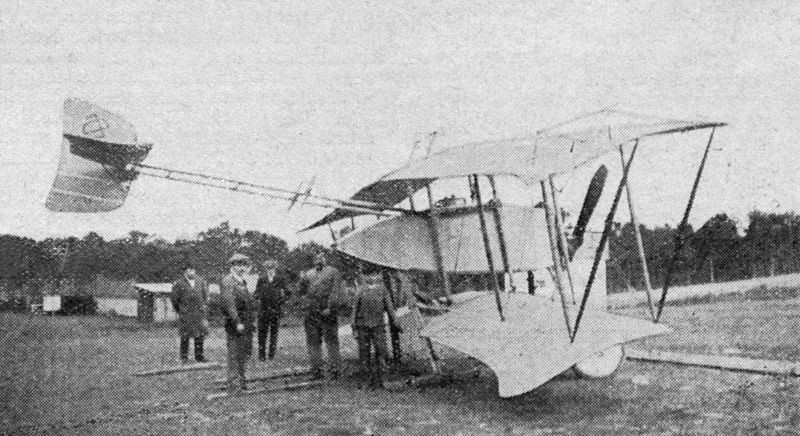
This second design of the duo Louis Constantin (designer) and M. d’Astanières (sponsor) never participated in the Concours de la sécurité (1914) for which it was intended, because it was not ready and still had problems that needed to be fixed. The machine was claimed to have three special features: A special design of the leading edges of the wings to improve their efficiency, automatic lateral stability by negative dihedral wings, and improved longitudinal stability by minimal its longitudinal moment of inertia. The last two of these appear rather counterintuitive, but perhaps… It was first tested only days before the outbreak of WW1, which stopped any further experimenting.
An aircraft designed following the ideas a patent of Francois d’Astanières about an automatically-stable monoplane. Built by Louis Clement, it was tested initially in 1913. The aircraft was later modified with some safety features patented by Louis Costantin (concave leading-edge flaps and modified elevators), the then called Constantin-d’Astanieres monoplane took part in the 1914 Concours de Sécurité.
Powered by a fuselage-mounted car engine that drove, via chains, a pusher propeller. The Constantin-d’Astanieres has a fairly orthodox rear fuselage and tail feathers, sles conventional was its additional front elevator on outriggers. The icing in the cake was its “slighty flexible” wings intended to absorb wind gusts.
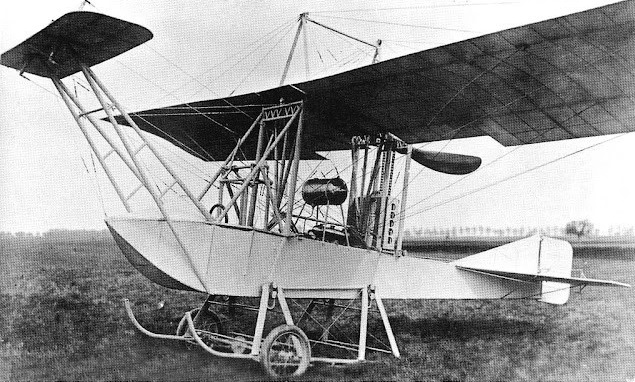
The d’Astanières autostable in its second configuration, was under test at Bois d’Arcey in May 1913.
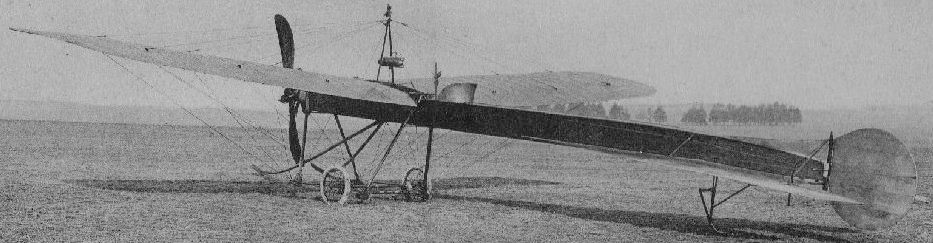
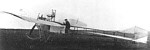
During 1909 and 1910 Camille Contal of Mourmelon, France, the inventor of a three-wheeled car called the Mototri, built several monoplanes. The 1910 machine had a narrow triangular fuselage was covered with sheets of mahogany with a 50 hp Gnome overhung at the nose. The rectangular wings could be warped, with the front spars fixed through steel fittings to the top two ash longerons, and the rear spars hinged. The pilot sat with his legs extended so that he could set his back easily against the seat without having to be strapped in.
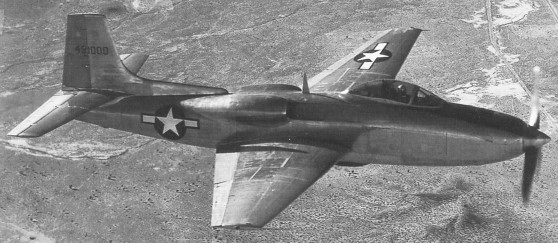
The Consolidated Vultee XP-81 (its newly-merged builder soon to be better known as Convair) was the first American aircraft powered by a turboprop engine. Ordered by the USAAF on 11 February 1944, the XP-81 was intended as a long-range escort fighter using compound power, with one 1230kW General Electric TG-100 turbo-prop and one 1701kg thrust Allison I-40 jet engine, eventually designated J33-A-5. When delays with the turboprop powerplant were encountered, the prototype XP-81 was flown on 11 February 1945 with a Packard V-1650-7 Merlin installed temporarily in the nose. The first flight with the intended turboprop engine followed on 21 December 1945 and the turboprop provided no advantage in performance over the Merlin. A second XP-81 flew in early 1946 to join the first machine in testing, but war’s end, the disappointing results with the TG-100, and the superiority of pure jet designs resulted in cancellation of an order for 13 YP-81 service-test aircraft. Both XF-81 airframes have survived derelict on a test range at Edwards AFB, California.
Wingspan: 15.39 m / 50 ft 6 in Length: 13.67 m / 44 ft 10 in Height: 4.27 m / 14 ft 0 in Wing area: 139.48 sq.m / 1501.35 sq ft Max take-off weight: 12700 kg / 27999 lb Empty weight: 5785 kg / 12754 lb Max. speed: 815 km/h / 506 mph Cruise speed: 442 km/h / 275 mph Ceiling: 10800 m / 35450 ft Range: 4000 km / 2486 miles Armament: 6 x 12.7mm guns or 6 x 20mm cannon planned, 1450kg underwing bombs
The Consolidated Vultee XP-54 “Swoose Goose” was a twin boomed pusher fighter that featured a powered lift to get the pilot to the cockpit, downward ejection seat, and upward tilting cannon.