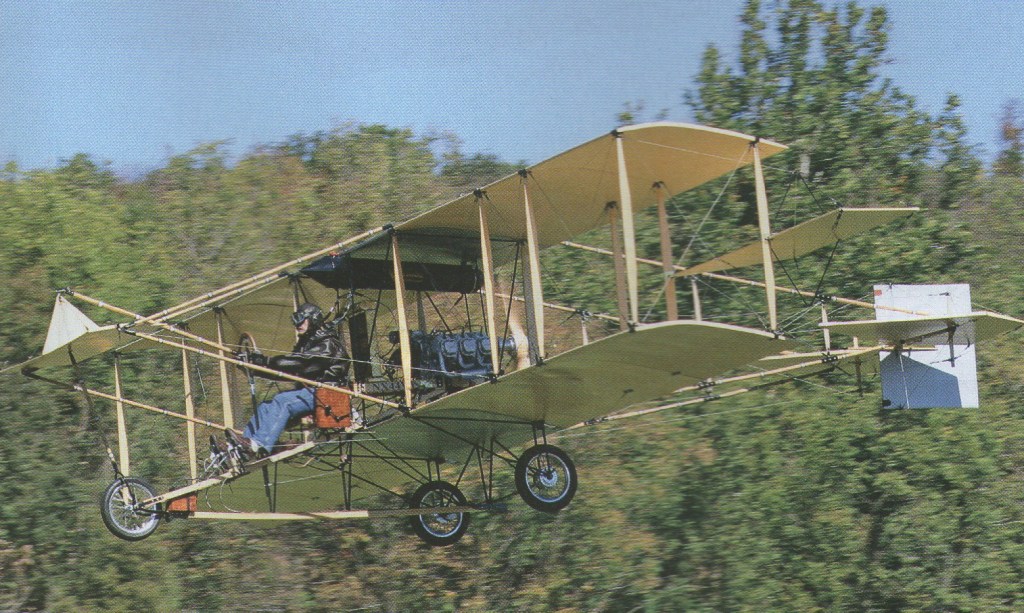
On 8 October 2010 Dave Coolbaugh first flew his replica Curtiss-Ely 1911 Pusher for the first time. The retired Navy/airline pilot spent more than 6000 hs building the craft since beginning in the Summer of 2008.
Engine: Continental C-125, 125 hp
On 8 October 2010 Dave Coolbaugh first flew his replica Curtiss-Ely 1911 Pusher for the first time. The retired Navy/airline pilot spent more than 6000 hs building the craft since beginning in the Summer of 2008.
Engine: Continental C-125, 125 hp
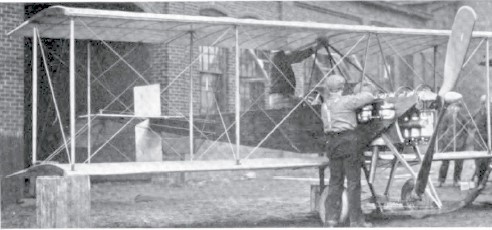
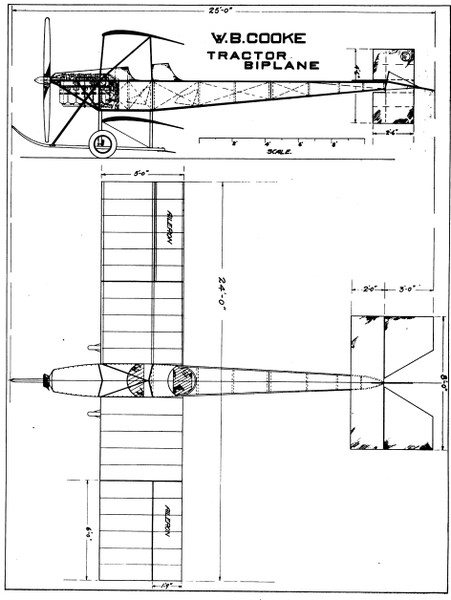
Weldon B. Cooke from Pittsburgh – Sandusky designed and built this tandem biplane aircraft in the winter of 1912-1913. Cooke, who was a well-known exhibition pilot, designed this aircraft with racing and exhibition flying in mind.
Cooke designed the aircraft for a 75 mph (121 km/h) top speed. For the time it was designed, it was a very modern aircraft, incorporating features that wouldn’t become commonplace on aircraft until towards the end of the Great War. The layout of the aircraft itself, a tandem two seat biplane with a tractor motor, was very unusual in 1912. Most of the aircraft being built and flying in North America at the time being some variation of a Curtiss type pusher biplane where the pilot and passengers would sit exposed in front of the leading edge of the lower wing.
Another unusual feature of the aircraft was the inverted installation of the Roberts inline 6 cylinder engine. When the early direct drive inline motors were mounted upright in a tractor installation, the cylinders would be almost completely exposed above fuselage deck. This type of mount would add aerodynamic drag to the aircraft, as well as presenting a substantial visual barrier for the pilot. By inverting the motor, the engine could be contained within the fuselage profile and the pilot had an unobstructed forward view. This may have been the first recorded inverted motor installation in an aircraft. The undercarriage consisted of a central skid with two flexible wheels at right / left with no connection to the fuselage (only to the central skid).

Because of the inability of period aircraft to be able to fly to and from the exhibition, the logistics of flying in the 1910s involved shipping the aircraft by train from one event to the next. To facilitate this, Cooke designed the aircraft to be quick and easy to take apart and re-assemble. The wings, which have a span of 24 feet, are made up of four detachable six foot sections. The fuselage is built in three detachable sections. The front section contains the engine and the passenger’s seat with all controls and their connections. The second section contains the pilot’s seat and the third, the tail and the square rudder. The skin of the fuselage was made up of a thin ply veneer to give it additional stiffness.
Used for exhibition flying and air racing, this biplane is sometimes identified as the ‘Sandusky Biplane’. Only the one was built.
Engine: 1 × Roberts two-stroke 6 cylinder, 75 hp (56 kW)
Propeller: 2-blade
Wingspan: 24 ft (7.3 m)
Length: 25 ft (7.6 m)
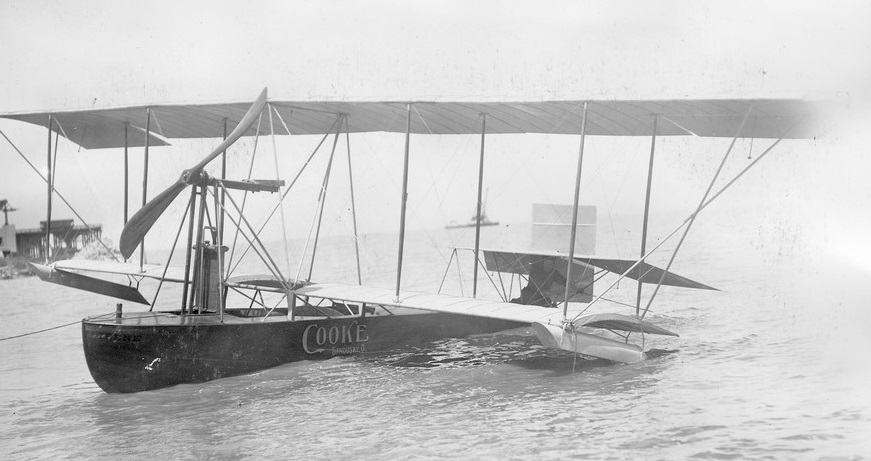
Weldon B. Cooke, an early pioneer who taught himself to fly in a Curtiss pusher, started construction of a flying boat project in California.
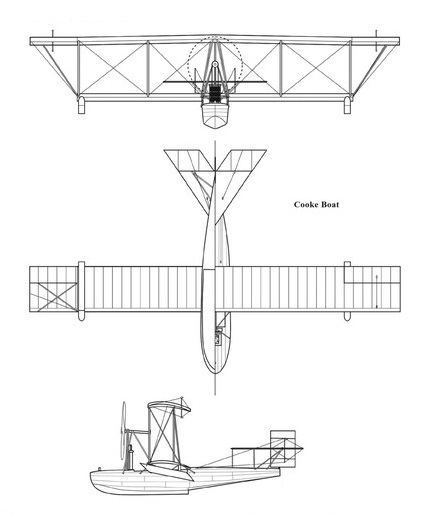
The craft’s biplane wings rested on a full length boat hull that ended in a tail group supported by struts. Its single tractor propeller, mounted forward of the wing, was driven by a belt running from a 75-hp Roberts engine. Sometime in 1913, Cooke shipped the parts by rail to Sandusky, Ohio, where the aircraft was completed and flown.
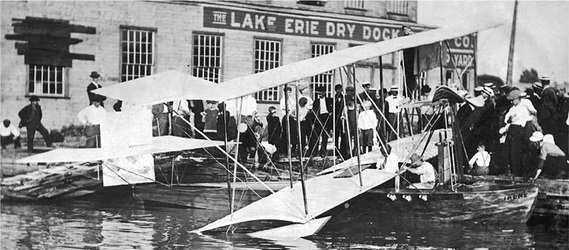
Although the “Irene,” depicted in this image, suffered from design and construction flaws, she became famous locally when Cooke raced her against C. B. Lockwood’s motorboat “Chinook.” Cooke attained speeds of 35 miles per hour in the water and 50 miles per hour in the air. Lockwood’s fast motor boat reached a speed of 23 miles per hour.
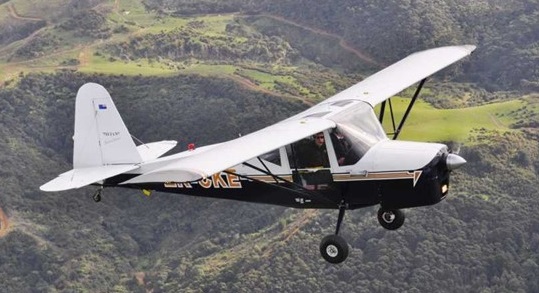
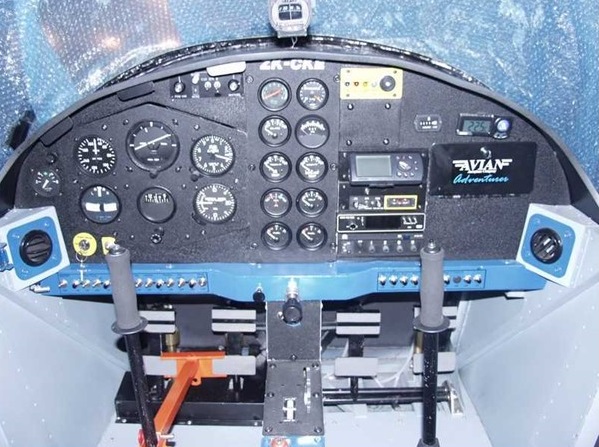
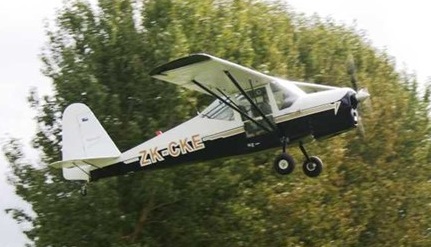
The Cooke Avian Adventurer is a one-off design constructed of riveted alloy extrusions, and fabric covered. Design and built by Bruce Cooke of Cambridge, New Zealand, construction was over 10 years and the approximate cost to build was NZ$10000-$20000. A two seat side by side plus large baggage bay, ultralight, there are full dual controls.
The aircraft is influenced by the classic taildraggers such as the Piper Cub, Cessna Bird Dog and the Auster series. Construction is of rivetted interlocking aluminium extrusions. This construction method results in a high component count but it avoids the necessity for expensive sheetmetal tooling. The outward sloping cabin sides reduce the amount of bending required for the bottom longerons while allowing very generous shoulder room for the two side by side occupants and giving an almost directly down view through the fully glazed upward opening doors. The airframe is covered with Stits Polyfiber fabric.
The engine is Subaru EJ 20 “Matariki” (Subaru and Matariki both refer to the cluster of 6 stars in the Taurus constellation named Pleiades by the ancient Greeks), which produces 140 HP Nominal and drives a 3 bladed electrically variable Ivoprop through a Neil Hintz gearbox.
Bruce Cooke’s Avian Adventurer ZK-CKE c/n AV08-1 was first registered on 19/11/08, although it did not fly until March 2011.
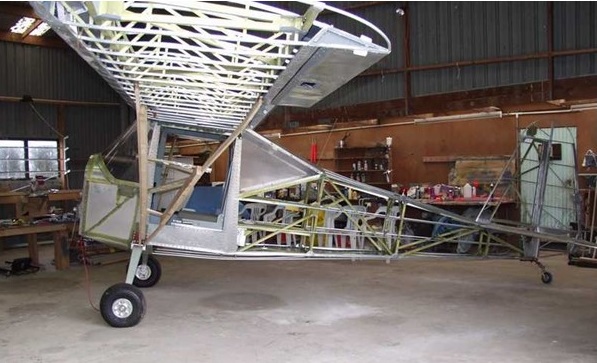
The first flight in March 2011 was at Hamilton with test pilot Bob Monds.
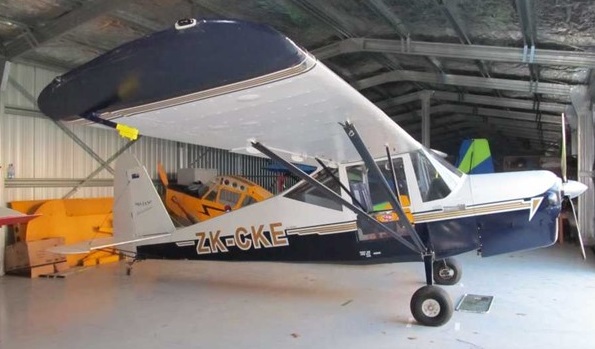
Engine: Subaru EJ20 Matariki, 140 hp
Prop: Ivoprop 3 bladed electrically variable
Wingspan: 10.23 metres
Length: 7.63 metres
Empty Weight 640kg
MAUW 850kg
Cruise: 90-95 knots
Stall speed: 35 knots
Fuel burn at cruise: 27 lt/hr

John Cook was trained in England and emigrated to the US to work on aircraft when the UK industry imploded in the 60’s. After stints at several companies including Helio, he went to work for Northrop on the 747 (Northrop designed and built the center and aft fuselage) and after work in the evenings and on weekends, several co-workers went down to Torrance and helped production design this plane in return for stock in the company. They built a prototype and a static test article, intending to obtain an FAA Type Certificate. The aircraft first flew in May 1969 and performed well; it passed static tests with very minor fixes. During a spin test, the FAA pilot kept the power on during the first turn of the spin – we had always closed the throttle as it stalled – and the plane entered an unrecoverable spin mode. John and the FAA pilot parachuted to safety, but the plane N21CA fell into the LA Harbor.
They built a second prototype, N72CA first flying in November 1971, and John Cook and John Parker test flew it to determine a safe aft CG limit. During one of these tests in January 1972 they got into the same situation and bailed out. JP was fine but Cook’s parachute was hit by the spinning plane and he was killed.
The company continued for a while and a third prototype was first flown in 1972 (N123CA) and an attempt was made to market the project as a homebuilt. This was not successful, the company folded and the plane was sold.


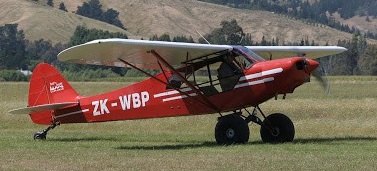
The Westland Bush Plane was built by Russell Cook of Kaihinu, north of Hokitika, New Zealand, around 2008. It may look like a Cub, but the only original bit of a Cub is one wing. The dimensions are all bigger than the standard PA-18, and the whole lot is built from scratch. The tundra tyres are for landing in the West Coast river beds.
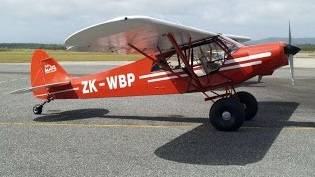
Registered ZK-WBP (c/n 0017251) the Westland Bush Plane has an extra side door to the luggage area behind the rear seat.
It received some minor damage on 23 July 2011 whilst landing on a river bed.
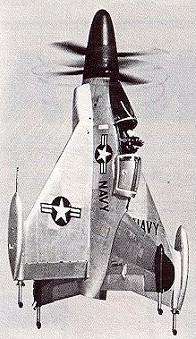
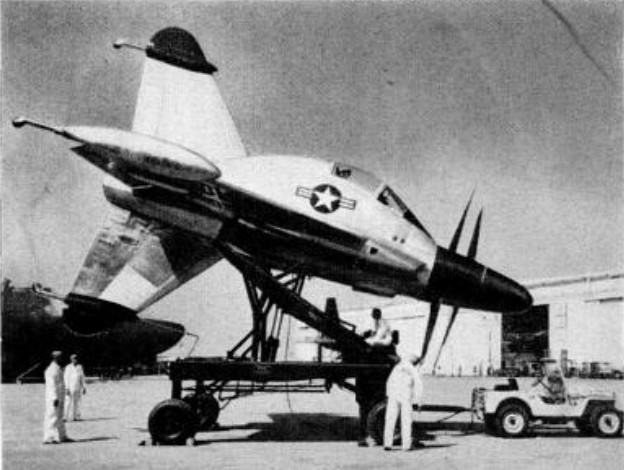
From 1949 the US Navy actively pursued a policy of VTOL research. The results were two prototypes, the Lockheed XFV-1 and the Convair XFY-1 Pogo. Both aircraft were of the ‘tail-sitter’ concept and powered by the 5500-shp (4101-kW) Allison T40-A-6 turboprop driving large contra-rotating propeller units. These provided more thrust than the weight of the aircraft, making possible VTOL operation.
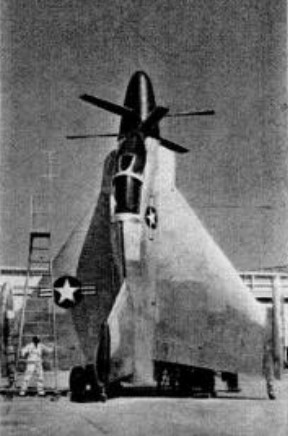
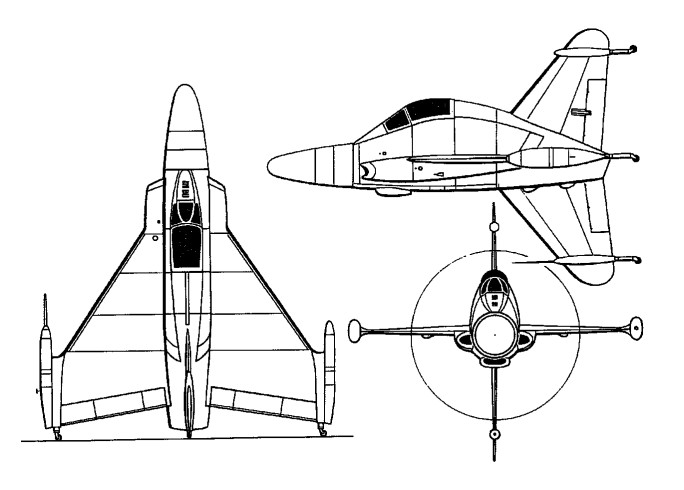
The XFY-1 was a swept delta design with large dorsal and ventral fins, all four surfaces of this cruciform arrangement carrying castoring wheels to support the aeroplane vertically on the ground. This arrangement of flying surfaces made it impossible to fit the XFY-1 with the same type of conventional landing gear as the XFV-1, so Convair received the only example of the T40 turboprop cleared for VTOL operation.
The pilot is seated in a gimbal-mounted seat which tilts forward 45 degrees when the aircraft is in the vertical position, returning to normal when horizontal flight is attained.
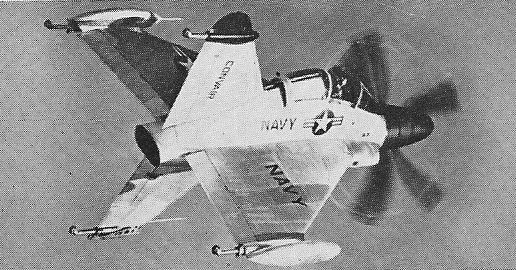
The Pogo made its first free VTOL flight on 1 August 1954 and in October made its first transition from free vertical to horizontal flight and back. The flight test programme was very successful in overall terms, but like that of the XFV-1 confirmed that exceptional piloting was necessary for such a tail-sitter type.
The aircraft had little castoring wheels on their fins on which they stood, towering nearly 12.2 m (40 ft) above the ground, and wingtip weapon pods.
The Pogo was equipped with a custom fitted clamshell ‘hangar’ which locked around tile aircraft and made it independent of airfield facilities so that it could be stationed anywhere.

Extensive tethered tests from a special rig were followed by a first vertical take-off and landing on 1 August 1954. Testing continued with a series of similar vertical flights before the first complete transition from vertical to horizontal flight and vice versa was accomplished on 2 November 1954. Although some 40 flight hours were accumulated by two prototypes of this experimental fighter, its development was abandoned.
The aircraft did not get beyond preliminary testing.
Engine: 1 x Allison YT40-A-6 turboprop, 4362kW / 5500 shp
Wingspan: 8.43 m / 27 ft 8 in
Length: 10.66 m / 34 ft 12 in
Height horizontal: 30 ft 9in
Wing area: 32.98 sq.m / 354.99 sq ft
Max take-off weight: 7371 kg / 16250 lb
Empty weight: 5345 kg / 11784 lb
Loaded weight: 10,000-11,000 lb
Max. speed: 982 km/h / 610 mph
Ceiling: 13320 m / 43700 ft
Armament: 4 x 20mm cannon (proposed) or 46 x 70mm rockets
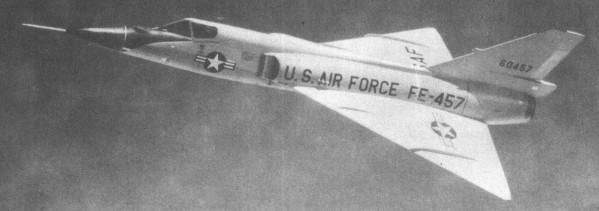
The Convair F-106 Delta Dart began its production life as a direct successor to the interim F-102 Delta Dagger, as the F-102B, built around the advanced Hughes-produced MA-1 fire control system. The F-106 retained many design elements of the F-102 including a small internal bomb bay. Nuclear capability with twin Genie nuclear-tipped missiles was a standard design initiative. An internal 20mm cannon would not be fitted to the system until 1973, when it was found throughout engagements in the Vietnam conflict that close-range fighting was still involved.
The F-106 has mid-set delta wings, with 60 degrees sweepback, no tailplane, and square-top fin and rudder.
Engine air intakes are on each side of the fuselage just forward of the wing leading edges.
The tricycle undercarriage has a single wheel on each main unit and twin nose-wheels. The nosewheels retract forward.
While development of the earlier fighter was delayed by various teething troubles in 1955-6, progress with the later machine became possible with the development of the Hughes MA-1 integrated fire-control system. In November 1955, the USAF placed an order for 17 F-102Bs and in December, a mock-up of the proposed cockpit with radically new equipment and pilot displays was completed. On 17 June 1956, the F-102B was redesignated F-106.
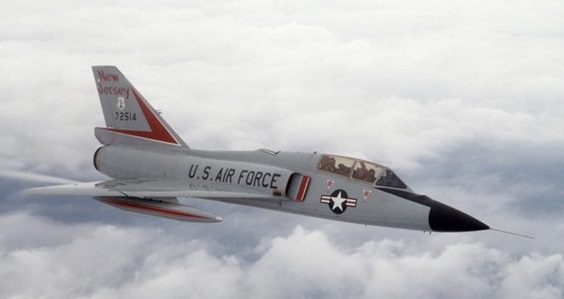
The first of two YF-106A service-test aircraft (56-451/452) flew on 26 December 1956 at Edwards AFB, California. Like most new fighter types in the ‘century series’, the F-106 was initially a disappointment. Maximum speed, rate of climb and overall acceleration were significantly below Air Defense Command expectations with the Pratt & Whitney J57-P-9 turbojet employed in the initial machines and the Wright J67, licence-built Olympus, being contemplated. When the latter powerplant failed to materialise, the USAF reduced its requirement from 1,000 to 360 of the new interceptors.
The first flight of the F-106B two-seat trainer was made in April 1958.
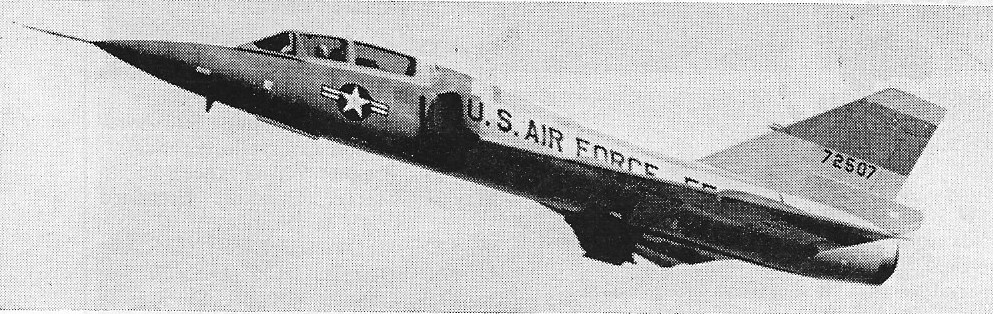
An F-106A held the world speed record of 1525.05 mph from 15 December 1959 until the autumn of 1961.
Performance was improved with the installation of the 7800kg thrust Pratt & Whitney J75-P-17 turbojet which could provide 11100kg thrust with afterburning.
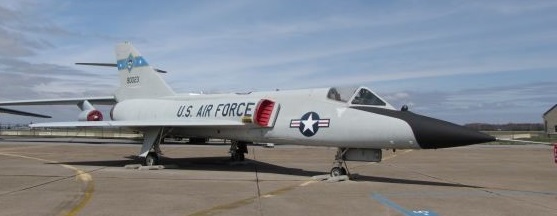
The F-106A attained its initial operating capability with the 498th Fighter-Interceptor Squadron at Geiger AFB, Washington, in October 1959 and subsequently served with 15 ADC and eight Air National Guard squadrons. Except for brief deployments to Europe and to Korea in 1968, the type served exclusively in North America. Totals of 277 F-106A single-seat interceptors served in company with 63 F-106B two-seat combat trainers, 340 machines actually being completed, and the types remained on active duty until 1982.
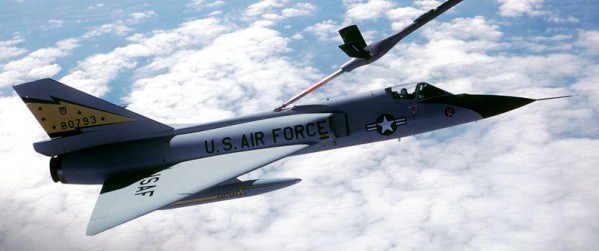
Convair F-106A Delta Dart
Engine: 1 x Pratt & Whitney J75-P-17 turbojet, 17,500 lb / 24,500 lb with afterburner.
Length: 70 ft 10 in (21.55m)
Wingspan: 38 ft 5 in (11.67m)
Wing area: 64.8 sq.m / 697.50 sq ft
Wing load: 55.76 lb/sq.ft / 272.00 kg/sq.m
Height: 20 ft 4 in (6.18m)
Wheel track: 15 ft 5.5 in
Wheelbase: 24 ft 1.5 in
Empty Weight: 24,859lbs (11,276kg)
Maximum Take-Off Weight: 41,831lbs (18,974kg)
Maximum Speed: 1,487mph (2,393kmh; 1,292kts)
Cruising speed: 529 kts / 980 km/h
Cruising altitude: 41011 ft / 12500 m
Maximum Range: 1,950miles (3,138km)
Rate-of-Climb: 30,000ft/min (9,144m/min)
Service Ceiling: 58,005ft (17,680m; 11.0miles)
Armament: 1 x 20mm cannon
Hardpoints: 4 for:
2 x AIR-2A Genie Nuclear Rockets or
4 x AIM-4 Falcon Air-to-Air Missiles
Accommodation: 1
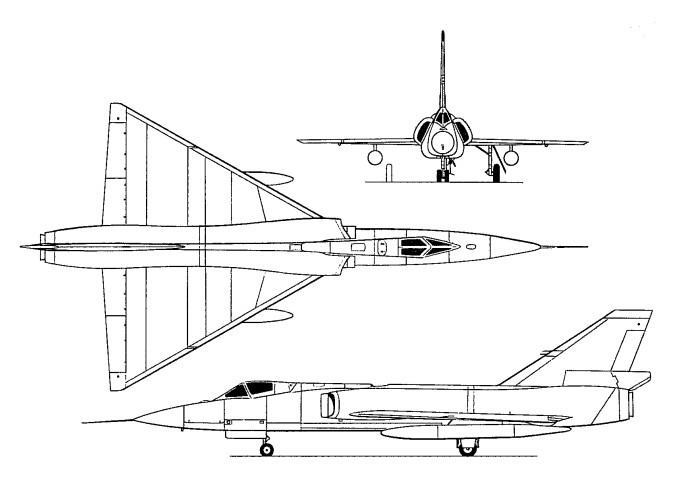
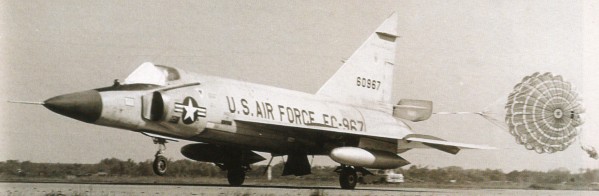
The Convair F-102 Delta Dagger resulted from a 1950 USAF design competition for an integral all-weather interceptor weapon system. Combining the Hughes Falcon air-to-air missile, the 60 degree sweep delta wing platform first flown on the XF-92A, and the 4944kg thrust Pratt & Whitney J57-P-11 turbojet, the first of 10 YF-102s (52-7994/7995 and 53-1779/1786) flew at Edwards AFB, California, on 24 October 1953, piloted by Dick Johnson. The prototype was lost in a mishap nine days later.
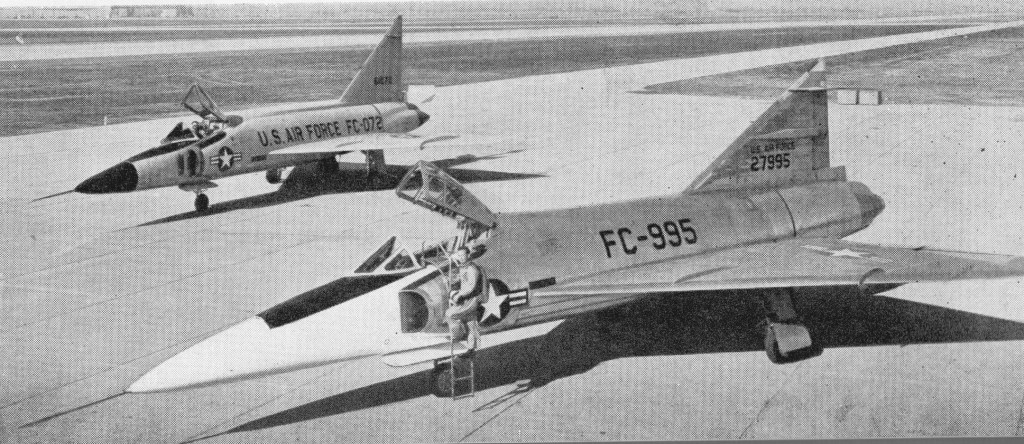
The YF-102 was not a success, proving unable to maintan supersonic speeds in level flight. The fuselage was completely redesigned into a ‘coke bottle’ shape using the area rule concept, and a more powerful engine installed. The indented fuselage or ‘area rule’ configuration was developed by NACA’s Richard Whitcomb was introduced in the much-altered YF-102A, which was assembled in 117 days.
The first of four YF-102As (53-1787/1790) flew at Edwards AFB on 20 December 1954, again piloted by Dick Johnson, not merely with ‘area rule’ but with cambered wing, new canopy (except on 53-1788) and 5443kg thrust Pratt & Whitney J57-P-23. The new design was supersonic and met USAF expectations.
Development included the introduction pf a larger fin from the 23rd production aircraft.
Convair F-102 Delta Dagger Article
The primary weapon was the Hughes AIM-4 Falcon air-to-air missile, coupled with the Hughes MG-10 fire control system. Introduced later was the AIM-26, some nuclear tipped.
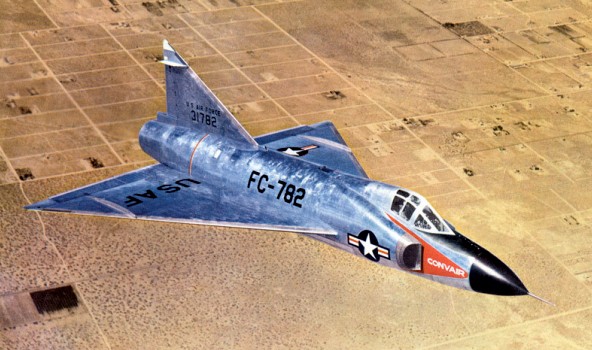
The production F-102A began to reach Air Defense Command squadrons in June 1955. The first two-seat TF-102A combat proficiency trainer (54-1351) flew at Edwards AFB 8 November 1955 and operated alongside F-102As in ADC service.
Service entry began with the first examples delivered in April 1956 to the 327th Fighter Interceptor Squadron (FIS) at George, California.
The F-102B designation was briefly assigned to a new aircraft completed as the F-106. The little-known YF-102C (53-1806), a converted F-102A model, tested change in the internal fire control system, but these were not adopted.
The F-102A eventually served with 32 ADC and 21 States ANG squadrons. Air Defense Command machines went through several modernisation programmes before being relegated to the ANG, the internal provision for rockets being eventually omitted. A few F-102As went to Greece (20 F-102A and 4 TF-102A) and Turkey (40 F-102A and 9 TF-102A).
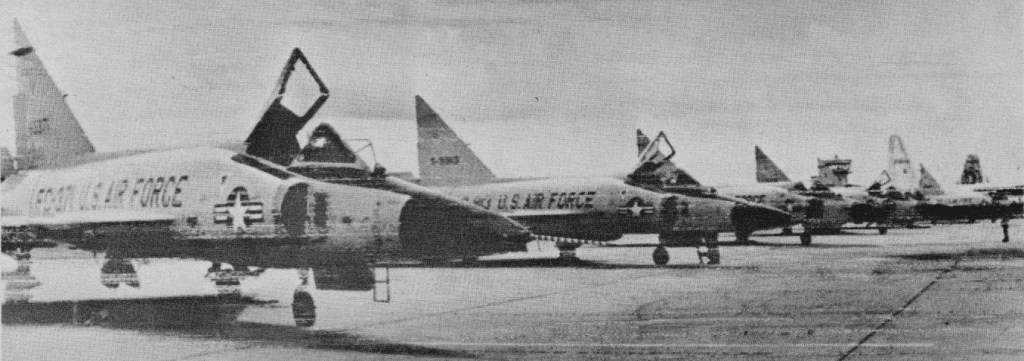
A few camouflaged F-102As were deployed to South East Asia in 1964-6, and to Korea in 1968 but, while they flew a few missions over North Vietnam, they are not thought to have actually been in combat. No air-to-air kills were achieved but one F-102A was shot down by a MiG-21 on 5 February 1968.
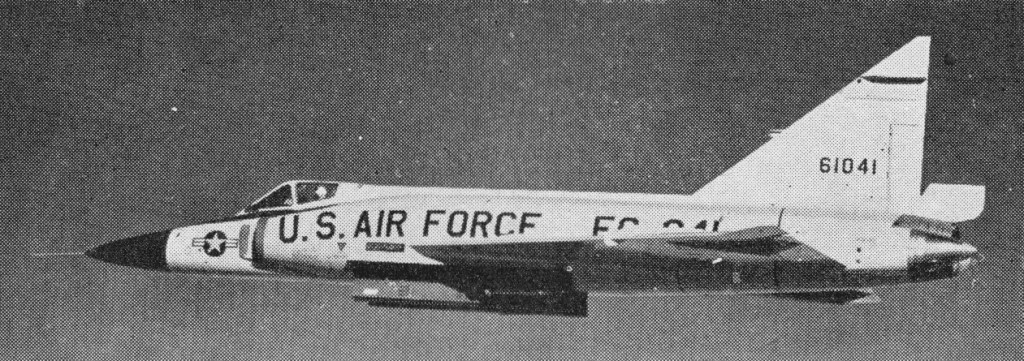
Most F-102A squadrons had converted to other types by the end of 1971. The last US operational user was the Hawaii Air National Guard’s 199th FIS which received its first F-4C Phantom replacement in October 1975.
Greece retired their F-102As in 1979, with Turkey withdrawing its last 13 fighters and five trainers on 5 June 1979.
In March 1973, the USAF awarded Sperry a contract to convert an initial 6 F-102As as a fully manoeuvrable manned or unmanned target drones under the Pave Deuce programme as PQM-102As. Over 200 were eventually converted, operating until 1986.
Numerous F-102A airframes have been saved, the 199th Fighter Interceptor Squadron of the Hawaii Air National Guard having retained no fewer than four non-flyable F-102As for display purposes after transitioning to the F-4C Phantom.
Total Delta Dagger production was exactly 1000 airplanes built at San Diego’s Lindbergh Field, comprising 10 YF-102, 4 YF-102A, 875 F-102A and 111 TF-102A trainers.
Convair F-102A Delta Dagger
Engines: 1 x Pratt & Whitney J57-P-23 turbojet, 17,200 lb (5307/7802kp) thrust.
Length: 68 ft 4.5 in (20.84m)
Wingspan: 38 ft 1.5 in (11.62m)
Wing area: 695.031 sqft / 64.57 sq.m
Wing loading: 45.31 lb/sq.ft / 221.0 kg/sq.m
Height: 21 ft 2.5 in (6.46m)
Empty Weight: 19,026lbs (8,630kg)
Maximum Take-Off Weight: 31,500lbs (14,288kg)
Maximum Speed: 825mph (1,328kmh; 717kts) at 36,000 ft
Cruising speed: 469 kts / 869 km/h
Cruising altitude: 34449 ft / 10500 m
Maximum Range: 1,350miles (2,173km)
Rate-of-Climb: 17,400ft/min (5,304m/min)
Service Ceiling: 54,003ft (16,460m)
Armament:
6 x AIM-4A / AIM-4C Falcon Air-to-Air Missiles
2 x 2.75″ Rocket Pods (24-shot, unguided rockets)
Nuclear Capable munitions as needed.
Accommodation: 1
Hardpoints: 6
Convair F-102A Delta Dagger
Engine: 1 x Pratt & Whitney J57-P-35 turbojet, 10,900 dry, 17,000 lb afterburner
Wingspan: 38 ft 1.5 in (11.62m)
Wing area: 661.5 sq.ft
Length: 68 ft 4.5 in (20.84m)
Height: 21 ft 2.5 in (6.46m)
Wheel track: 14 ft 2.25 in
Wheelbase: 22 ft 4.5 in
Maximum Take-Off Weight: 27,000 lbs
Maximum Speed: 825 mph (1,328kmh; 717kts, M1.25) at 36,000 ft
Service Ceiling: 54,000 ft (16,460m)
Armament:
6 x AIM-4A / AIM-4C Falcon Air-to-Air Missiles
2 x 2.75″ Rocket Pods (24-shot, unguided rockets)
Nuclear Capable munitions as needed.
Accommodation: 1
Hardpoints: 6
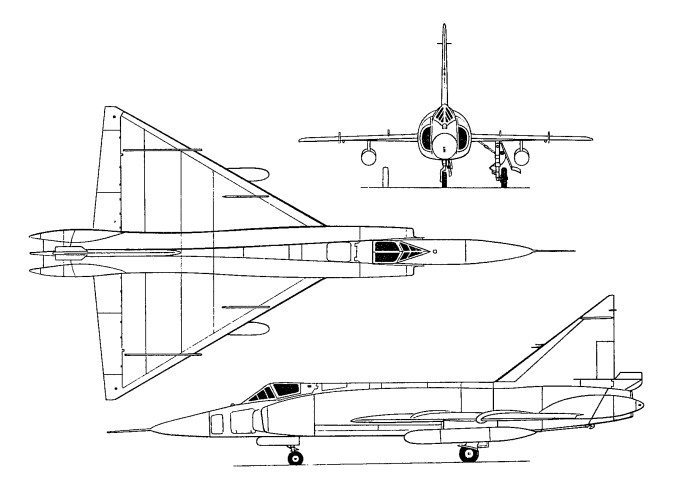
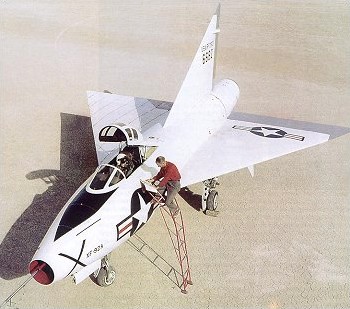
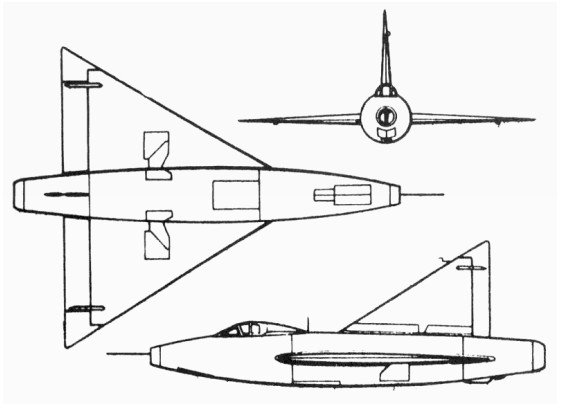
The Convair Model 7 submission was ordered in prototype form as the XF-92 to be powered by a 1600-lb (726-kg) thrust Westinghouse 130 turbojet supplemented for take-off and combat by a 6000-lb (2722-kg) thrust Reaction Motors LR-11 liquid-propellant rocket. This was a tailless delta type with mixed powerplant, and its wing was designed with the aid of Dr Alexander Lippisch. This would have been a very fast point-defence interceptor with exceedingly limited range and duration.
Validation of the basic design’s 60 degree swept delta wing (complete with full-span elevons for pitch and roll control) was entrusted to a smaller-scale aeroplane, the Model 7-002, which used components from five other aircraft and was powered by an Allison J33-A-23 turbojet. The Model 7-002 was generally successful, and development of the XF-92 proceeded without undue problems. In June 1949 the XF-92 was cancelled, but the Model 7-002 was kept in development as the XF-92A high-speed research aeroplane. Re-engined with the 6800-lb (3084-kg) J33-A-29 afterburning turbojet, the XF-92A eventually reached a speed of Mach 0.95 at 40,000-ft (12,190-rn). Meanwhile the LTSAF was completing the competition for the fire-control system originally specified for the XF-92, and this was later installed in the modestly supersonic F-102 Delta Dagger interceptor that was evolved as the Convair Model 8 on the aerodynamic basis of the XF-92A with the advanced Pratt & Whitney J57 afterburning turbojet.
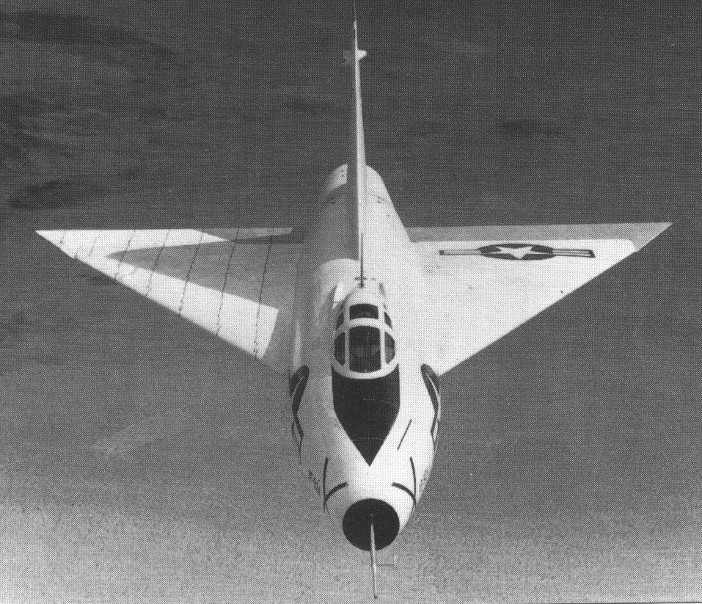
The Convair made its first flight on 8 June 1948. This was a simple airplane with latticed canopy cover, nose air inlet, and through-flow arrangement for its 2358kg thrust Allison J33-A-23 turbojet. Its delta wing was swept 60 degrees. When the fully-fledged rocket-powered XF-92 design was cancelled because of its obviously limited military application, the model 7002 was redesignated XF-92A.
The XF-92A originally flew without afterburning. During continuing tests at Edwards AFB it was re-engined and its fuselage lengthened to provide reheat for the new 3402kg afterburning thrust Allison J33-A-29. At the same time, the natural-metal XF-92A was painted gloss white.
Always a research aircraft rather than a fighter, the XF-92A was turned over to NACA for tests before its flight career ended in 1953.
Since it had been intended only as a flying mock-up for the cancelled machine, the XF-92A was never a candidate for a production order, though it performed valuable, if unintended, service as a testbed for the company’s F-102 interceptor.
XF-92A
Engine: 1 x 3402kg afterburning thrust Allison J33-A-29 turbojet
Max take-off weight: 6800 kg / 14992 lb
Wingspan: 9.5 m / 31 ft 2 in
Length: 12.9 m / 42 ft 4 in
Wing area: 39.0 sq.m / 419.79 sq ft
Max. speed: 1000 km/h / 621 mph
Crew: 1