In April 1939, Curtiss-Wright’s St Louis Airplane Division flew the prototype of the CW-23 basic combat trainer which was essentially a tandem two-seat, lower-powered derivative of the CW-21 single-seat fighter. It introduced inward-retracting, fully-enclosed main undercarriage members and hydraulically-actuated rather than manually-operated flaps, and these features were adopted for a new version of the single-seat fighter, the CW-21B.
It had a 447kW Pratt & Whitney R-1340 Wasp engine and was intended as a basic combat trainer for the US Army. Flown in 1939, official testing led to its rejection for production.
1 engine
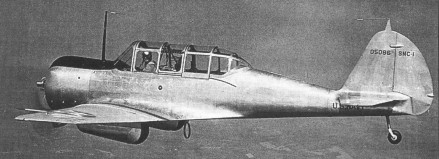
Curtiss-Wright CW-22 / SNC-1 Falcon
Two CW-19 company demonstrators were built, c/n 19R-10 (N16417) in January 1937 and A19R-14 (NC16421) also in 1937. N16417 was later converted to CW-22 specifications and sold in May 1940.
This aeroplane was developed within the context of the US Navy’s enormous increase in pilot training during 1940, and an advanced combat trainer evolved from the CW-19 light fighter and trainer project with features such as retractable landing gear from the CW-21 Demon export fighter. The CW-22 prototype resembled the CW-21 with a longer, two-seat fuselage but considerably lower power in the form of the 313-kW (420-hp) Wright R-975 Whirlwind radial.
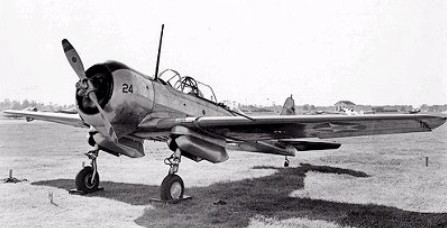
The landing gear had main units retracting rearward into underwing fairings as on the CW-21 single-seat interceptor. Powered by a 313kW Wright R-975 Whirlwind radial, 36 CW-22s were exported to the Netherlands East Indies, but due to the Japanese advance in that region were delivered to the Dutch in northern Australia during March 1942.
A developed CW-22B version was sold to Turkey (50); the Netherlands East Indies (25); and various Latin American countries (totalling about 25). Several Dutch aircraft were later captured and flown by the Japanese. Both the CW-22 and CW-22B were armed with two machine-guns, one fixed and the other flexibly mounted.
After a demonstrator had been tested by the US Navy, a CW-22N advanced training version went into production. The US Navy applied the designation SNC-1 Falcon to the type, a total of 455 being purchased in three batches of 150, 150 and 155 respectively; the aircraft of the third batch had a modified, higher cockpit canopy. The initial order for 150 aircraft was later bolstered by five impressed aircraft. Many SNC-1s were sold to private owners in the USA after World War II.
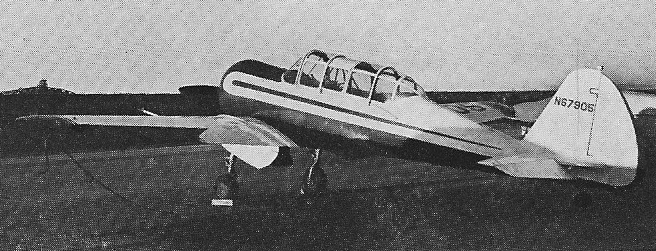
Some 136 CW-22s were exported.
CW-22 / SNC-1
Engine: one Wright R-975-28 Whirlwind radial, 420 hp (313 kW)
Wingspan: 10.67 m / 35 ft 0 in
Length: 8.23 m / 27 ft 0 in
Height: 3.02 m / 9 ft 11 in
Wing area: 16.14 sq.m / 173.73 sq ft
Max take-off weight: 1718 kg / 3788 lb
Loaded weight: 1241 kg / 2736 lb
Max. speed: 319 km/h / 198 mph at SL
Cruise: 195 mph at 2500 ft
Service ceiling: 6645 m / 21800 ft
Operational range: 1255 km / 780 miles
Armament: 2 x 7.62mm machine-guns
Crew: 2
Curtiss-Wright CW-19
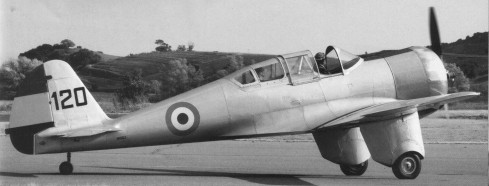
In 1935, the Curtiss-Wright Corp, in response to an order from the US Bureau of air Commerce, and George Page designed and produced a single prototype of the CW-19L Coupe at its St. Louis, Missouri plant. A development of the CR-2 Coupe design, the model 19L was a two seat, fixed undercarriage low-wing monoplane, powered by a 90 hp 5 cylinder Lambert R-266 radial engine. Of all metal monocoque construction with an enclosed cabin, the CW-19 was envisioned to be sold to private owners.
The two occupants were side-by-side, with a car type door on each side. The fixed undercarriage was enclosed in streamlined spats. Registered as NS69, it was granted an Approval Type Certificate (ATC number 589) on 3 December 1935.
Later repowered with a 145 hp Warner Scarab engine, the sole prototype became the 19W, with a 154 mph maximum and 132 mph cruise speeds.
The performance and cost were too great for private pilots. No production was under taken and the original prototype was the only example built.
Curtiss decided to develop the design as a military trainer. As the model 19R, re-configured into a tandem layout, with the two seats under sliding clear canopies. Still with fixed undercarriage, power was increased, initially to a 350 hp Wright R-760 Whirlwind, and later a 420 hp Wright R-975.
A single, fixed synchronised 0.30 calibre machine gun was mounted in the nose and provision was made for an additional flexible mount machine gun in the rear cockpit (for use as a gunnery trainer). Bomb racks could also be fitted. Two 35 USG were fitted.
A photo-recon variant, with two belly-mounted cameras was also developed and at least one of the Bolivian examples appears to have been delivered in this configuration.
When the flaps were extended a latch was released, allowing the undercarriage struts to fully extend, the wheels dropping an additional 6 inches from the spats. When the aircraft had landed the struts were compressed again, retracting the flaps re-engaging the latch so the wheels were held in their ground position until the flaps were lowered for landing again.
The prototype, c/n 19R-1 was registered NR11781 and was first flown in early 1936. Approved Type Certificate 629 was issued on 19 February 1937. Performance was increased from the model 19L, with maximum 185 mph and cruise 164 mph speeds.
The prototype was written off in Brasil during a sales tour of South America. Orders were received for 23 from several Latin American governments.
Two more company demonstrators were built, c/n 19R-10 (N16417) in January 1937 and A19R-14 (NC16421) also in 1937. N16417 was later converted to CW-22 specifications and sold in May 1940, and NC16421 crashed in Miami in April 1938.
A total of 26 CR-19Rs were built between 1936 and 1938. 23 for export plus 3 company demonstrators.
An unarmed basic trainer version of the CW-19R was built as the CW-A19R. Flown in February 1937 it was tested by the US Army but no production orders followed.
The type is known to have been evaluated by the USAAC at Wright Field in Ohio, and also by USAAC pilots at Bolling Field and US Naval pilots at Anacostia NAS, both in Washington DC.
Ecuador ordered six aircraft in June 1936 and all were delivered in the following September. They were c/ns 19R-2 to 19R-7, and were given the Ecuadorian AF serial numbers 51 to 56. Two were lost in service and the remained served until at least early 1946.
Dominican Republic ordered two (c/ns 19R-11 and –12) in early 1937. One was not repaired after a landing accident in February 1942, and the other was retired in 1946, to be preserved in a museum near Santo Domingo.
Cuba ordered 5 in 1937, all delivered by January 1938. C/ns 19R-8, -9, -13, -15 and –16, they carried serial numbers 50-54 in Cuba. Three survivors were later re-serialed 100-102, all but 102 lost in accidents by 1949, when 102 was retired.
Bolivia bought the last ten produced (c/ns 19R-17 to 19R-26, Bolivian AF 118-127). They were delivered crated in late 1938 to El Alto aerodrome near La Paz and re-assembled under the supervision of Harry Berguer.
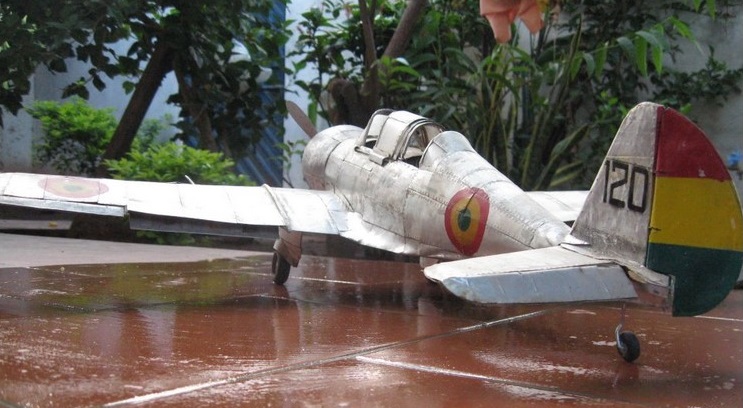
CW-19L
Engine: 90 hp / 67 kW Lambert R-266 5 cylinder radial
Max speed: 130 mph
Cruise speed: 115 mph
CW-19W
Engine: 145 hp / 108 kW Warner Scarab
Max speed: 154 mph
Cruise speed: 132 mph
CW-19R
Engine: Wright R-760E2 (J-6-7) Whirlwind, 350 hp / 261kW
Wingspan: 10.67 m / 35 ft 0 in
Length: 8.03 m / 26 ft 4 in
Height: 2.49 m / 8 ft 2 in
Wing area: 16.16 sq.m / 173.94 sq ft
Max take-off weight: 1588 kg / 3501 lb
Empty weight: 904 kg / 1993 lb
Max speed: 298 km/h / 185 mph
Cruise speed: 164 mph
Rate of Climb: 2000 fpm
Armament: 2 x 7.7mm machine-guns, light bombs on underwing racks
CW-19R
Engine: Wright R-975E3 (J-6-9), 336kW
Curtiss-Wright CW-15 Sedan
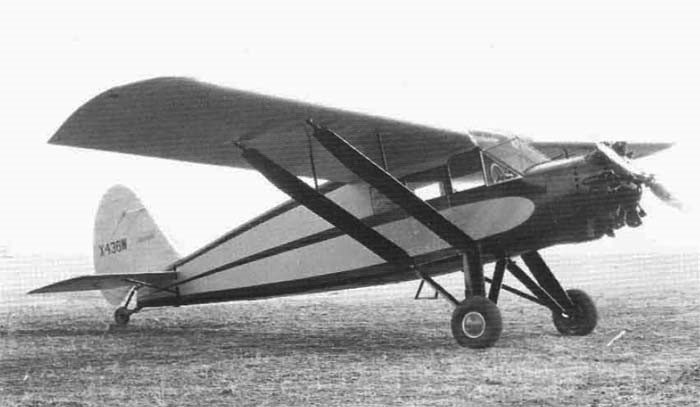
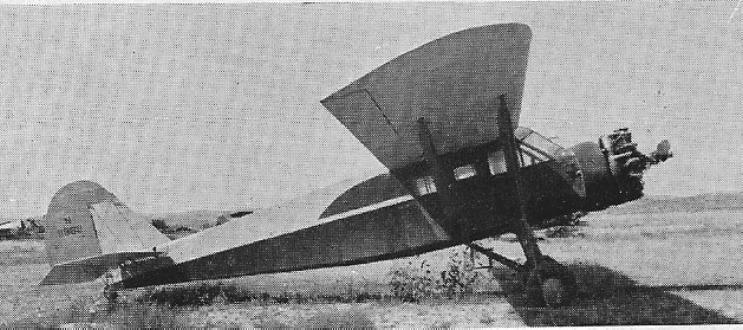
The Curtiss-Wright CW-15 Sedan was a four-seat utility aircraft produced in small numbers in the United States in the early 1930s. It was a braced high-wing monoplane with conventional tailwheel landing gear with a fully enclosed cabin, superficially resembling the Travel Air 10. At the time of the CW-15’s design, Travel Air had recently been acquired by Curtiss-Wright.
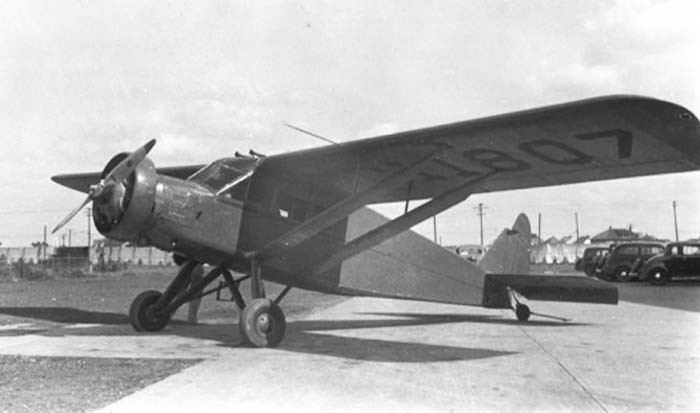
Designed by Walter Burnham, the CW-15 Sedan first flew in 1931 and 15 were built.
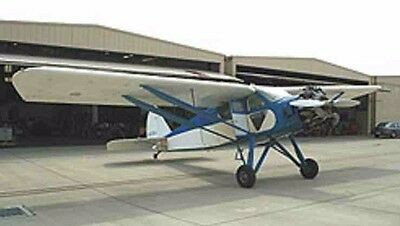
The -15 Sedan was initially produced with the 180 hp Curtiss Challenger and 210 hp Kinner C-5 engines, but the remaining examples were powered by 300 hp Wright Whirlwind (Sedan 15-D) and 245 hp Jacobs (Sedan 15-N).
CW-15C
Engine: Curtiss R-600 Challenger, 185 hp (138 kW)
Propeller: 2-bladed fixed-pitch metal
Wingspan: 46 ft 5 in (14.15 m)
Wing area: 240 sq ft (22 m2)
Airfoil: Göttingen 593
Length: 30 ft 5 in (9.27 m)
Height: 8 ft 10 in (2.69 m)
Empty weight: 2,083 lb (945 kg)
Gross weight: 3,281 lb (1,488 kg)
Maximum speed: 115 mph (185 km/h; 100 kn)
Cruise speed: 97 mph (156 km/h; 84 kn)
Range: 525 mi (456 nmi; 845 km)
Service ceiling: 12,000 ft (3,700 m)
Rate of climb: 600 ft/min (3.0 m/s)
Crew: 1
Capacity: 3 pax
nine built
Sedan 15-D
Engine: 300 hp Wright Whirlwind
Wing span: 43 ft 5 in
Wing area: 215.06 sq.ft
Length: 30 ft 5 in
Height: 9 ft 7 in
Empty weight: 2121 lb
Loaded weight: 3319 lb
Max speed: 135 mph
ROV: 750 fpm
Service ceiling: 14,000 ft
Range: 500 mi
Three built
CW-15N
Engine: Kinner C-5
three built
Curtiss-Wright CW-6 Sedan
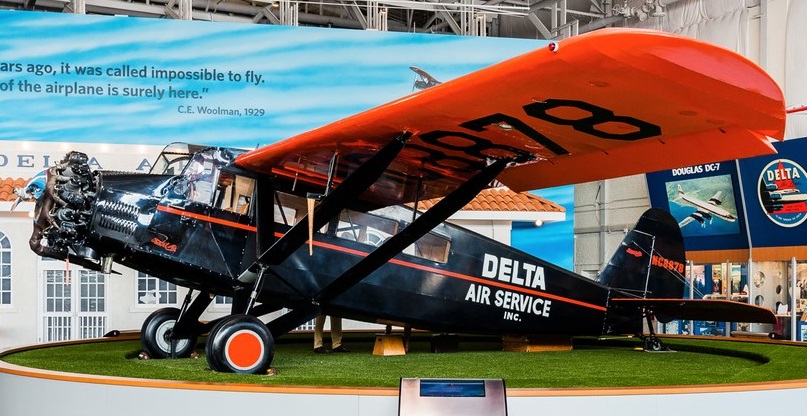
Passenger Aircraft, USA, 1927
Delta conducted their first passenger flight with a Curtiss-Wright 6 B Sedan on June 17, 1929 from Dallas to Jackson with stops at Shreveport and Monroe.
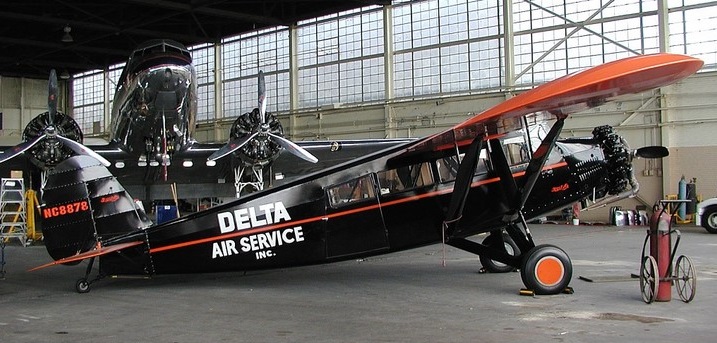
Curtiss-Wright CW-4 Commercial
Powered by a Siemens engine and registered N9742 c/n 2-C, the designation conflicts with one built in August 1933 by Curtiss-Wright as a CW-4, aka T-32 Condor II, c/n 35.
Curtiss-Wright CW-3 Duckling / Teal
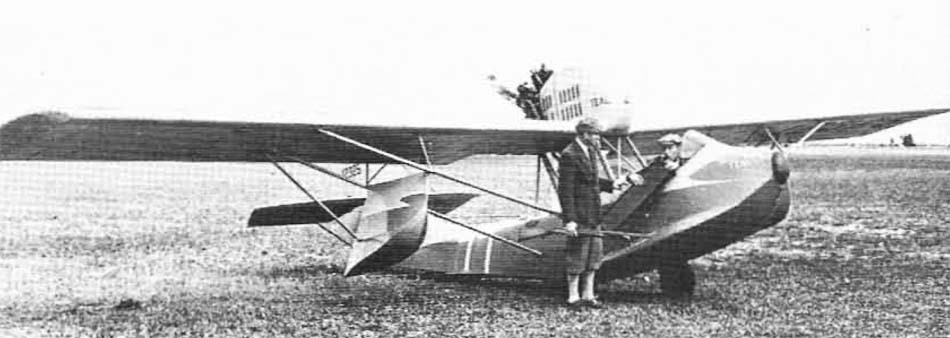
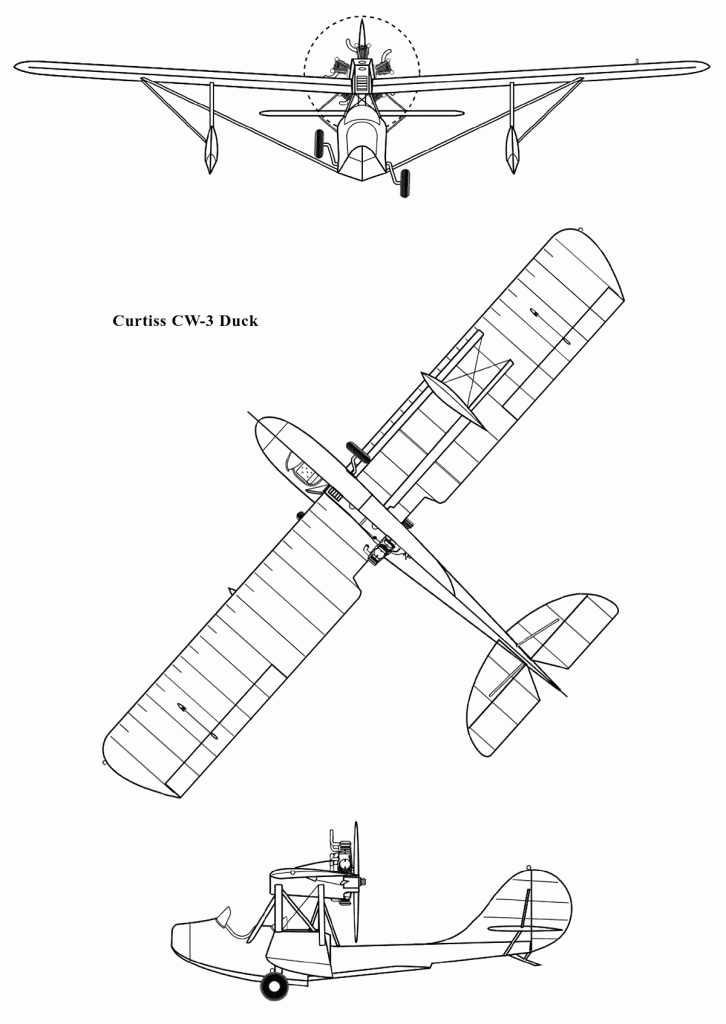
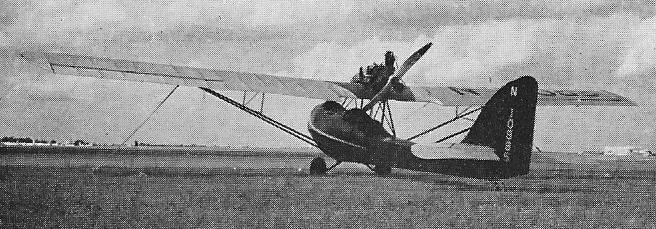
The Curtiss-Wright CW-3 Duckling (sometimes called the Teal) was an American two-seat amphibian flying-boat developed by Curtiss-Wright as a modification of the CW-1 Junior. The new aircraft was distinguished by a double cabin, where the pilot and passenger sat side by side, and the new fuselage. The fuselage had a plywood V-shaped underside added and the addition of strut-mounted pontoons. The engine was mounted above the wing driving a pusher propeller. The wing and engine installation remained unchanged, although floats were added under the wing for stability on the water surface.
First flying in 1931 only three aircraft were built, all powered by different engines, but the power was the same – 90 hp (67 kW).
The first prototype was equipped with a Velie M-5 radial engine, the second CW-3L for $1,250 with a Lambert engine, the third CW-3W with a Warner Scarab engine.
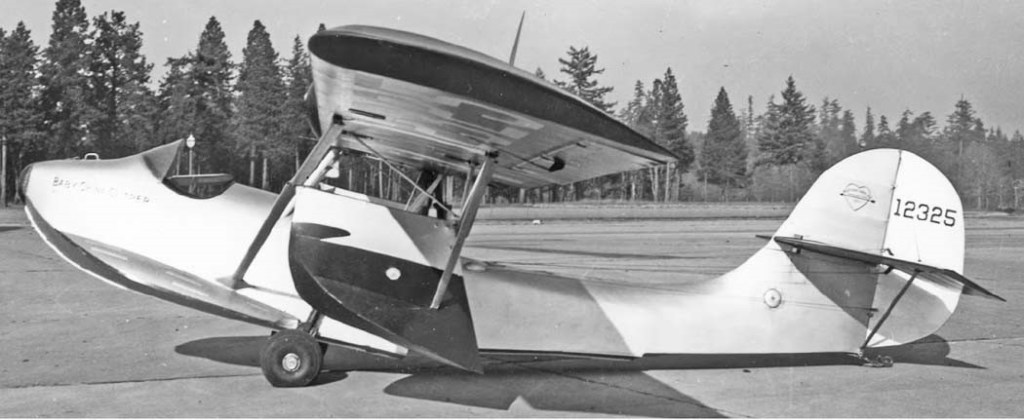
The release of CW-3 ended there, since the financial crisis began in the USA and there were no amphibious customers.
CW-3L
Engine: Lambert, 90 hp
MTOW: 544 kg
Wingspan: 12.04 m
Length: 6.48 m
Wing area: 16.38 sq.m
Maximum speed: 129 km / h
Cruising speed: 105 km / h
Crew: 2
CL-3W
Engine: 1 × Warner Scarab, 90 hp (67 kW)
Wingspan: 39 ft 6 in (12.04 m)
Length: 21 ft 3 in (6.48 m)
Crew: two
Curtiss-Wright CW-1 Junior
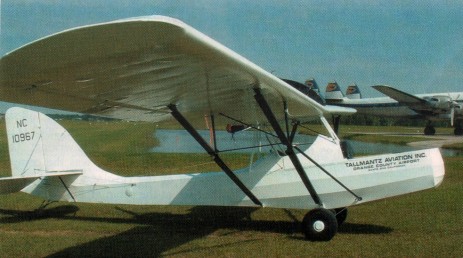
The Curtiss-Wright CW-1 Junior of 1931 (ATC 397) was designed by Karl White (modified from the CR-1 Skeeter). Selling for $1,490-1,595, 270 were built.
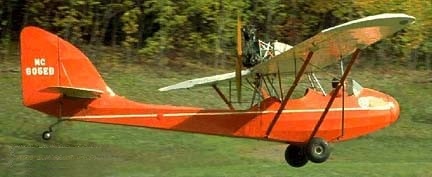
Engine options were numerous — even four tiny model-aircraft motors were used at the 1938 Nationals to demonstrate its modest power demands in order to fly, which it did, piloted by Dick Granere). Many were later converted to Continental A-40 to -65 power.
The CW-1A Junior of 1933 (ATC 2-442) was a single CW-1, NC11851, as a test bed for a 35hp Augustine B4-40 engine.
Two CW-1S Junior were built in 1936 (ATC 2-525) as CW-1 with 40hp Salmson AD-9 engines.
CW-1
Engine: 45hp Szekely SR-3 pusher
Wingspan: 39’6″
Length: 21’3″
Height: 7 ft 4 in
Wing area: 176 sq.ft
Empty weight: 570 lb
Loaded weight: 975 lb
Useful load: 420 lb
Max speed: 80 mph
Cruise speed: 70 mph
Stall: 32 mph
ROC: 600 fpm
Service ceiling: 12,000 ft
Range: 200 mi
Seats: 2
Curtiss-Wright CR-2 Coupe

The Curtiss-Wright CR-2 Coupe side-by-side cockpit with unfaired landing gear, strut-braced wing monoplane began as a Curtiss-Robertson project. Two were built in 1930, N627V and N637V, the design later evolved into the CW-19L.
Engine: Wright-Gypsy, 90hp
Wingspan: 38’0″
Length: 25’0″
Useful load: 611 lb
Max speed: 110 mph
Cruse speed: 90 mph
Stall: 45 mph
Range: 450 mi
Seats: 2
Curtiss-Wright CR-1 Skeeter
Designed by Karl White and Walter Beech, the CR-1 Skeeter, open cockpit, monoplane parasol wing design is thought to be from the Snyder Buzzard Light Plane, the rights to which were purchased in July 1930 by Curtiss, although White later claimed to have actually begun a similar preliminary design long before that while working with Beech at Travel Air Co.
First flown on 5 October 1930 piloted by Lloyd Child, only one was built, N607V, considered the prototype for the 1931 CW-1 series.
Engine: ABC Scorpion, 24hp pusher
Wingspan: 39’6″
Length: 21’3″
Seats: 2

