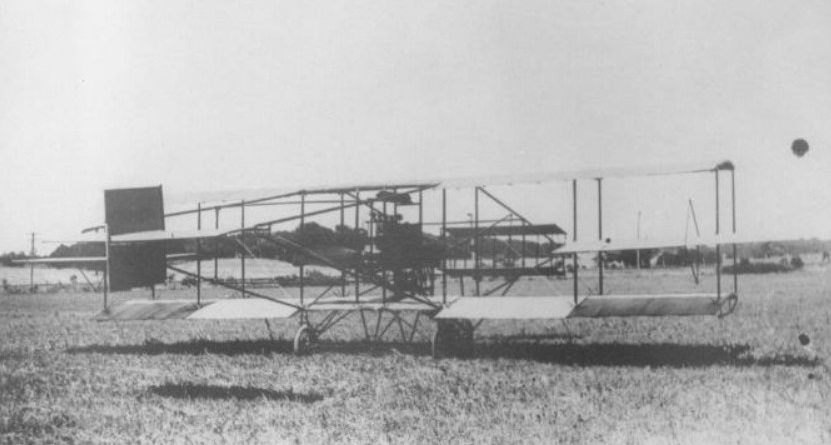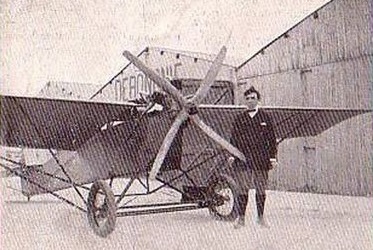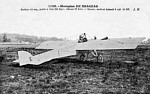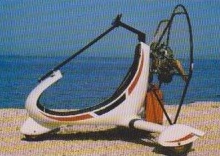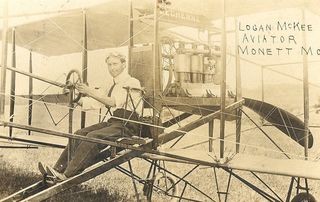
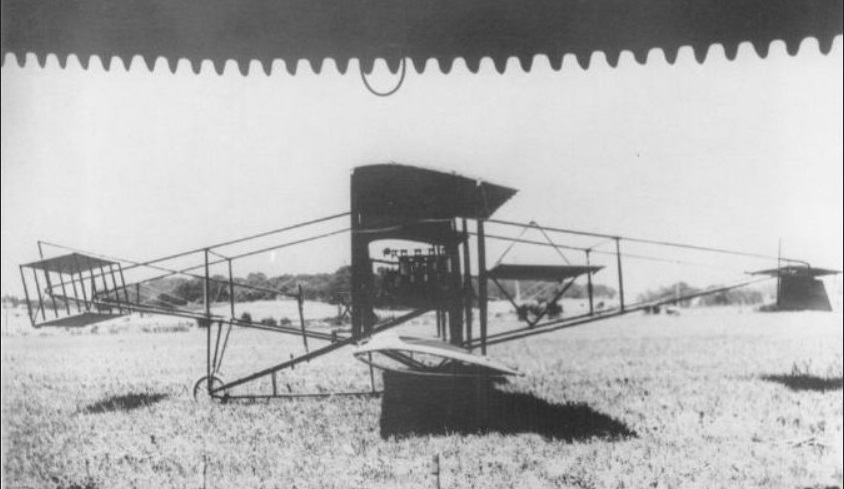
DeChenne 1911 Aeroplane             

was a success and gave its first public demonstration flight at Monett on July 4, 1911, flown by Monett druggist Logan McKee. It then made an exhibition tour in Oklahoma and Texas.
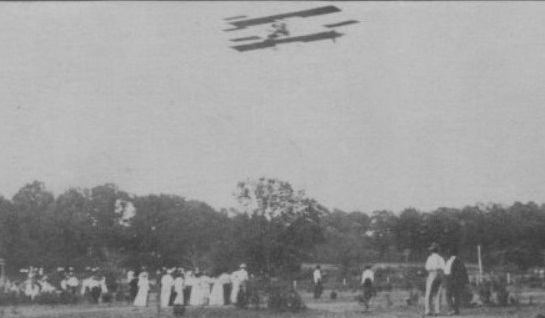
The aeroplane made several straight away flights, going some distance, but hardly exceeding fifty feet in height, alighting in some pasture and returning to the grounds.” If I am reading this correctly, when McKee wanted to turn around, he landed and turned the plane around on the ground, then flew back to the fair grounds. Turning was by far the most dangerous maneuver in early flight, and making a plane that could turn safely was a major design challenge for early airplane builders. Either McKee was a very cautious pilot, or the DeChenne was a very limited aircraft. In any case, the DeChenne company received $1,000 for a two day exhibition at Caddo.

On October 6, 1911, Aero magazine carried a classified ad seeking a new pilot for the Dechenne, and on November 25, 1911, it carried an ad offering to sell the plane’s engine. “Cheap if taken soon. Reason, have closed for season and can make more by spring.” If the plane ever flew again after McKee, I have found no record of it. In February, 1913, Aero & Hydo magazine carried a “quitting business” ad offering to sell various assets of the DeChenne company.
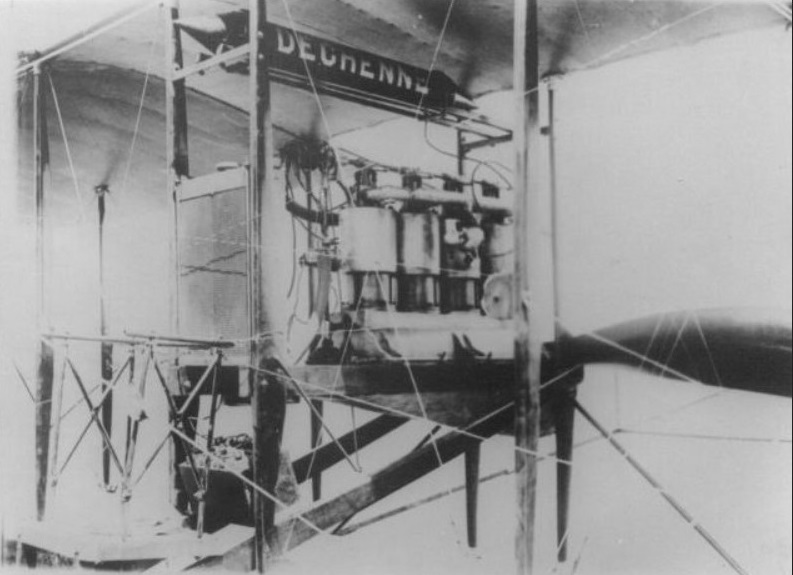
Dechaux Helicop-Jet        

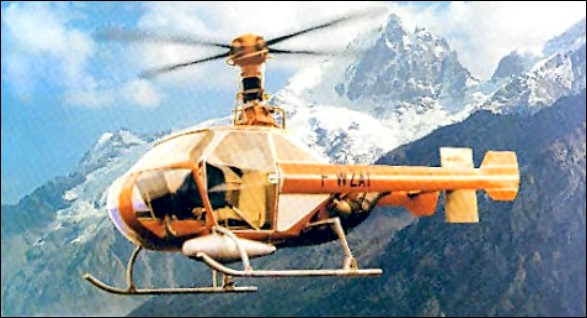
The Hélicop-jet was an original design helicopter of Mr. Charles Déchaux and employed the so called pressure-jet principle (compressed air from turbine engine was channelled to exhaust nozzles at the tips of the rotor blades and extreme tail). The aircraft had a rotor as used in the Sud Aviation SO-1221 Djinn and also featured a twin tail boom configuration and used cabin doors of the Panhard PL-24c car.

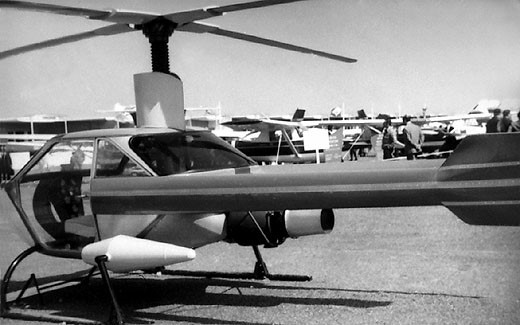
A full-size model was exhibited at the 1969 Paris Air Show.

mock up in Salon du Bourget 1969

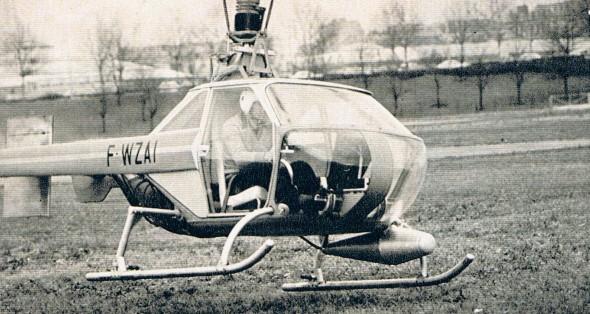
The first example of the Hélicop-jet, F-WZAI, had one 250-260hp Turboméca Palouste IV turbine and it made the first flight in December 1976 at the Issy-les-Moulineaux heliport with Mr. Heurtau, technical director of Héli-Union at the controls.

Trials with this first aircraft showed that only the pilot could be lifted.

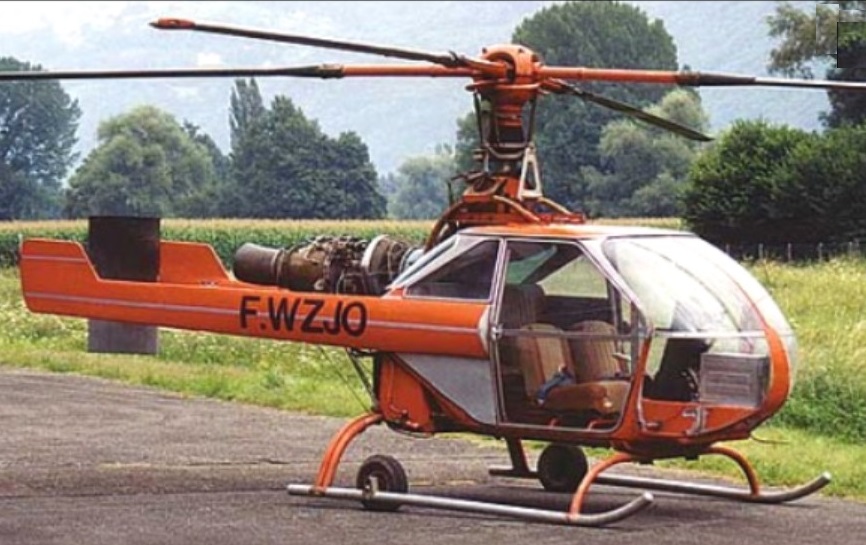
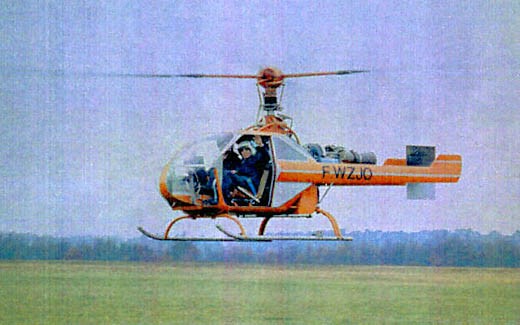
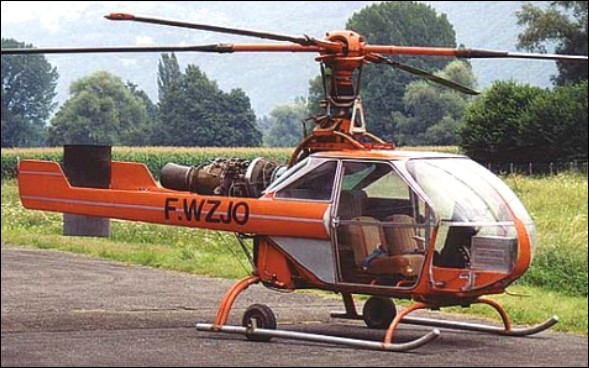
The second prototype, F-WZJO made its maiden flight on December 12, 1984, still in Issy-les-Moulineaux. This time it is equipped with a Turbomeca Astazou IIIA 600 hp turbine and a more rounded windshield.

Tests continued at La Ferté-Alais, under the direction of engineer Jean Richard and piloted by Philippe Fouquaux. As with the first prototype, the second seemed largely underpowered. The tests of no 2 ceased in 1985.

Hélicop-Jet Project Management Co was formed in Montreal in 1984 with the objective the production of a helicopter derived from the Hélicop-Jet, without success. Plans for versions with Turboméca TM.319, P&W PT6 and Allison 250 turbine engines were abandoned.

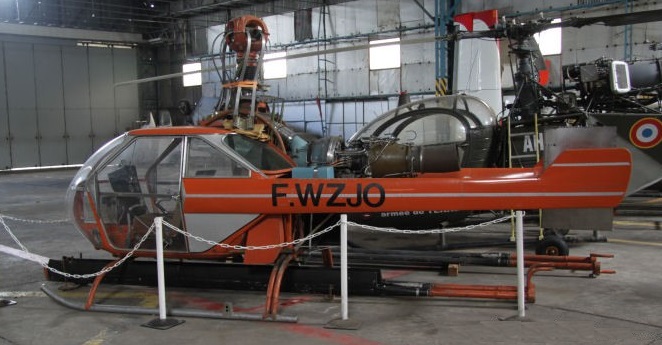
The prototype no 2 was given to CELAG (Center for Studies and Leisure Aerospace Grenoble) in July 2001. Since July 2007, it has been exhibited in the collections of the Lyon-Corbas Aviation Museum. This prototype arrived at the CELAG on July 25, 2001, after a long period of immobilization at Ferté-Alais, where it had been stored by 1985. It was in excellent state, and almost complete.

Gallery

No 2 prototype, F-WZJO
Engine: Turbomeca Astazou IIIA 600 hp
Rotor diameter: 10.08 m
Number of blades: 4
Fuselage length: 5.30 m
Height: 2.72 m
Empty weight: 450 kg
MTOW: 1060 kg
Cruise speed: 200 km / h
Range: 450 km
Seats: 4

Debongnie Monoplanes

No.3

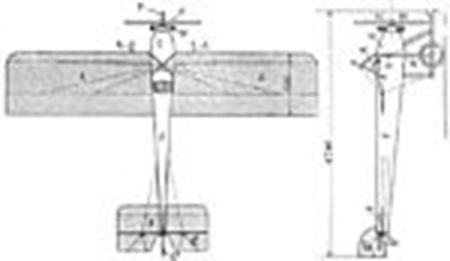
Édouard Eugène Joseph Ghislain opened a workshop in Nieuport-Groenendyck, with his first monoplane coming out 1910. A second with characteristic curved wings appeared in 1911 and another in 1912. Although building three different monoplanes his firm was principally in propeller production. The works folded in 1914 with the beginning of the war.

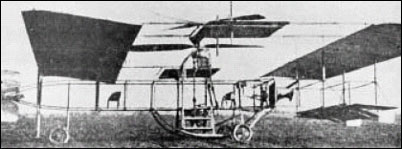
Decazes Helicoplane        

Around 1902, Viscount Decazes and G. Besancon had conducted tests of a 6m diameter vertically mounted propeller in Paris for a planned concept that would have used two of these vertical thrusting propellers, in addition to fixed wings and a propeller for forward thrust. The “rotor” tested produced 67kg of lift at 60 rpm, requiring 10hp. Without a flight weight engine, however, Decazes would have to weight ten more years to build his idea. In 1912, Decazes built his prototype “Helicoplane” at the Loire et Olivier Aircraft plant, and it was tested the following year by Commandant Dorand at Villacoublay. It used two 50hp Gnome rotary engines, one for the co-axial four-bladed rotors and one for the propeller. Two wings in tandem had approximately 25sq.m surface area each. Although it was not intended to hover without a head wind, it was planned to have minimum speed of 18km/h. A transmission failure, however, ended the tests prematurely, prior to flight.

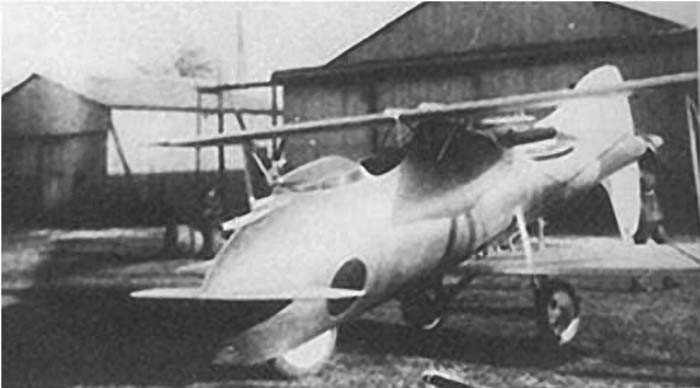
de Bruyere C1

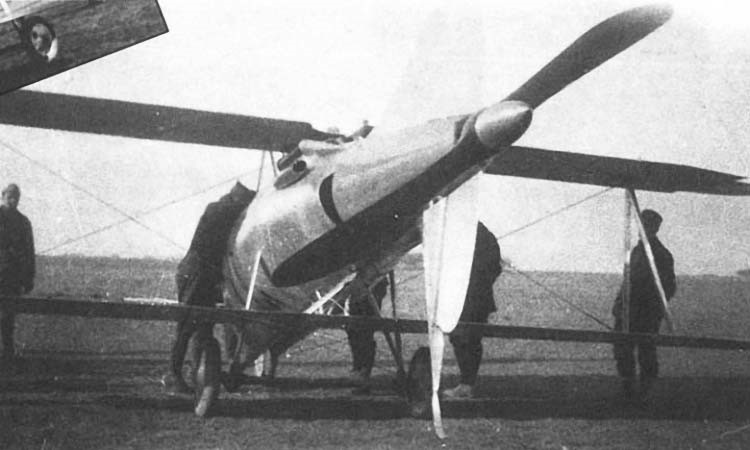
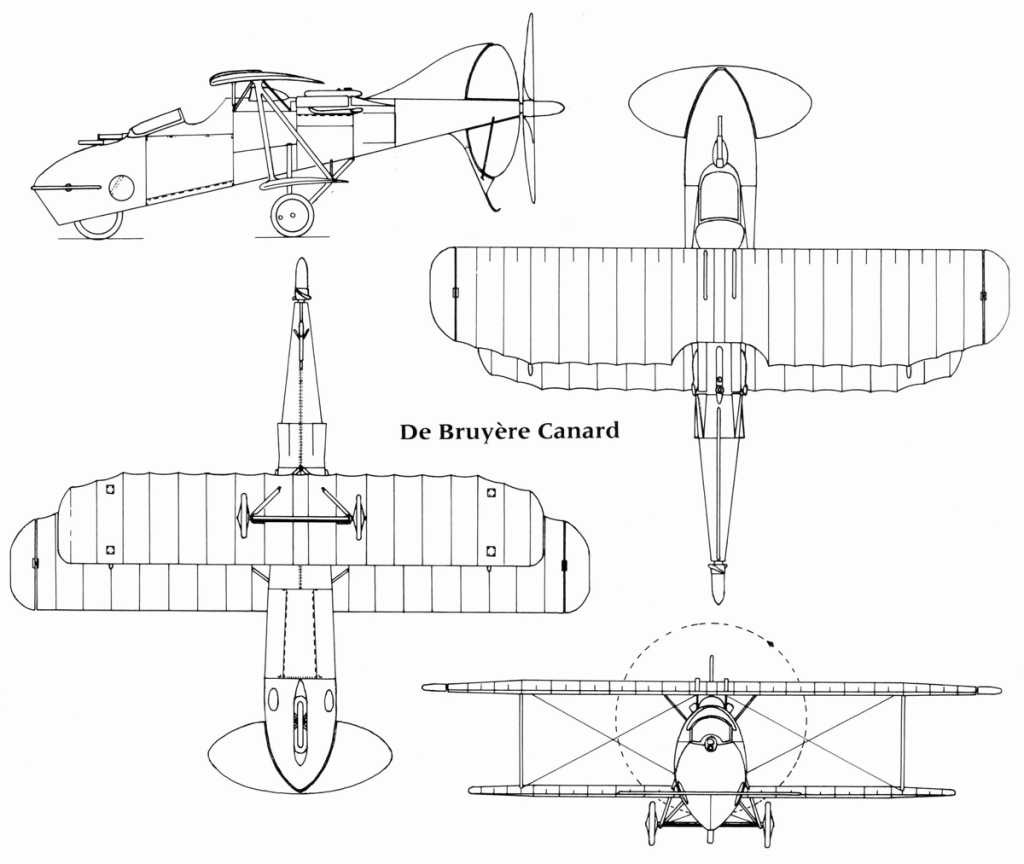
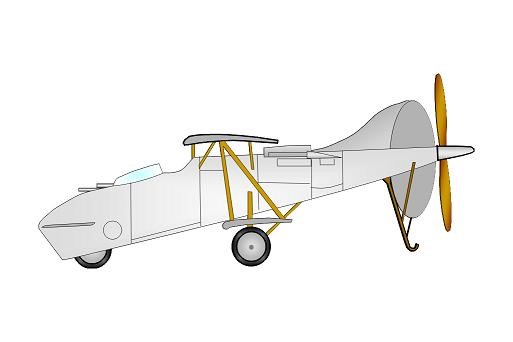
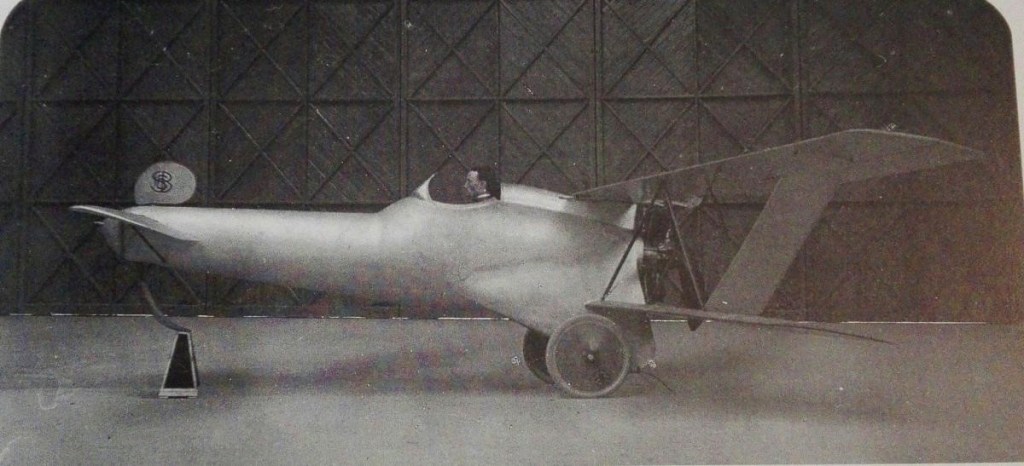
A fighter of the First World War created by French engineer Marcel de Bruyere in 1917, the C 1 was a biplane with equal-span, staggered wings supported by inverted V-struts. Pitch control came from a one-piece, all-moving canard foreplane, while roll was managed by full chord tip ailerons managed roll on the upper wing. The 150-horsepower Hispano-Suiza 8Aa engine was placed behind the wings.

A long shaft connected the engine to a pusher propeller mounted at the tail. The aircraft lacked a fixed horizontal stabiliser but had a short vertical fin and long tail skid to protect the rear-mounted propeller. Its tricycle landing gear and metal fuselage were extremely advanced for the time.

Large circular side windows gave reasonable downward visibility, and it was armed with a single Hotchkiss M1902 37mm cannon.

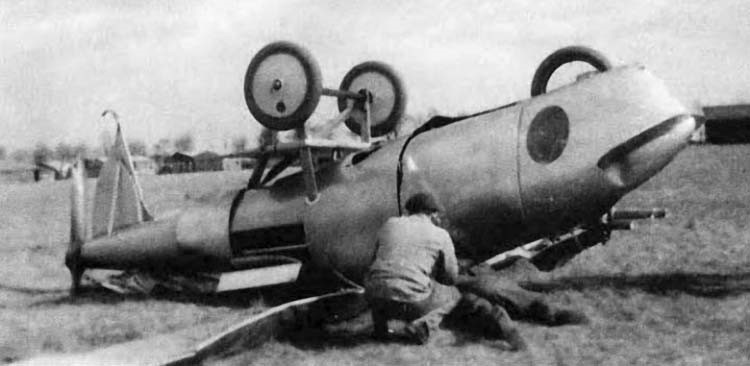
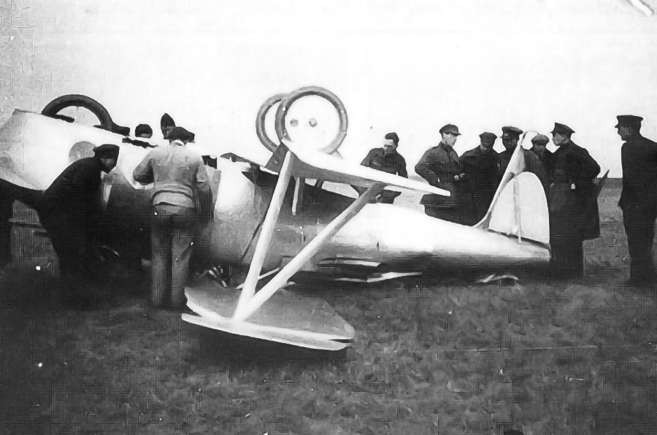
The fighter, designated de Bruyere C1, first flew in April 1917 from the Etampes test aerodrome in Belgium.

During the test flight, the plane climbed several meters, rolled over and crashed. The craft was not rebuilt and received no further development.

de Bruyere С1
Engine: 150 hp Hispano-Suiza 8a
Wing span: 8.20 m
Length: 7.50 m
Crew: 1
Armament: 1 x 37 mm Hotchkiss M1902

Debreyer JCD-03 Pelican

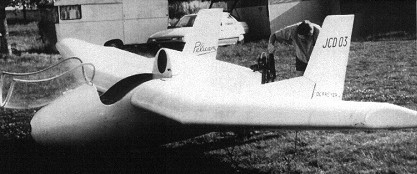
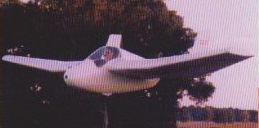
The “Pélican” flying wing was designed by Jean-Claude Debreyer based on the AV-36. Unlike that machine, however, it is not designed for soaring but only for inexpensive powered flight. The designer’s goal was to produce a machine that was easy to build, ultra-light and low in cost, which explains the choice of the flying wing configuration, the low aspect ratio of the wing and the tandem landing gear. The prototype was built of wood with a few laminated parts; the wing section was the same as that of the AV-36 (Fauvel F4 17%). The two-stroke engine, mounted at the rear of the short fuselage, between the two fins, drives a two-bladed propeller directly. The Air Est Services, based in eastern France, offers a kit version, built of composite materials, named JCD-03. It can be equipped with a 12 hp Solo engine or a 24 hp Koenig which gives a considerable improvement over the original performance figures.

The Pelican is transformed into the Eagle by substituting a 24 hp direct drive Konig for the Solo.

Air Est JCD-03 Pelican

Wing span: 7.92 m
Length: 3.10 m
Wing area: 12.0 sq.m
Airfoil: Fauvel F4 17%
Empty weight: 85 kg
Max. weight: 175 kg
Engine: Solo 15 ch
Propeller diameter: 75 cm
Takeoff run: 150 / 200 m
Stall speed: 45 km/h
Cruise speed: 75 km/h
Endurance: 3 hours

Air Est JCD-03 Eagle
Empty weight: 90 kg
Wing span: 7.2 m
Wing area: 12 sq.m
Fuel capacity: 20 lt
Engine: Konig SC 430, 24 hp
MAUW: 200 kg
Seats: 1
Max speed: 130 kph
Cruise speed: 90 kph
Minimum speed: 40 kph
Climb rate: 3 m/s
Fuel consumption: 8 lt/hr
Kit price (1998): 45 000 F sm

De Bernardi MDB 02 Aeroscooter

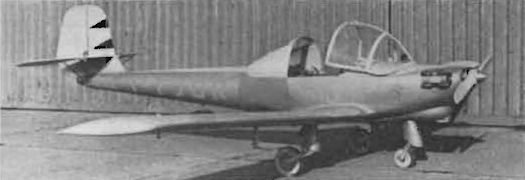
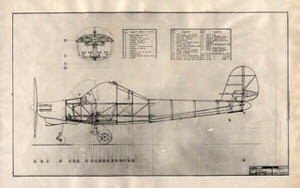
Having developed the all-metal single-seat Partenavia P.53 Aeroscooter earlier, Mario de Bernardi sought to improve the design as the two-seat de Bernardi M.d.B. 02 Aeroscooter. The aircraft was to be built by CAP in Bergamo, Italy.

The Aeroscooter is a low-wing, two-seat monoplane. The partial welded steel tube fuselage uses aluminum skins. The wing uses a wood spar. The tricycle landing gear uses trailing link suspension. The single-piece plexiglas canopy slides forward to open. All fuel is housed in the 20 l (5.28 US gal; 4.40 imp gal) header tank and 50 l (13.21 US gal; 11.00 imp gal) main tank behind the passenger’s seat.

The prototype was built by De Bernardi with the assistance of two mechanics. In April 1959, De Bernardi died of a heart attack after flying a demonstration of the prototype at Rome Urbe Airport.

An example is on display at Museo Aeronautico Caproni di Taledo, Milano.

The daughter of De Bernardi was offering plans for a modernized version of the Aeroscooter using a Rotax 912UL engine to be flown under Italian microlight category.

M.d.B. 02 Aeroscooter
Engine: 1 × Agusta GA.70/0, 62 kW (83 hp)
Propeller: 2-bladed fixed-pitch
Wingspan: 9.5 m (31 ft 2 in)
Wing area: 8.300 m2 (89.34 sq ft)
Length: 5.5 m (18 ft 1 in)
Height: 1.70 m (5 ft 7 in)
Empty weight: 260 kg (573 lb)
Gross weight: 460 kg (1,014 lb)
Fuel capacity: 60 l (15.85 US gal; 13.20 imp gal)
Maximum speed: 210 km/h (130 mph, 110 kn)
Cruise speed: 190 km/h (120 mph, 100 kn)
Stall speed: 50 km/h (31 mph, 27 kn)
Range: 600 km (370 mi, 320 nmi)
Rate of climb: 6 m/s (1,200 ft/min) at sea level
Take-off run: 50 m (164 ft)
Landing run: 50 m (164 ft)
Crew: 2