Diamona HK36 / Hoffman HK-36 Super Dimona

Diamona HK36

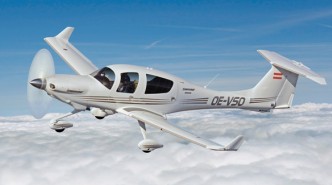
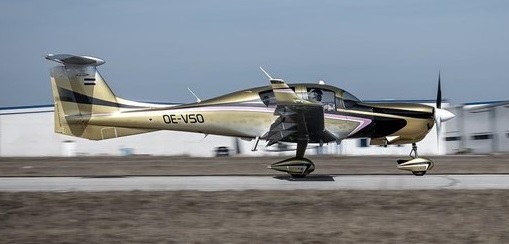
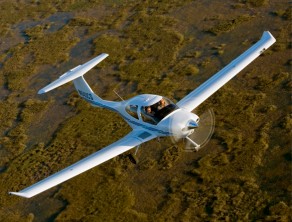
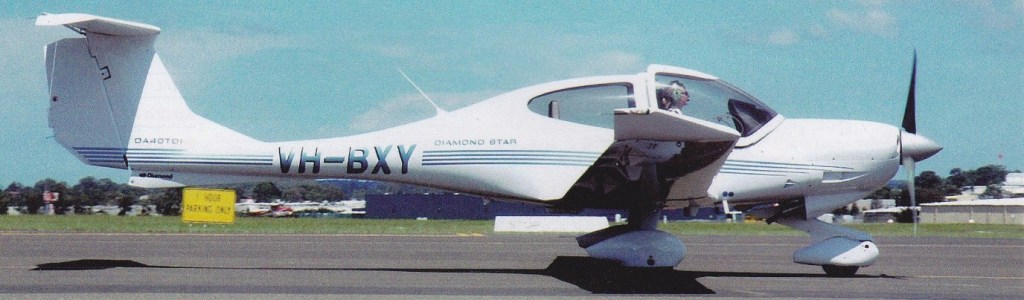
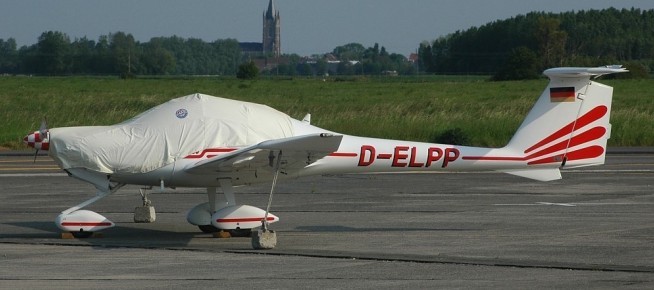
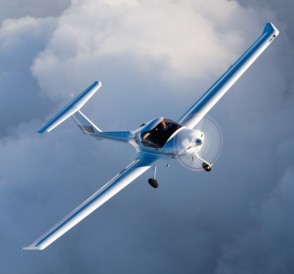
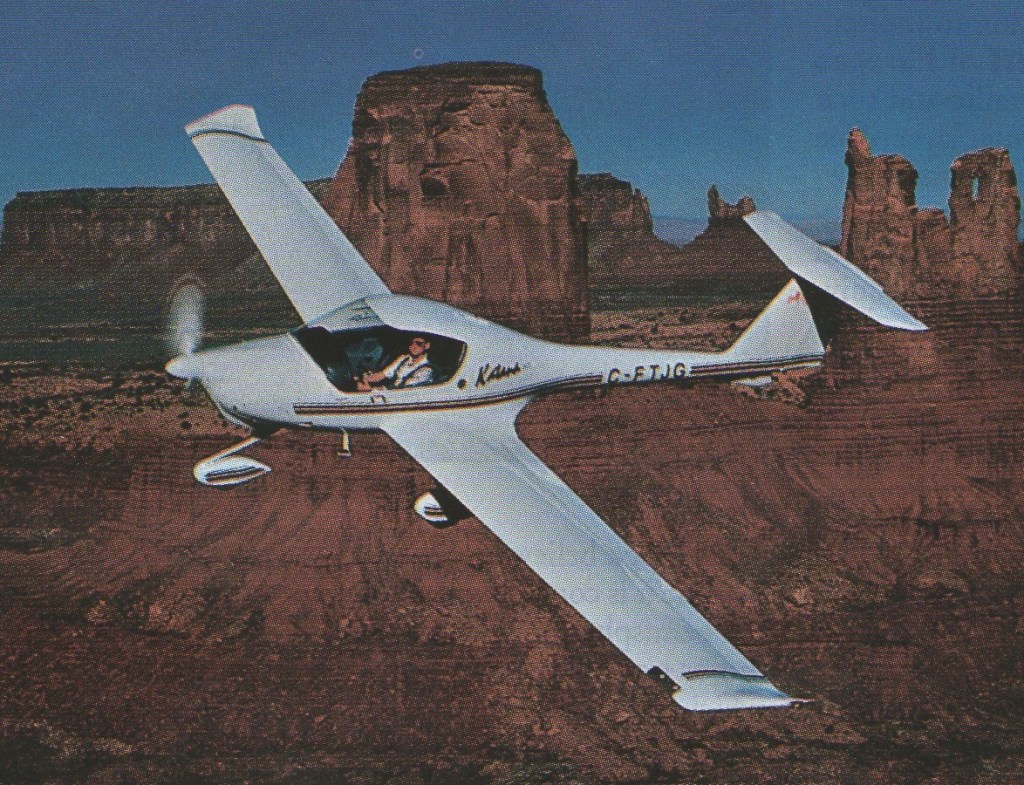
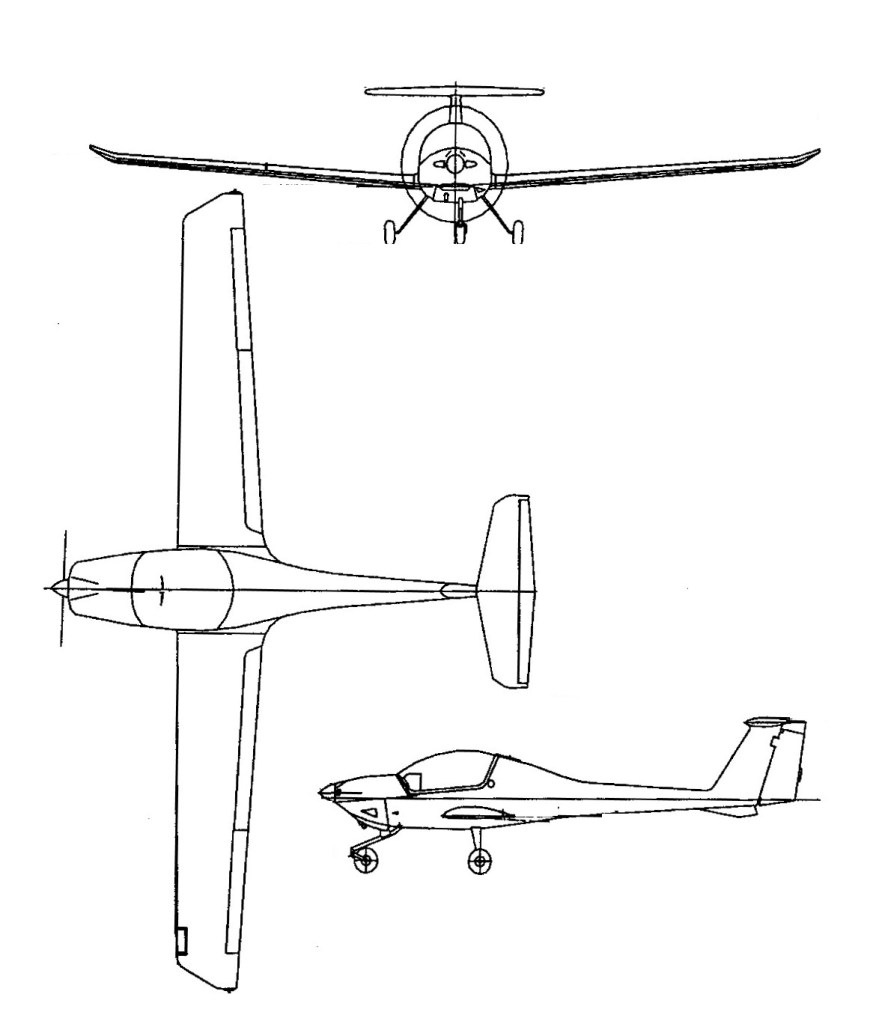
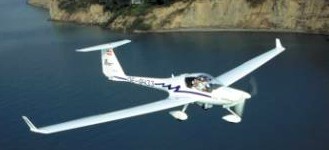
The H-36 Dimona side-by-side two-seat motor glider was designed by Wolff Hoffmann, who left Scheibe to form his own company, Hoffmann Flugzeugbau, to put the Dimona into production at Friesach in Austria, where production was due to start in the summer of 1981. Design work began in 1979 using the Worthmann FX63 137 wing profile. The all-fiberglass two-place self-launching HOAC (formerly Hoffmann) Dimona features a folding wing design which allows two people to fold both wings in several minutes and reduce the aircraft hanger space requirement to no more than that of a sailplane trailer. The Limbach engine drives a Hoffmann 2 blade, 3 position propeller. Of glassfibre construction, the Dimona is a low wing monoplane with a T-tail and a fixed tailwheel undercarriage with spats on the main wheels. The wings can be folded alongside the fuselage and are fitted with air brakes. The cockpit canopy hinges upward for entry, and there are two rear windows. The 80hp Limbach SL2000 EB1 ‘flat four’ engine drives a Hoffmann three-position two blade propeller, and a special engine suspension is featured to ensure low noise and vibration levels.

The prototype made its first flight on 9 October 1980, on sale since summer 1981; some 50 Dimonas had been ordered by the spring of 1981.

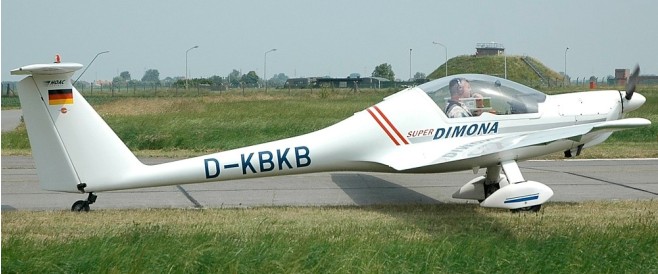
The Hk 36 Super Dimona has the wing span increased to 16.2 m. with carbon fiber spar and modified fuselage. It is also offered with wingtip extensions to give a span of 17.6 m. Approach control is with top surface Schempp-Hirth type airbrake. In addition to the Limbach, it is offered with a Rotax 912 A of similar power, or a more powerful Limbach L 2400 EB. Dimonas have been manufactured in Germany and Austria, and is Air Transport Certified.

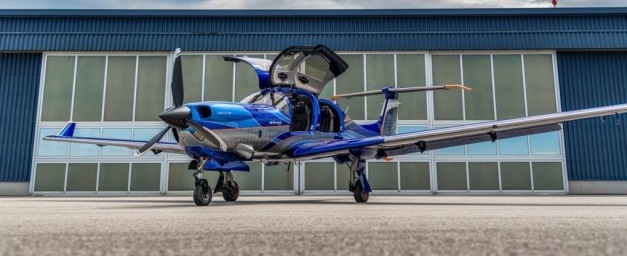
The two-place self-launching glider, a development of the HOAC HK 36 Super Dimona, is produced in four varieties, the HK 36TC with an 60 kW/ 81 bhp engine and tailwheel landing gear, the HK 36TC with the same engine and tricycle gear, the 86 kW/ 115 bhp HK 36TTS with tailwheel gear, and the HK 36TTC with the same engine and tricycle gear. The variants with the larger engine have the capability of towing lighter sailplanes. The wings fold back to stand vertically parallel with the fuselage for storage.
Hoffman HK-36R Super Dimona

Gallery

Hoffmann H-36 Dimona
Engine: Limbach SL2000 EB1, 80hp
Propeller: Hoffmann three-position two blade
Span: 52 ft 6 in
Length: 22 ft 5.75 in
Height: 5 ft 3 in
Wing area: 163.6 sqft
Aspect ratio: 16.8
Empty weight: 882 lb
Max take-off weight: 1,433 lb
Max speed: 130 mph (power on)
Economical cruising speed: 112 mph
Min sinking speed: 2.95 ft/sec at 50 mph
Best glide ratio: 27:1 at 65 mph (power off)
Max rate of climb at sea level: 689 ft/min
Max range: 621 miles

Diamond HK36
Wing span: 16m / 52.5ft
Wing area: 15.24sq.m / 164sq.ft
Empty Weight: 497kg / 1096lb
Payload: 243kg /538lb
Gross Weight: 740kg /1631lb
Wing Load: 48.56kg/sq.m /10.34lb /sq.ft
Aspect ratio: 16.8
L/DMax: 27 @ 105 kph / 57 kt / 65 mph
No. of Seats: 2
MinSink: 0.91 m/s / 3.0 fps / 1.78 kt
Airfoil: Wortmann FX 63-137
Structure: CFRP
Engine: 60 kW/ 80 bhp Limbach L2000 EB1C

Super Diamona HK36
Wing span: 16.2m / 53.1ft
Wing area: 15.24sq.m / 164sq.ft
Empty Weight: 497kg / 1096lb
Payload: 243kg / 538lb
Gross Weight: 48.56kg / 10.34lb
Aspect ratio: 16.8
No. of Seats: 2
L/DMax:27 @ 105 kph / 57 kt / 65 mph
Airfoil: Wortmann FX 63-137
MinSink:0.91 m/s / 3.0 fps / 1.78 kt
Engine: Rotax 912A/ 67 kW/90 bhp Limbach L2400 EB
Structure: GFRP/CFRP

Diamond Katana C1
Price: $123,900
Engine:Cont. IO-240, 125 hp@2700 rpm
TBO hrs.: 2000
Fuel type:100/100LL
Propeller make/type: MT Fixed
Landing gear type: Tri/Fixed
Max ramp weight (lbs.): 1650
Gross weight (lbs.): 1650
Max landing weight (lbs.):1650
Empty weight, std. (lbs.): 1163
Useful load, std. (lbs.): 487
Payload, full std. fuel (lbs.): 337
Usable fuel (gals.): 25
Wingspan: 35 ft. 8 in.
Overall length: 23 ft. 6 in.
Height: 7 ft. 2 in.
Wing area (sq. ft.):125
Wing loading (lbs./sq. ft.): 13.2
Power loading (lbs./hp.): 13.2
Wheel base: 5 ft. 6 in.
Wheel track: 6 ft. 3 in.
Seating capacity: 2
Cabin width (in.): 42
Baggage capacity (lbs.):44
Cruise speed (kts.): 75% power @ 24,000 ft.: 132
Max range (w/ reserve) (nm): 75% power: 482
Fuel consumption (USgph): 75% power: 5.0
Estimated endurance (65%) (hrs): 4.5
Stall speed (flaps up) (knots): 42
Stall speed (flaps down) (knots): 34
Best rate of climb (fpm): 1105
Service ceiling (ft.): 13,000
Takeoff over 50-ft. obstacle (ft.): 1263
Landing over 50-ft. obstacle (ft.): 1235

HK36 Katana Xtreme TS
Wing span: 16.6m / 54.5ft
Wing area: 15.33sq.m / 165sq.ft
Empty Weight: 539kg / 1189lb
Payload: 231kg / 509lb
Gross Weight: 770kg / 7698 lb
Wing Load: 51.53kg /sq.m / 10.29lb/sq.ft
No. of Seats: 2
MinSink: 1.14m/s / 3.75 fps / 2.2 kt
L/DMax: 28
Structure: GFRP/CFRP

HK36 Katana Xtreme TTS
Wing span: 16.6m / 54.5ft
Wing area: 15.33sq.m / 165sq.ft
Empty Weight: 539kg / 1189lb
Payload: 231kg / 509lb
Gross Weight: 770kg / 1698lb
Wing Load: 51.53kg/sq.m / 10.29lb/sq.ft
No. of Seats: 2
L/DMax:28
MinSink:1.14 m/s / 3.75 fps / 2.2 kt
Engine: 86 kW/ 115 bhp Rotax 914F
Structure: GFRP/CFRP

HK36TTC-ECO
Seats: 2.
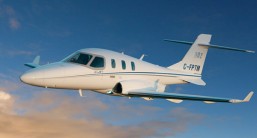
Diamond D-Jet

Engine Williams FJ33-4A-19 turbofan
Length 35 ft 1 in
Height 11 ft 7 in
Wing Span 37 ft 6 in
Cabin seating 2 + 3
Pressurization 5.5 psi
Cabin altitude 8,000 ft @ FL250
Maximum ramp weight 5,690 lbs
Useful load 2,240 lbs
Maximum fuel 1,740 lbs
Maximum cruise speed 315 ktas
Certified ceiling 25,000 ft
Time to climb to 25,000 feet 15 min
Long range cruise speed 240 ktas
Maximum range 1,350 nm

Diamond DA50

Austria-based Diamond Aircraft announced a change in direction for its DA50 aircraft program, which Diamond introduced in 2017 with five-, six-, and seven-seat variants. Diamond says after spending 2018 re-evaluating all its ongoing projects, it decided to change the DA50’s “engine concept.” As such, Diamond was partnering with Continental Aerospace Technologies to equip the DA50 with Continental’s 300-horsepower CD-300 Jet-A1 engine. Initial ground tests of the DA50 with the new engine occurred 15 March 2019, and the first flight with the new engine happened March 22, marking the official start of the aircraft’s flight test program with the CD-300.

DA50 using a 300-horsepower Continental CD-300 Jet-A1 engine

Diamond Aircraft determined that the CD-300 engine aligned with Diamond’s jet fuel philosophy and that it is a suitable solution for the DA50. Certified in December 2017, the CD-300 is the third platform in Continental’s Jet-A fuelled piston engine line up.

In 2020 Diamond Aircraft offered the DA50 RG. The first production aircraft to be fitted with a CD-300 powerplant. The DA50 RG is powered by a 300hp turbocharged Continental CD-300 V6 diesel.

DA50 RG

In the design phase, close attention was paid to drag reduction, and the aircraft features a retractable undercarriage.

Hinged, double slotted flaps provide high lift and excellent slow speed behaviour. The aeroplane has five seats, including a 60/40 folding back seat with a separate cargo bay hatch. Entry and exit are through big gull-wing doors.

DA50 RG

The aircraft’s avionics include Garmin’s G1000 NXi flight deck with the GFC700 Automated Flight Control System.

Options include a removable right-hand control stick, oxygen system, electric air conditioning, TKS de-icing system, Garmin GCU 476 keypad and a built-in tablet mount.

The aircraft is currently undergoing type certification with EASA, with approval anticipated by late summer of 2020. FAA certification is expected by the end of 2021.

DA50 Magnum
Engine Austro Engine AE 300 2.0 l turbo-diesel,170 hp
Fuel Jet A1
Propeller MT 3-blade Constant Speed
Cruise speed 150+ kts
Fuel consumption 9 USgph max power
Fuel consumption 6-7 gph cruise
Certified altitude 18,000 ft
Maximum takeoff weight (MTOW) 3,262 lbs
Seating 4
Cabin width 52 inches
Doors 3

DA50 SuperStar
Engine Teledyne Continental TSIOF-550J
Fuel AVGAS 100LL
Propeller 3 or 4 – blade constant speed
Cruise speed 200+ kts
Fuel consumption 16-20 gph at cruise
Maximum takeoff weight (MTOW) 3,560 lbs
Seating 2 + 3
Cabin width 52 inches
Doors 3 + baggage door
Pressurization: Yes

Diamond DA40 / DV40 Diamond Star

DA40-CS

An all composite light aircraft. There is a display showing percentage power as well as engine RPM. Dual control sticks instead of wheels allow for better instrument placement on the panel. Control stick actuation is by push rods in¬stead of the more conventional cables and implies a lower maintenance cost. The panel itself is modular allowing for improved main¬tenance access
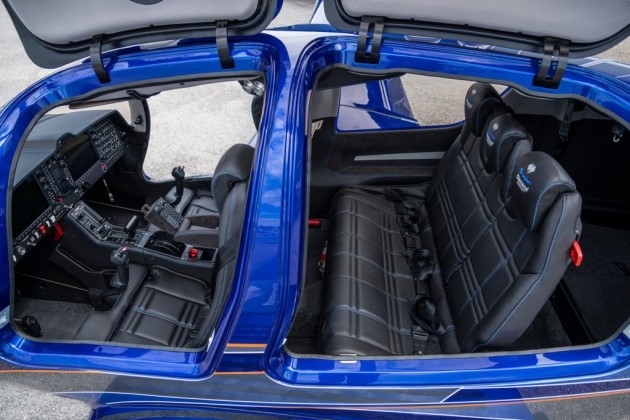
The DA-40 seats four people comfortably. A forward hinged canopy allows access for the pilot and front seat passenger, with a separate access for the rear passengers via a gull wing door in the left fuselage side The cabin struc¬ture contains a carbon fibre roll bar aft of the front seats for crash protection. There is plenty of headroom and legroom for all occupants. As in the Katanas the front seats are fixed in position, but don’t have quite the same reclined aspect as in the Katana. Rudder pedals can be easily adjusted.

At the 2004 Sun’n Fun Diamond showed the DA40-FP. A fixed pitch version of the DA40-180 DiamondStar, powered by a Lycoming O-360-A4D 180 hp, with a fixed pitch metal Sensenich prop.

In 2006 220 Diamond Star four-seaters were delivered.

Diesel-powered DA 40TDI

The DA40 DiamondStar is powered by a Lycoming IO-360-M1A 180 hp engine, with a hydraulic prop governor and a constant speed prop.

DV40-180
Engine: Lycoming IO-360, 180 hp.
Range @ cruise: 570 nm.
Fuel burn @ cruise: 35 lt/hr.
Seats: 4.

DA40-Tdi
Engine: Thielert TAE turbodiesel, 135 hp.
Cruise: 130 kt.
Fuel burn @ cruise: 18.5 lt/hr.
Range @ cruise: 750 nm.
Seats: 4.

DA40 CS
Engine: Lycoming IO-360-M1A, 180 hp
Propelller: Hartzell 2-blade aluminum constant-speed
Airworthiness category: Normal and utility
Length: 26 ft 5 in
Height: 6 ft 6 in
Wing Span: 39 ft 6 in
Maximum takeoff weight: 2,645 lbs
Useful load: 900 lbs (standard equipped airplane)
Fuel capacity, usable (standard/optional): 40 USgal / 50 USgal
Fuel: AVGAS 100LL
Takeoff distance, ground roll: 1,175 ft
Takeoff distance, 50-foot obstacle: 1,700 ft
Landing distance, ground roll: 1,155 ft
Landing distance, 50-foot obstacle: 2,093 ft
Rate of climb, sea level: 1,120 ft/min

2007 Diamond Star DA40 XL
Engine: Lycoming IO-360-M1A, 180 hp@SL
TBO (hrs.): 2000
Fuel type: 100/100LL
Propeller type: MT 3-blade CS
Landing gear type: Tri./Fixed
Max ramp weight (lbs): 2646
Gross weight (lbs.): 2646
Landing weight (lbs.) 2535
Empty weight, std. (lbs.): 1756
Useful load, std. (lbs.): 890
Useful fuel, ext. (gals.): 50
Payload, full std. fuel (lbs.): 602
Wingspan: 39 ft. 6 in.
Overall length: 26 ft. 5 in.
Height: 6 ft. 6 in.
Wing area (sq. ft.): 145
Wing loading (lbs./sq.ft.): 18.2
Power loading (lbs./hp): 14.7
Wheel size (in.): 6.00 x 6
Seating capacity: 4
Cabin doors: 3
Cabin width (in.): 47
Cabin height (in.): 44
Cruise speed (kts.): 75% power: 150
Fuel consumption (USgph.): 75% power: 10
Range (nm): 75% power: 720
Range (nm): 55% power: 785
Vso (kts.): 49
Best rate of climb, SL (fpm): 1120
Service ceiling (ft.): 16,400
Takeoff distance (ft.): 1027
Takeoff over 50 ft. obstacle (ft.): 1140

DA40 XLS
Engine: Lycoming IO-360-M1A, 180 hp
Propeller: MT 3-blade composite constant-speed
Airworthiness category: Normal and utility
Length: 26 ft 5 in
Height: 6 ft 6 in
Wing Span: 39 ft 6 in
Maximum takeoff weight: 2,645 lbs
Useful load: 860 lbs (standard equipped airplane)
Fuel capacity, usable: 50 gal
Fuel: AVGAS 100 LL
Takeoff distance, ground roll: 1,175 ft
Takeoff distance, 50-foot obstacle: 1,700 ft
Landing distance, ground roll: 1,155 ft
Landing distance, 50-foot obstacle: 2,093 ft
Rate of climb, sea level: 1,120 ft/min

2009 DIAMOND DA40 XLS
Price: $348,950
Engine: Lycoming IO-360-M1A, 180 hp@SL
Fuel type: 100/100LL
Propeller type: 3-blade, CS, composite MT
Landing gear type: Tri./Fixed
Max takeoff weight (lbs.): 2645
Useful load, std. (lbs.): 860
Usable fuel, std. (USgals.): 50
Baggage capacity (lbs.): 100
Wingspan: 39 ft. 6 in.
Overall length: 26 ft. 5 in.
Overall height: 6 ft. 6 in.
Seating capacity: 4
Cabin width (in.): 45.5
Vso (KIAS): 49
Cruise speed, 75% power (kts.): 150@10 gph
Range, 75% power (nm): 720
Range, 55% power (nm): 785
Max speed (KTAS): 157
Best rate of climb, SL (fpm): 1120
Service ceiling (ft.): 16,400
Takeoff ground roll (ft.): 1175
Takeoff over 50 ft. obstacle (ft.): 1700
Landing ground roll (ft.): 1155
Landing over 50 ft. obstacle (ft.): 2093
Max demonstrated crosswind (kts.): 20
Glide ratio: 10.3:1

Engine Lycoming IO-360-M1A,180 hp
Propeller MT 3-blade composite constant-speed
Airworthiness category Normal and utility
Length 26 ft 5 in
Height 6 ft 6 in
Wing Span 39 ft 6 in
Maximum takeoff weight 2,645 lbs
Useful load 860 lbs (standard equipped airplane)
Fuel capacity, usable US50 gal
Fuel AVGAS 100 LL
Takeoff distance, ground roll 1,175 ft
Takeoff distance, 50-foot obstacle 1,700 ft
Landing distance, ground roll 1,155 ft
Landing distance, 50-foot obstacle 2,093 ft
Rate of climb, sea level 1,120 ft/min

HOAC LF 2000 / LF2 / Diamond DV20

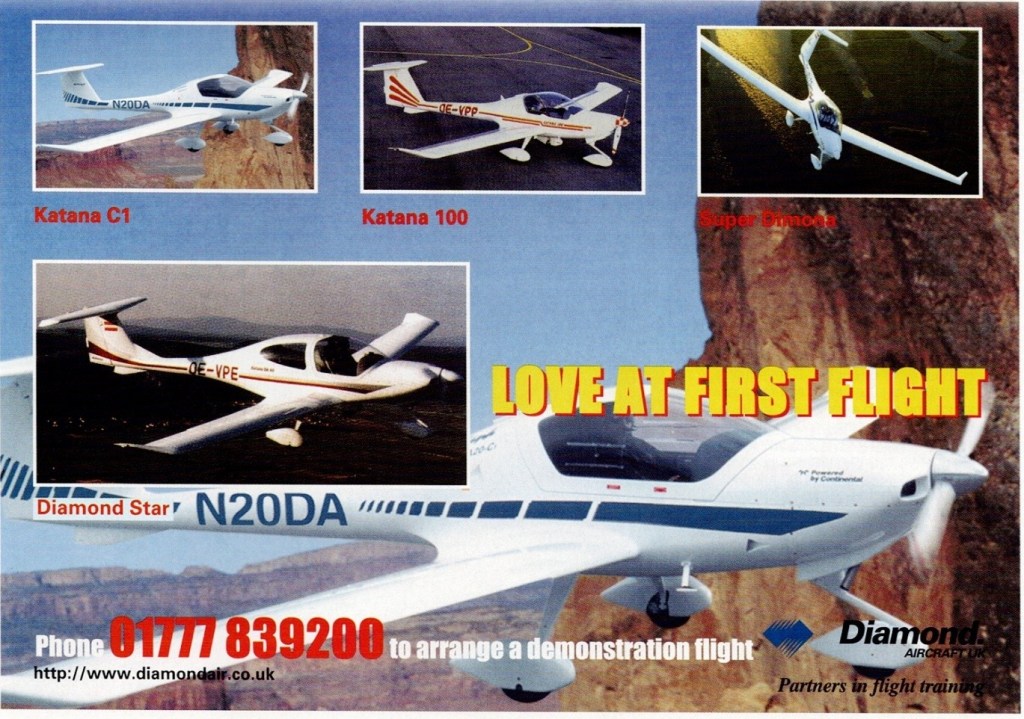
HOAC DV.20 Katana

A primary flight trainer based on the HK36 motor glider, with shortened wings, the addition of flaps, and a tricycle landing gear. Production com¬menced in Austria in 1993 with over 150 being produced until 1995. Diamond’s Canada operations were established in June 1992 at London, Ontario, to develop, certify and manufacture a light all-composite, two-place training aircraft.
Diamond Aircraft Industries Canada division produced the HK 36 Super Dimona motorglider in four versions. Production of the DV 20 Katana two-seat lightplane stopped in Austria (first flown March 1991 as the HOAC LF 2000, becoming LF2 before DV 20), which evolved into the Diamond DA20 produced in Canada.

Diamond DA20 Katana

DA20

A primary training and sport aircraft of composite construction. Some forty changes were made to the Canadian-built Katana DA20-A1 from the original Austrian DV20. Major changes included a wider cabin, electric trim and a doubling of the electrical system capacity. The original Katana A1 was certified in 1994, with first customer deliveries beginning in January 1995. The last of this model was delivered in April 1998 with a total of 331 manufactured. Over 100 significant design changes were incorporated in the Katana DA20-C1, from the original aircraft. Production deliveries of the Katana Cl started early 1998 with a 1999 production rate of three aircraft per week.

May 2000

The Katana’s fuselage is built as one piece from glass reinforced plastic (GRP), with local areas of carbon reinforced plastic (CRP) with reinforcement in high stress areas. The total length of the aircraft is 7.17 metres (23 ft 6 in) and the skin is made of GRP laminate. The skins of the wings, however, are a GRP/foam/GRP sandwich. The wing is a Wortman laminar profile and the inner 50 percent of the wing features slotted flaps. Each wing is attached to the fuselage with three bolts. In the wing several ribs provide structure and mounting surfaces for guides and support for control bellcranks. The rudder, also made of a GRP/foam/GRP sandwich, is cable operated by dual adjustable pedals. The horizontal stabiliser and elevator are of the same construction with local GRP reinforcement. A steel control tube actuates the elevator, but centering and force gradients on the stick are assisted by two compression coil springs which are mounted concentric to the vertical push/pull tube of the elevator control system. The elevator trim function, which is operated on the central control panel, works by moving the common spring base with an electric actuator. The flaps are actuated electrically through a mechanical linkage that operates to both sides. The ailerons, on the other hand, are driven by steel control tubes and aluminium bellcranks. The landing gear is a conventional, non-re¬tractable tricycle system. The main gear struts are spring aluminium, while the nose gear strut is a steel tube sprung on an elastomeric spring pack. The castoring nose wheel is friction damped and the aircraft is steered by differential braking of the main wheels. The engine is mounted on a conventional welded steel tube frame attached to the ceramic fibre matting and stainless steel skin firewall. The maximum gross weight was increased by 66 lb on 8 April 1999 by the FAA to 780 kg (1720 lb).
The Katana has a central control stick that is mounted at the front of the comfortable, and rather deep, four-point harness bucket seats. It is interesting to note that this aircraft is built for the changing Canadian weather and a heating system, as well as air vents at the lower position on the instrument panel, make for an easily controlled cockpit environment.

Diamond DA-20

Gallery

DA20
Engine TCM IO-240-B3B, 125 hp
Propeller Sensenich 2-blade fixed pitch
Airworthiness category Utility, spin certified
Length 23 ft 6 in
Height 7 ft 2 in
Wing Span 35 ft 8 in
Maximum takeoff weight 1,764 lbs
Useful load 600 lbs
Fuel capacity, usable 24.0 gal
Fuel AVGAS 100LL
Takeoff distance, ground roll 1,280 ft
Takeoff distance, 50-foot obstacle 1,640 ft
Landing distance, ground roll 661 ft
Landing distance, 50-foot obstacle 1,360 ft
Rate of climb, sea level 1,000 ft/min

DA20-A1
Engine: Rotax 912F-1, 81 hp.

DA20-C1
Engine: Teledyne Continental IO-240-B3B, 125 hp.
Recommended TBO: 2,000 hr
Prop: 1.75-rn dia Sensenich fixed-pitch wood-fibre.
Length: 23 ft 6 in
Height: 7ft 2 in
Wing span: 10.87 m (35 ft 8 in).
Wing area: 11.6sq.m (125 sq.ft).
Wing Loading: 13.2 lb/sq ft
Power Loading: 13.2 lb/hp
Seats: 2.
Empty weight, typical: 1,166 lb
Maximum gross weight: 1,654 lb
Fuel capacity, std: 25 US gal / 93 litres (91 litres usable).
Fuel usage @ 2500 rpm: 20 lt/hr.
Oil capacity: 6 qt
Takeoff distance, ground roll: 952 ft
Takeoff distance over 50-ft obstacle: 1,263 ft
Max demonstrated crosswind component: 15 kt
Rate of climb, sea level: 1105 fpm
Cruise Speed @ 75% power, 6,000 ft: 132 ktas
Endurance: 4.5 hr.
Operating ceiling: 13,123 ft
Landing distance over 50-ft obstacle: 1,235 ft
Landing distance, ground roll: 550 ft
W (best angle of climb): 60 kias
Vy (best rate of climb): 75 kias
Va (design maneuvering): 106 kias
Vfe (max flap extended): 78 kias
Vne (never exceed): 163 kias
Vs (stall, clean): 42 kias
Vso (stall, in landing configuration): 34 kias

2008 Diamond DA20-C1 Eclipse
Base Price: US$174,495
Engine: Continental IO-240-B3B, 125 hp@SL
TBO (hrs.): 2000
Fuel type: 100LL
Propeller: 69-in. Sensenich FP
Landing gear type: Tri./Fixed
Gross weight (lbs.): 1764
Empty weight, std. (lbs.): 1164
Useful load, std. (lbs.): 600
Payload, full std. fuel (lbs.): 456
Usable fuel, std. (USgals.): 24
Wingspan: 35 ft. 8 in.
Overall length: 23 ft. 6 in.
Height: 7 ft. 2 in.
Wing area (sq. ft.):125
Wing loading (lbs./sq. ft.): 14.1
Power loading (lbs./hp.): 14.1
Seating capacity: 2
Cabin doors: 1
Cabin width (in.): 45
Cabin height (in.): 44
Cruise speed (kts.): 75% power: 138
Fuel consumption (USgph): 75% power: 5.5
Vso (kts.): 45
Best rate of climb, SL (fpm): 1000
Service ceiling (ft.): 13,120
Takeoff ground roll (ft.): 1280
Takeoff over 50 ft. obstacle (ft.): 1640
Landing ground roll (ft.): 661
Landing over 50 ft. obstacle (ft.): 1360

DA20
Engine: TCM IO-240-B3B, 125 hp
Propeller: Sensenich 2-blade fixed pitch
Airworthiness category: Utility, spin certified
Length: 23 ft 6 in
Height: 7 ft 2 in
Wing Span: 35 ft 8 in
Maximum takeoff weight: 1,764 lbs
Useful load: 600 lbs
Fuel capacity, usable: 24.0 USgal
Fuel: AVGAS 100LL
Takeoff distance, ground roll: 1,280 ft
Takeoff distance, 50-foot obstacle: 1,640 ft
Landing distance, ground roll: 661 ft
Landing distance, 50-foot obstacle: 1,360 ft
Rate of climb, sea level: 1,000 ft/min

Katana DA20-Cl

DG Flugzeugbau Silence

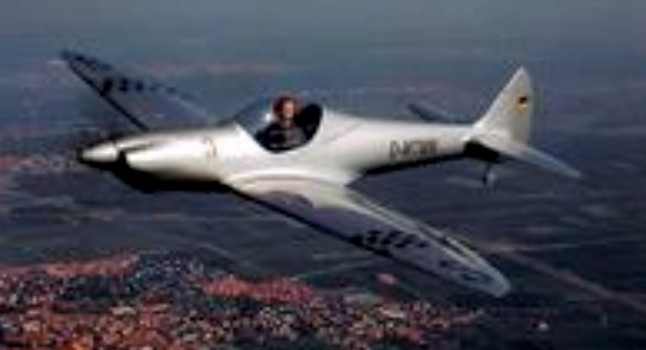
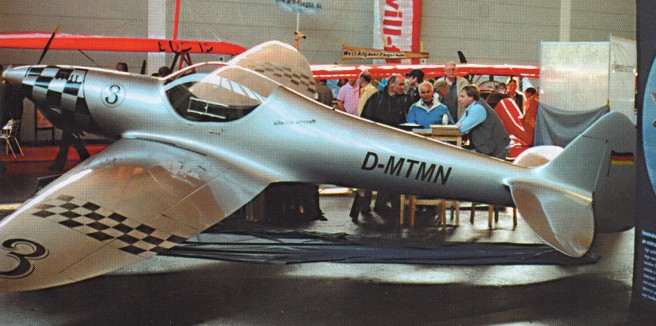
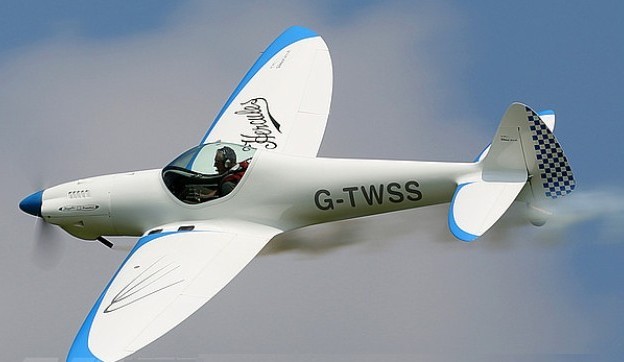
The developers of the Silence single place ultralight joined DG to produce both kits and finished aircraft. The main components are of a honeycomb sandwich.

Silence Twister

Silence, manufactured by Silence Aircraft in Verl near Bielefeld, Germany.

Silence Twister

The Swiss company H55 was working with the Solar Impulse project co-founder and pilot André Borschberg. They use the Silence Aircraft Twister and jointly with Siemens they developed a single seat aerobatic airplane.

Engine: Jabiru 2200, 80 hp.
Stall: 41 kt / 47 mph / 76 kmh
Cruise: 127 kt / 146 mph / 235 kmh
VNE: 162 kt / 186 mph / 300 kmh
Empty Weight: 238 kg / 525 lbs
MTOW Weight: 399 kg / 880 lbs
Climb Ratio: 1275 ft/min / 6 m/s
Max speed: 140 kts.
Seats: 1.

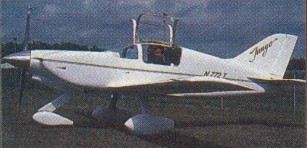
DFL Tango

Fabricated in Asia from American moulds, prefabricated instrument panels and firewall forward options reduce the build time.

Top speed: 225 mph
Cruise: 208 mph
Stall: 63 mph
Range: 850 sm
Rate of climb: 1500 fpm
Takeoff dist: 600 ft
Landing dist: 800 ft
Engine: Lycoming O-360, 180 hp
HP range: 150-200 hp
Fuel capacity: 40 USG
Empty weight: 1040 lb
Gross weight: 1800 lb
Length: 19.3 ft
Height: 7.25 ft
Wing span: 25 ft
Wing area: 75 sq.ft
Seats: 2
Landing gear: nose