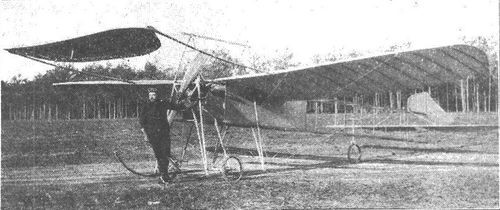
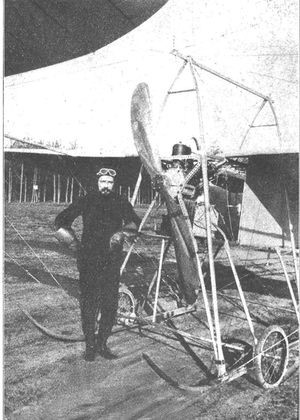
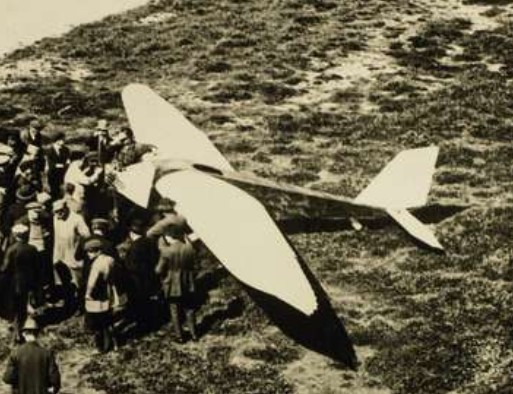
DFG Hintner Eindecker of 1910 was a monoplane drawn up by the Cornelius Hintner – a successful Austrian artist who later became famous as a film director – realized by the German firm of Deutsche-Flugmaschinenbau-GmbH.
The Hintner Eindecker was special in that the elevator was mounted in front of the tractor propeller. Power was supplied by a 25 hp Anzani 3-cylinder radial driving a Chauvière propeller. The wing area was about 30 m², where total weight (inclusive the pilot) was 280 kg.
During the first test flight the machine flew for 500 meters at a height of 25 meters, most likely only in a straight line. The machine lifted after a run of only 25 to 30 meters.
When Hintner flew his Eindecker he had no licence and almost certainly no flying experience whatsoever. He later received German flying licence No.110 on September 9, 1911 flying an Albatros biplane at Berlin.
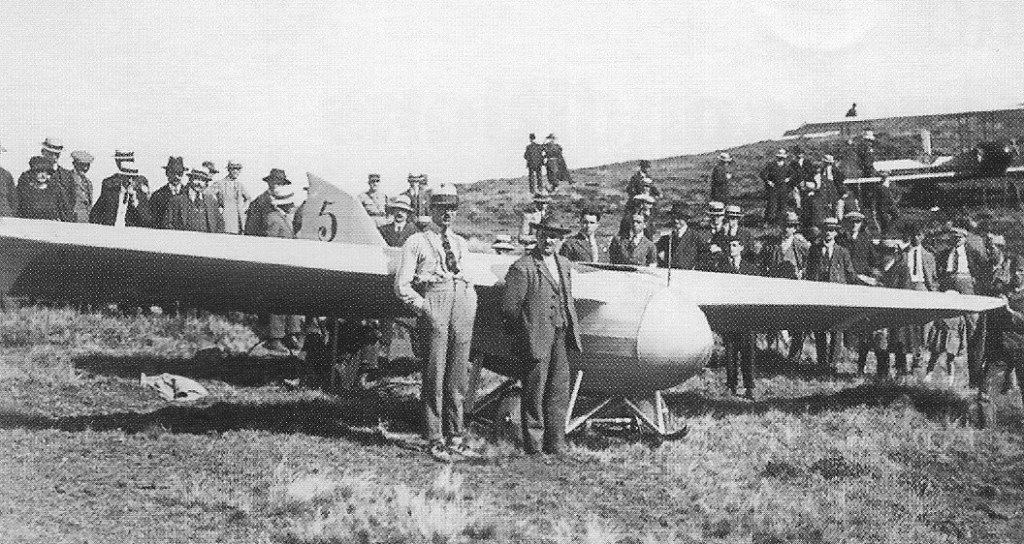
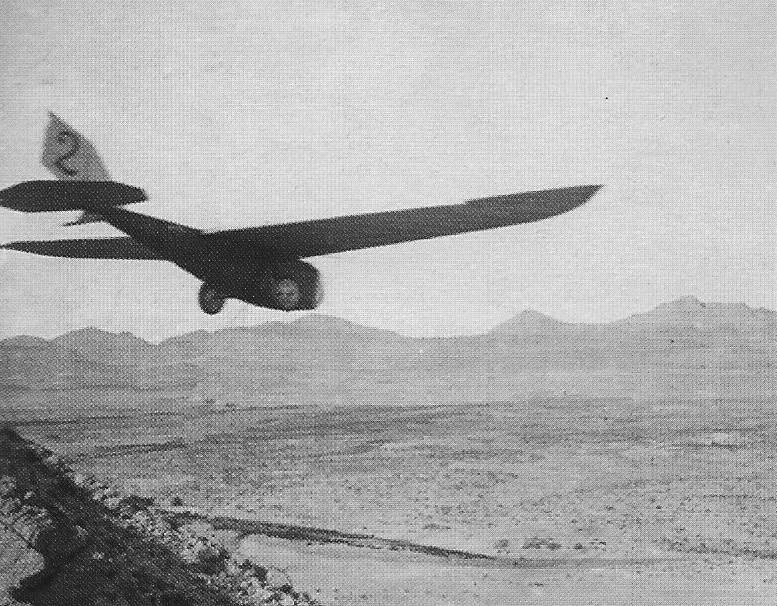
The Dewoitine monoplane had already been flown in the first French soaring contest at Clermont Ferrand in 1922. It was able under Georges Barbot, in the autumn of 1922, to make a gliding flight of 20 minutes from the plateau of Super-Bagderes (Pyrenees) with an altitude difference of 1200 meters. In 1923, it was flown by Barbot 8 hours, 36 minutes and 56 seconds in Biskra, Africa.
The Dewoitine monoplane has flexible wings without external brace-wires. For transportation, the wings can be folded back against the fuselage, without being entirely disconnected. Each wing has a hollow main spar and tapers outward.
It is steered by warping the ends of the wings, the rear two-thirds being flexible and the front third rigid.
The fuselage has a streamline form made by oval ribs- connected by light spars. On the glider, the front end of the fuselage consisted of a spherical cap of plywood, the latter was replaced by an engine on the low-powered airplane.
Flown at Biskara by Barbot 1922
The 7 to 10 HP Anzani engine was originally designed for motorcycles. It had two opposite cylinders and was air-cooled. The brake horse-powers were; 7 HP at 1250 R.P.M. 8 HP at 1350 R.P.M. 9 HP at 1450 R.P.M. 11.75 HP at 1800 R.P.M. 12.75 HP at 2200 R.P.M. With wide-open throttle, the revolution speed was about 1350 R.P.M., hence 8 HP.
The weight of the supporting structure is 35 kg (77.2 lb) or 4.375 kg (9.65 lb) per HP. The weight of the fuel is about 20 kg (44.1 lb) and the power plant 80 kg (176.4 lb). With a total weight of 250 kg (551.2 lb) the total load per HP is 31.25 kg (68.9 lb).
The engine is located in the front end of the fuselage and drives a two-bladed propeller. The fuselage is supported by an ordinary landing gear with rubber-tired wheels. The fuselage and wings are covered with fabric.
The flight performances are said to have been satisfactory. Barbot reached an altitude of 500 m (1640 ft) in a 25-minute flight from Francavat to Toulouse. The start was made from a level field.
Barbot made another flight from St. Inglevert (France) across the English Channel to Lympne (England) and back. The time going was 50 minutes; returning, 43. minutes. The consumption for both flights was 4.5 liters (1.2 gallons) gasoline and 0.7 kg (1.54 lb) oil. At 1500 R.P.M. near the ground, the speed was 90 km/hr (56 mi/hr). At 1200 R.P.M it was 75 km/hr (47 mi/hr). The theoretical ceiling was 2000 m (6562 ft).
Span: 11.3 m (37.07 ft) Wing area: 11.5 sq.m (123.78 sq ft) Aspect ratio: 10 Length 4.9 m (16.08 ft) Weight empty 115.0 kg (253.5 lb) Total weight 250.0 kg (551.2 lb)
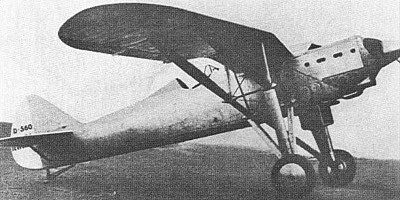
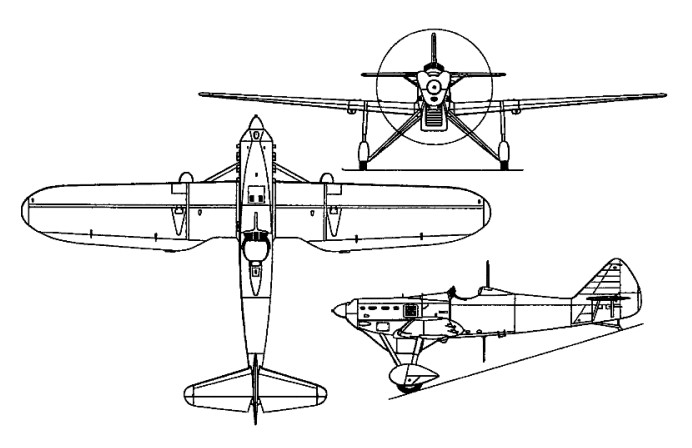
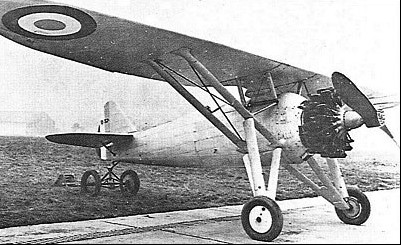
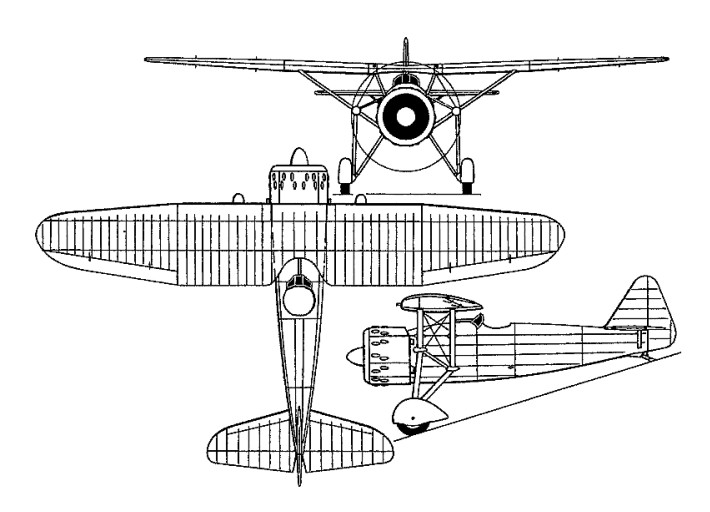
At the end of March 1933, criticism of the gulled wing of the D 560 led Emile Dewoitine to replace this with a wing of parasol form and of reduced span and area. Re-designated D 570, the modified prototype entered flight test on 27 November 1933, transferring from Francazal to the Centre d’Essais at Villacoublay early in December. It flew back to Francazal for minor modifications, and, on 21 December, while returning to Villacoublay, suffered an aileron failure and was destroyed.
Engine: HS 12Xbrs, 600 hp Max take-off weight: 1709 kg / 3768 lb Empty weight: 1284 kg / 2831 lb Wingspan: 11.58 m / 37 ft 12 in Length: 8.53 m / 27 ft 12 in Height: 3.42 m / 11 ft 3 in Wing area: 17.00 sq.m / 182.99 sq ft Max. speed: 338 km/h / 210 mph
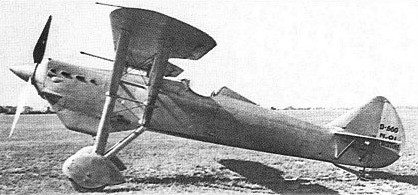
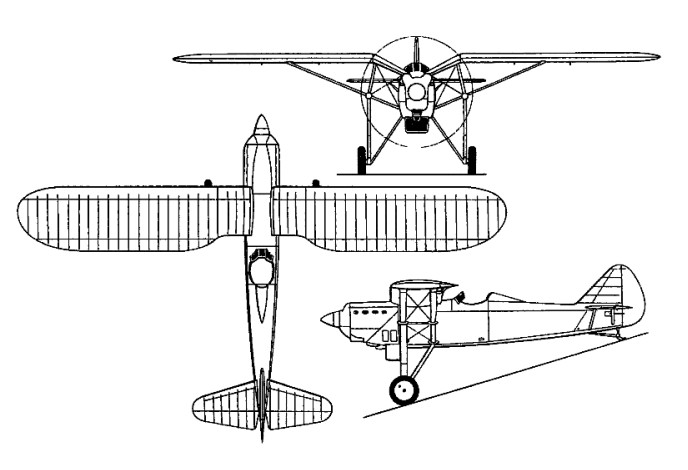
Aware of some prejudice against the low-wing monoplane configuration for single-seat fighters, Emile Dewoitine evolved almost simultaneously with the low-wing D 500 a fighter of shoulder-mounted gull wing configuration. This used the same 660 take-off horsepower HS 12Xbrs engine, the same fuselage and essentially similar tail surfaces. Designated D 560, this fighter flew for the first time on 5 October 1932, proving to be slower at rated altitude than the equivalent low-wing monoplane when flown at the Centre d’Essais at Villacoublay during the following month. The ventral radiator bath was extended forward similar to that of the D 500, and to rectify a stability problem the vertical tail was enlarged. The manoeuvrability of the D 560 proved outstanding, but evaluation pilots participating in the 1930 C1 programme universally condemned the gulled wing (which was also featured by other contenders – the Loire 43, the Gourdou-Leseurre 482 and the Mureaux 170). As a consequence, the D 560 was rebuilt as a classic parasol monoplane, the designation being changed to D 570.
Engine: HS 12Xbrs, 600 hp Max take-off weight: 1698 kg / 3743 lb Empty weight: 1270 kg / 2800 lb Wingspan: 12.47 m / 40 ft 11 in Length: 8.48 m / 27 ft 10 in Height: 3.42 m / 11 ft 3 in Wing area: 17.30 sq.m / 186.22 sq ft Max. speed: 375 km/h / 233 mph
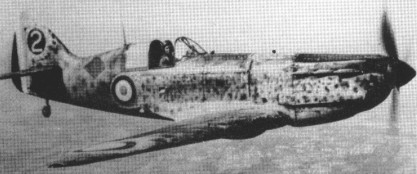
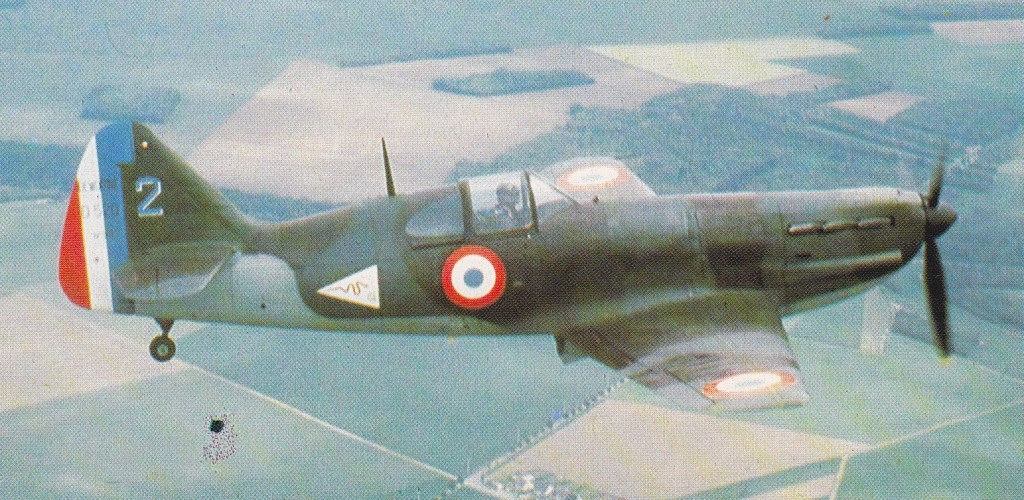
The Dewoitine company was nationalized in 1936, becoming part of the SNCAM (Societe Nationale de Constructions Aeronautiques du Midi), and on the outbreak of the Second World War the D 520, designed by Robert Castello, was the French air forces’s most advanced fighter. Designed a new fighter to meet the French Air Ministry Programme A23, which in its revised form called for a maximum speed of 520km/h, was the was inspiration to give it the designation D.520.
Three prototypes were ordered by the French government in April 1938, the first (D 520 01), powered by an 664-kW (890-hp) Hispano Suiza 12Y 21 engine, flying on October 2 of that year with Marcel Doret at the controls. With this powerplant the aircraft did not achieve its required speed of 520 km/h (323 mph), but with an uprated 12Y 29 engine with jet exhaust manifold, the design speed was reached. Even before the first flight of the third prototype in May 1939 the company had received orders for 200 of the new and potentially decisive fighter, the figure rising to 710 within two months. The second prototype (D 520 02) with a redesigned tail, wing radiators replaced with a ventral unit, introduced a sliding cockpit hood, and other aerodynamic improvements flew for the first time on January 28, 1939. It was fitted with a provi¬sional armament of one HS 404 20 mm (0.79¬in) Hispano cannon firing through the propel¬ler hub and two 7.5 mm (0. 295 in) MAC 1934-¬M39 machine guns in underwing fairings. It was powered by a 12Y 29 (later 12Y 31) and reached a speed of 550 km/h (342 mph). The D 520 03 third prototype was similar to the second, and first flew on March 15, 1939. It had a steerable tail wheel instead of the tailskid of the other two aircraft. Powered by a supercharged 678kW Hispano-Suiza 12Y45 engine, the D.520 was armed with an engine-mounted HS-404 20mm cannon and four wing-mounted 7.5mm MAC machine-guns. The wing was a single-spar structure with duralumin skinning. Ailerons were fabric-covered and flaps pneumatically operated. The fuselage was an all-metal monocoque structure and the wide-track undercarriage legs retracted inwards into the wing profile. Main production lines were at the SNCAM Toulouse factories. For the first time in France women joined the workforce and sub-contractors previously outside the aircraft industry were employed. Each aircraft required only half the man-hours needed to build the main French fighter at that time, the MS 406. The first production example, from an initial order for 200 placed in April 1939, flew on November 2, 1939, powered by a 930 hp Hispano Suiza 12Y 45 engine. Many modifications were required and by the time the German Blitzkrieg was launched only 50 D.520s were with front-line units. Orders up to April 1940 required 2200 for the Armee de l’Air and 120 for the Aeronavale, but many were cancelled due to difficulties in maintaining the production rate. Fewer than 300 had been delivered by the time of Germany’s invasion of France in May 1940, rising to 403 by the time of the Armistice. The fuselage of the production machines was lengthened by 51 cm (20 in), the engine cowling was modified, two additional fuel tanks were fitted within the wing leading edges and armour protection was provided for the pilot. The armament was increased by a further two 7.5 mm (0.295 in) M39 guns enclosed in the wings. Deliveries began in January 1940, but when the German armed forces made their attack against France on May 10, 1940, only 36 D 520s, equipping GC 1/3, were in service. They flew their first operational sorties three days later and proved extremely effective under fire, establishing a 2/1 ‘kill ratio’ over Luft¬waffe opponents. As deliveries increased, D 520s served with five Groupes de Chasse during May and June, and by June 25, 1940, a total of 437 had been completed. By the time of the fall of France the D.520 had claimed 114 victories and 38 probables.
After the armistice with France, Germany permitted her a limited air arm (Armistice air force), but there were no D 520 units in the occupied country. Over 300 aircraft, how¬ever, remained in unoccupied France and North Africa and were used by the Vichy French air force. The German authorities ordered a further 550 D 520s to replace all other single engined fighters in French service, and, although they saw considerable action against many British aircraft, their losses were few. In November 1942 the Germans entered the hitherto ‘Free’ French areas and commandeered 246 D 520s plus a further 169 in various stages of production. The SNCA de Sud Est received a contract from the Germans to complete 150 of these machines, and by the summer of 1944 they had been delivered, bringing total D 520 production to 905 machines. A few of these were used as by the Luftwaffe Jagdgeschwadern in the USSR, and D 520s also equipped JG 105 at Chartres, JG 103 in Austria and JG 101 in Pau Long. Sixty D 520s were allocated to the Regia Aeronautica as trainers and second line fighters; 120 formed the basic strength of the Bulgarian air arm, and a few saw service with the Romanian air force. As the Germans retreated in the autumn of 1944, the liberated French recaptured about 75 D 520s. These helped reform the French air force on December 1, 1944, and they flew with the Forces Francaises de l’Interieur during the closing months of the war. In late 1945, one of the 17 Dewoitines still in use as trainers at Tours was converted to two seat configuration and designated D 520 DC; 12 were thus modified. Some D 520s were phased out of service through lack of spares in mid 1948 and the last unit was disbanded in September 1953. This aircraft had been originally designed to accept a 1300 hp engine, in order to reach a speed of 595 km/h (370 mph), but no reliable engine of this power was ever available for trial or production aircraft. Variants were mooted and trialled with different engines.
D.520 Engine: l x Hispano-Suiza 12Y-45, 687 kW / 935 hp. Span: 10.2m (33 ft 5.5 in). Length: 8.6m (28 ft 2.5 in). Height: 2.57 m / 8 ft 5 in Wing area: 15.97 sq.m / 171.90 sq ft Max T/O weight: 2677 kg (5,902 lb). Empty weight: 2123 kg / 4680 lb Max speed: 332 mph at 18,045 ft / 342 mph at 13,120 ft. Service ceiling: 36,090 ft / 11,000m Climb to 13,125 ft / 4000 m: 5 min 49 sec Max range: 1540 km / 957 miles Operational range: 553 mi / 900 km Crew: 1 Armament: 1×20-mm Hispano-Suiza cannon and 4 x 7.5-mm / 0.295-in MAC machine-guns.
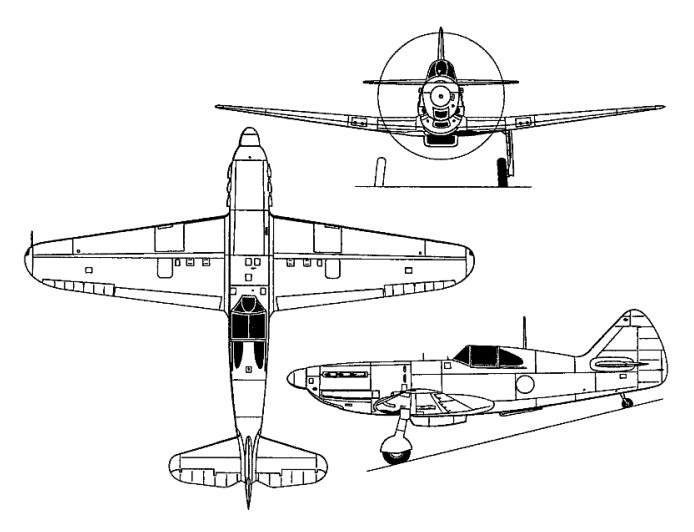
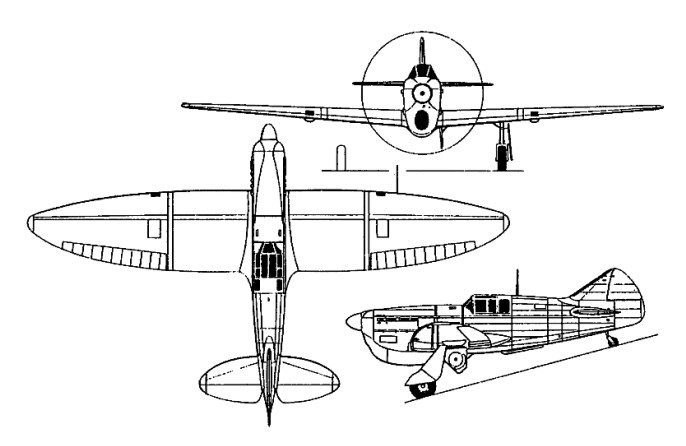
The company’s first monoplane fighter with retractable landing gear, two prototypes of a new fighter, the D 513, were ordered in 1935 as part of the 1934 C1 programme, the first of these being flown on 6 January 1936. Featuring semi-elliptical horizontal and vertical surfaces, with a wing of relatively high aspect ratio, an Hispano-Suiza 12Ycrsl engine with a frontal radiator similar to that of the D 503, and an inward-retracting main undercarriage, the D 513 proved disappointing during initial trials. It suffered serious instability and attained a maximum speed of only 425km/h at 4600m. Radical redesign followed, the wing and tailplane being mated to an entirely new fuselage, vertical tail surfaces, elevators and undercarriage, the frontal radiator giving place to a deep radiator bath beneath the nose. In this definitive form, the D 513 still proved incapable of meeting specified performance, a shortcoming which, compounded by continuing instability and difficulties with both engine cooling and undercarriage retraction, led to the discontinuation of development. The second prototype was fitted with an HS 12Ydrs2 engine rated at 930hp at 990m, and undercarriage and radiator like the D 503, and was employed for high-speed parachute launching trials as the D 514 LP.
D 513 (final form) Take-off weight: 2446 kg / 5393 lb Wingspan: 12.06 m / 39 ft 7 in Length: 7.45 m / 24 ft 5 in Wing area: 18.32 sq.m / 197.19 sq ft Max. speed: 445 km/h / 277 mph
First flown on 15 April 1935, the D 503 was, in fact, a modification of the D 511 prototype, which, although exhibited in the Salon de l’Aeronautique in Paris in November 1934, was not flown. The D 511 had consisted of the fuselage and tail assembly of the D 500 mated to a wing of marginally smaller span and area, cantilever main undercarriage members and an Hispano-Suiza 12Ycrs engine. Calculations indicated that the D 511 would not offer a sufficient advance in performance (despite the fact that the first production order for the D 510 was not to be placed until May 1935) and it was therefore re-engined with a 690hp HS 12Xcrs engine with a circular frontal radiator, armament comprising a 20mm engine-mounted cannon and two wing-mounted 7.5mm Dame machine guns. Flight testing revealed a climb rate inferior to that of the standard D 500 and, after serving as the personal aircraft of Col Rene Fonck in the escadrille ministerielle, the prototype was assigned to the flying school at Etampes.
Engine: 690hp HS 12Xcrs engine Take-off weight: 1823 kg / 4019 lb Empty weight: 1378 kg / 3038 lb Wingspan: 11.48 m / 37 ft 8 in Length: 7.56 m / 24 ft 10 in Height: 2.70 m / 8 ft 10 in Wing area: 15.00 sq.m / 161.46 sq ft Max. speed: 375 km/h / 233 mph Range: 840 km / 522 miles Armament: 1 x20mm cannon, 2 x 7.5mm Dame machine guns
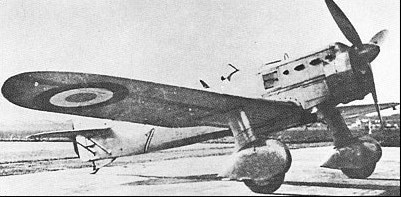
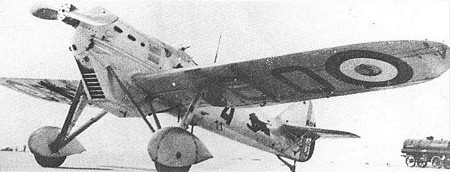
The D 500 was designed by Emile Dewoitine to a 1930 requirement for the Aviation Militaire. It was of all metal monoplane construction, with neat cantilever low wings, a fixed, spatted landing gear, and open cockpit. Intended to meet the demands of the 1930 C1 programme and eventually selected as winning contender, the D 500 was powered by a 12-cylinder Vee Hispano-Suiza 12Xbrs (HS 72) engine rated at 660hp for take-off and 690hp at 4000m. Armament comprised two 7.7mm Vickers guns in the fuselage, these later being supplanted by 7.5mm Darne guns with provision for two similar wing-mounted weapons.
The prototype was first flown on June 18, 1932, and at the end of November 1933, orders were placed for 60 D 500s of which 45 were to be built by Liore-et-Olivier and 15 by SAF-Avions Dewoitine. Of the former, 40 were to be powered by the HS 12Xbrs engine and the remaining five by the HS 12Xcrs (HS 76) with provision for a 20mm Hispano-Suiza S7 (Oerlikon) cannon mounted between the cylinder banks. With this installation and twin wing-mounted machine guns the fighter was designated D 501.
The SAF-Avions Dewoitine order was eventually to comprise eight D 500s, five D 501s and two D 510s. The first production D 500 was flown on 29 November 1934, contracts having meanwhile been placed for a further 50 D 500s and 80 D 501s to be built by Liore-et-Olivier and 60 D 501s by Ateliers et Chantiers de la Loire, deliveries to the Armee de l’Air commencing May-June 1935. Three D 500s were ordered by Venezuela at the beginning of 1934 and delivered in July 1935, and in the following year 14 D 501s were supplied to Lithuania. The Armee de l’Air received 100 D 500s and 133 D 501s, 30 of the latter type also being supplied to shore-based elements of France’s Aeronautique Navale. Small numbers of D 500s and D 501s equipped Escadrilles Regionale de Chasse in the early months of World War II, but had been relegated to tuitional tasks by 1940.
D.510
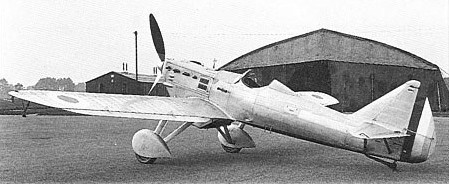
A further improved model, the D 510, first flew on August 14, 1934. It had a larger area rudder and a revised engine mounting to accommodate the 860 hp HS 12 Ycrs power¬plant. Two of the 15 D 500 series aircraft (the second and tenth) comprising the initial production contract for the new low-wing fighter monoplane placed with SAF-Avions Dewoitine were fitted with the Hispano-Suiza 12Ycrs (HS 77) engine as prototypes for the D 510. Heavier and longer than the HS 12Xcrs (HS 76) of the standard D 501 fighter, the HS 12Ycrs similarly catered for a 20mm cannon between its cylinder banks, and was rated at 775hp at sea level and 860hp at 4000m. The first of the D 510 prototypes flew (without the cannon fitted) on 14 August 1934, the second (with cannon) following on 10 December. Apart from engine, the D 510 was fundamentally similar to the D 501, the cannon being complemented by a pair of 7.5mm wing guns. In May 1935, the Ministere de l’Air placed an initial contract for 35 (later reduced to 25) D 510s, these being delivered from 9 October 1936. Seven more D 510s were then built for the Armee de l’Air as agreed replacements for a similar number of D 501s taken from the service’s deliveries as part of the Lithuanian order. Follow-on contracts then called for a total of 80 more aircraft from which a contract for 24 D 510s from the Chinese Central Government was to be fulfilled. Other export D 510s were single examples to the UK and the Soviet Union, and two to Japan for evaluation purposes, and two, unofficially, to Republican Spain. These last had been the first two of a cancelled contract for Turkey and were ostensibly sold to the Hedjaz (Saudi Arabia). When it was revealed that the two D 510s had arrived in Spain, the French government insisted that their engines be returned to France. Eventually, both aircraft were fitted with M-100 (licence-built HS 12Ybrs) engines from a Tupolev SB bomber and allegedly saw some combat. Three Groupes de Chasse were still flying with the D 510 at the beginning of World War II, but re-equipped during the first months of the conflict. Two Escadrilles Regionale de Chasse in North Africa converted to D 510s in September-October 1939, flying them until mid-1940, and two escadrilles of the Aeronautique Navale formed on D 510s in December 1939 and May 1940.
One hundred and twenty were built, 90 going to the Armee de l’Air, for whom the D 510 was the first fighter capable of a level speed exceeding 400 km/h (248 mph). Before the Second World War, most D 510s served in metropolitan France or Tunisia but on the outbreak of war, Groupes de Chasse GC 1/ 1, 11/ 1 and 118 were equipped with this model, and some D 501s were still in service in France with ERC (Escadrilles Regionales de Chasse) 561 and 562. Some D 501s were also still in service in North Africa when France capitulated in May 1940. Prior to the outbreak of war, Dewoitine had export orders from China (24 D 510C), the Hejaz (two D 510), Japan (two D 510J), Lithuania (14 D 510L), Britain (one D 510A), the USSR (one D 510R) and Venezuela (three D 500V). There is some doubt whether those destined for Venezuela were ever received, and it is probable that some or all of the Lithuanian batch and the two for the Hejaz went instead to the Republican forces in Spain during the Civil War.
D 501 Take-off weight: 1787 kg / 3940 lb Empty weight: 1287 kg / 2837 lb Wingspan: 12.09 m / 39 ft 8 in Length: 7.56 m / 24 ft 10 in Height: 2.70 m / 8 ft 10 in Wing area: 16.50 sq.m / 177.60 sq ft Max. speed: 367 km/h / 228 mph Range: 870 km / 541 miles
D.510 Engine: Hispano-Suiza 12Ycrs (HS 77), 775hp at sea level, 860hp at 4000m Take-off weight: 1929 kg / 4253 lb Empty weight: 1496 kg / 3298 lb Span: 12.092 m (39 ft 8 in) Length: 7.94 m / 26 ft 1 in Height: 2.42 m / 7 ft 11 in Wing area: 16.50 sq.m / 177.60 sq ft Maximum speed: 393 km/h (244 mph) Range: 700 km / 435 miles Armament: 1 x 20mm cannon, 2 x 7.5mm wing guns
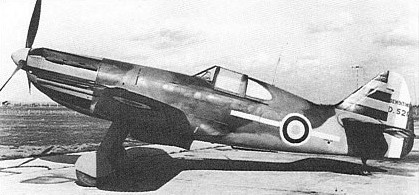
Following the loss, at the end of July 1930, of the first pre-series D 27 as a result of a wing structural failure, a substantially reinforced wing structure was designed to meet new requirements imposed by France’s Service Technique. Emile Dewoitine had, at this time, been assured by the Ministere de l’Air of an order for 90 D 27 fighters with reinforced wings, although this was not, in the event, to be confirmed.
The structural changes were accompanied by a change in designation from D 27 to D 53, the first reinforced wing being completed on 27 February 1931, and this being applied by Liore-et-Olivier to D 27 No 14 to produce the D 530 which flew at the end of the following March. The D 530 was powered by an Hispano-Suiza 12Md, a lightened version of the HS 12Mb (HS 57) engine of 500hp. The HS 12Md was not acceptable to the STAe, the second, third and fifth D 53 series fighters then being fitted with the HS 12Mb as D 531s for official evaluation. Weighing 1420kg, these recorded maximum speeds of 269km/h at sea level and 258km/h at 5000m during trials at Villacoublay.
In August 1931, the Turkish government expressed interest in the D 53 and was offered versions with either the compressor-equipped Skoda Lr engine of 580hp or the Curtiss V-1570 Conqueror of 600hp. The fourth D 53 series fighter prototype flown in the autumn of 1931 was the D 532 with a compressor-equipped Rolls-Royce Kestrel engine. This attained 313km/h at 4000m, climbing to that altitude in 6.9 min, but excessive oscillation of the tail led to discontinuation of flight testing and re-engining with an HS 12Mb engine as the D 534 LP.
Flown in April 1932, the D 535 was equipped with a 500hp HS 12Xbrs engine, this becoming the D 536 when fitted with a Farman compressor which raised the output of the HS 12Xbrs engine to 570hp at 5800m.
In July 1933, a twin-float fighter version of the D 535 was offered to Peru, which, in the event, procured Nieuport- Delage 123s.
Only seven D 53 series aircraft were flown of which two D 531s allegedly found their way to Republican Spain during the Civil War, becoming known as Dewoitinillos or Dewoitine pequenos (little Dewoitines) to distinguish them from D 371s. The dimensions of the D 53 series were similar to those of the D 27.
The five D.27 prototypes and two of a strengthened model, the D 53, were flown experimentally for a time on board the aircraft carrier Bearn.
In 1937, Dewoitine and Marcel Doret approached the nationalise SNCASE (which had absorbed the Dewoitine company) for a new aerobatic craft. The result was a new D.530 (No.6), built from D.530 F-ANAX. Using his old registration F-AJTE, Doret first flew his new craft in April 1937. F-AJTE lasted the war and German occupation and flew until 1955, whem Marcel Doret died. F-AJTE logged over 575 hours and in November 1936 was presented to the Muse de L’Air.
Transferred by the SAF-Avions Dewoitine to the Liore-et-Olivier (LeO) concern owing to the workload imposed on the parent company by the D 50bis (future D 500), the D 37 (later D 370) was a private venture contender in the 1930 C1 programme. Evolved in 1931 in parallel with the D 500, the D 37 was devel¬oped via the D 53 (strengthened D 27) and first flown on 1 October 1932 with a 700 hp Gnome Rhone 14 Kbrs Mistral Major 14-cylinder two-row radial engine driving a four blade propeller. The prototype was built at Argenteuil by Liore et Olivier and was entered for the 1932 French fighter competi¬tion by the Societe Aeronautique Frangaise, a new company formed by Emile Dewoitine following his return from Switzerland. It was subsequently subjected to an extensive series of modifications: a G-R 14Kbs engine gave place, in turn, to a G-R 14Kds affording 800hp for take-off and 740hp at 4500m; the engine cowling was changed; the undercarriage was redesigned, and the wing introduced dihedral and reduced chord. Yet more redesign was embodied by a second prototype, the D 371, which appeared late February 1934. Twenty-eight D 371s were ordered for the Armee de l’Air with the G-R 14Kf s engine of 930hp for take-off and 880hp at 3250m, and an armament of four underwing 7.5mm MAC 34 machine guns. Fourteen were ordered by Lithuania, and these, having two synchronised 7.7mm Browning guns in the fuselage and two Darne guns of similar calibre in the wings, were designated D 372s. Republican forces in Spain received the 14 D 372s (930 hp Gnome Rhone 14 Kfs) ordered by Lithuania. The Lithuanian government relinquished its D 372s in favour of D 501s, the former being sold to the Spanish Republican government and ferried to Spain during August 1936, where they were later joined by 10 of the 28 Armee de l’Air D 371s. In March 1036, Escadrilles 7C 1 and 7C2 of the Aeronavale at Hyeres began to replace their Wibault 74s with 20 examples of the D 373, similar to the 372 except for wing flaps and deck landing gear. These had flotation gear, a 30cm reduction in wing span and an armament of four Darne guns within the wing. These were followed by 25 D 376s with wing folding. The last D 371 left the factory at the end of December 1935, the Armee de l’Air fighters following the Navy’s D 373s. The remaining D 371s equipped an escadrille at Bizerte, Tunis, until 1939, but were little flown owing to constant problems with their engines. Standard armament of the D 37 was four underwing 7.5 mm (0.295 in) MAC 1934 or Darne machine guns, but the D 371 prototype was a testbed for two long barrelled 20 mm (0.79 in) Oerlikon S cannon mounted in the wing centre section, and some D 373/376s were fitted with 13.2 mm (0.520 in) Hotchkiss machine guns. Performance of the D 371 included a climb to 4500 m (14 764 ft) in 5.18 minutes and to 10000 m (32810 ft) in 21.85 minutes.
The French Government declared on 25 July 1936 that it would not send arms to Spain, but its Air Minister, Pierre Cot, secretly permitted a consignment of aircraft to be dispatched. At the end of July, about 70 aircraft were sent across the border to Barcelona, including Potez 54 bombers and Dewoitine 371 fighters. This version’s service effectiveness was limited, due to extensive grounding brought about by frequent engine troubles, and those still serving with ERC 574 in Tunisia were replaced by Morane Saulnier 406s in November 1940. The D 373/376s, 27 of which constituted the entire Aeronavale fighter strength upon the outbreak of war, were similarly replaced by Potez 63 fighters in January 1940.
D 31 Engine: 800¬hp Gnome Rhone 14 Kd
D.37 Armament: 4 x 7.5 mm (0.295 in) MAC 1934 or Darne machine guns
D.371 Span: 11.80 m (38 ft 8.5in) Length: 7.44 m (24 ft 5 in) Height: 3.40 m / 11 ft 2 in Wing area: 17.45 sq.m / 187.83 sq ft Take-off weight: 1884 kg / 4154 lb Empty weight: 1320 kg / 2910 lb Maximum speed: 380 km/h (236 mph) Armament: 2 x 20 mm (0.79 in) Oerlikon S cannon Climb to 4500 m (14 764 ft): 5.18 minutes Climb to 10000 m (32810 ft): 21.85 minutes Range: 900 km / 559 miles