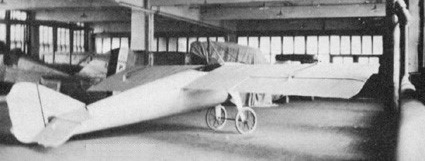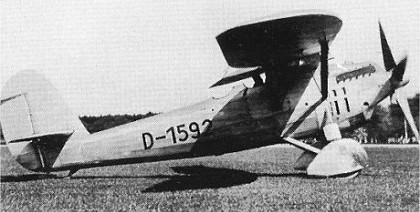
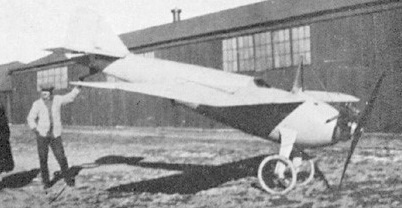
The Do C4, later renamed Do 10, was a two-seat parasol monoplane fighter. It was unsuccessful, and used as testbed for a tilting engine installation.
The Do C4, later renamed Do 10, was a two-seat parasol monoplane fighter. It was unsuccessful, and used as testbed for a tilting engine installation.
Dornier pursued the clandestine development of military aircraft, including the DoH Falke and Seefalke all metal cantilever high wing fighter monoplanes in 1922 and the DoD twin float torpedo bomber monoplane in 1926.
Manufactured at Altenrhein / Pisa, the Do.H was a relatively modern design. Fitted with floats, the Falks was available a sea-based fighter, too. Several engine variants existed.
In cooperation with Wright, the Wright H3 was fitted and the Falke offered to the US-Navy.
Dornier H Falke
Engine : BMW IV a, 296 hp
Length : 24.377 ft / 7.43 m
Height: 9.318 ft / 2.84 m
Wingspan : 32.808 ft / 10.0 m
Wing area : 215.28 sq.ft / 20.0 sq.m
Max take off weight : 2646.0 lb / 1200.0 kg
Weight empty : 2039.6 lb / 925.0 kg
Max. payload weight : 110.3 lb / 50.0 kg
Max. speed : 140 kts / 260 km/h
Landing speed : 49 kts / 90 km/h
Cruising speed : 119 kts / 220 km/h
Initial climb rate : 1161.42 ft/min / 5.90 m/s
Service ceiling : 25591 ft / 7800 m
Wing load : 12.30 lb/sq.ft / 60.00 kg/sq.m
Range : 259 nm / 480 km
Crew : 1
Armament : 2x MG
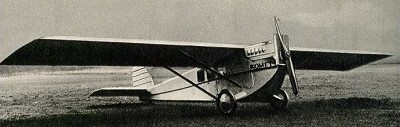
These aircraft were three of a large family of civil/military aircraft produced in the late 1920s, and surviving documentation on their design and weaponry is both sparse and conflicting, due to the fact that Germany was officially an ‘unarmed’ country at that time.
Development began in 1920 with the Do C III (Komet I). This was a high wing commercial transport with an open cockpit for the pilot and an enclosed cabin seating four passengers. It had an exceptionally long wingspan of 17 m (55 ft 9.25 in) and could be powered by either a 180 hp BMW III or 185hp BMW IIIa engine. It was built in small numbers and used by various German airlines with some success.
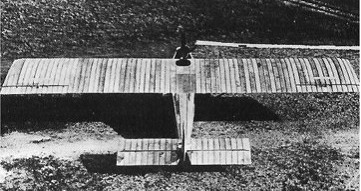
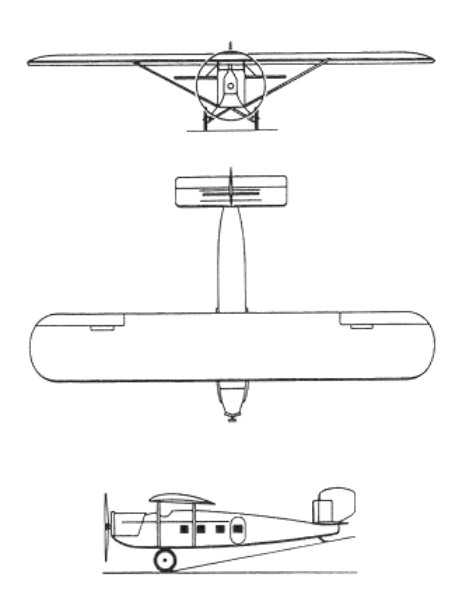
Designed in 1920 a modified version, the Komet II, utilized the same wing configura¬tion, but with an increased overall length. The Komet II was a five-seat (pilot in open cockpit and four passengers in cabin) monoplane with a thick wing placed on top of the deep box-section fuselage. Powered by a 134kW / 250 hp BMW IV engine, it made its first flight on October 9, 1922.
A small number were built with 250 hp BMW IV engines and were operated from 1922 by Deutsche Luft-Reederei, and Rolls-Royce Falcon-engined examples went to Spain, Colombia, Russia and the Ukraine.
This was followed by the six passenger Komet III, which first flew on December 7, 1924, with a 360 hp Rolls Royce Eagle powerplant. This same engine was used in a parasol wing development, the Do C, produced shortly afterwards as a training air¬craft. Some Do Cs were operated by the Fuerza Aerea de Chile as light bombers in about 1930.
The Do D torpedo bomber, which flew for the first time in July 1926, was a twin float version of the Do C, with a 600 hp BMW VI engine, which entered limited production for the Yugoslav naval air service in 1927. In 1925, two other versions of the Kornet III were evolved: an ambulance model, designated Do T, and a passenger counterpart with a 600 hp BMW VI, the latter receiving the name Merkur (or Do B).
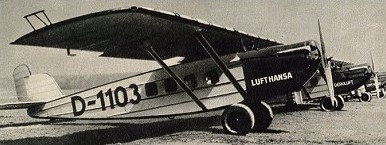
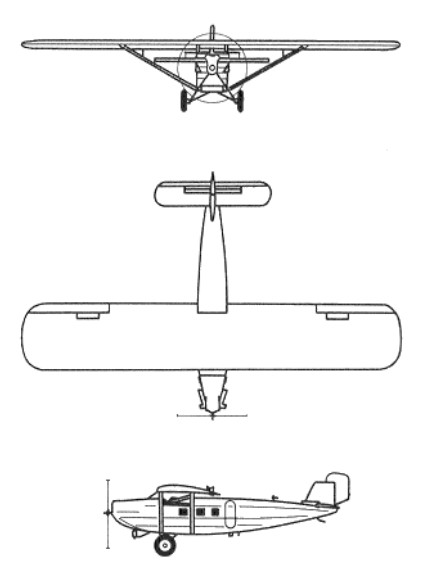
The final development of the Komet type was the Do.B Merkur, which first flew in February 1925 and was produced from 1926 as an eight-ten passenger airliner powered by a BMW VI engine. It could cruise at 175km/h. Following long-distance overland trial flights, dual controls and adjustable pilot seats were fitted. Deutsche Luft-Hansa received the greatest number with nearly 30 aircraft and these operated from Berlin to Konigsberg and elsewhere. Examples were operated by Deutscher Aero Lloyd and DDL in Europe, were exported to the Ukraine and licence-built in Japan and perhaps Switzerland in civil/military guises.
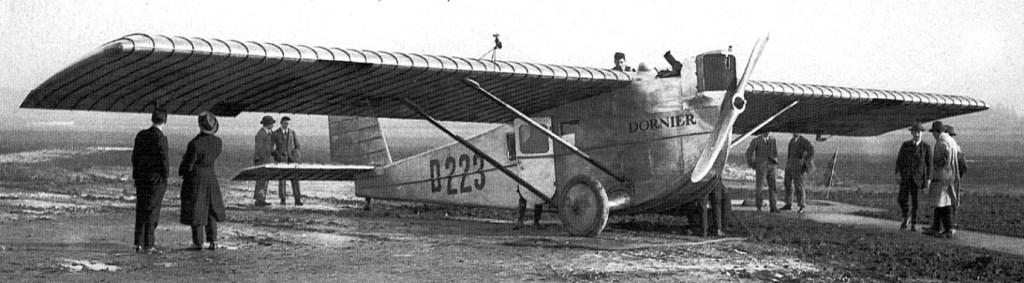
Aero-Lloyd Komet II D223 was the first German commercial aircraft to visit the UK since the First World War. It brought three Aero-Lloyd directors to visit Daimler Airways to finalise arrangements for a London-Berlin service. The Komet II had flown from Berlin via Amsterdam and Rotterdam, and due to bad weather landed in a field near Lympne, Kent, where crew and Passengers spent the night before arriving at Croydon Airport.
The Komet III used three different kind of powerplants. Some of them employed the Rolls-Royce 360 horsepower Eagles, others used the Napier 465 horsepower Lions, and the third powerplant was the 400 horsepower Liberty engine.
A twin-float seaplane version was also produced and Chile received a number as Do G trainers/torpedo-bombers. The Do D was similar to the Do C built for the Yugoslav Naval Air Service, while the Do T was an ambulance derivative of the Merkur.
The Merkur used a 600 horsepower engine as its powerplant.
Production details are impossible to give. It is known that the civil Komet and Merkur series, together with the Do T, were built openly in Germany; the para military variants most likely emanated from the Dornier factory at Alteirrhein in Switzerland.
Komet II
Engine: 1 x BMW IV, 185kW
Take-off weight: 2200 kg / 4850 lb
Empty weight: 700 kg / 1543 lb
Wingspan: 17.0 m / 55 ft 9 in
Length: 10.3 m / 33 ft 10 in
Height: 3.3 m / 10 ft 10 in
Wing area: 50.0 sq.m / 538.20 sq ft
Max. Speed: 165 km/h / 103 mph
Cruise speed: 135 km/h / 84 mph
Ceiling: 5000 m / 16400 ft
Range w/max.fuel: 500 km / 311 miles
Crew: 1
Passengers: 4
Do C
Span: 19.60 m (64 ft 3.75 in)
Length: 12.43 m (40 ft 9.5 in)
Gross weight: 3900 kg (8598 lb)
Maximum speed: 195 kph (121 mph)
Do.B Merkur
Engine: 1 x BMW VI, 500kW
Take-off weight: 3700 kg / 8157 lb
Empty weight: 2280 kg / 5027 lb
Wingspan: 19.6 m / 64 ft 4 in
Length: 12.8 m / 41 ft 12 in
Height: 3.8 m / 12 ft 6 in
Wing area: 62.0 sq.m / 667.36 sq ft
Ceiling: 5200 m / 17050 ft
Range w/max.fuel: 1000 km / 621 miles
Crew: 2
Passengers: 6-7
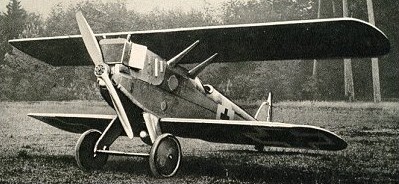
1918
Engine: 1 x BMW IIIa, 136kW
Take-off weight: 885 kg / 1951 lb
Empty weight: 160 kg / 353 lb
Wingspan: 7.8 m / 25 ft 7 in
Length: 6.4 m / 20 ft 12 in
Height: 2.6 m / 8 ft 6 in
Wing area: 18.6 sq.m / 200.21 sq ft
Max. Speed: 200 km/h / 124 mph
Cruise speed: 80 km/h / 50 mph
Ceiling: 8100 m / 26600 ft
Armament: 2 machine-guns
Crew: 1
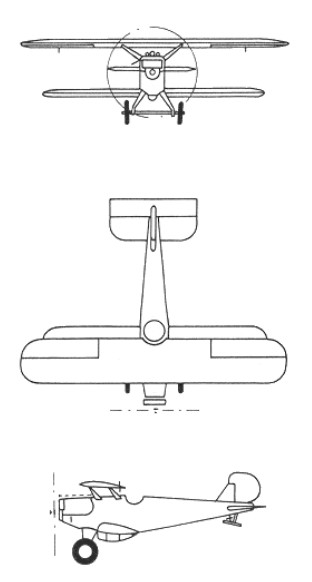
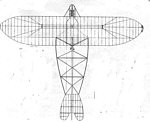
The 1910 Dorner Type II pusher monoplane was designed and built by Dorner in Germany
Span: 32’10”
Length: 38’1″
Weight w.engine: 661 lbs
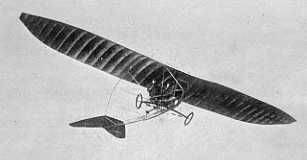
The Dorner monoplane was a well known sight around Johannistahl. Georg Schendel set a German record for altitude of 2010 meters on 6 June, 1911, and a World Altitude record with passenger, of 1690 meters on 9 June, 1911, in his Dorner. Type II had a 20 hp Dorner-Motor and cost 13,500 Marks. Type III came with a 40 hp Dorner-Motor at 15,500 Marks, or 50 hp at 16,500 Marks. The T.III version had a fatal accident for both passenger and pilot on 9 June, 1911 at Johannistahl.
The Dorna Free Bird is an Iranian light-sport aircraft, designed and produced by Hava Faza Dorna Co. of Hasanabad. Designed to comply with the US light-sport aircraft rules, it features a cantilever low-wing, an enclosed cabin with two-seats-in-side-by-side configuration accessed by doors, fixed tricycle landing gear, with wheel pants and a single engine in tractor configuration.
The aircraft structure is made entirely from composite material, with the fuselage a monocoque design. Its 9.45 m (31.0 ft) wing has an area of 11.06 m2 (119.0 sq ft), is built with dual spars and features winglets. It has a low-mounted horizontal stabilizer with a single spar. Both the seats and the rudder pedals are adjustable for pilot height. The cabin is 107 cm (42 in) in width. The standard engine used is the Austrian 100 hp (75 kW) Rotax 912ULS, four-stroke powerplant, driving a Czech-built Woodcomp three-bladed, ground adjustable propeller.
As of February 2017, the design does not appear on the Federal Aviation Administration’s list of approved special light-sport aircraft.
The aircraft was supplied complete and ready-to-fly in 2015 at €85,000 and was still in production in 2017.
Free Bird
Engine: 1 × Rotax 912ULS, 75 kW (101 hp)
Propeller: 3-bladed Woodcomp ground adjustable
Wingspan: 9.45 m (31 ft 0 in)
Wing area: 11.06 m2 (119.0 sq ft)
Empty weight: 380 kg (838 lb)
Gross weight: 600 kg (1,323 lb)
Fuel capacity: 70 litres (15 imp gal; 18 US gal)
Wing loading: 54.2 kg/m2 (11.1 lb/sq ft)
Maximum speed: 220 km/h (137 mph; 119 kn)
Stall speed: 64 km/h (40 mph; 35 kn)
Rate of climb: 5 m/s (980 ft/min)
Crew: one
Capacity: one passenger
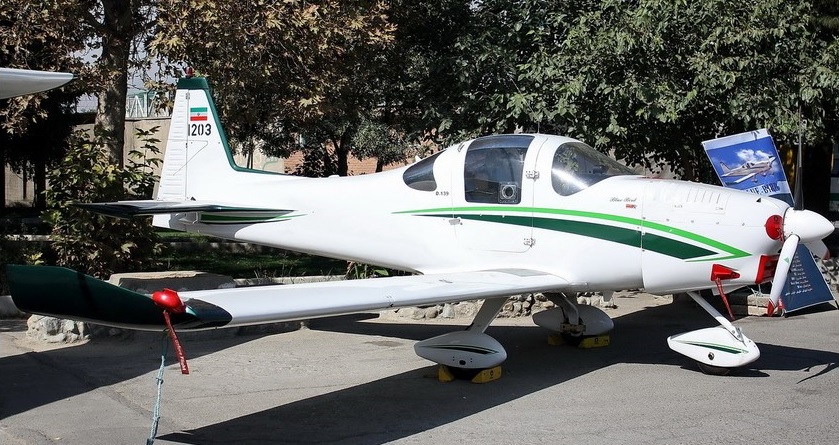
The design of the Parandeh Abi, Blue Bird in English, recreational and training aircraft was begun in 1994 and the first flight was on 27 July 1998. The designer was Mohammad Hassan Karami.
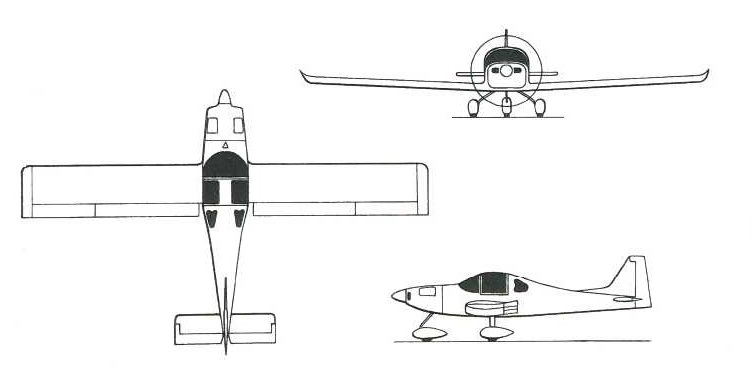
It is a conventionally laid out low wing single-engine monoplane, built entirely from composite materials and seating two side-by-side. Its two spar wings and single spar horizontal tail are rectangular in plan. The wing carries 2.5° of dihedral and the tips are slightly upturned. Plain flaps fill the trailing edges inboard of the ailerons. The elevators are horn balanced, as is the rudder. Together, the fin and rudder are straight tapered, with a small dorsal fillet.
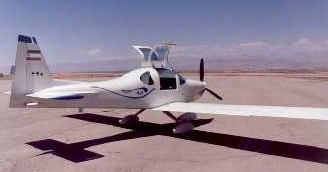
The Parandeh Abi is powered by a Rotax 914 F3 horizontally opposed four-cylinder engine driving a thee-bladed propeller. Its fixed, self-sprung steel cantilever tricycle undercarriage is attached to the fuselage. All wheels have speed fairings. In early production aircraft, access to the cabin was via the top hinged, upward opening canopy, but later examples have forward hinged doors reaching down almost to the wing. The doors contain a framed window, though the total cabin transparency is noticeably reduced. All models have a pair of small, fixed windows in the tapering fuselage behind the seats, where there is a baggage compartment. The aircraft can be equipped with either a stick or yoke for primary control. Other differences between early and later production models include improved engine cooling with the addition of chin and cheek air intakes, enlarged rudder horn balances, tailplane root fillets and fluted skinning on the ailerons and rudder.
The design was type certified to JAR-VLA standards.
Production of the Parandeh Abi began in 2001 with orders for 5 from Iranian flying clubs. By March 2006 Dorna had orders for 14 and options on another 30 and by November 2008 28 had been built at a unit cost of €120,000. As well as supplying clubs and training centres, Parandeh Albis also went to the Iranian Police and to the Civil Aviation Organisation.
By the end of 2012 the company’s website was gone and the domain was for sale. The company may no longer be in business.
Parandeh Abi
Engine: 1 × Rotax 914 F3
Propeller: 3-bladed MT-Propeller MTV-6-A/172-8, 1.72 m (5 ft 8 in) diameter
Wingspan: 9.45 m (31 ft 0 in).
Wing area: 11.06 m2 (119.0 sq ft) gross
Airfoil: NACA 63-215
Length: 6.17 m (20 ft 3 in)
Height: 2.70 m (8 ft 10 in)
Empty weight: 490 kg (1,080 lb)
Max takeoff weight: 750 kg (1,653 lb)
Fuel capacity: 120 L (26.4 Imp gal, 31.7 US gal)
Maximum speed: 282 km/h (175 mph; 152 kn) at 4,267 m (14,000 ft)
Cruise speed: 161 km/h (100 mph; 87 kn) economical, at 3,658 m (12,000 ft)
Stall speed: 83 km/h (52 mph; 45 kn) sea level, flaps down
Never exceed speed: 321 km/h (199 mph; 173 kn)
Range: 1,094 km (680 mi; 591 nmi) with maximum fuel
Service ceiling: 4,265 m (13,993 ft)
Rate of climb: 3.8 m/s (750 ft/min) at sea level
Crew: one
Capacity: one passenger
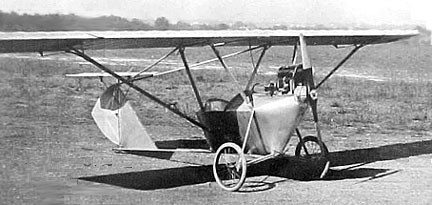
The 1924 Dormoy Bathtub won the Rickenbacker Trophy for its class at the 1924 Nationals. After the 1924 races Dormoy sold it to a farmer, who taxied it around his cow pasture, but was afraid to fly it. It eventually ended up parked in the field, and his cows chewed the wings away.
The 1925 Bathtub was built from scratch with a full-length, covered fuselage.
Only the two originals were built. Many subsequently replicated by home-builders even into the 1990s.
Engine: 25hp 4-cyl Henderson
Wing span: 24’0″
Length: 13’5″
Useful load: 190 lb
Max speed: 70 mph
Cruise speed: 60 mph
Stall: 25 mph
Sats: 1
The 1920 single place open cockpit monoplane designed by Etienne Dormoy was based on the Deperdussin, and powered by a 15hp converted V-twin motorcycle engine
Only one was built, sometimes listed as a Packard Motor Co product but actually a spare-time project by Dormoy and his co-workers while employed there.