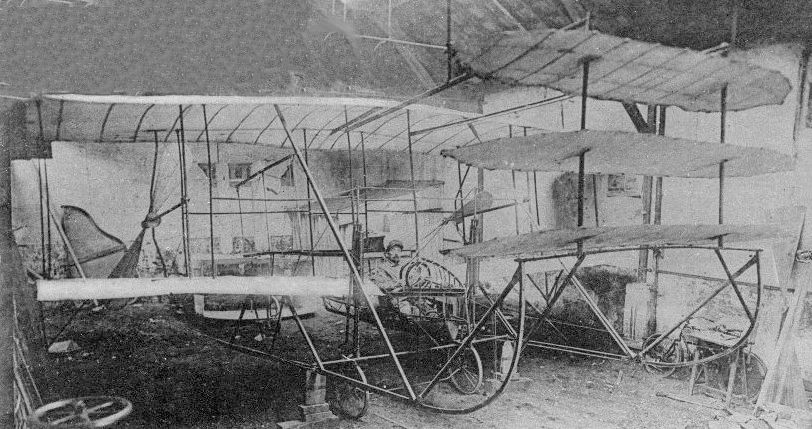
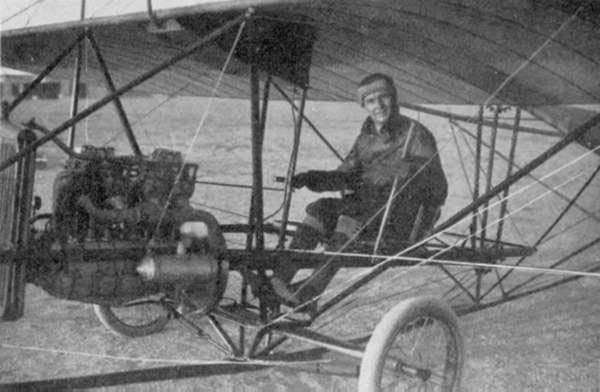
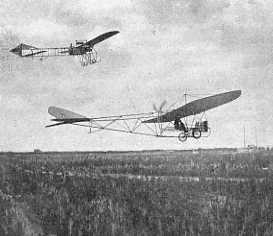
This somewhat complicated twin-propeller pusher with a span of 12 m and a length of 11 m was designed by Charles-Albert Dottori, who was granted a French patent for “Appareil de direction et de stabilisation pour aéroplanes” on April 16th, 1909. The machine was tested on the ground at Port-Aviation by Edmond Jean Eugène Pouvarel, who had built its 50 hp engine. It was destroyed by fire on the night of December 18th, 1909, before making any flights.
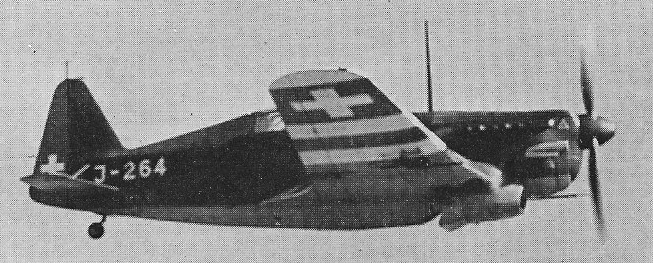
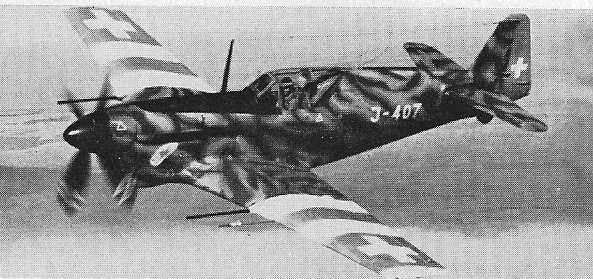
Swiss fighter aircraft. In 1938 the Swiss government purchased two Morane Saulnier M.S.405 fighters from France and, after careful evaluation, purchased a licence for the production version, the M.S.406C. Manufacture of a Swiss version of the 406 was assigned to Dornier Flugzeug at Altenrhein, with the Swiss designation D 3800. This differed from the French aircraft in having a Saurer/SLM licence built Hispano Suiza 12Y 31 of 860 hp, cooled by a fixed ventral radiator.
In 1939 40 Dornier delivered 82, followed in 1940 44 by 207 D 3801 fighters with many refinements and in having the 860 hp Hispano 12Y-31 engine replaced by a 1000 hp Hispano 12Y-51 built by A.G.Adolph Saurer.. Both types had one 20 mm (0.79 in) Hispano cannon and two 7.7 mm (0.303 in) wing guns, with provision for two 50 kg (110 lb) bombs.
D-3801
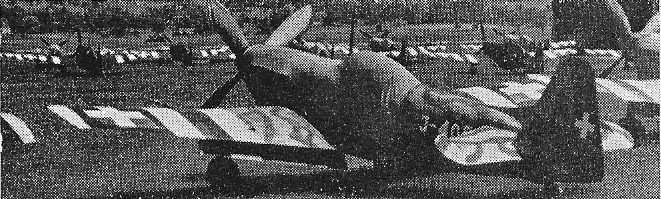
The D 3802 single-seat fighter prototype was built in 1943 by Dornier Werke to designs provided by Morane-Saulnier (designated M.S.450). A second prototype modified up to production standards was produced as the D-3802A, and orders were placed by the Swiss Air Force for 100. With the end of the war in Europe, the order was reduced to ten, built in 1944.
D-3802A
The 1500 hp (12Y 53) D 3803 of 1947 remained a one off, by which time the company had become Flug & Fahrtzeug¬werke (F&FW).
D 3801 Engine: 1000 hp Hispano 12Y-51 Span: 10.61 m (34 ft 9.75 in) Length: 8.16 m (26 ft 9.25 in) Empty weight: 4694 lb Gross weight: 2725 kg (6007 lb). Maximum speed: 523 km/h (325 mph) at 13,950 ft Econ cruise: 190 mph Time to 16,400 ft: 5.4 min Service ceiling: 35,400 ft
D-3802A Engine: Hispano-Suiza 1250 hp 12Y-52 Wingspan: 35 ft 2.75 in Length: 30 ft 7 in Height: 10 ft 11 in Empty weight: 6327 lb Loaded weight: 7716 lb Max loaded weight: 8014 lb Max speed: 391 mph at 21,325 ft Time to 19,865 ft: 7.1 min Ceiling: 33,500 ft Armament: three 20mm (0.79 in) cannon
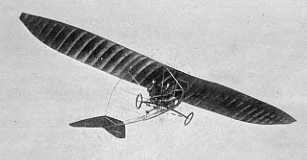
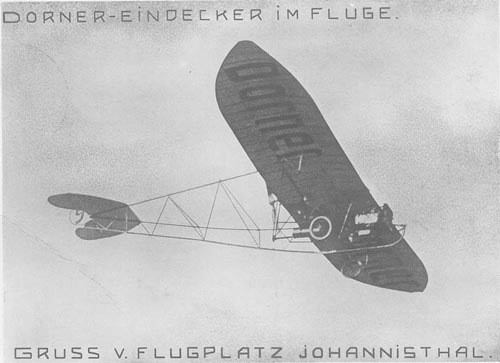
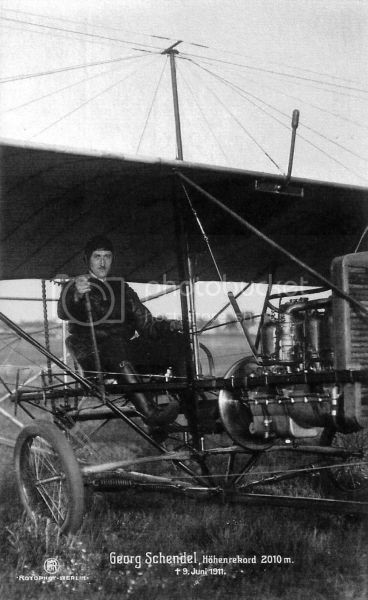
The Dorner monoplane was a well-known sight around Johannistahl. Georg Schendel set a German record for altitude of 2010 meters on 6 June, 1911, and a World Altitude record with passenger, of 1690 meters on 9 June, 1911, in his Dorner.
Type II had a 20 hp Dorner-Motor and cost 13,500 Marks.
Type III came with a 40 hp Dorner-Motor at 15,500 Marks, or 50 hp at 16,500 Marks.
1911 model T III – Dixi engine
Dorner had entered the T III with 40 hp Körting at the “Zuverlässigkeitsflug am Oberrhein” in April/May 1911, where his light monoplane still was underpowered and could not complete a single stage.
The T. III version had a fatal accident for both passenger and pilot on 9 June, 1911 at Johannistahl.
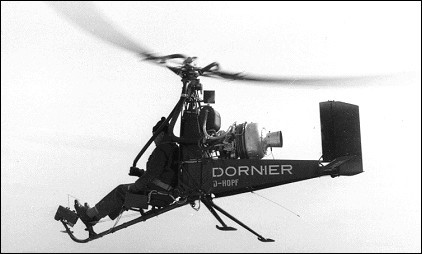
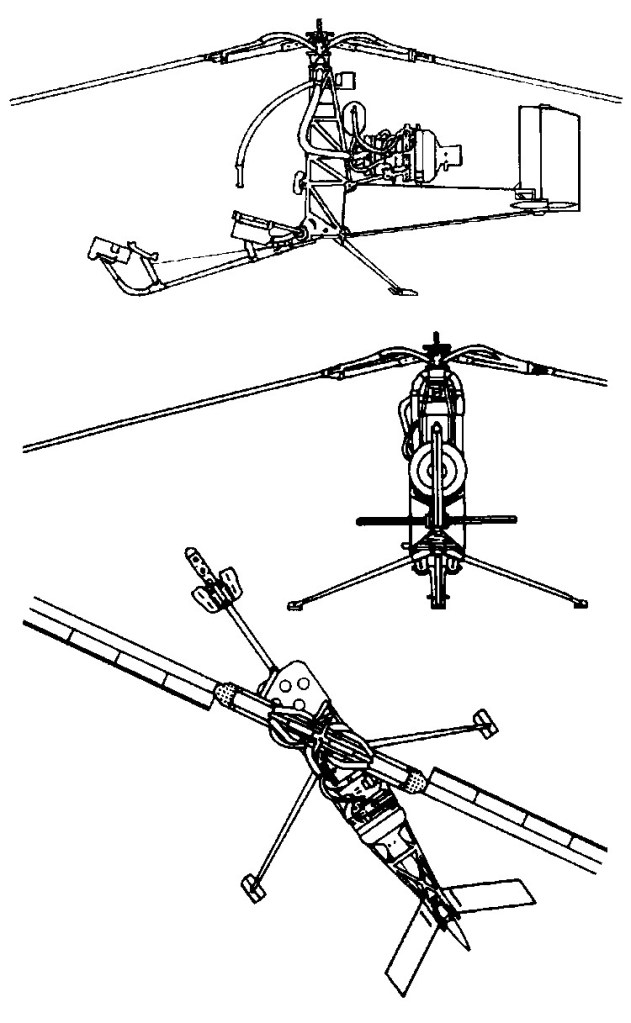
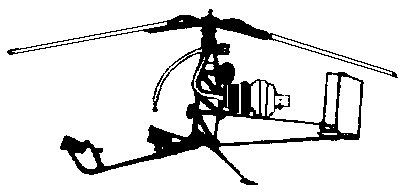
The Dornier Do.32 was one of the first helicopters designed and built by the German helicopter industry after the war. It was a small, ultra-lightweight single-seater which could be carried in a container of modest size, measuring 3.8m long and less than 1m wide. The container was fitted with wheels, could be towed by an ordinary motor car, and also served as a take-off and landing platform. The mini helicopter could be assembled in just five minutes.
The Do.32 was powered by a 100shp BMW 6012 turbine which drove the rotor through a cold cycle. The prototype was tested on 29 June 1962 and completed the test programme in mid 1963, when the German company displayed a second model at the Paris Air Show. A few others were built but the two-seat derivative (with a 250shp turbine) offered to the German government was not adopted.
Do-32 Engine: BMW 6012 turbine, 100shp Main rotor diameter: 7.50m Fuselage length: 3.20m Height: 1.90m Max take-off weight: 280kg Empty weight: 151kg Max speed: 115km/h Cruising speed: 115km/h Range: 90km Endurance: 50min, Crew: 1
Do 32 E/U Kieblitz Engine: BMW Turbokompressor 6012 L Length: 10.499 ft / 3.2 m Height: 6.234 ft / 1.9 m Rotor diameter: 24.606 ft / 7.5 m Max take off weight: 617.4 lb / 280.0 kg Max. speed: 62 kts / 115 kph Range: 49 nm / 90 km Crew: 1
Oficinas Tecnicas Dornier was set up after the Second World War by Dr. Claude Dornier. First designed the Do 25, a general-purpose airplane from which the very successful Do 27 STOL aircraft was built. Spanish Company Construcciones Aeronauticas SA produced 50 of these.
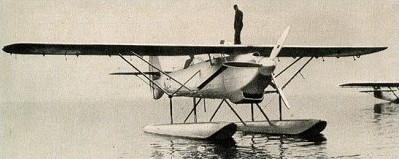
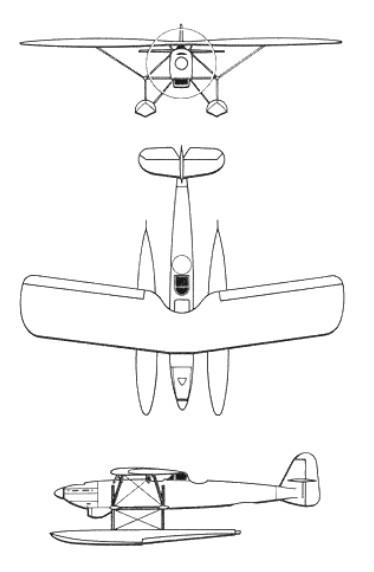
Developed in 1934 at the Altenrhein factory, the Do 22 all metal, fabric covered, except for the metal-skinned forward fuselage, parasol monoplane first appeared as a twin float seaplane. Two prototypes were built. The Do 22 was powered by a 775¬hp Hispano-Suiza 12Ybrs engine driving a three-bladed propeller. The Do 22 carried a crew of three, the rear cockpit providing accommodation for a gunner, and a radio operator whose position in the front half of the cockpit was protected by a glazed canopy. Four 7.92mm MG 15 machine-guns were fitted, one in the forward fuselage above the engine, one in a ventral position and two in the rear cockpit. There were racks on the underside of the fuselage for a single 800 kg (1764 lb) torpedo or four 50 kg (110 lb) bombs. Approximately 30 were built at Friedrichshafen in Germany and the first production aircraft was flown on 15 July 1938. Orders were not received from the Luftwaffe, but some were produced at Friedrichshafen for export to Latvia (Do 22 Kl), Greece (12 Do 22Kg) and Yugoslavia (12 Do 22Kj). The Do 22L (a landplane model registered D OXWD) flew on March 10, 1939. The Do 22 fought on both sides during the Second World War. Of the 12 delivered to the Yugoslavian navy, eight escaped to Egypt in April 1941 and served under No 230 Squadron RAF in the Mediterranean; and four Do 22K1 from the Latvian order were sold to the Finnish air force in 1941.
Engine: 1 x Hispano-Suiza 12 Y 21, 670kW Wingspan: 16.2 m / 53 ft 2 in Length: 13.1 m / 42 ft 12 in Height: 4.8 m / 15 ft 9 in Wing area: 41.3 sq.m / 444.55 sq ft Empty weight: 2850 kg / 6283 lb Max take-off weight: 3700-4000 kg / 8157 – 8819 lb Max. speed: 350 km/h / 217 mph Cruise speed: 310 km/h / 193 mph Ceiling: 8500 m / 27900 ft Range w/max.fuel: 1600 km / 994 miles Range w/max.payload: 800 km / 497 miles Crew: 3 Armament: 2-3 machine-guns
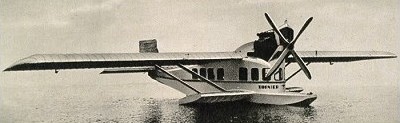
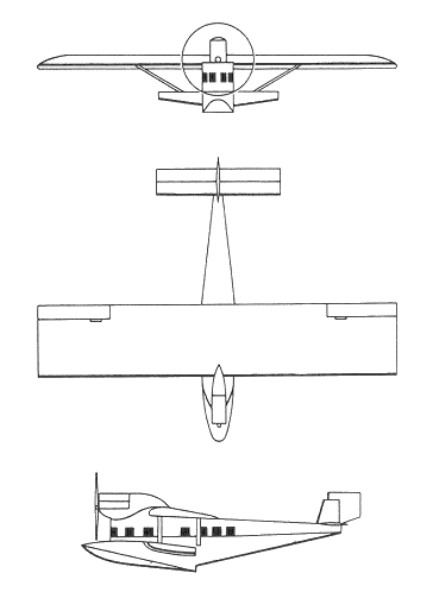
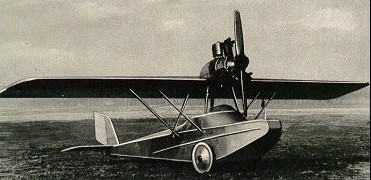
In 1920 Dornier produced the first Delphin commercial flying-boat. It was based upon substantially the same design as the Libelle. The first versions, the L.1 and L.1a, were each produced with a high open pilot’s cockpit aft of the 138kW BMW IlIa or 134kW BMW III engine, but the later L.2 and L.3 versions had seating for two in front of the passenger cabin, separated by a bulkhead. Power for these versions was provided by a 186.3kW BMW IV or 194kW Rolls-Royce Falcon III and a 447kW BMW VI engine respectively. The Delphin L.2 accommodated up to seven passengers (one next to pilot). The L.3 could carry up to 13 and was built in Switzerland by the Aktiengesellschaft fur Dornier-Flugzeuge at Altenrhein for over inland water and coastal services.
Engine: 1 x BMW IIIa, 136kW Max take-off weight: 2200 kg / 4850 lb Empty weight: 600 kg / 1323 lb Wingspan: 17.0 m / 55 ft 9 in Length: 11.5 m / 37 ft 9 in Height: 3.1 m / 10 ft 2 in Wing area: 50.0 sq.m / 538.20 sq ft Max. speed: 150 km/h / 93 mph Cruise speed: 125 km/h / 78 mph Ceiling: 4000 m / 13100 ft Range w/max.fuel: 380 km / 236 miles Crew: 1 Passengers: 5
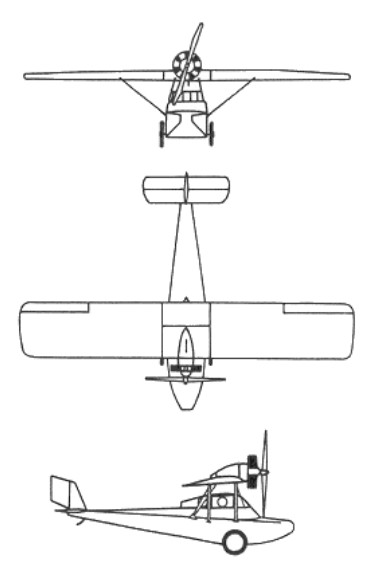
Virtually a landplane version of the Dornier Libelle without the hull sponsons but with fixed tailskid landing gear. The 1924 Spatz had a 60kW Siemens-Halske engine was standard, but a 75kW engine and an open cockpit or enclosed cabin were optional.
Engine: 1 x Siemens-Halske Sh-7, 59kW Take-off weight: 800 kg / 1764 lb Empty weight: 490 kg / 1080 lb Wingspan: 9.8 m / 32 ft 2 in Length: 6.9 m / 22 ft 8 in Height: 2.8 m / 9 ft 2 in Wing area: 15.5 sq.m / 166.84 sq ft Max. speed: 141 km/h / 88 mph Cruise speed: 120 km/h / 75 mph Ceiling: 3500 m / 11500 ft Crew: 1 Passengers: 2
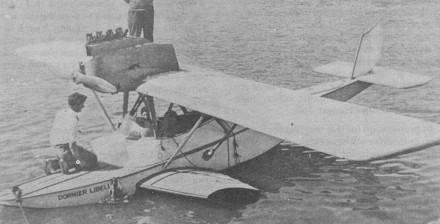
The Libelle is a small flying boat of 1922. They were sold in Brazil, New Zealand, Australia, Japan and the Fiji.
Dornier Libelle II Length : 24.606 ft / 7.5 m Height : 7.874 ft / 2.4 m Wingspan : 32.152 ft / 9.8 m Max. speed : 78 kts / 145 km/h Service ceiling : 6562 ft / 2000 m Engine : Cirrus III 4-Cyl, 79 hp Crew : 1+2