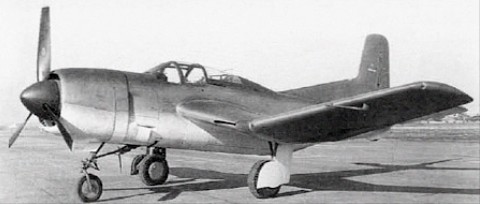
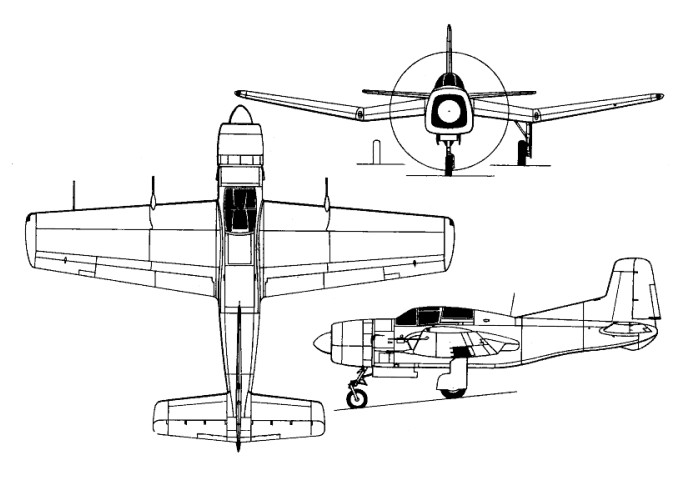
The US Navy had initiated the procurement of an advanced dive-bomber, leading to the development by Douglas of a two-seat aircraft in this category. Two prototypes were ordered by the US Navy in June 1941, designated Douglas XSB2D-1 Destroyer, the first prototype made its initial flight on 8 April 1943.
The prototype was a two-seat dive-bomber, introducing an internal bomb bay and, for the first time for an aircraft to operate from an aircraft-carrier, retractable tricycle landing gear. The US Navy’s new requirement was for a single-seat torpedo/dive-bomber, and the XSB2D-1 was modified for this new role by conversion to a single-seat cockpit, the addition of two wing-mounted 20mm cannon, enlargement of the bomb bay and the provision of increased fuel capacity. Airbrakes were installed in each side of the fuselage, and the Wright Cyclone 18 engine of the XSB2D-1 was retained to give the requisite high performance. A contract on 31 August 1943 increased earlier orders for this aircraft, designated BTD-1 and retaining the name Destroyer, to 358. Deliveries of production aircraft began in June 1944, but only 28 had been delivered before contract cancellation was initiated soon after VJ-Day. The Destroyer’s performance was disappointing and it appears the type was not used operationally. Two aircraft were provided experimentally with a mixed powerplant, a 680kg thrust Westinghouse WE-19XA turbojet being fitted in the rear fuselage and fed with air through a dorsal inlet aft of the cockpit. Thus designated XBTD-2, the aircraft were the first jet-powered machines of Douglas and the US Navy. A first flight was made in May 1945, but at speeds over 322km/h the downward-angled turbojet could not be used. The project was cancelled in late 1945.
BTD-1 Engine: 1 x Wright R-3350-14 Cyclone 18 radial, 2268 hp / 1715kW Max take-off weight: 8618 kg / 19000 lb Empty weight: 5244 kg / 11561 lb Wingspan: 13.72 m / 45 ft 0 in Wing loading: 51.05 lb/sq.ft / 249.0 kg/sq.m Length: 11.76 m / 38 ft 7 in Height: 5.05 m / 16 ft 7 in Wing area: 34.65 sq.m / 372.97 sq ft Max. Speed: 299 kts / 554 km/h / 344 mph Service Ceiling: 7195 m / 23600 ft Range: 1286 nm / 2382 km / 1480 miles Armament: 2 x 20mm cannon, one torpedo or 1450kg of bombs Crew: 1
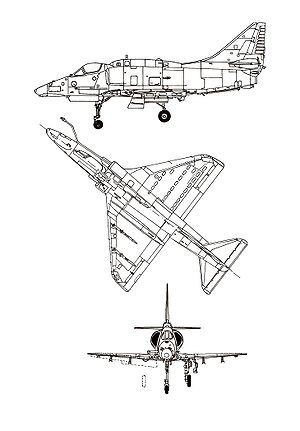
Designed as a replacement for the A-1 Skyraider, the initial work was carried out as a private com¬pany exercise without government funding and a draft proposal was submitted to the Bureau of Aeronautics in January 1952. The US Navy was impressed with what it saw but, as it was already committed to a number of new fighter designs, asked that the concept be applied to a jet-powered, carrier-borne attack bomber. Such an aeroplane was required to have a top speed of not less than 805km/h (500mph), a combat radius of 555km (345 miles) with a 908kg (20001b) weapons load and a maximum take-off weight of no more than 13,600kg (30,000lb). The Navy visualised the aircraft as a twin turboprop grossing approximately 30,000 lb (13 605 kg). However, the service also specified a unit cost limit of $1m, due to severe budgetary restrictions (the Korean War was coming to an end). Jumping ahead with the story, Douglas actually produced the first 500 Skyhawks at a price of $860,000 apiece.
By the time inspection of a mock-up took place, the Skyhawk had crystallised into a 12.01m (39ft 4¾in) long fuselage housing a pilot, fuel systems and a licence-built Armstrong Siddeley Sapphire jet engine mated to a modified delta wing, spanning just 8.38m (27ft 6in) and a stalky tricycle undercarriage. On 21 June 1952, Douglas was awarded a contract for 20 such aircraft under the designation A4D 1 (BuAer Nos 137812 31).
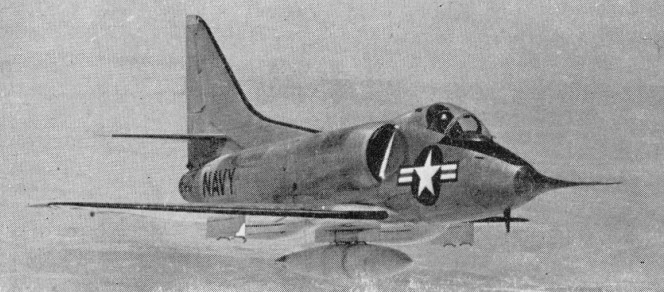
Construction of the XA-4A (originally XA4D-1) prototype Skyhawk began in September 1953 and the first flight of this aircraft, powered by a Wright J65-W-2 engine (32 kN), took place 22 June 1954.
Heinemann approached the Skyhawk design on the basis of a growth factor of 10, and set out to save weight wherever humanly possible. Assuming that the mission could be performed by a 12,000 lb (5 442 kg) aircraft, he chose the 7,200 lb (3 265 kg) Wright J65 W 2, a licence built Armstrong Siddeley Sapphire. This was used in the prototype, but the pre¬-production and production aircraft were to have the 7,800 lb (3 537 kg) J65 W 4 and 4B, most of which were reconditioned engines previously flown in the USAF’s F 84F Thunderstreak. Simplicity was the keynote of the airframe design. The Skyhawk was given a single piece wing based on a three spar box continuous from tip to tip, forming a single integral fuel tank. To minimise wing cutouts, the main undercarriage units were mounted externally. To minimise restrictions on external stores, the main legs were retracted forward to lie in fairings below the wing surface, while the wheels turned through 90 degrees to lie flat in apertures ahead of the main structure.
The fuselage was fastened on top of the wing by ten bolts, and contained an avionics bay in the nose, and a single fuel tank between the cockpit and the engine. To save weight, the fuselage had a single transport joint, and “broke” in the middle, where the frame that carried the engine was bolted to the wing intermediate spar. Engine change was effected by removing the rear fuselage complete with tail. The nose undercarriage retracted forward below the cockpit, so that emergency extension was assisted by both gravity and aerodynamic drag. One of the most unusual aspects of the Skyhawk design was its two tank fuel system, with 560 US gal (2 120 lt) in the wing and 240 US gal (908 lt) in the fuselage, which must have saved significantly in terms of weight of pipes and valves.
The same philosophy of simplifying to reduce weight was applied to the avionics, the many black boxes supplied by the Navy being repackaged as a single item, with a single power supply and one multi pin connector. Douglas designed its own ejection seat, which was much lighter than existing products. The company had already designed its own bomb racks, eliminating the normal high drag sway bracing, and had developed low drag shapes for external stores: the Aero IA series of bombs, and fuel tanks of 150, 300 and 450 US gal (568, 1136 and 1705 lt) capacity. The aircraft was armed with two Colt 20 mm MK 12 cannon in the wing roots, each gun being provided with 100 rounds. The initial aircraft were fitted with three pylons for ordnance and drop tanks, with a total load capacity of 8,055 lb (3 653 kg).
On 22 June 1954 the first XA-4D-1 Skyhawk took to the air from Edwards air force base, California piloted by Bob Rahn. The first of 19 pre production A4D 1s was flown seven and a half weeks later, on 14 August 1954. Eight years later, when the US forces adopted a uniform system of aircraft designations, the A4D-1 became the A-4A.
Flight trials showed up a number of minor aerodynamic problems but the basic design more than vindicated itself.
As a result of early flight tests, the sugar scoop fairing was added to the tail cone and vortex generators to the outer wing, and the rudder structure was redesigned to eliminate buzz, although these modifications became standard only on the A-4B. This “inside out” rudder was a North American idea, first used on the FJ 4 Fury. In September 1955, preliminary carrier trials were carried out on the USS Ticonderoga, and on 15 October 1955, an A-4A, still fitted with the less powerful J65-W 2, set up a 500 km (310.7 mile) closed circuit world speed record of 695.127 mph (1112,2 km/h) at Edwards AFB on 15 October 1955.
A4D-1
A total of 165 of the first production model were constructed, including the 19 pre production aircraft. The first production model, designated the A4D-1, was cleared for operational service in September 1955, deliveries to the fleet began on 9 September 1956, the A 4A going to VA 72 attack squadron, based at Quonset Point NAS, Rhode Island. The Skyhawk was declared operational on 26 October that year, and deliveries to the first Marine Corps unit, VMA 224, began in the following January. The A-4A went through various stages of uprating, ending with the J65 W 18 of 8,500 lb (3 855 kg). It had an empty weight of only 8,400 lb (3810 kg), of which avionics represented 138 lb (62,6 kg), and a maximum take off weight of 20,000 lb (9 070 kg).
The A4D-1, or A-4A as it became known in 1962, was powered by a single Wright J65-W-4 or W-4B turbojet and carried an internal armament of two 20mm cannon. Up to 2268kg (5000 lb) of external stores could be carried on a fuselage and two wing racks which could, alternatively, support three drop tanks with a capacity of 3028 litres (800 gallons) to increase range. Production continued until 1957, by which time 165 had been built. The A-4B, of which 542 were to be built, first flew on 26 March 1956 and entered service in 1957. It corrected various shortcomings of the first series, introducing the revised rudder as a production item, plus dual hydraulics, powered flying controls and a beefed up structure to permit clearance to 7g. Provisions were made for carriage and firing of the Bullpup air surface missile and for in flight refuelling, using a long straight probe attached to the lower starboard side of the front fuselage. Douglas also developed a buddy refuelling pack for the centreline station, allowing an A 4 to act as a tanker. Aside from the drogue and hose, and associated equipment, the pod also contained 300 US gal (1136 lt) of fuel, equal to the capacity of the long range tanks carried on each of the wing pylons. The system allowed for the transfer to the receiving aircraft of all the A 4 tanker’s external fuel, plus half of the internal capacity, making a transferable total of 1,300 US gal (4 925 lt). This second series was typically powered by the J65 W 16A of 7,700 lb (3 492 kg), although it was later uprated to the W 18 of 8,500 lb (3 855 kg). Empty weight grew to 9,146 lb (4 148 kg) and maximum take off weight to 22,500 lb (10 205 kg). A-4B deliveries began to Marine Corps squadron VMA 211 in September 1957, and to the first Navy unit, VA 12, in the following February.
The next model designated after the A4D 2 (A-4B) in the pre-1962 series was the A4D 3, a variant of the 2 with J52 P 2 engine. Ten were ordered but then cancelled, and no equivalent designation was given in the A 4 series. Also remaining in the project category was the A4D4, intended to be an A4D 2N (A4C) with J52 engine. A-4C (A4D-2N) appeared in 1959. Essentially similar to its predecessor, the A-4C was optimised for all-weather operations and was equipped with terrain-following radar, an autopilot, a low-altitude bombing system and an improved ejector seat. Initial production machines received the W-16A engine but later aircraft incorporated the W-16C model.
The key to this extended capability was a small, lightweight radar, which, in its way, was just as remarkable as the Skyhawk itself. Developed specifically for the Skyhawk from a simple radar ranging set by the US Navy Avionics Facility at Indianapolis, it had the designation APG 53A. Manufactured by Westinghouse, it weighed 90 lb (40,8 kg) and used a dish of only 16 in (40,6 cm) diameter. Aside from performing surface mapping (B scope) and ranging functions, this radar produced a vertical profilometer (E scope) display, enabling the pilot to fly a terrain clearance path at relatively low altitude and high speed. Other new equipment for this series included the TPQ-10 blind bombing system, AJB 3 low altitude bombing system and all attitude reference, an automatic flight control system and an ADD (airstream direction detector). Total avionics weight was now 395 lb (179 kg), giving an empty weight of 9,728 lb (4 412 kg).
The first flight of the A4C took place on 21 August 1958, and the first deliveries followed in March 1960 to VMA 225 at Cherry Point MCAS, South Carolina. The first Navy squadron to receive it was VA 192, which began conversion at the end of 1961. A total of 638 was subsequently built, making this the most prolific member of the Skyhawk family; at one stage it equipped 23 Navy and nine Marine squadrons, in addition to various training units.
The 1000th Skyhawk was delivered in February 1961. Production of the A-4C ended in 1962.
The next model to enter series production was the A-4E (A4D-5) in which the J65 used in all previous variants gave place to the two spool Pratt & Whitney J52 P 6. This provided a static thrust of 8,500 lb (3 855 kg), and was far more economical than the ageing Sapphire. It also had considerable growth potential, whereas the J65 had reached the end of the line. The A4E had a locally strengthened structure and two additional pylons, giving a total theoretical external load capacity of 9,155 lb (4 152 kg). New equipment included a further improved ejection system, a Doppler radar, Tacan, radar altimeter and the improved AJB 3A LABS/all attitude and heading reference. The avionics now amounted to 526 lb (238,5 kg) and empty weight had climbed to 9,853 lb (4 468 kg). The first aircraft of this upgraded sub series flew on 12 July 1961, and the A4E began to enter service in November 1962, the first squadron (VA 23) reaching operational status in the following year. A total of 498 of this series was built following two YA4Es.
The use of the J52 engine improved the type’s combat radius by virtue of its lower fuel consumption compared with the previously used J65. Most importantly, the A-4E marked the end of the Skyhawk as a nuclear bomber; this model and all subsequent ones were optimised for conventional bombing and ground attack work. The A-4E remained in production from 1961 until 1966, by which time 499 had been built.
Like the A4D-3 and A4D-4, the A4D-6 remained a paper project.
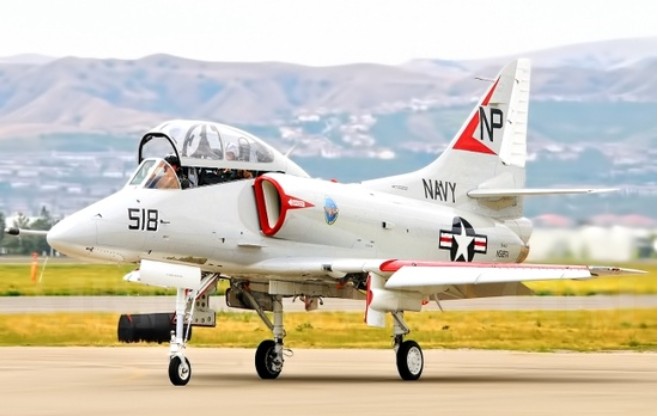
In 1964, the Navy placed an order for two prototypes of an operational trainer version under the designation TA 4E, the first example of which flew on 30 June 1965. Provision for a second cockpit involved lengthening the fuselage by 28 in (71 cm), duplicating some of the avionics, a 136 US gal (515 lt) reduction in fuselage fuel tankage and the installation of the J52 P 8A engine used in the A4F. The two seater took on other features of the A4F, notably the nosewheel steering, wing spoilers and zero zero seat, and was accordingly redesignated TA-4F soon after first flight.
A total of 241 TA 4Fs was built (including the prototypes), with deliveries beginning in May 1966 to VA 125 at Lemoore NAS. The majority of TA 4F aircraft were subsequently converted to serve as TA 4Js, replacing the TA 9J Cougar, with a further 292 TA 4Js being built as such from the ground up (including 17 for Israel). This current two seater has no nav attack system since it is used purely for advanced flying training, for which purpose the less powerful J52 P 6 is fitted. The maiden flight of the TA 4J took place on 21 November 1969, with deliveries beginning the following month to VT 21 and VT 22 training squadrons at Kingsville, Texas, and this two seater now equips all Navy advanced flying training units. It is also used by some fleet training units and Marine squadrons. As an advanced trainer it is to be replaced in the late 1980s by the new VTX project, which will also supersede the Rockwell T 2 Buckeye in the basic training role. Twenty three of those TA4Fs that were not converted to 4J standard were reworked for the forward air control task as OA 4Ms. This work was carried out by the Naval Air Rework Facility at Pensacola, the first OA 4M flying on 23 May 1978 and entering USMC service at Cherry Point late 1979.
Douglas TA-4J Skyhawk
The last major single seat variant developed for the US Navy was to be the A-4F which first flew in August 1966, of which 146 were built. This introduced the more powerful J52 P 8A engine of 9,300 lb (4 218 kg) and a large dorsal fairing (later retrofitted to A 4Es) to provide additional avionics space. Other modifications included cockpit armour and other vulnerability reduction changes, nosewheel steering, low pressure tyres, a zero zero ejection seat and wing spoilers for improved landing performance, especially in crosswinds and a dorsal ‘hump’ fairing to house additional avionics. One hundred A 4Fs were retrofitted with the more powerful J52 P 401 which required slightly enlarged intakes. With the A4F, avionics weight had escalated to 744 lb (337 kg) and empty weight to 10,448 lb (4 738 kg). The first of this series flew on 31 August 1966, and the type entered service in June of the following year.
The dorsal hump was also retrofitted to a number of A-4Es. A two-seat training version was produced under the designation TA-4F, a few of which were later re-equipped for the electronic warfare role under the designation EA-4F. Total production of the A/TA-4F series amounted to 385 units of which 147 were single-seaters and 238 the trainer model.
In July 1967, the Royal Australian Navy received eight new-build A-4Gs and two two seat TA4Gs, these aircraft being generally similar to the A 4E but were powered by the J52-P-8A engine, and TA 4F; first flights were made on 19 July and 7 August 1967 respectively. In 1971, these were augmented by eight refurbished ex US Navy A4Fs and two TA4Fs. Approximately half have since been lost in accidents (mainly in operating from HMAS Melbourne), but the remainder served with VF 805 and training squadron VG 724 at Nowra, NSW.
The first was delivered 22 Nov 1967, and the last delivered on 8 July 1971.
The A-4F Super Fox is used by adversary squadrons, with reduced avionics, no armament, and an uprated J-52-P-8A engine (nearly 2000 lb thrust more) to provide dissimilar combat training.
Israel has been by far the largest export customer for the Skyhawk. Delivery of 48 A 4Hs for service with Heyl Ha’Avir began in 1967 (after a first flight on 27 October 1967) with modifications that included a braking parachute, the modified fin later used on the A 4M, and a revised internal armament consisting of two 30 mm DEFA cannon with 150 rounds per gun. These were followed by a further 42 A 4Hs and 10 two-¬seat TA 4Hs (first flown on 15 April 1969), and as many as 60 ex US Navy A4Es, and 17 TA 4Js, some of which arrived in 1969, and others at the time of the October 1973 war, replacing aircraft lost in combat. From late 1972, Israel also received an initial batch of 90 A4Ns, fundamentally similar to the Marine Corps’ A 4M, but with an improved nav attack system and revised cockpit layout. The A 4N first flew on 8 July 1972 and the final total of A 4N deliveries was 117 aircraft, and thus Israel received no fewer than 267 single seat and 27 two seat Skyhawks in all, although 53 of these were lost in the Yom Kippur war alone. Some of Israel’s Skyhawks have been modified to suit local requirements (eg, an extended jetpipe to reduce the effects of the SA 7 warhead) and the 100 or so remaining on strength were expected to be replaced in Heyl Ha’Avir service towards the end of the decade.
The Indonesian Air Force (TNI AU) has been a more recent purchaser of the Skyhawk, last year receiving 14 A 4Es and two TA 4Hs from Israeli stocks. Reports indicate that these are to be augmented by 16 ex US Navy A4Es, but it is not yet clear who is to refurbish these aircraft. The success of the two-seat Skyhawks as trainers led to the development of the next model to be built, the TA-4J, which flew from 1966. Unlike the earlier TA-4F, the J carried only a single 20mm cannon armament and had much operational equipment re¬moved. Power was provided by a J52-P-6 engine. The US Navy’s Air Advanced Training Command received a total of 293 such aircraft.
In 1970, New Zealand took delivery of the first of a batch of 10 A4Ks and four two seat TA4Ks, these being new build aircraft (first flown on 10 November and 5 December 1969 respectively), based on the A 4F, but with a braking parachute, modified radios and the revised fin used on the A 4H and A 4M. These equipped No 75 Sqn of the RNZAF, based at Ohakea.
Douglas A-4K
The A 4L was an A 4C updated to the standard of the A4F in terms of equipment and control system, including the distinctive fairing on top of the fuselage. However, the A4L retained the three pylons of the earlier model and the J65 engine of 8,500 lb (3 855 kg). One hundred of these conversions were made at Naval Air Rework Facilities (NARF); the first flight was made on 21 August 1969 and the first deliveries took place at the end of 1969. The A4L went first to Navy and Marine reserve units, where, in the former case, they began to be replaced by early model A 7 Corsair IIs in the mid 1970s, the Skyhawks then passing to regular fleet utility (VC) squadrons.
In principle, both the Navy and Marine Corps were to have replaced the Skyhawk with the winner of the VAL contest, designed to requirements issued in May 1963. Vought won this competition with the A 7 Corsair II, early in 1964, the resulting A 7A making its first flight on 27 September 1965. Powered by a single Pratt & Whitney TF30 P 6 turbofan of 11,350 lb (5 147 kg), the A 7A had an empty weight of 14,857 lb (6738 kg), a total of eight weapon pylons, and a design catapult gross weight of 32,500 lb (14 740 kg). Due to its larger size and more economical engine, it could fly further with heavier warloads and more equipment than the diminutive Skyhawk. However, the Corsair II was clearly going to cost far more and require more maintenance effort than the smaller, simpler Skyhawk. In addition, it may well have been that the A 7 provided capabilities that were far in excess of those demanded by the Marines for the short range close support mission. The two services therefore went their separate ways, the Navy adopting the Corsair II, while the Marine Corps funded a further stage of Skyhawk development. The resulting A-4M was the final variant for the US services. It adopted yet another increase in engine thrust, with the 11,200 lb (5080 kg) J52 P 408A, producing a reduction in take off run of approximately 20 per cent 305m (l000ft) and an increase in climb rate of the order of 50 per cent. In addition, the A4M featured a larger canopy giving better rear view, a redesigned fin, an angled flight refuelling probe to minimise interference with the nose radar, a braking parachute, double the ammunition capacity of earlier Skyhawks, an uprated electrical generator, a self contained gas turbine starter and a ram air turbine for emergency services. This considerably improved Skyhawk had its maiden flight on 10 April 1970, and deliveries began twelve months later to VMA 324 at Beaufort, South Carolina. A total of 158 A 4Ms was built, in addition to two A4Fs converted, the last of the series being handed over by Douglas on 27 February 1979 (30 such aircraft had been transferred to Israel during the Yom Kippur War of 1973) in a ceremony that marked the end of Skyhawk production. This 2,960th A 4 was delivered to VMA 331 at Cherry Point. The emergence of the A-4M added new impetus to the export model Skyhawks, acting as a basis for the A-4N, the A-4KU and providing elements for the A-4S. The first of these, the A-4N or Skyhawk II, was the second model built for Israel. Employing the M’s basic airframe and engine, the model N featured a new navigational and weapons delivery system including a head-up display and a built-in armament of two 30mm DEFA cannon. First flown in 1972, a total of 129 A-4Ns were built, most of which have received the elongated jet pipe modification. Another notable feature is the addition, in Israel, of a fin top fairing to house a radar warning system.
In late 1974, the Kuwait Air Force ordered 30 A 4KU single-seaters and six TA4KUs trainers, all new build aircraft based on the A 4M. Deliveries began in 1977 after first flights, respectively, on 20 July and 14 December 1976, and these aircraft were operated by two attack squadrons. The KU was similar to the M with the addition of a braking chute housing below the rear fuselage.
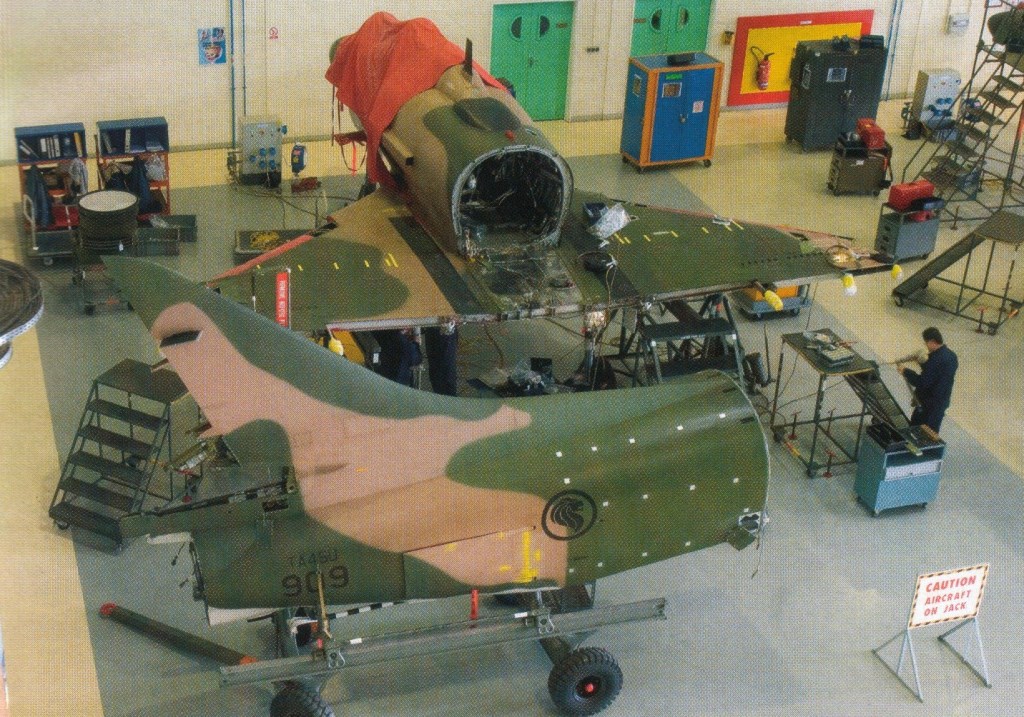
The A-4S appeared in 1972. As well as incorporating elements such as the refuelling probe from the A-4M, the S represented the final product of Douglas’s ‘new from old’ refurbishing programme. Ordered by the Singapore government, the A-4S had a re-worked, ex-US Navy A-4B airframe incorporating a redesigned cockpit, solid state electronics, the ventral braking parachute housing, 30mm Aden cannon in place of the original weapons, and overhauled and up-rated J65 engines. Converted by Lockheed Aircraft Services, 40 aircraft were produced, complemented by seven TA-4S trainers. The first eight conversions taking place in 1973 in California (first flight 14 July 1973) and the remainder in Singapore by 1976. More than 100 modifications included the installation of the 8,100 lb (3674 kg) J65 W 20, 30 mm Aden cannon, a modern nav-attack system including a Ferranti lead computing sight, spoilers and a braking parachute. The seven TA 4S Skyhawks (first flown 21 February 1975) differ from the standard Navy two seaters, in having separate hoods, rather than a combined canopy over the two cockpits. The A4S Skyhawks equip No 142 Gryphon and No 143 Phoenix squadrons at Tengah, while others serve alongside Hunters in the OCU role with No141 Squadron.
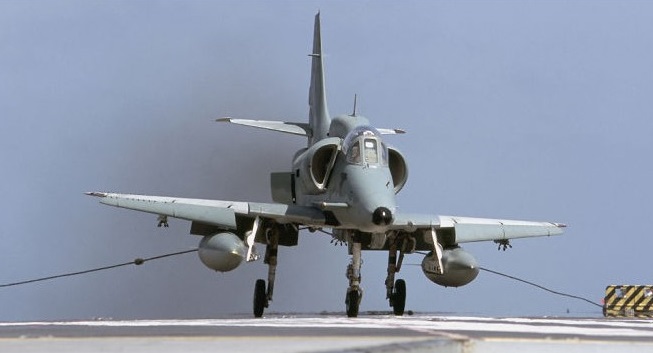
The first refurbished Skyhawk model appeared during 1965 under the designation A-4P. Production totalled 75 units, the aircraft being an overhauled A-4B or A-4C. Work on the type was undertaken by Douglas (50 aircraft) and Lockheed (25), the Lockheed machines being originally A-4Cs and fitted with the Ferranti Dl 26R Isis weapons sighting system. Sixteen extra A-4Bs were supplied to the Argentinian Navy under the designation A-4Q for use aboard the carrier Veinticinco deMayo. Argentina was the first foreign recipient of the Skyhawk. An initial batch of 25 ex US Navy A4Bs, redesignated as A 4Ps, was delivered in 1966 for use by the Fuerza Aerea Argentina. These were followed by a similar batch in 1970, and 25 former A4Cs in 1976. The Skyhawks serve in the attack role with I Escuadron de Caza Bombardiero of IV Brigada Aerea at El Plumerillo AB, Mendoza, and with IV and V Escuadrones of V Brigada at General Pringles AB Villa Reynolds. In 1971, the Comando de Aviacion Naval Argentina purchased 16 refurbished A4Bs, these being assigned the designation A 4Q. These Skyhawks have been operated by 3 Escuadrilla Aeronaval de Caza y Ataque at Comandante Espora NAS, with detachments aboard the carrier 25 de Mayo. The 10 surviving A 4Qs were being replaced by the Dassault¬Breguet Super Etendard.
Republic of Singapore Air Force A-4S Skyhawks have been re-engined with General Electric F404 non-afterburning turbofans, and the first flew in late September 1986. Redesignated A-4SU after the upgrade, including HUD and laser INS.
Following the 1982 Falklands/Malvinas War in the South Atlantic, in 1983 the U.S. placed an embargo on sale of military aircraft to Argentina. In April 1983 it was reported a number of the 24 ex-Heyl Ha’Avir A-4E and A-4H were in te process of delivery by Israel to Argentina. Of 16 original A-4Q, Argentina lost five in accidents and six during the Falklands conflict.
The remaining Argentine Skyhawks continued operational until March 1999, when the last five of the old inventory were retired.
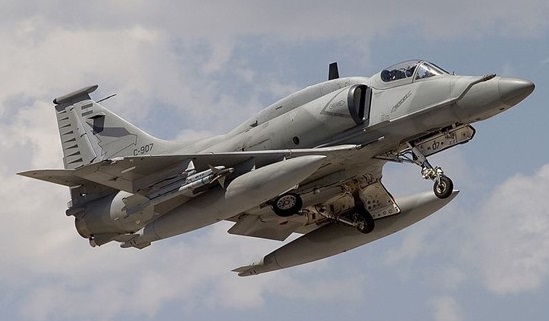
In 1994, the United States made Argintina an offer to modernize 36 ex-USMC A-4M Skyhawks in a US$282 million deal that would be carried out by Lockheed Martin and included the privatization of the Fabrica Militar de Aviones (Spanish for Military Aircraft Factory), now Lockheed Martin Aircraft Argentina SA. The program was named Fightinghawk in recognition of the F-16 Fighting Falcon, which was the source of its new avionics. In 2010, FMA reverted to the Argentine government as Fabrica Argentina de Aviones (FADEA).
Argentine Air Force technicians chose 32 A-4M (built between 1970/1976) and 4 TA-4F airframes from the Aerospace Maintenance and Regeneration Center at Davis-Monthan Air Force Base in Tucson, Arizona to upgrade. The upgrade plans included: Complete overhaul of the airframe, wiring looms and the Pratt & Whitney J52P-408A engine Installation of Douglas Escapac 1-G3 ejection seats HGU-55/P helmets Honeywell Normal Air-Garrett’s OBOGS (On Board Oxygen Generation System) Westinghouse/Northrop Grumman AN/APG-66V2 (ARG-1) radar HOTAS controls and a ‘glass’ cockpit (2 CRT color screens) Sextant Avionique/Thales Avionics SHUD Litton/Northrop Grumman LN-100G inertial navigation system MIL-STD-1553B data bus Two General Dynamics Information Systems AN/AYK-14 mission computers Northrop Grumman AN/ALR-93 (V)1 Radar warning receiver AN/ALQ-126B jammer AN/ALQ-162 jammer ALR-47 chaff/flare dispenser IFF AN/APX-72
The A-4M airframes were equipped with the TV and laser spot tracker Hughes AN/ASB-19 Angle Rate Bombing System (ARBS) but these were removed after their conversion as A-4AR, as the radar could provide the same data.
The contract stipulated that 8 airframes would be refurbished at the Lockheed-Martin Plant in Palmdale, California and the rest (27) in Córdoba, Argentina at LMAASA (ex-FMA).
At least ten TA-4J and A-4M airframes for use as spare parts, eight additional engines, and a new A-4AR simulator were also delivered.
Lockheed Martin A-4AR Fightinghawk
The Fightinghawks, received Air Force serials C-901 to C-936, saw their first group arrive in Argentina on 18 December 1997 and the first “Argentine” A-4AR was rolled out on 3 August 1998 at Cordoba. The last one, number 936, was delivered to the Air Force in March 2000. Two aircraft (a one-seat and a two-seat) remain some time in the United States for weapons homologation.
All of the A-4ARs were delivered to the 5th Air Brigade (V Brigada Aérea) at Villa Reynolds, San Luis Province, where they replaced two squadrons of Falklands/Malvinas veteran A-4P (locally known A-4B) and A-4C. They were soon deployed in rotation around the country from Rio Gallegos in the south to Resistencia in the north where they were used intercept smugglers and drug trafficking airplanes.
Argentina Air Force McDonnell Douglas A-4AR Fightinghawk
In September 1998, just months after their arrival and again in April 2001, United States Air Force F-16s visited Villa Reynolds for the Southern Falcon joint exercise, known as Aguila (Spanish for Eagle) in Argentina. In 2004, the A-4ARs went abroad for the joint exercise Cruzex, along with Brazilian F-5s and Mirages, Venezuelan F-16s and French Mirage 2000s.
As of February 2013, after 15 years of service, three A-4ARs had been lost: 6 July 2005: near Justo Daract, San Luis Province, pilot Lt Horacio Martín Flores (29 years old), died. 24 August 2005: near Río Cuarto, Cordoba, pilot ejected safely. 14 February 2013: “Vice Comodoro Angel Aragonés” airport near Santiago del Estero, both pilots ejected safely.
The Skyhawk was in continuous production for no less than 26 years, from 1953 to 1979, believed to be the longest manufacturing run ever achieved by an American combat aircraft. In that time 2,960 Skyhawks were produced, of which 2,405 were single seat attack aircraft and 555 were two seat trainers.
By having a wing of very short span, 27 ft 6 in (8,38 m), it was possible to save approximately 200 lb (90,7 kg) by eliminating the wing fold. However, carrier approach speed dictated a reasonably large wing area, 259.82 sq ft (24,15 sq.m). The Skyhawk is also noted for handling, and for high roll rates, up to 300 deg/sec at moderate speeds. The US Navy Blue Angels aerobatic team has flown the Skyhawk since 1974, using modified A4Fs with the uprated J52 P 408 engine. For long flights, pilot workload is reduced by virtue of attitude, altitude and heading hold facilities provided by the AFCS (automatic flight control system), which also gives yaw damping for improved weapon aiming. Instantaneous turn rates can be high, combining with the Skyhawk’s small size to make it a useful aircraft with which to simulate Soviet fighters in teaching air combat manoeuvres. In real combat, the survivability of the Skyhawk benefits from having manual reversion for the flying controls, a three spar wing, a self¬sealing fuselage tank and armour plate in front and below the cockpit, and behind the pilot’s head.
On a standard day the A 4M can reach approximately Mach = 0. 87 at sea level and up to Mach = 0.93 at altitude. At maximum take off weight and carrying a 300 US gal (1136 lt) centreline tank, it can deliver a 4,000 lb (1815 kg) bombload over a 225 nm (420 km) radius in a LO LO sortie, or over 275 nm (510 km) in a HI LO profile. Flying a HI LO HI close support mission, it can loiter at 5,000 ft (1500 m) and 150 nm (280 km) radius for one hour with a 4,000 lb (1815 kg) bombload, or for two hours with 1,750 lb (795 kg).
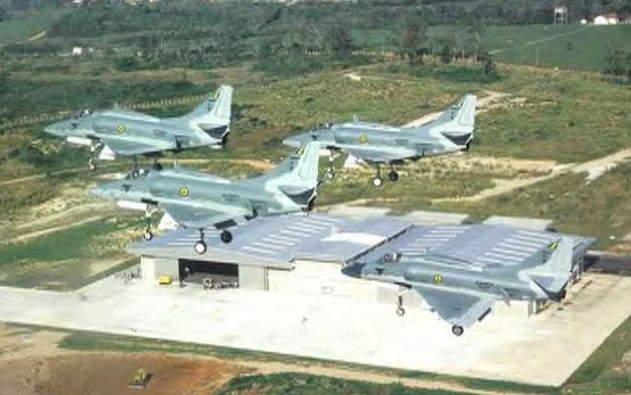
Brazil operated carrier NAe Minas Gerais until 2001 when she was replaced by the ex-French carrier Foch, renamed the NAe Sao Paulo. The Sao Paulo was better suited to operate Brazil’s newly acquired, but still second-hand batch of 20 Kuwaiti A-4KUs and TA-4KUs.
The push by the Brazilian Navy to allow its naval air arm to operate tactical jet aircraft came to a head in the 1980s, as a ruling that prohibited the Brazilian Navy from operating these aircraft was finally overturned.
After about a decade of perusing through different candidates, Kuwait’s A-4KUs, which were built in the late 1970s and were advanced for the type, were selected on the grounds that they featured very low flight hours and had almost no corrosion, as they had operated in the hot deserts of the Arabian Peninsula for decades. A $70M deal was brokered to acquire the Kuwaiti A-4s for the Brazilian Navy. These aircraft would be re-branded AF-1 after some modest upgrades were applied before entering service.
In late 2000 the ex-Kuwaiti Skyhawks took to the skies above the Minas Gerais and the Skyhawk was once again operating in a tactical role aboard a carrier. Throughout the early part of the decade the Brazil’s AF-1s participated in multiple international exercises and indigenous training events, before training aboard the Sao Paulo was cut off in 2004 when a series of mechanical failures forced the carrier into long periods of overhaul. These failures included a deadly explosion of one of her catapults in 2004 and a deadly fire in 2012. The Skyhawks kept flying, and by the late 2000s it was clear that their capabilities were still rudimentary in comparison to other modern multi-role fighters. The jets were mainly relegated to general purpose bombs and AIM-9 Sidewinders for the within-visual-range fight. They also relied on external radar direction to execute intercepts and over-the-horizon surface attacks.
The Skyhawks also suffered from some engine and spares issues as the decade wore on and thus flying hours and available airframes were greatly curtailed. In 2009, the Brazilian Navy aimed to fix these problems through a comprehensive upgrade.
A-4F Engine One Pratt & Whitney J52-P08A turbojet, 11,220 lb. Span 8.38m (27ft 6in) Wings area: 24.16m2 Wing sweep: 33 degree Length 12.23m (40ft 1.5in) Height 4.62m (l5ft2in). Empty weight: 10,465 lb / 4,899kg Maximum takeoff weight: 24,500 lb Take off weight (normal): 11,113kg Fuel capacity: wing and fuselage internal and three external tanks: 1,800 U.S. gallons Max speed: SL, M0.88 (570kts); @35,000 ft: M0.8. Armament: Two 20 mm MK 12 cannon in wing roots with 200 rpg. Accommodation: Pilot only; Douglas Escapac I G3 zero zero lightweight seat. Maximum speed: 586 knots (with a 4,000 pound bomb load) Initial climb rate: 8,440 ft/min Maximum ferry range: 1740 nautical miles G load max: 6 Hardpoints: one fuselage and four wing racks Wheel track: 2.37m Combat Radius: 575 km Wing chord at root: 4.72m Tailplane span: 3.45m Vert Tail area: 4.65m2 Horz Tail area: 4.54m2 T-O run @ 23,000lbs: 832m
A-4K Skyhawk Powerplant: Pratt & Whitney J52-P8A, 9300 lbf thrust Length: 40 ft 3 in (12.22 m) Wingspan: 26 ft 6 in (8.38 m) Maximum speed: 672 mph (1083 kph) Range (without refueling): 2000 miles (3220 km) Service ceiling: 42,250 ft (12,880 m)
A-4K Engine: 1 x Pratt & Whitney J52-P-8B/C turbojet. Wingspan: 8.38m. Length: 12.57m. Height: 4.53m. Wing area: 24.16sq.m. Empty wt: 11800 lbs. MAUW: 24,500 lbs. Fuel: Internal: 5200lb, external: up to 6600 lb. Armament: 2 20mm cannon + 4 hard point stores.
A-4M Engine: One Pratt & Whitney J52 P 408A turbojet, 11,200 lb st (5 080 kgp) for take off. Span, 27 ft 6 in (8,38 m) Overall length (excluding FR probe), 40 ft 4 in (12,29 m) Overall height, 15 ft 0 in (4,57 m) Max speed, 670 mph (1078 km/h) at sea level, or Mach= 0.88 Max speed, 646 mph (1040 km/h) with 4,000 lb (1815 kg) weapon load Initial rate of climb, 4,800 fpm (24,4 m/sec) Service ceiling, 42,250 ft (12 880 m) Take off run, 2,730 ft (832 m) at 23,000 lb (10 433 kg) weight Combat radius, 385 mls (620 km) Max ferry range, 2,350 mls (3800 km) at 24,500 lb (11113 kg) Empty weight 10,800 lb (4900 kg) Normal take off weight, 24,500 lb (11113 kg). Internal fuel capacity wing and fuselage, 800 US gal (3 028 lt) External drop tank fuselage centreline, capacity 150, 300 or 400 US gal (568, 1136 or 1514 lt), and one drop Undercarriage track 7 ft 9.5 in (2,37 m) Wing area, 260 sq ft (24,16 sq.m). Armament: Two 20 mm MK 12 cannon in wing roots with 200 rpg. Hardpoint: Fuselage 3,500 lb (1588 kg) capacity Hardpoint: two inboard wing 2,250 lb (1020 kg) Hardpoints: two outboard wing 1,000 lb (450 kg) Accommodation: Pilot only; Douglas Escapac I G3 zero zero lightweight seat. Wing chord at root: 4.72m Tailplane span: 3.45m Vert Tail area: 4.65m2 Horz Tail area: 4.54m2 T-O run @ 23,000lbs: 832m
A 4N Skyhawk II Wing span: 27 ft 6 in (8.38 m). Max speed: 645 mph (1,038 km/h).
TA 4F
A4G Skyhawk Engine One Pratt & Whitney J52-P8A, 9,300 lbs thrust Wing Span: 27 ft 6 in Length: 44 ft Height: 15 ft Empty weight: 10,100 lb Loaded weight: 24,500 lb Crew One Ceiling: 40,000 ft Speed: 657.6 kts Range: 2000 miles (ferry) Armament: 2 x 20mm cannon (100 rounds per gun)
TA4G Skyhawk Engine One Pratt & Whitney J52-P8A, 9,300 lbs thrust Wing Span: 27 ft 6 in Length: 44 ft Height: 15 ft Empty weight: 10,100 lb Loaded weight: 24,500 lb Crew Two Ceiling: 40,000 ft Speed: 657.6 kts Range: 2000 miles (ferry) Armament: 2 x 20mm cannon (100 rounds per gun)
TA-4K Engine: P&W J52-P-8B/C, 9300 lb st. Wingspan: 8.38m. Length: 13.27m. Height: 4.73m. Wing area: 24.16sq.m. Empty wt: 5897 kg. Internal fuel: 1909 kg. MTOW: 11,113 kg.
TA-4S
A-4AR Fightinghawk / OA-4AR Length: 40 ft 3 in (12.30 m) Wingspan: 27 ft 6 in (8.38 m) Height: 14 ft 11 in (4.57 m) Wing area: 259 ft² (24.15 m²) Empty weight: 4,900 kg (10,803 lbs) Loaded weight: 11,000 kg (24,251 lbs) Max. takeoff weight: 11,136 kg (24,500 lb) Powerplant: 1 × Pratt & Whitney J52P-408A Turbojet, 11,200 lbf (50.0 kN) Maximum speed: 1080 km/h (671 mph) Range: 1,700 nm (2,000 mi, 3,220 km) Service ceiling: 42,250 ft (12,880 m) Rate of climb: 8,440 ft/min (43 m/s) Wing loading: 70.7 lb/ft² (344.4 kg/m²) Thrust/weight: 0.51 Crew: 1 (2 in OA-4AR) Armament: Guns: 2× 20 mm (0.787 in) Colt Mk 12 cannon, 100 rounds/gun Missiles: 2× AIM-9M Sidewinder, CITEFA AS-25K Bombs: 9,900 lb (4,490 kg) on five external hardpoints
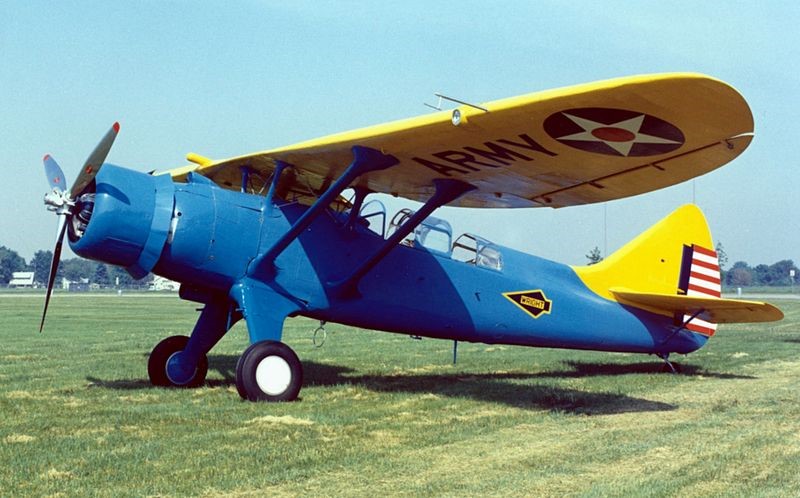
The Douglas O-46A was designed to operate from established airfields behind fairly static battle lines as in World War I. The O-46 was a development of the earlier Douglas O-43. The 24th airframe of the O-43A contract was completed as the XO-46 prototype, with a revised wing and an engine switch, from the O-43’s inline engine to a radial engine, the Pratt & Whitney R-1535-7.
First flying in 1935, the Air Corps ordered 90 O-46As in the same year. They were built between May 1936 and April 1937.
In 1939, a report was issued on the O-46A which stated that it was too slow and heavy to outrun and out-manoeuvre enemy fighter aircraft, too heavy to operate from small, wet, unprepared fields, and too large to conceal beneath trees. This report was a forecast of the future, for World War II with its rapidly changing battle lines proved the need for light, manoeuvrable observation aircraft which could operate from unimproved airstrips. Consequently, in 1942, the “O” (observation) designation was changed to “L” (liaison).
At least 11 O-46s saw overseas duty; two were destroyed in the Japanese raid on Clark Field in the Philippines on 8 December 1941. The Maryland Air National Guard operated O-46As off the coast of New Jersey for anti-submarine duty. The remainder were declared obsolete in late 1942 and after that were used primarily in training and utility roles.
A proposed variant with a Wright R-1670-3 engine received the designation O-48 but was not built.
On 27 November 1942, O-46A (s/n 35-179) was part of the 81st Air Base Squadron, when it landed downwind at Brooks Field, Harlingen, Texas, ran out of runway and overturned. Written off, it was abandoned in place. More than 20 years later it was discovered by the Antique Airplane Association with trees growing through its wings, and in 1967, it was rescued and hauled to Ottumwa, Iowa. Restoration turned out to be beyond the organization’s capability, and in September 1970, it was traded to the National Museum of the United States Air Force for a flyable Douglas C-47 Skytrain. The (then) Air Force Museum had it restored at Purdue University, and placed it on display in 1974, the sole survivor of the 91 O-46s built.
O-46A Powerplant: 1 × Pratt & Whitney R-1535-7 Twin Wasp Junior, 725 hp (541 kW) Propeller: 3-bladed metal propeller Wingspan: 45 ft 9 in (13.94 m) Wing area: 332 sq ft (30.8 m2) Length: 34 ft 6.75 in (10.5347 m) Height: 10 ft 8.5 in (3.264 m) Empty weight: 4,776 lb (2,166 kg) Gross weight: 6,639 lb (3,011 kg) Maximum speed: 200 mph (320 km/h, 170 kn) at 4,000 ft (1,200 m) Cruise speed: 171 mph (275 km/h, 149 kn) Range: 435 mi (700 km, 378 nmi) Service ceiling: 24,150 ft (7,360 m) Rate of climb: 1,765 ft/min (8.97 m/s) Wing loading: 20 lb/sq ft (98 kg/m2) Power/mass: 1.087 hp/lb (1.787 kW/kg) Guns: 2 × .30 cal (7.62 mm) Browning machine guns (one wing mounted and one flexible) Crew: 2
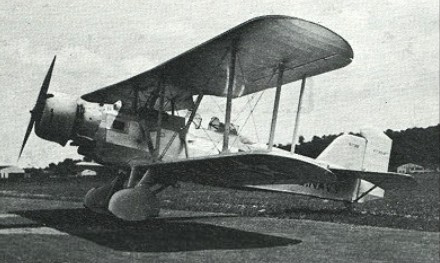
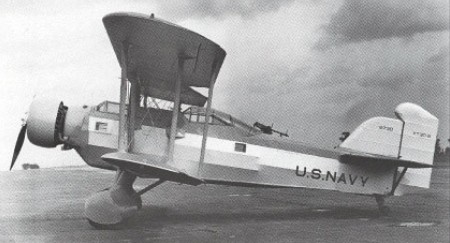
Designed and built to meet a US Navy requirement for a three-seat torpedo-bomber, the Douglas XT3D-1 prototype was first flown in early 1931. A biplane, basically of metal construction with fabric covering, the XT3D-1 incorporated folding wings and arrester gear for carrier-based operations, had fixed tailwheel landing gear, and was powered initially by a Pratt & Whitney S2B1-C Hornet radial piston engine. Accommodation was provided for a crew of three in open cockpits, a bomb-aimer/gunner forward, the pilot in the centre cockpit, just aft of the wing trailing edge, and a second gunner to his rear. Failing to meet requirements in its initial service trials, the XT3D-1 was returned to Douglas for modification, gaining a more powerful 597kW Pratt & Whitney XR-1830-54 radial engine, wheel fairings for the main units and an enclosed canopy for the two rearmost cockpits. Redesignated XT3D-2, it was returned for further service testing but again failed to attract a production order. It was flown by the US Navy for about 10 years for general-purpose duties before being relegated for use as an instructional airframe in 1941.
Engine: 2 x Pratt & Whitney S2B1-G Hornet, 429kW Max take-off weight: 3564 kg / 7857 lb Empty weight: 1922 kg / 4237 lb Wingspan: 15.24 m / 50 ft 0 in Length: 10.79 m / 35 ft 5 in Height: 4.03 m / 13 ft 3 in Wing area: 57.97 sq.m / 623.98 sq ft Max. speed: 206 km/h / 128 mph Ceiling: 4265 m / 14000 ft Range: 893 km / 555 miles Armament: 2 x 7.62mm guns, 832kg of bombs
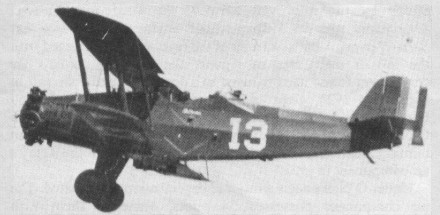
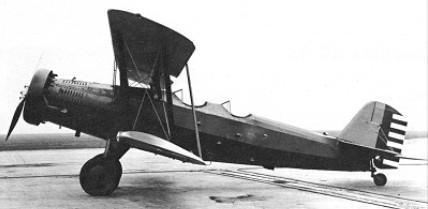
In 1926 as the principal combat element of Mexican Army Aviation, eight Douglas O 2C observation aircraft were procured from the USA these were to be supplemented by nine O 2Ms and three O¬2M 2s. The excellent flight characteristics of the Douglas O-2 family led to the conversion of 40 O-2Ks in 1930 as basic trainers for the US Army. Dual controls were installed and armament was deleted, the modified aircraft then being designated Douglas BT-1. The only O-32 to be built was given dual controls, also in 1930, and became designated BT-2. Thirty O-32As were modified similarly to the O-2Ks; used by US Army and National Guard units for basic training these were redesignated BT-2A. Some 146 BT-2B aircraft were built as such, the first appearing in 1931. Powered by the 336kW Pratt & Whitney R-1340-11 radial, they survived many years in basic training units.
BT
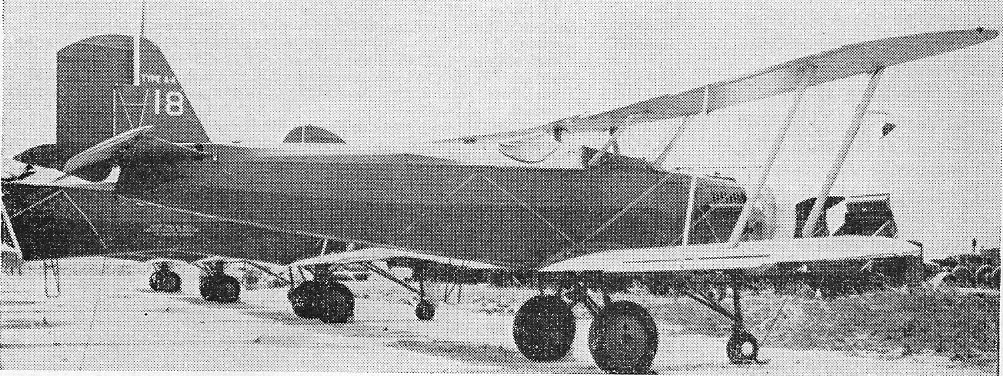
BT-2B was converted in 1940 to Type A-4 target aircraft by installation of radio equipment and conversion to nosewheel undercarriage.
Type A-4 target aircraft
Douglas BT-2B Engine: 1 x Pratt & Whitney R-1340-11 radial, 336kW Max take-off weight: 1845 kg / 4068 lb Empty weight: 1324 kg / 2919 lb Wingspan: 12.19 m / 39 ft 12 in Length: 9.5 m / 31 ft 2 in Height: 3.3 m / 10 ft 10 in Wing area: 33.63 sq.m / 361.99 sq ft Max. speed: 216 km/h / 134 mph Cruise speed: 188 km/h / 117 mph Ceiling: 5850 m / 19200 ft Range: 515 km / 320 miles
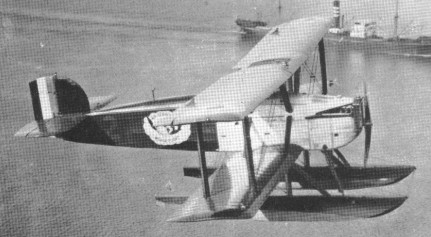
By the mid twenties rivalry between the U.S. Army Air Service and the Navy was at its height, and the Air Service made repeated attempts to keep in the public eye and favour. It pioneered the U.S. Air Mail service at great cost in lives and air¬craft, and made many long distance flights and record attempts. In July 1923, U.S. Army Air Service disclosed that it intended to attempt a global flight the following year. Four specially built two seat Douglas World Cruisers were used for this last achievement, each powered by a 400 hp Liberty engine and with interchangeable wheel and float undercarriages for the over land and over water sectors. As far as structure was concerned, the DWC was identical to the DT-2. The internal equipment, however, was specially designed for the round-the-world attempt and the saving in weight by deletion of the military load (torpedo with release gear, firing sight, etc) was used to increase the range of the aeroplane to 3,540km by fitting extra petrol and oil tanks – totalling 2,437.8 litres. The all-up weight (floats) was 3,710kg. The improved engine, a 313kW Liberty, offered a weight of less than 0.91kg per hp. Wings: Sitka Spruce, Cotton Covering Fuselage: Steel Tube, Sitka Spruce, Cotton Covering Empennage: Sitka Spruce, Cotton Covering Cowling: Aluminum Named after the cities of Seattle, Chicago, Boston and New Orleans, the four aircraft took off from Lake Washington, Seattle, on April 6. 1924 Seattle hit a mountainside in Alaska. After completing much of the journey, Boston force landed in the Atlantic, the other two arrived back at Seattle on September 28, after a 27,534 mile flight over 28 countries. It took 175 days, with a flying time of 371 hours 11 minutes. Throughout the journey the crews prevailed against an endless series of forced landings, repairs, bad weather, and other mishaps that continually threatened the success of the flight.
The crews were; Alva L.Harvey, Leigh Wade, Erik Nelson, Kailua-Kona, John J. Harding, Henry H. Ogden, Frederick L. Martin, Lowell H. Smith, and Leslie P. Arnold.
DWC Landplane Engine: Liberty, 400 hp / 313kW Wingspan: 15.24 m / 50 ft 0 in Length: 10.82 m / 35 ft 6 in Height: 4.14 m / 13 ft 7 in Wing area 65.68 sq.m / 707 sq. ft Empty weight 1950 kg / 4,300 lb Loaded weight 3137 kg / 6,915 lb Max. speed 166 km/h / 103 m.p.h Cruise speed: 85 km/h / 53 mph Ceiling 3050 m / 10,000 ft Range 3540 km / 2,200 miles. Crew: 2
DWC Seaplane Engine: Liberty, 400 hp / 313kW Wingspan: 15.24 m / 50 ft 0 in Length: 10.82 m / 35 ft 6 in Height: 4.14 m / 13 ft 7 in Wing area 65.68 sq.m / 707 sq. ft Empty weight 5,100 lb Loaded weight 7,715 lb Max. speed 100 m.p.h Ceiling 7.000 ft Range 1,650 miles. Crew: 2
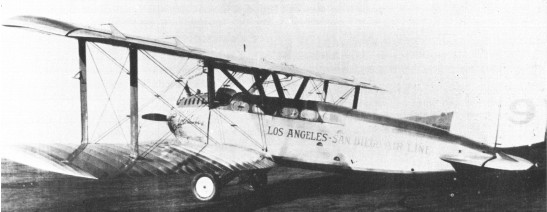
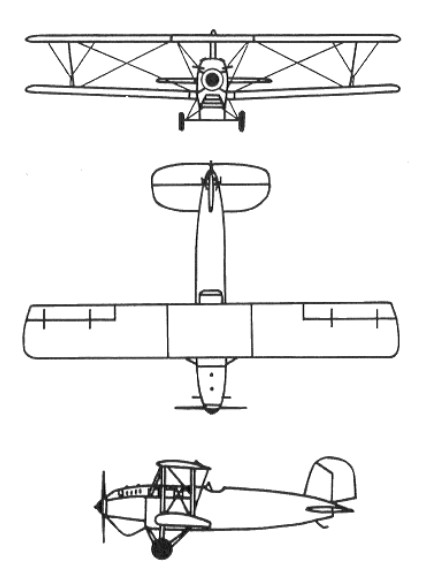
The US Post Office Department had been responsible for US internal air mail routes from 1918 onwards, and by 1925 the various types of DH-4 biplane which had been primary equipment since inception of the service were worn out. A decision was thus made to order a conversion of the Douglas O-2 observation biplane, which had been ordered into quantity production for the US Army. The Douglas DAM-1 (Douglas Air Mail-One), quickly shortened to M-1, was test flown during the spring of 1925. It had twice the payload of the DH-4, but made use of the same Liberty engine, of which large numbers were in store and readily available. The M-1 was a straightforward conversion of the O-2, with the forward cockpit covered in sheet aluminium to form a reinforced mail compartment with access through two deck hatches, the pilot being located in what was formerly the rear (observer’s) cockpit in the O-2. During tests, extended exhaust piping was installed to keep fumes away from the pilot. The M-1 was adjudged successful, but no production order was received by Douglas.
M-3
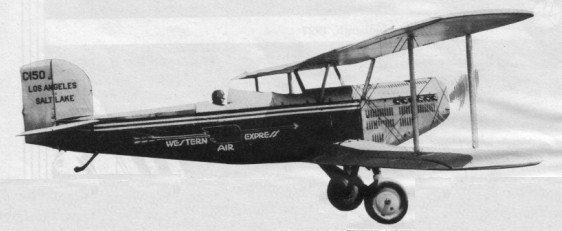
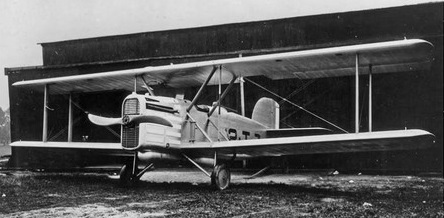
With the introduction of Contract Air Mail (CAM) routes, however, the newly formed Western Air Express Company (later Western Airlines) ordered six Douglas mailplanes. Designated M-2, they differed from the M-1 mainly by replacement of the original tunnel radiator with a frontal type. Provision was also made for quick conversion of the freight section to permit carriage of a passenger in place of mail. A month before Western Air Express inaugurated its Los Angeles-Salt Lake City service in April 1926, the US Post Office ordered 50 of the M-3 version for its major routes. The M-3s differed only in detail from the M-2s, sporting an overall aluminium finish with US Air Mail emblazoned in black on the fuselage sides and on the undersurfaces of the lower wing. Western’s machines had a red and silver paint scheme. The Douglas Company’s chief engineer, J. H. ‘Dutch’ Kindelberger, then redesigned the M-3 with the aim of doubling its payload. The main change in this new M-4 was an entirely new ‘stretched’ wing which spanned 1.47m more than the 12.09m of the earlier types, and lacked the cut-out in the trailing edge of the upper wing inherited from the US Army O-2s. The Post Office was sufficiently impressed to arrange for 40 of the 50-plane M-3 order to be delivered in M-4 configuration. A single M-4 bought by Western Air Express was designated M-4A by Douglas to differentiate it from the Post Office order. With the leasing of route CAM-3 (Chicago-Dallas) to National Air Transport (NAT) in October 1925, a need arose for more mailplanes. NAT at first used the Curtiss Carrier Pigeon and then, having acquired the important Chicago-New York route, bought at auction all 10 M-3s and eight M-4s from the Post Office when, during July 1926, that department relinquished all its routes to private operators. The Douglas mailplanes were introduced by NAT on 1 September 1927, and were phased out during 1930 in favour of three-engined Ford tri-motors. In their three years’ service they performed admirably in all weathers and in the most difficult flying conditions. NAT had bought other M-4s from a variety of sources and at one stage had as many as 24 Douglas mailplanes in operation. Among them was a privately owned aircraft which had been confiscated by the US Treasury while illegally smuggling liquor from Cuba to Florida during Prohibition; it became known as the ‘Booze Ship’. NAT M-3s were flown with new long-span wings from the spring of 1928 onwards; for economic reasons these had been designed and constructed by the company’s own engineering department. One M-4 was converted by NAT to take a 391kW Pratt & Whitney Hornet radial engine. A total of 57 Douglas mailplanes was built, but with the advent of the Ford and other three-engined types they were soon withdrawn from air mail services. A few were sold to private owners but the majority were scrapped.
M-4 Engine: 1 x Liberty 12 V-12 piston engine, 298kW Max take-off weight: 2223 kg / 4901 lb Loaded weight: 1544 kg / 3404 lb Wingspan: 13.56 m / 44 ft 6 in Length: 8.81 m / 28 ft 11 in Height: 3.07 m / 10 ft 1 in Wing area: 38.18 sq.m / 410.97 sq ft Max. speed: 225 km/h / 140 mph Cruise speed: 177 km/h / 110 mph Ceiling: 5030 m / 16500 ft Range: 1127 km / 700 miles
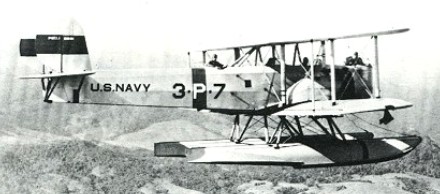
In July 1925 the US Navy Bureau of Aeronautics ordered three Douglas XT2D-1 twin-engined torpedo-bomber/ general-purpose biplanes. They were required to be suitable for use with wheel or float landing gear, and for operation from aircraft-carriers. Two months earlier a single XTN-1 aircraft, with similar general characteristics, had been ordered from the US Naval Aircraft Factory. The first XT2D-1 prototype flew on 27 January 1927 as a landplane. Soon afterwards its 373kW Wright P-2 radial engines were replaced by Wright R-1750s and the other two prototypes were similarly re-engined. The three aircraft participated successfully in trials with US Navy Torpedo Squadron VT-2 in spring 1927 and, nine examples of the production T2D-1 were purchased. The basic configuration of the XT2D-1 prototypes was retained, a large single fin and rudder, wide-track divided landing gear capable of easy conversion to take twin floats, and two-bay equal-span wings with rounded tips. The fuselage of the T2D-1 was 0.90m shorter than that of the XT2D-1 and the engine nacelles were repositioned. A crew of four was carried, the pilot and co-pilot in tandem open cockpits, with gunner/ bomb-aimer in the nose and radio-operator/gunner in the fourth cockpit amidships. The T2D-1 performed satisfactorily in service, operating from aircraft-carriers (being the first twin-engined aircraft to do so) during the 1928 US Navy fleet exercises. However, its size precluded embarkation of the carrier’s full aircraft complement and, as a result, the type was re-allocated to patrol squadrons. T2D-1s flew subsequently with VP-1 and VP-2 from Pearl Harbor, Hawaii, operating on wheels or twin floats as required until scrapped in 1933. Variant P2D-1: in June 1930 the Douglas company received an order for 18 aircraft based on the T2D-1, but intended specifically for over-sea patrol duties; these new P2D-1 aircraft had twin fins and rudders to ensure better flight characteristics, particularly with one engine inoperative, and were powered by 429kW Wright R-1820-E radial engines; deliveries were completed by the end of 1931 and the P2D-1s, almost always in twin-float configuration, flew with VP-3 of the US Navy stationed in the Panama Canal Zone, until withdrawn from first-line service in 1937.
T2D-1 Engine: 2 x Wright R-1750 radial piston engines, 391kW Take-off weight: 4773 kg / 10523 lb Empty weight: 2726 kg / 6010 lb Wingspan: 17.37 m / 56 ft 12 in Length: 12.80 m / 41 ft 12 in Height: 4.85 m / 15 ft 11 in Wing area: 82.31 sq.m / 885.98 sq ft Max. speed: 201 km/h / 125 mph Ceiling: 4215 m / 13850 ft Range: 735 km / 457 miles
The DT was the first aircraft to be produced in quantity by Douglas aircraft. Based largely on the design of Douglas’s first plane, the Cloudster, the DT was a two-bay biplane featuring a welded, steel tube fuselage, with wings and tail surfaces of built-up wooden construction. It could be rigged as either a landplane or seaplane, and the wings could be folded rearward for stowage.
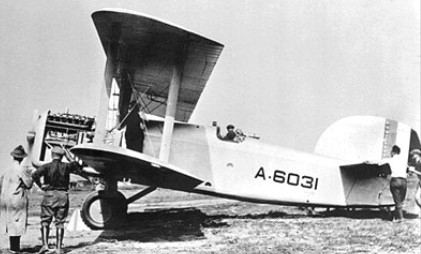
The 1921 DT-1 was a single-seat 298kW Liberty-powered (with side radiators) torpedo plane. In November 1921, the Navy took delivery of the first of three single seat DT-1s ordered, then after trials concluded in early 1922, directed that the remaining two be completed as two-seaters. Soon afterward, the Navy gave Douglas an order to produce 38 two-seat types as the DT-2 and also contracted L-W-F to build 20 and with NAF to build another six.
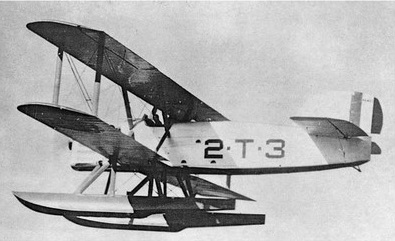
DT-2 2-T-3 of VT-2 early 1920s
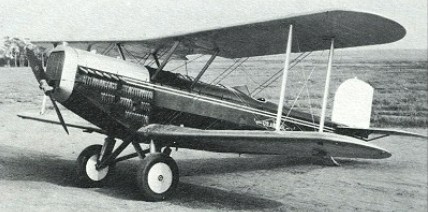
The two-seat DT-2, a single-bay biplane was powered with a 335.3kW Liberty engine and nose radiator. The fuselage was of welded steel tubing, braced with tie-rods and provided with stiffening gussets. It was built in three detachable sections: engine section, mid-section and tail section, the first two plated with aluminium and the tail with fabric. The vertical tail surfaces had conventional wooden frames, while the horizontal tail surfaces were of steel tubing. The wings were of standard box-beam and built-up rib construction of wood, fabric-covered. The upper wing was made up of three panels, while the lower had the usual two. The undercarriage had a 3m wide track, although DT-2 could be fitted with two long wooden floats.
DT-2 of 2-T-3 VT-2 1923
As deliveries proceeded, DT-2s began entering operational service in late 1922 with VT-2 in San Diego, California, and during 1923 and 1924, at least six were transferred to the Marine Corps.
A total of about 80 production DT-2-type aircraft were produced in the USA, most as standard DT-2 for the US Navy but including a small number of SDW-1 scouting floatplanes, but excluding five export models delivered to Norway and Peru. The latter had 484.3kW Wright engines and were operated by the small Naval Air Station at Ancon (20 miles from Lima) which was under the command of US Navy officers on loan to the Peruvian government. Seven DT-2 were also built in Norway under licence.
US Navy DT-2 entered service from 1922 and during their four-year career were experimentally flown from the aircraft carrier USS Langley. Several new versions of the DT were developed by fitting new engines into existing DT-2, two NAF DT-2s became DT-4s when they were fitted with 525 hp Wright TA-2 engines, able to carry a bomb load of 748kg. Another modified as a testbed with the installation of a 40 hp Wright P-1 air-cooled radial engine was re-designated DT-6.
L-W-F DT-2
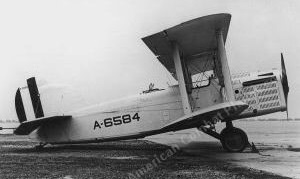
Three L-W-F DT-2s re-built by Dayton-Wright with deeper fuselages to carry more fuel returned to service as SDW long-range scouts. The 1924 Wright SDW-1 was an LWF DT-2 modified as a long-range USN scout with added fuel tanks. An open cockpit biplane, three conversions were made, including A6596. Landing gear was twin pontoons.
All DTs had been withdrawn from Navy and Marine service by the end of 1927.
DT-2 Engine: 1 x Liberty V-12, 336kW Take-off weight: 2950 kg / 6504 lb Empty weight: 1695 kg / 3737 lb Wingspan: 15.24 m / 50 ft 0 in Length: 10.41 m / 34 ft 2 in Height: 4.14 m / 13 ft 7 in Wing area: 65.68 sq.m / 706.97 sq ft Max. Speed: 163 km/h / 101 mph Ceiling: 2375 m / 7800 ft Range: 472 km / 293 miles Crew: 2 Armament: 1 x 830-kg torpedo
Douglas DT-2 Seaplane Engine: Liberty 12A, 420 hp Prop: 2 blade, fixed pitch, wooden Armament: 1 x .30 mg Bombload: 1 x 1835 lb torpedo Max sped: 99 mph at SL Ceiling: 7400 ft Combat range: 275 mi Empty weight: 4528 lb Loaded weight: 7293 lb Wingspan: 50 ft 0 in Length: 37 ft 8 in Wing area: 707 sq.ft Seats: 2 Total produced: 67
L-W-F DT-2 Engine: Liberty 12A, 420 hp Wingspan: 50 ft Length: 34 ft 2 in Height: 13 ft 7 in Wing area: 707 sq.ft Empty weight: 37 37 lb Gross weight: 6502 lb Fuel capacity: 115 Gal Top speed: 101 mph at SL Landing speed: 49 mph Service ceiling: 7800 ft Climb to 4050 ft: 10 min Range w/torpedo: 293 miles
Douglas dropped anchor in Santa Monica with Davis’ money and began work on the Cloudster, an airplane that contained some innovative uses of streamlining, then a new design construction. The Navy gave him an order for three of the airplanes, but it wasn’t until Los Angeles Times publisher Harry Chandler rounded up some local financial support that Douglas was able to get going. A single example of a Liberty-powered biplane was built for an attempt at a non-stop flight across the USA.
Engine: 1 x Liberty, 295kW Max take-off weight: 4354 kg / 9599 lb Empty weight: 2177 kg / 4799 lb Wingspan: 17.0 m / 55 ft 9 in Length: 11.2 m / 36 ft 9 in Height: 3.7 m / 12 ft 2 in Max. speed: 193 km/h / 120 mph Cruise speed: 137 km/h / 85 mph Range w/max.fuel: 4345 km / 2700 miles Crew: 2