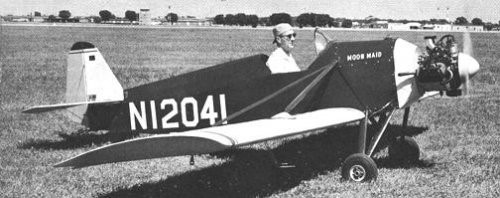
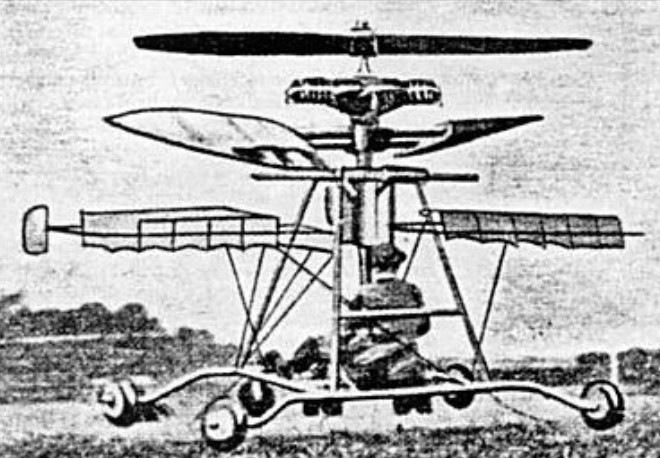
Moon Maid started out to be a gyroplane, but after a couple of years the designer/builder, Richard Doyle, decided to turn it into a standard airplane, stretching the fuselage four feet and replacing the rotor with a pair of wings spanning 23.5 feet. He pow¬ered it with a Bob Huggins 1523cc VW conversion of about 50 hp, one of the first homebuilts to use VW power.
The aircraft first took the air (now as N12041) in June 1964. The Moon Maid initially had a 25hp VW1200, later received a 50hp VW1600 and finally a 60hp VW1840.
During its career the aircraft was modified several times and amongst others received a dorsal fin, a slightly enlarged vertical tail and a new cantilever undercarriage with wheel pants.
Although plans were available for amateur construction (for engines in the 35-50hp range), no further aircraft were built.
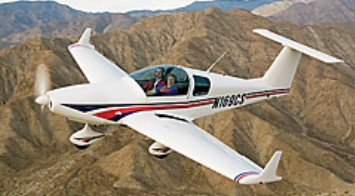
The Skylark takes Light Sport Aircraft to a new level in style. The lines and contours exude a sense of high energy and grace that not only looks good, but turns heads and delivers in performance. This two place, side-by-side, all metal, low wing aircraft provides strength and ruggedness not found in most LSA’s: it can withstand 7 G’s and has a Vne of 179 mph and a maximum LSA cruise of 138 MPH.
Stall: 36 kt / 42 mph / 68 kmh Cruise: 117 kt / 135 mph / 217 kmh VNE: 156 kt / 179 mph / 288 kmh Empty Weight: 296 kg / 653 lbs MTOW Weight: 599 kg / 1320 lbs Climb Ratio: 1200 ft/min / 6 m/s Take-off distance (50ft obstacle): 500 ft / 152 m Landing distance (50ft obstacle): 530 ft / 162 m
Dova Skylark LSA Engine: Rotax 912S, 100hp@SL TBO (hrs.): 1500 Fuel type: 100/100LL Propeller type: Fixed Pitch Landing gear type: Tri./Fixed Max ramp weight (lbs): 1320 Gross weight (lbs.): 1320 Landing weight (lbs.): 1320 Empty weight, std. (lbs.): 653 Useful load, std. (lbs.): 667 Useful fuel, std. (gals.): 24 Payload, full std. fuel (lbs.): 523 Wingspan: 26 ft. Overall length: 21 ft. 7 in. Height: 7 ft. 5 in. Wing area (sq. ft.): 101 Wing loading (lbs./sq.ft.): 13.1 Power loading (lbs./hp): 13.2 Seating capacity: 2 Cabin width (in.): 43 Cruise, 75% power (kts.): 117 Fuel burn, 75% power (gph): 4.0 Max range (nm): 75% power: 457 Max range (nm): 60% power: 543 Vso (kts.): 37 Service ceiling (ft.): 14,000 Best rate of climb (fpm.): 1200 Takeoff ground roll (ft.): 500 Landing ground roll (ft.): 530
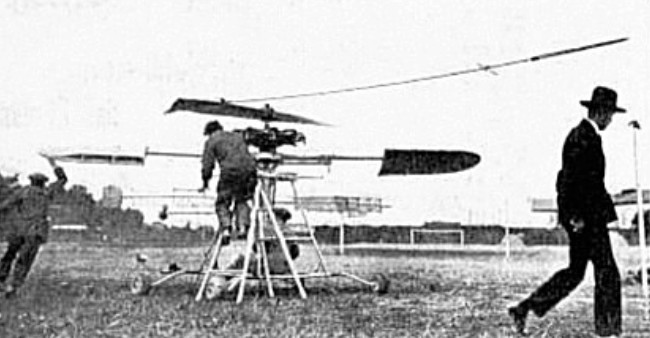
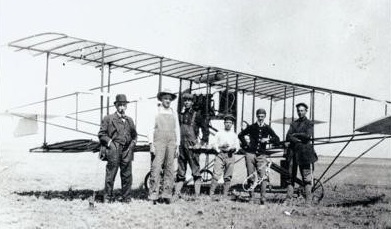
In 1908 there was a group of eight to nine different people in town known as the Douglas flying club, Arizona … and these people built what was known as the Douglas Glider.
The members of the Douglas flying club were A.M. Williams, John C. Wright, Judge Forte, Ben Goodsell, Felipe Mazon, Ted Bowden, Charles M. Ford and Sparks Y. Faucet.
The glider was built in downtown Douglas and flown off of 15th Street between A and Washington Ave. It’s made most of rattan and bamboo, and metal fittings and fabric that covers over the wings.
Initially, to get the glider off the ground, horses would be attached a hitch on the front of the glider that was then attached to harnesses. The horses would then start running and as the glider began to lift off the ground the hitch would come free from the harnesses. It didn’t fly very far but it did get off the ground.
They had people there watching them do this and after they were done they would pass the hat and people would contribute a little money to it and if they had enough money they would make another run.
That evolved into an airplane when they hung a motor on it and put a propeller on the motor and then put wheels on the glider making it an airplane.
The Douglas Glider in the early 1900’s with a motor and wheels.
Following 1908 modifications were made to the Douglas Glider, Schultz said. It would later change its name to the Douglas Flyer then The Douglas Bomber and be used in the Border War from 1910-20.
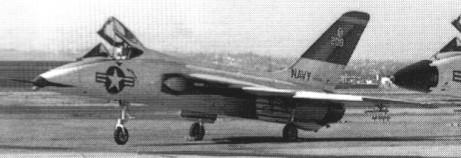
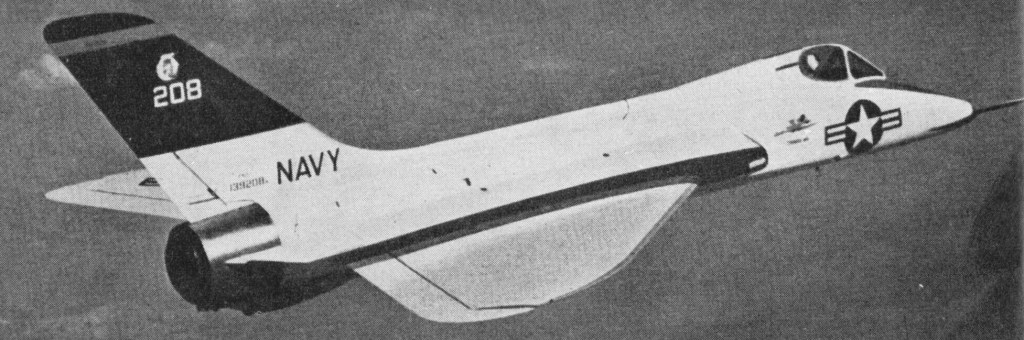
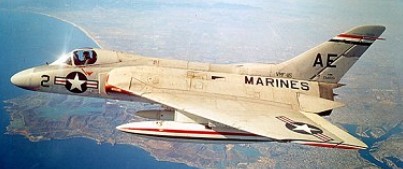
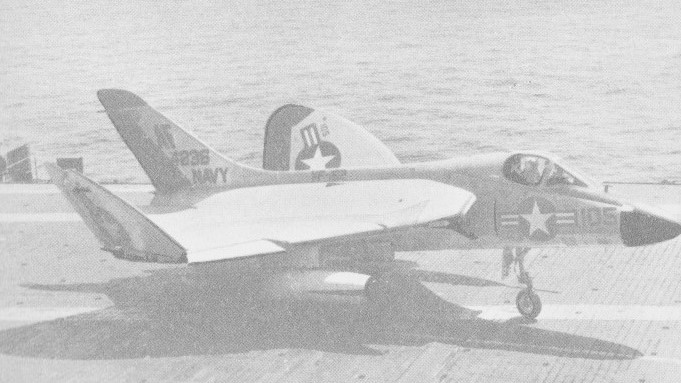
The Douglas F5D was envisaged originally as an improved all-weather development of the F4D (F-6) Skyray, and two prototypes were ordered in 1953 under the designation F4D-2N.
Substantial changes, including wings of much reduced thickness/chord ratio, a lengthened fuselage, revised vertical tail surfaces and the introduction of a new cockpit canopy brought the redesignation F5D-1 (subsequently named Skylancer) before the first flight was recorded on 21 April 1956.
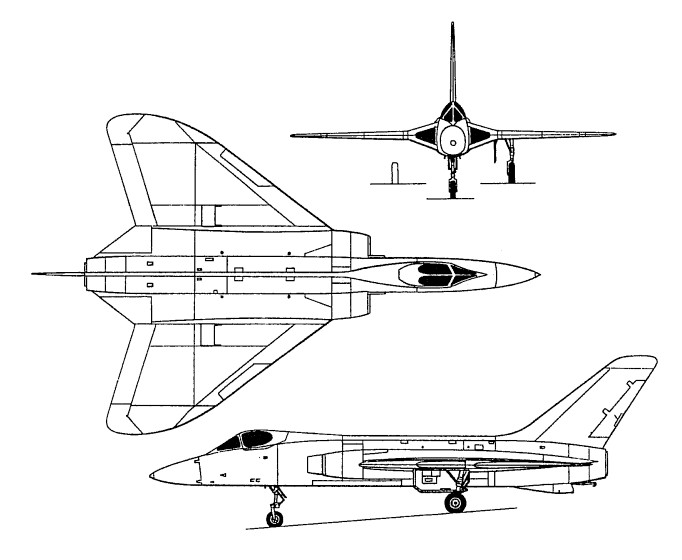
The F5D Skylancer was basically an enlarged version of the Skyray with a fuselage of increased fineness ratio and a wing of reduced thickness/chord ratio for higher supersonic performance on the power provided by a Pratt & Whitney J57-P-8 afterburning turbojet.
The first of four XF5D prototypes went supersonic on its initial flight, and by then, nine preproduction and 51 production examples had been ordered, but following early flight testing the programme was cancelled except for two of the preproduction aircraft. The performance of the F5D was little better than that of the Chance Vought F8U-1 which was on the point of entering service.
F5D
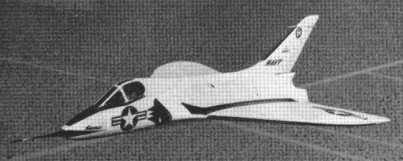
By 1957 two prototypes of the XF5D-1 Skylancer were flying.
XF5D-1
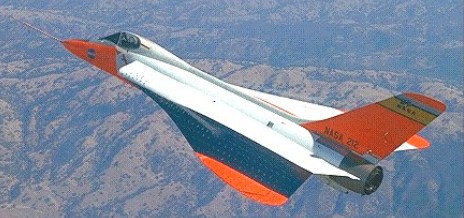
The four F5D-1s were used by the US Navy as flying testbeds for a variety of equipment before they were handed over to NASA for experimental use.
Two prototypes given to NASA in late 1960 essentially as castaways. Neil Armstrong flew one of the F5Ds on 26 September 1960 during a visit to NASA Ames and realised the F5D could serve well in a study of Dyna-Soar abort procedures because its wing planform was a match for the X-20.
Armstrong began flight tests in the F5D in July 1961, and after no fewer than 10 flights, developed an effective maneuver of X-20 abort. His last flight in the F5D was 1 November 1961.
Neil Armstrong’s last flight as a Flight Research Centre employee occurred on Friday 28 September 1962. It was another low L/D flight in an F5D.
F5D Engine: 1 x Pratt-Whitney J57-P-8, 7250kg Max take-off weight: 12733 kg / 28072 lb Empty weight: 7912 kg / 17443 lb Wingspan: 10.21 m / 33 ft 6 in Length: 16.4 m / 53 ft 10 in Height: 4.52 m / 14 ft 10 in Wing area: 51.75 sq.m / 557.03 sq ft Max. speed: 1760 km/h / 1094 mph Cruise speed: 1025 km/h / 637 mph Ceiling: 17500 m / 57400 ft Range: 2140 km / 1330 miles Crew: 1
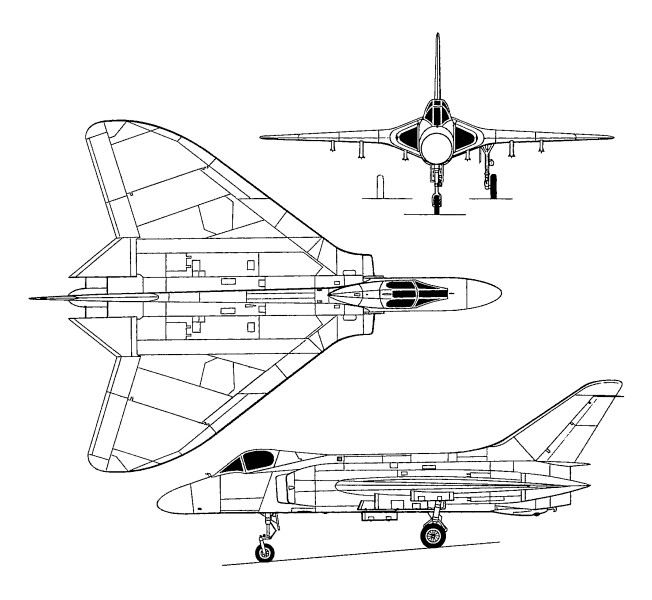
US Navy interest in German delta-wing research led, in 1947, to the design by Douglas of a carrier-based interceptor with a variation of the pure delta wing. Approval of the Douglas design was signified by the award of a contract for two Douglas XF4D-1 prototypes on 16 December 1948, the first making its maiden flight on 23 January 1951 powered by a 2268kg thrust Allison J35-A-17 engine. This represented an emergency powerplant, resulting from delays in development of the Westinghouse J40 turbojet which had been the planned engine. Both prototypes were flown subsequently with the XJ40-WE-6 developing 3175kg thrust and the XJ40-WE-8 which had a rating of 5262kg with afterburning, but problems with this engine programme led to final selection of the Pratt & Whitney J57 engine for production aircraft.
The F4D Skyray was a cantilever mid-wing monoplane, the wing of modified delta configuration incorporating elevons to serve collectively as elevators or differentially as ailerons. The tail unit had only swept vertical surfaces, landing gear was of retractable tricycle-type. The pilot was accommodated well forward of the wing. The potential of the F4D was demonstrated effectively by the second prototype on 3 October 1953, then powered by the XJ40-WE-8 turbojet, which set a new world speed record of 1211.746km/h.
The first production F4D-1 was flown on 5 June 1954, powered by a Pratt & Whitney J57-P-2 turbojet developing 6123kg thrust with afterburning, but it was not until 16 April 1956 that deliveries began, initially to US Navy Squadron VC-3. The 419th and last production aircraft was delivered on 22 December 1958, but in the intervening period a change had been made by installation of the higher-rated J57-P-8 engine. All aircraft retained the F4D-1 designation, the popular (derived) name being Ford.
The new Douglas factory at Torrance (Plant B-6) in May 1954 was in volume production with both the AD-5 and 6 Skyraider and the F4D-1 Skyray, the latter with the J57 turbojet with afterburner. This leaves the El Segundo division almost clear to turn out twin-jet Skywarriors. Navy contracts for the Skyray were sufficient to keep Torrance busy until the end of 1956. Reports came to the effect that a new variant, the F4D-2, was being developed “with some configuration changes.” After manufacture at Torrance, Skyrays are put aboard a flat truck and taken to El Segundo, where final operational equipment is installed preparatory to flight testing.
At the peak of its utilisation, the Skyray equipped 11 US Navy, six US Marine and three reserve squadrons, but none was used operationally. The type survived in first-line service until the late 1960s, with two front-line squadrons not converting to the type until 1964. It was redesignated F-6A in September 1962.
F4D Engine: 1 x Pratt & Whitney J57-P-8B turbojet, 64.5kN / 9700 lb with afterburner Max take-off weight: 11340 kg / 25001 lb Empty weight: 7268 kg / 16023 lb Wingspan: 10.21 m / 33 ft 6 in Length: 13.93 m / 45 ft 8 in Height: 3.96 m / 12 ft 12 in Wing area: 51.75 sq.m / 557.03 sq ft Ceiling: 16765 m / 55000 ft Range: 1931 km / 1200 miles Crew: 1 Armament: 4 x 20mm cannons, 1814kg of weapons on six hardpoints
F4D-1 Engine: Pratt & Whitney J57-P-2 turbojet, 9,7001b. thrust Wingspan: 33 ft. 6 in Length: 42 ft. Loaded weight: approx. 16,000 lb. Max. speed: approx. 750 m.p.h. Ceiling: 50,000 ft. Endurance: 45 min. Armament: 4×20 mm. Cannon Bombload: 2x 1,000 lb. bombs, 6 pods of 7×2.75 in. rockets or 4 pods of 19×2.75 in. rockets. Crew: 1.
F4D-1 Engine: Pratt & Whitney J57-P-8, 14,550 lb with reheat Wingspan: 33 ft 6 in Wing area: 557 sq.ft Length: 45 ft 8.25 in Height: 13 ft Empty weight: 16.024 lb MTOW: 27,000 lb Max speed SL: 722 m[h / M0.95 Max speed 36,000 ft: 693 mph M1.05 Max ROC: 18,000 fpm Service ceiling: 55,000 ft Max range: 950 miles External fuel: 2 x 250 gal underwing Armament: 4 x 20mm cannon
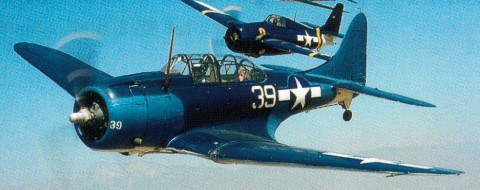
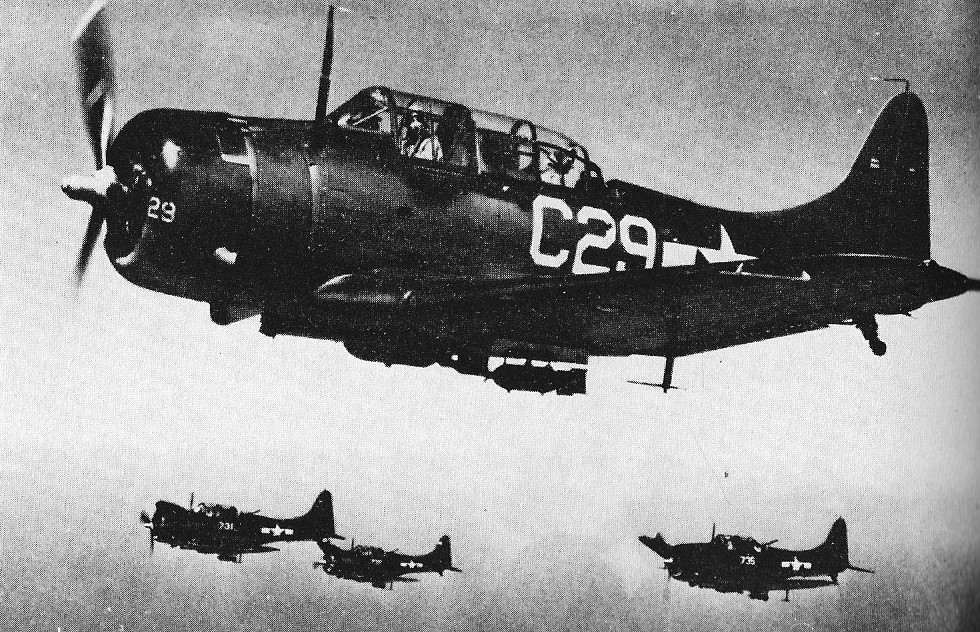
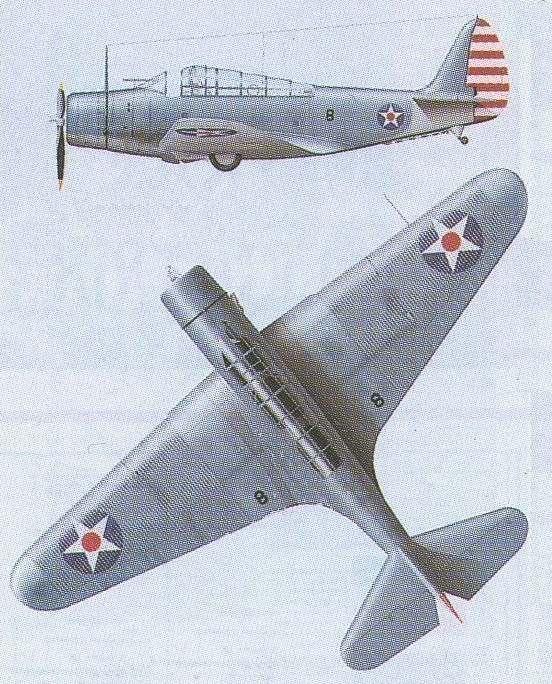
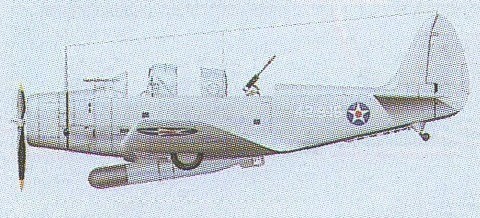
The SBD entered production in 1940. Crewed by a pilot and an observer/gunner the SBD-3, which appeared in March 1941, was powered by a l000hp R-1820-52. In contrast to the earlier models, the SBD-3 had 0.50 armour in the cowling, self-sealing tanks, and protective armour, 584 had been built by December 1941. Seven hundred and eighty SBD-4 models were built at El Segundo, California while 2,409 of the SBD-5s were built at the Douglas plant at Tulsa, Oklahoma.
SBD-3 Max speed: 275 mph Max range; 875 miles Crew: 2 Armament: 2 x .50 mg Bombload: 1 x 500 lb bomb
SBD-4 Engine: Wright R1820-60 Cyclone, l200hp. Max speed: 245mph at 15,800ft. Initial rate of climb: 1190 ft/min.
SBD-5 Engine: Wright R1820-60 Cyclone, l200hp. Length: 33.005 ft / 10.06 m Height: 12.927 ft / 3.94 m Wingspan: 41.503 ft / 12.65 m Wing area: 324.965 sqft / 30.19 sq.m Max take off weight: 9521.2 lb / 4318.0 kg Weight empty: 6535.6 lb / 2964.0 kg Max speed: 221 kts / 410 km/h / 245mph at 15,800ft. Cruising speed: 161 kts / 298 km/h Service ceiling: 25197 ft / 7680 m Cruising altitude: 14000 ft / 4265 m Wing loading: 29.32 lb/sq.ft / 143.00 kg/sq.m Range: 672 nm / 1244 km Initial rate of climb: 1190 ft/min. Crew: 2 Armament: 2x MG 0.5cal (12,7mm), 2xMG 0.3cal (7,62mm), 726kg + 295kg bomb.
SBD-6 Crew: 2 Engine: 1 x Wright R-1820-6 Cyclone 9, 1007kW Max take-off weight: 4318 kg / 9520 lb Empty weight: 2964 kg / 6535 lb Wingspan: 12.65 m / 41 ft 6 in Length: 10.06 m / 33 ft 0 in Height: 3.94 m / 12 ft 11 in Wing area: 30.19 sq.m / 324.96 sq ft Max. speed: 410 km/h / 255 mph Cruise speed: 298 km/h / 185 mph Ceiling: 7680 m / 25200 ft Range: 1244 km / 773 miles Armament: 2 x 12.7mm machine-guns, 2 x 7.62mm machine-guns, 725kg of bombs
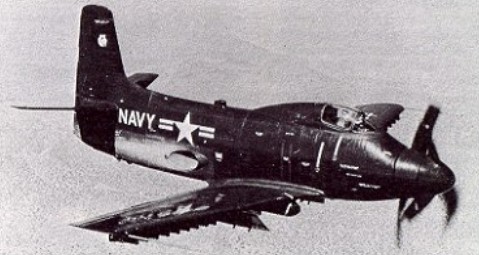
While the Navy was planning its turboprop aircraft to replace the Skyraider, Douglas was developing the XA2D 1 Skyshark powered by a 5,332 shp turboprop and the pilot was equipped with an ejection seat. The A2D was armed with four 20 mm cannon, was fitted with an ejection seat and grossed 22,000 lb (10 000 kg). The first of two prototypes made its maiden flight on 26 May 1950. It demonstrated a climb rate of 7,200 ft/min (36,6 m/sec) and a level speed of up to 435 kt (806 km/h). In 1955, an A2D carried out a speed run from Indianapolis to Florida, covering 1,086 mls (1738 km) in an elapsed time of 2 hr 33 min, which was quite commendable for a turboprop. However, the engine and gearbox gave endless problems. The propeller control mechanism consisted of 25 unreliable vacuum tubes in a black box about the size of a suitcase and gave constant trouble. Other problems included bearing failures and overheated skin around the exhausts.
One prototype crash landed on 14 December 1950, killing the pilot, while, in June 1953, the second aircraft shed its propellers in flight. Development continued, marred by the loss of gearboxes or props on three of the five Douglas test aircraft. Twelve Skysharks were built, but only eight ever received engines. Meanwhile, jets had overtaken the turboprop and, by 1954 Douglas was testing the XA4D Skyhawk, and the A2D was abandoned.
A2D-1 Skyshark
Engine: 1 x Allison XT-40-A-2 turboprop, 3803kW Max take-off weight: 10417 kg / 22966 lb Empty weight: 5871 kg / 12943 lb Wingspan: 15.24 m / 50 ft 0 in Length: 12.56 m / 41 ft 2 in Height: 5.20 m / 17 ft 1 in Wing area: 37.16 sq.m / 399.99 sq ft Max. speed: 805 km/h / 500 mph Cruise speed: 443 km/h / 275 mph Ceiling: 14660 m / 48100 ft Range: 1025 km / 637 miles Armament: 4 x 20mm cannons, 2500kg of bombs Crew: 1
In a meeting at the Navy Department, Ed Heinemann got an idea, and during a coffee break, he approached some of the brass with it: let Douglas cancel the BTD 1 and design a dive bomber the way it ought to be built. Heinemann knew he had stirred some interest, and when the meeting reconvened, a Marine colonel spoke up and asked that Heinemann be allowed to present an idea “that has a lot of merit.” When Heinemann was finished, he sat back and waited. Only one part of his proposal would cause a problem: he had specified a Pratt & Whitney engine. The Navy had already contracted to buy a large number of Curtiss Wright engines, and if he wished to get the job, he would have to use the Wright.
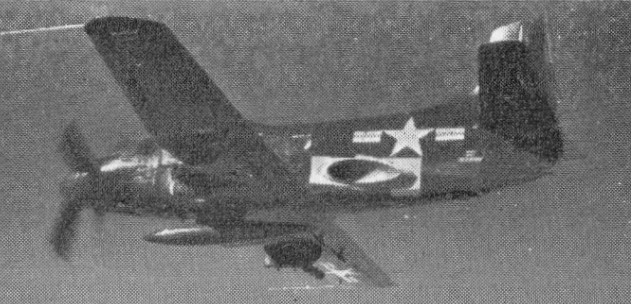
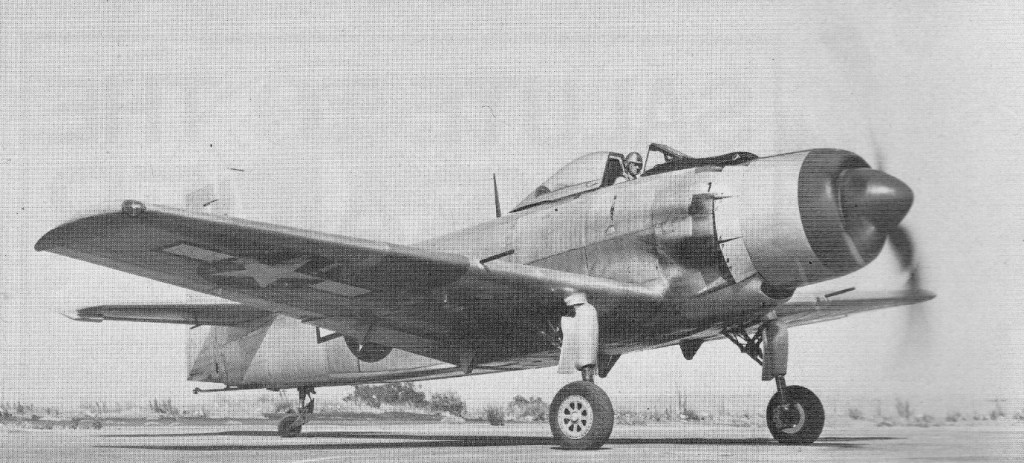
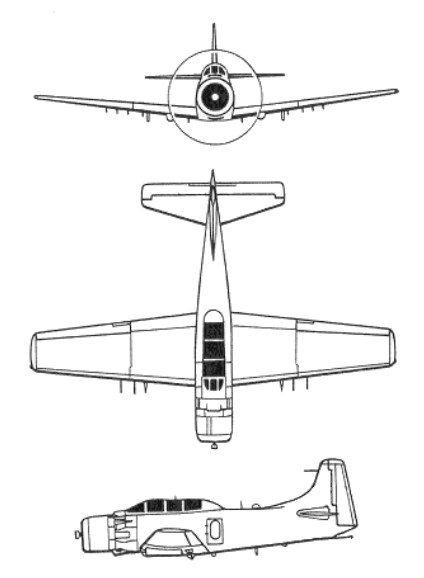
Flown for the first time in prototype form, BuNo 09085, as the XBT2D-l on 18 March 1945, the type was ordered into production just one month later. At first the 25 prototypes were named Destroyer IIs but this was changed to Skyraider shortly before nearly 600 were ordered.
XBT2D-1 Dauntless II
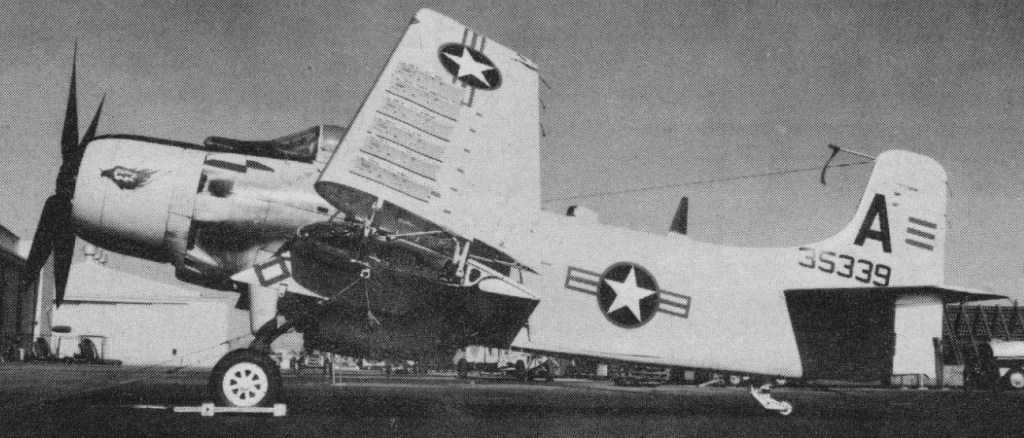
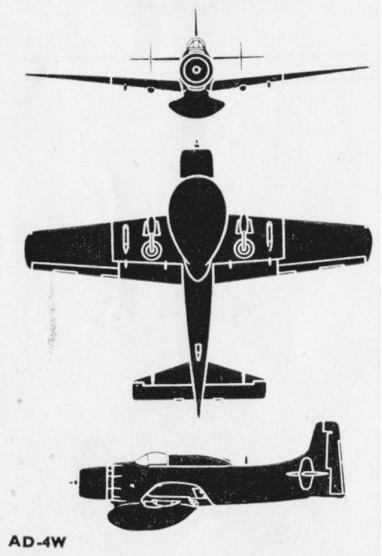
At the end of the war with Japan the 600 ordered was reduced to 242 AD 1s (as it was now redesignated) with 35 AD 1Qs. Radar equipped machines were designated AD 1W whilst the strike version the AD 2 was also built. There then followed other versions such as the AD 2Q, AD 2QU, AD 3, AD-3N, AD 3Q, AD 3w, AD 4, AD 4B, AD 4n, AD-4Q and AD 4W. The AD 2Q carried radar countermeasures equipment and the AD 3 was something quite different with a turboprop engine. The AD-4W was supplied to the Royal Navy and served as the AEW 1. The side by side seating of the AD 5 (redesignated A 1E) and EA 1E (formerly the AD 5W) were for many purposes. The single seater AD-6/A-1H and the final AD 7, A-1J were delivered in 1957.
The Skyraider entered service with Attack Squadron VA-1B in 1947. A total of 3,180 Skyraiders were completed between 1945 and February 1957, when the assembly line finally closed. These aircraft saw service with the US Air Force, the US Navy and the US Marine Corps as well as overseas air arms including those of France, South Vietnam and the UK.
Skyraiders were supplied to the Royal Navy under MDAP during the Korean Emegency for radar picket duties, until replaced by the Fairey Gannet AEW.3.
Royal Navy Douglas Skyraider
Douglas AD-5 Skyraider
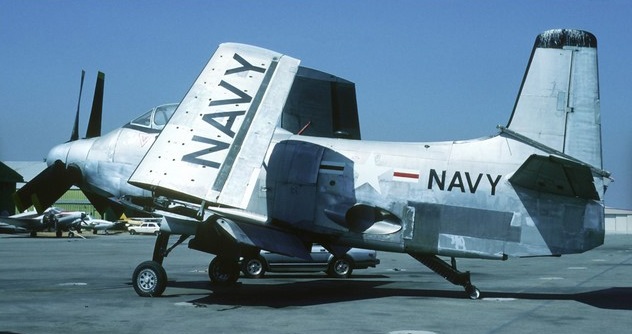
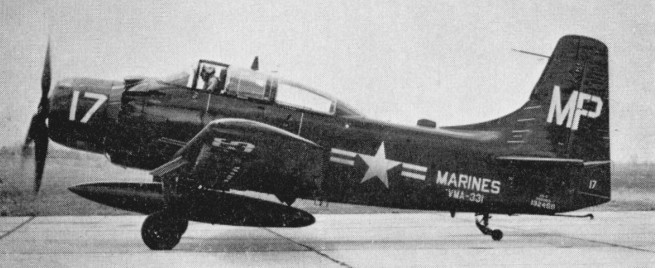
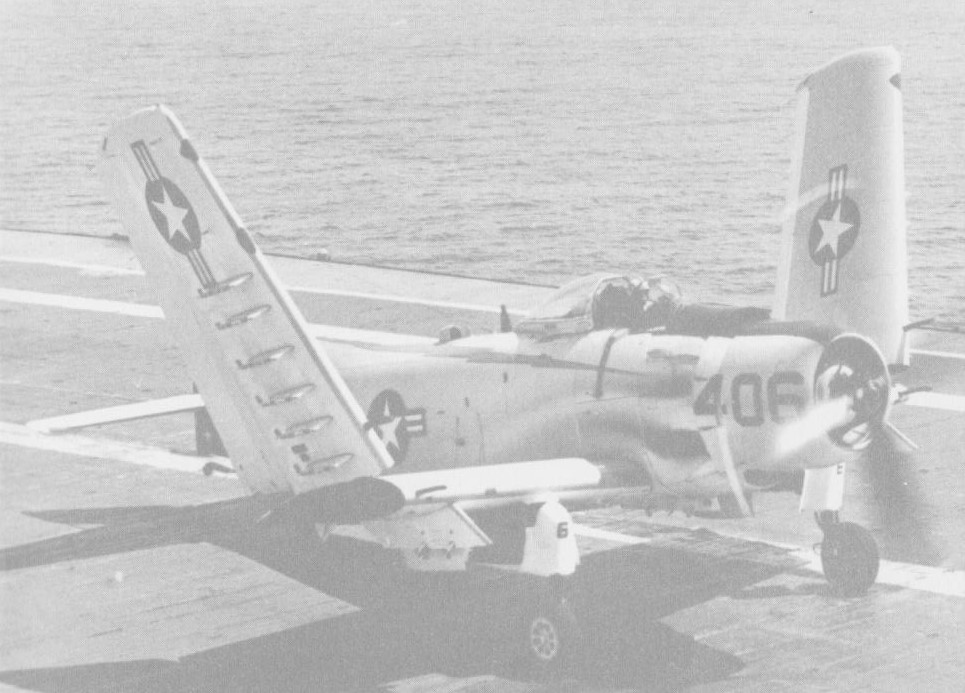
Single-seat attack aircraft such as the AD-1, AD-6 and AD-7, there was also the multi-place AD-5 of 1951.The AD-5 introduced larger tail surfaces and side-by-side seating for two. Flown for the first time in Au¬gust 1951, variants of the AD-5 subsequently performed AEW (AD-5W), ECM (AD-5Q), day attack (AD-5) and night attack (AD-5N) missions amongst other tasks, making it easily the most versatile model of this remarkable warplane. The AD-5 could be equipped for twelve different roles including transport with eight passengers or four stretchers in the fuselage. The AD-6 reverted to single-seat attack configuration.
AD-6
The AD-7 was strengthened. In 1962 the type was re-designated A-1.
The new Douglas factory at Torrance (Plant B-6) in May 1954 was in volume production with both the AD-5 and 6 Skyraider and the F4D-1 Skyray, the latter with the J57 turbojet with afterburner. This leaves the El Segundo division almost clear to turn out twin-jet Skywarriors. The U.S.A.F. version of this machine (B-66) is made at Long Beach, and the main factory, at Santa Monica, makes Globemasters and DC-7s.
The Skyraider went out of USN service in 1969 with the last actually leaving in 1971. During the period awaiting the arrival of the Gannet the Royal Navy used Skyraider AEW 1 and Avenger aircraft to bridge the gap in November of 1951. 50 machines started arriving, and these ex AD 4Ws formed 778 Squadron at RNAS Culdrose. During 1953 the squadron had five flights with a total of 39 Skyraiders having by then been delivered – the remainder coming during 1956. By 1959, they were being phased out, but 12 of them were sold to Sweden as target tugs and remained in service until the late 70s.
It was the conflict in Vietnam which saw the aircraft that the USN had withdrawn in 1968 being purchased by the USAF and a number of A 1E/AD 5, A 1H/AD 6 and A 1J/AD-7 saw active service after what was supposed to be the end of their career. Others were supplied to the South Vietnam air force.
Refurbished AD-6 for South Vietnam Air Force 1964
A 1s were in Africa with the French as late as 1973 and many of these machines were transferred to the forces of Chad, Khmer and The Central African Republic.
When the US tri-service designations were rationalised in 1962, AD-1 to AD-7 versions became re-designated from A-1A to A-1J. Eventually Douglas built 3,818 of the AD Skyraider at El Segundo, California, prior to production termination in 1957.
AD-5 Engine: Wright R3350-26W, 3,150 h.p. Wingspan: 50 ft Length: 39 ft. 3.75 in. Loaded weight: 16,667 lb Max. speed: 365 m.p.h. Ceiling: 25,000 ft. Range: over 1,500 miles. Armament: 2×20 mm cannon Bombload: 6,000 lb Crew: 1-3.
AD-6 Engine: Wright R-3350-26W, 2700 hp Wingspan: 50 ft 0.25in Wing area: 400 sq.ft Length: 38 ft 10.5 in Height: 15 ft 8 in Empty weight: 11,968 lb MTOW: 25,000 lb Fuel capacity: 316 Gal External fuel: 3 x 125 Gal External stores: 10,000 lb Max speed: 365 mph at 15,000 ft Max range: 3000 miles Armament: 4 x 20 mm guns
AD-7 Skyraider Powerplant: one 3,050-hp (2274-kW) Wright R-3350-26WB radial piston. Maximum speed 552 krn/h(343 mph) at 6095 m (20,000 ft) Service ceiling 7740 m (25,400 ft) Range 2092 km (1,300 miles) Empty weight 5486 kg (12,094 lb) Max take-off weight 11340 kg (25,000 lb) Span 15.25 m (50 ft 0.25 in) Length 11.84 m (38 ft 10 in) Height 4.78 m(15 ft 8.25 in) Wingarea 37.2 sq.m (400.33 sq ft) Armament: four 20-mm cannon Hardpoints: 15 up to 3629 kg (8,000 lb)
A-1 Seats: 1
A-1E Seats: 2
EA 1F Skyraider
A-1G Seats: 4.
A 1 J Skyraider Length : 38.845 ft / 11.84 m Height : 15.682 ft / 4.78 m Wingspan : 50.755 ft / 15.47 m Wing area : 402.574 sq.ft / 37.4 sq.m Max take off weight : 25004.7 lb / 11340.0 kg Weight empty : 12550.9 lb / 5692.0 kg Max. speed : 276 kt / 512 km/h Cruising speed : 164 kt / 303 km/h Service ceiling : 31168 ft / 9500 m Cruising altitude : 5906 ft / 1800 m
AD-7 (AD-1J) Engine: 1 x Wright R-3350-26WA, 1985kW Max take-off weight: 11340 kg / 25001 lb Empty weight: 4785 kg / 10549 lb Wingspan: 15.47 m / 50 ft 9 in Length: 11.84 m / 38 ft 10 in Height: 4.78 m / 15 ft 8 in Wing area: 37.16 sq.m / 399.99 sq ft Max. speed: 515 km/h / 320 mph Ceiling: 7740 m / 25400 ft Range: 1448 km / 900 miles Armament: 4 x 20mm cannon, 3629kg of bombs
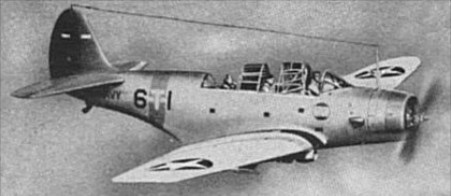
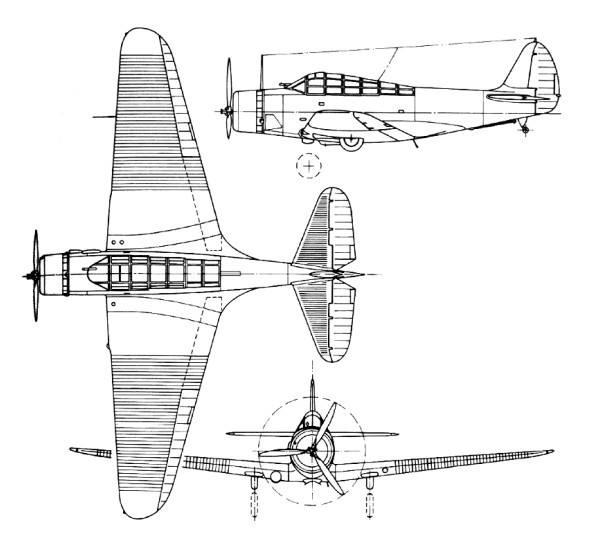
The prototype of the Devastator torpedo bomber flew for the first time on 15 April 1935. It was the first monoplane selected for aircraft-carrier operations, the first of 129 ordered by the US Navy entering service in 1937.
For the first time in a Navy bomber the TBD featured an enclosed cockpit and all-metal construction.
Armed with only one forward-firing and one rear-mounted machine-gun (plus a 533mm torpedo or 450kg bomb), it was vulnerable to enemy attack and a lack of self-sealing fuel tanks contributed to the Devastator’s failure in combat. Heavy losses were suffered in action against the Japanese during the early part of World War II, especially during the Battle of the Coral Sea when the type operated from USS Lexington and Yorktown. The Battle of Midway, fought between 4 and 7 June 1942, was the Devastator’s last major action: it was relegated to non-combat duties after suffering heavy losses during the battle.
Engine: 1 x 900hp Pratt & Whitney R-1830-64 Twin Wasp Wingspan: 15.24 m / 50 ft 0 in Length: 10.67 m / 35 ft 0 in Height: 4.60 m / 15 ft 1 in Wing area: 421.949 sqft / 39.2 sq.m Max take-Off Weight: 4624 kg / 10194 lb Weight empty: 6182.8 lb / 2804.0 kg Wing loading: 24.19 lb/sq.ft / 118.0 kg/sq.m Max. Speed: 179 kts / 332 km/h / 206 mph Cruising speed: 111 kts / 206 km/h Range (max. weight): 361 nm / 669 km Service ceiling: 19701 ft / 6005 m Crew: 3 Armament: 2xMG 0.3cal (7,62mm), Torp/Bomb 454kg