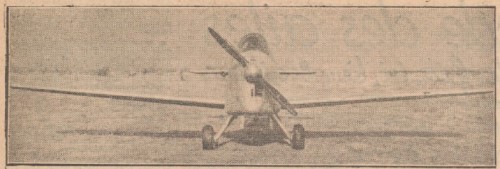
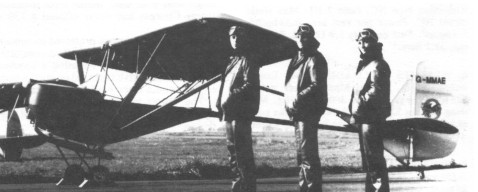
A single-seat cabin monoplane, the Aigle, first flew on April 2, 1949. Only one model was built.
Engine: 4T train, 40 hp
Wingspan: 7.14 m
Length: 5.44 m
Empty weight: 202 kg
Total weight: 320 kg
Maximum speed: 160 km / h
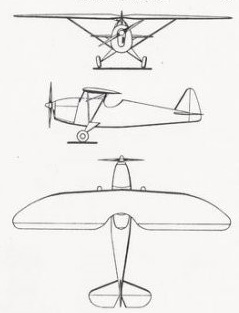
A single-seat cabin monoplane, the Aigle, first flew on April 2, 1949. Only one model was built.
Engine: 4T train, 40 hp
Wingspan: 7.14 m
Length: 5.44 m
Empty weight: 202 kg
Total weight: 320 kg
Maximum speed: 160 km / h
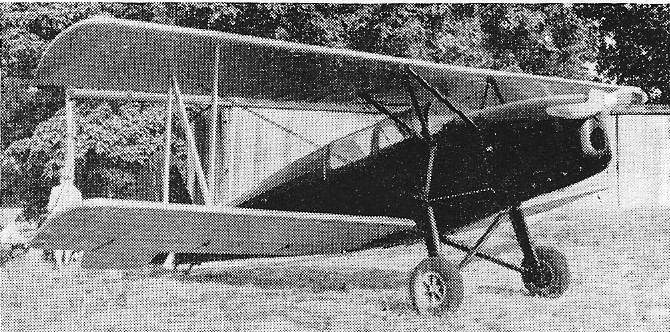
The unique Driggs Skylark N11301 c.n 3016 was built in May 1931.
An enclosed tandem two-seater powered by a 95 hp Cirrus engine, modifications to the tail and canopy addition were carried out in May 1942.
In 1956 it was owned by Morey Cheever of Demotte, Indiana, USA.
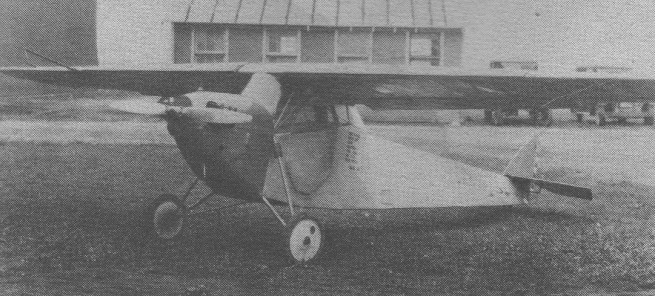
The original Driggs-Johnson DJ-1 of 1925 was powered with a 28-hp converted Henderson motorcycle engine. The few production Darts used slightly more power. This is one that the Army bought to test variable-camber wings; low cost and simple construction made it easy to try different arrangements.
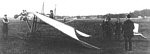
During 1911 Marquis Picat du Breuil designed three monoplanes, built by Pouvarel in France.
No.3
Span: 29’4″
Length: 39’4″
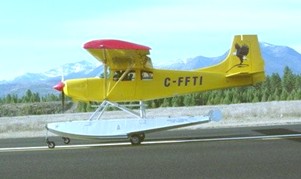
With more than 20 years expertise in manufacturing and with Yvan Desmarais’s flying experience on many different aircrafts, the construction of the first prototype began in 1998. The first flight was done at the Bromont airport on May 12th 2001 with great success. Following this first flight, many more are accomplished in the month and with the necessary flying hours accumulated by June 7th 2001, the special flying certificate can be delivered. On October 3rd 2001, the first flight on floats is accomplished, again with great success.
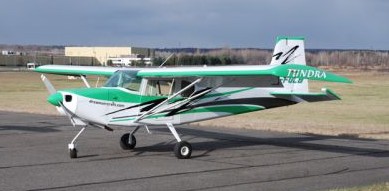
The TUNDRA is a four place kit plane in the STOL aircraft category (Short Takeoff and Landing) with a useful load comparable to bigger airplanes. This airplane will carry four adults, their luggage and enough fuel for a trip of several hours, even in floatplane configuration. This experimental aircraft is a true four place airplane.
The TUNDRA is offered in either a tail dragger or a tricycle gear configuration. The TUNDRA structure is already built to attach a tail or nose wheel and even floats (all required parts are included).
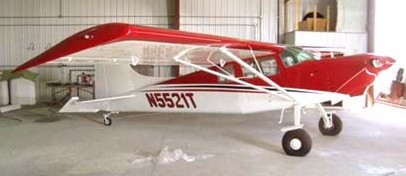
The TUNDRA is an all metal plane with a useful load of more than 1100 pounds and 58 gallons of fuel (219.5 lt).
Tundra
Engine: 200 hp
Undercarriage: Wheels
Max. take off weight: 2550 lbs
Design load factor normal @ 2550 lbs: +3.8 -1.7G
Maximum wing loading @ 2550 lbs: 13.90 lbs/sq ft
Maximum flap extended speed: 90 mph (78 kts)
Maximum cruise speed – Vc: 140 mph (122 kts)
Never exceed speed (Vne): 160 mph (140 kts)
Take-off roll: 400ft
Cruise speed 75% power and 1500ft: 132 mph (115kts)
Stall speed with extended flaps (Vso): 30 mph (26 kts)
Stall speed (Vs): 42 mph (37 kts)
Rate of climb: 1000 fpm
Service ceiling: 14 000 ft
Endurance: 5.2 hrs
Range: 673 miles
Length: 25 ft 6in
Height: 7 ft
Wheel span: 8 ft
Wing span: 36ft
Wing area: 183.6 sq ft
Wing chord: 5ft 1in
Horizontal tail span: 10ft 7in
Horizontal tail area: 39 sq ft
Empty weight: 1450 lbs
Design gross weight: 2550 lbs
Useful load: 1100 lbs
Fuel capacity: 58 US gl
Full fuel weight: 348 lbs
Design payload: 722 lbs
Wing loading: 13.90 lbs/sq ft
Power loading: 13 lbs/bhp
Cabin width: 44in
Cabin length: 112in
Tundra
Engine: 200 hp
Undercarriage: Skis
Max. take off weight: 2550 lbs
Design load factor normal @ 2550 lbs: +3.8 -1.7G
Maximum wing loading @ 2550 lbs: 13.90 lbs/sq ft
Maximum flap extended speed: 90 mph (78 kts)
Maximum cruise speed – Vc: 128 mph (112 kts)
Never exceed speed (Vne): 160 mph (140 kts)
Take-off roll: 650ft
Cruise speed 75% power and 1500ft: 125 mph (110kts)
Stall speed with extended flaps (Vso): 40 mph (35 kts)
Stall speed (Vs): 45 mph (39 kts)
Rate of climb: 800 fpm
Service ceiling: 14 000 ft
Endurance: 5.2 hrs
Range: 660 miles
Length: 25 ft 6in
Height: 7 ft
Wheel span: 9 ft
Wing span: 36ft
Wing area: 183.6 sq ft
Wing chord: 5ft 1in
Horizontal tail span: 10ft 7in
Horizontal tail area: 39 sq ft
Empty weight: 1604 lbs
Design gross weight: 2550 lbs
Useful load: 946 lbs
Fuel capacity: 58 US gl
Full fuel weight: 348 lbs
Design payload: 598 lbs
Wing loading: 13.90 lbs/sq ft
Power loading: 12.78 lbs/bhp
Cabin width: 44in
Cabin length: 112in
Tundra
Engine: 200 hp
Undercarriage: Floats
Max. take off weight: 2800 lbs
Design load factor normal @ 2550 lbs: +3.8 -1.7G
Maximum wing loading @ 2550 lbs: 15.25 lbs/sq ft
Maximum flap extended speed: 90 mph (78 kts)
Maximum cruise speed – Vc: 125 mph (110 kts)
Never exceed speed (Vne): 140 mph (122 kts)
Take-off roll: 1300ft
Cruise speed 75% power and 1500ft: 118 mph (103 kts)
Stall speed with extended flaps (Vso): 45 mph (39 kts)
Stall speed (Vs): 52 mph (45 kts)
Rate of climb: 600 fpm
Service ceiling: 14 000 ft
Endurance: 5.2 hrs
Range: 613 miles
Length: 25 ft 6in
Height: 9 ft
Wheel span: 9 ft
Wing span: 36ft
Wing area: 183.6 sq ft
Wing chord: 5ft 1in
Horizontal tail span: 10ft 7in
Horizontal tail area: 39 sq ft
Empty weight: 1692 lbs
Design gross weight: 2800 lbs
Useful load: 1108 lbs
Fuel capacity: 58 US gl
Full fuel weight: 348 lbs
Design payload: 760 lbs
Wing loading: 15.25 lbs/sq ft
Power loading: 14.2 lbs/bhp
Cabin width: 44in
Cabin length: 112in
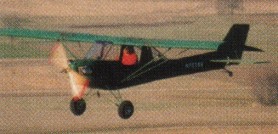
Built by Justin Drake
LSA legal
Engine: VW 1835, 40 hp
HP range: 40-75 hp
Cruise: 70 mph
Stall: 38 mph
Range: 230 sm
Rate of climb: 550 fpm
Takeoff dist: 400 ft
Landing dist: 500 ft
Fuel capacity: 8 USG
Empty weight: 494 lb
Gross weight: 750 lb
Length: 16 ft
Wing span: 24 ft
Wing area: 104 sq.ft
Seats: 1
Cockpit width: 24 in
Landing gear: tailwheel
Side by side two seat single engined high-wing monoplane with conventional three axis control. Wing has swept back leading edge, unswept trailing edge and tapering chord, conventional tail. Pitch control by elevator on tail; yaw control by fin mounted rudder; roll control by half span ailerons; control inputs through stick for pitch/roll and pedals for yaw. Wing braced from below by struts; 100% double surface. Undercarriage has three wheels in tail dragger formation; composite suspension on tailwheel and bungee suspension on main wheels. Push right go right tailwheel steering connected to yaw control. No brakes. Aluminium/fabric fuselage, partially enclosed. Engine mounted below wing driving tractor propeller.
Anodized aluminium tubing is seamless mandrel drawn. Aluminium extrusions are to British HE30 standard. Stainless steel cables, aircraft quality fasteners, Dacron wing covering, heat shrunk polyester covering to tail surfaces and ailerons.
The Dragon 150 is the first aircraft produced by the Dragon Light Aircraft Co, which is an offshoot of the independent airline British Air Ferries. It makes no claim to be revolutionary, but instead is intended as a robust, practical machine in which conventional aircraft pilots will feel immediately at home.
The Dragon 150 only just a microlight and is certainly not an ultralight in the US sense of the term. Designer Billy Brooks deliberately made the weight and wing loading as high as the microlight definition would allow, to maxi¬mise the number of days in which the aircraft can be used in the fickle British climate.
Although the prototype, which first flew on 10 July 1982, was powered by a Hunting HS525A engine, DLAC decided to fit the Robin EC44 to the production version.
Controls include a central control column, dual linked rudder pedals and dual linked throttles with a friction adjuster. A wide range of options is available, including 720 channel radio, electric start, parachute and extra instruments. Supplied as a pre cut, pre bent, pre drilled kit requiring 30 40 h to complete.
Dragon 150
Length overall 23.7 ft, 7.23 m.
Height overall 7.7ft, 2.35m.
Wing span 34.9ft, 10.64m.
Chord at root 6.2ft, 1.88m.
Chord at tip 4.8ft, 1.45m.
Dihedral 1.5 degs.
Sweepback 1deg.
Tailplane span 11.0ft, 3.36m.
Fin height 6.3 ft, 1.91 m.
Total wing area 189 sq.ft, 17.6 sq.m.
Total aileron area 30.8 sq.ft, 2.86 sq.m.
Fin area 19.5 sq.ft, 1.81 sq.m.
Rudder area 9.8 sq.ft, 0.91 sq.m.
Tailplane area 40.4 sq.ft, 3.75 sq.m
Total elevator area 12.4 sq.ft, 1.15 sq.m.
Wing aspect ratio 6.0/1.
Wheel track 5.7 ft, 1.74 m.
Wheelbase 18.2 ft, 5.55 m.
Tailwheel diameter overall 4 inch, 10 cm.
Main wheels diameter overall 16 inch, 40 cm.
Engine: Robin EC44, 45 hp at 6500 rpm.
Propeller diameter and pitch 72 x 42 inch, 1.83 x 1.07 m.
Toothed belt reduction, ratio 3.3/1.
Max static thrust 240 lb, 109kg.
Power per unit area: 0.24hp/sq.ft, 2.6hp/sq.m .
Fuel capacity 6.9 US gal, 5.7 Imp gal, 26.0 litre.
Empty weight 328 lb, 149kg.
Max take off weight 791 lb, 359kg.
Payload 463 lb, 210kg.
Max wing loading 4.181b/sq.ft, 20.4kg/sq.m.
Max power loading 17.6 lb/hp, 8.0kg/hp.
Load factors; +6.0, 3.0 ultimate.
Max level speed 66mph, 106 kph.
Never exceed speed 85mph, 136kph.
Max cruising speed 60mph, 96kph.
Economic cruising speed 53mph, 86kph.
Stalling speed 25mph, 40 kph.
Max climb rate at sea level 500 ft/ min, 2.5m/s.
Min sink rate 400ft/min at 28kph, 2.0m/s at 45kph.
Best glide ratio with power off 9/1 at 38 mph, 61 kph.
Take¬off distance 150 ft, 45 m.
Landing distance 100ft, 30m.
Service ceiling 14,000ft, 4270m.
Range at average cruising speed 100 mile, 160km.
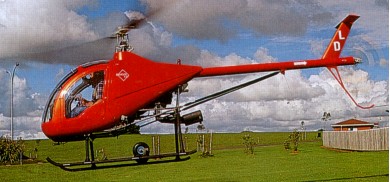
Designed by Angelo and Alfredo Castiglioni to FAR 27. Constructed with a welded titanium frame, the overall configuration is conventional, with a two bladed main rotor with a semi-rigid teetering head, and two bladed tail rotor. Both sets of blades are metal and of similar design to the proven Jet Ranger – although the blades, following European convention, rotate clockwise (when viewed from above). The Dragon Fly shows the influence of Bell Augusta parentage. The transmission is only about 20 cm deep and 30 cm in diameter. It is driven through a pair of triple V-belts and a centrifugal clutch by a horizontally opposed, four cylinder, two stroke engine. At 6250 RPM the 1052 cc engine develops 105 HP, although a more powerful 1300 cc 140 HP version is undergoing testing at the moment (1995) and will be fully inter-changeable with the 105 HP engine.
The engine is fed by four Nikuni 44 carburettors, each with their own air filter and automatic vacuum pump, ensuring continuous fuel supply in the event of a failure of both of the main booster pumps. The carbs are mounted on each cylinder via a thermionic manifold – thereby eliminating the need for a carburettor heat control since they are heated directly by conduction. The need for a mixture control is also eliminated by the provision of a fixed jet with automatic altitude and temperature compensation. Engine cooling is by forced air from two axial, belt driven fans.
HELIOT variant is for military and civil special operations, with a 661 lb (300 kg) useful load and is fitted with a camera and color monitor; can carry an external module to permit unmanned remote flying; with module removed, HELIOT can be piloted.
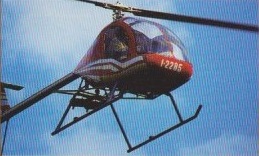
Dragonfly 300
Engine: Hirth F30A26AK, 105 hp.
MTOW: 450 kg.
Empty wt: 230 kg.
Rotor Dia: 6.6m.
Cabin width: 1.25m.
Vne: 80 kt.
Cruise: 65 kt.
HIGE: 6730 ft.
HOGE: 4760 ft.
Endurance: 2 hr 50 min.
Fuel cap: 64 lt.
ROC @ 37 kt: 1300 fpm.
Seats: 2.
Descent autorotation: 1200 fpm @ 35 kt.
Engine: Hirth F30, 130 hp
Rotor span: 6.6 m
MAUW: 450 kg
Empty weight: 230 kg
Fuel capacity: 60 lt
Max speed: 150 kph
Cruise speed: 110 kph
Minimum speed: 0 kph
Climb rate: 9.5 m/s
Seats: 2
Fuel consumption: 18 lt/hr
Price (1998): £65,000
Kit price (1998): $83,000
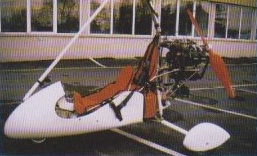
The stainless steel chassis of the Royal Karat originates from Slovenia, and the basic structure is also used by the Take Off company. The Karat wing is produced by the same supplier.
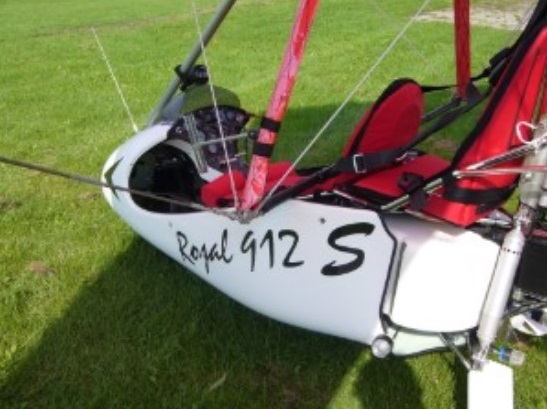
Royal Karat
Empty weight: 190 kg
Wing span: 10.60 m
Wing area: 13.8 sq.m
Fuel capacity: 60 lt
Certification: Vz
Engine: Rotax 582, 64 hp
MAUW: 400 kg
Seats: 2
Max speed: 130 kph
Cruise speed: 85 kph
Minimum speed: 50 kph
Climb rate: 4.5 m/s
Fuel consumption: 11 lt/hr
Price (1998): 38 800 DM
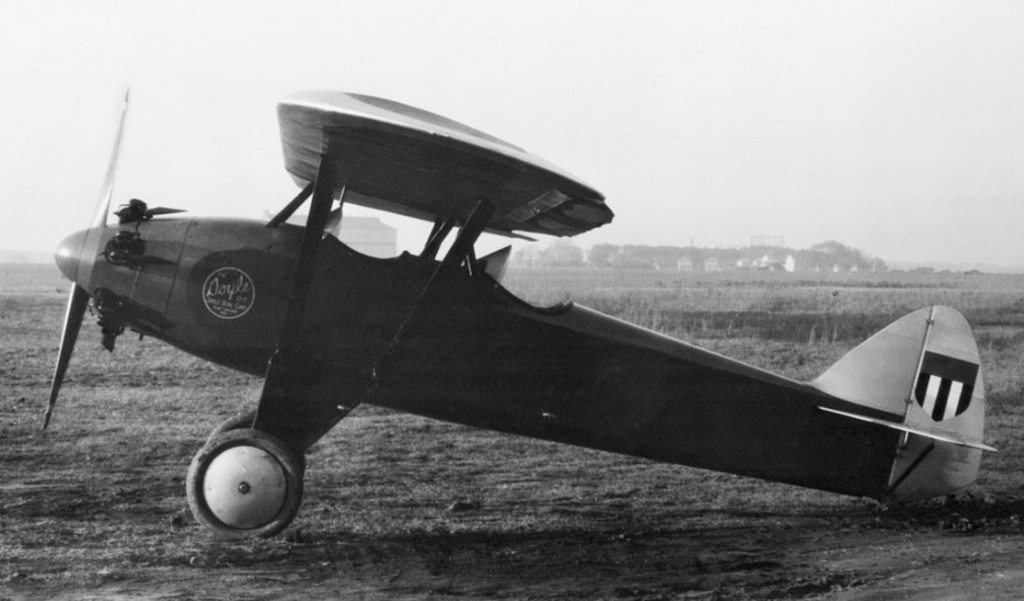
William Burke of the Vulcan Last Company backed the Wilson and Harvey Doyle plan to build a two-place, tandem, open-cockpit parasol sportplane and the Vulcan Aircraft Division began design work in a rented second floor room and construction in a former street car barn in Portsmouth.
The resulting Vulcan American Moth was a hit, but the relationship among the principles was deteriorating and the Doyle brothers left to start their own Doyle Aircraft Company in Baltimore. They produced fourteen Doyle Orioles which were similar to the Moth before bankruptcy ended the effort.
The prototype flew on 15 October 1928 with a yellow and black paint scheme and was priced at $2,975. Doyle Aero did not survive the Great Depression economy and ceased operations after a short production run. Harvey Doyle became an aeronautical engineer, and Wilson Doyle would become a professor of Political Science.
Seven of the O-2 Oriole and one O-3 Oriole were all built in 1928.
The last surviving O-2 serial number A-5 (NX9531) was restored in 1984 after being in storage since 1934 and identified by its designer Harvey Doyle.

