Dunne D.1

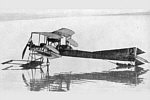
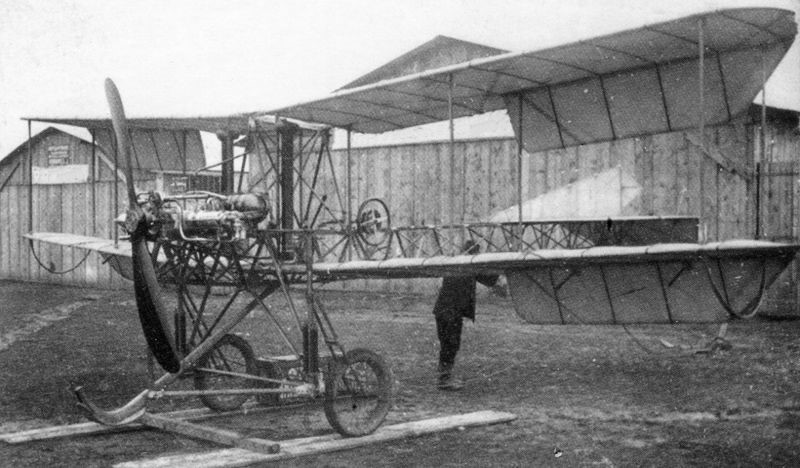
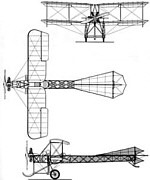
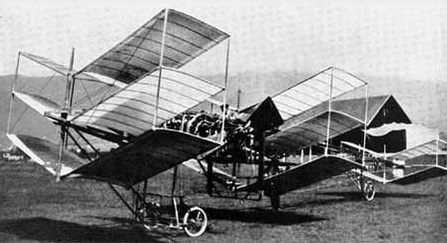
John Dunne came to the Balloon Factory on June 1st, 1906, where he was appointed to the Royal Engineer Committee and placed in charge of the design, construction and testing of aero¬planes. Teamed up with Colonel John Capper, Superintendent of His Majesty’s Balloon Factory at South Farnborough in Hampshire, their first aircraft, the Dunne D.1, was ready in the spring of 1907. It was a single-seat glider with arrow shaped biplane wings. Powered by two 12 h.p. Buchet engines, it was ready by the spring of 1907, and in July was removed in great secrecy to the Marquis of Tullibardine’s Scottish estate at Blair Atholl, in Perthshire, for its first tests. It made one very brief unpowered flight, with Capper at the controls, during which its inherently stable properties were confirmed, but on its first attempt at a proper powered take off, owing to faulty launching tactics it crashed, sustaining extensive damage. Back at Farnborough during the winter the D.1 was redesigned and rebuilt, with a new engine and a wheeled landing gear, to re emerge as the D.4.
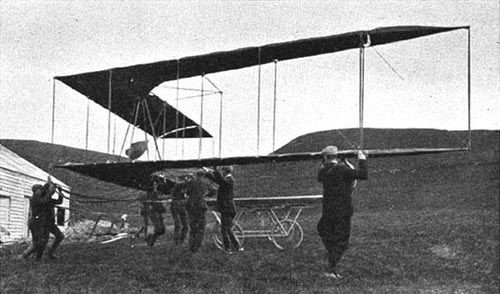
The D.1 proved the soundness of Dunne’s ideas and was followed by further machines on the same principle; the D.3 was constructed at Farnborough and later ones built privately at Eastchurch. In addition, both seaplane and flying boat versions of the Dunne biplane were built in America by the Burgess Company. But it gradually became apparent that inherent stability was not so essential for a military aircraft as good manoeuvrability.

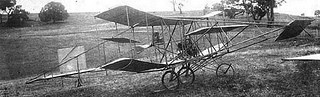
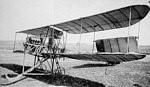
Duigan No.1 biplane       

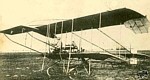
John Duigan’s first biplane, the photo having been taken at Mia Mia, Victoria, Australia in 1910. Though building it was a joint effort by the two brothers, ‘ownership’ is normally assigned to John alone. The craft was only marginally capable of flight, and after a crash in August 1910, it was rebuilt and modified, with the new version of it being somewhat more flight capable.

Designed and built by Johan & Reginald Duigan, it made the first flight in Australia by an Australian designed and built plane.

Span: 34’6″
Speed: 40 mph

Duigan 1910 Homebuilt

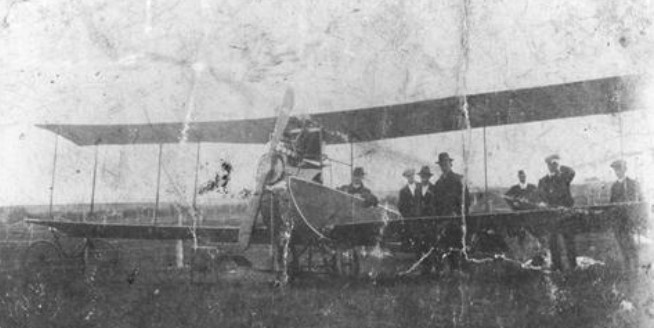
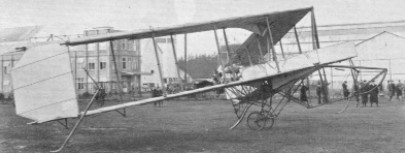
Duigan’s Avro-Type Biplane with Bariquand & Marré Wright Engine at Geelong, circa 1916

John Duigan and his bother Reginald built the aircraft at Ivanhoe, Victoria, in 1912-1913, basing its design on an Avro biplane that Duigan had previously owned in England, with some modifications to the wings and undercarriage.

John Duigan flew his homebuilt aircraft at Mia Mia, Victoria, Australia, on 16 June 1910, as the first Australian built aircraft to fly in Australian skies. After being damaged in a test flight at Keilor Plains the biplane, minus its original engine, was sold to Hans Christian Anderson, a Geelong motor garage owner in 1915. Andersen fitted it with a Wright Model ‘A’ Model 30 horsepower 4-cylinder engine built under licence by Bariquand & Marré of Paris in 1909. Andersen flew the biplane from the Belmont Common on several occassions until he crashed the plane at Lovely Banks circa 1916.

The engine is believed to be from the first plane flown in Australia, an imported Wright Flyer, in which Colin Defries first took to the air at Victoria Park Racecourse, Sydney, on 9 December 1909.

The plane is fitted with both landing skids and pnuematic-tyrred wire-spoked wheels.

The original Duigan biplane was in storage with the Museum of Victoria in Melbourne, Australia. The museum also has on display the Duigan replica that Ron Lewis built and flew from 1990-1995.

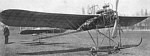
Dufour 5

This plane, the first Swiss two-seater, was a 1911 development of the earlier Dufaux-4 and had a similar landing gear and triangular-section fuselage. It was equipped with either 70 hp Gnôme or with Oerlikon 4-cylinder horizontally-opposed engines. Several were built, it was used in the flying school of Ernest Failloubaz, was flown by many of the most famous early Swiss pilots and also made the first Swiss military flights.

Span: 27’3″
Length: 30’6″
Weight: 1224 lbs
Speed: 52 mph