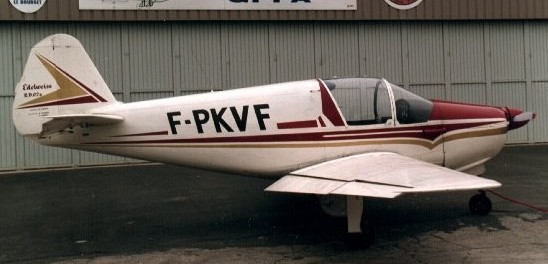
Duruble Roland Duruble 2 / RD 02r Edelweisse

Conceived primitively in 1945 of wood, and the construction beginning in 1946, there were disappointments with the Caurite glue. The Office Véritas informed the builders that the plane could not be accepted.
With thoughts of a metallic prototype, the goal was to show that one with 65 cvs. Several years of study and the first drawings done, the framework began at Bessonneau until 1956. The plane was transported at Legrand, where the prototype was finished towards the end of 1961.
The assembly and completion were achieved at the Boos airfield.
July 7, 1962, Edelweiss first flew. Testing by the CNRA was completed June 24. CNRA n° 270952 was delivered August 19, 1963, partner to the file n° 341 of August 23, 1963.
A two-seater, all metal plane, with a Walter-Mikron 4-III motor of 65 hp at 2600 rpm, with retractable tricycle undercarriage.
The Edelweisse was presented to the gathering of the amateur constructors at Rouen-Boos the 16, 17 and 18 August 1963 and made a sensation.
On February 21, 1981, a motor breakdown led Roland Duruble to fit a Revmaster 2100D n°s 2496 of 75 hp, and a twin-bladed metallic constant speed Maloof propeller.
The prop was replaced with a twin-bladed in wood and Revmaster reduced performance to 65 hp at 3200 rpm, although TBO became 1000 hrs instead of 800. Climb rate was noted at + 1,5 m/ses to 11500 ft. The
By October 8, 1984 with 947 hs 25 min TT. the craft wass sold to M. Jacques Plumet. The reported flight time on October 23, 1993 was 1097 hs 39min.
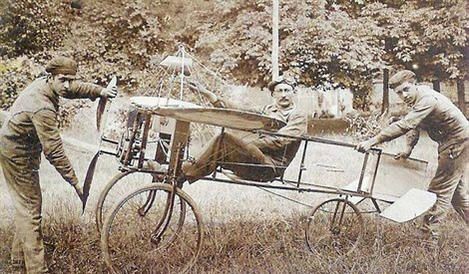
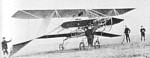
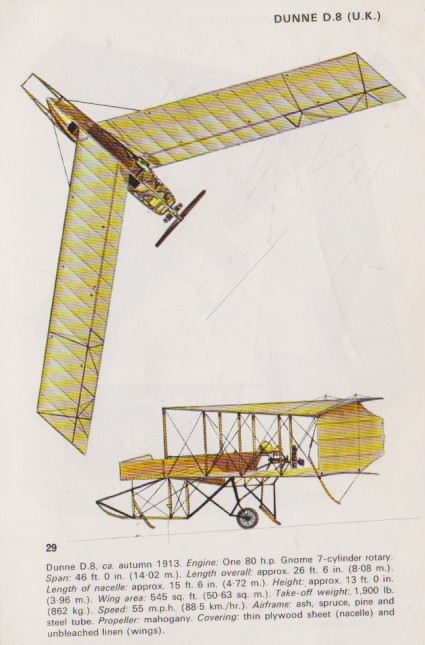
Dunne D.8

Unfortunately, by that time the War Office decided that it had spent far too much on experiments with aeroplanes a total of about £2,500, at a time when Germany was devoting £400.000 a year to military flying and Dunne lost his official support.

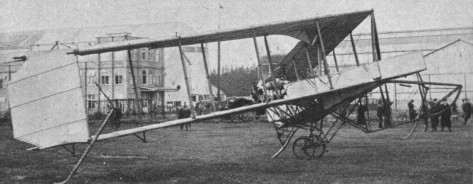
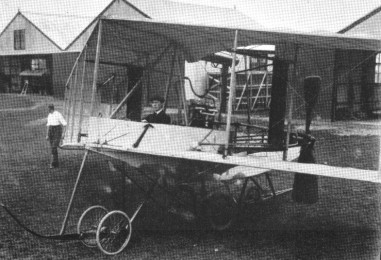
Dunne’s final designs were built during 1911 1912. When the Dunne D.5 crashed in 1911 it was rebuilt as the D.8. Reverting to the biplane con¬figuration he rebuilt the D.5 with a 4-cylinder, 60 hp Green engine and dual controls. It was a tailless four bay unstaggered biplane with its wings swept at 32°. The washout on tips well behind the centre of gravity provided longitudinal stability in the same way as a conventional tailplane. Wing tip elevons were used for control, operated by a pair of levers, one either side of the pilot. It was powered by a 4-cylinder, 60 hp Green engine that directly drove a single pusher propeller. The Green engine was later replaced by an 80 hp Gnome. The D.8 first flew in June 1912 at Eastchurch.

Captain Carden, who had but one hand, used this machine to gain his Royal Aero Club Aviator’s Certificate in June 1912. In August 1913 the aircraft was flown from Eastchurch in Kent to Paris, France for tests by the French Aeronautic Corps, during which Commandant Felix of the Nieuport company astonished crowds at a Deauville flying meeting by stepping from the cockpit and walking along the aircraft’s lower wing in flight.

Dunne D.8 Article

Three Dunne tailless biplanes were built by the Burgess Company of Marblehead, Massachusetts in 1916 and evaluated by the US Army, but by then Dunne had been advised by his doctors to give up aviation, which he did.

Engine: 60 hp, Green.
Span 46 ft
Length 30 ft. 4 in
Wing chord 6 ft
Weight empty about 1,400 lb
Weight loaded 1,900 lb
Max. speed 55 mph.

Dunne D.VII       

Dunne built a monoplane, the D.7, which was displayed at the 1911 Olympia Aero Show in London, and began making de¬liberate attempts to upset the machine’s equilibrium in flight by letting go of the controls during steep, low level turns. Even the most forgiving aircraft will bite when sorely tried, and sure enough Dunne suffered four major crashes for his fool¬hardiness.

Span: 35′
Weight allup: 1400 lb
Speed: 60 mph

Dunne D.VI

Unfortunately, by that time the War Office decided that it had spent far too much on experiments with aeroplanes a total of about £2.500, at a time when Germany was devoting £400,000 a year to military flying and Dunne lost his official support.
He carried on by himself, and in the next few years proved conclusively the soundness of his ideas. After taking off in his D.6 powered biplane, he locked the controls and let it fly itself while he wrote a report.

The 1911 Dunne D 6 was designed by John W. Dunne and built by Short Bros.

Span: 36′
Length overall: 21′

Dunne D.V

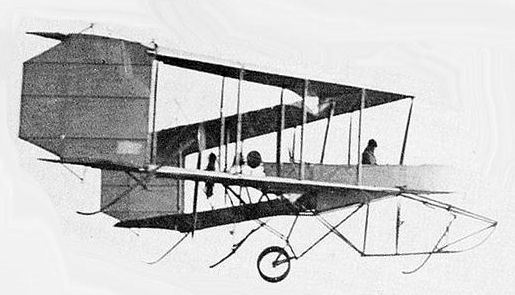
In 1908 Lord Tullibardine offered to help, and with Capper and his assistant, Captain Carden, they set up the Blair Atholl Aeroplane Syndicate and had Short Brothers build them a new tailless biplane with a 60 hp Green engine driving two propellers.

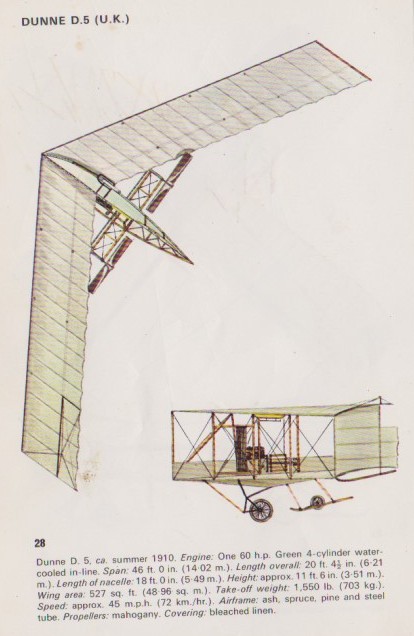
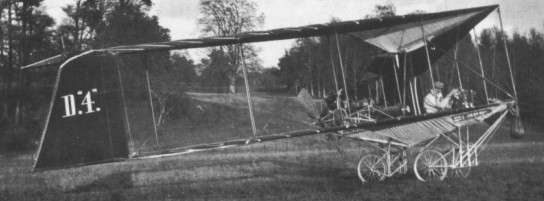
The D.5 was a two seater which Dunne elected to test fly himself. The recalcitrant motor put Dunne and his D.5 into the marsh at the end of Eastchurch aerodrome, in Essex, where the team had moved after leaving Scotland, but during the spring of 1910 his arrow shaped aircraft became a familiar sight in the area and was noted for the steadiness with which it flew. The tests culminated in a 1.25 km (2 mile) flight during which Dunne never touched the controls and a demonstration in front of Orville Wright. The D.5 had combined elevators and ailerons (elevons) at the tips of its wings. These were operated by two levers which could be locked into position on a ratchet to maintain a desired attitude, and the machine’s stability vindicated Dunne’s theories about the tailless configuration.

Span: 46′
Length overall: 20’4″
Weight: 1550 lb gross
Speed: 45 mph

Dunne D.IV

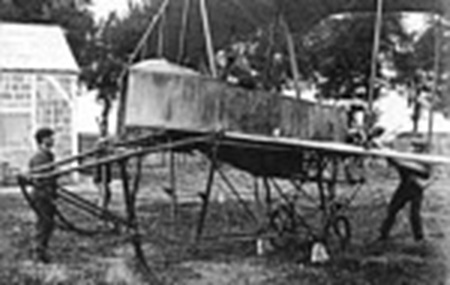
Back at Farnborough during the winter of 1904 the D.1 was redesigned and rebuilt, with a new 25 hp R.E.P. engine and a wheeled landing gear, to re emerge as the D.4.
On Dunne’s own admission this D.4 was more of a hopper than a flier. It did make eight flights late in 1908, but the longest was barely 36 m (120 ft) and the War Office declined further financial sup¬port for his experiments.

Wing area: 504 sq.ft
Weight: 1035 lb all up

Dunne D.III Biplane         

The D.1 proved the soundness of Dunne’s ideas and was followed by further machines on the same principle; the D.3 was constructed at Farnborough and later ones built privately at Eastchurch. In addition, both seaplane and flying boat versions of the Dunne biplane were built in America by the Burgess Company. But it gradually became apparent that inherent stability was not so essential for a military aircraft as good manoeuvrability.