Dybovskiy Dolphin

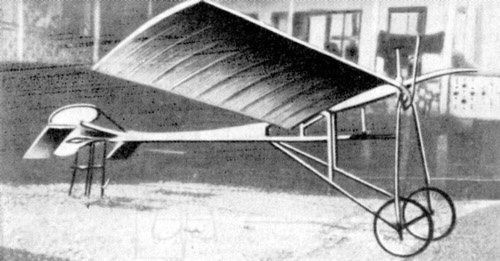
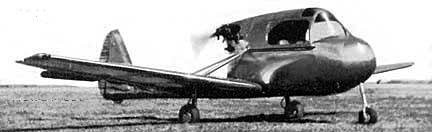
The 1913 streamlined “Dolphin” was a tractor monoplane with plywood-covered fuselage, powered by 7-cylinder 80 hp rotary Kalep engine. Both machine and motor were built at the “Motor” company in Riga, today capital of Latvia. It was designed by Russian military pilot Viktor Vladimirovich Dybovskiy, with help of his brother Vyacheslav.

DW Aviation DW.II

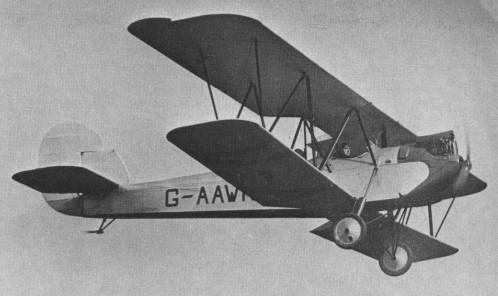
During 1929, Dudley Watt was approached by T. Neville Stack who had an idea for a slow landing, safe -flying training biplane combining the advantages of folding wings with natural stability. Watt agreed to finance the construction and formed a company, D. W. Aviation Co, at Brooklands. The aircraft was designed by Captain K. N. Pearson, M.C., AFRAeS, and dubbed the D.W.II. By the end of 1929, first wood had been cut. Drawings for the tail unit were completed by March 1930 from which time forward construction proceeded at full speed. .
The work team consisted of Bill Hellon, a former Handley Page general mechanic who had worked with Savage Skywriters at Hendon, and Bill Whitaker, an aircraft craftsman who had formerly worked for both Vickers and Hawkers. The chief engineer responsible for the project was William A. Baker.
The building of the D.W.II took place in the “black sheds” at Brook¬lands and on May 17, 1930, G AAWK made its public debut in the hands of Dudley Watt. The engine was a 90 h.p. ADC Cirrus III.
The D.W.II was an instant success.
Everything seemed set fair for this biplane with its “unusually high lift” wings which cruised at a respectable 75 m.p.h. on such comparatively low power.
It was at this point that the whole enterprise left Brooklands for Ford Aerodrome, Yapton, Sussex, where larger hangars were available. Here was to be set up a production line.
But things did not work out as planned and the Dudley Watt fortunes took a turn for the worse. Inspired by the success of the D.W.II, work had already begun on the mock up of a three seat version to be known as the D.W.III. This was never to be and just before Christmas, 1930, the collapse came. In spite of its success, orders did not materialise for the D.W.II and there was now no cash left to allow speculative building. Dudley Watt was forced to sack his workforce.
Watt and the D.W.II turned up at aviation meetings during the following season but afterwards gradually faded from the aviation scene. The D.W.II was sold in 1934 to Brian Field who dismantled it into oblivion.

DW Aviation DW.I

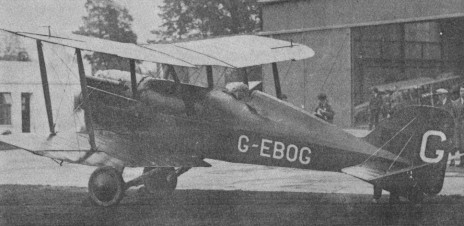
The Aircraft Disposal Co Ltd was selling off refurbished ex RAF SE.5s. Inspired by the potential of the S.E.5a just as had McCudden and others before him, Dudley Watt rebuilt his machine as a high perform-ance model. The 200 h.p. Wolseley Viper was replaced by a 300 h.p. Hispano Suiza enclosed in a stream-lined cowling and cooled by under¬slung radiators. The rear fuselage decking was redesigned to fair in with the pilot’s headrest and a smaller windscreen was fitted. Now named the D.W.l., the work on this Hisso–powered hybrid was carried out in a shed at Brooklands near the old Henderson School of Flying hangars.
Dudley Watt raced it as a standard S.E.5a at Bournemouth in April 1927. In its re vamped form it should have been a race winner but records do not show it to have been a flag dropper. The D.W.1 was finally burned at Whitchurch in 1932.

du Temple 1874 Monoplane / du Temple Canot planeur

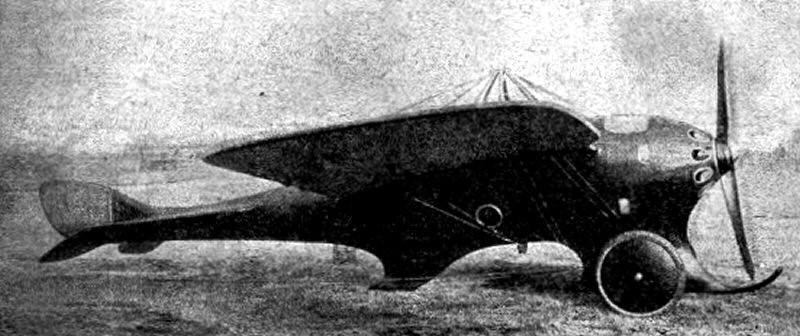
The du Temple Monoplane “Canot planeur” of 1874 might have been realized by Félix du Temple de la Croix (1823-1890) from his 1857 patent. The du Temple Monoplane was a steam-powered aircraft made of aluminium, built in Brest, France, by naval officer Félix du Temple.

The aircraft used a very compact, high-speed circulation steam engine for which Félix du Temple applied for a patent on 28 April 1876. The engine used very small pipes packed together to obtain the highest possible contact surface for the smallest possible volume.

When he began with the aid of his brother, M. Louis du Temple, to experiment on a large scale, the inadequacy of all motors then known became apparent. They first tried steam at very high pressures, then a hot-air engine, and finally built and patented, in 1876 a very light steam boiler weighing from 39 to 44 lb. to the horse power, which appears to have been the prototype of some of the light boilers which have since been constructed. It consisted in a series of very thin tubes less than 1/8 in. in internal diameter, through which water circulated very rapidly, and was flashed into steam by the surrounding flame.

This type of boiler, which boils the water instantly, has come to be known as a flash boiler. The engine design was later adopted by the French Navy for the propulsion of the first French torpedo boats.

Variously reported as steam powered or powered by a hot-air engine; fitted with a propeller of 12 blades or 6 blades or even 8 blades; and the undercarriage sometimes claimed as “retracting”.

A flight of the full-scale machine was attempted in 1874 in Brest, where it was launched from a ramp. Several trials were made with the aircraft, and it is generally recognized that it achieved lift-off – described by Dollfus as “short hop or leap” and in Flight International as “staggered briefly into the air” – (from a combination of its own power and running down an inclined ramp), glided for a short time and returned safely to the ground, making it the first successful powered flight in history though not the first self-powered one. Flight was not attained as the machine swiftly hit the ground and rolled over. Reports on who was in the pilot’s seat is given that du Temple at the controls – or, in other reports – a “young sailor” was the pilot.

Félix du Temple had been the first to build a heavier-than-air model (weight 700 g), which flew and landed safely in 1857.

It had a wingspan of 13 m (43 ft) and weighed 80 kg (180 lb) without the pilot.
Dusenbury Wright Flyer III

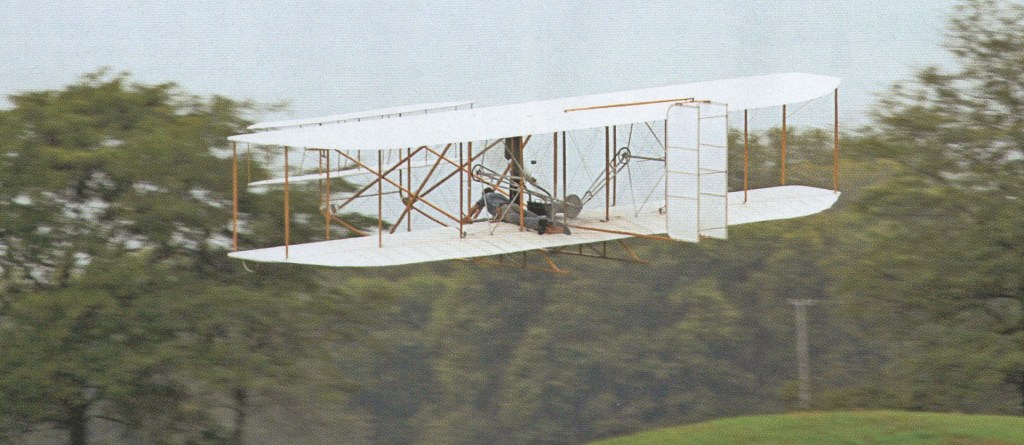
On October 3, 2007, at Huffman Prairie, Ohio, USA, Mark Dusenberry flew his Wright Flyer III reproduction for 2min 10sec around the oval course where Wilbur Wright proved the practicality of powered flight in 1905.

Dusenberry’s flight was the longest achieved by a Wright III reproduction. It came during rehearsals for a series of educational events on October 5 to celebrate the 102nd anniversary of Wilbur’s flight, during which the pioneer flew 29 laps of the course, covering 24 miles in 39min.

Construction took Dusenberry 10,000hr over a 10yr period, using the same materials seen on the original, spruce and ash. He also built a reproduction 1905 engine, and carved the spruce propellers. The only departure from original construction was the polyester cloth covering.

The October 5 events were organised by the US National Parks Service, and 2,500 people assembled at the prairie to watch Dusenberry’s flight; it lasted only 40sec, ending when the starboard wingtip clipped the ground in a turn. Mark was unhurt in the impact, and said. “All I broke was a bunch of sticks, and put a few holes in the fabric. I will repair it, and should have it flying in about a year”

Durand Mark V

The Durand biplane features a negative stagger configuration so that it does not produce a full stall, only a very short period of “nibbling” with little loss of altitude. The structure is rated + 3.8 and —1.5 G’s. Roll is produced by a combination of effects when a spoiler is activated, instead of by use of ailerons. According to its designer, a spoiler for roll control actually helps an airplane turn in the direction of the bank, while ailerons do not. The trailing edges of the wings are taken up by full-span flaps. With a standard 150-hp Lycoming, the Durand can carry two people with 128 pounds of baggage at 135 mph over a range of 520 miles. Cockpit controls are basic, with dual sticks in lieu of standard control wheels. The cabin features exceptional visibility by using a forward sliding canopy instead of side doors normally associated with high-wing and biplane cabin aircraft.

Engine 150-hp Lycomlng
HP range: 125-180.
Gross Wt. 1840 lb
Empty Wt. 1210 lb
Fuel capacity 24.5 USG
Wingspan 24 ft 6 in
Length 20 ft 3 in
Top speed 170 mph
Cruise 135 mph
Climb rate 1200 fpm
Ceiling 15,000 ft
Normal range 400 miles
Range with auxiliary tanks 520 mile
Takeoff run 550 ft
Landing roll 450 ft

Durand XD-85

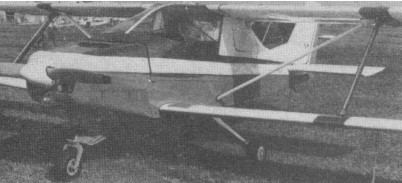
This was a 2-seat pusher designed and built by Mr. William H. Durand and the aircraft first flew during the Summer of 1948. The all-metal XD-85 was powered by an 85hp Continental C85-12J engine. The aircraft reportedly sustained wing damage in a hangar incident and was not rebuilt. Further development was halted, a fate not uncommon to many other (light) aircraft projects of the immediate post-war years.

Duruble Edelweiss RD 03

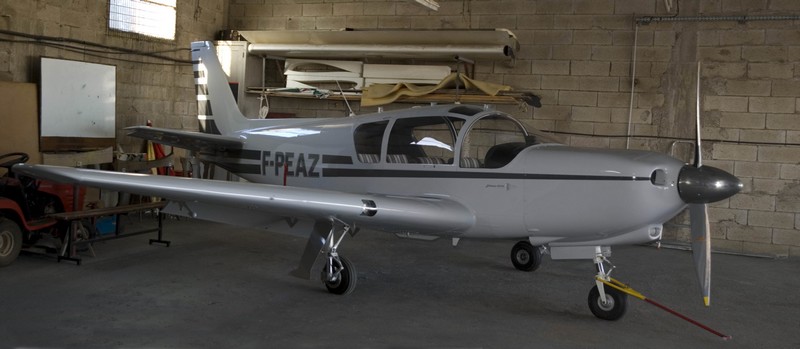
This aircraft is a 4 seat aircraft with the prototype (F-PYIT) powered by a Lycoming O320 (160Hp) for the first flight in March 1982. Made available in plans form for home construction and developed from the earlier RD-02 two-seater.
Able to take up to 180hp, the propeller was a variable speed Hoffmann, and autoopilot (badin Crouzet), classified IFR in 1984.
With 23in and 2300rpm it can cruise about 140kt and use 32l per hour (100LL).

Windspan: 8.820m
Length: 6.875m
Wing area: 11.388sq.m
Airfoil: Naca 23019
socket Profil : Naca 23012
Marginal Profil : 6°30′
Dihedral: -3°
Twisted: +3°
Number of seats: 4
Power: 160 HP
Class: Utility
Max speed: 275 km/h
Cruise speed: 253 km/h
Stall speed clean: 105 km/h
Stall speed gear and flaps: 92 km/h
ROC: 5.9 m/s
Max ceiling: 5000 m
Empty weight: 485 kg
Fuel: 108 kg
Passager front weight: 172 kg
Passager rear weight: 154 kg
Luggage: 20 kg
max payload: 443 kg
MAUW: 928 kg
Wing loading: 81.49 kg/sq.m
Power loading: 6.19 kg/hp