
In October 1988 it was reported that the Indian Air Force had placed an order for 25 Chickinox ultralights to be placed at the disposal of selected flying clubs and for pre-selection of future IAF pilots.
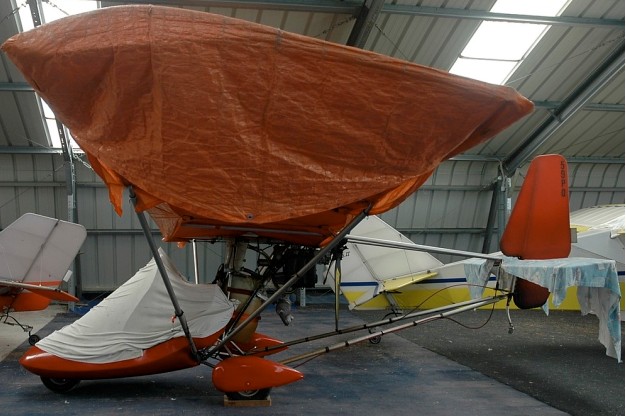
In October 1988 it was reported that the Indian Air Force had placed an order for 25 Chickinox ultralights to be placed at the disposal of selected flying clubs and for pre-selection of future IAF pilots.
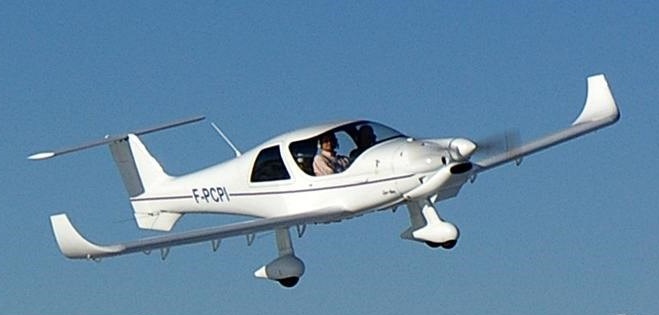
The Limousine S-LSA has elements of the MCR-4S and the Twin-R, designed to fit the LSA category. The airframe is based on the MCR-4S. The cabin is finished with the interior developed for the Twin engine “Twin-R”. It includes the new memory foam seats for comfort. The Limousine S-LSA bascally the MCR-4S certified under the S-LSA category. A two seater factory built in compliance with ASTM standards, with options and the interior designed for the Twin-R. It is a MCR-4S factory built and limited to 2 occupants whereas the 4S comes as a kit.
For its launch, the Limousine S-LSA was offered at 127,728 Euros +GST/VAT ex factory until 31 December 2010.
Engine: Rotax 912S, 100 hp
Propeller: 2 blade fix pitch
Wing span: 8.72 m / 28 ft 5 in
Length: 6.72 m / 22 ft 5 in
Height: 1.95 m / 6 ft 4 in
Wing area: 8,30 m / 87.7 sq ft
Aspect ratio: 9,20
Empty Weight fully equiped: 280 Kg / 616 lbs
Structural MTOW: 750 Kg / 1650 lbs
Useful load at 600Kg: 320 Kg / 704 lbs
Fuel tanks: 2 x 100L=200L Total / 52 US Gal
Wing loading: 77 kg/m / 18.8 lb/sq ft
Speed at 75% Cruise, FL 0: 128 Kts (240 Km/h)
Speed at 75% Cruise , FL80: 139 Kts (257 Km/h)
Consumption at 75%: 20.7 L/h / 5.5 US Gal
Range standard tanks at 75%: 1342 Nm (2486Km)
Speed at 65% & FL110: 132 Kts (245 Km/h)
Consumption at 65%: 17.9 L/h / 5 US Gal
Range standard tanks at 65%: 1477 Nm (2737Km)
Take Off distance: 200 m / 656 ft
Climb rate, FL 0: 700 ft/min
G loading: +3.8 /-1.5 g
Glide ratio: 16/1
Cabin Width: 1.17 m / 46 in
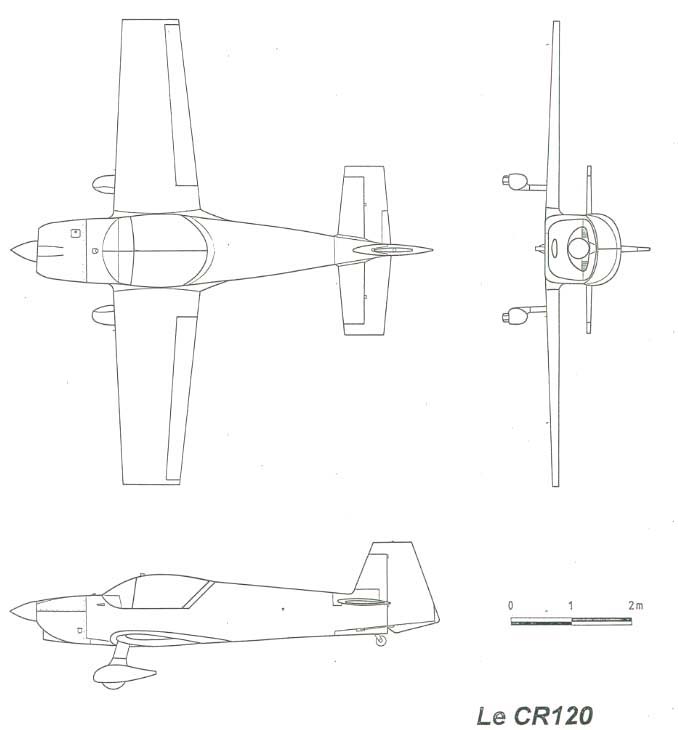
The CR120 is a two-seater directly derived from the CR100. The first flights took place in September 1996, with the optimal performance with 200hp.
The 120 has a stronger wing and no flaps.
The aircraft built starting from the plans will be able to fly under CNRA (Navigability certificate Restricts Plane), and the kit plane will fly under the CNSK (Special Navigability certificate Kit) “category; experimental”, according to the country of registration.
CR 120
Engine: Lycoming, 200 hp
Prop; fixed pitch
Wing span; 7.77 m
Wing area; 9.74 sq.m
Length; 6.2 m
Fuel capacity; 85 lt
Empty weight; 570 kg
MTOW; 850 kg
Aileron span; 2.70 m
Aileron area; 1.63 sq.m
Max manœuvre (Va); 260 km/h
Never exceed (Vne); 342 km/h
Max turbulent air (Vno); 301 km/h
Load factor; +8 /-6 g
Rate of climb; 10 m/s
Roll rate at 260 km/h; 275 deg/s
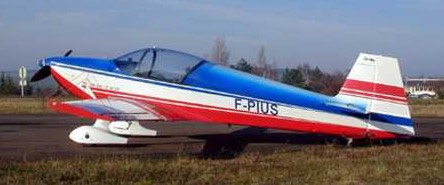
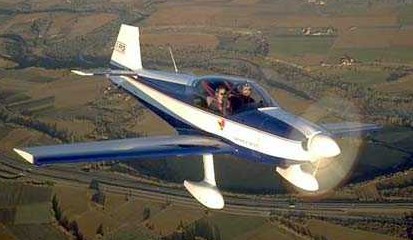
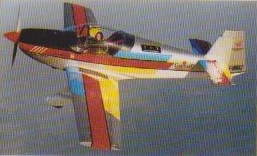
The CR100 was conceived and optimized for use in flying-clubs The first flight took place in August 1992. The selected motor (180hp and vp prop) is the least expensive, the CR100 can receive various options, including 200hp with a fixed pitch propeller.
A CR100 built from plans will be able to fly under the CNRA (Navigability certificate Restricts Plane). Aircraft from a kit will be able to fly under the CNSK (Special Navigability certificate Kit) / ” category; experimental “, according to the country of registration.
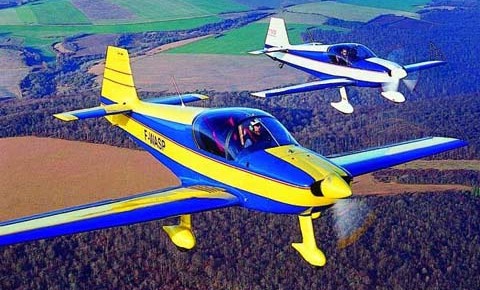
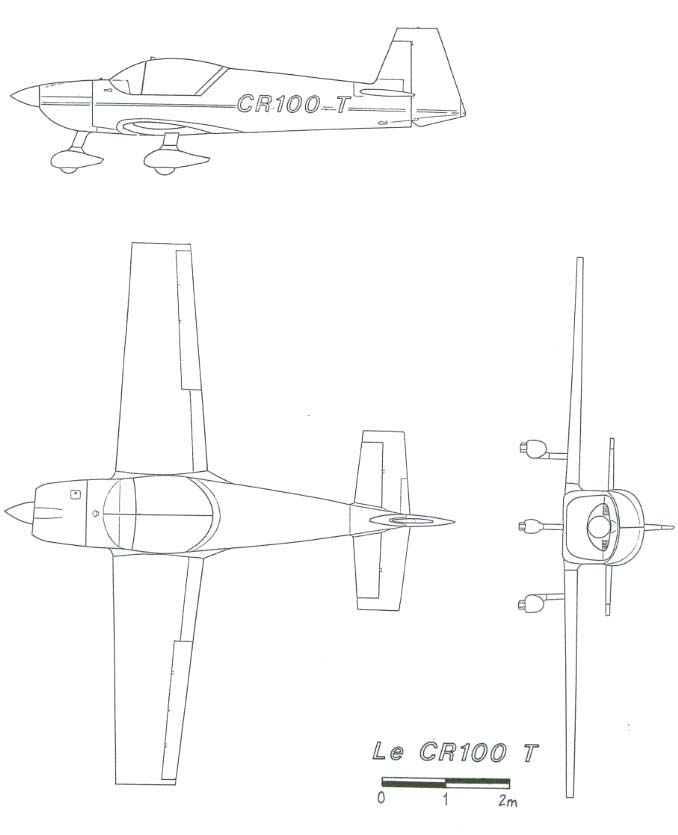
The CR100T is a two-seater directly derived from the CR100. The first flights took place in November 2000. With a nose wheel, 180-200 hp, and variable pitch prop, the CR100T was optimized for reliable and intensive school use.
CR 100
Wing span; 8.50 m
Wing area; 10.60 sq.m
Length; 6.8m
Fuel capacity; 85 lt
Empty weight; 550 kg
Empty equipped weight; 850 kg
MTOW; 760 kg
Aileron span; 2.17 m
Aileron surface; 1.21 sq.m
Max manouevre (Va): 260 km/h
Max speed (Vne): 346 km/h
Max turbulent air (Vno); 301 km/h
Design load: +8 /-6 g
Max flap extension (Vfe): 185 km/h
Rate of climb; 8 m/s
Roll rate at 260 km/h; 195 deg/s
CR 100T
Engine: Lycoming O-360, 200 hp
Wing span; 8.50 m
Wing area; 10.60 sq.m
Length; 6.8 m
Fuel capacity; 85 lt
Empty weight; 550 kg
MTOW; 850 kg
Aileron span; 2.17 m
Aileron area; 1.21 sq.m
Manoeuvring speed (Va); 260 km/h
Max speed (Vne); 346 km/h
Max turbulence speed (Vno); 301 km/h
Load factor; +8 /-6 g
Max flap extn (Vfe); 185 km/h
Rate of climb; 8 m/s
Roll rate to 260 km/h; 195 deg/s
CR 100
Engine: Lycoming IO-360, 180 hp
Wing span: 8.5 m
Wing area: 10.6 sq.m
MAUW: 854 kg
Empty weight: 550 kg
Fuel capacity: 40 lt
Max speed: 316 kph
Cruise speed: 273 kph
Minimum speed: 96 kph
Climb rate: 8 m/s
Fuel consumption: 40 lt/hr
Seats: 2
Kit price (1998): £42,300
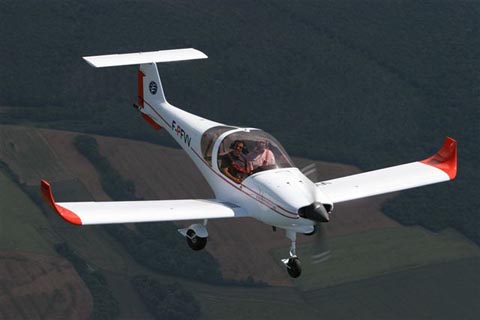
The design of the MCR R180 incorporates a carbon fuselage derived from the MCR 4S (four-seater with more than 130 sold), a Lycoming O-360 of 180 hp, and a canopy offering a visibility on 180°. Options include a roller of tow cable and a ballistic parachute.
The MCR R180 is certificated for kits under CNSK 2 category allowing kits.
Engine: Lycoming O-360, 180 hp
Propeller: Sensenich or 4-blade Hoffman
Max propeller diameter: 1.94m
Wing span; 8.72 m
Wing area; 8.31 sq.m
Length; 9.2 m
Cabin width; 1.20 m
Fuel capacity; 2 x 65 lt
Empty weight initial version; 450 kg
Equipped weight; 750 kg
MTOW aerotowing; 600 kg
Wing loading aerotowing; 72 kg/sq.m
Stall @ MAUW; 83 km/h
Stall 600 kg; 74 km/h
Manoeuvring speed (Va); 219 km/h
Never exceed (Vne); 270 km/h
Turbulent air max (Vno); 243 km/h
Load factors; +3.8/-1.5 g
Flap extension (Vfe); 160 km/h
Best towing speed; 90 – 150 km/h
ROC w/tow 350 kg: 7.27 m/s
ROC w/tow 550 kg: 5.73 m/s
ROC w/tow 750 kg: 4.67 m/s
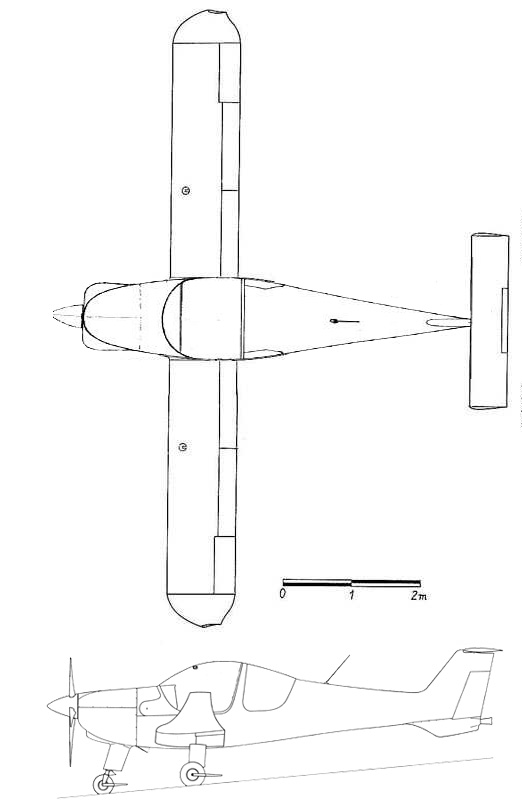
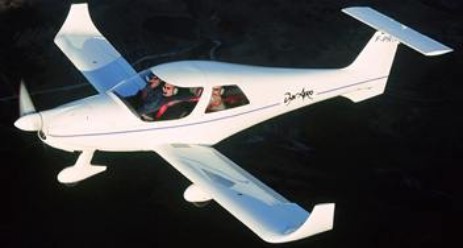
The initial studies of the four-seat MCR-4S started in early 1994, during development of the MCR VLA. The VLA appears first in 1996 and permited the development of the general technology. The airframe, and the high lift devices, such as the double slotted flaps were initially designed to equipped the MCR UL, meanwhile, the control system was directly from the MCR CLUB technology of 1998.
The MCR 4-S concept was to fly with four people onboard, cruising at more than 250 km/h, and burning only 20 lt/hr with a 100 hp engine.
The research gave wing-tips optimized in a wind-tunnel, and double slotted flaps, providing the MCR 4-S with STOL performances.
Designed around a roomy cockpit ; 1,20m width at the rear seats, to allow four people up to 1,95m tall to be easily seated in the airplane, the aircraft is equipped with a very strong oil-pneumatic undercarriage, allowing landings on any type of runways.
The 4-S maiden flight was in June 2000.
The MCR 4-S has a very light empty weight. The aircraft can carry up to 150% of its own empty weight.
Engine options include the 100 hp Rotax 912S, 100 hp turbo charged Rotax 914, and 120 hp Jabiru 3300.
The MCR-4S can be fitted with other options such as Ballistic Recovery System parachute, extended range fuel tanks, and toe operated hydraulic brakes.
The MCR-4S is available in kit form in respect with the CNSK regulation (specific kit airworthiness certificate) or in the “experimental” category depending on the registration country.
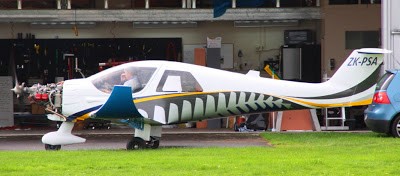
The MCR PickUp is a two seater version of the MCR 4S with a large trunk instead of the rear seats.
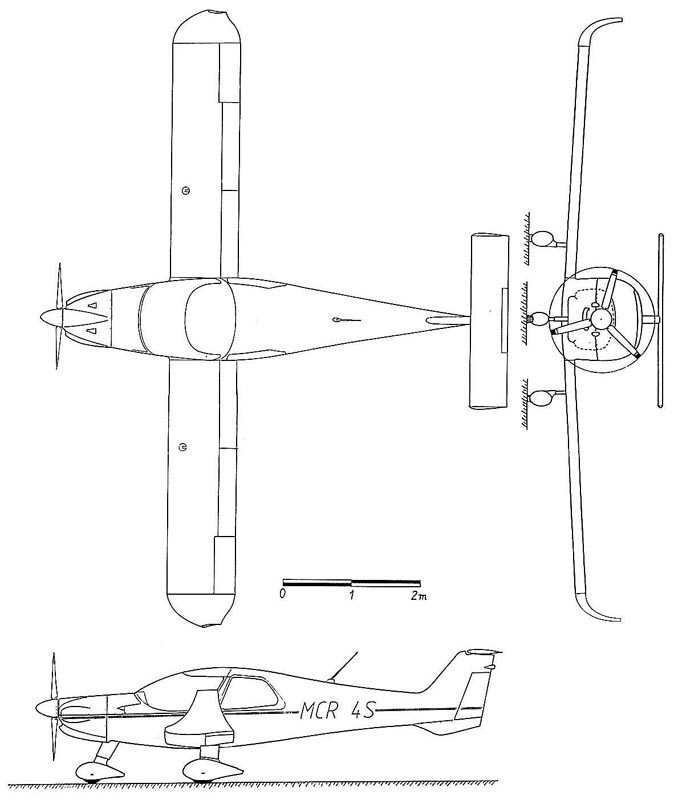
Wing span; 8.72 m
Wing aera; 8.30 sq.m
Aspect ratio; 9.20
Cabin Width; 1.20 m
Fuel capacity standard; 2 x 65 lt
Extended range fuel tanks; 2 x 100 lt
Empty weight Basic version; 300 kg
Equipped empty weight; 350 kg
Max. Takeoff weight; 750kg
Wing loading; 90 kg/sq.m
VSO (stall speed landing configuration); 83 km/h
Va (Maneuvering speed); 219 km/h
Vne ( Never exceeding speed); 270 km/h
Design maneuvering speed; 300 km/h
Vno (Normal Operation Speed); 243 km/h
G loading; +3.8 /-1.5 g
Vfe (Flaps extended speed); 160 km/h
Engine; Rotax 912, 95-100 hp
Cruising 75%, FL 0; 245 km/h
Cruising 75%, FL 80; 236 km/h
Fuel consumption 75%; 20.7 lt/hr
Range ,std Tanks 75%; 1079 km
Cruising 65% FL110; 255 km/h
Fuel consumption 65%; 17.9 lt/hr
Range ,std Tanks 65%; 1846 km
Takeoff roll; CS. Prop; 350 m
Climb rate FL 0, CS. Prop; 750 fpm
Engine; Rotax 914, 100-115 hp
Cruising 75%, FL 0; 245 km/h
Cruising 75%, FL 80; 272 km/h
Fuel consumption 75%; 20.7 lt/hr
Range ,std Tanks 75%; 1079 km
Cruising 65% FL110; 255 km/h
Fuel consumption 65%; 17.9 lt/hr
Range ,std Tanks 65%; 1846 km
Takeoff roll; CS. Prop; 350 m
Climb rate FL 0, CS. Prop; 900 fpm
DynAero MCR Pick-up
Stall: 34 kt / 39 mph / 63 kmh
Cruise: 135 kt / 155 mph / 250 kmh
VNE: 146 kt / 168 mph / 270 kmh
Empty Weight: 260 kg / 573 lbs
MTOW Weight: 600 kg / 1323 lbs
Climb Ratio: 1250 ft/min / 6 m/s
Take-off distance (50ft obstacle): 240 ft / 73 m
Landing distance (50ft obstacle): 350 ft / 107 m
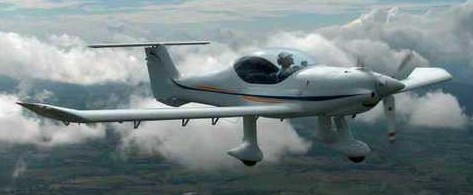
The MCR ULC specifications were established in 1996, defining it as an ultra-light airplane based on the FAI requirements, and first flown in April 1997. Based on the Sportster design, with the same fuselage and engine installation, the FAI ultra-light MCR-ULC was specifically designed for fast cruise and optimized for slow approach speeds.
The MCR ULC characteristics lie in its wing design, involving a greater span and area, as well as split double slotted fowler flaps and ailerons.
The MCR ULC can be equipped with a choice of different power plants, but may also be fitted with other options such as Ballistic Recovery System parachute, Oil Pneumatic under carriage ( for intensive use), extended ferrying fuel, toe operated Hydraulic brakes , and fuselage footsteps. Engine options include the 80 hp Rotax 912, 100 hp Rotax 912S, and 80 hp Jabiru 2200.
The MCR ULC is available in a kit form in respect with the CNSK regulation (specific kit airworthiness certificate) or in the “experimental” category, depending on the registration country.
Ready-to-fly delivered aircraft are in the Ultra-light category
The MCR ULC R is a direct evolution of the MCR ULC, available in kit form in respect with the CNSK regulation (specific kit airworthiness certificate) or in the “experimental” category, depending on the registration country.
Engine options include the 80 hp Rotax 912, 100 hp Rotax 912S, 100 hp turbo charged Rotax 914, and 80 hp Jabiru 2200.
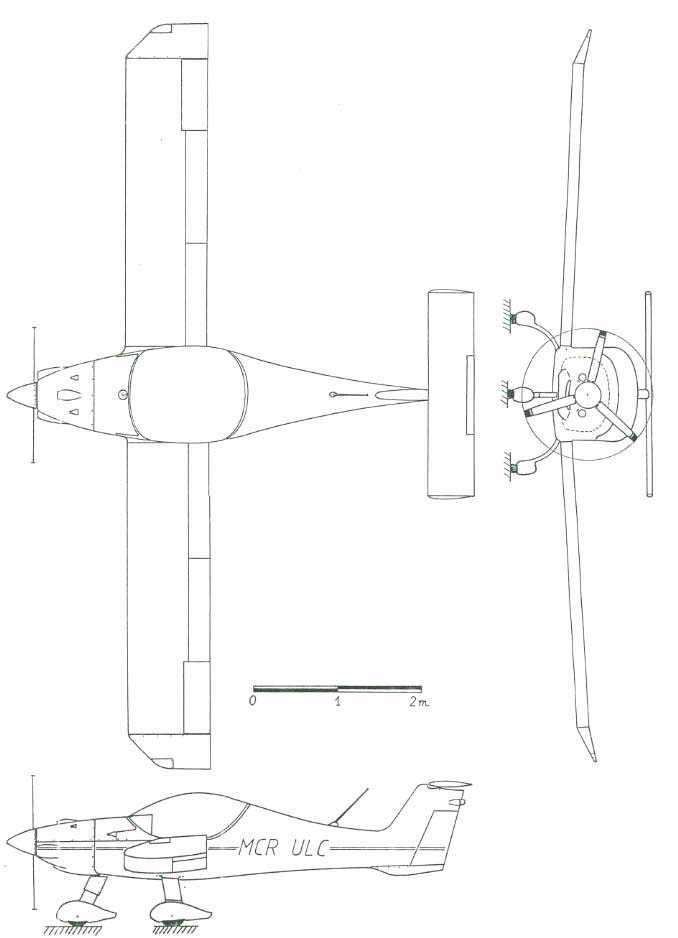
The MCR M is a tail wheel evolution of the MCR ULC R, first flown in December 1999.
The MCR M is available in kit form in respect with the CNSK regulation (specific kit airworthiness certificate) or in the “experimental” category, depending on the registration country.
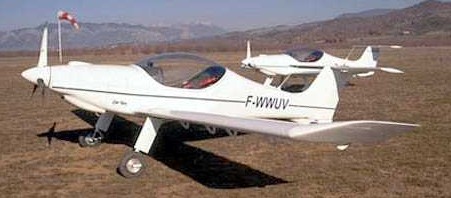
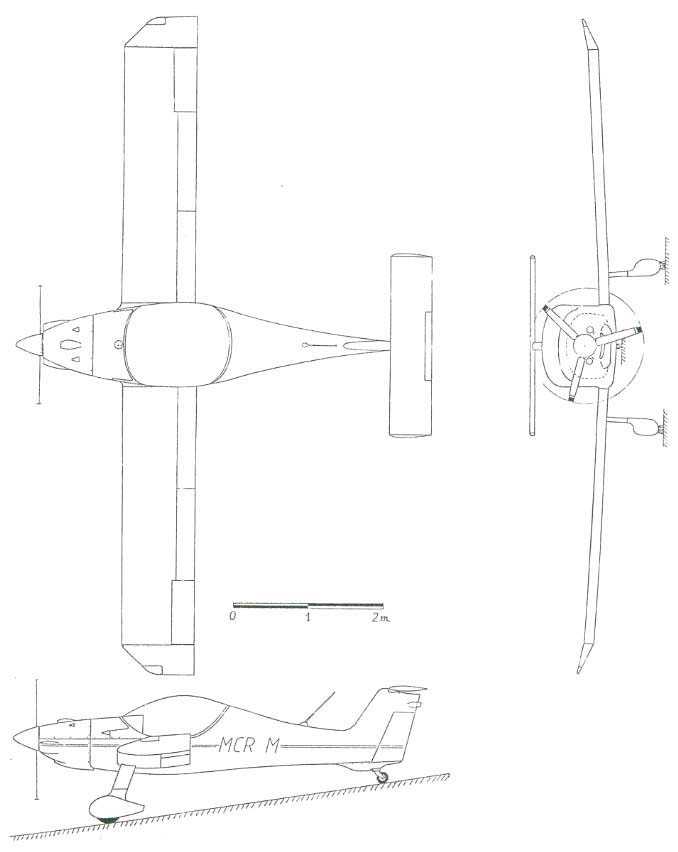
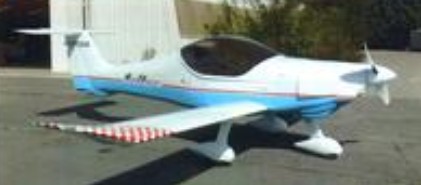
Turbo, rescue parachute, autopilot. Price 2009: 100000 EURO
MCR ULC
Wing span; 8.64 m
Wing aera; 8.13 sq.m
Aspect ratio; 9.18
Cabin Width; 1.12 m
Fuel capacity standard; 80 lt
Extended range fuel tanks; 2 x 40 lt
Empty weight Basic version; 230 kg
Equipped empty weight; 270 kg
Max. Takeoff weight; 472 kg
Wing loading; 58 kg/sq.m
VSO (stall speed landing configuration); 63 km/h
Va (Maneuvering speed); 172 km/h
Vne ( Never exceeding speed); 270 km/h
Design maneuvering speed; 300 km/h
Vno (Normal Operation Speed); 210 km/h
G loading; +4 /-2 g
Vfe (Flaps extended speed); 140 km/h
Engine; Rotax 912, 80 hp
Cruising 75%, FL 0; 250 km/h
Cruising 75%, FL 80; 270 km/h
Fuel consumption 75%; 17,1 lt/hr
Range ,std Tanks 75%; 1245 km
Cruising 65% FL110; 265 km/h
Fuel consumption 65%; 14,8 lt/hr
Range ,std Tanks 65%; 1432 km
Takeoff roll; CS. Prop; 140 m
Climb rate FL 0, CS; 1750 fpm
Engine; Rotax 912S, 100 hp
Cruising 75%, FL 0; 271 km/h
Cruising 75%, FL 80; 293 km/h
Fuel consumption 75%; 21,3 lt/hr
Range ,std Tanks 75%; 1097 km
Cruising 65% FL110; 288 km/h
Fuel consumption 65%; 18,5 lt/hr
Range ,std Tanks 65%; 1264 km
Takeoff roll; CS. Prop; 112 m
Climb rate FL 0, CS. Prop; 1950 fpm
MCR ULC R
Wing span; 8.64 m
Wing aera; 8.13 sq.m
Aspect ratio; 9.18
Cabin Width; 1.12 m
Fuel capacity standard; 80 l
Extended range fuel tanks; 2 x 40 lt
Empty weight Basic version; 230 kg
Equipped empty weight; 270 kg
Max. Takeoff weight; 490 kg
Wing loading; 60 kg/sq.m
VSO (stall speed landing configuration); 63 km/h
Va (Maneuvering speed); 172 km/h
Vne ( Never exceeding speed); 270 km/h
Design maneuvering speed; 300 km/h
Vno (Normal Operation Speed); 210 km/h
G loading; +4 /-2 g
Vfe (Flaps extended speed); 140 km/h
Engine; Rotax 912, 80 hp
Cruising 75%, FL 0; 250 km/h
Cruising 75%, FL 80; 270 km/h
Fuel consumption 75%; 17,1 lt/hr
Range ,std Tanks 75%; 1245 km
Cruising 65% FL110; 265 km/h
Fuel consumption 65%; 14,8 lt/hr
Range ,std Tanks 65%; 1432 km
Takeoff roll; CS. Prop; 140 m
Climb rate FL 0, CS. Prop; 1750 fpm
Engine; Rotax 912S, 100 hp
Cruising 75%, FL 0; 271 km/h
Cruising 75%, FL 80; 293 km/h
Fuel consumption 75%; 21,3 lt/hr
Range ,std Tanks 75%; 1097 km
Cruising 65% FL110; 288 km/h
Fuel consumption 65%; 18,5 lt/hr
Range ,std Tanks 65%; 1264 km
Takeoff roll; CS. Prop; 112 m
Climb rate FL 0, CS. Prop; 1950 fpm
MCR M
Wing span; 8.64 m
Wing aera; 8.13 sq.m
Aspect ratio; 9.18
Cabin Width; 1.12 m
Fuel capacity standard; 80 lt
Extended range fuel tanks; 2 x 40 lt
Empty weight Basic version; 230 kg
Equipped empty weight; 270 kg
Max. Takeoff weight; 544 kg
Wing loading; 67 kg/sq.m
VSO (stall speed landing configuration); 70 km/h
Va (Maneuvering speed); 191 km/h
Vne ( Never exceeding speed); 315 km/h
Design maneuvering speed; 350 km/h
Vno (Normal Operation Speed); 221 km/h
G loading; +4 /-2 g
Vfe (Flaps extended speed); 140 km/h
Engine; Rotax 912, 80 hp
Cruising 75%, FL 0; 250 km/h
Cruising 75%, FL 80; 270 km/h
Fuel consumption 75%; 17,1 lt/hr
Range ,std Tanks 75%; 1245 km
Cruising 65% FL110; 265 km/h
Fuel consumption 65%; 14,8 lt/hr
Range ,std Tanks 65%; 1432 km
Takeoff roll; CS. Prop; 140 m
Climb rate FL 0, CS. Prop; 1750 fpm
Engine; Rotax 912S, 100 hp
Cruising 75%, FL 0; 271 km/h
Cruising 75%, FL 80; 293 km/h
Fuel consumption 75%; 21,3 lt/hr
Range ,std Tanks 75%; 1097 km
Cruising 65% FL110; 288 km/h
Fuel consumption 65%; 18,5 lt/hr
Range ,std Tanks 65%; 1264 km
Takeoff roll; CS. Prop; 112 m
Climb rate FL 0, CS. Prop; 1950 fpm
DynAero MCR MiniCruiser
Stall: 49 kt / 56 mph / 91 kmh
Cruise: 172 kt / 198 mph / 319 kmh
VNE: 175 kt / 201 mph / 324 kmh
Empty Weight: 250 kg / 551 lbs
MTOW Weight: 490 kg / 1080 lbs
Climb Ratio: 1750 ft/min / 9 m/s
Glide Ratio: 10
Take-off distance (50ft obstacle): 200 ft / 61 m
Landing distance (50ft obstacle): 350 ft / 107 m
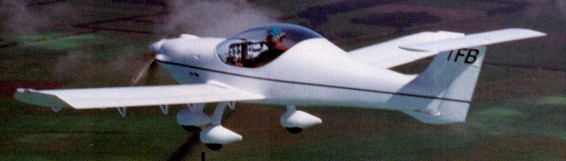
The MCR range of aircraft is a result of 20 years research and development by Michel Colomban and the modern manufacturing techniques developed by DynAero. Michel Colomban was for many years an engineer and aerodynamicist and was associated with Morane-Saulnier, Potez and Aerospatiale.
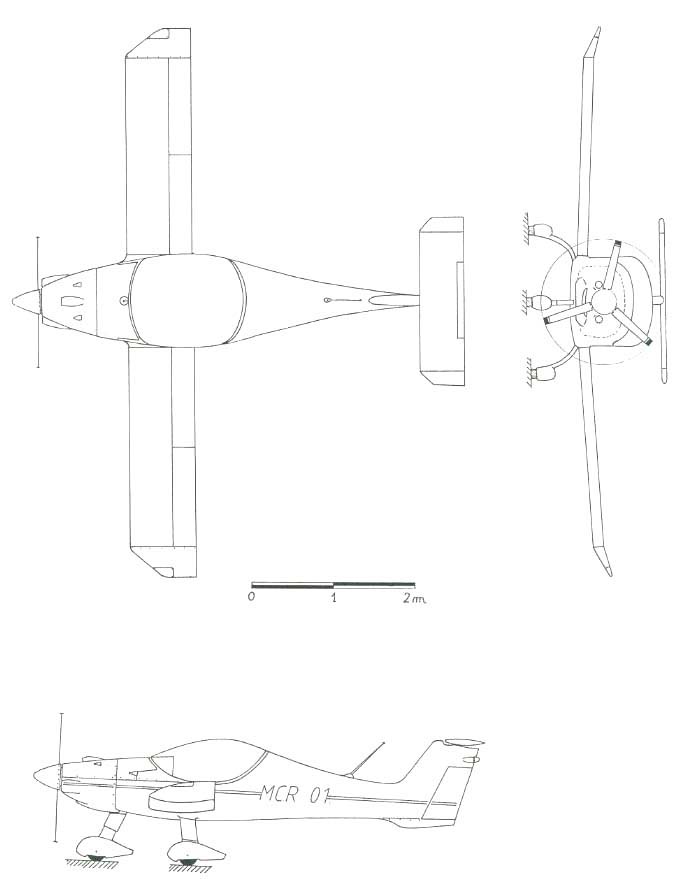
MCR-01 stands for Michael Colomban Revolution –(series) 01, a carbon-based evolution of the Colomban MC100. When first designed and produced marketing was aimed at the plans-built community. It was successful in Europe.
When Colomban conceived the kit version he decided it would be easier to produce if its structure was all composite with a metal skin on the wing. By slightly enlargening the wing, eliminating the flaps and incorporating flaperons, the designer saved weight, but the all-composite wing was stronger.
Many engines have been used including the 100 hp Rotax 912S and JPX.
Manufactured by American Ghiles Aircraft as the Lafayetti 4S, it uses the Rotax 912S or 914 engine.
The wing and fuselage skin is made from layers of kevlar and carbon-fibre sandwich, with the control surfaces constructed from foam ribs supported by carbon spars and fused to an aluminium skin. Fitted with a constant-speed prop, almost ¾ span double slotted Fowler flaps, and of composite construction. First flown in 1996, the MCR 01 ULM employed double slotted flaperons, but it was soon discarded for separate flap and aileron.
At Epinal, Dyn’Aero showed a new version of the Ban-Bi with a redesigned wing and tail, the longer wing being now 27.1 ft instead of the 21.7 in the 21.7 in the normal kit. French regulations required a lower stall speed and this wing reduces it from 54 mph to 39 mph.
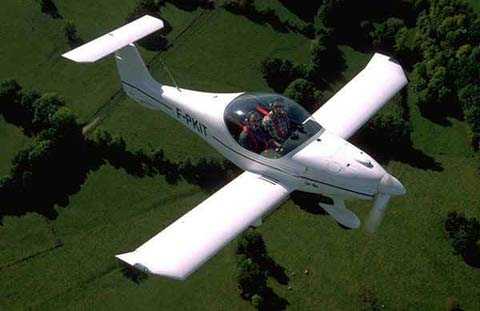
The initial design program started in early 1994, and the MCR Sportster flew for the first time in July 1996
The MCR Sportster is a side by side two-seater airplane with incredible performance and capability. Fast and agile, the VLA was specially designed to reach top speed while providing the most enjoyable experience to pilots.
The MCR Sportster is a very high performance aircraft, that can cruise as fast as 300 km/h with only a 100 hp engine, at very low cost. The Sportster has a direct control system and can be equipped with a choice of different power plants, but may also be fitted with other options including Ballistic Recovery System parachute, extended range wing tanks, and toe operated hydraulic brakes. Engine options include 80 hp Rotax 912, 100 hp Rotax 912S, 100 hp Rotax 914 turbo charged, and 80 hp Jabiru 2200.
The MCR Sportster is available in kit form in respect with the CNSK regulation (specific kit airworthiness certificate) or in the “experimental” category depending on the registration country.
The MCR CLUB is a direct evolution of the MCR Sportster. It is also a side by side two-seater airplane, it is designed around the same fuselage with an identical cockpit and engine installation.
The MCR Club appears for the first time in 1998. Its construction and design was developed in partnership with an Aviation club for its own use.
Equipped with a 80 HP engine and a fix pitch propeller, it is for intensive use in flight school operations or aviation clubs.
With a 100 HP engine and a constant speed propeller, it becomes an high performance airplane with fast cruising speed.

The MCR CLUB can be equipped with a choice of different power plants. Engine options include 80 hp Rotax 912, 100 hp Rotax 912S, 100 hp Rotax 914 turbo charged, and 80 hp Jabiru 2200. Other options including Ballistic Recovery System parachute, oil pneumatic under carriage (for intensive use), extended range fuel tanks in the fuselage (particularly for school or training operations), toe operated hydraulic brakes, and fuselage footsteps.
The MCR CLUB is available in kit form in respect with the CNSK regulation (specific kit airworthiness certificate) or in the “experimental” category, depending on the registration country.
In 1999, another WINGGRID demonstrator was tested by the French, and Christopher Robin equipped an MCR-01 with winggrid. A comparative study with a conventional MCR-01 and another equipped with Winglets studied by ONERA was performed.
Dyn’Aero MCR-01 Ban-Bi
Engine: Rotax / JPX
Wing span: 6.63 m
Wing area: 5.2 sq.m
MAUW: 450 kg
Empty weight: 230 kg
Fuel capacity: 88 lt
Max speed: 300 kph
Cruise speed: 267 kph
Minimum speed: 83 kph
Climb rate: 7 m/s
Seats: 2
Fuel consumption: 16.7 lt/hr
Kit price VLA fast build (1998): £16,500
Ghiles Lafayette / MCR-01
Engine; Rotax 912S, 100 hp
Wingspan; 22 ft 1 in
Wing area; 69.46 sq.ft
Aspect ratio; 7
Wing loading; 15.6 lb/sq.ft
Rate of climb; 1485 fpm
Length; 18 ft 5 in
Cabin width; 44 ft
Fuel capacity; 21 USG
Supplemental fuel tank; 24 USG
Empty weight; 508 lb
Equipped weight; 596 lb
MTOW; 1081 lb
Takeoff speed; 49 mph
Max maneuvering speed; 125 mph
Vne; 186 mph
Design speed; 207 mph
Max flap extension; 103 mph
DynAero MCR-01 ULC Ban-Bi
Engine: Rotax 912S, 80 hp.
Prop: Electric MT 3 blade constant speed.
Wing span: 29 ft.
Chord: 30 in constant.
Stall: 34 kt / 39 mph / 63 kmh
Cruise at 75% power, 141 kts
VNE: 160 kt / 184 mph / 296 kmh
ROC: 1500 fpm.
Glide ratio: 1:16.
Empty Weight: 250 kg / 551 lbs
MTOW Weight: 450 kg / 992 lbs
Take-off distance (50ft obstacle): 540 ft / 165 m
Range: 840 sm @ 162 mph.
Price 2009: 33804 EURO
MCR 01 UL
Empty weight: 230 kg
Wing span: 8.28 m
Wing area: 7.95 sq.m
Fuel capacity: 88 lt
Engine: Rotax 912, 80 hp
MAUW: 450 kg
Seats: 2
Max speed: 282 kph
Cruise speed: 271 kph
Minimum speed: 63 kph
Climb rate: 10 m/s
Fuel consumption: 17.7 lt/hr
Price (1998): 400,000 Fht
Kit price (1998): 160,000 Fht
Ban-Bi Club – U/C: Nose wheel.
Ban-Bi Montagne – U/C: tail wheel.
Ban-Bi ULM
VLA
Engine: Rotax 912, 80 hp.
MTOW stall: 52 mph.
Empty wt: 441 lbs.
MTOW: 1078 lbs.
Range: 930 sm @ 180 mph.
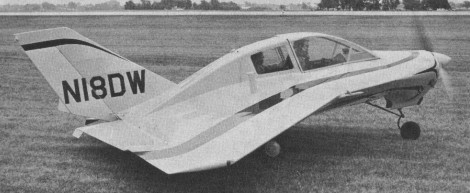
The JD-2 was developed from the JD-1 flying-wing type. The JD-1 had fabric covered wings.
John Dyke wanted a high-speed airplane with folding wings that would be compact enough to tow home for garage storage — thus the unique delta design. The basic fuselage skeleton, vertical stabalizer and wing spars are of welded steel tube. The wings have an all-metal frame and have been tried with either fiberglass or aluminum covering. Virtually the entire planform surface of the Delta provides lift at cruise speeds. A 180-hp Lycoming provides the power. First flew 1966

Engine: Lycoming O-360, 180 hp.
HP range: 160-200.
Gross Wt. 1950 lb
Empty Wt. 1080 lb
Fuel capacity 47 USG.
Wingspan: 22.2 ft.
Length: 19 ft.
Height: 5.5 ft.
Wing area: 178 sq.ft.
Top 210 mph.
Cruise mph 180.
Stall mph — no stall.
Climb rate 2000 fpm.
Takeoff run 700 ft.
Landing roll 1000 ft.
Range 633 sm.
Service ceiling: 14,500 ft.
Seats: 4.
Retractable nose wheel.
The JD-1, designed by John Dyke, was all metal and fabric covered.
The JD-2 was developed from the JD-1 flying-wing type.
Engine: Lycoming O-329
Wingspan: 22 ft 0 in
Length: 19 ft 0 in

