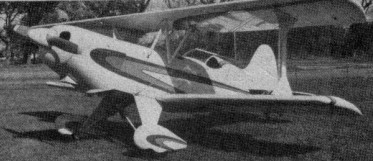
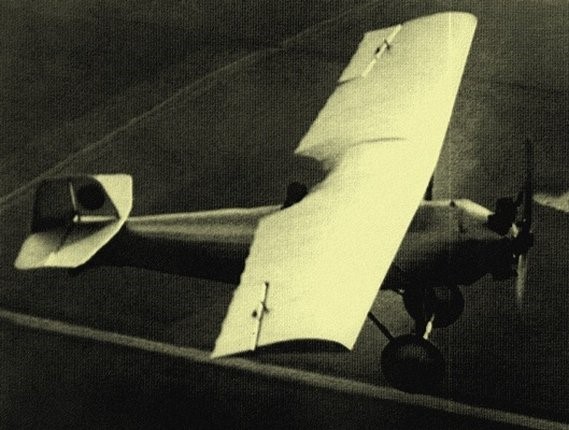
Single seat single engined biplane with con¬ventional three axis control. Conventional tail. Control inputs through stick for pitch/roll and pedals for yaw. Wings braced by struts. Undercarriage has three wheels in tail drag¬ger formation. Aluminium tube framework, with optional pod. Engine mounted between wings driving tractor prop¬eller. Named Pee Wee after an early lightweight aircraft developed by Joe Kirk, one of EAA’s directors in the ’50s and ’60s, the Pee Wee machine is a tractor biplane powered by a KFM opposed twin engine with electric start. The design allows a pod to be incorporated, so that if the builder wishes he or she can take advantage of the engine heat to warm the feet. The Princeton Sailwing shape is used in the wing construction and, as befits a biplane, a tail dragger undercarriage is fitted.
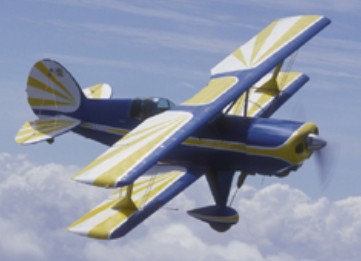
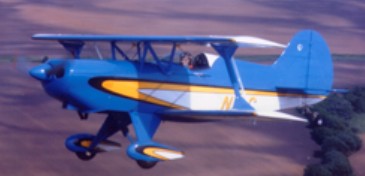
This further development of the Acro-Sport is intended for unlimited international-class aerobatic competition. Though basically similar in appearance to its counterpart, the Super Acro-Sport takes advantage of a more powerful engine turning a fixed-pitch prop, an improved roll rate and inverted flight capabilities. Its two wings have almost sym¬metrical airfoil sections. Also added was a trim tab on the starboard elevator and a servo tab on the port side.
Engine 200-hp Lycoming. Gross Wt. 1350 lb. Empty Wt. 884 lb. Fuel capacity 20 USG Wingspan 19 ft 7 in Length 17 ft 6 ft Top speed 156 mph Cruise 135 mph Stall 50 mph Climb rate 3700 fpm Ceiling 15,000 ft Takeoff run 125 ft Landing roll 800 ft Range 300 miles
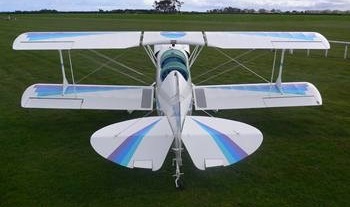
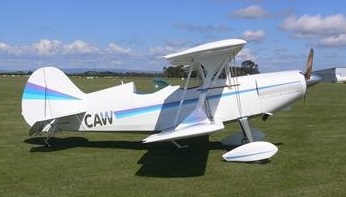
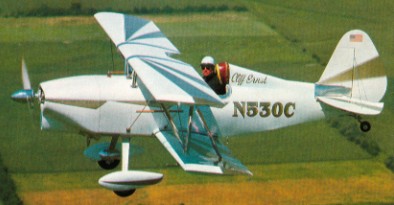
The Acro II, a two-place larger version of the single-place Acro Sport, can be constructed for little more than its single-place brothers. With its larger wheels, wide landing gear and light gross weight, the Acro II is a fun, docile sport airplane designed for engines ranging in power from 115 to 200 hp. When fitted with a 180-hp Lycoming, its empty weight of 875 pounds. First flown on 9 July 1978, like all Acro Sports, its cockpit is designed to be comfortable for pilots up to 6 ft 6 in and 240 pounds. The airframe is larger than the really “midget” biplanes to avoid “touchy” flight characteristics and allow for more baggage. Designed by Paul Poberezny, the Acro II features an M-6 airfoil with a 43-inch chord.
As with all Acro Sport projects, the fuselage is welded steel tube, wings are spruce and Stits Poly-fiber is used for covering. An excellent aerobatic trainer with responsive controls and docile straight and level flight characteristics. Cruise at 123 mph (180 hp), stall at 53 and max out at 152.
I fly N400GB, an Acro II ser# 573. Daniel Reed Aug 2022
This biplane was designed by EAA President Paul Poberezny who wanted to come up with a plane that could be used in high school industrial arts programs and Civil Air Patrol groups as an educational tool. The first flew in January 1972, less than 12 months after the design was started. The Acro-Sport can be fabricated with tools normally found in a high-school shop. It is built with steel tube covered by fabric and 100- to 200-hp engines.
In 1955, the EAA decided to develop a single-seat sport biplane as a service to its members. The prototype was built as a classroom project by students of St.Rita’s High School in Chicago. It flew for the first time on 10 June 1960. The E.A.A. Biplane was designed in response to many requests from members of the American Experimental Aircraft Association for a single seater sports biplane of simple yet rugged construction. The fuselage consists of a welded chrome-moly steel tube frame, to which are fitted plywood formers and wooden stringers, the whole being fabric covered apart from the aluminium coaming panels. Both upper and lower wings have solid spruce spars and built-up wooden ribs, and are internally and externally wire braced. The leading edge to the front spar is aluminium covered, the remainder being fabric covered. Interplane and centre section struts are made of streamline steel tube. A 9.5 Imp. gallon fuel tank is fitted behind the firewall. The empennage, like the fuselage, is built up of welded steel tube and is fabric covered and externally braced. The ailerons which are installed on the lower wing only, are operated by means of push rods, while the elevator and rudder are cable operated. The main undercarriage is built up of steel tube with bungee cords for shock absorption.
Engine: Continental C-85, 85 hp. Wing span: 20 ft 0 in (6.1 m). Wing Area: 108 sq. ft. Wing Loading: 9.4 lb./sq.ft. Length: 17 ft 0 in (5.18 m). Height: 6 ft 0 in (1.83 m). Max TO wt: 1150 lb (522 kg). Empty Wt. 640 lb. Fuel capacity 12 USG. Max level speed: 125 mph (201 kph). Stall mph 55. Climb rate 800fpm. Takeoff run 500 ft. Landing roll 550 ft. Range 200 sm.
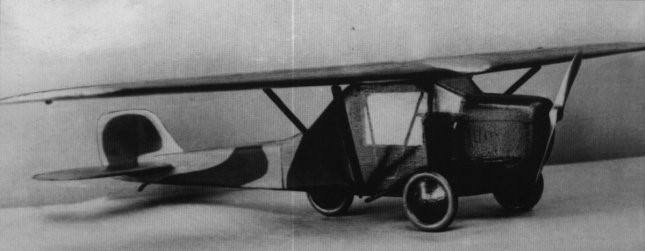
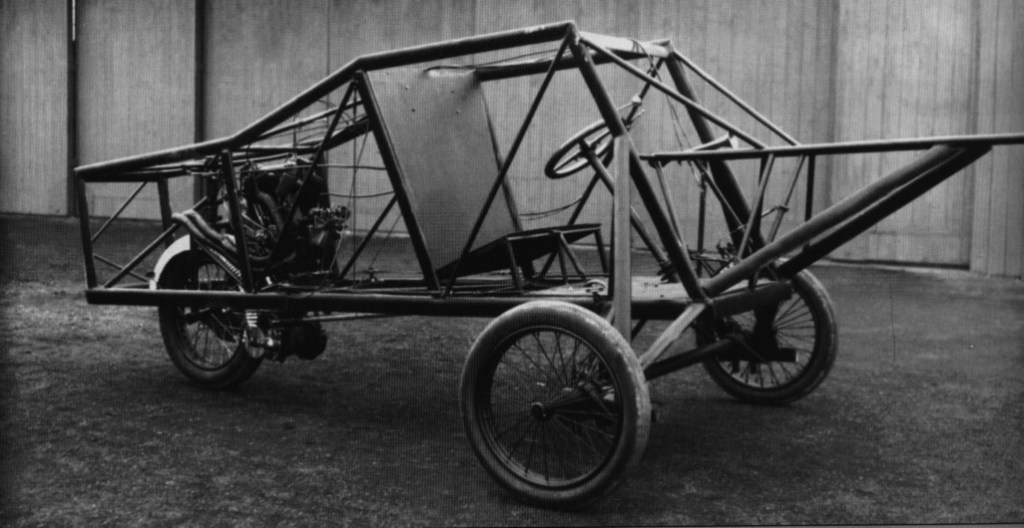
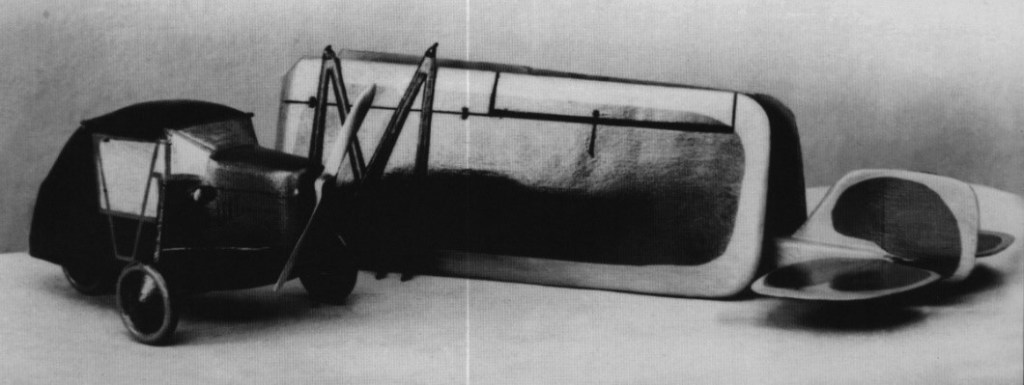
Stanisław Działowski developed the DKD-X “Aeromobil” car project during 1930-1931. The ”Aeromobil” took so much that he abandoned the implementation of previous projects. The plane was to serve as an air taxi or a liaison aircraft. In 1931, together with his brother Mieczysław Działowski, they started the construction of a three-wheeled self-propelled trolley constituting the traction part of the future aircraft, which, after detaching the back of the hull and wings, could move on the ground like a car. The construction of the trolley was completed in October 1932 and it was demonstrated on the streets of Krakow in October 1933.
In 1934, Stanisław Działowski developed an improved version of the DKD-X / 2 with a stronger engine with larger dimensions and wing surface, and a more aesthetic appearance. The funds for constructing the prototype were obtained from social contributions, emitting, among others, brick stamps, unfortunately the unit’s command expressed opposition, prohibiting this form of collecting funds. This forced the constructor to suspend work on advanced construction.
A two- or three-seater high-winged craft with mixed construction. The wings were double-spared, wooden, supported by V-braces, and folded for hanger and transport. The nose was covered with plywood, the remaining part with fabric.
The hull trolley was truss welded from steel pipes, covered with fabric. The front part of the fuselage contained a cabin with two seats next to each other, in the second version there was a third seat or place for a stretcher, it was covered with sheet metal. The back of the fuselage is removable from the trolley, was welded from steel pipes, covered with fabric.
A three-wheeled chassis provided with two steering wheels at the front and one wheel driven by gearboxes at the rear. The front wheels were fixed. During the flight, the wheel with the drive was to be concealed in the hull, and to move on the ground, extended to 1/3 of the height of the wheel. The rear wheel was driven by a separate small engine.
In the opinion of IBTL, it was stated that DKD-X will reach the calculated speed of 210 km / h, and only 140 km / h. This reduced the attractiveness of the offer. The severe illness that Stanisław Działowski later underwent pushed for an indefinite period of completion of construction.
Being later the technical director of the LOPP Pilots School in Stanisławów, he worked on improving the structure, which was not finished before the war. In May and June 1938, the DKD-X / 2 hull was exhibited at the 1st National Air Show in Lviv.
DKD-X / 1 Engine: Napier Javelin, 110-125 kW (150-170 hp) + Moto Schakosch, 12 kW (16 HP) Span: 9.00 m Length: 6.80 m Height: 1.70 m Wing area: 16.00 m2 Empty weight: 380) kg Payload: 220 kg Total weight: 600 kg Speed on the road: 40-45 km / h.
DKD-X / 2 Engine: 15 kW (20 HP) BMW wheel drive Span: 12.95 m Length: 7.45 m Height: 1.73 m Wing area: 211-25.00 m2 Empty weight: 450 kg Total weight: 750-800 kg Max speed: 210 km / h Cruise speed: 180 km / h Stall: 75 km / h Speed on the road: 50 km / h.
In 1929-1930 the Działowski brothers designed the three-seater sports planes DKD-VII and DKD-VIII (differing only with engine: Siemens 55hp or Genet 80hp respectively), however aerodynamic trials at Aerodynamics Institute in Warsaw exposed numerous shortcomings of the design and further work was cancelled.
In 1930, the construction of DKD-VIII began as a high wing aircraft of mixed construction.
Suspension of support for the project and lack of financial resources, as well as the constructor’s interest in the new project (DKD-X) resulted in discontinuation of works on DKD-VIII.
Engine: DKD-VII: Siemens-Halske Sh-4, 40 kW (55 hp) DKD-VIII: Armstrong Siddeley Genet, 59 kW (80 HP). Span: 11.0 m Length: 7.3 m Height: 2.35 m Wing area: 20.0 m2
Empty weight: 380 kg Max weight: 800 kg Max speed: 155 km / h Cruising speed: 135 km / h Stall: 60 km / h Rate of climb: 3 m / s Ceiling: 3600 m Range: 640 km
Following their experience with the Działowski D.K.D.3 at the first National Lightplane Contest in 1927, the Działowski brothers, Stanisław and Mieczysław, set about designing and funding their entrant to the following year’s competition. Several established Polish aircraft companies offered both easy terms for purchase of material and free assembly. The costs of materials were covered by LOPP, while the engine was purchased thanks to the collection of money. The materials were purchased at PZL, PWS and Plage and Laśkiewicz.
Both the Kraków branch of LOPP and the Kraków Aeroclub agreed to buy an example. LOPP decided to use a 34 kW (45 hp) Anzani 6 six-cylinder radial engine, the Działowskis’ original choice, but the Aeroclub selected a 41 kW (55 hp), five cylinder Siemens-Halske Sh 4 radial. The latter was initially designated D.K.D.5, soon revised to DKD.4bis.
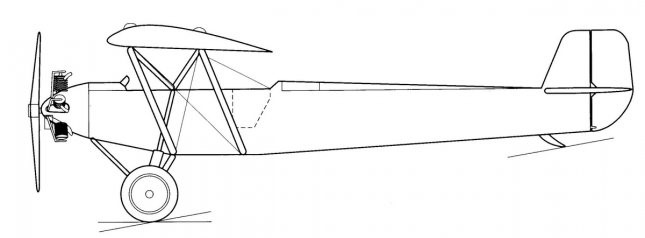
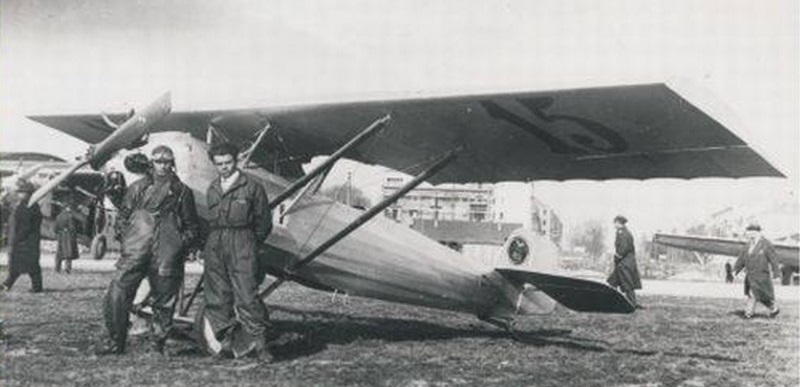
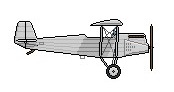
The D.K.D.4 was a two-seat parasol monoplane with a three part, wooden, two spar, fabric covered wing which was trapezoidal in plan. The central section was mounted on two outward-leaning pairs of steel cabane struts from the upper fuselage, one to each spar and each outer panel was braced to the lower fuselage longerons with a pair of steel struts to the spars. Its wingtip ailerons were short and broad. There was a large semi-circular cut-out in the central trailing edge to ease cockpit access and enhance the upward field of view.
Its fuselage was similar to that of the D.K.D.3, which had a welded steel tube girder structure with wooden frames, stringers and fabric covering, producing an oval cross-section apart from a flat underside. The radial engines of both versions were mounted with their cylinders exposed but otherwise under a duralumin cowling. The D.K.D.4’s empennage was conventional and tidier than that of its predecessor. Its trapezoidal horizontal tail was mounted on top of the fuselage and its similarly shaped fin mounted a rectangular, unbalanced rudder which reached down to the keel, working in a cut-out between the elevators. Their steel tube structure was fabric covered. Larger area, balanced rudders area were added to both examples in late 1929, together with larger ailerons.
The prototypes had simple, single axle, fixed landing gear with two V-struts with a bracing crossbar between their vertices, though the sole production example dispensed with the crossbar.
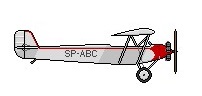
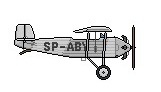
The two copies of the DKD-IV aircraft were built: one (factory number 1) with Siemens engine, designated DKD-IV bis, and initially named DKD-V, for LOPP, and the second (factory number 2), named DKD-IV for the Academic Aeroclub in Krakow. DKD-IV bis also differed from DKD-IV with cut ends of ailerons. Both copies were built in Park 2 of the Air Regiment in Krakow and flown in September 1928.
The D.K.D.4 and the 4bis both made their first flights in September 1928. This gave time for trials and development before the second National Lightplane Contest, which started on 29 October with twelve contestants. Both took part in the 2nd National Competition of Light Ships. J. Bargiel (the winner) and Iwaszkiewiczówna took part in the DKD-IV, and DKD-IV bis, piloted by Kaczmarczyk 9 came 5th) and M. Działowski. The D.K.D.3, flown by its designer, came third.
During the flight from Krakow to Warsaw for the Competition, both planes were damaged, but thanks to the help of the employees of the Polish Aeronautics Company, they were repaired in time. In the DKD-IV Competition he was 1st, and DKD-IV as 3rd.
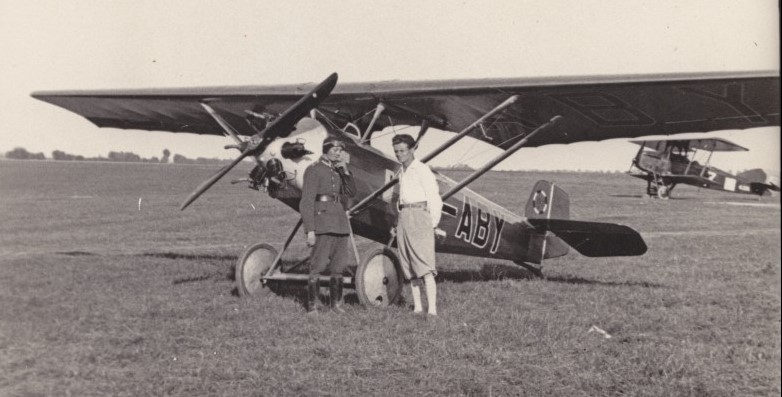
In the autumn of 1928 the commander of the 2nd Air Regiment wanted to order 25 DKD-IV for military aviation, but the Aeronautics Department did not accept the order. The first plane in the series for the army was already under construction. At the turn of 1928 and 1929, S. Działowski completed the construction of this copy (factory number 3), with the Anzani engine for the Academic Aeroclub of Krakow. In 1929 aircraft received new registration marks: DKD-IV bis factory No. 1- SP-ABA, later changed to SP-ABX, DKD-IV factory number 2- SP-ABL and factory number 3 SP-ABY.
In 1929, SP-ABA was exhibited at the Universal National Exhibition in Poznań. In May 1930, K. Piotrowski made a flight to Olomouc and Brno in DKD-IV. Airplanes were used for training and promotion flights (eg during ski competitions in Zakopane). In addition, they took part in the South-Western Polish Flight in 1929 (Działowski at SP-ABY won the 3rd prize) and in Podhalańskie Złot Awionetka in Nowy Targ on October 3, 1930. In the Third National Competition of Light Ships in 1930. DKD-IV bis took 11th place. DKD-IV No. 2 SP-ABL was renovated in 1934 and converted into a single-seater, and the fuselage was covered with cloth directly, resulting in its sides becoming flat. The aircraft, after renovation, was used by the Kraków Aeroclub from May 1934 to July 1935.
On 28th January 1930 pilot J.Soltykowski flew the DKD.4bis SP-ABL under the Debnin bridge at Krakov three times.
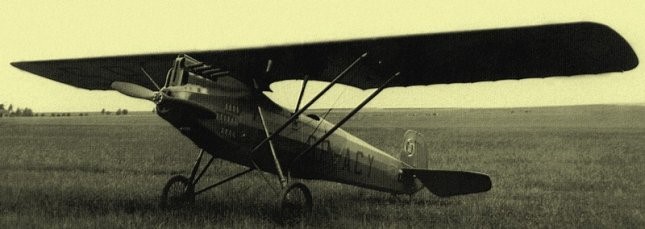
The later D.K.D.5 was a fully aerobatic and final development of the D.K.D.4 design. It was powered by a 63 kW (85 hp) Cirrus III four cylinder upright air-cooled inline engine mounted exposed. An aerodynamic clean-up included a divided undercarriage with cranked axles and a long oleo strut from the outer axle to the upper longeron on each side. Its wings were foldable and their span and area were 11% greater than the D.K.D.4. It first flew in July 1930, piloted by its designer. Despite a slight increase in weight over the D.K.D.4bis, the large increase of power and the clean-up raised its maximum speed to 175 km/h (109 mph), gave it a ceiling of 4,500 m (14,800 ft) and enabled it to reach 1,000 m (3,300 ft) in six minutes.
The D.K.D.5 SP-ACY did not reach the Warsaw Second International Tourism Challenge as it was badly damaged in an emergency landing after a fuel pipe broke during its flight to Warsaw at Końskie. S. Działowski (with competition number 03) suffered serious injuries. It was rebuilt and operated by the Kraków Aeroclub and competed in competitions and rallies.
DKD.4 Engine: Anzani 6, 34 kW (45 hp) Span: 9.0 m Length: 5.5 m Height: 2.28 m Wing area: 13.5 m2 Empty weight: 264-318 kg Payload: 230 kg Max weight: 548 kg Speed max: 135 km / h Cruising speed: 126 km / h Stall: 75 km / h Rate of climb: 1.5 m / s Ceiling: 2270 m
DKD.4bis Engine: Siemens-Halske Sh 4, 41 kW (55 hp) Propeller: 2-bladed Wing span: 9.0 m (29 ft 6 in) Length: 5.6 m (18 ft 4 in) Height: 2.2 m (7 ft 6 in) Wing area: 13.5 sq.m (145 sq ft) Empty weight: 345 kg (761 lb) Payload: 242-294 kg MAUW: 638 kg (1,407 lb) Speed max: 140 kph / 87 mph / 76 kn at sea level Cruising speed: 125 kph / 78 mph / 67 kn Stall: 80 km / h ROC: 1.4 m / s Time to 2,000 m (6,600 ft): 23 min Service ceiling: 3,000 m (9,800 ft) Seats: 2
DKD.5 Engine: Cirrus III, 63 kW (85 hp) Span: 10.0 m Length: 6.6 or 6.3 m Height: 2.7 or 2.1 m Wing area: 18.0 m2 Empty weight: 440 kg Gross weight: 650 kg Max speed: 175 km / h Cruising speed: 150 km / h Stall speed: 75 km / h Rate of climb: 2.5 m / s Ceiling: 3500 m
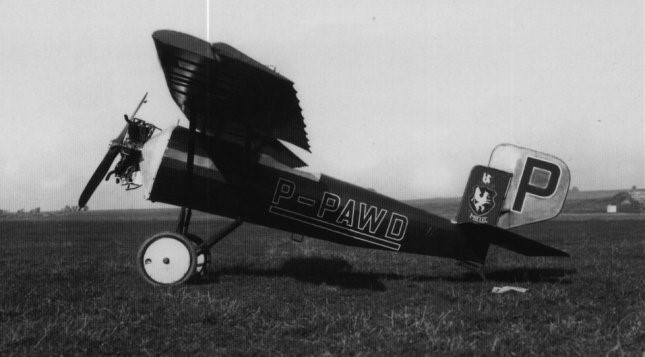
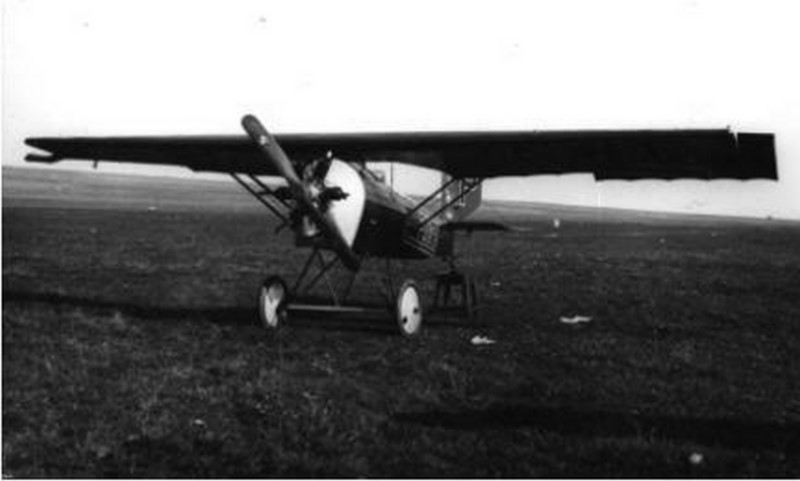
In the summer of 1927, Stanisław Działowski transformed the wrecked DKD-I plane into a single-seat DKD-III aircraft. With the help of his colleagues, Działowski made a new fuselage and chassis in the 2 Air Regiment workshops in Kraków, and renovated the batten, which came with the tail from DKD-I. From Aeronautics Department MSWojsk rented an Anzani engine.
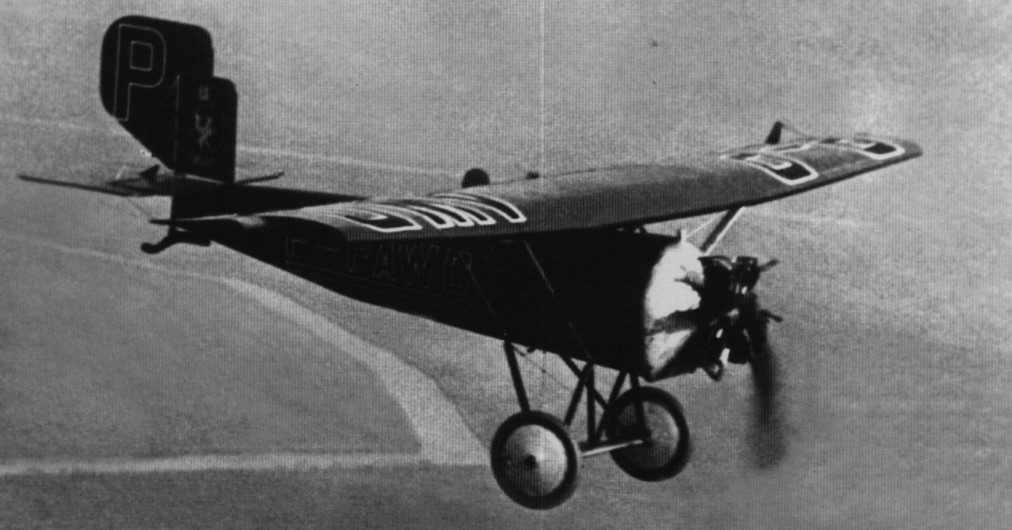
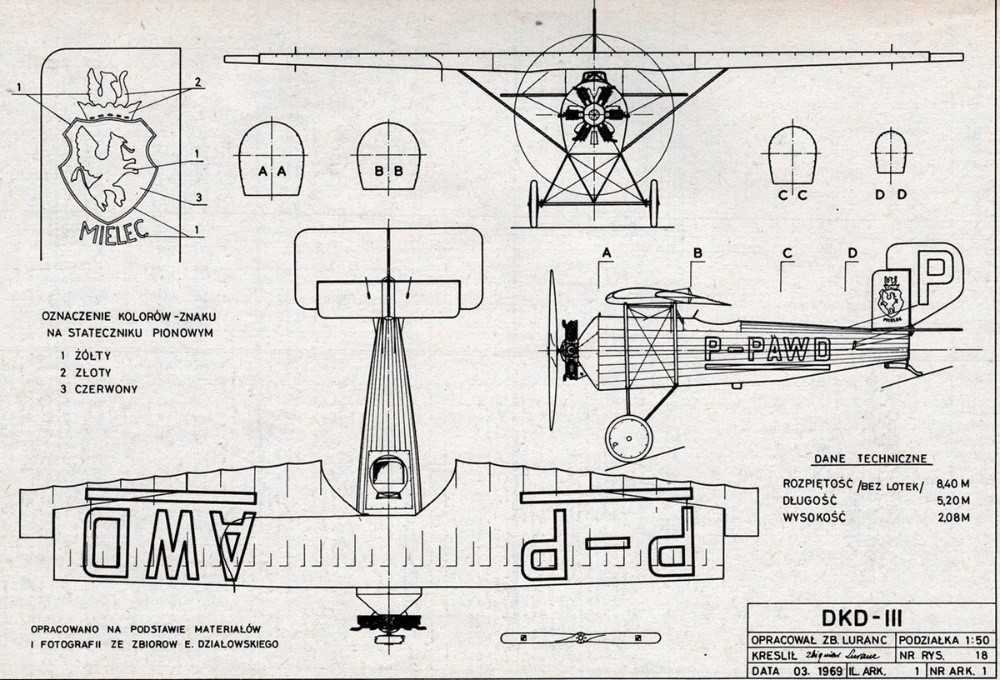
A single-seat high-wing aircraft with mixed construction. Trapezoidal wing, wooden, covered with fabric. The nose is covered with plywood. The wing was attached to the hull on a turret of steel pipes and supported by two pairs of steel pipe braced with steel wire. Equipped with ailerons. The truss-welded hull was from steel pipes, covered with fabric. The front of the hull was covered with sheet metal. There was an open cockpit and classic fixed undercarriage.
The plane was built for the First National Competition for Light Ships and was flown on 4.10.1927 at the Kraków-Rakowice airport. It received the registration P-PAWD.
The next day, after the flight, Działowski made a flight from Krakow via Dęblin to Warsaw for the Awionettes Competition. In the competition, the aircraft received the best score for attempts to take off, landing, altitude and disassembly, but due to the engine defect during the flight it finally took 4th place.
In 1928, the aircraft was improved, but at the cost of increasing its weight. In the 2nd Awionette Competition in 1928, S. Działowski took fifth place at the DKD-III.
In 1929, the aircraft received SP-ACR registration marks.
In 1930, it took part in the Third National Competition of Light Ships, but was damaged during a forced landing in a circular flight.
The DKD-III was used for several years and made a total of about 1800 flights with a total time of 431 hours.
Engine: Anzani, 33 kW (45 hp) Span: 9.0 or 8.4 m Length: 5.2 m Height: 2.1 m Wing area: 11.5 m2 Empty weight: 293 kg (after mod. 314 kg) Total weight: 420 kg (after mod. 463 kg) Maximum speed: 125 km / h Cruising speed: 110 km / h Stall: 72 km / h Rate of climb: 2 m / s Ceiling: 3800 m Range: 500 km
Circa 1998, a new version of the Chickinox, the Top 2000 has the tailplane supported by a unique design of boom. Rotax engines of 50 to 80 hp are suitable, or Subaru.
Engine: Subaru 1600, 83 hp Wing span: 9.5 m Wing area: 14.9 sq.m MAUW: 450 kg Empty weight: 220 kg Fuel capacity: 38+22 lt Seats: 2 Max speed: 150 kph Cruise speed: 110 kph Minimum speed: 65 kph Climb rate: 4 m/s Fuel consumption: 15 lt/hr