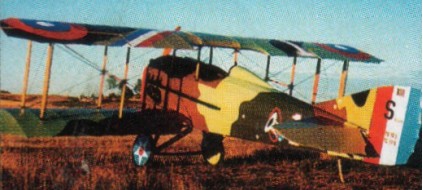
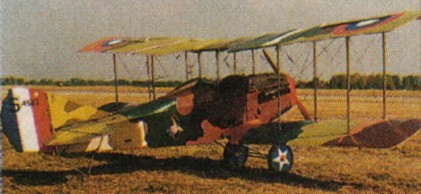
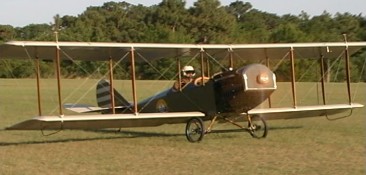
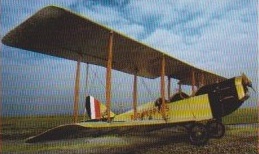
Designed by Dennis Wiley, the Jenny is a 2/3 scale WW I replica biplane. The fuselage construction is welded 4130 steel tube. Wing construction uses aluminium leading and trailing edge spars, and stamped aluminium ribs. The craft is covered in standard aircraft fabric. Building times are reported to be 400 to 600 hours.
A construction video is available which will cut building time considerably. The craft can be powered by the Rotax 503/582, or the AMW. The designer has completed the installation of a Chevy Geo engine on his own craft and had about 40 hours flying time on it.
The Geo is reported to put out about 65 HP and come in at a weight of 135 lbs. complete. The Jenny is a tail dragger, in a tractor configuration. Controls are stick and rudder.
The craft can be built from a set of plans and raw materials or was available in kit form.
The Jenny takes off in about 300 feet climbs at about 600 feet per minute and cruises in the 65/70 m.p.h. range. The designer indicates that the craft has been tested to +6 and -4 G’s ultimate. Apparently 400 plan sets have been sold 40 aircraft are flying, with another 27 under construction.
By 2009, the Jenny was marketed by Loehle Aircraft Corp who carried the design for a while.
John-Hal Barfield bjohnhal@aol.com I need plans 2/3 Jenny I would like to put back in the air 12 May 2018
Variation: Timber Tiger Aircraft Jenny
Engine: Rotax 503 CDI, 46 hp. HP range: 46-65. Empty Weight: 419 lbs. Gross Weight: 800 lbs. Wing Span: 27 ft. 6 in. Wing Area: 175 sq. ft. Wing Loading: 4.6 lbs. sq. ft. Length: 18.33 ft. Height: 7 ft. Speed max: 70 mph. Cruise Speed: 65 m.p.h. Stall Speed: 35 m.p.h. VNE: 80 m.p.h. Range: 180 sm. ROC: 450 fpm. Take-off dist: 250 ft. Landing dist: 300 ft. Fuel cap: 10 USG. Seats: 2. Landing gear: tail wheel.
Engine: Rotax 503, 52 hp Wing span: 8.3 m Wing area: 16.3 sq.m Empty weight: 190 kg MAUW: 362 kg Fuel capacity: 38.8 lt Max speed: 130 kph Cruise speed: 100 kph Minimum speed: 60 kph Climb rate: 4 m/s Seats: 2 Fuel consumption: 11 lt/hr Plan price (1998): US$125 Kit price (1998): US$9100
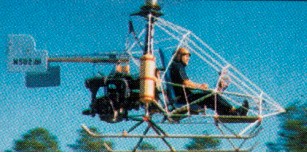
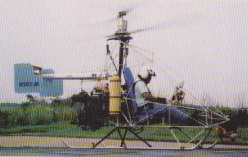
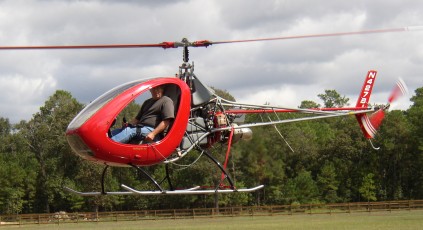
Eagle’s Perch single-seat kit-built helicopter was first flown 1994 as the Perch Nolan 51-HJ.
A single seat open frame coaxial pendulum helicopter. Steel tube frame, controlled with stick, throttle and rudder, no collective. Hydraulic controls, contra-rotating and two engines preclude autorotation. Engine: 2 x 65 hp Hirth 2706. Rotor blades: 4 blades, 14’ diameter, 4.75” chord, aluminium, asymmetric aerofoil. No tail rotor.
Gallery
Nolan 51-HJ Engine: 2 x Hirth 2706, 130 hp Rotor span: 4.11 m Blade area: 0.12 sq.m MAUW: 500 kg Empty weight: 258 kg Fuel capacity: 37.8 lt Max speed: 160 kph Cruise speed: 120 kph Minimum speed: 0 kph Climb rate: 15 m/s Seats: 1 Fuel consumption: 17 lt/hr Kit price (1998): $18,500
Engine: turbine, 110hp Seats: 1. Endurance: 1.5 hrs. Max air speed: 100 kts.
Engine: Modified Solar T62 turbine, 160 derated to 90 hp Gross Weight: 850 lbs Empty Weight: 500 lbs Fuel Capacity: 21 (16 + 5 reserve) US gal Range with reserve: 160 miles Rate of Climb: 900 fpm Hover IGE: 9,500 ft Service ceiling: 11,000 ft Normal cruise with doors: 95 mph Max airspeed at sea level: 110 mph Seats: 1 Max pilot weight: 220 lb
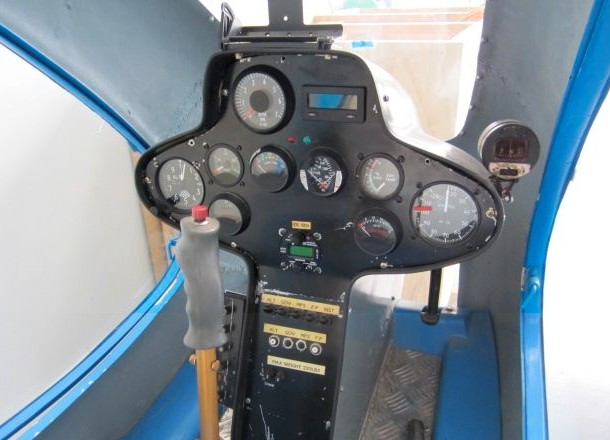
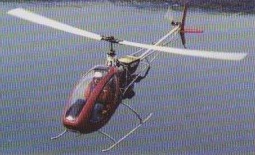
First flown in April 1985. After crashing his demonstrator Helicycle in 1999, Schramm did find investment. The result is a single seat partially enclosed helicopter which flies conventionally or as a compound with an additional pusher engine. An ultralight version uses Rotax 503. Elastomeric rotor head, long-life blades. Optional turbo version has full power to 10,000 ft. Engine options are: 74 hp Rotax 618 derated to 60 hp, Rotax 503. Compound engine: 45 hp Zenoah. Rotor blades: 21’ x 7” all aluminium by Eagle R&D. The HELICYCLE in it’s normal configuration is designed to cruise along side the industry standard R-22. Landings and take offs at above 9000 ft. are possible because of a 7.5/1 power to weight ratio. The same as the Hughes 500. The Helicycle features include a fully harmonized rotor, a modulated collective system, very low 2-per-rev vibration level due to elastomeric thrust bearings, generous flapping angle for low “G” and slope landing conditions, control friction devices, and electronic throttle control. The cyclic control in the HELICYCLE accurately models the feel of the R-22. With a high degree of control power, it provides a transition for the R-22 qualified student pilot. To aid in controlling costs, the Helicycle has 12 grease zerks and 2 sliders that do need a minute or two of attention now then, the rest of the bearings are sealed. The Helicycle certified level lifetimes for it’s drive train and rotor system components are 1500-2000 hrs.
Engines: 2 x McCulloch Top speed: 105 mph Cruise: 90 mph Range: 160 sm Rate of climb: 900 fpm Service ceiling: 9000 ft Fuel capacity: 12 USG Empty weight: 395 lb Gross weight; 672 lb Length: 21.7 ft Height: 7 ft Disk span; 20 ft Disk area: 314 sq.ft Seats: 1
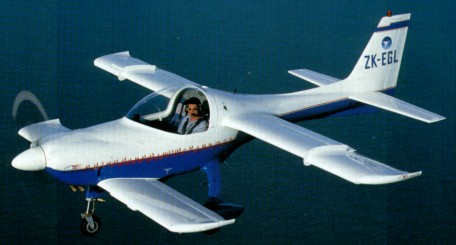
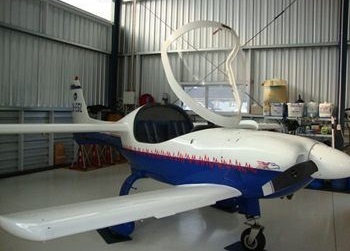
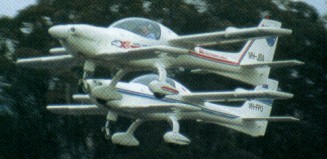
The original design came from an American, John Roncz, who had worked with Burt Rutan on numerous projects. The first flight of the Eagle 150A was in March 1988 using an Aeropower engine. The Eagle 150A was certified on 13 November 1996 and a total of fifteen were built with sales in Perth, Sydney and Asia. The 150B Model was certified in Australia on 11 November 1997, FAA certification followed on 11 February 1999, and its New Zealand Type Acceptance Certificate was issued on 5 May 1999. Apart from the limited use of fasteners, brackets and control system components, the 150B structure is made entirely of aerospace grade composites, such as kevlar, carbon fibre, nomex and fibreglass. Most of the structure is of a sandwich type construction with carbon fibre laminates separated by a nomex core. Kevlar is used around the cockpit area to improve the crashworthiness of the aircraft. The undercarriage “bow” is made of fibreglass as it is more flexible than carbon fibre. The basic fuselage consists of two sub-assemblies — the forward fuselage is the canard, cockpit area and the mainplane and the rear fuselage is the horizontal and vertical stabiliser. These are joined just be¬hind the fuel tank which is located behind the seat-back bulkhead — and are fastened by a ring of structural screws accessible from the outside. This allows the aircraft to be broken down in under half an hour to be placed on a trailer. Fuel from the tank feeds directly to the engine through an engine-driven mechanical pump. A two-stage pump is provided to supply both low pressure and emergency fuel flow. The canard and the mainplane are structurally integral with the forward fuselage and are bonded into place during assembly of the forward fuselage. Similarly, the vertical stabiliser is part of the rear fuselage and can not be subsequently removed.
150B
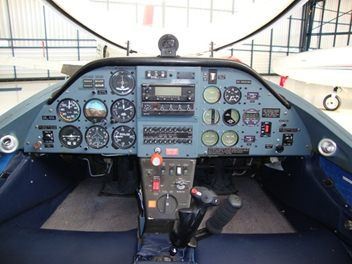
The flight controls are operated from a centrally located “jet fighter” style control column, which has trigger to talk, a button to change radio channels and a hat switch for the electric elevator trim. The 150B is comfortable to fly with a central padded arm rest to lean on when in control and good air vents are found on the edge of the instrument panel. The aircraft’s two sets of rudder pedals are individually adjustable through a switch on the cabin wall console that operates an electric actuator. Pitch control is achieved through a conventional elevator fitted to the horizontal stabiliser — no elevator is fitted to the canard. All surface controls are operated through pushrods and not pulleys and cables. A pitch trim indicator for the electrical elevator trim tab is found on the instrument panel. Like the pitch, control of yaw is through a conventional rudder fitted to the vertical stabiliser. The rudder control is combined with the brake system and is unconventional in that the brake action is not associated with a pedal rotation, that is, toe brakes. The aircraft is fitted with a fixed tricycle undercarriage with a free-castoring nose wheel. The first movement on the pedal (about 5 cm of travel) operates the rudder in the conventional way and further pressure begins the application of the main wheel brakes; when force is applied to both pedals simultaneously both wheel brakes act together. This is new to a lot of pilots and it is very important to feel the pedal forces. Ailerons are fitted to the outer section of the mainplanes and, as expected, these provide roll control. An aileron trim, found on the central console, uses a small torque tube to offset the centre position of the control column in the roll. The 150B has trailing-edge slotted flaps fitted to both the canard and the mainplane which are lowered or raised by a switch (duplicated on both sides of the instrument panel). All four flap segments are interconnected and are operated by a single electrical actuator driving a pushrod mechanism. The electric flaps are continuously variable and are rather different with coloured marks on the inboard face of the canard tips indicating their position. This will be changed to a light indicator on the panel (which will be retrofitted). The one-piece, front hinged canopy offers excellent visibility and requires most pilots to take a hat for protection from the sun. The canopy can be secured in a partly open position for taxiing during hot days and when the canopy is closed it is locked by a single lever behind the pilot’s head.
Approved maneuvers are normal flying, stalls and lazy eights, chandelles and step turns in which the angle of bank is not more than 60 degrees. With the flaps retracted, limits are ±3.8g and -l.9g, but there are plans for this be increased to +8.8g and -4.3g.The Eagle 150 had the MTOW increased from 640 kg to 650 kg by the Australian CASA. Manufacturing of the Eagle 150 moved to Malaysia.
Eagle 150B Engine: Teledyne Continental IO-240B, 125 hp. TBO: 2000 hrs Fuel type: 100/100LL Prop: McCauley fixed. Seats: 2. Height: 7 ft 7 in (2.32m). Main wingspan: 23 ft 6 in (7.16m). Wing area: 95 sq. ft Wing loading: 14.5 lb/sq.ft. Canard wingspan: 16 ft (4.88m). Pwr loading: 11.2 lb/hp. Overall length: 21 ft. 2 in. Height: 7 ft. 7 in. Wheel base: 4 ft. 7 in. Wheel track: 6 ft. 4 in. Seating capacity: 2 Cabin width (in.): 42 Cabin height (in.): 32 Baggage capacity (lbs.):80 Empty wt: 941 lbs (427 kg). MTOW: 1430 lbs (650kg). Useful load: 489 lbs (223kg). Payload with full fuel: 333 lbs (151 kg). Max ramp weight: 1430 lb Max landing weight: 1430 lb Ave fuel consump: 23 lt/hr. Fuel cap Total: 100lt (156 lbs, 71 kg), Useable fuel: 97lt / 153 lb / 69.5 kg / 26 US gal Endurance With res: 2.8 hr. Max range (w/ reserve) 75% power: 520 nm Baggage cap: 100 lbs (45 kg). Take-off dist (ground roll): 834 ft. Take-off dist (50-ft): 1145ft. ROC: 1051 fpm@ 77 kts. Max X-wind: 15 kt. Max level speed: 130 kts. Cruise speed @ 75% power: 120 kts @ 2000 ft. Ldg dist (ground roll): 513 ft. Ldg dist (50ft): 1198ft. Service ceiling: 15,000 ft Vx (best angle of climb): 74 KIAS. Vy (best rate of climb): 77 KIAS. Va (manceuvring): 106 KIAS. Vfe (max flaps): 89 KIAS. Flaps (0-20 degrees): 104 KIAS. Vno (max structural cruise): 129 KIAS. Vsi (stall clean): 55 kts. Vso (stall): 45 kts (full flaps). Vne: 165 knots Landing gear type: Tri/Fixed Price: $119,000
Composite Industries Limited (CIL) was formed to develop the aircraft initially designated the Eagle XDS (Eagle X Dual Seater). A name change followed the thought that XDS emphasised a training role and XTS Eagle two seater was adopted instead. After a prototype the design was frozen for two pre production prototypes. The Eagle prototype uses a 100hp Continental 0 200 engine to give a 800 fpm rate of climb, 115 knot cruise, weighs 959 kgs at Max T/O weight with a minimum airspeed of 44 knots. There are two major changes incorpo¬rated in the pre production prototypes. The fuselage is three inches deeper in the cockpit area as a result of a quest to provide a safety “crush zone” and the undercarriage was being changed from tapered struts to legs attached to rubber blocks in compression. The aircraft failed to meet the JAR-VLA requirements, and received a special category certificate of airworthiness from Australia’s CAA. The stall speed exceeded the permitted 45 kts by 2 kts, at MAUW and forward C of G.
Deliveries of Eagle Aircraft’s new ag-¬plane, manufactured by Bellanca, were planned to begin in October 1979. Designed from advanced glider technology, which en¬hances fuel efficiency, the Eagle was cer-tificated with 220 and 240 hp Continen¬tals and 275 and 350 hp Jacobs (all radi¬als); certification was pending with the 300¬hp Lycoming opposed powerplant.
Wood wings and steel tube fuselage, all Dacron-covered; spoilers on top surface of lower wings for more precise control at spray speed (65mph).
An agreement with Bellanca Aircraft Corporation of June 1979 was for Bellanca to manufacture Eagle on its behalf. Eagle production lasted until the early 1980s.
Eagle 300 First built: 1980. Engine: 1 x Lycoming IO-540, 300 hp. TBO: 1500 hrs. Prop: Hartzell 3 blade, constant speed 86 in. Seats: 1. Length: 26 ft. Height: 10.9 ft. Wingspan: 55 ft. Wing area: 386 sq.ft. Wing aspect ratio: 15.1. Max ramp wt: 5400 lbs. Max take off wt: 5400 lbs. Standard empty wt: 2650 lbs. Max useful load: 2750 lbs. Max landing wt: 4000 lbs. Wing loading: 13.5 lbs/sq.ft. Power loading: 18 lbs/hp. Max useable fuel: 426 lbs. Hopper capacity: 250 USG. Climb rate: 750 fpm. Climb @ 8000 ft: 450 fpm. Service ceiling; 20,000 ft. Max speed: 100 kts. Working speed: 100 kts. Fuel flow @ working speed: 103 pph. Endurance @ working speed: 3.9 hr. Stalling speed clean: 48 kts. Turbulent air penetration speed: 103 kts. Fixed tail-wheel undercarriage. Fitted with spoilers.