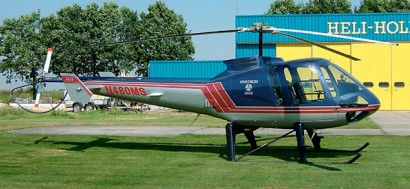
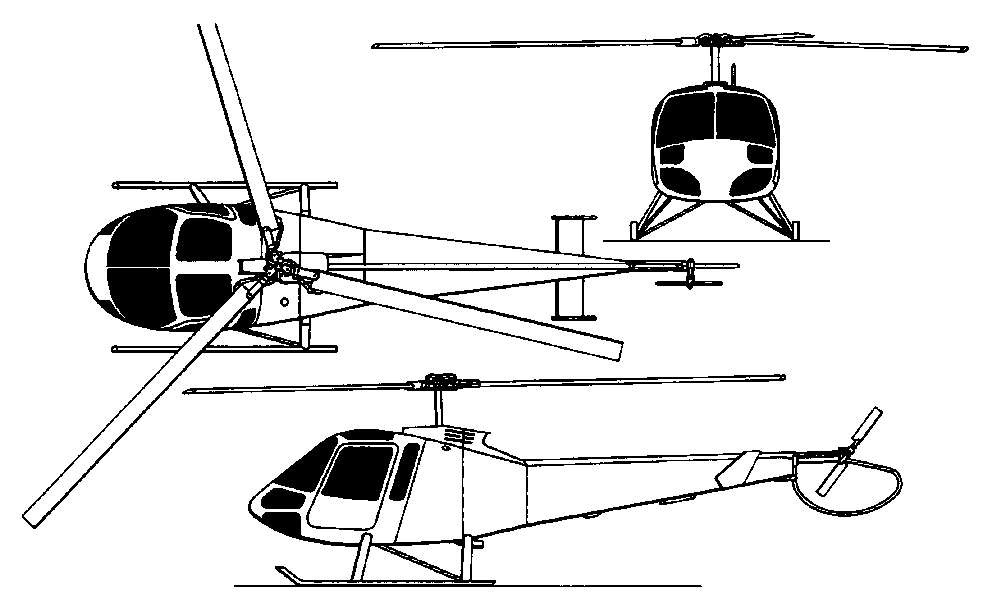
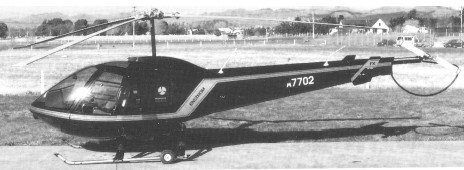
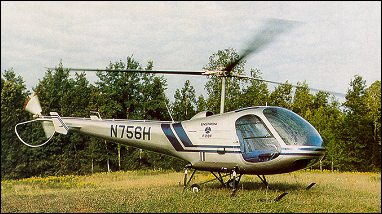
A number of models were developed and produced based on the body style of the 280. After preliminary market and design studies, Enstrom initiated the development of a larger, turbine-powered helicopter in 1988. Primarily developed from the four-seat Model 280L Hawk, the Eagle prototype, based on a converted 280FX airframe, flew for the first time in December 1988, powered by Allison 250-C20W turbine, followed by a definitive aircraft (N8631E) with a wider cabin on 7 October 1989. The 480 initial version has a five-seat (two plus three) configuration with staggered seating for forward visibility from all seats. Easily reconfigured to three seats for training or executive transport; or pilot’s seat only for transporting light cargo. Instrument panel centrally located above avionics console. Announced in February 1990, the Eagle is powered by an Allison 250 turboshaft. The second 480/TH-28 (production prototype) flew in December 1991. Initial FAA certification for the 480 was received on 7 June 1993; in December 1994, the approval was extended to FAR 27 standards.
A three-seat version, designated TH-28, was proposed by Enstrom for the US Army’s New Training Helicopter (NTH) programme. Specially configured as a training light patrol helicopter: unique features include three crashworthy seats, crashworthy fuel system, and a large instrument panel which will accommodate dual instrumentation for either VFR or IFR training. Seating configuration allows training of two students simultaneously. The TH-28 was flown first in 1990. A production representative helicopter made its maiden flight on 21 December 1991. The TH-28 was granted FAA certification to C.A.R. Part 6 standards in September 1992. Turbine-powered certification of the TH28 came in September 1992 and the 480, to FAR Pt27 standards, in December 1994. Development of the more capable 480B variant powered by the Rolls Royce/ Allison 250-C20W turbine powerplant had begun in the spring of 1999, and FAA certification of the new model was obtained on 9 February 2001. In August 2003, the UK CAA also certified the Enstrom 480B turbine helicopter. The 480B basically equipped (2003) cost US$639,500, and features a high-inertia, three-blade, fully articulated main rotor system with upgraded main rotor gearbox, unboosted flight controls and high skid gear as standard equipment. The rotor speed is 372 rpm nominal; 385 rpm maximum permissible, and an anti-nodal vibrating cantilever beam to damp vibration at low speeds. The 480B cabin layout can be quickly reconfigured to seat one, three or five persons. A baggage compartment is in the tailboom. Optional equipment includes emergency pop-out floats, air conditioning and cargo hook rated for external loads up to 454kg. The 480B can also be fitted with police patrol equipment including special police radios, searchlight, siren/PA system, FLIR and data recording facility. The prototype, N480EN was exhibited at NBAA Convention, New Orleans, October 2000.
Production began in 1994 with initial deliveries to Europe. By June 2002, 43 480, 10 480B and four TH-28 had been registered. Final TH-28 produced in 1993 and delivered to China in 1993. Nine 480B delivered by mid-2003. Certified and operating in 14 countries: Australia, Belgium, Brazil, Canada, China, France, Germany, Japan, South Africa, Sweden, Switzerland, Thailand, UK and USA. In addition, 480 are also operating in Burkina Faso and Russian Federation. Customers include the Indonesian Police which ordered 18 480B in 2003.
TH-28 Engine: 1 x Allison 250-C20W. Instant pwr: 313 kW. Rotor dia: 9.8 m. MTOW: 1293 kg. Useful load: 533 kg. Max speed: 122 kts. Max cruise: 114 kts. Max range: 765 km. HIGE: 14,000 ft. HOGE: 12,000 ft. Service ceiling: 13,000 ft. Crew: 1. Seats: 3.
480 Engine: 1 x Allison 250-C20W, 212kW. Instant pwr: 313 kW. Rotor dia: 9.8 m. Length: 8.92m Height: 2.79m MTOW: 1293 kg. Useful load: 533 kg. Max speed: 122 kts. Max cruise: 114 kts. Max range: 765 km. HIGE: 14,000 ft. HOGE: 12,000 ft. Service ceiling: 13,000 ft. Crew: 1. Pax: 3/4. Seats: 5.
The Model 280 Shark is an improved F-28A, with revised nose contours of better aerodynamic shape. A conventional light helicopter with skid landing gear, tubular metal tail rotor protector, and a horizontal stabiliser with fins at tips. High inertia, three-blade fully articulated rotor head with blades attached by retention pin and drag link have control rods passing inside a tubular rotor shaft to a swashplate inside fuselage. No rotor brake is fitted. The non-folding blades have a MAC A 0013.5 section, and a two-blade teetering tail rotor is fitted. A thirty-groove belt drive runs from the horizontally mounted engine to the transmission. The flying controls are conventional and manual, with a trim system that absorbs feedback from the rotor and repositions stick datum as required by pilot. With bonded light alloy blades, the fuselage has a glass fibre and light alloy cabin section, steel tube centre-section frame, and stressed skin aluminium tailboom. The skids are carried on Enstrom oleo-pneumatic shock-absorbers. Air Cruiser inflatable floats are available optionally. Fuel is in two tanks, each of 79.5 litres. Total standard fuel capacity is 159 litres, of which 151 litres are usable. Auxiliary tank, capacity 49 litres, can be installed in the baggage compartment. Electrical power is provided by a 24V 70A engine-driven alternator, 12V 70A system optional. No hydraulic system is fitted. Shoulder harnesses are equipped for three seats and night lighting is standard on the 280FX. Night lighting includes instrument lighting with dimmer control, position light on each horizontal stabiliser tip, anti-collision light and nose-mounted landing light. Optional equipment for both F28F and 280FX includes fixed float kit, wet or dry agricultural spray kit and cargo hook for utility missions. Wide instrument panel available for IFR training. Accomodating a pilot and two passengers, side by side on bench seat, the centre place is removable. Removable door on each side of cabin. Baggage space is aft of engine compartment, with an external door. Cabin heated and ventilated. Developed in 1973 as a luxury version of the F-28A, FAA certification was achieved in September 1974. A collaboration between a Boston industrial design firm and the Enstrom engineering team yielded the new aerodynamically styled airframe. Immediately put into production, a number of models were developed and produced based on the body style of the 280 Shark (mechanically identical to the F-28C).
F-28C/280C: improved versions, introduced in 1975 replacing the F28A and 280, powered by the 153kW Avco Lycoming HIO-360-E1AD engine with a Rajay 301-E-10-2 turbocharger; the tail rotor was moved to the port side of the fuselage and the direction of rotation reversed. Certified by the FAA in 8 December 1975, production ceased in Novembr 1981. In 1977 Enstrom Helicopters received FAA certification for an increase from 2,200 to 2,350 pounds gross weight for the turbo¬charged Model 280C. Fixed waste gate turbocharging on the Enstrom’s 205 hp Lycoming HIO 360 engine enables the F 28C and the 280C to lift their 2,350 pound gross weights at den-sity altitudes up to 13,000 feet. In addition to the turbo¬charging, Enstrom shifted the tail rotor from the right to the left side of the tail boom, thus placing the anti torque device where it reacts more favorably with the main rotor’s downwash and, therefore, is more effective. A tail rotor blade with a wider chord has been tested and is being retrofitted to all C models of the F 28 and the Shark 280. The FAA has approved the modification.
F-28F Falcon/280F: FAA certificated in January 1981, the F-28F and 280F were powered by the turbocharged 168kW Avco Lycoming. HIO-360-F1AD engine
280FX: updated version of the Model 280F fitted with faired landing gear, new seats, redesigned vertical and horizontal tail surfaces, covered tail rotor shaft and tail rotor guard powered by one 225 hp (168 kW) Lycoming HIO-360-F1AD. First flown in December 1983 and certificated in January 1985. Export customers include the Chilean army which bought 15
280L Hawk: work on a four-seat version of the 280C began in January 1978 and a prototype was first flown on 27 December 1978. The main rotor diameter was increased by 0.61m and the fuselage lengthened by 0.91m. Powerplant of the F-28F/280F was retained and fuel capacity increased to 170 litres. However, full development was postponed indefinitely in 1983 following a change in company ownership
Spitfire Mk 1: developed by the Spitfire Helicopter Company of Lynnfield, Massachusetts, from the basic Enstrom F-28A design, the Spitfire Mk 1 appeared in 1976, powered by a 313kW Allison 250-C20B turboshaft
The turbine-powered 280FX, a modified piston-powered model in which an Allison 250-C20 turbine engine with the Enstrom drive train and rotor system was integrated, flew first in December 1988. Turbine-powered certification of the TH28 came in September 1992 and the 480, to FAR Pt27 standards, in December 1994.
The Model 480 Eagle is a development of the 280L Hawk, with seating for five and power provided by the Allison 250-C20B turboshaft. Although the Enstrom helicopters are intended mainly for light passenger operations, the F-28C and Model 280C can be used in the agricultural role with two side-mounted chemical hoppers and their associated spraybooms. Liquid chemical capacity is 340 litres, and powder chemical capacity 0.5cu.m.
A total of 735 of the earlier versions produced (14 F28, 315 F28A, 121 F28C, 56 F28C-2, 21 280, 206 280C and two 280L). A total of 98 280FX built up to mid-2003, a further two 280 registered in early 2003. The Chilean Army operates 15 280FX for primary and instrument training. The Venezuelan National Guard took delivery of four 280FX for training in January 2002. Basic 2004 price was US$320,000 for the F28F Falcon and 280FX Shark.
280 Shark Engines: Lycoming HIO-360-C1A, 205 hp. Seats: 3. Disc loading: 2.67 lb/sq.ft. Pwr loading: 10.48 lb/hp. Max TO wt: 2150 lb. Empty wt: 1450 lb. Equipped useful load: 642 lb. Payload max fuel: 402 lb. Range max fuel/ cruise: 224 nm/2.1 hr. Range max fuel / range: 245 nm/ 3.0 hr. Service ceiling: 13,000 ft. Max cruise: 102 kt. Max range cruise: 83 kt. ROC: 1000 fpm. HIGE: 5600 ft. HOGE: 3700 ft. Max sling load: 500 lb. Fuel cap: 240 lb.
F-280C Turbocharged Engines: Lycoming HIO-360-E1AD, 205 hp. Seats: 3. Disc loading: 2.73 lb/sq.ft. Pwr loading: 10.73 lb/hp. Max TO wt: 2200 lb. Empty wt: 1495 lb. Equipped useful load: 647 lb. Payload max fuel: 407 lb. Range max fuel/ cruise: 193 nm/1.9 hr. Range max fuel / range: 201 nm/ 2.7 hr. Service ceiling: 18,000 ft. Max cruise: 96 kt. Max range cruise: 76 kt. ROC: 1300 fpm. HIGE: 13,800 ft. HOGE: 8300 ft. Max sling load: 500 lb. Fuel cap: 240 lb.
280C Shark Engine: Lycoming HIO-360-E1AD, 205 hp. TBO: 1000 hrs. Main rotor: 32 ft. Seats: 3. Length: 28.7 ft. Height: 9.2 ft. Max ramp weight: 2350 lbs. Max takeoff weight: 2350 lbs. Standard empty weight: 1592 lbs. Max useful load: 758 lbs. Max landing weight: 2350 lbs. Max sling load: 1000 lbs. Disc loading: 2.9 lbs/sq.ft. Power loading: 11.5 lbs/hp. Max usable fuel: 240 lbs. Max rate of climb: 1200 fpm. Service ceiling: 12,000 ft. Hover in ground effect: 8800 ft. Hover out of ground effect: 4100 ft. Max speed: 102 kts. Normal cruise @ 3000 ft: 92 kts. Fuel flow @ normal cruise: 85 pph. Endurance @ normal cruise: 2.7 hr.
280FX Shark Engine: 1 x Textron Lycoming HIO-360-F1AD. Instant pwr: 170 kW. Rotor dia: 9.8 m. MTOW: 1180 kg. Useful load: 460 kg. Max speed: 102 kts. Max cruise: 102 kts. Max range: 483 km. HIGE: 13,200 ft. HOGE: 8700 ft. Service ceiling: 12,000 ft. Crew: 1/2. Pax: 1/2. Seats: 3.
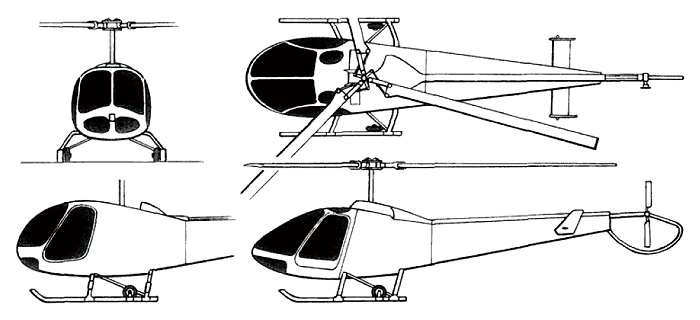
A conventional light helicopter with skid landing gear and tubular metal tail rotor protector; horizontal stabiliser with fins at tips. High inertia, three-blade fully articulated rotor head with blades attached by retention pin and drag link; control rods pass inside tubular rotor shaft to swashplate inside fuselage; no rotor brake: blade section MAC A 0013.5; blades do not fold; two-blade teetering tail rotor. Thirty-groove belt drive from horizontally mounted engine to transmission. Flying controls are conventional and manual. Trim system absorbs feedback from rotor and repositions stick datum as required by pilot.
The F-28A forward fuselage, consisting of the extensively glazed compartment for the pilot and two passengers seated side-by-side on a bench seat, is made of light alloy and glassfibre. The centre section of the fuselage, accommodating the engine, transmission and fuel tanks, as well as providing anchorage points for the steel-tube undercarriage skids, is more substantially built of steel tube. The rear fuselage, carrying small vertical tail surfaces and the two-blade teetering tail rotor of bonded light alloy construction, is a semi-monocoque structure basically conical in shape and built of aluminium.
Bonded light alloy blades. Fuselage has glass fibre and light alloy cabin section, steel tube centre-section frame, and stressed skin aluminium tailboom.
Skids carried on Enstrom oleo-pneumatic shock-absorbers. Air Cruiser inflatable floats available optionally. One 168kW Textron Lycoming HTO-360-F1AD flat-four engine with Rotomaster 3BT5EE10J2 turbocharger. Two fuel tanks, each of 79.5 litres. Total standard fuel capacity 159 litres, of which 151 litres are usable. Auxiliary tank, capacity 49 litres, can be installed in the baggage compartment. Oil capacity 9.5 litres. Pilot and two passengers, side by side on bench seat; centre place removable. Removable door on each side of cabin. Baggage space aft of engine compartment, with external door. Cabin heated and ventilated. Electrical power provided by 24V 70A engine-driven alternator; 12V 70A system optional. No hydraulic system.
Shoulder harnesses for three seats. Night lighting is optional for F28F. Night lighting includes instrument lighting with dimmer control, position light on each horizontal stabiliser tip, anti-collision light and nose-mounted landing light. Optional equipment for both F28F and 280FX includes fixed float kit, wet or dry agricultural spray kit and cargo hook for utility missions. Wide instrument panel available for IFR training.
The two-seat prototype of the F-28 was flown first on 12 November 1960 with a two-bladed main rotor and an un-skinned tubular rear fuselage, followed by the first of two three-seat production prototypes on 26 May 1962. Initial FAA certification was achieved for the F-28 model in April 1965 and deliveries began in 1965. The production version appeared in the autumn of 1963. Powered by a 134kW Avco Lycoming O-360-A1A engine, it had a three-bladed main rotor and a light alloy and glassfibre cabin section with an all-metal semi-monocoque tail boom. Enstrom sold only nine F-28s before being purchased by the Purex Corporation in early 1968. An improved version of the F 28, powered by a 205 hp Lycoming H10 360 C1B and called the F 28A, was certificated in May 1968. Production of the three seat F-28A started in 1967 but only 35 were sold before Purex suspended all operations in February 1970.
The F 28A uses a normally aspirated 205 hp engine. The main rotor blades are of bonded construction and have no time limit, mainly be¬cause the F 28 rotor system originally was designed to be rigid in plane, so the blades are heavier and experience lower working stress levels than if the F 28 had been de¬signed initially to employ its present fully articulated three blade system.
The F 28A offers a cruise speed of 87 knots. Enstrom offers an option, called a throttle correlator, that is designed to facilitate throttle/collective coordination. It employs a cam like arrangement that partially couples the collective and throttle, but even the folks at Enstrom did not recommend it with much enthusiasm.
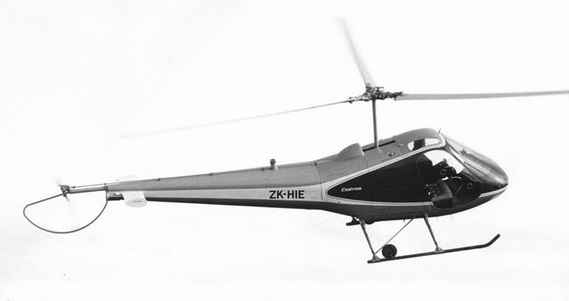
F-28A ZK-HIE
The rugged rotor system of the Enstrom gives the F 28A a heavier cyclic, or attitude, control feel than is found on other light helicopters, such as the Hughes 300. By fixed wing standards, however, the control pressures are low. The somewhat heavier cyclic control force characteristics combine with a fairly large, six inch offset in the flapping hinge to give the F 28A a nice harmony between stability and control over an allowable CG range of six inches. When the helicopter is disturbed either by a gust or a sudden cyclic control input, the F 28A experiences an initial divergence in roll or pitch but not the wild type of response that is frequently imagined to exist with helicopters. An electric pitch and roll trim, which is operated by a thumb switch on the cyclic stick, allows a pilot to remove residual control forces and establish a hands ¬off trim condition in cruising flight.
Because of its heavier rotor blades (at 51 pounds each, they are nearly twice the weight of those on the Hughes 300C), the F 28A does not gain lost rotor rpm as quickly as does a helicopter with a lighter rotor system. The higher inertia of the Enstrom rotors, however, does enable the F 28A to hold its rpm longer, at times when the pilot may need to use the rotational energy stored in the whirling rotor system.
In 1976 the improved F-28C was produced. The basic F28A and 280 were replaced by turbocharged F28C and 280C, certified by FAA 8 December 1975.A turbocharged conversion by Enstrom maintains full rated power up to 12,000 ft. Fixed waste gate Rajay 301-E-10-2 turbocharging on the Enstrom’s 153kW / 205 hp Lycoming HIO 360-E1AD engine enables the F 28C and the 280C to lift their 2,400 pound gross weights at density altitudes up to 13,000 feet. In addition to the turbocharging, Enstrom shifted the tail rotor from the right to the left side of the tail boom, thus placing the anti torque device where it reacts more favorably with the main rotor’s downwash and, therefore, is more effective. A tail rotor blade with a wider chord has been tested and is being retrofitted to all C models of the F 28 and the Shark 280. The FAA has approved the modification.
The F-28C-2 introduced a one-piece windscreen and a pedestal central instrument console for improved forward and downward vision. The 500th helicopter was delivered during June 1977. Production ceased in Novembr 1981, succeeded by the F28F.
Although the Enstrom helicopters are intended mainly for light passenger operations, the F-28C and Model 280C can be used in the agricultural role with two side-mounted chemical hoppers and their associated spraybooms. Liquid chemical capacity is 340 litres, and powder chemical capacity 0.5cu.m.
F-28F Falcon/280F was FAA certificated in January 1981, powered by the turbocharged 168kW Avco Lycoming HIO-360-F1AD engine. The basic F28F Falcon model was certified to FAR Pt 6 on 31 December 1980. The two major changes were incorporated into the F28F and 280F/280FX over the earlier F28C/280C series were an increase in power from 153kW to 168kW / 225shp and the addition of a throttle correlator to reduce pilot workload. Changes to the F28F and 280FX are the redesigned main gearbox with a heavy wall main rotor shaft (standard equipment on all new aircraft and retrofittable to all existing F models); optional lightweight exhaust silencer, which reduces noise in the hover by 40% and gives a 30% reduction when flying at 152m (can also be retrofitted to F28F, 280F and 280FX); and a lightweight starter motor.
A dedicated police version of Model 280F, the F-28F-P Sentinel, was developed for the Pasadena Police Department, and fitted with special equipment including a searchlight. First delivery was in October 1986. The development of a turbine-powered model was initiated in 1988, culminating in certification of the TH28 in September 1992.
The T-28 experimental version featured a 240 shp AiResearch TSE 36-1 turboshaft engine, increased fuel, larger diameter tail rotor, and a new transmission system.
Customers total 735 of earlier versions (14 F28, 315 F28A, 121 F28C, 56 F28C-2, 21 280, 206 280C and two 280L). Last of 135 F28F delivered 1999 to Fresno Police Department, California, but further nine produced in 2002 and 2003. Total of 98 280FX built up to mid-2003, increasing Enstrom piston-engined helicopter production to 966; further two 280 registered in early 2003, Peruvian Army has 10 F28F for flight training; Colombian Air Force operates 12 F28F for primary and instrument training, Numerous US police departments operate F28F-P for patrol and surveillance missions.
The basic 2004 price was US$320,000 for F28F Falcon and 280FX Shark.
F-28A Engine: Lycoming HIO-360-C1A, 205 hp. Main rotor dia: 32 ft / 9.75 m Disc loading: 2.67 lb/sq.ft. Pwr loading: 10.48 lb/hp. Length: 29 ft 6 in / 8.99 m Cabin max width: 5 ft 1 in / 1.55 m Empty wt: 1450 lb / 657 kg Max wt: 2150 lb / 975 kg Equipped useful load: 642 lb. Payload max fuel: 402 lb. Max sling load: 500 lb. Range max fuel/ cruise: 204 nm/2.1 hr. Range max fuel / range: 240 nm/ 237 mi / 381 km / 3.3 hr. Luggage cap: 7 cu.ft or 60 lbs. Vne: 98 kts. Cruise: 87 kt / 100 mph / 161 kph Max cruise: 93 kt. Max range cruise: 74 kt. Service ceiling: 12,000 ft / 3660 m Hover IGE: 5600 ft. ROC: 950 fpm / 290 m/min Best climb/glide speed: 58 kts. Fuel cap: 240 lb / 30 USG. Endurance: 2.5 hr. Baggage hold: 8 cu ft / 0.33 cu m Seats: 3.
F-28B Engine: Lycoming TIO-360, 275 hp
Enstrom F-28C Engine: 1 x Avco Lycoming HIO-360-E1BD, 153kW Main rotor diameter: 9.75m Length: 8.94m Height: 2.79m Max take-off weight: 1066kg Empty weight: 680kg Max speed: 180km/h Cruising speed: 172km/h Ceiling: 3660m Range: 435km Crew: 1 Passengers: 1
F-28C-2 Falcon Engine: Lycoming HIO-360-E1AD, 205 hp. TBO: 1000 hrs. Main rotor: 32 ft. Seats: 3. Length: 28.2 ft. Height: 9.2 ft. Max ramp weight: 2350 lbs. Max takeoff weight: 2350 lbs. Max wt (100mph restriction): 2500 lbs. Max wt (90mph restriction): 2600 lbs. Standard empty weight: 1562 lbs. Max useful load: 788 lbs. Max landing weight: 2350 lbs. Max sling load: 800 lbs. Disc loading: 2.9 lbs/sq.ft. Power loading: 11.5 lbs/hp. Max usable fuel: 240 lbs. Max rate of climb: 1200 fpm. Service ceiling: 12,000 ft. Hover in ground effect: 9700 ft. Hover out of ground effect: 6000 ft. Max speed: 97 kts. Normal cruise @ 3000 ft: 90 kts. Fuel flow @ normal cruise: 78 pph. Endurance @ normal cruise: 2.9 hr. Max range cruise: 74 kt Range max fuel / range: 196 nm/ 2.7 hr Range max fuel/ cruise: 178 nm/1.9 hr
F-28F Engine: Lycoming HIO-360-F1AD, 225 hp. TBO: 1000 hrs. Main rotor: 32 ft. Seats: 3. Length: 28.2 ft. Height: 9.2 ft. Max ramp weight: 2600 lbs. Max takeoff weight: 2600 lbs. Standard empty weight: 1562 lbs. Max useful load: 1038 lbs. Max landing weight: 2600 lbs. Max sling load: 1000 lbs. Disc loading: 3.2 lbs/sq.ft. Power loading: 11.6 lbs/hp. Max usable fuel: 240 lbs. Max rate of climb: 1450 fpm. Service ceiling: 18,000 ft. Hover in ground effect: 12,400 ft. Hover out of ground effect: 7500 ft. Max speed: 97 kts. Normal cruise @ 3000 ft: 94 kts. Fuel flow @ normal cruise: 96 pph. Endurance @ normal cruise: 2.4 hr.
Intent on encouraging British aviation progress, the Daily Mail offered a prize of £1,000 in 1923 for a ‘motor glider’ competition. The Duke of Sutherland offered £500 for the longest flight on one gallon of petrol in an aero¬plane with an engine of not more than 750 CC. capacity. So the Royal Aero Club organised a Light Aeroplane Competition at Lympne in Kent. Joint winners of the main prize were Walter Longton in the English Electric Wren and Jimmy James in W. S. Shackleton’s A.N.E.C. Both covered 87.5 miles on one gallon of petrol.
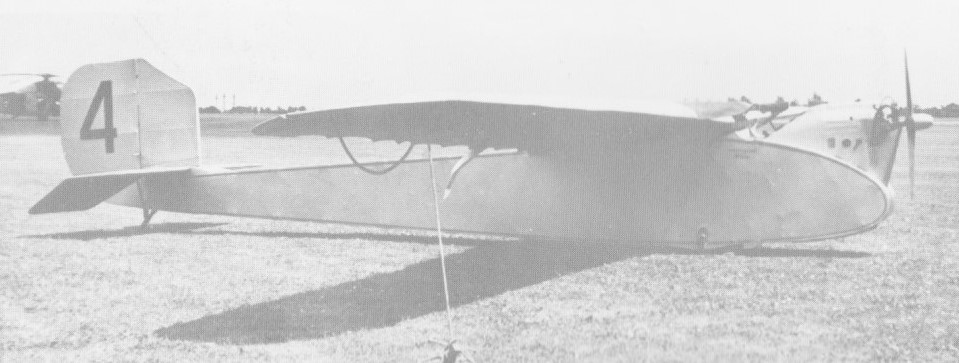
The Wren was designed by W.O.Manning and one example was flown in the competition. Joint winners of the main prize were Walter Longton in the English Electric Wren and Jimmy James in W. S. Shackleton’s A.N.E.C. Both covered 871 miles on one gallon of petrol. Later registered G-EBNV it was subsequently operated from Sherburn-in-Elmet. It did not fly after 1929 and was stored.
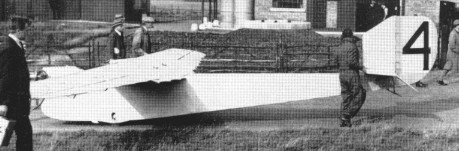
c/n 3 was built in 1923 at Lytham St Annes and carried the competition number 4. It was not registered and unknown if it actually flew in the competition. Acquired post-war by the Shuttleworth Trust it was stored until the 1950s when it was rebuilt by apprentices at English Electric. In the rebuild parts of G-EBNV were utilised, and it first flew again in January 1957.
Engine: ABC Scorpion, 3 hp Wingspan: 37 ft Length: 24 ft 3 in AUW: 420 lb Max speed: 50 mph
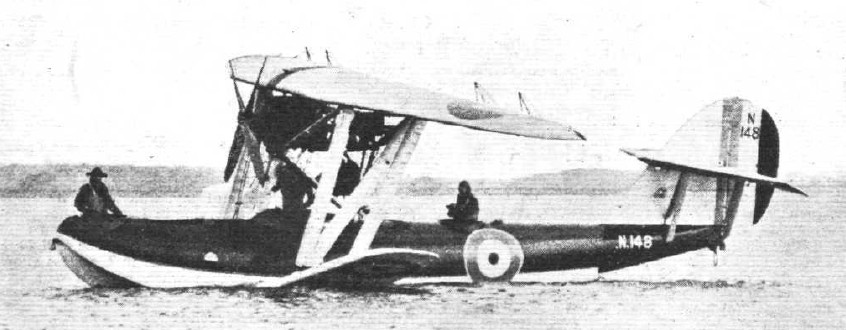
While the company were working on the Kingston they decided to experiment with a design for a small flying boat. The aircraft was a single-engined biplane flying-boat named the Ayr and was built in 1924. The hull was designed by Linton Hope, who had designed the Kingston hulls. An unusual feature was the lower wing, or stub wing mounted low down on the hull. It was designed to carry bombs underneath the stub-wings, these would have been underwater when the aircraft was afloat. During trials the aircraft rolled to the right and refused to become airborne.
Engine: 1× Napier Lion IIB 12-cylinder ‘broad arrow’ piston engine, 450 hp (336 kW) Length: 40 ft 8 in (12.40 m) Wingspan: 46 ft 0 in (14.02 m) Height: 13 ft 8 in (4.12 m) Wing area: 466 sq ft (43.3 m²) Empty weight: 4,406 lb (2,003 kg) Loaded weight: 6,846 lb (3,112 kg) Maximum speed: 127 mph (110 knots, 204 km/h) Service ceiling: 14,500 ft (4,400 m) Armament: 2 x 0.303 in (7.7 mm) Lewis machine guns Crew: 3
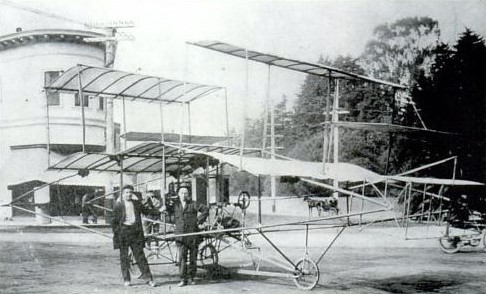
A design of father and son English who built this design – variously named helicopter, helicopter-monoplane or heliocopter in contemporary reports. Construction took place in guarded secrecy in a shed in Fruitville near Oakland from 1910.
The two propellers (today it would be ‘rotors’) were in the front of the machine, diameter 20 feet, and were of an adjustable type. Power was provided by an engine of 8 cylinders producing 75 hp. The curved planes (‘wings’) with a total of 800 sq. ft were intended for soaring the machine.
The idea was to make a straight ascent by use of the propellers and then travel at will by soaring. The whole construction was extremely expensive at least $ 10.000 were outlaid to build it.
In 1906, it was towed through 24th and Harrison streets in Oakland.
Aeronautics Vol. 5 (1909) 1 (July) p.30 The English helicopter met with disaster in a test for lift. It became unfastened from the floor, and the lift testing mechanism in its shed and the helices were wrecked against the rafters. It has never been tried in the open or free flight.
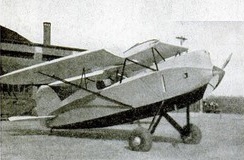
A lightweight side-by-side two-seat monoplane. Powered by a Wright-built version of the British Gipsy four-cylinder in-line air-cooled engine, an example, N39V, was exhibited at the New York show in 1930, priced at $3,800-5,000.
Folding wings allow storage in a 20 ft x 11 ft space.
In the experimental stage in 1930, the Engineers Aircraft Corp of Stamford, Conn, led by Major Thomas G. Lanphier, aide to Col. Chas. A. Lindbergh, were preparing to go into production.
Engine: Wright-Gipsy, 90-100 hp Wingspan: 30’0″ Top speed: 120 mph Cruise: 100 mph Landing speed: 45 mph Seats: 2
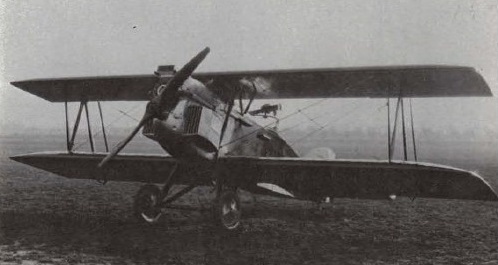
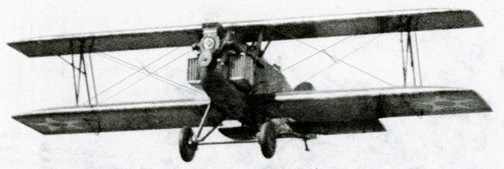
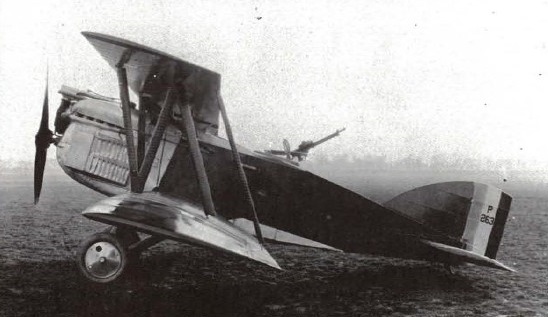
The Engineering Division TP-1 was a two-seat biplane fighter designed by Alfred V. Verville and Virginius E. Clark at the United States Army Air Corps Engineering Division.
The prototype TP-1 was built as the XTP-1 AS68578 and tested at McCook Field in 1923. A biplane, the upper wing had a smaller span and narrower chord than the lower wing. The XTP-1 was armed with five .30 in (7.62 mm) machine guns and fitted with a 423 hp (315 kW) Liberty 12 engine. It was damaged in testing and scrapped.
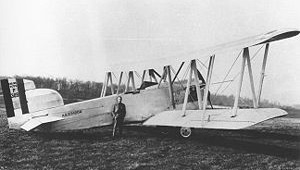
A second prototype, AS68579, was completed as an observation/reconnaissance aircraft with new wings, with the designation XCO-5
The XCO-5 needed a high-lift wing suitable for high-altitude work. New wings were prepared. The aerofoil was Joukowsky StAe-27A, a heavily cambered wingshape with a thick leading edge. The upper and lower wings had a pronounced stagger, with a total wing area of 600 sq.ft. As well as lining and insulating the cockpit, heat was taken from the engine exhaust. A cover over the top of the cockpit kept the heat in; a clear panel in the cover allowed the pilot to see his instruments.
TP-1
On October 10, 1928, Bill Streett and Albert William Stevens achieved an unofficial altitude record in the XCO-5 for aircraft carrying more than one person: 37,854 ft (11,538 m); less than 1,000 ft (300 m) short of the official single-person altitude record. At that height they measured a temperature of −78 °F (−61 °C), cold enough to freeze the aircraft controls. With frozen controls, Streett was unable to reduce altitude or to turn off the engine until some 20 minutes later when it ran out of fuel, after which he piloted the fragile experimental biplane down in a gentle glide and made a deadstick landing.
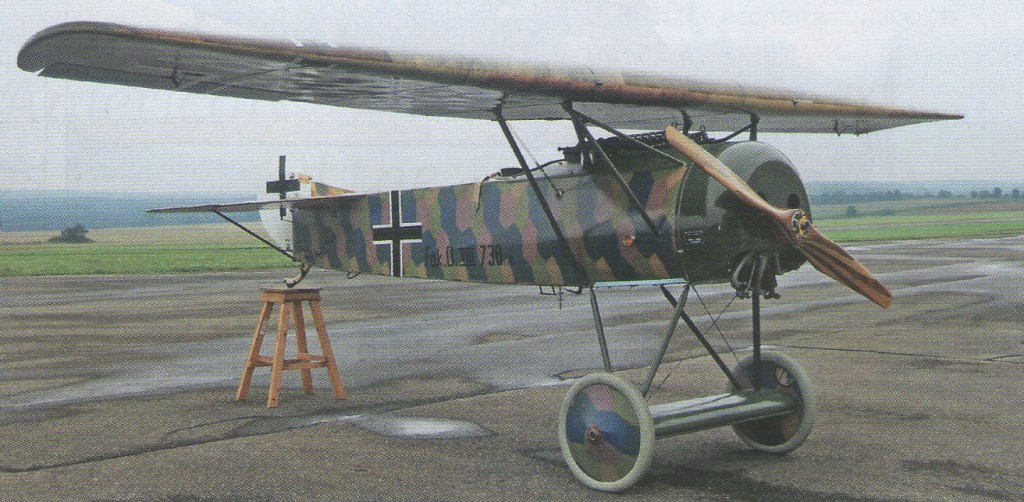
Achim Engels’ company has set up a small factory production line (2010) of airworthy reproductions of WW 1 aircraft, including the Engels E6 Fokker D.VIII.
Achim Engels’ company has set up a small factory production line (2010) of airworthy reproductions of WW 1 aircraft, including the Engels E6 Fokker E.III.