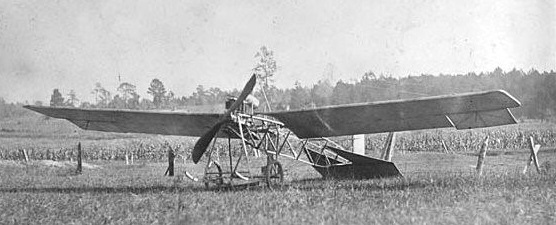
The Epps Monoplane, which made successful flights, was designed and built in 1912 by Ben T. Epps from Athens, Georgia. It was an open cockpit, single engine, mid-winged wire braced monoplane with conventional landing gear supplemented with skids.
The Epps Monoplane, which made successful flights, was designed and built in 1912 by Ben T. Epps from Athens, Georgia. It was an open cockpit, single engine, mid-winged wire braced monoplane with conventional landing gear supplemented with skids.
The 1909 Epps monoplane was designed and built by Benjamin Thomas Epps in the USA.
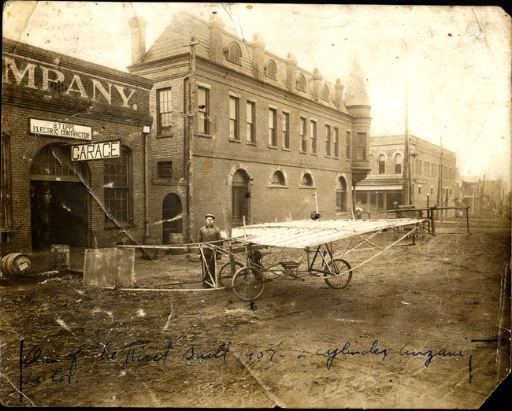
The early American Ben Epps Monoplane of 1907 was designed and built by Benjamin Thomas Epps in Athens, Georgia. This machine is quoted as being the first heavier-than-air aeroplane in history that flew south of the Mason-Dixon Line. Machine can be identified by its high wing monoplane construction, pilot seat construction under the wing, tricycle undercarriage, pusher construction.
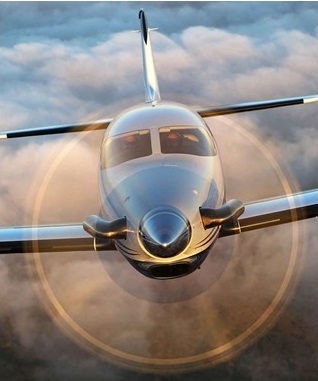
Epic Aircraft completed the successful maiden flight of its first conforming prototype E1000 single-engine turboprop, code-named FT1, putting the manufacturer on track to achieve certification later in 2016.
FT1 made its successful first flight on December 19 2015 from the Bend Municipal Airport. After the 20-minute test hop, Epic chief pilot David Robinson reported, “The aircraft handled extremely well and performed just as expected,” according to an Epic statement.
FT1 testing was assessing general handling qualities, operational performance, systems operations in normal mode, failure scenarios, extreme conditions and Flight Into Known Icing (FIKI) requirements.
The second and final flight test article, FT2, was scheduled to fly that spring, and will reflect as closely as possible the E1000 production aircraft, both in equipment and manufacturing process.
FT2 testing will focus on assessing interior and cabin functionality, including fuel, hydraulic, avionics, navigational and environmental systems.
Priced at $2.95 million the E1000 is powered by the single 1,200-horsepower Pratt & Whitney PT6A-67A turbine engine, giving is a top speed of better than 325 ktas, a max range of 1,650 nautical miles, climb rate over 4,000 feet per minute, ceiling of 34,000 feet, and full-fuel payload of 1,120 pounds.
The carbon fiber Epic Escape is a pressurized single-engine turboprop that is a 92% scaled down version of the Epic LT. The pressurized, carbon-composite fuselage carrys 4-5 passengers, and the slight reduction in size allows the Escape to fly even faster than the Epic LT. The high tech airframe design with the Honeywell Garrett-10 1000 horsepower engine gives 360 KTAS.
The four or five-place cabin has reclining leather seats, and exotic wood trim. The Escape VLJ turboprop was to be available as an experimental aircraft.
Seats; 4 or 5
Pressurization; 6.5 psi
Engine; 1,000 hp
Length; 33.4 ft.
Wingspan; 36.3 ft.
Height; 11.7 ft.
Cabin length; 14.5 ft.
Cabin width; 4.7 ft.
Cabin height; 4.4 ft.
Empty weight; 2,750 lbs.
Maximum take-off weight; 5,500 lbs.
Maximum payload with full fuel; 855 lbs.
Maximum cruise; 365 KTAS
Economy cruise; 300 KTAS
Ceiling; 28,000 ft.
Time to climb; 28,000 ft., 8 min.
Range economy cruise (res / max pax); 1,800 NM

The Victory is a carbon fiber very light jet with single-pilot operation. It has a high speed 320+ knot cruise up to FL280. The 4-5 seat Victory jet was available as an experimental category aircraft.
Engine: Pratt & Whitney PW617, 1450 lb
Length: 33.3 ft
Wing span: 36.3 ft
Wing area: 203.5 sq.ft
Height; 10.7 ft
Empty weight: 2700 lb
Gross weight: 5500 lb
Fuel capacity: 278 USG
Maximum payload with full fuel; 900 lb
Maximum cruise; 320 KTAS
Economy cruise; 250 KTAS
Stall: 62 mph
Range economy cruise (with res / full passengers); 1200 NM
Takeoff dist: 2500 ft
Landing dist: 2500 ft
Ceiling; 28,000 ft.
Time to climb; 28,000 ft., 10 min
Seats: 4-5
Landing gear: nose
Pressurization; 6.5 psi
Cabin length; 14.5 ft.
Cabin width; 4.7 ft.
Cabin height; 4.4 ft.

The carbon fibre Epic LT was designed and built by Rick Schameck in 14 months to 2004.
The Epic Dynasty is the certified version of the Epic LT.
With nearly 2000 hours logged toward certification, the Dynasty was undergoing testing mandated by Transport Canada towards Transport Canada Certification, enabling Part 135 on demand charter and air taxi services.

The Dynasty has all the features of the Epic LT, plus some extras. Available long range tanks extend the Dynasty to an estimated range of almost 1900nm. The carbon fiber fuselage paired with a PT-6 engine delivers 340 knots of true air speed. Like the Epic LT, the Dynasty carries six passengers with full fuel and baggage.
Epic LT
Engine: P&W PT6-67A, 1200 hp
HP range: 750-1200
Cruise: 402 mph
Stall: 68 mph
Range: 1840 sm
Rate of climb: 4800 fpm
Takeoff dist: 1500 ft
Landing dist: 1500 ft
Fuel capacity: 289 USG
Empty weight: 4200 lb
Gross weight: 7329 lb
Length: 36.7 ft
Wing span: 43 ft
Wing area: 203.5 sq.ft
Seats: 6
Landing gear: nose
Epic Dynasty
Engine: Pratt & Whitney PT6-67A
Wingspan: 43 ft
Height: 12.5 ft
Length: 35.8 ft
Wing area: 203.6 sq. ft
Empty weight: 4,000 lb
Maximum take-off weight: 7,300 lb
Usable load with standard fuel: 1,350 lb
Maximum cruise: 340 KTAS
Economy cruise: 288 KTAS
Certified ceiling: 31,000 ft
Time to climb: 9 minutes to 25,000 ft
Range max cruise (w/ IFR res @ MTOW /opt LR tanks: 1,874 NM
Range maximum cruise (with IFR reserves @ MTOW): 1,200 NM
Take-off distance (over 50′ obstacle): 1,600 ft.
Landing distance (over 50′ obstacle): 1,840 ft.
Fuel capacity: 288 gallons usable
Fuel capacity (optional long range tanks): 350 gallons usable
Seats: 6
Cabin length: 15 ft
Cabin width: 4.6 ft
Cabin height: 4.9 ft
Pressurization: 6.5 psi
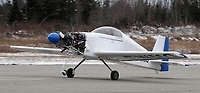
The Épervier Project was developed within the framework of an end-of-program project for the Mechanical Engineering bachelor degree at the Université de Sherbrooke, in 2008. The goal of the project was to design and construct a single passenger, homebuilt construction plane.
The team was made of David Rancourt, Nicolas Vincent, François Bérubé, David Barabé, Mathieu Lavoie, Gabriel Arsenault, Maya Caron, Jasmin Mc Fadden, Francis Beaucaire, Miguel Costa, Mathieu Lessard, Guy Bilodeau.

In 1911 H. Eparvier designed and built a monoplane in France.
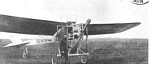
The 1909 Eparvier monoplane was designed and built by H.Eparvier in France.
Weight: 770 lb

