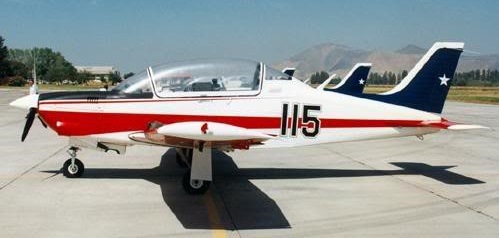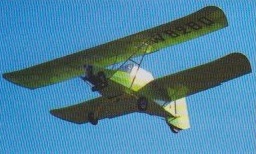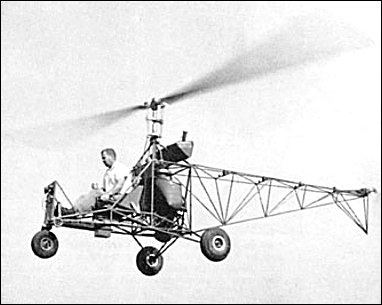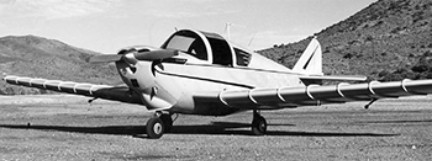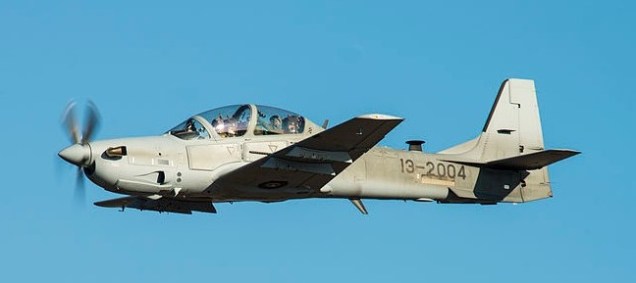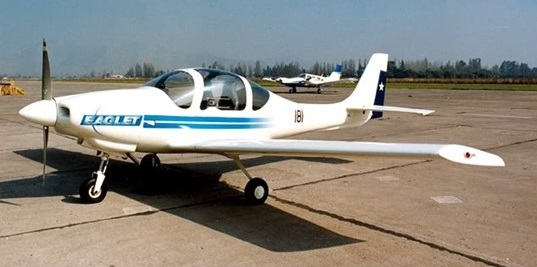
Enaer  Namcu / Eaglet

The ECH-02 Ñamcu light aircraft project started in June 1986 and assigned to the Department of Research and Development Company. The idea behind the project was to develop new design capabilities and gain experience with composites, hoping to eventually offer the local market a civil lightweight and relatively inexpensive, aerobatic trainer. The engineering used computer-aided design (CAD) and while US would provide the raw material, the design of structures and systems would be Chilean.

The construction of the first prototype was started by ENAER in February 1987, receiving the civil registration CC-PZI on 31 March 1989.
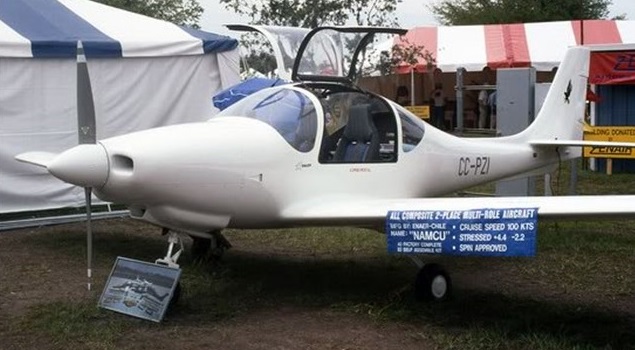
CC-PZI

Its first flight occurred on 8 May 1989, being taken to the Le Bourget airfare in June and officially shown in Chile on October 6, all in the same year. Its construction number was 001 and factory number ECH-002.

The situation of CC-PZI remained unchanged until May 14, 1996, when the civil registration was canceled as being sold to the Chilean Air Force. With the FACh , starting in June 1996 and assuming the number 181, it was based at the Group’s facilities 11 in Los Cerrillos.
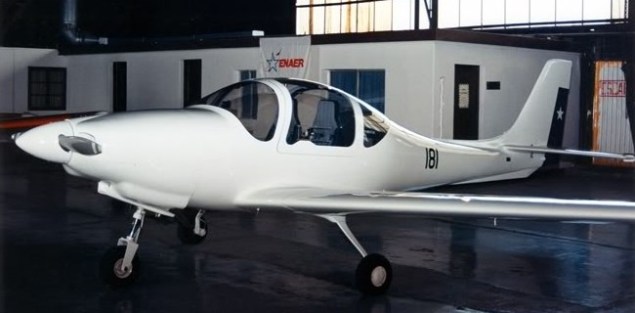
From 2000, the aircraft became 181 renamed Eaglet (instead of Ñamcu), since ENAER wanted to occupy it as a flight demonstrator. At the FIDAE 2000 this aircraft was displayed as “181 Eaglet”.
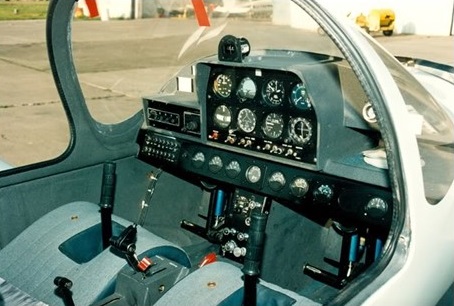
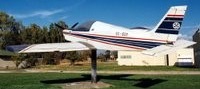
To become Eaglet, the original Ñamcu 181 gradually received a number of changes to its engine and propeller, interior accommodation, undercarriage and wheels, flaps and avionics. The EE-10 Eaglet version being developed jointly by ENAER and Dutch partners. On July 3, 2001 this unit abandoned the military number and was reregistered CC-PZC to ENAER. This aircraft was later displayed at the National Museum of Air and Space.
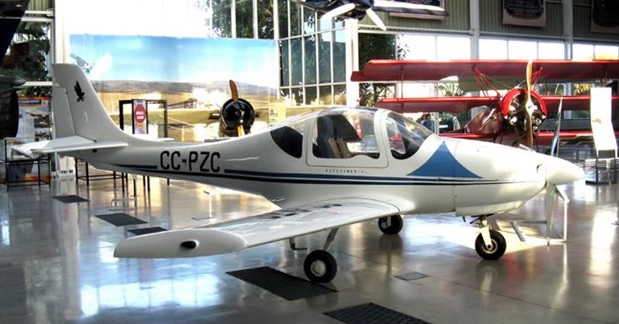
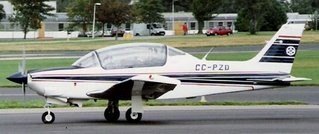
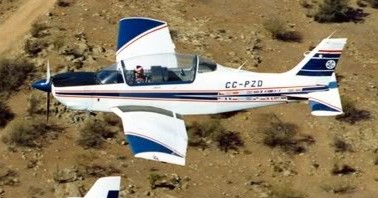
The second prototype cn 002 of Ñamcu was finished in 1990, the registration CC-PZJ assigned the April 9 of that year.
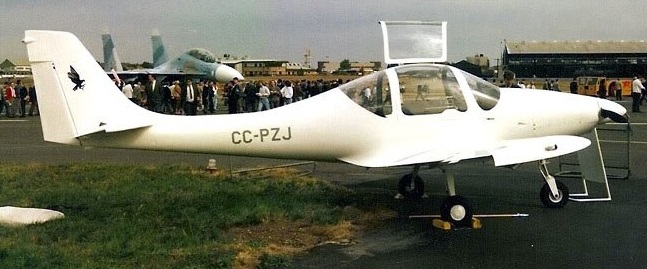
CC-PZJ in Europe

After being presented at the Farnborough Airshow ’90, from England made a private demonstration (Chilean pilot and one European) in which they experienced flutter, managing to land shortly before the entire rear section broke. It happened after 150 flight hours. The remains were then used extensively for structural investigation and its cabin was used to mock-up in the doomed EuroEnaer EE-10 project in the second half of 90s, and also for research and testing of destructive dynamics of shock and collisions, best configuration of seats, effects fairings, etc.

The third Ñamcu prototype was also manufactured by ENAER. Its registration was CC-PZK (cn 003), assigned on 28 October 1991. This aircraft served as a basis for studying the possibility of certifying the type in Chile and FAR 23 utility category and the idea of promoting it to the IAF as determiner flying skills (this unit received some modifications requested by that air force).

On February 11, 1992, the aircraf crashed on at the farm of San Damiano, near We. Squadron commander Saa Francisco Izquierdo was killed. This accident ended projects associated with ECH-002, closing the Ñamcu office in Santiago and temporarily finish the program. The registration was canceled on April 2, 1993.

Shortly after the accident that destroyed CC-PZK, began the fourth prototype, for the ÑAMCU kit and the road to the Euroenaer EE-10 Eaglet. The kit project had the idea of targeting the US market, being certified in that country. The subsequent project was called Kit Ñamcu. The idea was for a cheaper and more aerodynamic design, simpler construction and a better price.

In early 1993 the construction of the fourth plane, registered CC-PZL(cn 004) on March 26 of that year, ended th ENAER name. It was displayed at the Sun & Fun in Florida that year, then went back to the workshop, returning to fly in October 1993.

Then a pair of Chilean companies were subcontracted to build a number of pieces of composite and metallic materials, but the final product was not good nor timely. After that, the aircraft went to the US together with a kit, and was being touted in Florida by pilot Harry Hayman.
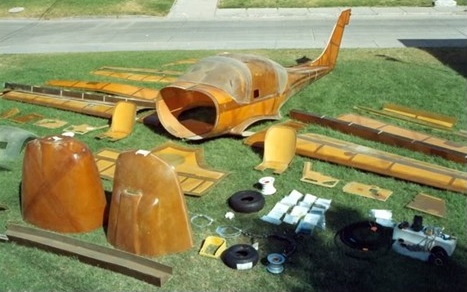
In 1994 Dutchman Jan Van Toorn, a former aeronautical merchant house linked to Piper, was contacted, who offered to send the kit to Holland, and market it. In 1996 a group of Dutch executives arrive in Chile to begin the certification process for their country. The joint idea between ENAER and Dutch executives was to establish an independent company in the Netherlands that could take the call Project Eaglet. In February 1997 Chilean executives traveling to Holland with technical documentation of the Ñamcu Project; soon after, the joint-venture Euroenaer was founded.

While that was happening, in June 1996 the CC-PZL passed to the FACh as 182 and was based with Group 11 with the 181 (ex CC-PZI). The registration CC-PZL was canceled on 31 May 1996. Soon this aircraft would lead role in the birth of EE-10 Eaglet. In February 1998, the CC-PZL / 182 aircraft would be packed to Holland, where it received a number of improvements in order to participate in the start of the Chilean-Dutch joint venture.

Some of these improvements were:
A more powerful O-320-D2A engine [145 shp / 2,450 RPM and 160 shp / 2,700 RPM for 5 minutes] was fitted replacing the 115 hp Textron Lycoming O-235-N2C;
The cabin was re-design ergonomically and expanded;
The flaps and rudder were redesigned;
A new propeller, flaps, Trim, smaller systems in door locks and hood were fitted.

The CC- PZL / 182 and then became the first Eaglet (or semi Eaglet) to support certification as utility JAR 23 category (for private aircraft under 5,670 kg / 12,500 lbs [and enabled maneuvers such as lazy 8, Chandelas, steep turn, etc.].

In Holland the CC-PZL / 182 (004) was registered as PH-EAG under the Euro-Enaer Eaglet EE-10 designation, in April 1998, and on behalf of Euro-Enaer Holding BV, Den Helder.
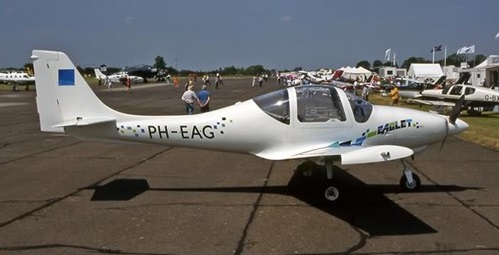
Finally, when EuroEnaer collapsed in February 2000, the University of Delft had the aircraft, and registered to the University in July 2002. Under this new status was used as a basis for the development of other projects, including the installation of a fly-by-wire system in the basic flight controls. This project was soon canceled, although the aircraft continued in the Netherlands.

After the progress made with the CC-PZL / 182 modified during 1998 in Chile, began the manufacture of the first Eaglet itself, cn 005. This was done following the European specifications. In Chile the complete structure corresponded to the EuroEnaer assembly in Holland and installation of the cabin and seats. Construction of 005 in Chile was practically in real time with arrival of information from Holland.

Once completed, the fifth aircraft went to Holland in 2000. Flight tests were made on it to complete the certifications uncompleted with the modified CC-PZL. It incorporated the modifications already made in the CC-PZL and CC-PZK, as more powerful engine, new propeller, and a new cockpit design provided by TU Delft. In Europe it was registered as Euro-Enaer EE-10 Eaglet PH-ABG (cn 005) in November 2000 and on behalf of Euro-Enaer Holding BV in Den Helder. The Eaglet design was certified JAR 23 type on July 13, 2001.
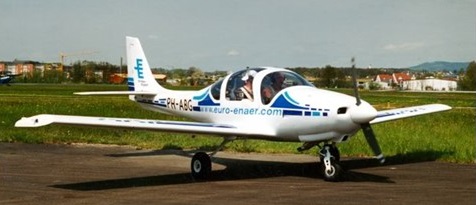
cn 005 in Europe

Linking EuroEnaer with RLD (Rijksluchtvaartdienst, the Dutch DGAC) determined that the company was in charge of the final assembly and certification, in addition to providing engines, accessories, paint and interior. Meanwhile, ENAER deliver all the airframe.
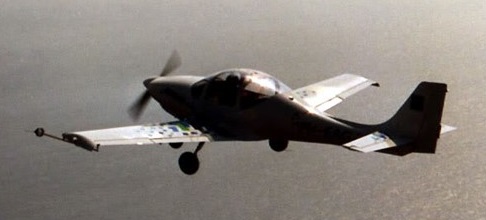
Euro-Enaer EE-10 Eaglet PH-ABG (cn 005)

The final certification of design and manufacturing rights were took longer than desired, and during this delay EuroEnaer began with financial difficulties that made it go bankrupt. Additionally, the participating contractor, Renegade Aircraft CV, in 2001 provided additional problems to the project by claiming the protection of their rights related to the Eaglet and threatened with lawsuits.

Finally, EuroEnaer bankruptcy in February 2002 suspended certification of design and with it the value of the aircraft type certificate. Then ENAER bought what remained of the joint venture and planned to validate alternative type certification in the Netherlands.

In August 2002, the only Eaglet built , cn 005, was returned to the plant in El Bosque. Once in Chile, on November 27, 2002 was registered CC-PBZ as EuroEnaer EE-10 (cn 005), and the title of ownership to ENAER was formally a sale to EUROENAER Holding BV under contract formalized in Santiago November 18 2002.
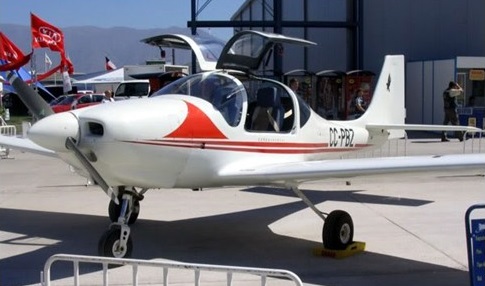
CC-PBZ

During FIDAE 2000 an unfinished airframe with leftover pieces, enabled presentation was the fantasy CC-OO7 makings.
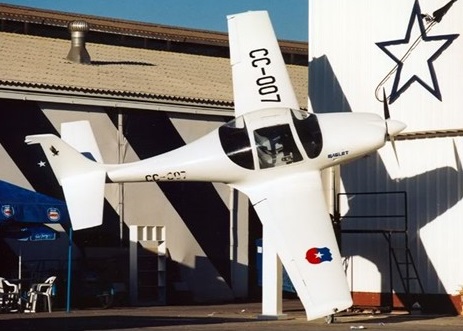
Finally, the project was forgotten as it was clear that with the large number of similar aircraft on the international market, the future, if there was any, was very complicated.

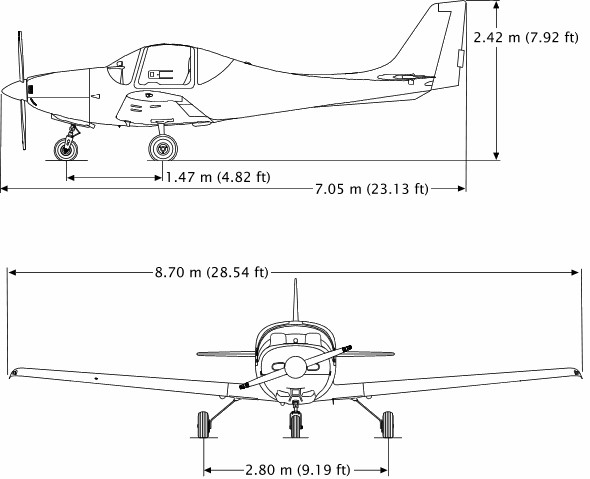
If the Eaglet still flies, it does with an Experimental Certificate, restricted only to marketing operations, testing and restricted flights, but no instruction or for profit with it.
Gallery

Enaer T-35 Pillan / E.26 Tamiz / Piper PA-28R-300 Pillan

In the late ’70s there was the need to develop a new primary and basic trainer and the ECH-51 Pillán project was chosen to fill specific technical aspects required, but also possible fabrication in Chile.

In the Pillán there is a sort of reinvention of the wheel, but using a series of highly tested products. The use of facilities and growing potential of Ala Maintenance first and ENAER starting in 1984, served starting to give force to this project and that while hybrid in its construction, was Chile in its conception.

This was to be the replacement in its entirety of the serving Beechcraft Mentor, and that until 2002 (when four units were delivered to the Ecuadorian Navy) different versions of the aircraft succeed in being placed in service in not less than seven other military aviations of America and Europe.

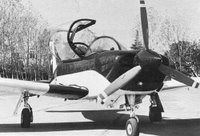
Developed by Piper for manufacture in Chile, the T35 Pillan (Devil) tandem-seat trainer is based on the Cherokee series, using a proportion of PA-28 Dakota and PA-32 Saratoga components The first prototype (N300BT) was designed and manufactured as part of the Project 51, by Advanced Engineering and Experimental Department of Piper Aircraft Co. in Lakeland, Florida, where it made its first flight on March 6, 1981 piloted by Hugh Smith, factory test pilot.

N300BT

Then the FACh commissioned the construction of a second prototype and also requested the necessary kits are manufactured in Chile to join three other copies of preproduction aircraft.

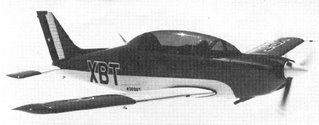
Shortly after the first flight, N300BT went to Chile to continue testing, retain the original registration, supplemented with XBT.

XBT crashed on February 26, 1982, on El Bosque, while doing an inverted low flight. The pilot, Don Fernando Malbrán (also reported as Don Juan González Silva), was killed.

The second prototype Pillán, manufactured, assembled and tested in the US, first flew on 31 August 1981.

The first flight occurred in Chile on 13 September 1981, flown by José Salgado, and was officially unveiled three days later in a symbolic delivery at the Aviation School.

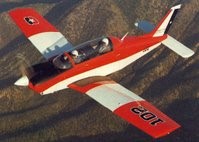
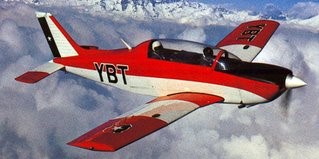
The number 102 was assigned in Chile, but soon (early 1982) changed to YBT when those digits were reassigned. It was exhibited at the IFAD ’82 painted red and white, as YBT. On 23 January 1986 the on aircraft was registered CC-PZA.

On 31 December 1993 this aircraft was decommissioned after 764.6 hours of flight. Since 1994, it is preserved in the Museum of Aviation, registration YBT on the sides, but with plate CC-PZA as “serial number”.

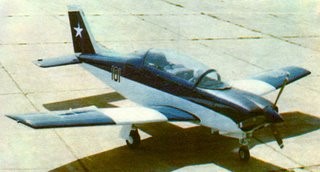
The third plane, was the first preseries of Pillán and first assembled in Chile. Its first flight was on January 30 , 1982.

At first it was painted blue top and white below the fuselage , and red / white / red wings ( then blue / white / blue ), plus the white star. It was exhibited at the IFAD ’82 with serial number 101.

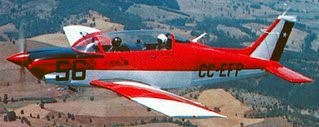
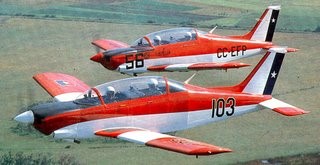
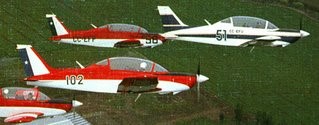
For a time it flew in Chile repainted red-white and registered CC-EFP before shipment to Farnborough ’82 (5 to September 12), where it was given the number 56 on the nose. With the same scheme and identifying marks it participated in the June 1983 Farnborough, and shared the static display with the space shuttle Challenger.

The aircraft continued to operate with such a color scheme and markings until the registration was replaced (keeping the red / white and 56th ) by CC-PZB tuition, on 23 January 1986.

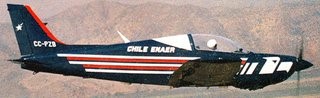
During the first half of 1987 this aircarft was extensively modified, being used as a prototype for the Project ENAER ECH-51M and T-35S Pillán version with aerobatic capabilities. Basically the weight was decreased and the cabin accommodation redesigned, retaining the original two-seater engine.

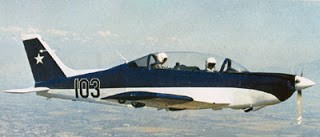
A new scheme of blue and white lines along the fuselage, finished in the head of a hawk nose , similar to that used at some point by Aerobatics Squadron Hawks FACh, was applied. CC-PZB made its second first test flight on March 4, 1988 and was exhibited at the IFAD of that year.

The T-35S program did not take this prototype and after a while the plane was decomissioned and the fuselage meant to be displayed on a pedestal in the Division of Systems and Equipment ENAER in El Bosque, painted white, red and blue, with a fantasy registration of CC-CSM. In 2006 it was given to the Aeronautical Museum in Los Cerrillos, to display the colors of the Squadron Hawks.

The fourth Pillán, (the second pre-series aircraft) was the second assembly in Chile. Its first flight date was estimated for January 20, 1982 , but was delayed for several weeks.

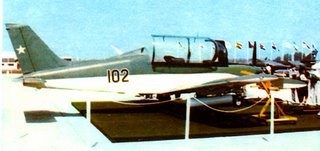
This was the only one painted a light green color scheme on the top half of the fuselage and the bottom white. The rudder green with a white star. It wore the number 102. It was exhibited in ’82. During the first half of 1982 its color scheme changed to the traditional white red with black numbers painted on the fuselage. During the first half of 1984 this plane, still marked with the number 102, was sent to the US for changes to the cabin and cockpit.

Returning to Santiago it received the number 104 as the original 102 was reassigned to the second prototype of Pillán (the original YBT).

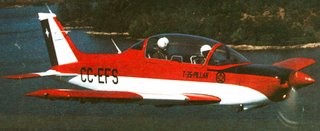
Shortly afterwards it received the registion CC-EFS, and was exhibited at the Farnborough Airshow ’84, keeping this identification during the second half of 1985.

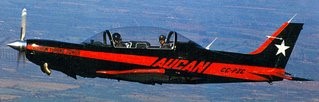
This airplane became the prototype Pillán T-35TX, later known as Aucán, as CC-PZC, being shown for the first time at IFAD ’86. Received on January 23, 1986, the first flight was on 12 February 1987.

The Aucán was basically a turboprop version of the original Pillán, converted by Soloy in the US, with an Allison 250-B17D engine with 420 shp, plus other minor changes. After an unsuccessful promotion, the aircraft experienced a series of noticeable changes, including the replacement of three traditional cockpit transparencies by a one-piece. The aircraft was presented in the FIDAE 1990, at which time it wore a camouflage in shades of dark green and gray with light gray undersides, keeping the CC-PZC registration.

It was eventually discharged from inventory of ENAER on June 21, 1991, and subsequently disassembled for use as spare parts for other aircraft, canceling the registration CC-PZC on April 2, 1993. The balances of the fuselage would be in a courtyard of the Educational Complex La Reina, Santiago, very battered and away from view.

The Aucán has no relation to the Pillán Turbo. The Pillán Turbo was the result of ECH-51DT, a plane built by ENAER ECH-51B serial number 186-88. Registered on October 6, 1988 as CC-PZG the Pillán Turbo featured all the changes applied and tested in the Aucán CC-PZC, and its first flight occurred on May 14, 1991. It differed from Aucán externally by a cockpit which consisted of two parts (with no racks front section). On July 12, 1996 was delivered to evaluating Aviation Group No. 11 as T-35DT Pillán Turbo, serial number 191. After the dissolution of this unit in late 1997 the aircraft returned to ENAER and was promoted in different configurations, without success.

The sixth aircraft was known as “the first series production aircraft,” though in reality it was the fourth of preproduction aircraft.

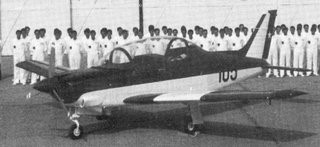
Its roll-out took place on March 8, 1984 at a ceremony in El Bosque, where it was shown as “the first Pillán made in Chile”, wearing 105, since this was the beginning to progressively integrate parts manufactured in Chile.

However, its official status indicates that this plane would never have flown, being used only to perform various tests on land, at the end of which it was severely deformed. The remains were definitely unusable in the second half of 1985.

The construction of the seventh plane, the fifth preseries, was not completed and was used as a model. During the second half of 1985 it was decommissioned and the remains were observed in the School of Aviation in January 1988. It was not assigned a serial number and it might be seen as that there were not six production aircraft but only five.

The eighth plane, sixth preseries, was the last in preproduction. Completed in 1984, it received the number 107. Due to its continuous modifications, the aircraft has seen three model designations (A, B and C).

It was exhibited at Farnborough with unregistered CC-EFU, and assigned the number 51 on a scheme of white with blue lines. After receiving the CC-PZD registration on January 23, 1986, and, with the same white color but with different set design lines, was exhibited at Le Bourget 1987, following which, in order to participate in the commemoration of the 50th anniversary of the Piper Aircraft Corporation, moved under its own power to the US via the North Atlantic (France, England, Ireland, Iceland, Greenland, Canada, USA).

It was reained by ENAER and used as a demonstrator of the company, with color schemes that varied over time.

After making ECH-51 number 107, began delivery to the FACh its first batch of T-35, by agreement dated July 6, 1984, for an initial batch of 20 aircraft, a total of 48 finally contracted. The first of these, serial number FACh 101 (cn 108-85) was completed in May 1985 and delivered on July 31 1985. After operational service it was sold to the Air Force of El Salvador in 1998, where it served as FAS 70 from 29 May 1998 until January 19, 2000, when it crashed and was completely destroyed in that country.

The Pillan is operational with the Chilean Air Force in two versions, the T-35A primary trainer and the T-35B instrument trainer, which has an upgraded avionics package. CASA is assembling a number of T-35C Pillans for the Spanish Air Force as the E.26 Tamiz, from kits supplied by ENAER under a counter-trade agreement linked to the Chilean Air Force purchase of C-101 Aviojets.

Versions include the T-35D instrument trainer for Panama.

T-35 Pillan
Engine: 1 x Lycoming AEIO-540-K1, 225 kW.
Span: 28.871 ft / 8.8 m.
Length: 26.247 ft / 8 m.
Height : 8.858 ft / 2.7 m
Wing area: 147.467 sq.ft. / 13.6 sq.m
Weight empty : 2050.7 lb / 930.0 kg
MTOW: 2950.3 lb / 1340 kg.
Max speed: 168 kt / 310 kph.
Landing speed: 62 kt / 115 km/h
Cruising speed: 144 kt / 266 km/h
Initial ROC: 365 m / min.
Wing loading: 20.09 lb/sq.ft / 98.0 kg/sq.m
Range : 648 nm / 1200 km
Ceiling: 6250 m.
T/O run: 290 m.
Ldg run: 240 m.
Fuel internal: 290 lt.
Endurance: 4-5 hr.
Crew: 2

Emilien Croses Criquet

Criquet L

A side by side two seater, the Criquet L is of wood and fabric construction.

Tabs on the rear wings, controlled by independent levers, counter the effects of crosswinds.

Criquet L
Engine: Rotax 503, 52 hp
Wing span: 8 m
Wing area: 17.62 sq.m
MAUW: 400 kg
Empty weight: 175 kg
Fuel capacity: 40 lt
Max speed: 130 kph
Cruise speed: 110 kph
Minimum speed: 50 kph
Climb rate: 2.5 m/s
Fuel consumption: 12 lt/hr
Seats: 2
Plan price (1998): 2200 Fttc

Emigh Trojan

The Emigh Trojan was built in small numbers between 1948 and 1950 by the Emigh Aircraft Corporation and, later, the Emigh Trojan Aircraft Company. Its unique feature are the simplified construction methods used in its assembly. The metal fuselage of the Trojan is made up of two identical halves that are joined along their horizontal centerline. Its wingtips, tail surfaces and ailerons are all interchangeable. This side-by-side two-seat cabin airplane can still be seen at airports around the country.

Engine: 90 hp Continental
Gross weight: 1,450 lbs
Top speed: 130 mph
Cruise: 115 mph
Landing speed: 48 mph
Range: 550 nm
Service ceiling: 13,000 ft
Seats: 2

EMBRAER EMB-314 A-29 Super Tucano

During the mid-1980s, Embraer was working on the Short Tucano alongside a new version designed EMB-312G1, carrying the same Garrett engine. The EMB-312G1 prototype flew for the first time in July 1986. However, the project was dropped because the Brazilian Air Force was not interested in it. Nonetheless, the lessons from recent combat use of the aircraft in Peru and Venezuela led Embraer to keep up the studies. Besides a trainer, it researched a helicopter attack version designated “helicopter killer” or EMB-312H. The study was stimulated by the unsuccessful bid for the US military Joint Primary Aircraft Training System program. A proof-of-concept prototype flew for the first time in September 1991. The aircraft features a 1.37-m (4.49-ft) fuselage extension with the addition of sections before and after of the cockpit to restore its center of gravity and stability, a strengthened airframe, cockpit pressurization, and stretched nose to house the more powerful PT6A-67R (1,424 shp) engine. Two new prototypes with the PT6A-68A (1,250 shp) engine were built in 1993. The second prototype flew for the first time in May 1993 and the third prototype flew in October 1993.
The request for a light attack aircraft was part of the Brazilian government’s Amazon Surveillance System project. This aircraft would fly with the R-99A and R-99B aircraft then in service and be used to intercept illegal aircraft flights and patrol Brazil’s borders. The ALX project was then created by the Brazilian Air Force, which was also in need of a military trainer to replace the Embraer EMB 326GB Xavante. The new aircraft was to be suited to the Amazon region (high temperature, moisture, and precipitation; low threat). The ALX was then specified as a turboprop engine aircraft with a long range and autonomy, able to operate night and day, in any meteorological conditions, and able to land on short airfields lacking infrastructure.

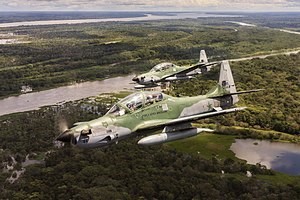
The Embraer EMB 314 Super Tucano, also named ALX or A-29, turboprop light attack aircraft is designed to operate in high temperature and humidity conditions in extremely rugged terrain, the Super Tucano is highly maneuverable, has a low heat signature, and incorporates fourth-generation avionics and weapons systems to deliver precision-guided munitions.

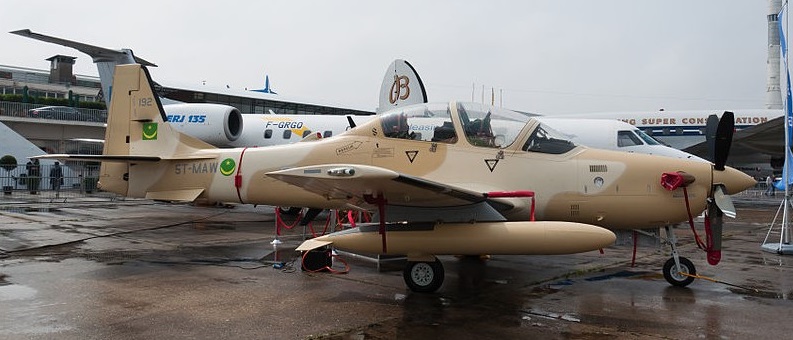
Mauritania AF A-29B 5T-MAW

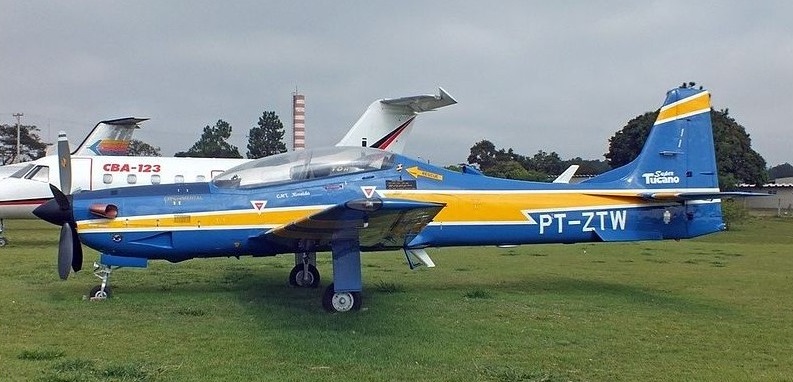
In August 1995, the Brazilian Ministry of Aeronautics awarded Embraer a $50 million contract for ALX development. Two EMB-312Hs were updated to serve as ALX prototypes. These made their initial flights in their new configuration in 1996 and 1997, respectively. The initial flight of a production-configured ALX, further modified from one of the prototypes, occurred on 2 June 1999 (PT-ZTW).

The second prototype was brought up to two-seater configuration and performed its first flight on 22 October 1999. The changes had been so considerable that the type was given a new designation, the EMB-314 Super Tucano. The total cost of the aircraft development was quoted to be between US$200 million and US$300 million.

EMB-312H Prototype PT-ZTW first flew on 9 September 1991, and currently is on display at the Memorial Aeroespacial Brasileiro in São José dos Campos.

EMB-312H Prototype PT-ZTW first flew on 9 September 1991, and currently is on display at the Memorial Aeroespacial Brasileiro in São José dos Campos.

Variants:

A-29A

A-29A

Single-seater for attack and armed reconnaissance (on interdiction tasks), attack and cover (on close air support tasks), able to intercept and destroy low-performance aircraft, incorporates an additional fuel tank (+ 400 liters)

A-29B
Twin-seater for the same tasks as the single-seat version, also used in training and advanced aerial control (on monitoring tasks)

Operators:

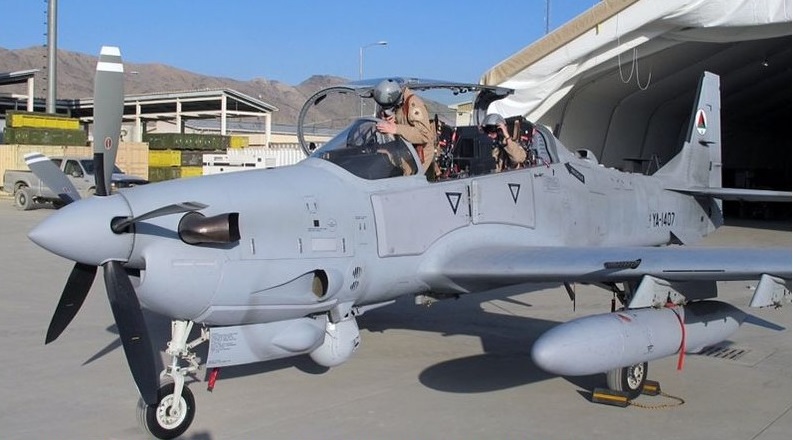
Afghan Air Force Embraer A-29 Super Tucano

Afghan Air Force – 20 aircraft ordered. The first aircraft were delivered in 2016 and the last were to be in service by late 2018. The first A-29 Super Tucano of the Pentagon’s Light Air Support (LAS) program, destined for the Afghan Air Force, delivered to the US Air Force in Jacksonville, Florida, by the Sierra Nevada Corporation and Embraer in September 2014. The first eight Afghan airmen are trained in the US to form a new Afghan fighter squadron. The first four aircraft arrived in-country at Hamid Karzai International Airport in Kabul on the 15 January 2016. Four more were delivered in July 2016, and an additional four arrived in March 2017, bringing the total of delivered Super Tucanos to 12.

National Air Force of Angola – six aircraft ordered. Deliveries were scheduled to begin in early 2012; but the first three delivered on 31 January 2013.

Brazilian Air Force – 99 aircraft (33 A-29A & 66 A-29B). At least 4 aircraft lost.

Air Force of Burkina Faso – 3 aircraft delivered in September 2011 of version A-29B.

Chilean Air Force – 12 aircraft.

Colombian Air Force – 25 aircraft, introduced between 2006 and 2008.
At least one aircraft crashed, claimed shot down by FARC.

Dominican Air Force – 8 aircraft

Ecuadorian Air Force – 18 aircraft, all delivered by 2011.

Ghana Air Force – 5 aircraft ordered in 2015.

Honduran Air Force – 2 aircraft ordered in 2014.

Indonesian Air Force – 16 aircraft ordered & delivered, one lost in a crash February 2016. The first four aircraft of the first batch of eight were delivered as of August 2012, the delivery of the second batch of four aircraft was delayed till September 2014. A total of 16 were ordered in 2011 with deliveries taking place in 2012, 2014, 2015 and 2016.

Lebanese Air Force – 2 A-29s delivered in October 2017, 4 more to be delivered in 2018.

Mali Air Force – 6 A-29 on order.

Mauritanian Air Force – 4 aircraft ordered, received two aircraft as of December 2012, two more aircraft on order.

Nigerian Air Force – 12 aircraft on order

Senegalese Air Force – 3 aircraft on order.

EP Aviation – part of Academi (formerly Blackwater) – at least one twin-seater variant for pilot training (delivered in February 2008).

United States Navy leased an aircraft for testing, as part of the Imminent Fury program.

The first A-29 Super Tucano of the Pentagon’s Light Air Support (LAS) program, destined for the Afghan Air Force, has been delivered to the US Air Force in Jacksonville, Florida by the Sierra Nevada Corporation and Embraer in September 2014. The LAS contract was developed by the Pentagon to supply Afghanistan’s military with 20 planes, which should ensure air superiority in the country after the majority of US forces leave. Because the contract is a foreign military sale, Nevada-based SNC and Brazil-based Embraer deliver the planes to the Air Force, which then passes them on to the Afghan military. The first of 20 A-29 Super Tucano aircraft arrived at Moody Air Force Base on September 26, 2014 in preparation for the Afghanistan pilot and maintenance training mission.

EMB 314 Super Tucano
Engine: 1 × Pratt & Whitney Canada PT6A-68C turboprop, 1,196 kW (1,600 shp)
Propeller: Hartzell 5-blade constant speed, fully feathering, reversible-pitch propeller
Wingspan: 11.14 m (36 ft 6.5 in)
Wing area: 19.4 sq.m (208.8 sq ft)
Length: 11.38 m (37 ft 4 in)
Height: 3.97 m (13 ft 0.25 in)
Empty weight: 3,200 kg (7,055 lb)
Max. takeoff weight: 5,400 kg (11,905 lb)
Payload: 1,500 kg (3,307 lb)
Maximum speed: 590 km/h (319 knots, 367 mph)
Cruise speed: 520 km/h (281 knots, 323 mph)
Stall speed: 148 km/h (80 knots, 92 mph)
Service ceiling: 10,668 m (35,000 ft)
Rate of climb: 16.4 m/s (3,242 ft/min)
Range: 720 nmi (827 mi, 1,330 km)
Combat radius: 550 km (300 nmi, 342 mi) (hi-lo-hi profile, 1,500 kg (3,300 lb) of external stores)
Ferry range: 1,541 nmi (1,774 mi, 2,855 km)
Endurance: 8hrs 24mins
g-limit: +7/-3.5 g)
Crew: Pilot plus one navigator/student
Armament: 2× 12.7 mm (0.50 in) 1,100 rounds per minute FN Herstal M3P machine guns, one in each wing.
Hardpoints: 5 (two under each wing and one under fuselage centreline) with a capacity of 1,550 kg (3,300 lb)

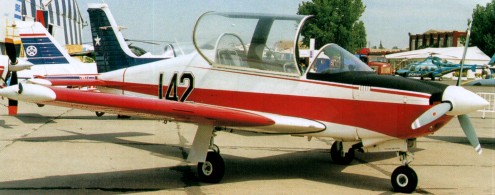
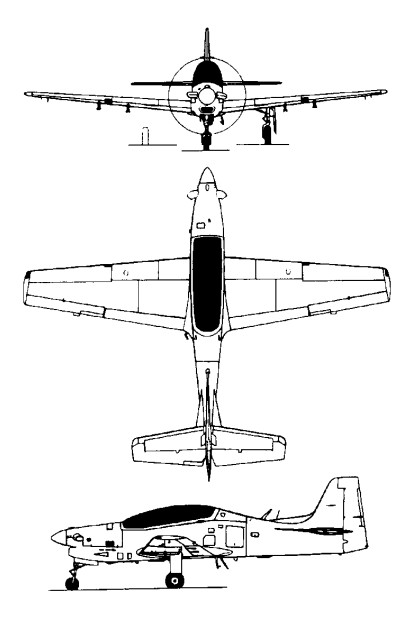
EMBRAER EMB-312 Tucano / EMB 314 Super Tucano / Shorts Tucano

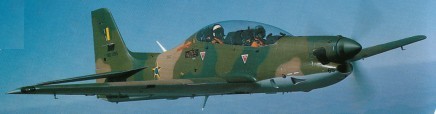
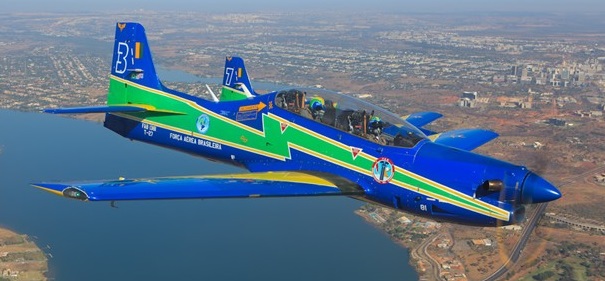
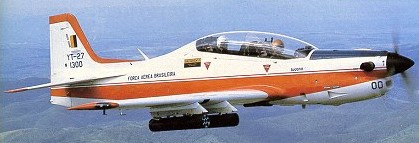
Work on the development of a new basic trainer for the Brazilian air force began in January 1978, the product of a design team led by Ing. Joseph Kovacs. A contract for two prototypes and two static test airframes was awarded to the company by the Brazilian Ministry of Aeronautics on 6 December 1978. Given the company designation EMBRAER EMB-312 and known to the Brazilian air force as the T-27, the type was named Tucano (Toucan) on 23 October 1981.

EMBRAER EMB-312 Tucano Article

A conventional-looking cantilever low-wing monoplane of light alloy construction, the EMB-312 has retractable tricycle landing gear, enclosed cabin accommodation for two in tandem seated on Martin-Baker ejection seats, and power provided by a Pratt & Whitney Aircraft of Canada PT6A turboprop engine.
The prototype flew for the first time on 16 August 1980 followed by a second on 10 December. A third, built to full production standards, flew in August 1982.

The third prototype incorporated the various modifications to be standardised on the production model. These included provision of an enlarged dorsal fin (retrofitted to the prototypes) to improve stability; reinforced wing hardpoints permitting the external load to be increased from 1323 lb / 600 kg to 2205 lb / 1000 kg; improved cabin ventilation control and air conditioning; better cabin sealing and lighting; redesigned aft fuselage inspection windows; a new modular circuit breaker panel an d engine relight facilities.

By July 1982 testing with external ordnance the Tucano proved capable of 4.4g with four 551 lb / 250 kg bombs (its maximum external load) and of up to 6.0g with 408 lb / 185 kg on each store station. Specifications revealed some weight increases, basic empty weight rising to 3946 lb / 1790 kg, max clean take-off weight to 5622 lb / 2550 kg and max loaded weight to 7044 lb / 3195 kg. These gave some minor performance reductions, maximum level speed to 284 mph / 458 kph at 13,500 ft / 4115 m and maximum initial climb as 1900 fpm / 9.65 m/sec.

Initial deliveries to the Brazilian air force were made in September 1983.

Embraer T-27 Tucano

Ordered by the FAB to replace the Cessna T-37, the type has since found world acceptance and by the middle of 1991 over 350 had been delivered out of 376 firmly ordered, with a further 86 on option. Tucano customers are the Brazilian air force (128), Honduras (12), Egypt (54), Iraq (80), Venezuela (31), Peru (20), Argentina (30), Paraguay (6) and Iran (15).

Argentina received its first five aircraft, from an order for 30, on May 21, 1987. Peru took delivery of its first EMB.312 in April 1987, and in the same month Venezuela received its 30th and last Tucano. The Brazilian Air Force’s 118th aircraft was deliv¬ered in May 1986, and by June 1987 281 had been delivered to eight customers.
Egypt is licence-building the Tucano, both for its own use and for Iraq. Embraer supplied ten complete aircraft at the end of 1984, and by April 1987 had delivered the 100th CKD kit to the Arab Organisation for Industrialisation’s Kader Factory. The combined Egyptian/Iraqi order was for 120 Tucanos, plus options.

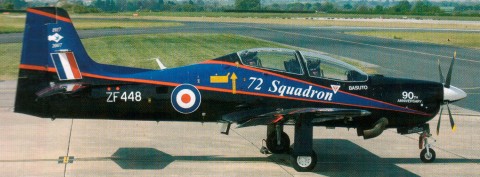
An uprated version was ordered by the UK government in March 1985 to replace Jet Provosts in the Royai Air Force and 130 were in production as the Shorts Tucano T.Mk 1, with 15 more on option. The extensively developed version features a strengthened airframe and significantly enhanced performance powewed by an 820kW Garrett TPE331-12B engine, and has itself attracted orders from Kenya (12) and Kuwait (16). The first Garrett powered aircraft flew in Brazil on February 14, 1986. The first Shorts-built Tucano flew in December 1986, deliveries to the RAF began in June 1987, and about 60 had been built and delivered by mid-1991. Although superficially similar to the original Brazilian-designed aircraft the Shorts Tucano is considerably different to meet the Service’s requirements. The original PT6A has been replaced by 1,100 shp (820 kW) Garrett TPE331-12B turboprop, a ventral airbrake added, a new cockpit layout provided and the structure strengthened for a fatigue life of 12,000 hours. Four underwing hardpoints can be fitted for export customers.

Shorts Tucano

The Embraer EMB 314 Super Tucano Brazilian turboprop aircraft designed for light attack & counter insurgency first flew on 2 June 1999.

Replica: Flying Legends Tucano

Gallery

Variants;
Tucano T.Mk 1: basic trainer version developed and built by Short Brothers in Belfast, in collaboration with EMBRAER. One-hundred-and-thirty, each powered by a Garrett TPE331-12B engine driving a Hartzell four-bladed propeller, ordered for RAF.
Tucano T.Mk 51: Twelve Shorts-built armed aircraft ordered by Kenyan air force in 1988 for weapons training. First example flown in October 1989 and delivered in 1990.
Tucano T.Mk 52: Sixteen Shorts-built basic trainers ordered by Kuwait air force in February 1989 for delivery in 1991.

EMB-312
Engine; 1 x Pratt & Whitney Aircraft Canada PT6A-25A, 560 kW
Max take-off weight; 3175 kg / 7000 lb
Empty weight; 1790 kg / 3946 lb
Wingspan; 11.14 m / 36 ft 7 in
Length; 9.86 m / 32 ft 4 in
Height; 3.40 m / 11 ft 2 in
Wing area; 19.40 sq.m / 208.82 sq ft
Max. speed; 242 kt / 448 km/h / 278 mph
Cruise speed; 319 km/h / 198 mph
Landing speed : 67 kt / 124 km/h
Initial ROC: 644 m/min / 2165ft/min / 11.0 m/s
Service Ceiling: 9150 m / 30000 ft
Fuel internal: 695 lt.
Range w/max.fuel; 1844 km / 1146 miles
T/O run: 380 m.
Ldg run: 370 m
Crew; 2
Warload: ext. 1000 kg
Combat radius: 795 km

Shorts Tucano
Engine; 1,100 shp (820 kW) Garrett TPE331-12B turboprop