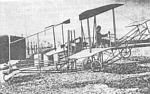
The 1911 Faccioli No. 4 was designed and built by Aristide Faccioli (the first technical director of Fiat).
Span: 26’3″
Length: 26’3″
Weight: 550 lb
The 1911 Faccioli No. 4 was designed and built by Aristide Faccioli (the first technical director of Fiat).
Span: 26’3″
Length: 26’3″
Weight: 550 lb
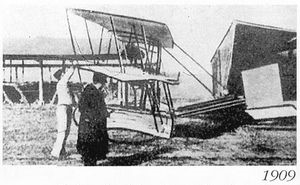
A triplane built by Aristide Faccioli in 1909.
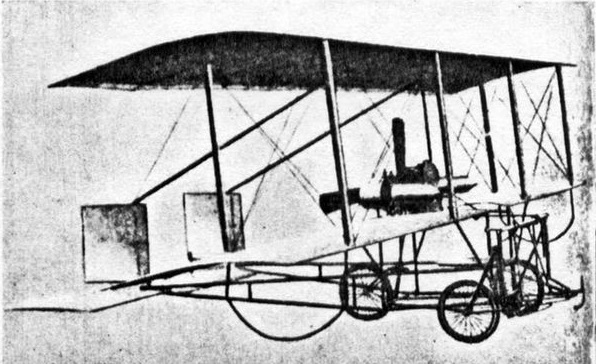
1909 SPA-Faccioli biplane, powered by a 20 hp Faccioli motor. Piloted by its designer Aristide Faccioli, in December 1909 at Turin, Italy, this machine became the world’s 15th aeroplane to make a successful controllable flight.
Designed and built by Aristide Faccioli, he was the first Italian to design and built an aircraft and its engine.
Span: 22′
Length: 11’6″
Weight: 400 lb
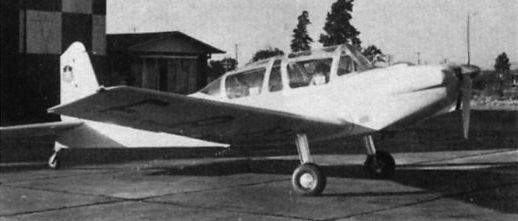
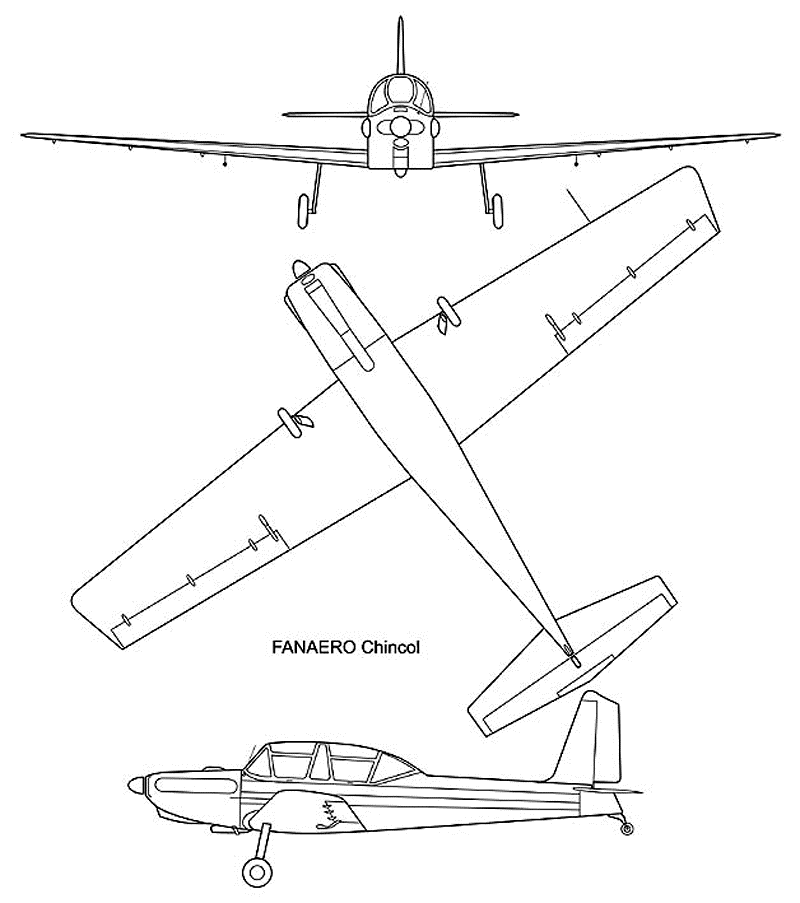
Chincol is a two-seat aircraft for initial training, designed and built at the Fabrica Nacional de Aeronaves plant at the “El Bosque” military base in Santiago, Chile.
The tandem-seat, fully aerobatic, primary trainer Chincol has mixed wood and metal construction and has a 215-h.p. Continental O-470-11 air-cooled flat-six engine. A Chilean wood called Manio is used for the cantilever wing and parts of the welded-steel fuselage. Although not so equipped on the prototype, the production Chincol was to have split flaps. The undercarriage is fixed.
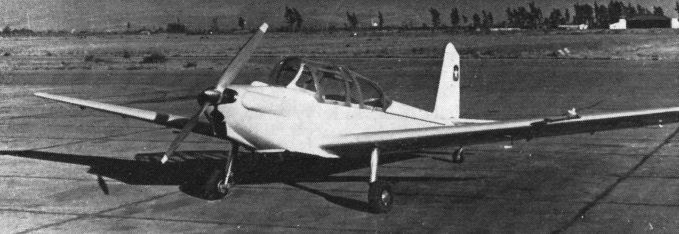
On December 14, 1955, the “Chincol” first flew.
The Chilean Air Force became interested in the aircraft and preparations began for its serial production of 50 copies, but they refused on financial problems.

Engine: Continental 0-470-11, 215 hp
Wing span: 10.40 m
Wing area: 15.70 sq.m
Length: 7.22 m
Height: 2.10 m
Empty weight: 740 kg
Maximum take-off weight: 1050 kg
Maximum speed: 210 km / h
Cruising speed: 183 km / h
Service ceiling: 17,716 ft
Range: 650 km / 404 mi
Rate of climb: 246 m / min
Seats: 2
An advanced trainer with Gipsy Six engine, designed by Lt Col A. M. Muniz.
Gipsy Major powered primary trainer designed by Lt Col A. M. Muniz.
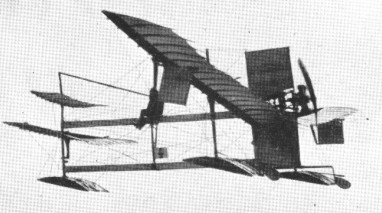
On 28 March 1910, this aircraft built by Henri Fabre made the first successful seaplane flight at Martigues, France. A float equipped aircraft named ‘Le Canard’.

The three-float, Gnôme-powered plane featured a fuselage consisting of two vertically spaced members, and trussed wing spars.
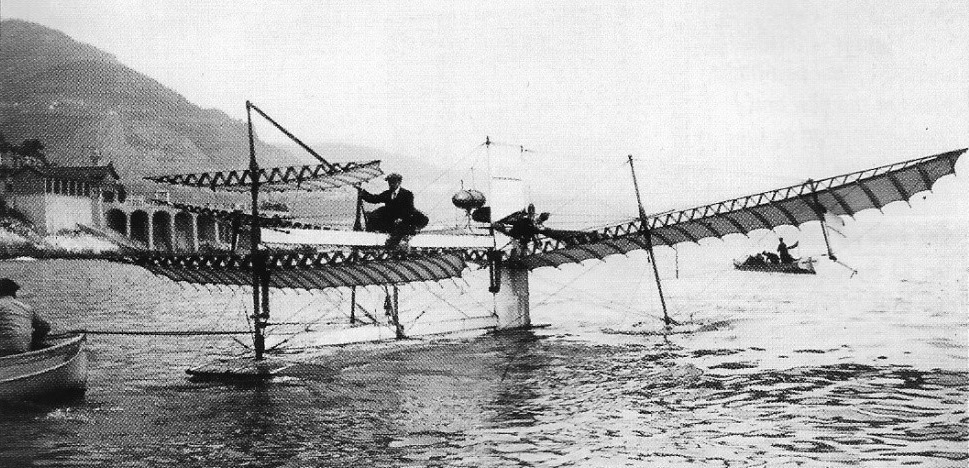
Engine: Gnome 7, 50hp
Span: 45’11” / 14 m
Length: 27’10” / 8.50 m
Height: 12 ft 2 in / 3.70 m
Wing area: 182.99 sq.ft / 17.00 sq.m
Weight gross: 1047 lb / 475 kg
Speed: 55 mph / 89 kph
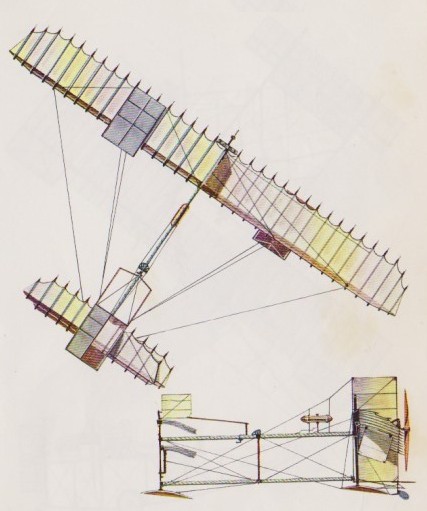

The Ezekiel Airship of 1902.
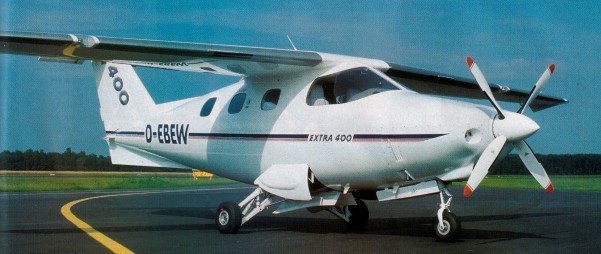
German designer Walter Extra, in the late 1990s, began to work on a larger idea—the Extra 400. Pressurization differential was 5.5 psi, providing an 8,000-foot cabin at 25,000 feet, and max gross was set at just above 4,400 pounds (or 1,999 kilograms because users of the European airway system pay progressively higher charges to operate aircraft weighing 2,000 kilograms or more).
The Extra 400, six seat, pressurised single is made from composite materials, mostly at Dinslaken. The fuselage is made in two parts, which are joined down the centre line. The wings are also constructed in two parts, top and bottom. Then the internal components are installed before the two parts are brought together. All fibreglass parts are cured in a heat room for 40 hours before moving on to the next stage in the construction process.
The engine in the 400 is the liquid cooled 350 hp Continental TSIOL 550-A Voyager, with an intercooled turbocharger. The propellor is a composite Muhlbauer constant speed four blade, with an option for a three blade version.
The Fowler flaps are in two parts on each wing, with all the working mechanism internal.
The Extra 400 six place pressurized piston single earned full certification from the FAA. The approval is in the normal category, for day/night/IFR operations. Powered by a 350 hp liquid cooled Continental TSIOL 550C powerplant, the Extra 400 can cruise at up to 230 knots at altitude, with a maximum no-wind range of better of 1,000 nm. Extra said that it would deliver the first two 400s in November 1999, before boosting production to two airplanes a month in the first half of 2001.
In parallel to the piston model, the company also developed a turbine version of the super-single, with a compact 450 shp Rolls-Royce/Allison engine.
Engine; Continental TSIOL-550-A, 350 hp, 325 hp cont.
TBO; 800 hr
Fuel type: 100LL
Prop; Mulhlbauer constant speed 3 or 4 blade 76.77 in
Length; 30 ft 10 in
Height; 10 ft 2 in
Wingspan; 37 ft 9 in
Wing area; 153.55 sq ft
Max ramp weight: 4409 lb
MTOW; 4299 lb
Landing weight: 4409 lb
Empty weight; 2659 lb
Useful load; 1640 lb
Total fuel; 178.5 USG
Max op alt; 25,000 ft
Pressurisation; 5.5 psi
Max cruise 20,000 ft; 259 kts
Max cruise 75% 25,000 ft; 243 kt
Econ cruise 65% 25,000 ft; 229 kt
Max. range economy (55%): 1160 nm
Stall; 55-57 kt
Initial climb rate: 1,400 fpm
Takeoff distance: 1,475 ft
Landing distance: 1,000 ft
Electrics; 24v, 1 battery
Alternators; 1 x 100 amp, 1 x 85 amp
Wheel base: 8.25 ft
Cabin doors: 1
Cabin width: 4.56 in
Cabin height: 4.07 in
Seats: 6
Landing gear type: Retr.
1997 price: 1,300,000DM / US$1.3m
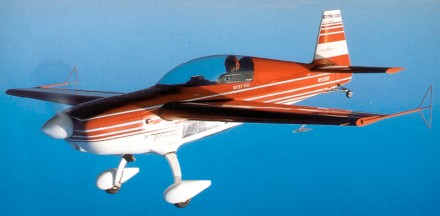
Extra 300 in single-seat 300 hp aerobatic competition (300 S), tandem two-seat aerobatic and training/cross-country (300), and 300 L low-wing (instead of mid-wing) variants; Extra 330 as a derivative of Extra 300 with Textron Lycoming AEIO-580 engine.
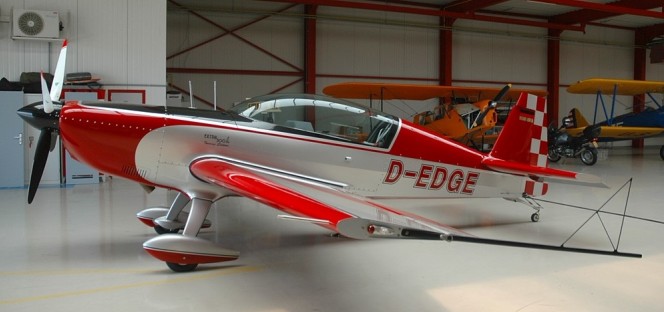
The Extra 330 LE high performance electric aerobatic airplane, jointly developed by Extra Aircraft and Siemens, has successfully demonstrated aerobatic performance as well as the capacity of glider towing and has beaten several world records. At a Paris Airshow the aircraft towed an aerobatic glider to 1000 Meter (with an average climb rate of 9.5 meters per second) then the glider performed aerobatics while the Extra landed and then after the glider landed the Extra, without recharging, took off again and for an aerobatic show with 260Kw on the prop.
Extra 300
Engine: Lycoming AEIO540, 300HP
Propeller: MT Composite 3 Blade Constant Speed
Top Speed: 220 knots
Roll Rate: 420 Degrees per Second
Climb Rate: 3,200 feet per minute
Load Limits: +/- 10G
Weight: 950kg
Fuel Capacity: 171 litres
Airframe: Composite Monoplane

