
The Extra 200 is a lower-cost, two-seat and 200 hp aerobatic competition and aerobatic training monoplane (first flown 1996).
The Extra 200 is a lower-cost, two-seat and 200 hp aerobatic competition and aerobatic training monoplane (first flown 1996).
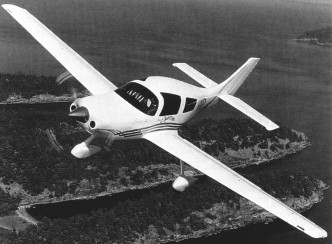
The Wheeler Express was designed not around the standard issue 170lb pilot/passenger, the aircraft providing two inches additional head and leg room. Cockpit width is the same as a late model Beech Bonanza. Designer Ken Wheeler reasoned that, as a four place aircraft, much of the flight time would be logged on long distance cross country with a consequent requirement for comfort. The basic construction of the Express is a foam covered sandwich, monocoque structure; built up from E glass, various foam core materials and vynalester resin.
Formed in two pieces split horizontally, the fuselage comes ready to be joined; the packing case serving as the lower fuselage jig.
The aircraft is stressed to 11 Gs. Powered by a Lycoming IO-360, the low wing, fixed tricycle undercarriage Wheeler Express is said to out-lift a Cardinal, out-distance a Bonanza and out-climb a Mooney.
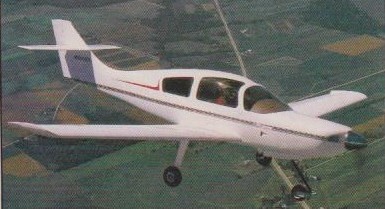
In 1988 the kit price was US$19,750.
In 1998 Express Aircraft offered a revised version of the Express in kit form. The claim was the composite four seater would be easier to build, lighter, and with a larger tailplane to improve handling. Construction time was still more than 2000 hrs.
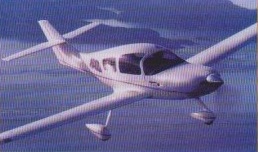
The production Express featured a larger fuselage and a new powerplant. The four seat composite aircraft is now powered by a six cylinder, 210 hp Continental engine, which provides a 210 mph cruise over a 1,200 mile range.
Optional low or cruiciform tail, and cargo pod requiring a minimum of 250 hp.
Wheeler Express
Engine: Lycoming IO-360, 200 hp
Wingspan: 31 ft
MTOW: 2300 lb
Fuel capacity: 51 USG
Cruise: 195 mph at 7000 ft
Range: 1100 mi
Engine: Lycoming IO-540, 300 hp
Wing span: 9.45 m
Wing area: 11.96 sq.m
MAUW: 1452 kg
Empty weight: 835 kg
Fuel capacity: 348 lt
Max speed: 362 kph
Cruise speed: 338 kph
Minimum speed: 92 kph
Climb rate: 8 m/s
Fuel consumption: 50 lt/hr
Seats: 4
Kit price (1998): $32,000
90 FT
Engine: Lycoming IO-540, 300 hp.
Speed max: 220 mph.
Cruise: 220 mph.
Range: 1450 sm.
Stall: 58 mph.
ROC: 1200 fpm.
Take-off dist: 1200 ft.
Landing dist: 800 ft.
Service ceiling: 20,000 ft.
Fuel cap: 92 USG.
Weight empty: 1875 lbs.
Gross: 3200 lbs.
Height: 8 ft.
Length: 25 ft.
Wing span: 31 ft.
Wing area: 130 sq.ft.
Seats: 4-6.
Landing gear: nose wheel.
90 TD
Engine: Lycoming IO-550, 280 hp.
Speed max: 235 mph.
Cruise: 225 mph.
Range: 1600 sm.
Stall: 58 mph.
ROC: 1200 fpm.
Take-off dist: 1200 ft.
Landing dist: 800 ft.
Service ceiling: 20,000 ft.
Fuel cap: 92 USG.
Weight empty: 1790 lbs.
Gross: 3200 lbs.
Height: 8 ft.
Length: 25 ft.
Wing span: 31 ft.
Wing area: 130 sq.ft.
Seats: 4-6.
Landing gear: tail wheel.
S-90
Engine: Lycoming IO-540-K1G5, 300 hp.
Vne: 230 kt.
Cruise 75%: 185 kts.
Stall: 55 kts.
Seats: 4.
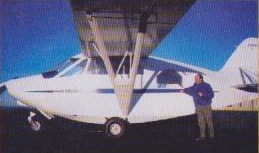
The tube and spaceframe Private Explorer offers 9.5sq.m of cabin area, high enough to stand up in. Circa 1998.
Engine: Lycoming
Wing span: 14.4 m
Wing area: 26.7 sq.m
MAUW: 1667 kg
Empty weight: 973 kg
Fuel capacity: 300 lt
Max speed: 200 kph
Cruise speed: 180 kph
Minimum speed: 67 kph
Fuel consumption: 40 lt/hr
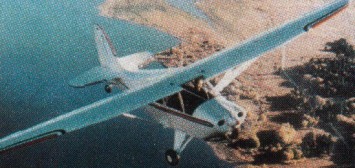
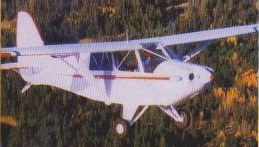
Explorer Aviation offers kits to build the Ellipse four-seat high-wing monoplane, first flown 1997.
A folding wing design, the wings are pre-built.
Empty weight: 534 kg
Wing span: 11.16 m
Wing area: 11.78 sq.m
Fuel capacity: 155 lt
Engine: Lycoming O-320, 150 hp
MAUW: 998 kg
Seats: 4
Max speed: 265 kph
Cruise speed: 246 kph
Minimum speed: 71 kph
Climb rate: 7 m/s
Fuel consumption: 30 lt/hr
Kit price (1998): $35,000
Top speed: 164 mph
Cruise: 156 mph
Stall: 55 mph
Range: 650 sm
Rate of climb: 942 fpm
Takeoff dist: 1100ft
Landing dist: 1100 ft
Service ceiling: 15,200 ft
Glide ratio: 14:1
Engine: Lycoming O-320, 150 hp
HP range: 125-200
Fuel capacity: 41 USG
Empty weight: 1177 lb
Gross weight: 2200 lb
Height: 6.3 ft
Length: 20 ft
Wing span: 36.6 ft
Wing area: 128 sq.ft
Seats: 4
Landing gear: tailwheel

Outwardly reminiscent of the Long EZ, the new composite canard used the Burt Rutan design as a starting point. Added to the aerodynamic appeal is fully retractable landing gear, split canopies, a 205 hp engine and a longer, wider pre moulded fuselage.
Named after the Berkut (Berkoot), a Russian Golden Eagle, by designer Dave Ronnenberg, the new craft uses a Lycoming 0 360 to provide a cruise of 208 knots indicated at 8000 feet on 2840rpm.
Constructed of carbon fibre and fibreglass a balsa core sandwich with a safety epoxy matrix the canard pusher has an overall length of some 18 foot 6in. The cockpit features a sidearm controller/stick with HOTAS (Hands On Throttle and Stick Controls). Going through its test programme in 1991 with manufacturing company Experimental Aviation, the aircraft has a claimed range of 1,400 nm at 65 percent power. Other preliminary specifications include a 2000 fpm ROC, 54 knots minimum controllable airspeed gear down, an endur¬ance of 5.5 hours at 65 percent power, a ceiling of 35,000 feet, maximum useful load of 965 lbs and an empty weight of 1,035 lbs.
The prototype Berkut was designed and built by Dave H. Ronneberg and Kerry Beresford.
Like the Long EZ, the Berkut carries 2 people in tandem seats. The front seat occupant has access to all instrumentation and controls. The rear seat, normally holding the passenger, is equipped with a side stick and throttle, but no rudder pedals, brakes, or instruments.
Out of 57 kits sold by 1998, 7 were finished.

Builder Jerrold Jorritsma installed a General Electric T-58 jet engine in his Berkut.
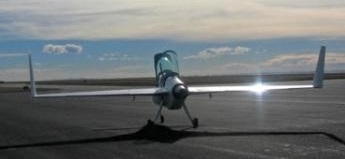
It was destroyed following an engine failure in Loveland, CO, May 9, 2010.
Engine: Lycoming IO-360-B1A, 205 hp.
HP range: 180-205.
Height: 7.5 ft.
Length: 18.5 ft.
Wing span: 26.67 ft.
Wing area: 110 sq.ft.
Weight empty: 1035 lbs.
Gross: 2000 lbs.
Fuel cap: 58 USG.
Speed max: 250 mph.
Cruise: 209 mph.
Range: 1228 sm.
Stall: 62 mph.
ROC: 2000 fpm.
Take-off dist: 1000 ft.
Landing dist: 1000 ft.
Service ceiling: 29,500 ft.
Seats: 2.
Landing gear: retractable nose wheel.
Renaissance Composites Berkut
Engine: Lycoming IO
Wing span: 8.12 m
Wing area: 10.12 sq.m
MAUW: 907 kg
Empty weight: 469 kg
Fuel capacity: 219 lt
Max speed: 398 kph
Cruise speed: 385 kph
Minimum speed: 107 kph
Climb rate: 10 m/s
Fuel consumption: 38 lt/hr
Seats: 2
Kit price (1998): $34,480

Engine: Lycoming IO-580-B1A, 315 hp@SL
TBO: 1800 hr
Propeller: 3-blade, CS, 82-in. Hartzell
Landing gear: Tri./Fixed
Gross weight: 3800 lb
Takeoff weight: 3800lb
Empty weight, std.: 2300 lb
Useful load, std: 1500 lb
Payload, full std. fuel: 912 lb
Usable fuel: 98 USgal
Baggage capacity: 250 lb
Wingspan: 38 ft. 9 in.
Wing loading: 20.5 lbs./sq. ft
Power loading: 12.1 lbs./hp
Seating capacity: 4 + 1
Cabin doors: 4
Cabin width: 52 in
Cabin height: 50 in
Cabin length: 138 in
Cruise speed@gross: 150 KTAS
Cruise speed@3,200 lb: 160 KTAS
Max range: 793 nm
Stall speed: 54 KCAS
Rate of climb@gross: 1091 fpm
Takeoff distance: 775 ft
Takeoff over 50 ft. obstacle:1286 ft
Base price: US$485,000
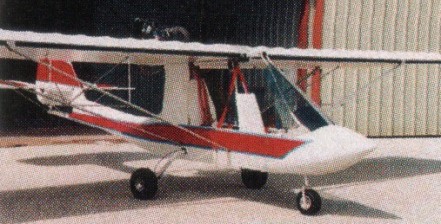
Four versions of this aircraft (LSA) were produced: the standard series and the wide body model, the stretch model and four stroke model.
The kit for the Excalibur II features prebuilt tail surfaces, wings, ailerons end fuselage, and all the controls are already installed. Build time for the kit is estimated at 100 to 200 hours.
Options include: 60-hp HKS 700E air-cooled 4-stroke or 4O-hp Rotax 447 air- cooled 2-stroke engine, instruments (ASI, altimeter, tach, dual CHT dual EGT, panel-mounted compass, ignition switch), standard or amphibious floats, fiberglass wheel pants, BRS ballstic emergency parachute, doors, strobe lights and paint materials.
Construction is 6061-T6 and 2024-T3 aluminum tube airframe with chromoly steel weldments where needed, stainless steel pop rivets and AN or military spec hardware. Wings and surfaces are covered with Superflite fabric. No welding or machining is necessary and all the critical work is completed at the factory.
Standard Engine; Rotax 503 (52HP)
Wingspan; 31 ft. 6 in.
Chord; 60 in
Length; 20 ft. 0 in.
Height; 6 ft. 0 in.
Wing area; 185 sq.ft.
Empty weight; 450 lbs.
Useful load; 500 lbs.
MTOW; 900 lb
Ultimate load factor; +6 -4
Build time; 100-200 hours
Field assembly time; 20 min.
VNE; 100 mph
Top level speed; 90mph
Cruise speed; 50-90 mph
Stall speed; 30-35 mph
Climb rate; 1200 fpm solo, 700 ft. dual
Take off roll; 96 ft.solo, 196 ft. dual
Glide ratio; 11:1 solo, 9:1 dual
Service ceiling; 14,000 solo, 12,500 dual
Range; 290 sm
Fuel used at cruise; 2.3 gph to 4 gph
Fuel capacity; 10 gal. (U.S.)
Cockpit width Standard Body; 26 inches
Seats: 2 Tandem
Undercarriage; nose wheel
LSA
Excalibur Wide Body
Engine: Rotax 503, 52 hp
HP range: 52-65
Cruise: 80 mph
Stall: 33 mph
Range: 290 sm
Rate of climb: 1200 fpm
Takeoff dist: 100 ft
Landing dist: 300 ft
Fuel capacity: 20 USG
Empty weight: 450 lb
Gross weight: 950 lb
Length: 20 ft
Wing span: 32 ft
Wing area: 183 sq.ft
Cockpit width: 31 in
Seats: 2
Landing gear: nose wheel
LSA
Excalibur Four Stroke
Engine: Rotax 582, 65 hp
Cruise: 80 mph
Stall: 33 mph
Range: 290 sm
Rate of climb: 1200 fpm
Takeoff dist: 96 ft
Landing dist: 300 ft
Fuel capacity: 20 USG
Empty weight: 470 lb
Gross weight: 950 lb
Length: 20 ft
Wing span: 31.5 ft
Wing area: 183 sq.ft
Cockpit width: 26 in
Seats: 2
Landing gear: nose wheel
LSA
Excalibur Stretch
Stall: 26 kt / 30 mph / 48 kmh
Cruise: 70 kt / 80 mph / 129 kmh
VNE: 87 kt / 100 mph / 161 kmh
Empty Weight: 204 kg / 450 lbs
MTOW Weight: 454 kg / 1000 lbs
Climb Ratio: 1200 ft/min / 6 m/s
Glide Ratio: 11:1
Take-off distance (50ft obstacle): 200 ft / 61 m
Landing distance (50ft obstacle): 300 ft / 91 m
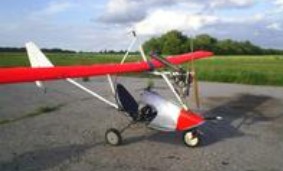
Very simple REAL Ultralight Aircraft for flyweight pilots. Delivered as kit package or ready to fly planes by Evgenij Kovalenko with several engine choices. 2009 Price: 6200 EURO
Stall: 35 kt / 40 mph / 65 kmh
Cruise: 43 kt / 50 mph / 80 kmh
VNE: 67 kt / 78 mph / 125 kmh
Empty Weight: 55 kg / 121 lbs
MTOW Weight: 145 kg / 320 lbs
Glide Ratio: 7
Take-off distance (50ft obstacle): 480 ft / 145 m
Landing distance (50ft obstacle): 390 ft / 120 m
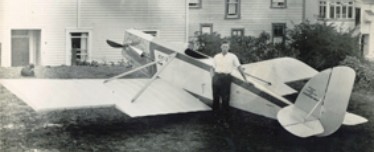
Built by Ron and Ernie Everson in the early 1960s.
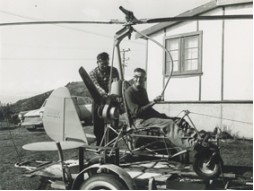
The Everson gyrocopter was built by Ron and Ernie Everson in the early 1960s. The gyrocopter was tested at Muriwai Beach, New Zealand, where it was tethered to a vehicle and driven at high speed. The aircraft did not receive a Certificate of Airworthiness.
Ron Everson donated the gyrocopter to MOTAT in 1982.

