Ferber 1907 Aeroplane

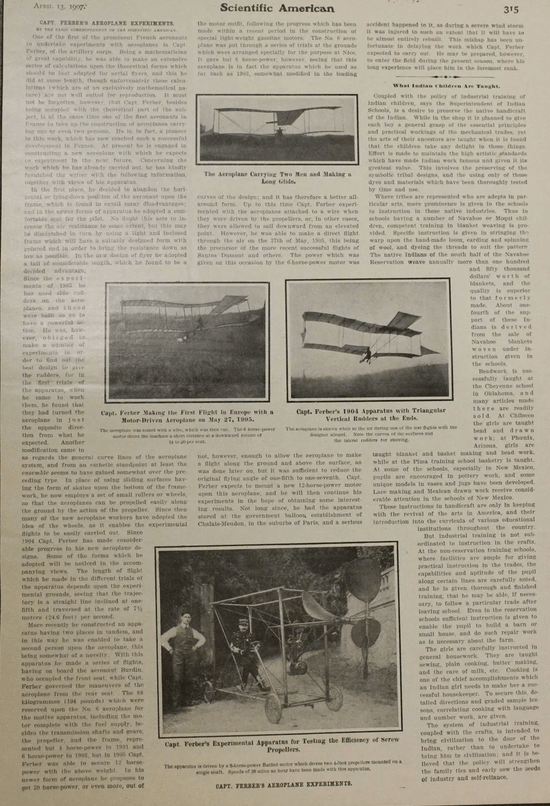
From 1904-1906, Ferber collaborated with Colonel Charles Renard at Chalais-Meudon. In 1905, he built a larger glider to which he married a 12 hp motor, and on 25 May at Chalais -Meudon he launched it from an overhead cable and made a short powered glide. Although not really a successful airplane, it seems to rank as the first rationally conceived and constructed airplane to fly in Europe.

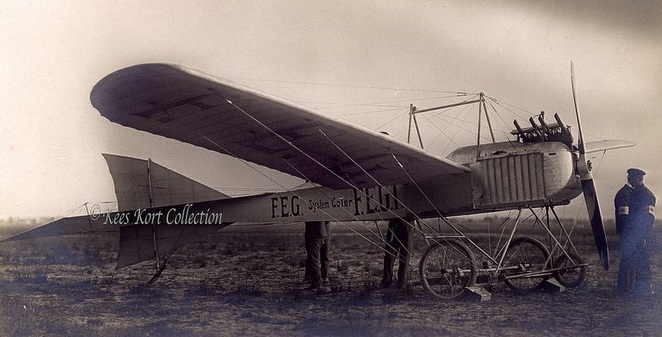
F.E.G. Eindecker

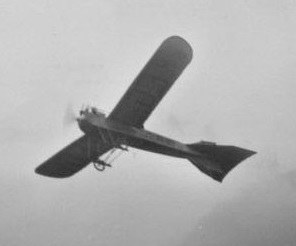
The 1912 F.E.G. Eindecker appeared on the flying field Johannisthal, Germany, in 1912 and made a great impression on the public.

They built this monoplane according to a design of Leutnant Coler, hence the additional System Coler on the side of the fuselage.

This was their first and only machine. The original version sported an anti-nose-over wheel.

The machine was very popular so card producers made at least 5 different cards showing the F.E.G. I System Coler in flight.

After their adventury with this monoplane the F.E.G. firm and Coler left the aviation field.

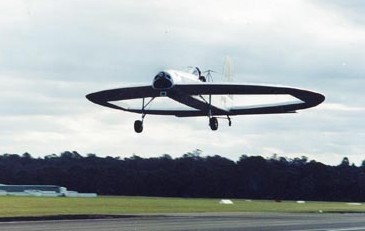
Feast Circle CW.4

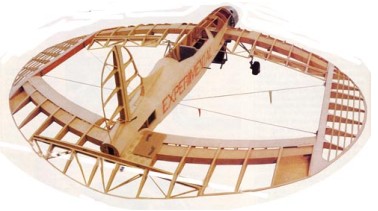
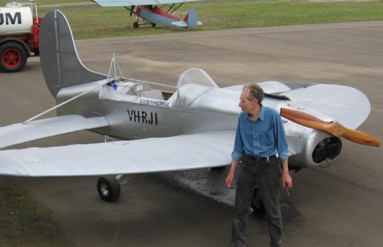
An experimental circular plane designed and built by Ron J Feast of Sydney, Australia. The aircraft was evolved from a series of flying models made over a period of 3 1/2 years. After first building a full size “mock up”, construction began in October, 1997 at Bankstown Airport. Australia hoop pine was used for the fuselage frame and plywood for the covering.
Each of the main front and rear wings were constructed in one length and they have curved box spars. All the wings are covered with Ceconite except for the leading edges of the main wings which are plywood covered.

The engine is ROTAX 912 UL 80 HP. The landing gear was strut type fitted to the wings and a steerable tail wheel.
Flight tests began at Camden Airport in August, 2000, and the first flight was in July, 2001.
The test pilot was Graham White. Flight tests continued until December, 2001 when it was decided in the interests of good lateral control at the very slow landing speeds of this aircraft to make a number of design changes.
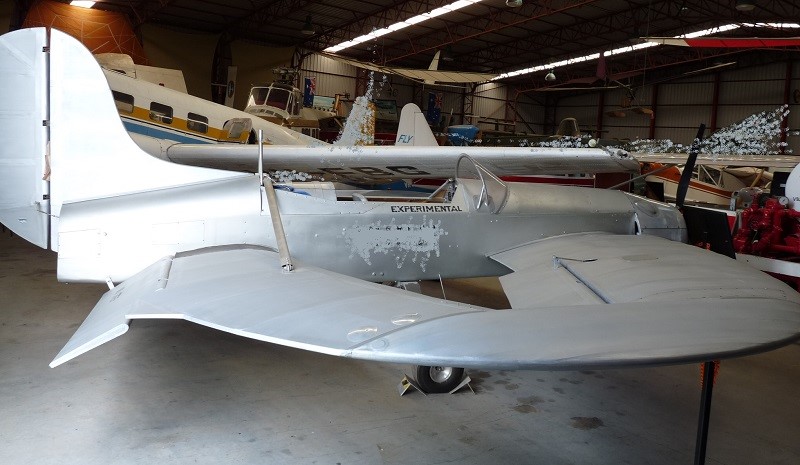
The rear main wing was moved forward to obtain a more compact external shape. Shortened side wings were built. Both main wings were cut at the centre and joined inside the fuselage to obtain a 5° dihedral. A tricycle undercarriage was built consisting of hardened aluminium leaf springs, coil expansion springs and cables. The nose wheel has a castoring action. Ailerons and elevators have streamlined leading edges and increased area.
It was completed in November, 2004. First taxi tests in February, 2005.

2nd version

Fearnside Bleriot XI replica

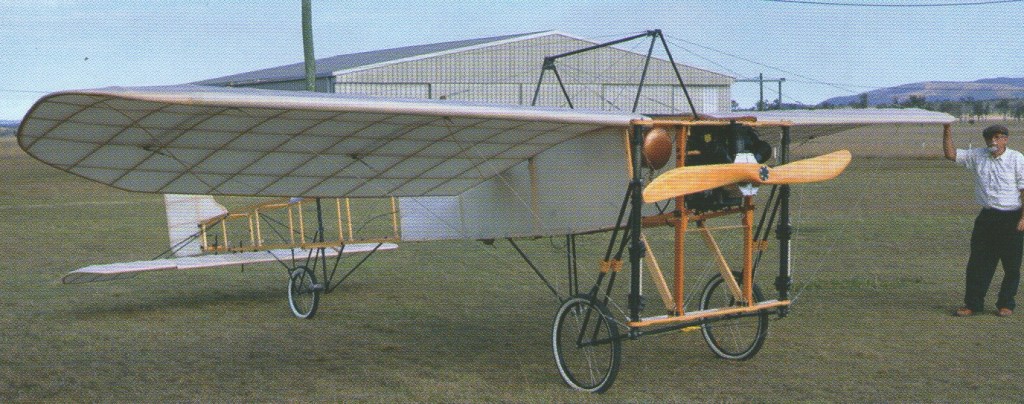
Sighted at Queensand’s Watts Bridge Memorial Aerodrome in 2010 was a Bleriot XI parked on the grass. Built by Keith Fearnside, this aircraft adheres to the original fabric covered, wire-braced timber construction techniques (including wing warping controls).
Keith’s aircraft has been fitted with a modern Rotax power plant but he has concealed it behind a dummy Anzani requiring close inspection before the actual details of the installation are revealed.

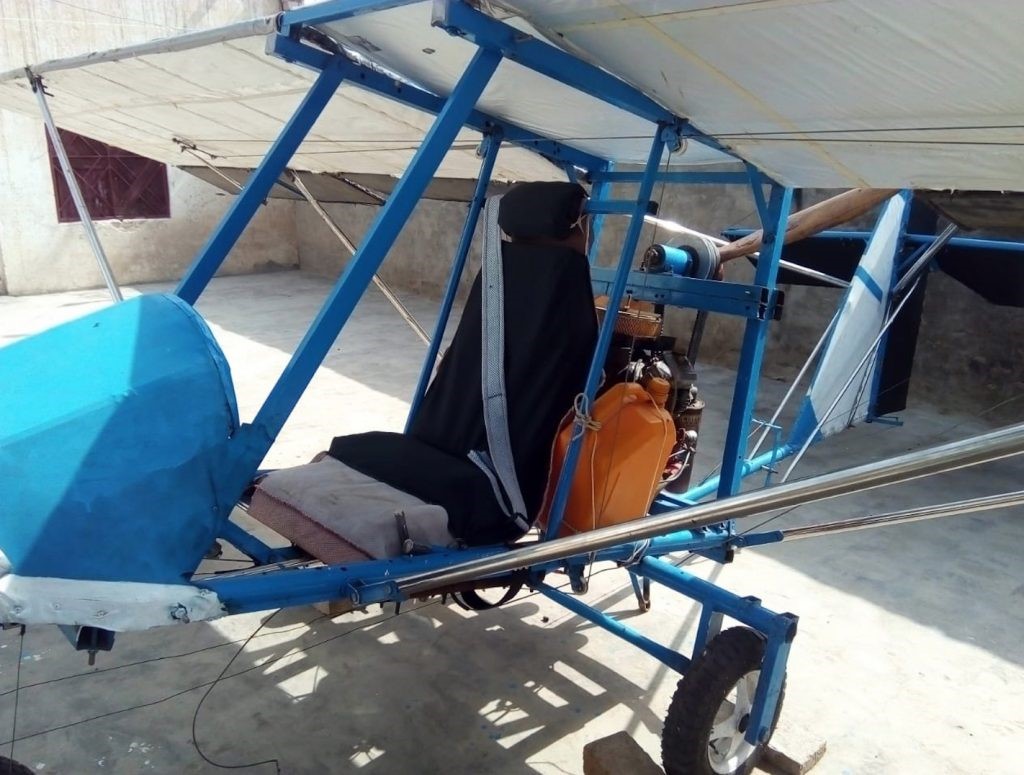
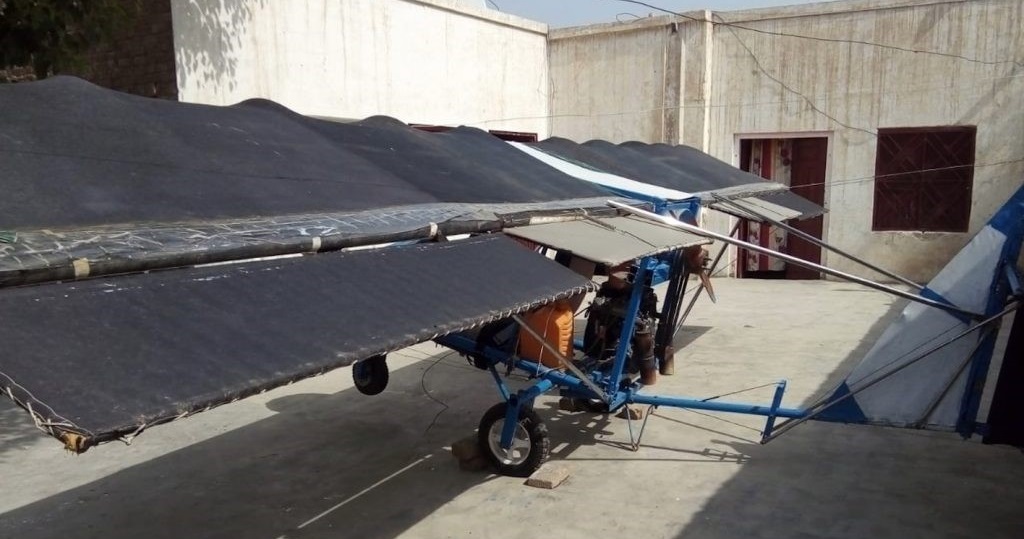
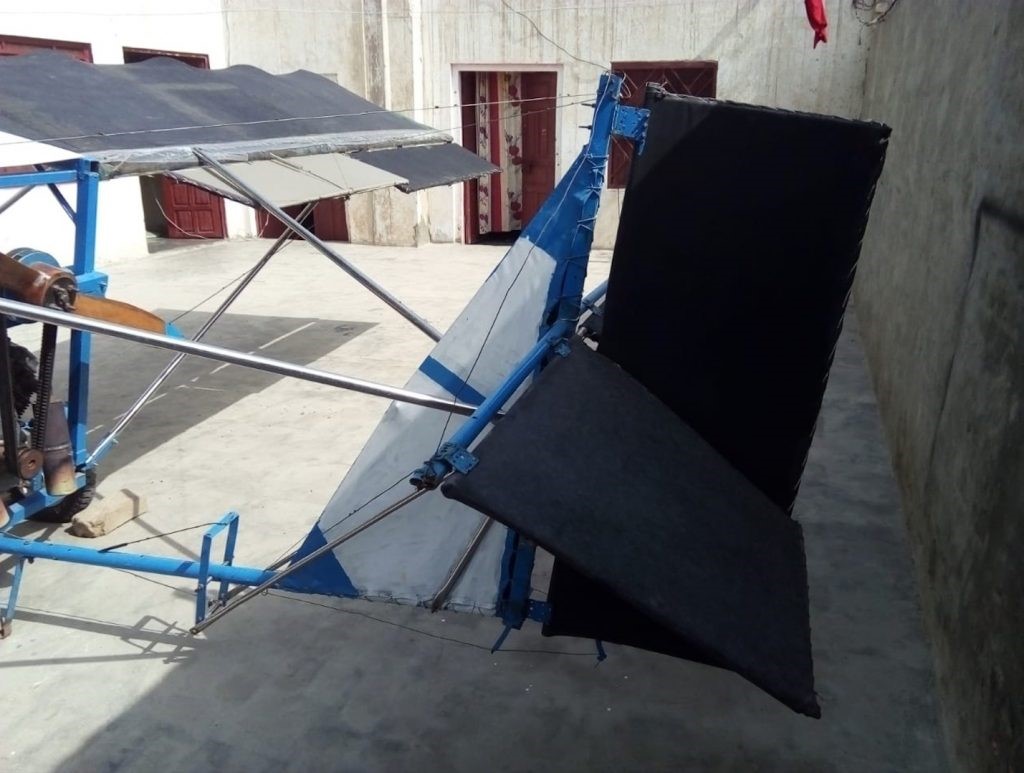
Fayaz 2019 Aeroplane

Muhammad Fayaz, a popcorn seller and part-time security guard, was inspired to make an aeroplane after watching the National Geographic series Air Crash Investigation in 2015, and had sold a field, used his savings and taken out a bank loan to pay for it. He had visited Lahore several times in order to “have a glimpse of a Boeing plane and examine how it looks like and what material and parts have been used”.

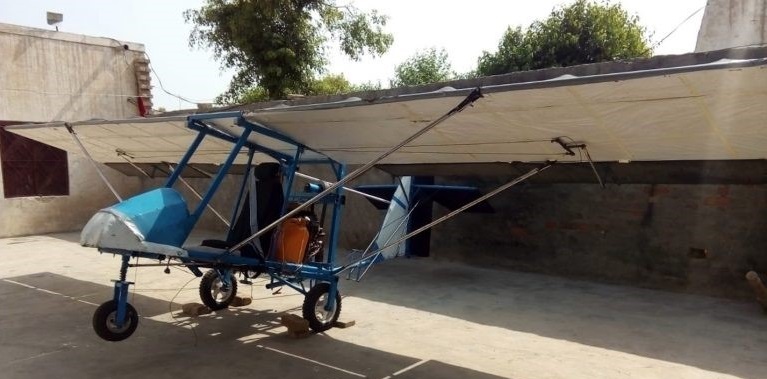
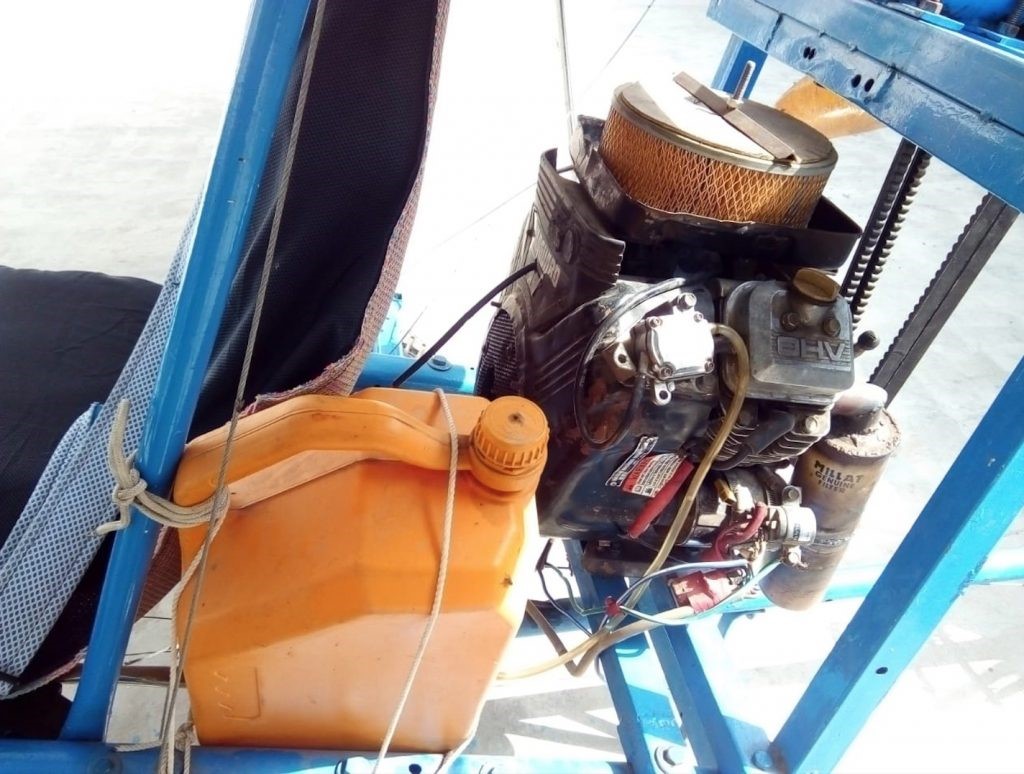
Starting the build in late 2018, the 92kg craft cost him a total of Rs50,000 (£270) to make and he claims it can fly to 1,000 feet. The programme, namely Air Crash Investigation on National Geographic, had helped me a lot and he became familiar with the parts of an airplane and their functioning, then started working on the project.

His friends and family reportedly made fun of him and his mother expressed her concern about the test flight, but this apparently did not deter him.

He experimented with second-hand engines until he found one light enough, powerful enough and cheap enough to use for the plane.

Mr Fayaz told reporters he had been told to contact Pakistan’s Civil Aviation Authority (CAA) to gain permission for his test flight, but he did not do so. Owing to limited resources, he was unable to contact the civil aviation officials and finally decided to take test flights without getting permission.

With a crowd of 500 watching, he reportedly used a length of road free from telegraph poles as the runway for his maiden flight and “took several rounds in the air”.

“I made the aircraft with my hard work. My plane can fly till 1,000 feet. Give me one chance so that I can prove that I am a patriotic Pakistani. I informed every department but no one responded me,” Mr Fayyaz said, according to Pakistan Today.

Mr Fayaz was then reportedly arrested for building an aircraft without a permit and “performing aerobatics in the makeshift flying machine”, the “first incidence report” filed by local police said.

The police at the station where Mr Fayaz was held after the incident had taken Mr Fayaz into protective custody and the “unreliable machine impounded to ensure it did not cause any harm to villagers who had gathered to witness the experiment.” The aircraft was confiscated.

Since his release, he asked that the prime minister and army chief give him an opportunity to serve the nation, as “I can make the planes for the country at a low cost.”

He also asked the government to help him get his plane back.

“No one can believe a person who has never been to college has built his own aircraft. This is the result of my passion and constant effort.”

But the impoverished man couldn’t complete his studies after his dad Muhammad Ishaque died and had to quit education after middle school aged 14.

Fayyaz was forced to instead sell popcorn to earn a living – but didn’t stop dreaming of flying a plane.

Married dad-of-four Fayyaz, who has no professional pilot training, said: “It feels great my childhood dream has come true.

Fayyaz learned the basic rules of air pressure and flying techniques with the help of experiments he carried out on his own. He also watched National Geographic’s ‘Air Crash Investigation’ show to learn about why planes crashed and to understand the different parts of an aircraft and their functions.

Fayyaz said: “I saw various models of aircraft and the thought came in my mind that if I cannot afford buying a plane, I must try to build my own.

“I took some pictures of the aircrafts at the museum and then took help from internet and my mechanic friends to design and build this aircraft.

The fruits of Fayyaz’s labour have now been appreciated by the Civil Aviation Authority which has also extended all the help and efforts to promote and support his innovation.

In a statement, the CAA said they ‘appreciated the passion and skills of the mini airplane maker’ and would provide him the required guidance to achieve more expertise in the field.

The body said under the country’s New Aviation Policy 2019, developed in line with the vision of Prime Minister Imran Khan, every effort will be taken to promote the sector and support innovation.

“My family had opposed me due to the risks involved and anticipating the failure of my invention, but I told them that they have to have faith and believe my hard work will pay off.

“But unfortunately, when I tried to make the solo flight, I was arrested by the police.

“They also took my plane into custody for a week, and I had to pay a fine of £17 to release it.

“I am very happy that now I will get technical support from Civil Aviation Authorities and I will be able to fulfil my childhood dream of flying an aeroplane.
Fawcett 120

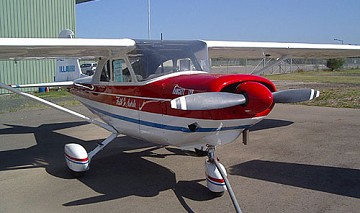
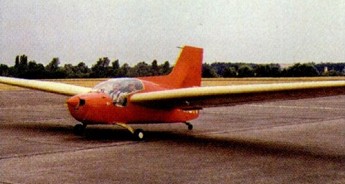
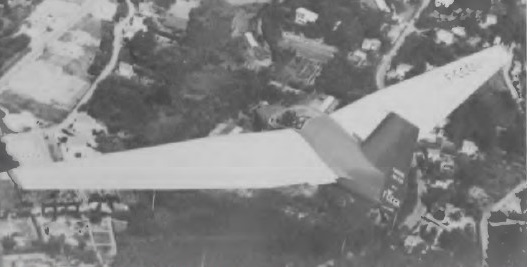
This Australian 4-seat high-wing cabin monoplane was designed by Luigi Pellarini in 1953 and built by Fawcett Aviation of Bankstown, as a replacement trainer to the Tiger Moth for their subsidiary, the Illawarra Flying School.
First flight November 1954.
Only one prototype was constructed; after unsuccessfully competing for an Army contract, it was stored at Bankstown until the late 1970s, when it was rebuilt with a four cylinder horizontally-opposed engine. The aircraft has always carried the registration VH-BQC.

Fawcett 120 Article

Of all metal construction (quite new in its day for light aircraft), the Fawcett 120 has a tricycle undercarriage, has dual controls and is fully aerobatic.
Wingspan: 10.87 metres, length 6.91 metres, height 2.06 metres, maximum speed 204.36 km/h, ceiling 14,600 feet.
Originally powered by a 130 hp de Havilland Gipsy Major 1 Series 1 four cylinder in-line piston engine, the aircraft was re-engined in 1979 with a four cylinder horizontally -opposed piston engine.

Fauvel AV.222

AV.222

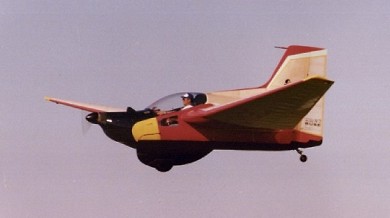
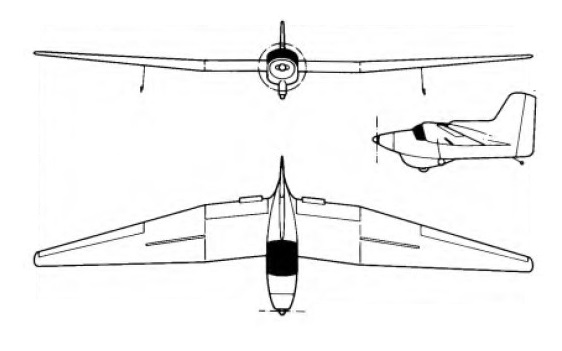
After having designed and flown the AV-221, Charles Fauvel developed a version for amateur construction, the AV-222. Lighter and of a less complex structure, this flying wing could be disassembled into three sections (the center section had no dihedral). It had a laminar airfoil (optional, or the more conventional Fauvel airfoil), and could be equipped with a choice of a classic landing gear or a mono-gear – a non-retractable monowheel from a Piper Cub in a large under-fuselage fairing supplemented by outrigger wheels under the wings and a small steerable tailwheel. Tthe last being the recommended one because it is lighter, more economical to fabricate and easier to install, and a single fin and rudder. The craft mounted either a Rectimo engine (40 HP), Limbach (60 HP) of Volkswagen origin, or the 2-cycle Rotax. The Rectimo and Limbach engines drive a two-blade fixed-pitch wooden propeller of 3ft 5.25in diameter. Fuel tanks could contain up to 30 liters (with 45 as an option).

The AV 222 was fitted with a conventional landing gear with twin main wheels to improve handling over rough ground; this new undercarriage consisted of cantilever self sprung laminated glassfibre legs and Duruble wheels with hydraulic brakes and streamlined wheel fairings. With the new undercarriage a larger dorsal fin was fitted to compensate for the smaller side area of the spats compared to the monowheel fairing.

In February 1971 M Fauvel decided to end the commercial production of his sailplanes, but plans of the AV 222 were available for amateur constructors, who were building examples of this version in France, Germany, Italy, the UK and the USA.

Several sets of AV-222 plans were sold in France, Germany, Italy, Sweden, United Kingdom and in the United States. The first AV-222 flying wing, constructed by Hans Martinson and registered SE-XSL, flew in Sweden in May 1992, while several other construction projects are pursued in France, Germany and in the United States.

AV 222
Engine: Limbach, 45 kW / 60 hp
Span: 53 ft 9.75 in / 16.4 m
Length: 17 ft 1.5 in / 4.95 m
Wing area: 247.6 sq ft / 23.05 sq.m
Airfoil: Fauvel F2 17%
Aspect ratio: 12
Empty weight: 716 lb / 350 kg
Max weight: 1,212 lb / 650 kg
Water ballast: None
Max wing loading: 23.91 kg/sq.m / 4.89 lb/sq ft
Min sinking speed: 2.85 ft/sec / 0.87 m/sec at 46 mph / 40 kt / 74 km/h
Best glide ratio: 26:1 at 53 mph / 46 kt / 85 km/h
Max. speed: 210 km/h
Stalling speed: 40 kt / 74 km/h
Take-off run: 361 ft / 110m
Rate of climb at sea level: 591 ft/min / 180 m/min

Fauvel AV.221

AV.221

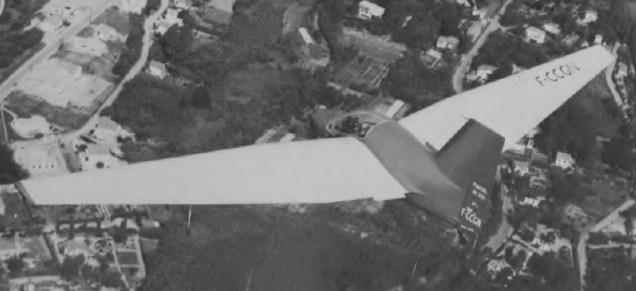
This motorglider was a new derivative of the side-by-side two-seater AV-22 and flew for the first time on April 8, 1965. It was exhibited in August of that same year to the 18th national gathering of the amateur builders of Montluçon. This motorglider was a two-seater side-by-side that was equipped with a Rectimo 4 AR 1200 39 hp engine (Volkswagen aircraft conversion) mounted on the nose, driving a fixed-pitch fully feathering wooden propeller. The prototype originally had a single glider-style main landing gear and was later changed to a more classic main landing gear of two wheels with hoop-style fiberglass gear legs. The wing was copied directly from the AV-22, but the fuselage was an entirely new structure in order to accommodate the new two-man crew requirements and addition of the engine and a single fin and rudder.

First shown in model form at the 1964 Cannes air show, the AV 221 has a short fuselage, mid-set cantilever wooden wings with slight forward sweep and built in three sections, a large fin and rudder with no tailplane and in its original form – a non-retractable monowheel from a Piper Cub in a large under-fuselage fairing supplemented by outrigger wheels under the wings and a small steerable tailwheel.

The prototype had completed six crossings of the Alps by mid-June 1966.

Later, the AV-221 was re-engined with a Survol – De Coucy “Pygmée”, a 4-cycle engine of 40 Horsepower that had the advantage of being very light compared to the Volkswagen. This lighter weight caused a lengthening of the AV-221 fuselage and was newly designated as AV-221 B. But the AV-221 never flew with this engine.

Production AV221s would have been powered by the 61hp Rectimo 4 AR 1600 version of the Volkswagen engine or in AV 221B form – by the 40hp or 50hp Fauvel Pygmee four-stroke ‘flat four’ engine; both these version would have had the wing span increased by 3ft to 53ft 9.5 in, with Hoerner wing tips, and the AV221B was 16.5 in longer than the prototype at 17ft 1.5in.

The AV 221 prototype was later fitted with a conventional landing gear with twin main wheels to improve handling over rough ground; this new undercarriage consisted of cantilever selfsprung laminated glassfibre legs and Duruble wheels with hydraulic brakes and streamlined wheel fairings. This replaces the former fixed monowheel in its large fairing and the two outrigger wheels under the wings, but for amateur construction the monowheel landing gear is recommended as being lighter, cheaper and easier to install. With the new undercarriage a larger dorsal fin was fitted to compensate for the smaller side area of the spats compared to the monowheel fairing.

Fauvel AV 221

Another variable of the AV-221, was the result of a reconstruction project on the prototype by Serge Chaintri, of Liévin, after it had been damaged in an accident. It was equipped with a Volkswagen aircraft conversion of 1600 cc. which resulted in greatly improved performance under power over the original and is still flying in 1999. It is registered as F-CRON under the CNRP (French navigability certificate for amateur-built gliders and motorgliders).

The AV221 was followed a few years later by a lighter and simplified version designated AV 222.

Wing span: 15.48 m
Length: 5.22 m
Wing area: 21.75 sq.m
Airfoil: Fauvel F4 17%
Aspect ratio: 10.6
Empty weight: 325 kg
Max gross weight: 530 kg
Max. speed: 160 km/h
Best glide ratio: 23:1
Min. sink rate: 0.87 m/sec