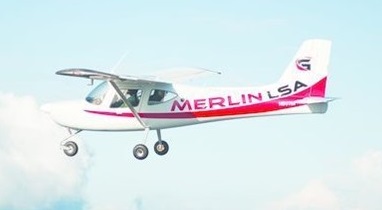
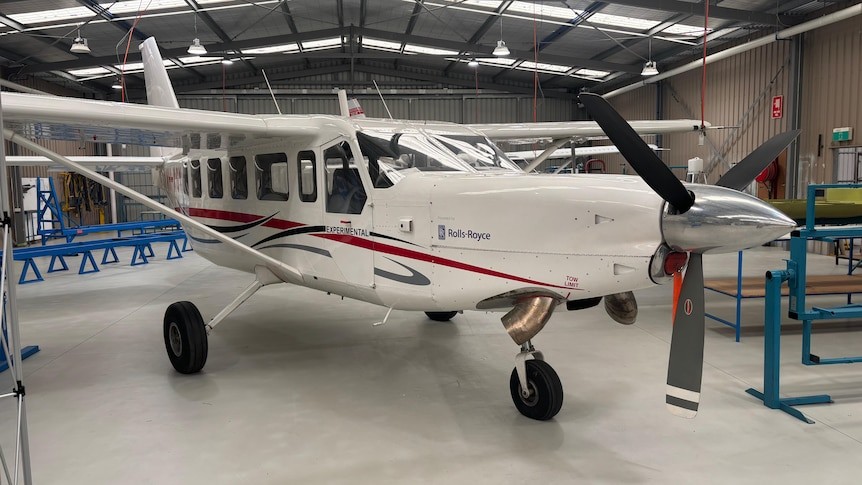
The first flight of Glasair Aviation’s Merlin light sport aircraft (LSA) took place on April 7, 2015. For nearly a year afterward, refinements and testing took place.
Almost a year later to the day, Glasair received the certification it sought on its prototype model, allowing it to reclassify the Merlin as an SLSA (that first S stands for Special). The Merlin will sell as fully factory-built, ready-to-buy-and-fly aircraft.
Pilot and passenger have a 47 inch wide cockpit and sweeping views outside. Skylights make it that much easier to track traffic.
Engine: Rotax 912 iS, 100 hp Max Speed at Sea Level: 120 kts / 138 mph Wing Span: 31 ft 9 in Wing Area: 132 sq.ft Length: 21 ft 8 in Height: 8 ft 8 in Empty weight (Prototype) 850 lb Max takeoff weight: 1320 lb Useful Load (Prototype): 470 lb Limit Load: +4g / -2g Fuel capacity: 24 USgal Cruise: 105 kts / 121 mph Stall, no flaps: 45 kts / 52 mph Stall, full flaps: 39 kts, 45 mph Cabin width: 46.5 in Baggage: 50 lb Base price: 2016: $149,000
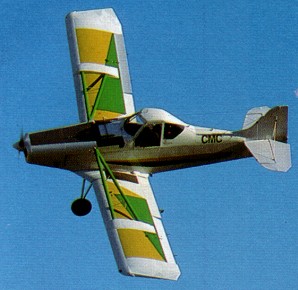
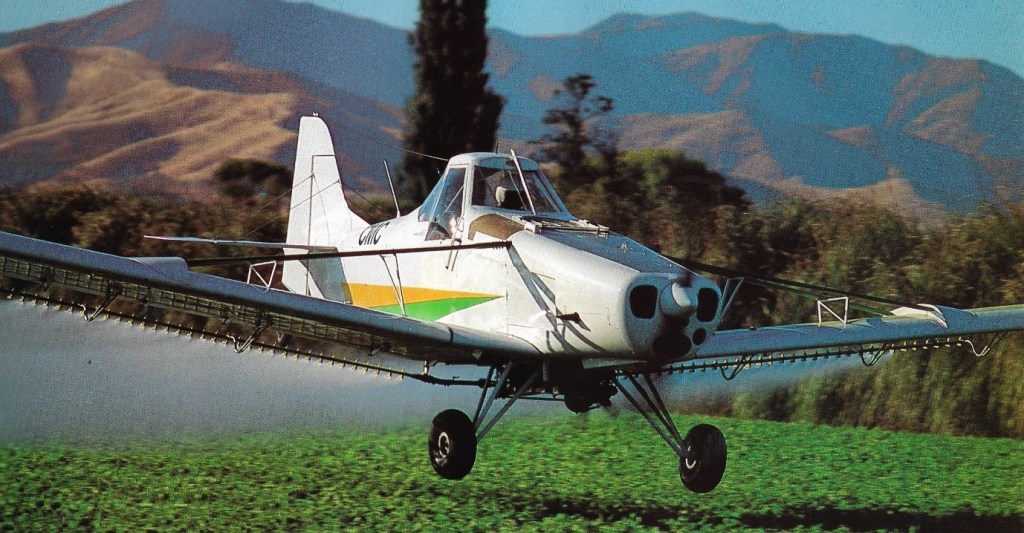
The Fatman was developed to improve on the PA-25 Pawnee by Peter Furlong and George Morgan. Gippsland Aeronautics began to rework the original Piper concept in 1983 and today only three components have commonality with the old familiar design interchangeable lift struts, undercar¬riage legs and engine mounts. Originally flying on a Pawnee Supplementary Type Certificate, after some fifteen interim prototypes the GA-200 achieved a type certificate of its own. Built and tested to FAR 23 specs, the 260 hp Lycoming 0 540 powered GA¬200 can haul a genuine 1500 cwt off and onto some confined spaces.
The GA¬200 featured a kevlar 180 litre fuselage fuel tank, however the company was offering an inboard (223 litre) wing fuel system as well as a further option with both fuselage and wing tanks, providing a six and a half hour endurance. No parts of the fuel system are installed forward of the firewall with the exception of the carburetor.
GA-200
All metal wings house fuel tanks with fuel gauges mounted in the wings. Normal tank venting is outboard on the wings. The leading edge of each wing is made of five nonstructural sections. Both wings have airscoops that pressurise both wings and fuselage to keep fertiliser dust out and eliminate the possibility of spray contamination. The bottom rudder slants up so – in the event that a tailspring breaks – the rudder will not sustain damage. The undercarriage is not the same as a Pawnee, having been beefed up using Fletcher mainwheels and the safety straps are now top mounted. The top leg attachment bolts are easily accessible from the outside of the airframe. The fuselage is of welded 4130 chrome moly steel tube – the high wear and tear area where the hopper outlet is fitted being of stainless steel. The hopper outlet is unique – the same base is used for both spray or solids, and doesn’t detract from aircraft performance or dump capability. The header tank features its own sight glass right in front of the pilot and holds enough fuel for about 15 minutes.
Fitted with two seats, the GA 200 has a superficial resemblance to its older brother but is in fact both shorter and wider. Engineered out of the design are the cooling problems common to the Pawnee and the 1930s vintage rag wing aerofoil. The fabric covered steel tube fuselage and all metal winged aircraft is fitted with an 800 litre hopper and has been designed and built to be extremely “fieldworthy”.
Federal Aviation Administration Type Acceptance Certificate No.98/14 was granted to the GA200C in the Restricted Category on 9 September 1998 at the original maximum take-off weight of 1315 kg. Type acceptance at the increased MCTOW of 1524 kg was granted on 17 February 1999, based on validation of CASA Certificate of Type Approval number 83-6.
GA-200 ZK-CMC pilot Ray Patchett
The GA200C is a development of the original GA200 at the instigation of the NZ agent. It has a larger volumetric capacity hopper (1050 litres), and associated with that a revised fuselage structure and a fuel injected 300 hp engine with constant speed propeller. The GA200C incorporates the Option 1 extended wing tips as standard and has a modified fuel system with gravity fed sump tank. Initially certification was achieved at the same weights as for the GA200 and at the same 250 hp in the standard category. Gippsland subsequently certificated the GA200C at a higher weight and with a slight increase in structural speeds. (To provide for the possible installation of an IO-580 engine.) The changed airworthiness limitations were originally going to be applied to a proposed GA200C-1 model, but that designation has now been dropped.
The GA200C Type Certificate Holder since Revision 9 dated 08.08.2006: GA200 Pty Ltd.
The last production example of the GA200 Series was serial number 200C-0345.
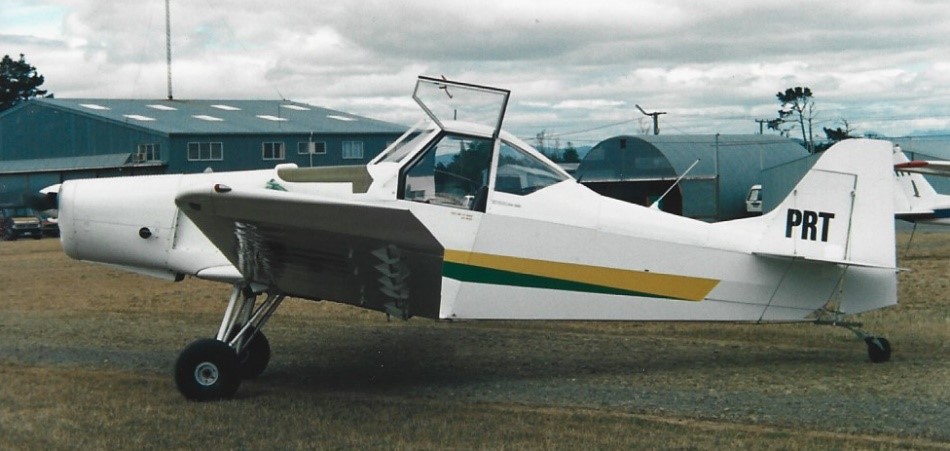
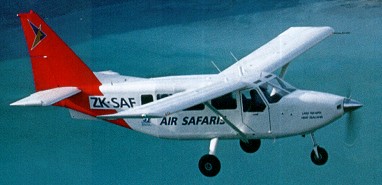
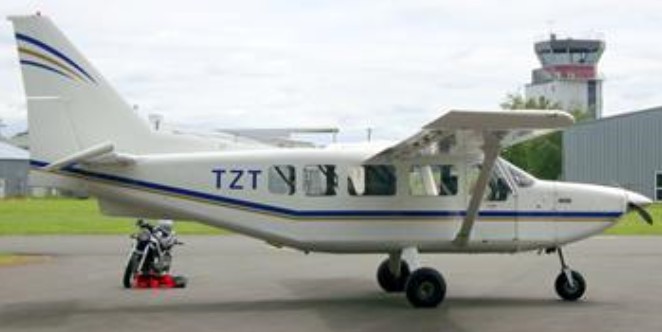
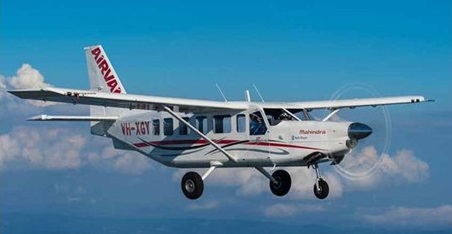
Designed by Peter Furlong to be between the Cessna Caravan and 206. Design work had begun in earnest in early 1994, with the first aircraft (VH-GAV and later re-registered as VH-PTR), powered by a 250 hp Textron Lycoming 0-540, making its maiden flight on 3 March 1995. On 7 February 1996, this air¬craft was destroyed during spinning trials. A second airframe was completed to a major component stage for static testing and a third, VH-ZGI, became the second flying prototype. The second prototype was first flown in August 1996 with a 300-hp Textron Lycoming IO-540K-lAS engine. Flight testing was completed by No-vember 1998 after a total of 350 hours had been collectively flown by the two aircraft. The basic simplicity of the aircraft’s non-turbo engine, automatic fuel management system, manual flaps, no cowl flaps, large cabin area with centre aisle, and useful centre of gravity range serve a utility role. It is of a strut braced high wing design, using the same wing as the GA 200, with a fixed undercarriage. It is of an all metal stressed skin construction which is fully corrosion protected. Up to eight passengers can be carried with entry gained by a large sliding door on the port side. The cabin floor has a quick release mechanism to permit rapid conversion between passenger and cargo roles or combi configuration.
The second prototype was re-registered VH-XGA in January 1999 and provisional type certification was achieved in early 1999, followed by full certification on 10 October 2000. The first production Airvan (004) was assembled in November 2000 and delivered to Air Fraser Island in Australia on 22 December 2000 as VH-RYT. The first export aircraft was 008, which was delivered to Maya Island Air in Belize, Central America, in late 2001 as V3-HGJ. Planned is a 2.4-metre-long, 18 cu.ft underbelly cargo pod that can carry 400 lbs (180 kg). The pod is able to be retrofitted.
In July 2005 the Airvan was awarded EASA European certification. Gippsland had delivered about 80 Airvans by the end of July including the last of 16 for the US Civil Air Patrol.
In August 2006 the 100th GA8 was handed over to Missionary Aviation Fellowship. Several engine variants were under evaluation. These include a 320-hp version of the Lycoming IO-580, a turbo-charged Lycoming TIO-540, a diesel version powered by the Thielert TAE 135 turbo diesel or the French SMA engine, and a turbine example powered by the Rolls-Royce Allison 250 BT7F. The consideration of a turbine-powered Airvan has meant a study into a stretched 10-seat turbine version, aimed at paramilitary and special mission applications. The Australian Civil Aviation Safety Authority (CASA) certified the GA8 Airvan for IFR flight. Certification work was also undertaken on an under belly cargo pod for the aircraft. The 18 cu ft pod will allow a total increase in weight lift of 180 kg and accommodate items up to 2.4 metres in length.
Mahindra agreed to pay about $40 million for a controlling stake in two small Australian aviation companies, Gippsland Aeronautics and Melbourne-based component maker Aerostaff Australia.
Mahindra Airvan 10
Developed by Mahindra Aerospace, the Airvan 10 10-seat single-engine turboprop received U.S. and Australian certification in 2017. With a price of around $1.7 million, it is targeted as a competitor to pricier turboprops, namely the Cessna Caravan and Quest Kodiak.
The Airvan 10 was planned to cost around $1.7 million and provide competition for turboprops like the Cessna Caravan and Quest Kodiak. The market introduction for the new turboprop was being supported by GippsAero, a Mahindra subsidiary in Australia and the original designer of the airplane.
GA-8 Airvan & Airvan 10
The Rolls-Royce M250-powered model, with a useful load of 2,300 pounds (1,400-pound full-fuel payload) and cruise speed of 145 ktas, is a follow-on to the piston-powered eight-seat Airvan 8, which Mahindra’s aircraft business unit in Australia produces. Certified in more than 42 countries, over 220 Airvan 8s were in service.
By 2025 more than 260 of the Airvans operating in 43 countries around the world.
The company employed up to 180 local people to send one GA8 Airvan out the factory door every two weeks in 2025.
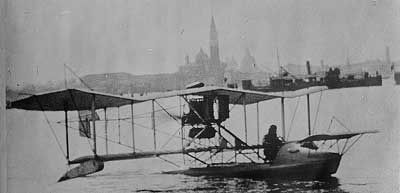
Ginocchio biplane flying boat seen here in 1913 at Venezia (Venice)
Manlio Ginocchio was an Italian aviation pioneer, and an officer in the Italian Navy. After earlier experiences with flying and designing of machines, he designed and built his “Idro-canotto” and powered it with a 90 hp Salmson engine. The machine was not very successful and remained in one example, although it was acquired by the Italian Navy and became part of the early Italian naval establishment in Venice.
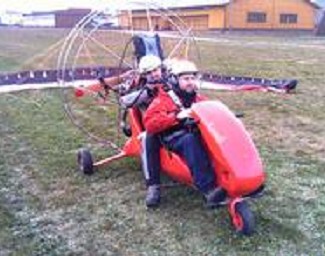
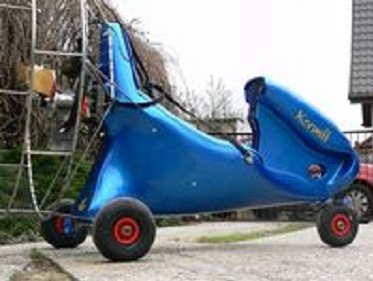
Our paratrikes are completely shell composite (fibre glass) construction which gives them very light weight. Fuel tank (standard): 10 l. (placed inside trike under engine). Very strong construction, durable for hard landings, stainless steel basket, disasembleable, protecting propeller from damage. Composite landing gear, wheels 300 mm with bearing, automatic wing positioning system (simple construction). Two seat trike: weight: 27 kg (without engine) length: 245 cm width: 165 cm. The Kermitt 2 bis fuel tank (standard): 35 l. (placed inside trike under engine). Composite landing gear, wheels 300 mm with bearing, automatic wing positioning system (simple construction). Two seat trike: weight: 32 kg (without engine) length: 245 cm width: 165 cm. Ideal for training.
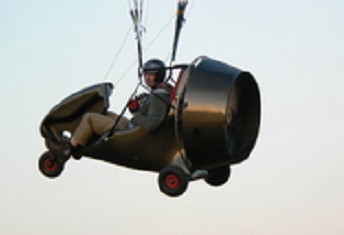
Kermitt Turbo
Worlds first full composite trike for PPG and paraplane, manufactured by polish producer GIMI. Powered by Hirth F33 engine with innovative tunnel drive.
Kermitt 2 Empty Weight: 56 kg / 123 lbs MTOW Weight: 270 kg / 595 lbs
Kermitt 2 bis Stall: 19 kt / 22 mph / 35 kmh Cruise: 38 kt / 43 mph / 70 kmh Empty Weight: 85 kg / 187 lbs MTOW Weight: 300 kg / 661 lbs Climb Ratio: 600 ft/min / 3,5 m/s Take-off distance (50ft obstacle): 100 ft / 30 m Landing distance (50ft obstacle): 70 ft / 20 m
The Kermitts are completly shell composite (forcet with fibre glass) construction which gives them very light weight. One seat trike: length: 195 cm width: 140 cm fuel tank (standard): 10 l. (placed inside trike under engine) Very strong construction, durable for hard landings, stainless steel basket, dissasembleable, and protecting the propeller from damage. Composite landing gear, wheels 260 mm with bearing, automatic wing positioning system (simple construction). Big trunk under the seat.
Kermitt Hirth
With the Hirth engine the one seat trike: length: 195 cm widh: 140 cm fuel tank standard: 23 l.t(35l option ) (placed inside trike under engine). Composite landing gear, wheels 260 mm front, 300 mm rear with bearing, automatic wing positioning system, simple contruction. Big trunk under the seat.
Kermitt 1 Empty Weight: 33 kg / 73 lbs MTOW Weight: 160 kg / 353 lbs
Kermitt 1 Hirth engine Empty Weight: 49 kg / 108 lbs MTOW Weight: 200 kg / 441 lbs
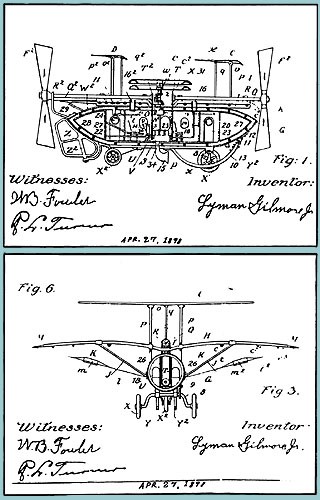
Copies exist of patent drawings of an aeroplane designed by Lyman Wiswell Gilmore Jr., although the April 27, 1898, date ascribed to them (and written on them in a hand other than the patent artist’s) is unsubstantiated, as far as can be determined.
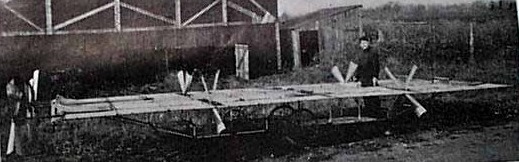
The Gilmore Monoplane design – said to date from 1898
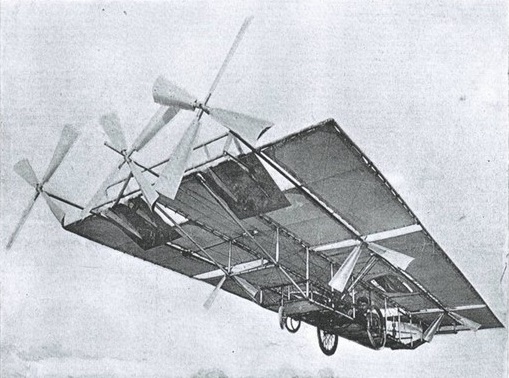
About 1909 Gilmore built a large machine of his 1898 design. Gilmore kept both the smaller monoplane and the large “1898”-type monoplane in a barn at his modest ranch, “The Lyman Gilmore Aerodrome,” in Red Bluff, California.
During the 1910’s Gilmore’s efforts picked up ‘steam’ and he built a large monoplane, apparently patterned to a degree after Louis Bleriot’s Bleriot XII (not Bleriot XI) monoplane of 1909. Gilmore seems to have claimed that he built that machine in 1908, but that assertion, as with so much of Gilmore’s story, seems to be lacking corroboration. During August and September of 1909, Gilmore was experimenting with what seems to have been a clockwork-powered large model aeroplane, which was apparently successfully demonstrated to a small number of people.
The Gilmore Monoplane “1898” design and the smaller monoplane, right, built about 1911
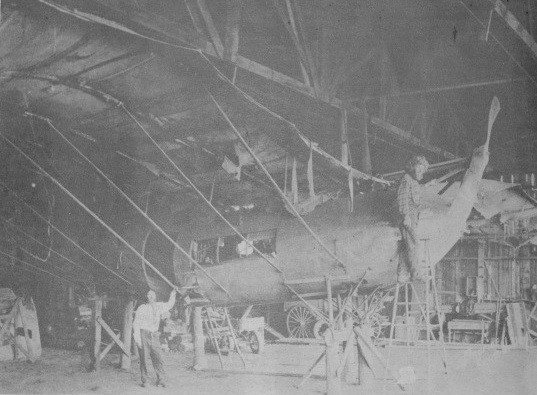
Gilmore would often roll the machines outside for the display until 1935, when the barn and the two machine were destroyed in a fire. His smaller (although still quite large) monoplane was apparently flight tested on September 21, 1911, although the crankshaft on his monoplane’s Roberts engine broke before the machine could be flown. A second attempt, before a large crowd on March 17, 1912, proved the machine, at 1,600 lb., to be too heavy for flight.
Lyman Gilmore, Jr., standing on the ground, Charles Lyman on a ladder
Gillis Aircraft Corp made its debut at the 1928 Detroit Air Show with the Crusader four-seat commercial cabin biplane, powered by a 125 hp Ryan Siemens engine.
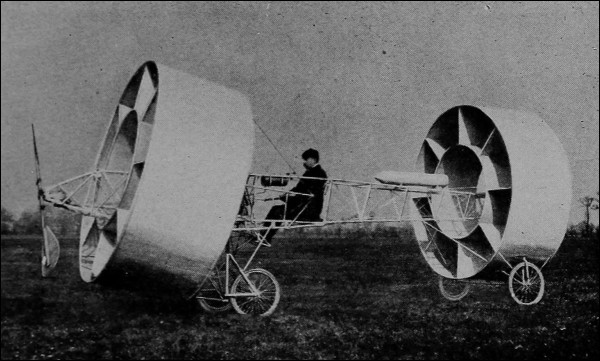
Designed by G. Curtis Gillespie and featured on the cover of Scientific American for June 26, 1905. Trussed frame of light aluminium tubing reinforced by piano wire 24 feet overall with a beam of 10 feet, covered in light duck and steered by two integrated flaps.
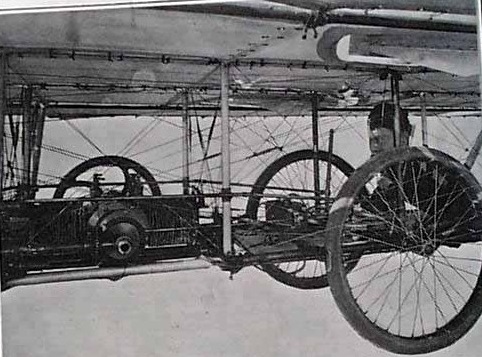
The motive power consisted of an air-cooled gasoline engine having six cylinders, opposed three to three in a horizontal plane with cranks set an an angle of 60 degrees.
The machine’s total weight was 150 pounds, and developed 20 horse-power.