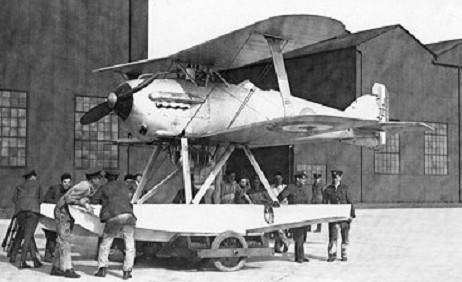
During early 1923 the Mars I was given extensively modified wings, had the fuel and water header tanks transferred within the fuselage to lose the view-limiting cabane structure, and had a more powerful Lion engine installed, being re-designated Gloster I. After winning the Aerial Derby of 1923, it was acquired by the RAF and with float landing gear, was used by the RAF’s High Speed Flight at Felixstowe for training purposes.
Engine: 1 x Napier Lion, 395kW Max take-off weight: 1202 kg / 2650 lb Empty weight: 894 kg / 1971 lb Wingspan: 6.10 m / 20 ft 0 in Length: 7.01 m / 22 ft 12 in Height: 2.84 m / 9 ft 4 in Wing area: 15.33 sq.m / 165.01 sq ft Max. speed: 354 km/h / 220 mph
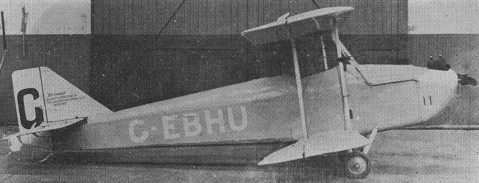
The Gloster G.14 Gannet, G EBHU, was registered on August 15, 1923 to the Gloucestershire Aircraft Co. Ltd. it was designed by H. P. Folland and built for the 1923 Lympne Trials, from which it retired when its 750cc Carden two stroke engine had cooling troubles. In 1924 it was re engined with a 698cc Blackburne Tomtit, with which it had a top speed of 72 m.p.h. Although its registration was cancelled on January 25, 1928, the Gannet was exhibited at the 1929 Aero Show at Olympia.
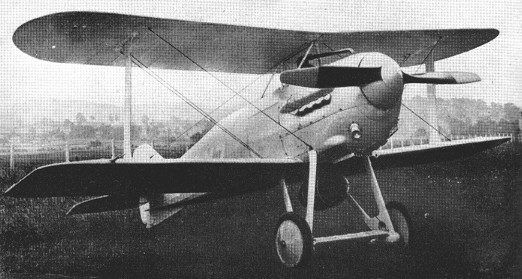
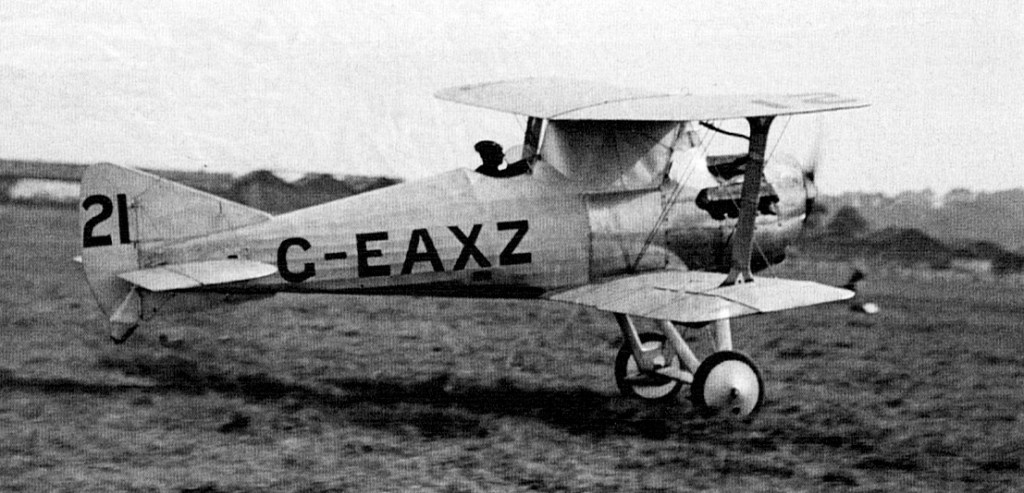
Britain’s Gloucestershire (Gloster) Company designed, built and flew the Mars 1 single seat racer in three weeks, as the prototype for a new fighter. It won the Aerial Derby in 1921, 1922 and 1923, and set up a British speed record of 196.6 mph.
Jimmy James, Gloster test pilot, taking off from Hendon at the start of the Aerial Derby on 16 July 1921. James won the Hendon-West Thurrock-Epping-Essex-Hertford-Hendon at 163 mph winning trophy and £600.
Designed by H. P. Folland, the Mars I or ‘Bamel’ was a single-seat racing biplane: the greater part of the fuselage, landing gear and tail unit being constructed from components similar to those used in the well-known Nieuport Nighthawk, which the company took over in 1920.
Engine: 1 x Napier Lion, 336kW Max. speed: 316 km/h / 196 mph
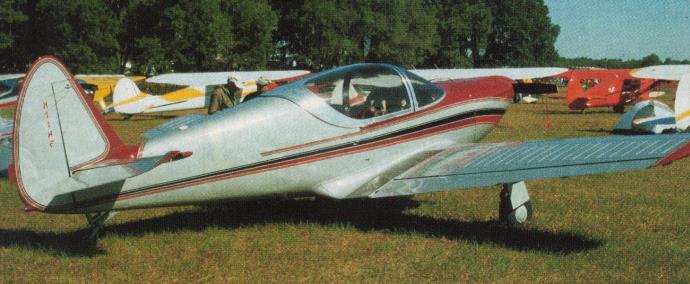
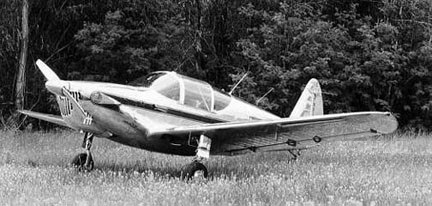
These all-metal side-by-side two seaters had retractable undercarriage and offered a ‘fighter-like” aircraft yet was powered by a small engine. Globe Swifts were priced at $2,995.
Texas Engineering & Manufacturing Co built 329 Globe Swifts under licence before Globe went bankrupt in August 1947, when it acquired rights in this aircraft. Temco priced the Swift at $3,250-3,750.
Temco GC-1B Swift
Including Globe production 1,093 were built from 1946 to 1951.
In 1989 Piper planned to produce the “sexy, spirited” SwiftFury, a 200 hp Lycoming powered 200 mph plus cruise update of the two seat Globe Swift designed in the late 1940s. Piper advised that some 350 SwiftFury orders have been placed with the 1989 price being US$118,900.00.
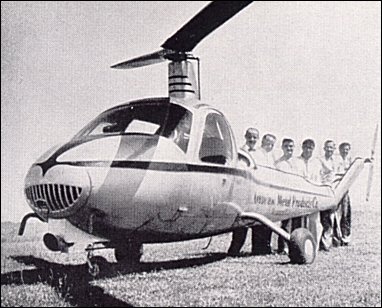
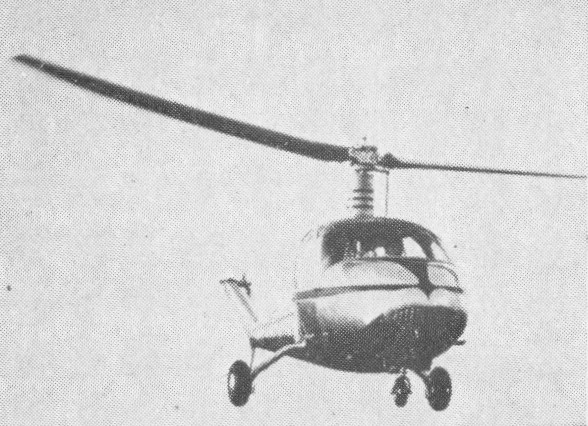
The two-seat ‘Humming Bird’ was originally designed by William E. Hunt. It was developed in 1947 by Frontline Helicopter Corp. as the ‘Flyride’ and the prototype (N544A) made its first flight in January 1948. It was a streamlined all-metal monocoque helicopter with an automobile-style forward fuselage and forward-swept rotor pylon. Power was provided by a 125hp Lycoming engine. The engine is in the aircraft’s nose, but instead of the five controls common to conventional aircraft, the Flyride has only two primary control units: a stick with a motorcycle grip, and a throttle. The stick, which rests on an arm between the two seats, governs all movements on the horizontal plane: an accelerator of the type used in motor vehicles controls upward and downward movement by means of a governor geared to the engine, and the pitch of the blades is regulated by the engine’s output in terms of revolutions per minute.
Since the cyclic control system is replaced by a fully tilting head, the rotor has no hunting hinges or drag hinges.
Frontline Helicopter was acquired by Glenview Metal Products and the machine became the GMP-1 Flyride. Glenview Metal Products Aircraft Division includes Robert Mattox, who was formerly aircraft designer with the Pitcairn Aviation Corporation and works manager with Piasecki Helicopter Corporation. In 1954 Glenview revived the prototype helicopter designed by William E. Hunt, with Hunt himself as consulting engineer. It was upgraded with a 135hp Lycoming in 1953 and was advertised to the public as the ideal personal helicopter.
GMP.I Flyride Number of seats: 2 Engine: Lycoming, 135hp Rotor diameter: 9.3m / 30 ft. 6 in Rotors: 2-blade main; 2-blade tail. Length: 10.82m Height: 2.62m Weight fully loaded: 750kg / 1,655 lb Empty weight: 522kg Cruising speed: 144km/h Inclined climb: 366m/min Absolute ceiling: 3810m Range: 448km Typical range: 280 miles at 90 m.p.h.
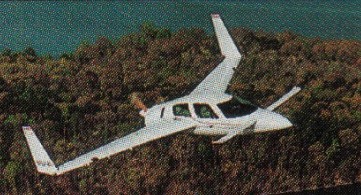
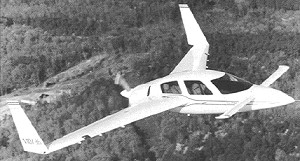
Initially referred to as the Speed Queen SQ2000, the SQ2000 was a new design following the lines of the Velocity etc., but with more rounded fuselage lines. The SQ2000 was designed by Stan Montgomery, and the prototype (which had the undercarriage of an Infinity) made its first flight in 1997 under the power of one 200hp Lycoming IO-360-C1A engine.
prototype N10736
The basic SQ2000 could be completed as a 2-seater with as very large baggage compartment or as a 4-seater.
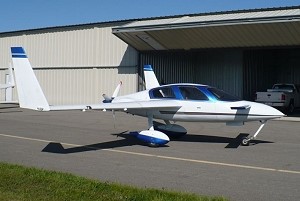
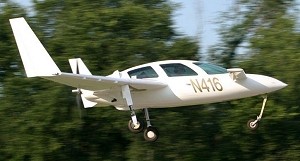
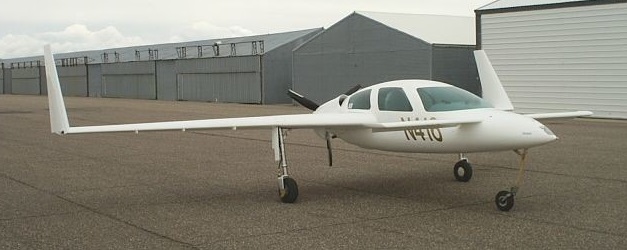
Paul Lee’s SQ2000 N416 fully retractable undercarriage
The SQ2000 features a cantilever mid-wing with tip rudders and a canard, a four-seat enclosed cabin accessed via doors, fixed or optionally retractable tricycle landing gear and a single engine in pusher configuration. The aircraft is made from composites. Its 26.58 ft (8.1 m) span wing has a wing area of 104.0 sq ft (9.66 m2). The cabin width is 48 in (120 cm). The acceptable power range is 160 to 260 hp (119 to 194 kW) and the standard engine used is the 200 hp (149 kW) Lycoming IO-360 powerplant.
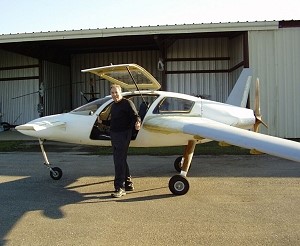
N440DH, David Hanson’s SQ2000, fixed main gear
Like many canard designs, the SQ2000 has lengthy runway requirements. The standard day, sea level take-off run is 1,600 ft (488 m), while the landing roll is 1,500 ft (457 m).
The SQ2000 lacks flaps and has a high landing speed. The overall cabin height of the SQ2000 has more headroom since the seats are mounted lower. The kit is more complete as it uses molded wings and canards.
Several examples had been completed and flown by 2005, including one by Mr. Paul Lee with one 200 hp Franklin 6A-350-C2 engine and one by Mr. David Kanson with one 200 hp Lycoming IO-360 engine.
SQ2000 aircraft were observed with Velocity style undercarriage (retracting into the fuselage) and with a KLS-developed undercarriage, which had straight undercarriage members retracting inwards into the wings.
Paul Lee’s N416 fully retractable undercarriage
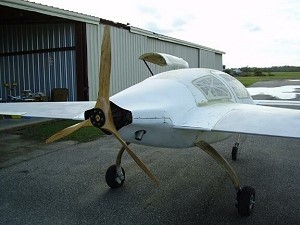
One particular SQ2000 was christened the Rotor-EZ by its builder, Paul Conner, who fitted one Mazda 13B rotary engine instead of the typical Lycoming, and a one-piece wooden propeller.
Paul Conner’s Rotor-EZ during construction
The aircraft made its first flight on 11 December 2004, but was lost in a fatal accident in May of the following year.
Rotor-EZ
Conner Rotor-EZ
Several models were planned for amateur construction and available from Glassic Composites, LLC, which planned various models: the SQ2000 XP, similar to the SQ2000, but with lower empty weight and suited for 150-200hp engines such as one Lycoming O-320 or Lycoming O-360 series (one example seems to have been built but probably not completed); the SQ2001, a three-seater with a passenger in the rear of the cabin; and the SQ2002, a so called 2+2 version with children’s seats. Yet none of these variants was built, and when
The SQ2000 was available with fixed or retractable undercarriage. The basic structures are moulded with spars. The SQ2000 first flew in 1993. The kit price in 1997 was US$22,000 for the SQ2000, and US$34,900 for the SQ2000 XP.
Less than a dozen aircraft were either completed or in construction in 12 years, and only eight on the US civil register. One reason probably lies in Glassic’s lack of credentials and the subsequent takeovers of the company’s assets.
Known completions are; SQ2000 N10736 (prototype), N416, N330DW, N2396M, N2366R, N206SQ, and N440DH. SQ2000 XP N971CL and the Rotor-EZ N2992P.
Glassic Composites ceased its activities and as of 1999, and was taken over by KLS Composites, a company formed by SQ2000 builders Messrs. Keith Register and Stan Montgomery.
Wing area: 104.2 sq.ft MTOW: 2250 lb Empty wt: 1100-1250 lb Useful load: 1000 lb Payload w/full fuel: 748 lb Max wing load: 21.0 lb/sq.ft Pwr load: 11.0 lb/hp Cabin length: 83 in Cabin width front: 47 in Cabin width rear: 42 in Cabin head room: 41 in
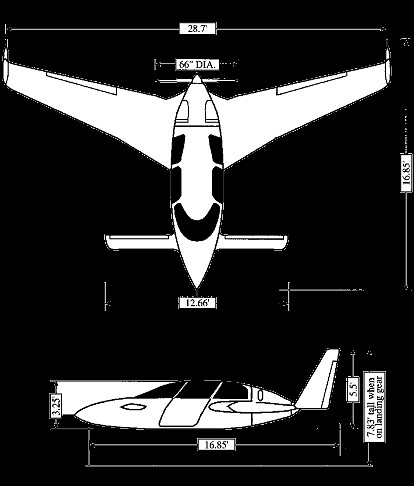
Prototype Engine: 1 x 200 hp Lycoming IO-360-C1A Wingspan:27.8 ft. Length: 16.85 ft. Height: 7.83 ft Maximum speed: 258 mph Cruise speed: 225 mph ROC: 2,.200 ft./minute Ceiling: 25,000 ft. Range: 800 miles
SQ2000 Top speed: 250 mph Cruise: 230 mph Stall: 67 mph Range: 900 sm Rate of climb: 2200 fpm Takeoff dist: 1700 ft Landing dist: 1700 ft Service ceiling: 25,000 ft Engine: Lycoming IO-360, 200 hp HP range: 150-250 Fuel capacity: 42 USG Empty weight: 1200 lb Gross weight: 2250 lb Height: 7.8 ft Length: 17.5 ft Wing span: 28.7 ft Wing area: 104 sq.ft Seats: 4 Landing gear: retractable nose
SQ2000 XP Top speed: 270 mph Cruise: 235 mph Range: 1035 sm Rate of climb: 2200 fpm Takeoff dist: 1500 ft Landing dist: 1500 ft Engine: Lycoming IO-360C-1C, 200 hp HP range: 150-200 Fuel capacity: 52 USG Empty weight: 1100 lb Gross weight: 2100 lb Height: 7.8 ft Length: 17.4 ft Wing span: 28.6 ft Wing area: 104 sq.ft Seats: 4 Landing gear: retractable nose or retractable tail
SQ2000 XP Powerplant: 1 × Lycoming O-360, 200 hp (150 kW) Wingspan: 26 ft 7 in (8.10 m) Wing area: 104.00 sq ft (9.662 m2) Length: 17 ft 6 in (5.33 m) Empty weight: 1,200 lb (544 kg) Gross weight: 2,250 lb (1,021 kg) Fuel capacity: 42 U.S. gallons (160 L; 35 imp gal) Maximum speed: 260 mph (420 km/h, 230 kn) Cruise speed: 230 mph (370 km/h, 200 kn) Range: 851 mi (1,370 km, 739 nmi) Service ceiling: 25,000 ft (7,600 m) Rate of climb: 2,200 ft/min (11 m/s) Wing loading: 21.6 lb/sq ft (105 kg/m2) Crew: one Capacity: three passengers
Paul Lee’s N416 (The following are at 1850 lbs. & 117 CG) Empty weight : 1410 lbs. (1394 lbs. without 9 qt. oil) Engine : Franklin 6A-350-C2, 200 hp Propeller : 66″ 3 blade, IVO magnum in-flight adjustable Fuel Capacity : 35 gal. (includes 2.25 gal. in supplementary tank) Landing gear: all-three wheels retractable Climb: 2000 ft./min (105kts, 2000 dens alt.) Ceiling: 18,000+ ft. (still doing 200+ ft./min) Best glide ratio : @ 19:1 (105 kts., 3000 dens alt.) Fuel efficiency : best about 5 gal. per hour near 120 kts. Canard stall : 66 kts. Takeoff distance : @ 1500 ft., rotate at 80 kts. (IVO electric adjustable prop.) Landing rollout distance: approx 2000ft Speed: 180 kias (3000 dens alt., 2800 rpm) Crew/passengers: 2-4
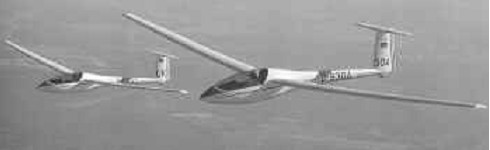
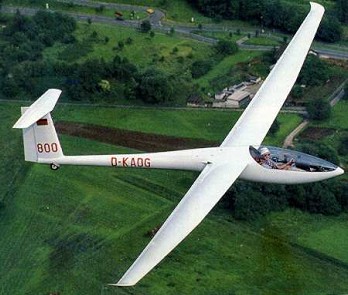
Intended to succeed the Mosquito B, the 15m span Glasfliigel 304 single-seater is a new design very similar to the Mosquito, work on which began in the autumn of 1979 by a team under Martin Hansen.
Construction is of glassfibre, with no carbon-fibre employed, although the 304/17 (now known as the Glasflugel 402), which has detachable wing tips to give a span of 17m, has largely carbon-fibre wing tips. It employs a new 16.4% thickness/chord ratio wing profile developed by Akaflieg Braunschweig and extensively tested and refined on a Mosquito. It features Glasflugel trailing edge dice brakes and interconnected variable camber flaps, a parrallogram control stick, T-tail with fixed stabilizer and elevator, and automatic connection on assembly of all flight control. The fuselage is similar to the Mosquito’s but with a more pointed nose; the monowheel is retractable. The instrument panel can be tipped up, together with the front-hinged upwards opening canopy, with which it is integral, to allow the pilot more unobstructed entry. Up to 253lb of water ballast can be carried.
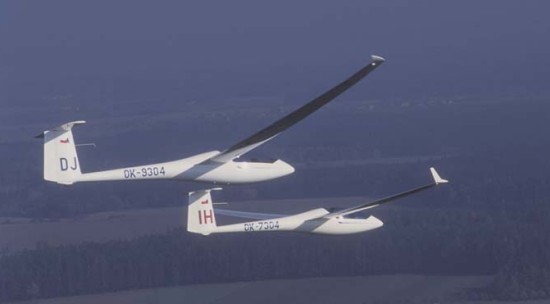
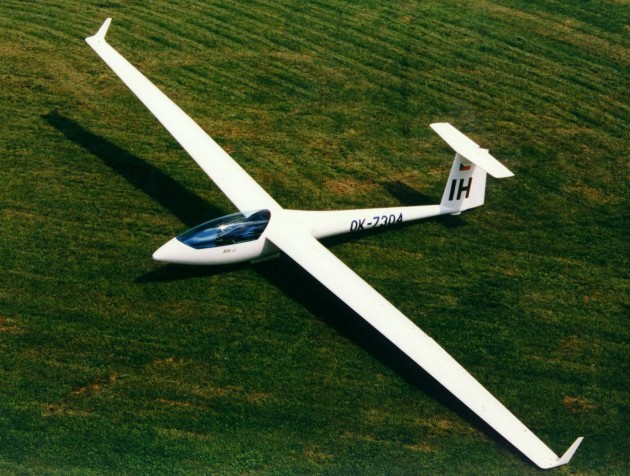
The prototype, D-9304, first flew on 10 May 1980. Production of the 304 started in the spring of 1981.
Glasflugel 304 CZ
HPH Ltd. took over the original molds and drawings for glider Glasflugel 304 from Mr. George Brauchle in 1998.
402 Span: 55 ft 9.25 in Length: 21 ft 2in Height: 4 ft 5.5 in Wing area: 114 sq ft Aspect ratio: 27.3 Empty weight: 518lb Max take-off weight: 992lb Max speed: 156mph (smooth air) Min sinking speed: 2.26ft/sec at 58mph Best glide ratio: 43:1 at 72mph
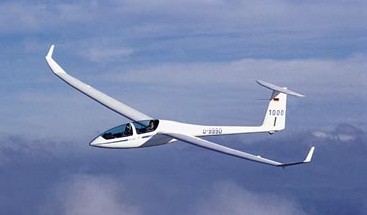
Long term plans for DG Flugzeugbau were to design and construct a a two seater glider, the DG-1000 – and from 2009 on the DG-1001. The Airfoil is a laminar wing section designed by Horstmann/Quast from DLR Braunschweig. The Technical University of Delft completed the design with the addition of winglets and optimizing the wing- fuselage intersection. The wing section is slightly less efficient at best L/D, however much better above 160 km/h. This was combined with very docile stalling characteristics and low bug- and rain sensitivity. The DG-1000 can be flown with 2 wing-spans. For easier rigging each wing features a parting device at about the 17.2 meter point. For flying at the 18 meter span a set of 0.4 meter long wing tips with “miniwinglets” are added (similar to the standard DG-800 18m tips). This configuration is designed to produce good rolling qualities and predictable flight behavior. For cross-country flying the 20m wing tip extensions with integral winglets are added. In addition the four-part trapezoidal wing of the DG-1000 has a small advantage over a two-part trapezoidal plan form at low speeds. The wings of the DG-1000 wing are about 89 kg. The fuselage incorporates a high seating position of the rear seat and a two-piece canopy. The landing gear has a shock-absorbing, new mechanism providing high comfort. One wheel extends forward from the landing gear compartment beyond the centre of gravity. The DG-1000 therefore tends to sit up, even with a pilot in the front cockpit. The sudden pitch up on winch launch is avoided because the glider always rests on the tail wheel. The big spring gives comfort during taxiing and the wheel comes with a hydraulic disk brake. The higher weight for the tail wheel is easy to handle with a towing device made by COBRA-Trailer. The sailplane has been designed with new profile sections and optimized to the size of the wings. There is a compartment in the vertical fin for ballast weights which is accessible via a removable panel. The wing-fuselage intersection was optimized for optima lboundary layer conditions with special airfoils in this area. Winglets are standard for the 20m span which performance-wise will result in a wingspan of approx. 21 meters. The drag of the nose wheel has been eliminated. From the beginning the DG-1000 was planed with an engine – as a self-launcher or as a Turbo-version. The maiden flight did not occur until July 28th, 2000.
The DG-1001S is the standard model with a 20 m span, winglets, retractable main gear, trim box, and water ballast. Additional there is an option for the landing gear of the DG-505 Orion.
DG-1001S-18/20 For this variation wing tips for an 18 m wingspan are available. 1.4 meter extensions, including winglets are available as options. In this version the DG-1000 is a very good aerobatic trainer. The extensions transform the ship into a high-performance cross-country machine.
DG-1001S Club A less expensive entry model, the span is fixed at 18 m, the gear is non retractable, and there is no water ballast system. The Club Model can be ordered with “normal” retractable gear, water ballast system, and with removable tips. This gives the option of later adding the wing extensions, including winglets thus giving a complete DG-1001S-18/20m.
DG-1001T The motorized version as a Turbo with a wing span of 18 or 20 m was available since spring 2005. The DG-1000, with the help of the trim box and fin tank, can be set up with a suitably rearward C.G. for spin training.
DG-1001M The motorized version as a Self Launcher with a wing span of 20 m was available since autumn 2009.
Models of the DG-800, which first flew in 1991, have been developed including the unpowered DG- 800S, the Rotax powered DG-800A and the liquid cooled buried engine configuration of the 800B substantially reduces noise emissions. Each model comes either with a one piece 18 m. wing or a 15 m wing with tip extensions increasing the span to 18 m. The engine in the DG-800 A is a 32 kW/ 43 bhp. Rotax 505A. Later 800Bs are fitted with an Oehler Solo liquid cooled two-cycle engine with automatic fuel- injection.
DG-808C 15m Wingspan: 15 m (49.2 ft) Wing area: 10,68 sq.m (115.0 sq.ft) Aspect ratio: 21,07 Fuselage length: 7,055 m (23.1 ft) Fuselage height: 1,434 m (4.7 ft) Empty weight with parting (full instruments): 334 kg (736lb) Wing loading with 80 kg payload: 38,8 kg/sq.m (7,95 lbs/sq.ft) Water ballast wings (option): 100 lt(26.4 US gal) Max. Weight of the normal version: 525 kg (1156lb) Max. Wing loading: 49,2 kg/sq.m (10.1 lbs/sq.ft) Max. Speed vne: 270 kph (146 kt) Stall speed with 80 kg (176 lbs) payload: 72 kph (39 kt) Best glide ratio at max. weight: 1:45 at 116 kph (63 kt) Min. Sink at 400 kg (881 lbs): 0,59 m/s (116 ft/min) at 80 kph (43 kt) Engine: SOLO 2625, 39kW/53hp Reduction gearing: 3:1 Fuel tank fuselage: 22 lt(5.8 US gal) Fuel tank wing (Option) : 2 x 10 lt(2×2,5 US gal) Take-off distance 15m (50 ft) obst. weight 450 kg / 992 lbs): 200m (656ft) Climb rate (weight 450 kg / 992 lbs): 4,5 m/s (885 ft/min)
DG-808C 18m Wingspan: 18 m (59.0 ft) Wing area: 11,81 sq.m (127.0 sq.ft) Aspect ratio: 27,43 Fuselage length: 7,055 m (23.1 ft) Fuselage height: 1,434 m (4.7 ft) Empty weight with parting (full instruments): 338 kg (745lb) Empty weight no parting (full instruments): 335 kg (738lb) Wing loading with 80 kg payload: 35,1 kg/sq.m (7,19 lbs/sq.ft) Water ballast wings (option): 100 lt(26.4 US gal) Max. Weight of the normal version: 525 kg (1156lb) Max. Wing loading: 44,5 kg/sq.m (9,1 lbs/sq.ft) Max. Speed vne: 270 kph (146 kt) Stall speed with 80 kg (176 lbs) payload: 68 kph (37 kt) Best glide ratio at max. Weight about: 1:50 at 110 kph (59 kt) Min. Sink at 400 kg (881 lbs): 0,50 m/s (98 ft/min) at 76 kph (41 kt)
DG-808S Wingspan: 15 m (49.2 ft) Wing area: 10,68 sq.m (115.0 sq.ft) Aspect ratio: 21,07 Fuselage length: 6.86 m (22.5 ft) Fuselage height: 1.39 m (4.56 ft) Empty weight (full instruments): 256 kg (564lb) Wing loading with 80 kg payload: 32.4 kg/sq.m (6.62 lbs/sq.ft) Waterballast wings: 120 lt/174 lt/239 lt (31.7 USG /46.0 USG /63.2 USG) Waterballast in fin tank: 6 lt(1.6 USG) Max. weight: 570 kg (1255lb) Max. wing loading: 53.4 kg/sq.m (11 lb/sqft) Max. speed VNE: 270 kph (146 kt) Stall speed with 80 kg (176 lbs) payload: 66 kph (35.5 kt) Best glide ratio at max weight: 1:45 at 116 kph (63 kt) Min. sink at 400 kg (881 lbs): 0,55 m/s (108 fpm) at 75 kph (40 kt)
DG-808S (without winglets) Wingspan: 18 m (59.0 ft) Wing area: 11,81 sq.m (127.0 sq.ft) Aspect ratio: 27,43 Fuselage length: 6.86 m (22.5 ft) Fuselage height: 1.39 m (4.56 ft) Empty weight (full instruments): 262 kg (578lb) Wing loading with 80 kg payload: 29.4 kg/sq.m (6.02 lbs/sq.ft) Waterballast wings: 120 lt/174 lt/239 lt(31.7 USG /46.0 USG /63.2 USG) Waterballast in fin tank: 6 lt(1.6 USG) Max. weight: 600 kg (1321lb) Max. wing loading: 50.8 kg/sq.m (10.4 lb/sqft) Max. speed VNE: 270 kph (146 kt) Stall speed with 80 kg (176 lbs) payload: 63 kph (34 kt) Best glide ratio at max weight: 1:50 at 110 kph (59 kt) Min. sink at 400 kg (881 lbs): 0,47 m/s (92 fpm) at 72 kph (39 kt)
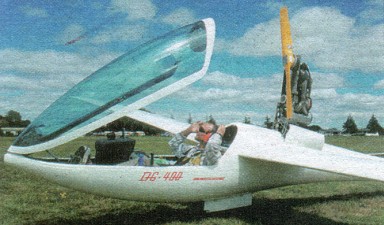
The DG400 is a single-seater motor glider version of the DG202, with a dorsally-mounted 43hp Rotax engine driving a tractor airscrew and electrically retractable backwards into the fuselage.
Fuel capacity is 4.5 Imp gallons, with optional extra fuel tanks in each wing. Detachable wing tips can be fitted to the DG400/15 to increase the span to 17m for Open Class competition, in which form it becomes the DG400/17. Without the tip extensions, the 15 m version carries 20 kg / 43 lb more payload, but with higher sink rate (0.60 m/s / 1.97 fps / 1.17 kt ) and lower L/D (41).
The DG400 prototype first flew in May 1981 in the hands of Walter Binder, and first production deliveries were planned for December 1981.
B. Brunzil of Switzerland raised the world 500 km speed triangle record to 170.06 kph/ 91.8 kt/ 105,7 mph flying a DG-400.
DG-400/15 Span: 49 ft 2.5 in Length: 23 ft 0 in Empty weight: 595 lb Max take-off weight: 1,058 lb Sink rate: 0.60 m/s / 1.97 fps / 1.17 kt L/D: 41
DG-400/17 Span: 55 ft 9 in Length: 23 ft 0 in Empty weight: 610 lb Max take-off weight: 992 lb