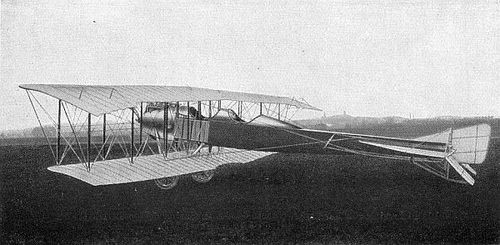
Bruno Büchner designed the 1913, 120 hp Argus powered, 20 m span Schuldoppeldecker biplane built by Gothaer Waggonfabrik.
Bruno Büchner designed the 1913, 120 hp Argus powered, 20 m span Schuldoppeldecker biplane built by Gothaer Waggonfabrik.
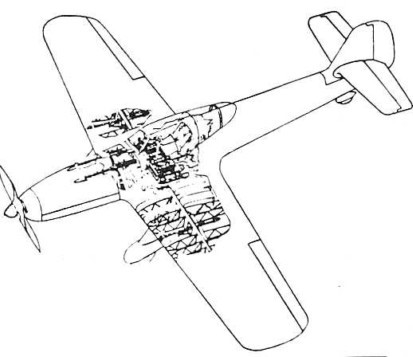
The Gotha Go 149 was a military aircraft developed in Germany in the mid-1930s for training fighter pilots. It was a conventional low-wing cantilever monoplane with tailwheel undercarriage, the main units of which retracted inwards. The wing was wooden, while the monocoque fuselage was metal. Two prototypes were constructed, and an armed version was also proposed as a light home-defence fighter (Heimatschutzjäger) armed with two 7.92 mm (.312 in) MG 17 machine guns, but the Luftwaffe did not purchase either version of the design, and no further examples were built.
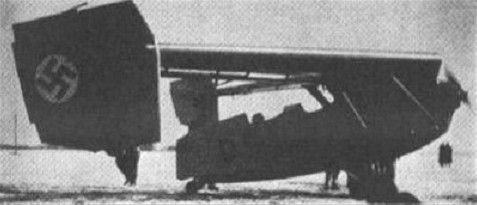
The Gotha Go 147 was a German experimental prototype reconnaissance aircraft designed in 1936. Designed by Gothaer Waggonfabrik and Albert Kalkert, construction of the two-seater aircraft was abandoned before the end of World War II.
Featuring an unconventional design, it was built to test how an aircraft without a tail would fly, with the hope of using the experience to produce a future version for military use. Construction was suspended after the prototype proved to have poor flight characteristics.
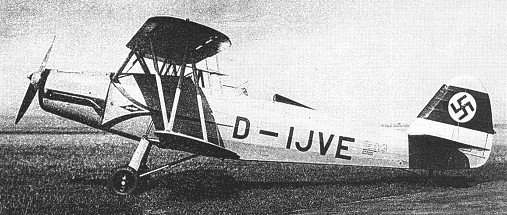
Gotha was closed by the terms of the Treaty of Versailles, but in 1933 the company resumed aircraft manufacture, and its first product was the Go 145 trainer. This first flew in February 1934 with a fabric-covered all-wood airframe, and was ordered into immediate production as a Luftwaffe basic trainer with the designation Go 145A. 9500-10,000 aircraft were built, including BFW and Focke-Wulf, and such was the utility of the type that in World War II large numbers were used by the Storkampfstaffefn (later Nachtschfachtgruppen) to harass the Soviet forces. The type was also built in Spain as the CASA 1115-L, and in Turkey. German variants were the Go 145B with an enclosed cockpit and landing gear spats, and the Go 145C gunnery trainer with a pivoted 7.92-mm (0.312-mm) machine-gun in the rear cockpit.
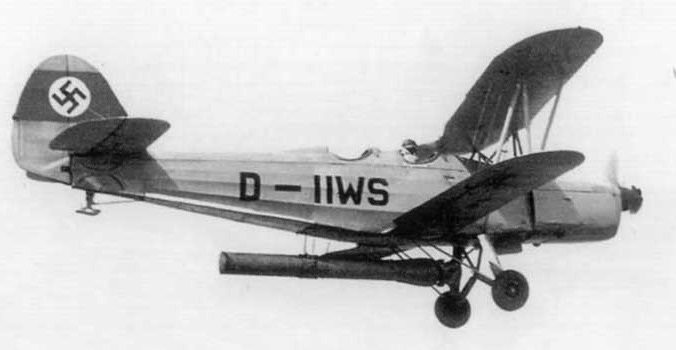
Go 145A
Span: 9.m (29ft 6.25 in).
Length: 8.7m (28 ft 6.5 in).
Powerplant: l x Argus As 100, 179kW (240 hp).
Armament: none.
Max TO weight: 1380 kg (3,043 lb).
Max speed: 132 mph at sea level.
Operational range: 391 miles.
Go 145B
Go 145C
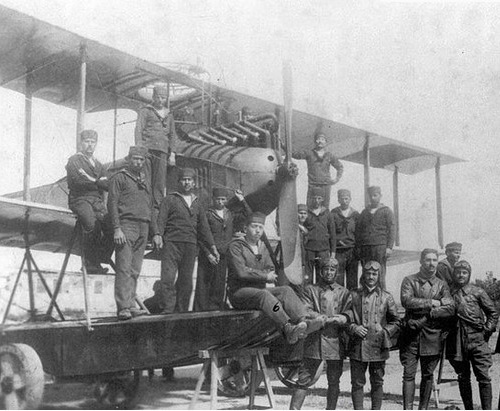
The Gotha WD.2 (for Wasser Doppeldecker – “Water Biplane”) and its derivatives were a family of military reconnaissance aircraft produced in Germany just before and during the early part of World War I. It was a development of the Avro 503 that had been built under licence by Gotha as the WD.1, and like it, was a conventional three-bay biplane with tandem, open cockpits. The landing gear comprised twin pontoons and dispensed with the small pontoon carried under the tail of the WD.1. Machines built for the German Navy were unarmed, but those supplied to the Ottoman aviation squadrons carried a 7.92 mm (.312 in) machine gun in a ring mount on the upper wing, accessible to the observer, whose seat was located directly below it.
In an attempt to increase performance, one WD.2 was built with a reduced wingspan and its Benz Bz.III engine replaced with the more powerful Mercedes D.III. Designated the WD.5, no further examples were built in this configuration, but it served as the pattern for the WD.9, built in a small series. This differed from the WD.5 prototype in having a trainable 7.92 mm (.312 in) machine gun located in the rear cockpit, to which the observer had been relocated. One such aircraft was supplied to the German Navy, with the rest of the batch going to Turkey, albeit with the less powerful engine of the WD.2.
The last member of the family to be built in any quantity was the D.III-powered WD.12, an unarmed version which featured greater attention to streamlining the aircraft, most especially around the engine area, which was now provided with a close-fitting cowl and a spinner for the propeller. Again, this type was supplied to both Germany and the Ottoman Empire. It was followed in production by a small number of WD.13s, essentially similar but for the use again of the less powerful Bz.III.
Finally, two WD.15s were built after a considerable redesign of the aircraft. These had plywood-covered fuselages, as opposed to the fabric covering used on all earlier members of the family, and were fitted with Mercedes D.IVa engines.
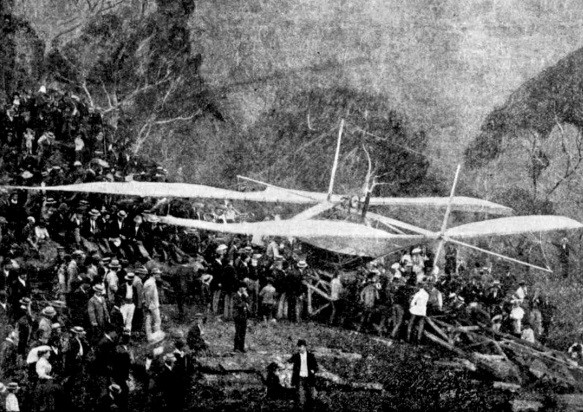
The creation of Australian inventor Newton Roberts Gordon, the “Air Ship” was the subject to a public test at Chowder Bay, Sydney, on December 26, 1894. The machine was a tandem-wing monoplane with steam-powered flappers between the sail-like wings. It slid down its starting ramp and crashed down onto the beach in front of thousands of spectators.
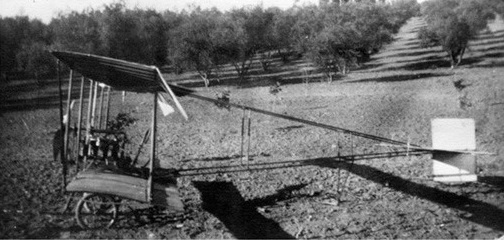
In 1903, Donald H. Gordon built a glider which took off from the top of the family barn. The contraption collapsed, and plane-building was suspended for several years. Gordon’s second aeroplane was built during 1911-1912.
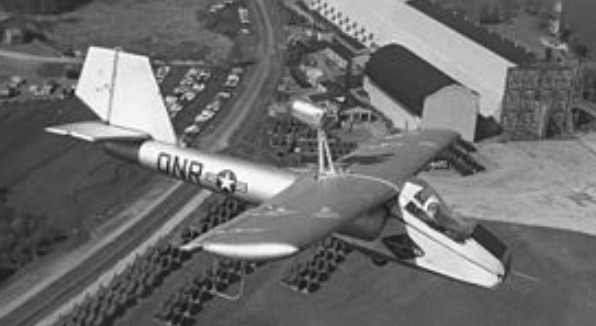
The original concept of an all-fabric inflatable aircraft was based on Taylor McDaniel inflatable rubber glider experiments in 1931. Designed and built in only 12 weeks, the Goodyear Inflatoplane was built in 1956, with the idea that it could be used by the military as a rescue plane to be dropped in a hardened container behind enemy lines. The 44 cubic ft (1.25 cubic meter) container could also be transported by truck, jeep trailer or aircraft.
The inflatable surface of this aircraft was actually a sandwich of two rubber-type materials connected by a mesh of nylon threads, forming an I-beam. When the nylon was exposed to air, it absorbed and repelled water as it stiffened, giving the aircraft its shape and rigidity. Structural integrity was retained in flight with forced air being continually circulated by the aircraft’s motor and guy wires.
There were at least two versions: The GA-468 was a single-seater. It took about five minutes to inflate to about 25 psi (170 kPa); at full size, it was 19 ft 7 in (5.97 m) long, with a 22 ft (6.7 m) wingspan. A pilot would then hand-start the two-stroke cycle, 40 horsepower (30 kW) Nelson engine, and takeoff with a maximum load of 240 pounds (110 kg). On 20 US gallons (76 L) of fuel, the aircraft could fly 390 miles (630 km), with an endurance of 6.5 hours. Maximum speed was 72 miles per hour (116 km/h), with a cruise speed of 60 mph. Later, a 42 horsepower (31 kW) engine was used in the aircraft.
Takeoff from turf was in 250 feet with 575 feet needed to clear a 50 foot obstacle. It landed in 350 feet. Rate of climb was 550 feet per minute. Its service ceiling was estimated at 10,000 ft.
The GA-466 was the two-seater version, 2 in (51 mm) shorter, but with a 6 ft (1.8 m) longer wingspan than the GA-468. A more powerful 60 horsepower (45 kW) McCulloch 4318 engine could power the 740 pounds (340 kg) of plane and passenger to 70 miles per hour (110 km/h), although the range of the plane was limited to 275 miles (443 km).
The test program at Goodyear’s facilities near Wingfoot Lake, Akron, Ohio showed that the inflation could be accomplished with as little as 8 psi (544 mbar), less than a car tire. The flight test program had a fatal crash when Army aviator Lt. “Pug” Wallace was killed. The aircraft was in a descending turn when one of the control cables under the wing came off the pulley and was wedged in the pulley bracket, locking the stick. The turn tightened until one of the wings folded up over the prop and was chopped up. With the wings flapping because of loss of air, one of the aluminum wing tip skids hit the pilot alongside the head, as was clear from marks on his helmet. Wallace was pitched out over the nose of the aircraft and fell into the shallow lake. His chute never opened. He may have been knocked unconscious and rendered unable to open it.
Only 12 Goodyear Inflatoplanes were built, but development continued until the project was cancelled in 1973. The US Army was not ready for blow up aircraft, however, and civilian certification standards prevented Goodyear from offering their Inflatobird to the public.
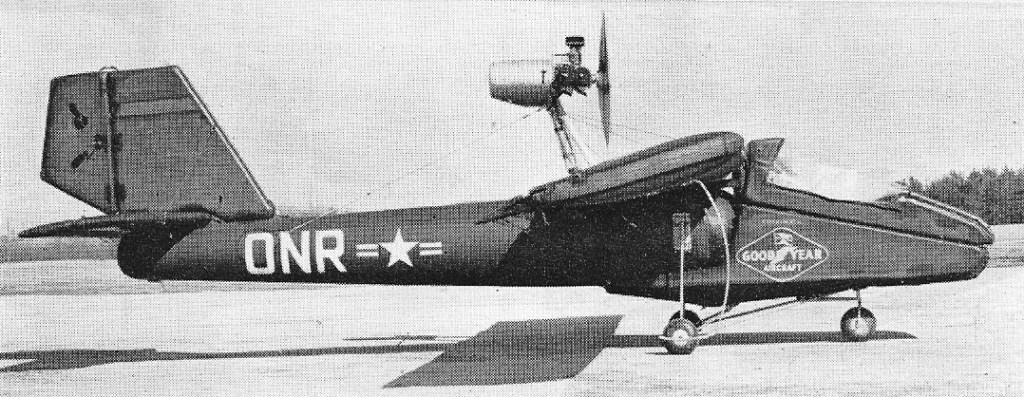
Goodyear donated two Inflatoplanes for museum display at the end of the project, one to the Franklin Institute in Philadelphia and one to the Smithsonian Institution in Washington, D.C.

Variants:
GA-33 Inflatoplane
The initial single-seat version, with open cockpit, based on the Taylor McDaniel inflatable rubber glider experiments from the early 1930’s. One built.
GA-447 Inflatoplane
An enclosed cockpit and new wing, used for undercarriage experiments (tricycle, uniwheel, and hydroskid). One built.
GA-466 Inflatoplane
Company designation for the AO-2 Inflatoplane
GA-468 Inflatoplane
Company designation for the AO-2 Inflatoplane
XAO-2-GI Inflatoplane
Military designation for the GA-466. One built.
XAO-3-GI Inflatoplane
Military designation for the GA-468. Five built.
General characteristics
Engine: 1 × McCulloch 4318 air-cooled, 60 hp (45 kW)
Length: 19 ft 2 in (m)
Wingspan: 28 ft (8.53 m)
Height: 4 ft (1.22 m)
Loaded weight: 740 lb (336 kg)
Maximum speed: 70 mph (113 km/h)
Range: 275 mi (440 km)
Service ceiling: 6,500 ft (1,981 m)
Rate of climb: 500 ft/min (152 m/min)
Crew: 1
Capacity: 1 passenger
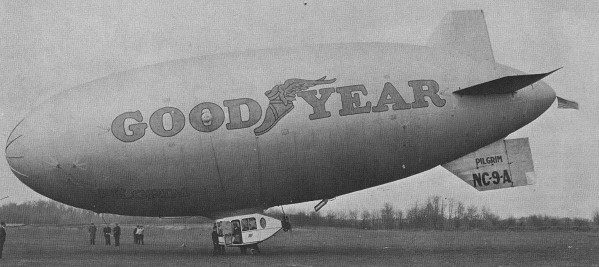
Non rigid airship construction continued with the revolutionary Goodyear Type AD “Pilgrim”, which first flew on June 3, 1925 with a capacity of 123,000 cu ft. With this airship a new system of internal rigging was used for the first time which enabled the control car to be rigged flush with the underside of the envelope, thereby reducing the aerodynamic drag and the overall height of the ship. The envelope volume was 50,000 cu ft and the ship was powered by a 60 h.p. Lawrence engine which gave a speed of 50 m.p.h. at full power. The interior of the enclosed cabin was luxuriously appointed with blue mohair velour upholstery and mahogany finished veneer below the window lines. Seating was for a pilot and two passengers, with a rear cockpit for an engine mechanic.
The first flight was made with the envelope inflated with hydrogen, but a month later it was re inflated with helium and flew for the first time with this gas on July 17, 1925. Since then all Goodyear airships have employed helium as the lifting agent. “Pilgrim”, registered NC 9A in 1927, remained in service until December, 1931, completing 2,880 hours and carrying 5,355 people. before honourable retirement. It is now preserved by the Smithsonian Institution, Washington, D.C. Its design formed the basis of all subsequent non rigid airships built by Goodyear and was the prototype for all modern pressure airships.
Goodyear Type AD (Pilgrim) 1925
Engine: 1 x 60 hp Lawrence air cooled radial.
Length: 105ft 6in.
Maximum diameter: 31 ft.
Volume: 50,068 cu ft (before stretch).
Maximum Speed: 50 m.p.h.
Cruising Speed: 40 m.p.h.
Range: 330 miles at full power, 525 miles at half power.
Endurance: 61 hours at full power, 13 hours at half power.
Fuel: 32 Imp.Gal.
Useful load: 921 lb.
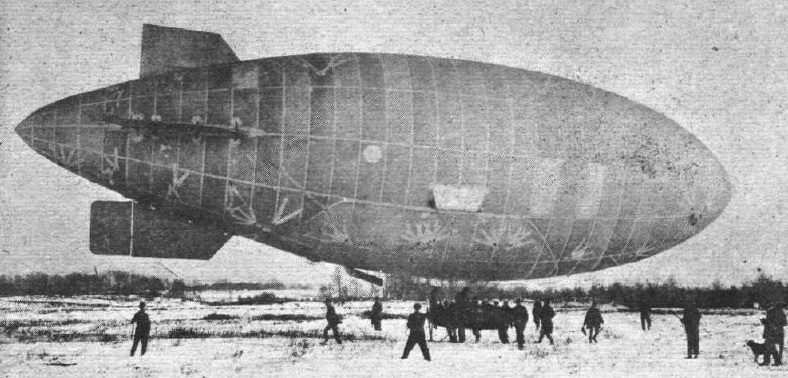
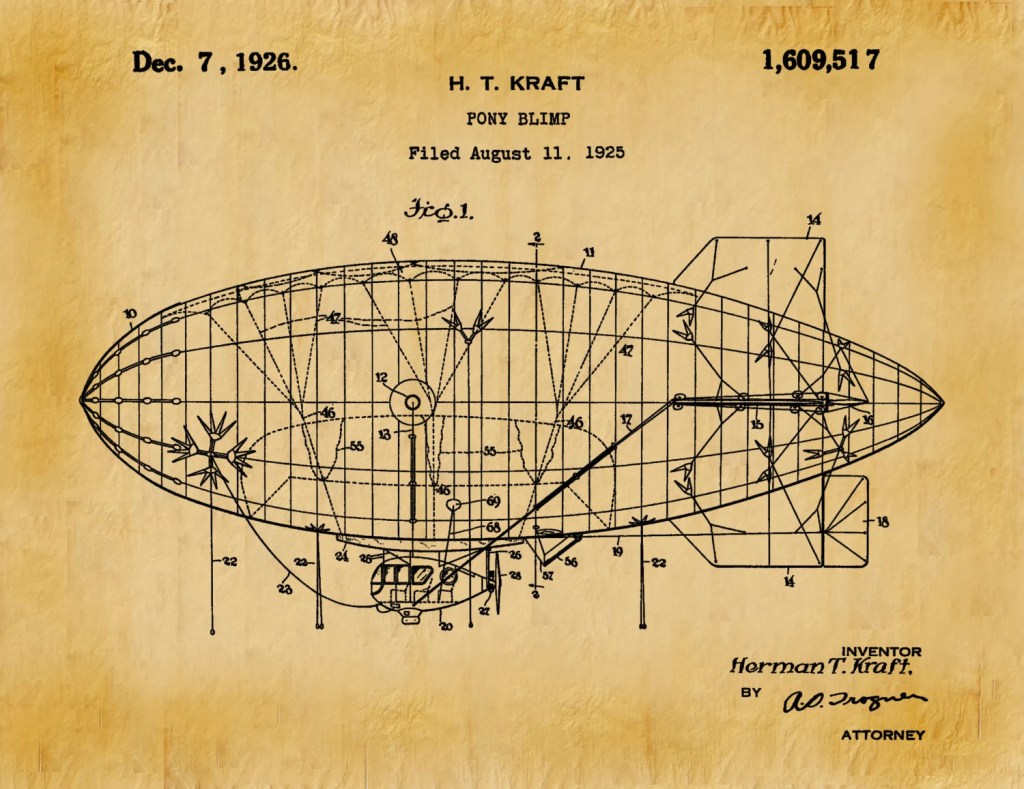
Although short lived, the FD was soon to be followed by three much smaller craft of 35,500 cu ft which were known as “Pony Blimps”. These were described as aerial runabouts, but their high initial cost and expense of operation precluded their large scale adoption by private owners.
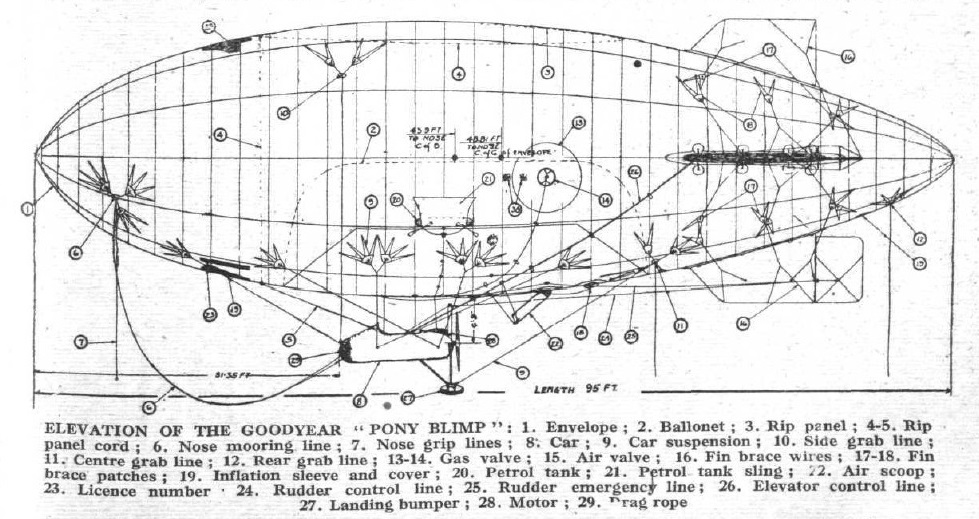
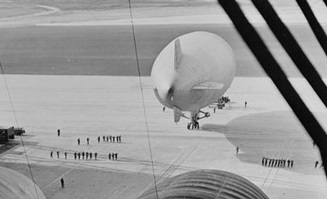
The first example was the Type A with a pusher engine built in December, 1919, the second and third being tractor engined Type AA, completed in April and June, 1920. No more of this type were built for civil use but the design attracted the interest of the military, with the result that the Army bought four Type AA in 1920 21, numbering them OA 1 to 4.
Engine: Water cooled, 40 hp
Length: 95 ft
Capaciy: 35,000 cu.ft
Ballonet capacity: 7000 cu.ft
Useful lift: 935 lb