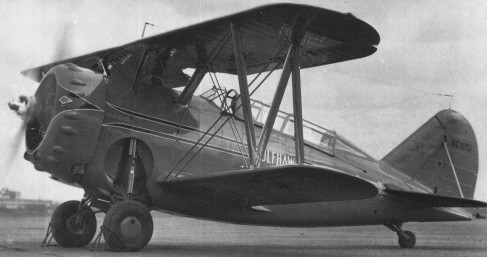
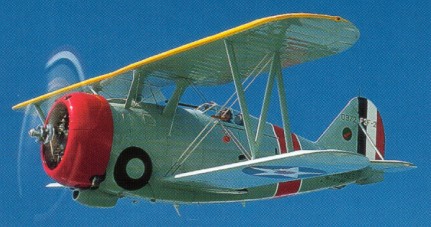
Virtually a two seat adaptation of the F3F-2 fighter, the G-32 Gulfhawk III was sold to Gulf Oil in May 1938 as a high speed transport. NC1051 was drafted into the USAAF in 1942, and designated UC-103.
Virtually a two seat adaptation of the F3F-2 fighter, the G-32 Gulfhawk III was sold to Gulf Oil in May 1938 as a high speed transport. NC1051 was drafted into the USAAF in 1942, and designated UC-103.

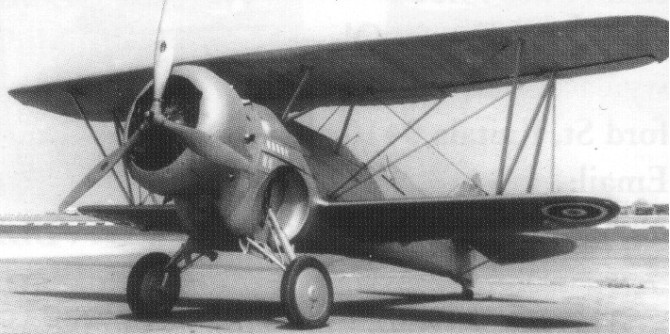
In 1931 the XFF-1 prototype two-seat carrier-based biplane fighter flew for the first time. It was of advanced design with enclosed cockpits (the canopy made up of telescoping sections) and a landing gear that retracted into well-type recesses in the forward fuselage sides.
On 6 March 1931 Grumman signed a contract to supply, for $73,975, one XFF-1 (experimental fighter, Grumman, model 1). Not a cent was to be paid until the XFF-1 had been accepted by the customer. Grumman hired Bill McAvoy from the NACA to make the first flight on 29 December 1931, powered by a 575 hp Wright R¬1820E Cyclone. It soon clocked 195 mph in level flight. Later, with a 750 hp R 1820F Cyclone, it achieved 323 km/h (201 mph).
In August 1932 Grum¬man flew the XSF-1 scout, with one of the fixed guns replaced by 45 gal of extra fuel, and this reached 207 mph. 33 SF 1s were ordered with revised internal equipment and R 1820 84 engines. These also served in the Lexington, with Scout Squadron VS 3B.
But the break¬through came just before Christ¬mas 1932, when everyone was about to be laid off because there were insufficient funds to pay the wages: the navy ordered 27 FF-ls. Deliveries of 27 FF 1s, with 559kW R 1820 78 engines, began to VF 5B (Lexing¬ton) in June 1933. Armament comprised two 0.30 in (7.62 mm) Browning machine guns in the upper front fuselage, with another in the rear cockpit, and there was provision for one 45.36 kg (100 lb) bomb beneath each lower wing.

In 1934 similar but R-1820-84-powered SF-1 scouts were delivered.
FF-1s and SF-1s totalled 60 aircraft and in 1933 these equipped fighter Squadron VF-5B aboard USS Lexington, and from then on the company never looked back. In 1935-36 the 25 surviv¬ing Fifis (the FF had to be called that) were modified with the cock¬pits arranged for dual-control pilot training. All FF 1 s and SF 1 s were withdrawn from front¬line service by the end of 1936, but served with reserve units (the former as FF 2 train¬ers) until late 1940.
Can Car’s entry into the aviation industry was in 1936 when the company obtained a licence to assemble the Grumman FF 2 (redesignated G 23 in Canada), a two seat, carrier based, naval biplane fighter, which had first flown in 1931. It combined a duralumin stressed skin fuselage and tail with wings consisting of metal ribs and spars covered with fabric. It was also the first of its kind to have retractable undercarriage. The G 23 was already close to being obsolete by the time assembly started and there could have been no obvious market among the major aviation powers, who already possessed higher performance biplanes or were developing faster low wing monoplane fighters. By mid 1938, 42 G 23s had been assembled at the company’s plant in Fort William, Ontario, one each for Nicaragua (The prototype Grumman G 23 was sold in Nicaragua and returned to the USA in the 1960s) and Japan and the remaining forty for Turkey. Thirty -four of the latter had been shipped when complaints were received from representatives of the Spanish Nationalists that Spain, not Turkey, was the final destination of these aircraft. The GE-23s were assembled in Barcelona and pushed into service as ground-attack and reconnaissance aircraft. Despite its retractable landing gear, the GE-23 was only marginally faster but considerably less agile than the CR.32 flown by the Italians and Nationalists, and only nine survived destruction in the air or on the ground to fall into Nationalist hands at the end of the war.
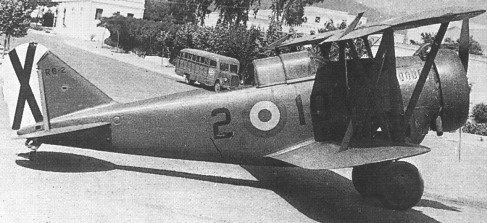
An additional ten G 23s were built and, with the exception of one sent to Mexico, these were offered to the Royal Canadian Air Force (RCAF) along with the remaining six from the ‘Turkish’ order. The RCAF was at first reluctant to accept the aircraft and the offer had to be made three times before the desperation produced by war forced them to take the G 23 into service as the Goblin in mid 1940. For a time, these fifteen obsolete aircraft formed the country’s main fighter force on the east coast, but by April 1942 all of the Goblins had been scrapped.
Other G 23s survived a bit longer than that. Several of the Spanish machines were taken over by the Nationalist forces at the end of the Civil War and the last was only scrapped in 1955.
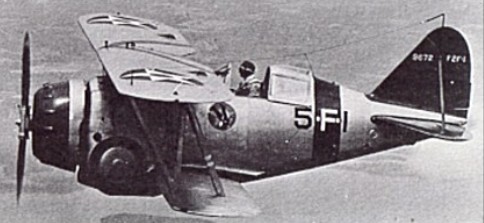
A single seat derivative of the FF-1, the XF2F-1 was flown by Paul Hovgard on 18 October 1933. Though a very tricky aircraft, needing (for example) care not to stall/spin off too tight a turn in the circuit, the single-seater had the outstanding speed range of 65 mph up to 230. The engine was the 14-cylinder Pratt & Whitney R-1535-72 Twin Wasp Junior, rated at 700 hp. The navy placed its biggest order since 1918: 55 F2Fs. These were delivered in 1935, and not only out-performed everything in the Army Air Corps but probably any other fighter in service anywhere. Even so, it was still tricky, and after designer Bill Schwendler had suggested improvements the navy ordered that these should be incorporated in the last of the 55, to be called the XF3F-1.
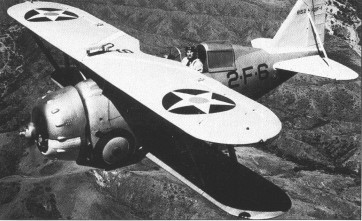
After de¬signer Bill Schwendler had suggested improvements to the F2F the navy ordered that these should be incorporated in the last of the 55, to be called the XF3F-1. This had a greater span, longer fuselage, bigger cockpit and other changes. During tests the pilot made a long vertical dive and then pulled out violently. He was aiming for 9 g. but calculations afterwards showed he actually pulled 14 g leading to fatal break-up. But after a small ventral fin had been added under the tail of a second prototype the navy placed another record order, for 54 F3F-ls, priced at over $lm. The F3F-1, powered by the 484kW R-1535-72, was good, and it carried one 0.5-in gun, one 0.3-in and two 116-lb bombs, but it could do with a bigger engine. The upshot was that on 23 March 1937 the navy placed another record order: 81 F3F-2s, priced at $1,674,310. These were powered by the 850-hp Wright Cyclone, turning a Hamilton propeller with three controllable-pitch blades. Grumman had to farm out the wings and tails to rival Brewster, but when fitted with the Cyclone R-1820-22 rated at 950 hp and the result was an order for 27 F3F-3s. They were so good the last did not come off the line until May 1939.
FF-1
Engine: Wright R-1820-78, 750 hp.
Seats: 2.
Wingspan: 36 ft 6in.
Length: 7.47 m (24 ft 6 in)
Gross Weight: 2110 kg (4655 lb)
Maximum speed: 333 km/h (207 mph).
Armament: 3 x 0.3 in mg, 200 lb underwing bomb load.
FF-2
Engine: 1 x Wright R-1820-78, 552kW
Max take-off weight: 2190 kg / 4828 lb
Empty weight: 1474 kg / 3250 lb
Wingspan: 10.52 m / 34 ft 6 in
Length: 7.47 m / 24 ft 6 in
Height: 3.38 m / 11 ft 1 in
Wing area; 28.80 sq.m / 310.00 sq ft
Max. speed: 333 km/h / 207 mph
Ceiling: 6400 m / 21000 ft
Range: 1428 km / 887 miles
Armament: 3 x 7.62mm machine-guns
Crew: 2
F2F-1
Engine: 1 x Pratt-Whitney R-1535-72 Twin Wasp, 485kW / 700 hp
Max take-off weight: 1745 kg / 3847 lb
Empty weight: 1221 kg / 2692 lb
Wingspan: 8.69 m / 28 ft 6 in
Length: 6.53 m / 21 ft 5 in
Height: 2.77 m / 9 ft 1 in
Wing area: 21.37 sq.m / 230.02 sq ft
Max. Speed: 383 km/h / 238 mph
Cruise speed: 225 km/h / 140 mph
Range: 1585 km / 985 miles
Armament: 2 x 7.62mm (0.3 in) machine-guns, 200 lb underwing bomb load.
Crew: 1
GE-23
Engine: 1 x Wright R-1820-F52, 596.5kW (800hp).
Span: 10.515m (34ft 6in).
Length: 7.467m (24ft 6in).
Max T/O weight: 2190 kg (4,828 lb).
Max speed: 216 mph at 7,000 ft.
Operational range: 921 miles.
Armament: 3 x 7.62-mm (0.3-in) mg.
F3F-1
Engine: Pratt & Whitney R-1535-72, 700 hp.
Armament: 1 x 0.5 in & 2 x 0.3 in mg, 232 lb underwing bomb load.
Seats: 1.
F3F-2
Engine: Wright Cyclone R-1820-22, 850 hp.
Wing span: 32 ft.
Armament: 2 x 0.3 in mg, 200 lb underwing bomb load.
Seats: 1.
F3F-3
Engine: Wright Cyclone R-1820-22, 950 hp / 708kW
Wingspan: 9.75 m / 31 ft 12 in
Length: 7.06 m / 23 ft 2 in
Height: 2.84 m / 9 ft 4 in
Wing area: 24.15 sq.m / 259.95 sq ft
Max take-off weight: 2175 kg / 4795 lb
Empty weight: 1490 kg / 3285 lb
Max. speed: 425 km/h / 264 mph
Cruise speed: 241 km/h / 150 mph
Ceiling: 10120 m / 33200 ft
Range: 1577 km / 980 miles
Crew: 1
Armament: 2 x 7.62mm machine-guns
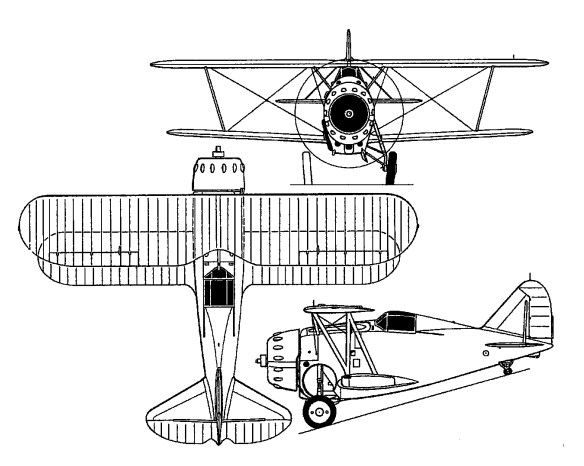

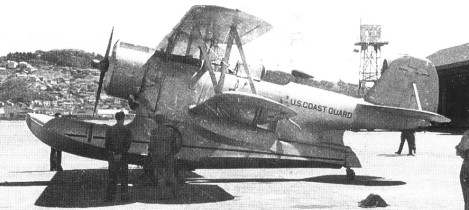
The J2F was an equal-span single-bay biplane with a large monocoque central float which also housed the retractable main landing gear, a similar design to the Leroy Grumman-designed landing gear first used for Grover Loening’s early amphibious biplane designs, and later adopted for the Grumman FF fighter biplane. The aircraft had strut-mounted stabilizer floats beneath each lower wing. A crew of two or three were carried in tandem cockpits, forward for the pilot and rear for an observer with room for a radio operator if required. It had a cabin in the fuselage for two passengers or a stretcher.
The Duck’s main pontoon was blended into the fuselage, making it almost a flying boat despite its similarity to a conventional landplane which has been float-equipped. This configuration was shared with the earlier Loening OL, Grumman having acquired the rights to Loening’s hull, float, and undercarriage designs. Like the F4F Wildcat, its narrow-tracked landing gear was hand-cranked.
Production of this general utility amphibian began in 1933 when the first prototype flew, and production continued until 1945. In all, nine series of the Duck were built.
The J2F-1 Duck first flew on 2 April 1936, powered by a 750 hp (559 kW) Wright R-1820 Cyclone, and was delivered to the U.S. Navy on the same day. The J2F-2 had an uprated Wright Cyclone engine of 790 hp (589 kW). Twenty J2F-3 variants were built in 1939 for use by the Navy as executive transports with plush interiors. Due to pressure of work following the United States entry into the war in 1941, production of the J2F Duck was transferred to the Columbia Aircraft Corp of New York. They produced 330 aircraft for the Navy and U.S. Coast Guard. If standard Navy nomenclature practice had been followed, these would have been designated JL-1s, but it was not, and all Columbia-produced airframes were delivered as J2F-6s.
The first appeared for the Navy in 1933 as the JF-1, powered by a 521.6kW Pratt & Whitney R-1830 Twin Wasp engine. This was followed by the JF-2 Coast Guard version, powered by a 559kW Wright Cyclone radial, and the JF-3.

The amphibian was originally used for photography, target-towing, scouting, and rescue work. Although the Duck is normally flown as a two-seater in tandem fashion, a folding floor in the rear cockpit gives access to a lower compartment for use in rescue work and the like; the lower compartment could house either two extra crew members or a stretcher.
A number of JF-2s were also delivered to Argentina.
By the beginning of 1941 about 115 JF and J2F-1 (company designation G-15) to J2F-4 Ducks were in service as general/utility amphibians for photographic, target-towing, scouting and rescue work. The J2F was an improved version of the earlier JF Duck, with its main difference being a longer float.
These were followed by J2F-5s and J2F-6s. The J2F6 was by far the most common. It featured aerodynamic improvements over the previous models, including a long-cord engine cowling.
The J2F-6 was produced in 1944 by the Columbia Aircraft Corporation of Valley Stream, Long Island, under licence from Grumman, bringing the total number of JF/J2Fs built to over 600.

J2Fs of the utility squadron of US Patrol Wing 10 were destroyed at Mariveles Bay, Philippines, by a Japanese air raid on 5 January 1942. The only Duck to survive the attack had a dead engine but had been concealed at Cabcaben airfield during the Battle of Bataan, to be repaired afterwards with a cylinder removed from a destroyed J2F-4 submerged in Manila Bay. Following repairs the J2F-4 departed after midnight on 9 April 1942, overloaded with five passengers and the pilot, becoming the last aircraft to depart Bataan before the surrender of the Bataan to the Japanese only hours later. Among its passengers was Carlos P. Romulo (diplomat, politician, soldier, journalist, and author), who recounted the flight in his 1942 best-selling book I Saw the Fall of the Philippines (Doubleday, Doran & Company, Inc., Garden City, New York 1943, pp. 288–303), for which he received the Pulitzer Prize for Correspondence.
Several surplus Navy Ducks were converted for use by the United States Air Force in the air-sea rescue role as the OA-12 in 1948.
The Argentine Naval Aviation received four new-build Grumman G-15s (equivalent to J2F-4s) in 1939, to supplement the eight Grumman G-20s (export version of the Grumman JF-2) received in 1937. In 1946–1947, 32 ex-US Navy Ducks (consisting of one J2F-4, 24 J2F-5s, and 7 J2F-6s) were acquired, with the last examples remaining in use until 1958.
The Colombian Navy operated three examples from 1948.
The Mexican Navy operated three ex-U.S. Navy J2F-6s from 1950–1951.
The Peruvian Navy operated one ex-USN example from 1961–1964.
In the United States the United States Army Air Forces, United States Coast Guard, United States Marine Corps, and United States Navy all operated the J2F.
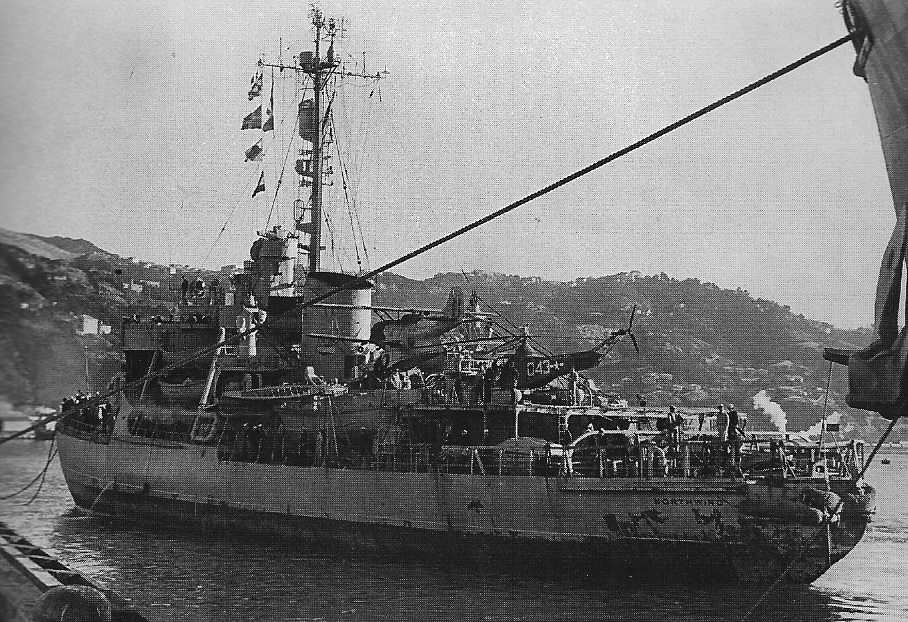
A Grumman J2F-6 Duck was owned and operated by Kermit Weeks at Fantasy of Flight in Polk City, Florida.

The United States Coast Guard worked with North South Polar, Inc. to recover a J2F-4 Duck, serial number V-1640, downed in a storm on a Greenland glacier on 29 November 1942. Two Coast Guard airmen were lost along with a rescued U.S. Army Air Forces passenger from a downed B-17 searching for a downed C-53 with five on board. The three men of the Duck are presumed to still be entombed at the site. North South Polar, under the auspices of the Coast Guard team, located the aircraft in August 2012 resting 38 feet beneath the surface of the ice sheet.
Variants:
J2F-1
Initial production version with 750 hp R-1820-20 engines, 29 built.
J2F-2
United States Marine Corps version with nose and dorsal guns and underwing bomb racks, 21 built.
J2F-2A
As J2F-2 with minor changes for use in the United States Virgin Islands, nine built.
J2F-3
J2F-2 but powered by an 850 hp R-1820-26 engine, 20 built.
J2F-4
J2F-2 but powered by an 850 hp R-1820-30 engine and fitted with target towing equipment, 32 built.
J2F-5
J2F-2 but powered by a 1,050 hp R-1820-54 engine, 144 built.
Engine: 1 × Wright R-1820-54 nine-cylinder radial engine, 900 hp (670 kW)
Wingspan: 39 ft 0 in (11.9 m)
Wing area: 409 ft² (38 m²)
Length: 34 ft 0 in (10.37 m)
Height: 13 ft 11 in (4.25 m)
Empty weight: 5,480 lb (2,485 kg)
Loaded weight: 7,700 lb (3,496 kg)
Maximum speed: 190 mph (304 km/h)
Cruise speed: 155 mph (248 km/h)
Stall speed: 70 mph (112 km/h)
Range: 780 mi (1,255 km)
Service ceiling: 20,000 ft (6,100 m)
Rate of climb: ft/min (m/s)
Crew: two (pilot and observer)
Capacity: two rescued airmen
Armament: 1 × Browning .30 cal machine gun (7.62 mm) on flexible mount in rear cockpit
Bombload: 650 lb (295 kg)
J2F-6
Columbia Aircraft built version of the J2F-5 with a 1,050 hp R-1820-64 engine in a long-chord cowling, fitted with underwing bomb racks and provision for target towing gear; 330 built.
OA-12
Air-sea rescue conversion for the United States Army Air Forces (and later United States Air Force, OA-12A).
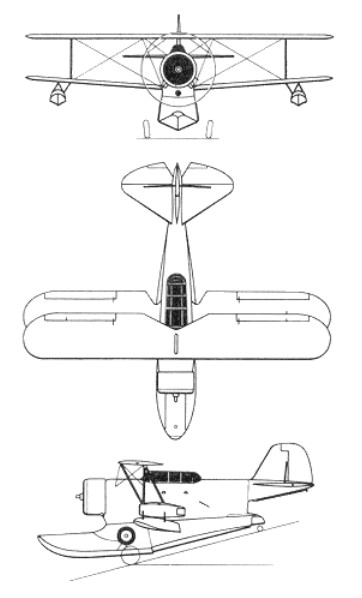
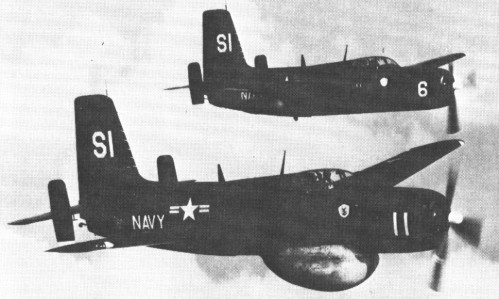
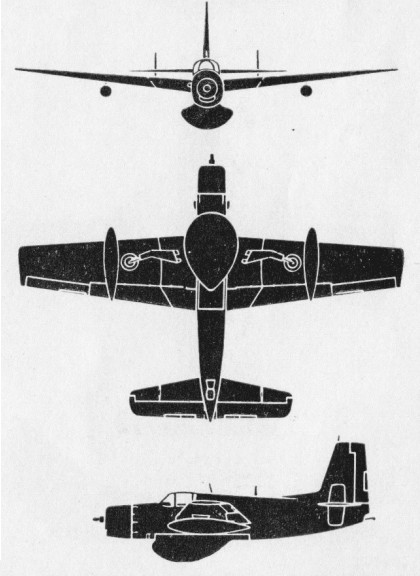
In 1944 Grumman set out to produce a successor to the war-winning TBF Avenger torpedo bomber with a composite power plant consisting of an R-2800-34W piston engine in the nose and a Westinghouse 19XB-2B turbojet engine in the rear fuselage, and the first result was the XTBF-1 (G-70), first flown on 19 December 1945. Looking like a slimmer and neater TBF, this machine had a Westinghouse J30 (later an Allis-Chalmers J36, otherwise de Havilland Goblin) turbojet in the tail for high-speed boost propulsion. This was later omitted.
In 1949 two new prototypes incorporating all the changes were built (carrying the designations XTB3F-1S and XTB3F-2S) the former equipped as a submarine hunter and the latter as a killer.
Both types were ordered by the US Navy under the respective designations AF-1S and AF-2S, but before completion of the first AF-1S its designation was changed to AF-2W.
It was put into production in two versions, which operated from US Navy carriers in the ASW (anti-submarine warfare) role in pairs, known as hunter/killers.
The hunter was the AF-2W, distinguished by its APS20A search radar, the displays and controls for which were in a two-seat rear compartment. The AF-2W carried a large search and early-warning radome beneath the forward fuselage.
The killer was the AF-2S, which took over when its companion had obtained a sure ‘con¬tact’. First it used its smaller APS-30 radar under the right outer wing to pinpoint its target, using a searchlight in an identical pod under the left wing to illuminate it if necessary. Then it would attack using any of its assortment of weapons.
The AF-2S Guardian (G-82) carried one 900kg torpedo, two 720kg depth charges or two 900kg bombs internally, while a similar load could be carried externally. In addition a searchlight was carried under the port wing and a radar scanner under the starboard.
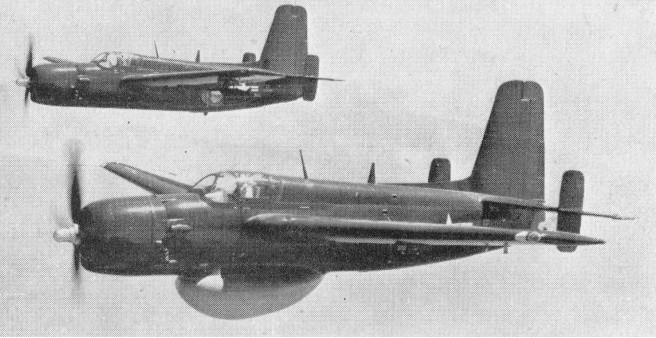
In 1952-53 the AF-3S version was produced with additional submarine detection gear.
The Guardians were among the largest single-engine military aircraft, heavier than a Douglas DC-3 and with a roomy side-by-side cockpit, the AF-2S having a third rear-compartment seat for the single radar operator. Grumman delivered 193 of the AF-2S attack version and 153 of its companion AF-2W model in 1950-3. The company then followed with 40 AF-3S machines, which were the first aircraft in service with MAD (magnetic-anomaly detection) gear in a re¬tractable tail-boom mounting.
Production of the Guardian ended in March 1953.
AF-2S Guardian
Powerplant: one 2,400-hp (1790-kW) Pratt & Whitney R-2800-48W 18-cylinder radial piston engine.
Maximum speed: 510 km/h (317 mph) at medium/high altitude
Service ceiling 9910 m (32,500 ft)
Range 2415 km (1,500 miles)
Empty weight 6632 kg (14,620 lb)
Maximum take-off 11567 kg (25,500 lb)
Wing span 18.49 m (60 ft 8 in)
Length 13.21 m (43 ft 4 in)
Height 4.93 m (16 ft 2 in)
Wing area: 52.02 sq.m (560.0 sq ft)
Armament: internal bay for 1814 kg (4,000 lb)
Crew: 3
Deutscher Aero-Lloyd, the air transport company, built a high-wing training monoplane designed by Dr Ing K. Grulich in 1925. Designated S.1, it could have either 75 hp or 100 hp Siemens engine.
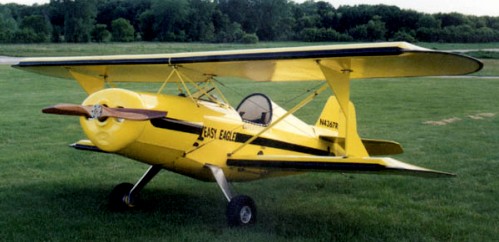
The LSA Easy Eagle I Bi -Plane is an affordable, easy to build aircraft that combines standard aircraft construction methods, steel tubing, wood and fabric covering.
The 4130 steel tube fuselage is wide enough for 44 inch waist line and a 6 foot 3 inch pilot. The 300 pound useful load allows for a 228 pound pilot and 11 gallons of fuel. The low wing loading of 6.7 pounds. per square foot gives the Easy Eagle I Bi -Plane a low stall speed and great glide ratio.
The aluminum 5/8 inch landing gear and 5 inch wheels provide for easy handling either on paved runways or grass strips. With the optional hydraulic brake upgrade, ground handling is superior.
The Easy Eagle I Bi -Plane takes off in only 300 feet and lands in about the same, thanks to 105 square feet of wing area. Climb is 900 feet per minute at sea level.
With a stall at 45 mph or less, a cruise of 100 mph, low building time and simple straight forward construction, all combine to make the Easy Eagle Bi-Plane a single place, affordable bi-plane.
The airframe is rated at plus 4 and minus 3 g-s the Easy Eagle Bi-Plane is capable of doing many sportsman aerobatic maneuvers.
Featuring a fully welded steel frame combined with an all wood wing and a one piece aluminum landing gear, make it a airplane for today. Landing and taking off is made easy with a fully controllable tail wheel.
With a 64 hp VW engine the Easy Eagle cruises at 100mph and has a stall speed of 45mph. The Easy Eagle features a fabric covered fully welded steel frame combined with an all wood wing.
In 2008 the EASY EAGLE was available from:
GREAT PLAINS AIRCRAFT
PO Box 545 Boys Town, NE, USA.
Engine: 1915cc VW 65HP
Span: 18’4″
Length: 14’4″
MTOW: 725 lb
Empty Weight: 454 LBS
Useful Load: 283 LBS
Wing Area: 105 sq.ft.
Seats: 1
Take Off Distance: 450 FT
Stall: 45 MPH
Landing Speed: 55 MPH
Cruise: 95 MPH
Rate of Climb: 700 FPM
Range: 350 sm
Fuel capacity: 12 USG
Seats: 1
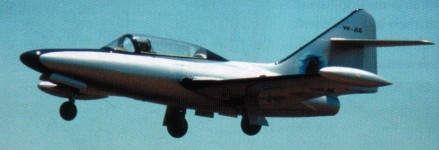
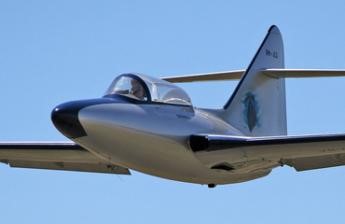
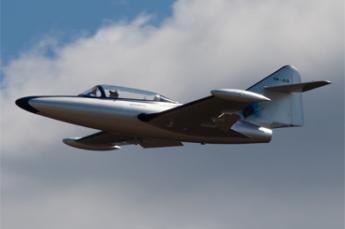
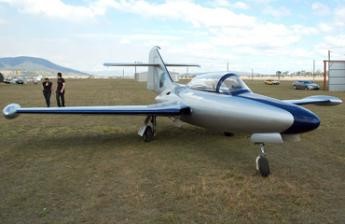
Designer and builder, John Gross, built the 3/4 scale replica Grumman F9F Panther at a Mt Cotton property a few miles south east of Archerfield (Australia).
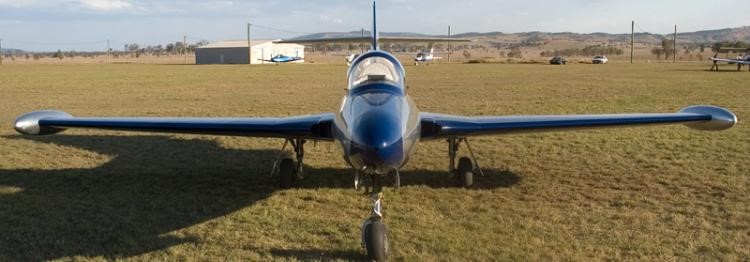
After 8 years of work, the homebuilt JG-2 took-off for the first flight on April 1 2006 at Kingaroy airport.
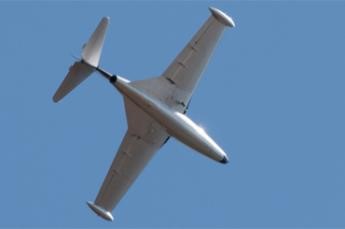
Power is from a GE T58-8F turbojet.
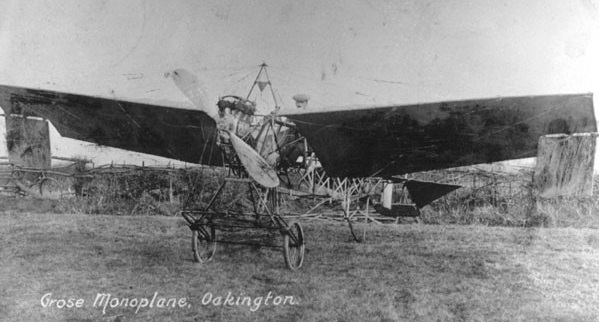
Built in the UK, construction commenced in 1909, and testing took place in April 1910, though no flights were ever reported.
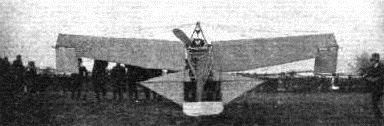
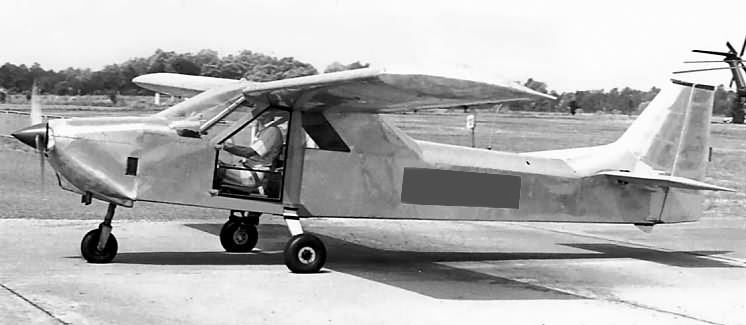
An original one-of-a-kind homebuilt aircraft, designed and built by James Bredelet and Louis Gros for two to four persons. The aircraft had a cantilever wing and was powered by one 130 hp Continental IO-240-A engine. It first flew on September 4, 1982.

The Gruppo Costruzioni Aeronautiche GCA.3 Eta Beta is virtually a tandem two-seat scaled-up version of the earlier GCA.2 Dumbo, retaining the V-tail assembly. The Eta Beta appeared in 1952, and was designed for both training and touring roles.
The fuselage is an all-wood stressed-skin structure and the wing is an all-wood monospar structure with a stressed plywood skin. Cantilever spring steel main undercarriage legs are fitted, and the enclosed cabin is provided with dual controls and HF radio.
Engine: 60 hp C.N.A, D4S
Wingspan: 27 ft 10,5 in
Length: 20 ft 4 in
Empty weight: 710 lb
Loaded weight: 1151 lb
Max speed: 124 mph at SL
Cruise: 106 mpg
ROC: 984 fpm
Range: 404 mi

