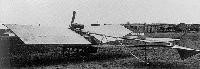
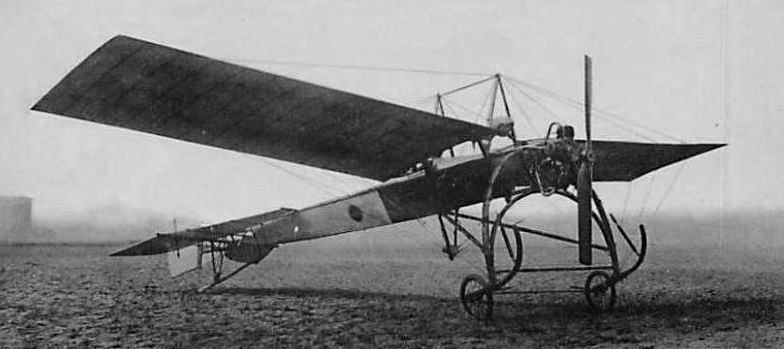
Guyard No.2 1911

In April 1912, a second Guyard monoplane made its appearance and was tested at Issy (France). A totally different design, this monoplane was well-built. The undercarriage was built on a pair of arched wooden struct and a crossbar, plus a pair of neat short forward skids.

Engine: Anzani 5-cyl 50 hp
Wingspan: 11m / 35’5″
Wing area: 18 sq.m / 29’6″
Length: 8 m
Weight: 225 kg
Speed: 100 kph

Gulfstream Peregrine

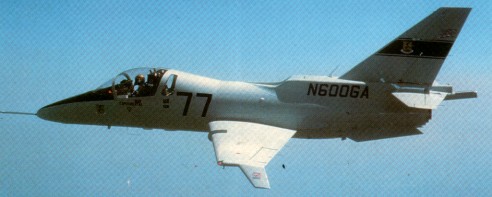
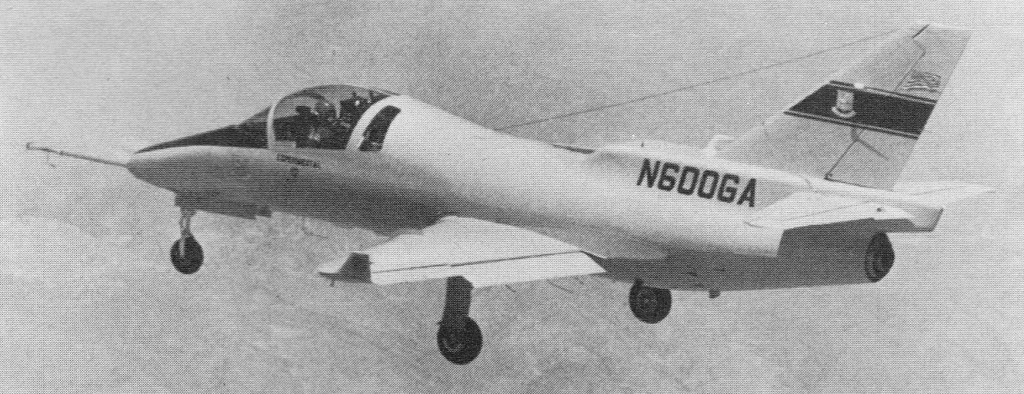
In July 1979 Gulfstream American (later Gulfstream Aerospace) revealed its plans to develop the Peregrine as a military trainer on the basis of its Hustler 500, an unusual executive jet powered by a nose-mounted turboprop and a tail-mounted turbofan. The trainer was based closely on the Hustler 500 without accommodation for passengers in the fuselage, without tip tanks, and with the forward fuselage revised to eliminate the turboprop and provide side-by-side seating for the pupil and instructor. The structure was of the conventional all-metal type with a semi-monocoque fuselage and cantilever low-set wings.

Gulfstream Peregrine Article

As first flown on 22 May 1981, the Peregrine had drag-reducing Whitcomb winglets on the upper surfaces of the wing tips, though these were later moved to the under surfaces. The engine was located in the rear of the fuselage, and was aspirated via a dorsal inlet whose aft contours formed the structural basis for the swept tail surfaces.

The sole prototype crashed in November 1983, and further development was abandoned. A possible derivative had tandem seating and two 1,500-lb (680-kg) thrust Williams WR44 turbofans, and the details below apply to the planned basic production version.

Type: two-seat primary and basic trainer.
Engine: one 3,000-lb (1,361-kg) thrust Pratt & Whitney Canada JT15D-5 turbofan.
Maximum speed 454 mph (730 km/h) at 20,000 ft (6,095 m)
Initial climb rate 5,200 ft (1,585 m) per minute
Service ceiling 48,000 ft (14,630 m)
Range 1,243 miles (2,001 km).
MTOW: 6,200 lb (2,812 kg).
Wing span 34 ft 5.5 in (10.50 m)
Length 38 ft 4 in (11.68 m)
Height 13 ft 5 in (4.09 m).
Guizhou JL-9 / FTC-2000 Mountain Eagle

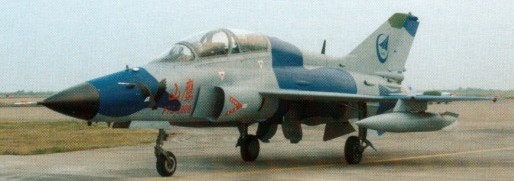
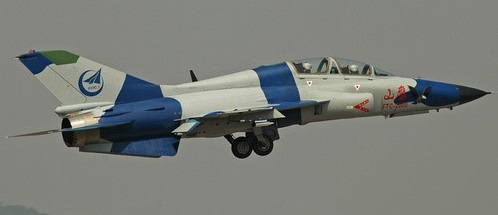
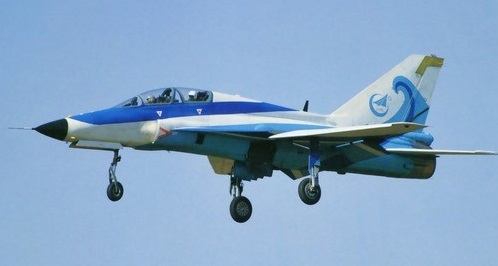
In 2001, Guizhou began development of a new trainer aircraft to replace the JJ-7 (MiG-21) trainers and better prepare pilots for flying the J-11 (Su-27) and J-10. To reduce costs and development time, Guizhou based their design off of the JJ-7. It uses the same fuselage and wings of the late-model JJ-7s, while radically redesigning the forward fuselage. The intakes were moved to the sides of the fuselage, allowing for a solid nose holding a radar. To improve the view for the instructor, the tandem cockpits were stepped. While intended as a trainer, it retains secondary attack capabilities. It comes standard with an ECM suite and a radar warning receiver, as well as an inflight refueling probe. Armament consists of an internal 23mm cannon and five hardpoints for unguided air-to-ground munitions and short-range AAMs.

Also known as the FTC-2000 Mountain Eagle, on December 13, 2003, the JL-9 derivative of the JJ-7 first flew, from An Shun/Huang Guo Shu (AVA) airport. Involving little change from the JJ-7, the JL-9 took 28 months from design to first flight.

The PLAAF began service trials of the JL-9 in 2006, while Guizhou continued to upgrade the onboard systems. In 2009, the JL-9 passed trials, and began production.

Meanwhile a navalized variant for the PLANAF has arose, incorporating several major modifications. The nose intakes were modified to prevent engine stalls at high angles of attack, the vertical stabilizer and leading-edge root extensions were enlarged, and the ventral fins were deleted to make space for the landing hook.

Guimbal Cabri G2

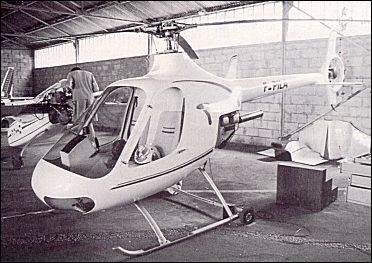
The Guimbal Cabri G2 is a two-seat single-reciprocating-engine-powered light helicopter. The two-seat Cabri G2 light helicopter was designed by Bruno Guimbal, a Eurocopter engineer, and the prototype (F-PILA) made its first flight at Marseille-Marignane in April 1992.

Guimbal Cabri G2 Article

Powered by a 150hp Lycoming, the main structure is carbon composite construction, and it uses a three bladed soft-inplane main rotor with carbon composite blades. The tail rotor is a fenestron design using seven injection moulded blades. Energy attenuating carbon composite seats of Guimbal’s own design are installed. The helicopter has conventional unassisted flight controls and largely conventional analogue instrumentation but uses its own design of electronic monitor for all engine functions.

An STC embodied on the engine is held by Guimbal and comprises a Plasma electronic ignition with variable timing to replace the RH retard-capable magneto, and also a compact oil filter housing.

Development continued at Aix-en-Provence with restricted DGAC certification being issued on 18 April 1994.The helicopter is the first light helicopter to be type certificated (Type Certificate R.145) by EASA against CS27.

Type Acceptance Certificate No. 11/21B/20 was granted on 22 June 2011 by New Zealand CAA.

Gallery

Guillon and Clouzy 1907 biplane

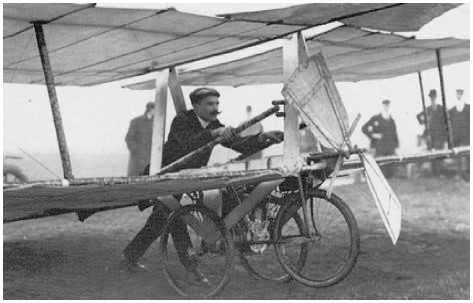
Standing on three bicycle wheels and with wings twenty feet across, Mr. Guillon’s “airship” had a 20 hp engine drive the propeller, which was five feet long and made of aluminium. The total weight of the machine was 300 lb., and with Mr. Guillon on board, reclining in a sloping position of 45 degrees at the back, the weight was 420 lb. When tested at Epsom Downs, Surrey, UK, on 11 April 1907, the aeroplane started away at a good twenty miles an hour, but Mr. Guillon could not get the engine to work satisfactorily, and the machine failed to rise from the ground. Furthermore, the rudder did not seem to act properly, darting this way and that. The aeroplane kept the crowd of some fifty persons constantly running to keep out of danger. Six unsuccessful trials were made, then the axle was found to be bent, and the experiment came to an end.