Gyro-Kopp-Ters Mosquito Hawk

Mosquito Hawk And Midnight Hawk
Gyro-Kopp-Ters can be purchased by kit or assembled and tested.
Kit
Mosquito Hawk 2001: $6500
Complete kit price: $7,500 in 2009.

Assembled
Mosquito Hawk 2001: $7500

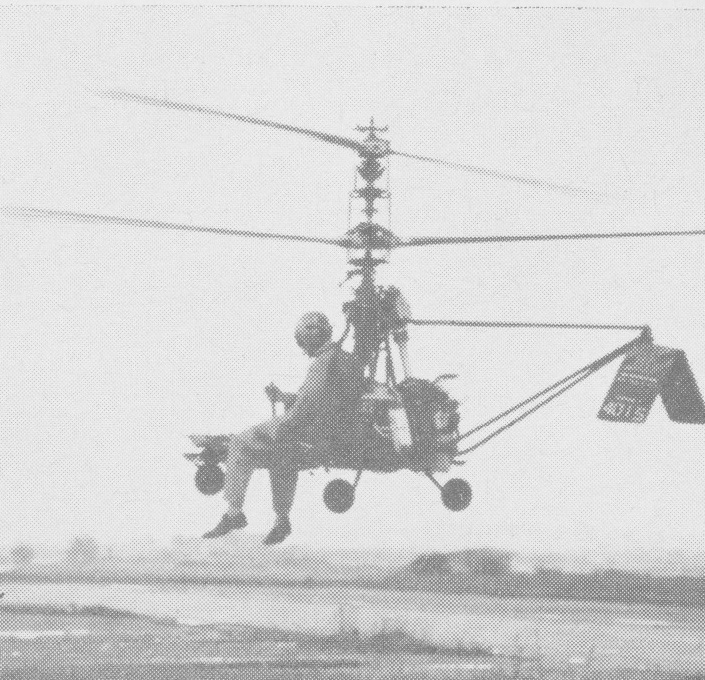
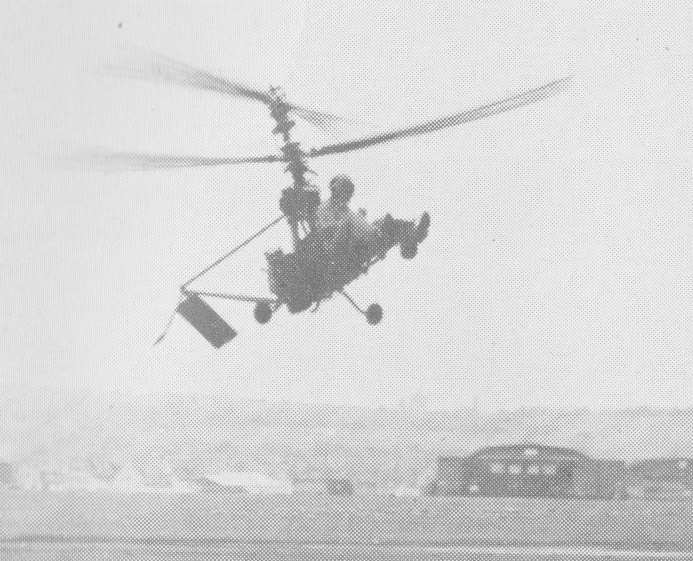
Single-seat open-frame autogyro
Engines: EA-81 or EA-82
Propeller: 52″ X 26″ Fixed Pitch
Rotor Blades: 25′ X 7″ Dragon Wings
Specifications:
Min Speed 25 mph
Cruise 50 mph
Top Speed 80 mph
Empty Weight 410 lbs
Useful Load 275 lbs
Width 4’11”
Height 7’11”
Length 10’2″
Frame of bolted 2X2 aluminum and angle, tall tail. Complete kit available, also engines, gauges,
reduction drive, t-shirt.

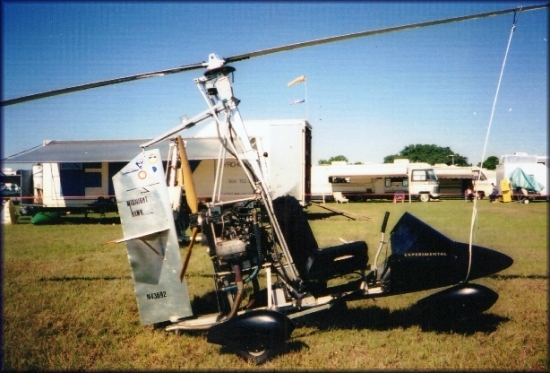
Gyro-Kopp-Ters Midnight Hawk

Gyro-Kopp-Ters can be purchased by kit or assembled and tested.
Midnight Hawk has front fairing and wheel pants. Frame of bolted 2X2 aluminum and angle, tall tail. Complete kit available, also engines, gauges, reduction drive, t-shirt. Free info package.

Kit
Midnight Hawk 2001: $8500
Kit: $9,500 in 2009.
Kit: $18,500 in Augusr 2020

Assembled
Midnight Hawk 2001: $9500

Single-seat partially-enclosed autogyro
Engine: EA-82, 90 hp @ 4800 RPM, Single Point fuel injected
with 1.75:1 reduction, Gates Polychain
Propeller: Precision 60″, 3-blade, ground adjustable, Rotax
bolt pattern
Rotor Blades: 26′ X 7″ Dragon Wings
Specifications:
Min Speed 25 mph
Cruise 50+ mph
Top Speed 80+ mph
Empty Weight 510 lbs
Useful Load 300 lbs
Width 4’11”
Height 7’11”
Length 10’2′

Engine: Subaru EA-82, 90HP @ 5200 RPM, Single Point Fuel Injected, Electric Start.
Reduction Drive: 1.67:1, Gates Polychain Belt
Rotor Blades: Dragon Wings, 25′ x 7″ (Rotor blade length may vary based on pilot weight)
Prop: Powerfin 60″, 3-Blade Composite, Ground Adjustable, Rotax Bolt Pattern.
Static Thrust: 450 LBS @ 4800 RPM, Prop Adjusted for Engine Peak Performance
Length: 12′ 4″
Width: 5′ 5″
Height: 8′ 2″
Empty Weight: 510 lb
Useful Load 300 lb
Climb: 600 FPM
Minimum Speed: 25 MPH
Cruise Speed: 50+ MPH
Top Speed: 85+ MPH
Never Exceed Speed: 120 MPH
Fuel Capacity: Max 16 Gallons; Burns: 4.0 GPH (Aluminum Seat Tank)
Standard Equipment: Hydraulic Pre-Rotator, Altimeter, Air Speed, Compass, Oil Pressure, WaterTemperature, Voltmeter, Hour Meter, Tachometer, Main Wheel Brakes, Trim Tab, & Tall Tail

Gyrodyne QH-50

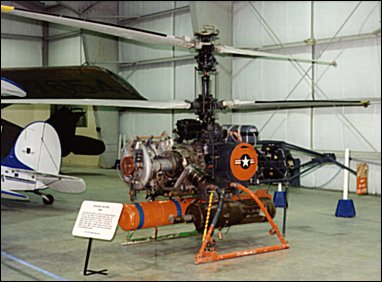
QH-50

In 1956, Gyrodyne XRON-1 experiments led to development of the QH-50 unmanned drone versions of the XRON-1 and Gyrodyne delivered over 60 production QH-50Cs for operation from Naval frigates.

QH-50C
Engine: 1 x T50-BO8A turboshaft, 243kW
Rotor diameter: 6m
Take-off weight: 1036kg
Empty weight: 524kg
Max speed: 148km/h
Ceiling: 5000m
Range: 132km
Armament: 2 x Mk-44 torpedos or 1 x Mk-46 torpedo

QH-50

Gyrodyne XRON-1 Rotorcycle

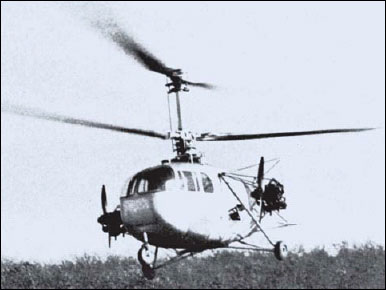
In 1956, Gyrodyne entered the competition to produce a single seat “personal” helicopter for operation off destroyer heli-decks for fleet observation, and for battlefield support, and built ten examples of the XRON-1 for the U.S. Navy. These also had a coaxial rotor layout and a 40hp Nelson H.59 engine – later replaced by a 60hp Porsche. This experiment led to development of the QH-50 unmanned drone versions and Gyrodyne delivered over 60 production QH-50Cs.

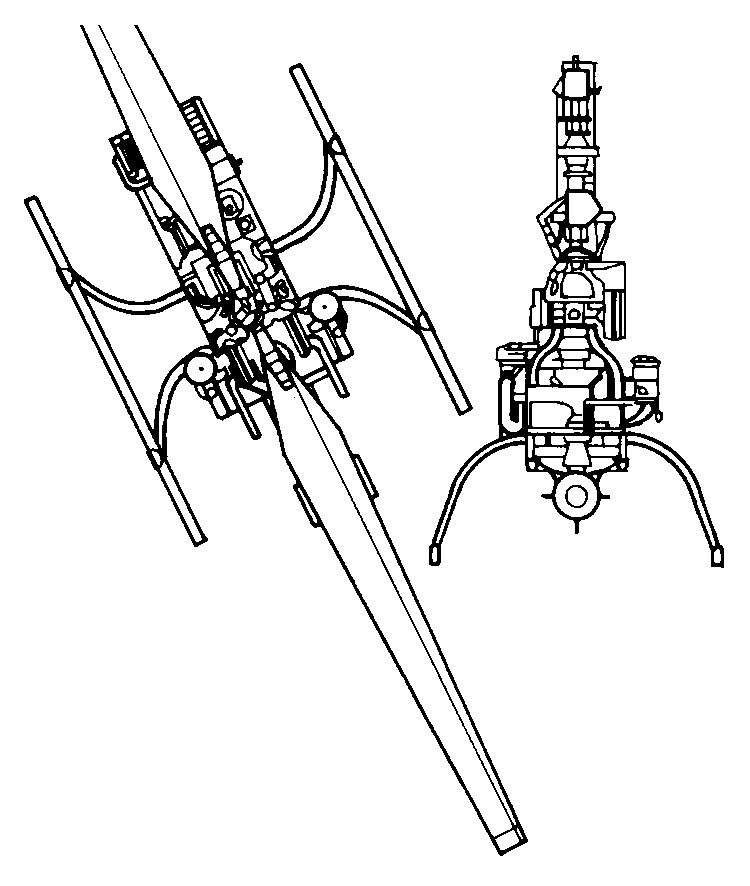
The inverted V-tail assembly is for stability only. All control is achieved through the overhead rotors. A feature is tip brakes mounted on the ends of the rotor blades which provide smooth directional control.

Gallery

XRON-1
Crew: 1
Engine: 1 x Porsche 4-cylinder piston, 45kW
Take-off weight: 315kg
Payload: 105kg
Max speed: 110km/h
Service ceiling: 2000m
Range: 50-95km

Gyrodyne GCA-2

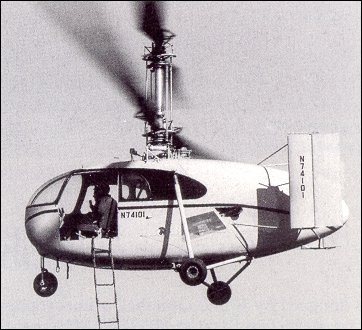
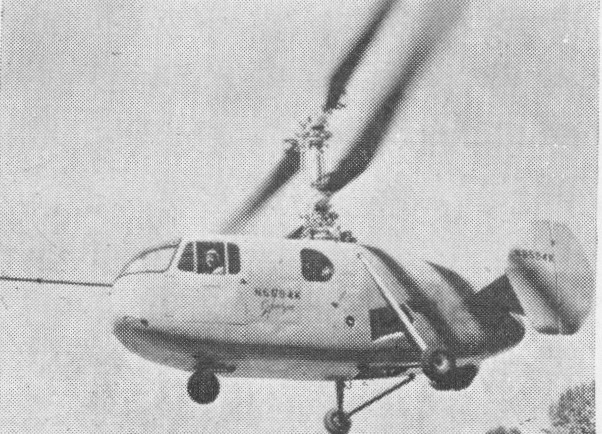
The Gyrodyne Company of America was established by Peter J. Papadakos in 1946. Gyrodyne acquired rights to the five-seat Helicopters Inc. (Bendix) Model J and developed this as the Gyrodyne GCA-2 (N74101). The GCA-2, an all-metal helicopter, had a coaxial twin rotor layout, with a five-seat cabin and a rounded fuselage with twin fins. It was subsequently modified to become the GCA-2A “Helidyne”, with twin 100hp Continental auxiliary engines mounted externally on strutted outriggers to give additional forward speed. It flew in this form on 30 November 1949.

Gyrodyne GCA-2C

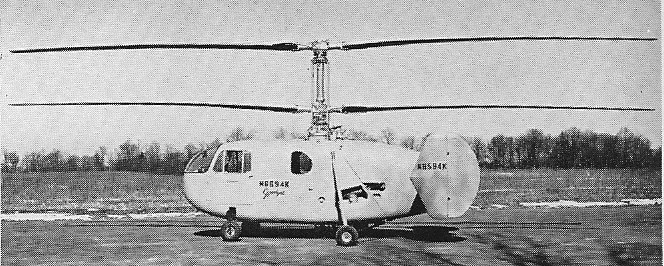
A further development of the GCA-2, serial number N6594K, first flew on April 25, 1952 piloted by Jim Ryan as the GCA-2C. Convertible to an ambulance with three litters.

G.C.A.2C

GCA-2C
Engine: 1 x P&W R-985-134, 450hp
Rotors: 2x 2 blade co-axial
Rotor diameter: 14.64m / 48 ft
Height: 14 ft 4 in
Fuselage length: 21 ft 6.5 in
Empty weight: 3800 lb
Loaded weight: 5,750 lb
Max. speed: 140km/h / 87 mph
Cruising speed: 110km/h / 70 mph
ROC: 1030 fpm
Ceiling: 9,200 ft
Typical range: 250 miles at 69 mph with full load
Number of seats: 6-8

Gwinn Aircar

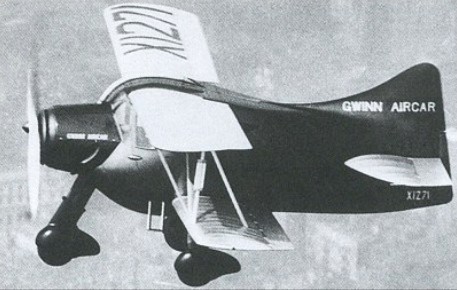
The first Aircar was completed in 1937 when it also received its Approved Type Certificate.
The test pilot for the Air Car was Richard K. Benson. During one flight he inadvertently got the Air Car into a spin and at about 10,000 feet and was able to recover at about 1000 feet. Saving the airframe got him a $10,000 reward from Gwinn.

Engine: 2 x Pobjoy Niagara II.
Seats: 2.
Top speed: 118 mph.
Cruise: 103 mph.
Landing speed: 41 mph.

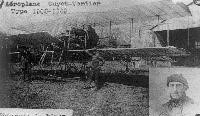
Guyot et Verdier 1911 biplane

In 1911, in Juvisy in Essonne, construction of a 4th biplane started but with monocoque metal fuselage on wheels with shock absorbers, the hull joining the front cell to the aft stabilizer adjustable, a rear stabilizer in two parts to allow the development of the rudder with a crutch for ground braking. Combination of ailerons with controls on joystick, 60 hp E.N.V motor, Regy tractor propeller, foot rudder control, upper plane span of 8 meters, and lower plane 7 meters.

Louis Verdier carried out the development and flight tests in presence of an officer from the military aeronautical laboratory of Chalais-Meudon in view of the use of this two-seater by the army.

In view of the results obtained, including the solidity of the aircraft, well built, good flight behavior, possibility of landing on very short terrain due to the solidity of its landing gear, a very soft suspension and good braking at
ground, the Guyot-Verdier airplane registered before January 1, 1911 in the 1st major military aviation competition in Reims in la Marne, which began on October 1, 1911.

42 manufacturers take part in this competition, registering around 70 machines. Unfortunately, the Guyot-Verdier aircraft does not meet the qualifications, the required conditions are too stringent.

On Sunday, October 29, 1911, Louis made a demonstration flight of in front of 4000 to 6000 spectators, in the field Berthonnerie Air Force (2 km from La Souterraine), flying for 35 minutes, completing a 35 km circuit where it reaches an altitude of 500 meters. He is carried in triumph in the streets of the city and a wine of honor is offered.

Then follow other flights and aerial celebrations, in November 1911, January 12, 1912, April 28, 1912 in Azérables in Creuse.

In 1912, Louis received his pilot’s license n° 526, from the aeronautical sports commission.

In 1913, Louis Verdier wrote:
“Despite all these facts and qualities as well as many steps taken by our gentlemen, Deputies and Senators of Creuse and Haute-Vienne, the La Souterraine aviation factory has never obtained any order of a military service from the French State, nor any financial aid, all this aviation equipment has been studied, built and developed to no avail, for it was not the few parties and exhibitions that were able to cover all these study and construction costs for these aircraft prototypes. I give up building and flying these planes, I leave the provinces and return to the Paris region”

Louis entered the Sanchez-Beza Establishments as a pilot, then as a test pilot and engine developer at the Salmson aviation factories in Billancourt and, with mechanics, replaces engines on seaplanes in Saint-Raphaël (Var), Bizerte (Tunisia), Marseille (Bouches-du-Rhône), Toulon (Var).
Guyot et Verdier 1910 biplane

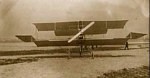
Henri Guyot and Louis Verdier undertake, still at La Souterraine, the construction of a third biplane, two-seater, at Chauvière, 80 horsepower engine and pusher propeller, unequal span wings.

The front cell and the rear fixed plane are joined by V-shaped ash spars and to reduce resistance in flight, the masts and metal parts are profiled. The span of the upper plane is 17.50 meters and the span of the lower plane 15 meters, bearing surfaces with beak entry into the air profiled to avoid resistance to the advancement of the aircraft, the engine mounted on a fuselage which is fixed on the lower plane of the aircraft which constitutes the cockpit. The cell is mounted on skid with 4 shock absorbers metal fixed on two wheels on each runner. The wheels are mounted on balloon tires with bead rims, brakes on wheels and brake stand on the ground.

The first official flight, piloted by Louis, took place on April 24, 1910 at Le Dorat on the flat racecourse. It was completely fenced which facilitated the control of entries because the event was paying. It’s a rectangle of 50 meters by 60 meters, the aircraft can take off in all directions.

Louis passed his A.C.F. (Aéro-Club de France) on July 1, 1911 on this Guyot-Verdier aircraft. His pilot’s license civil bears the n° 538. The license n°1 was obtained in 1909 by Louis Blériot.