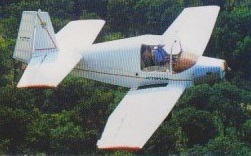
A two-seat light aircraft, the J.G.10, competed in the French Air Ministry Light Aeroplane Competition of 1931, but retired with engine trouble.
1 engine
Guillemin J.G.40

M. J. Guillemin designed a high-wing single-engine light postal or ambulance monoplane, the J.G.40, shown on the Bleriot Aeronautique stand at the 1930 Paris Air Show. The latter company acquired the license to build aircraft.
Guerpond Autoplan
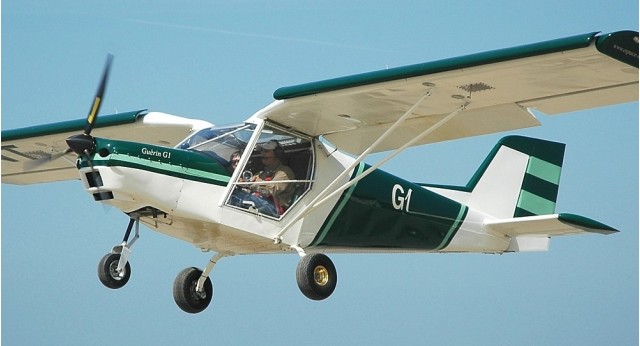
The Guerpond Autoplan is an all-wood tandem microlight aimed at the amateur constructor. The large tailplane allows a large CoG range. Engines of up to 64 hp can be used.
Engine: Rotax 462, 52 hp
Wing span: 8.60 m
Wing area: 17.50 sq.m
MAUW: 420 kg
Empty weight: 230 kg
Fuel capacity: 50 lt
Max speed: 150 kph
Cruise speed: 130 kph
Minimum speed: 50 kph
Climb rate: 4 m/s
Seats: 2
Fuel consumption: 15 lt/hr
Guérin G1
Guerchais-Roche T-39/2
Guerchais T-9
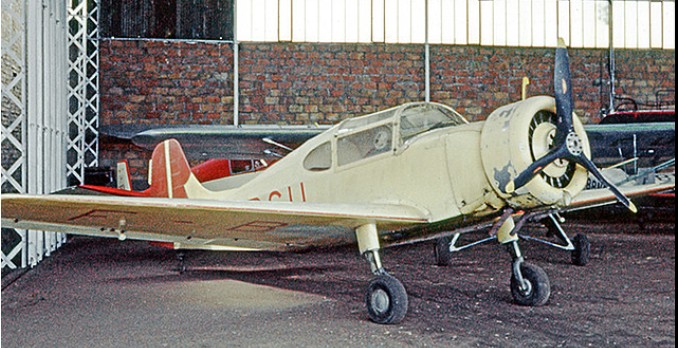
A light cabin monoplane with 120 hp Renault engine of 1930
Gudkov GU-1
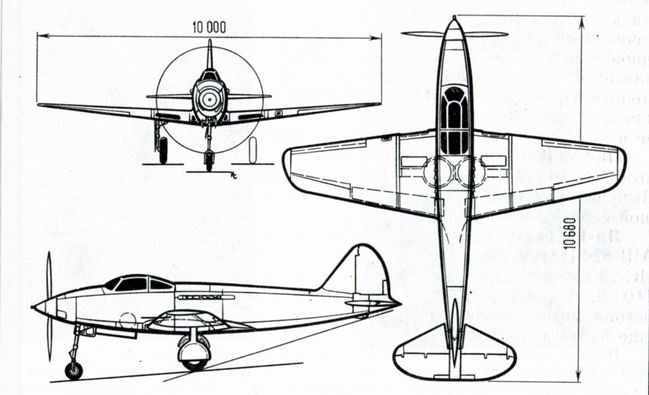
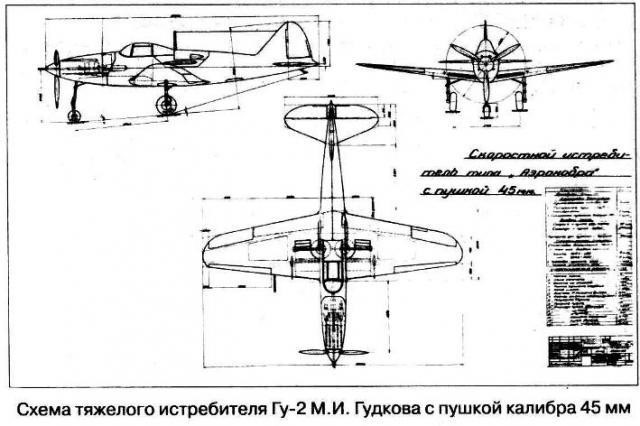
The Gu-1 single-seat fighter designed by Mikhail Gudkov had a liquid-cooled engine installed aft of the pilot’s cockpit, close to the CG, and driving the propeller via an extension shaft and reduction gear. Design of the Gu-1 was commenced in 1940, and the fighter was of mixed construction, with welded steel-tube forward and centre fuselage covered by duralumin skinning and metal wing mainspars, the remainder of the airframe being of wood. Power was provided by a Mikulin AM-41 12-cylinder liquid-cooled engine, the main coolant radiators for which were buried in the wings. The Mikulin bureau experienced difficulties with the extension shaft and reduction gear which were not ready for testing until 1942. Armament comprised a single 37-mm Taubin cannon firing through the propeller shaft. In the event, the Gu-1 proved to be seriously overweight.
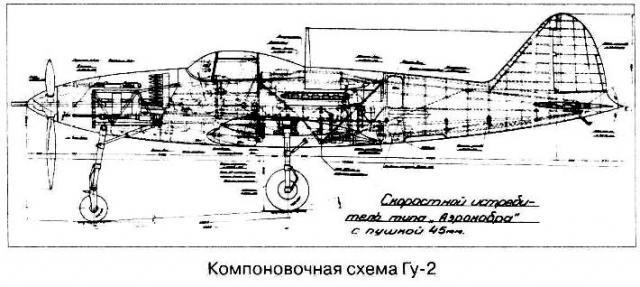
The initial flight test was performed by A I Nikashin on 12 July 1943, but after reaching some 650 ft (200 m), the fighter dived into the ground, killing the pilot, and further development of the Gu-1 was abandoned. No illustrations of the Gu-1 appear to have survived and the only available data are the weights.
Engine: Mikulin AM-41 12-cylinder liquid-cooled
Empty weight, 8,249 lb (3 742 kg).
Loaded weight, 10, 163 lb (4610 kg).
Armament: 1 x 37-mm Taubin cannon
Guangzhou/Kunming Chu Kiang
Charles Lindbergh’s New York to Paris solo in 1927 generated enthusiasm for aviation around the world.
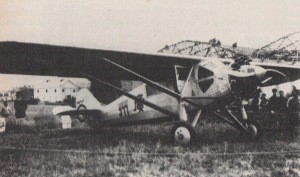
The Chu Kiang, was patterned after a four-seat Ryan Brougham, in 1929.
The Chronicle of Aviation datelined this item January 14, 1929, Peking: “China has acquired one of its first aircraft, an exact copy of the Ryan Brougham, and thus resembling Charles Lindbergh’s Spirit of St. Louis. Piloted by Chang Wai-chung, the 250-hp Chu Kiang recently completed a 2500-mile flight across China.”
Guangzhou/Kunming Xianyi Rosamonde / Dashatou Rosamonde
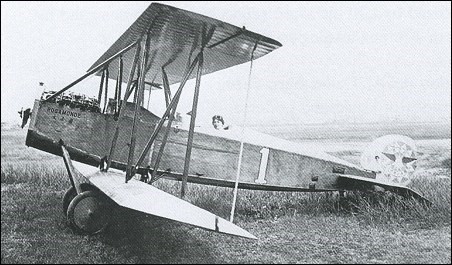
Sen Yet Young assisted in unifying China by heeding Sun’s call to “save China through aviation”. He enrolled in the Curtiss Aviation School in Buffalo, New York and soloed as a pilot on October 2, 1916. Sen Yet Young became the first Hawaiian American to be licensed, with sea plane and land plane ratings, receiving the Aero Club of America certificates 600 and 62 respectively. He won second place in marksmanship from an airplane and stayed months longer studying aviation engineering.
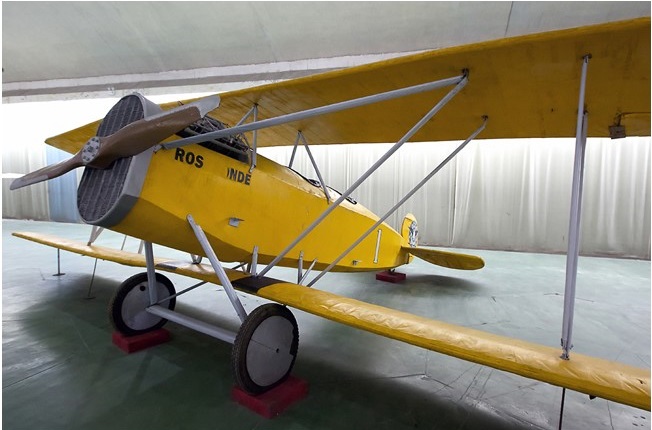
Young was named head of the Chinese Aviation Bureau and is credited with producing the first flourishing of aviation experts in Guangdong. He spearheaded the first Chinese factory to manufacture airplanes, and commanded the design and building of the Rosamonde, named after Sun’s wife, Soong Ching-ling.
Designed May 1923, the ‘Rosamonde I’ biplane trainer was made in Guangzhou in 1923. Madame Song attended the ceremony of the plane’s first flight, in July 1923.
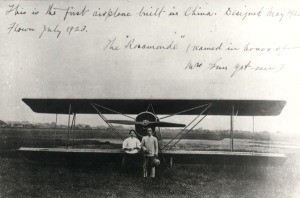
Soong would fly as a passenger in the plane with pilot Huang Guangrui at the controls.
Guangzhou/Kunming Chung 28B
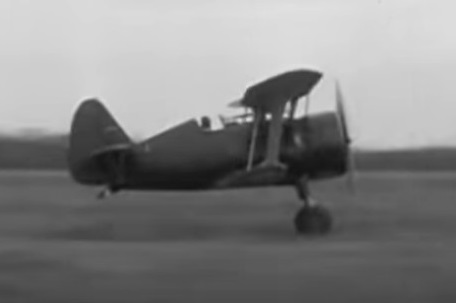
Thirty of the Chung 28B fighter were built, looking like the Polikarpov I-152.