The Harker Hawk PFA 003-10004 is a single-engined aircraft registered G-BDNE. An original design by Don Hawker, the Harker Hawk was started in 1973. A two seat low wing monoplane with slightly swept-back wings, it had a tail wheel undercarriage. Powered by a Continental A65, construction of PFA.03010004 was underway during 1974.
1 engine
Harbin 701
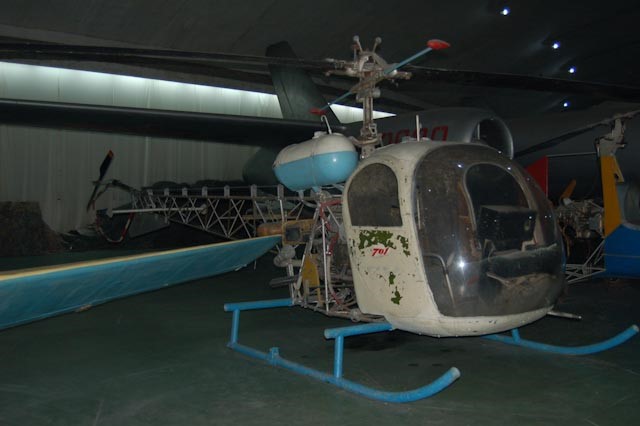
The Harbin Type 701 prototype was a reverse-engineered Bell 47G (Sioux) copy.
It was not put in production.
Harbin Drepeau Rouge 1 / Yun An 1
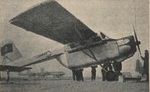
The Drepeau Rouge 1 is a five passenger, one pilot aircraft from China, with a 450kg useful load.
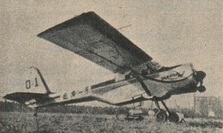
The Harbin Yun An 1 was constructed by professors and students, and is a version of the Drepeau Rouge 1.
Harbin Kiang 1
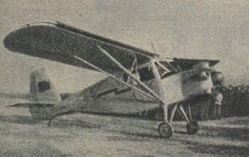
The 1958 Kiang No.1 was a one-off model. Built in 130 days by the Kharbin Institute. The three-seat Kiang-2 was intended for agricultural use.
Max speed: 100 mph
Range: 416 mi
To/Ldg dist: 80 yda
Payload: 484 lb
Hanuschke Populaire II
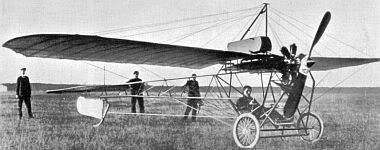
The 1912 Hanuschke Eindecker Model “Populaire II” was a German monoplane distinguished by its completely bare triangular tube fuselage fitted with a 50 hp rotary Gnôme engine.
Hanuschke 1910 aeroplane
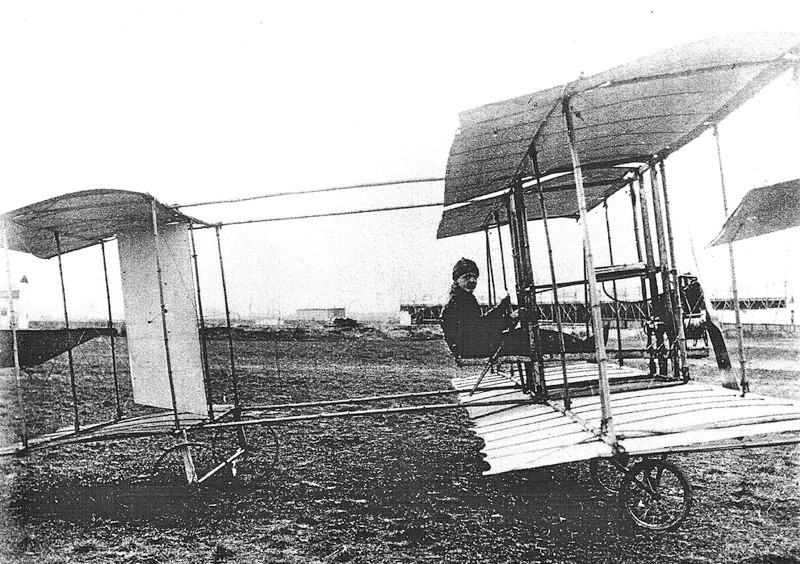
Bruno Hanuschke built his first powered plane, which looked much like his previous glider but powered by a two-cylinders engine. It was built (when as he was 18) in 1910 at Johannisthal, Germany. This biplane made only short hops.
Hants and Sussex Aviation / HAS Antoinette
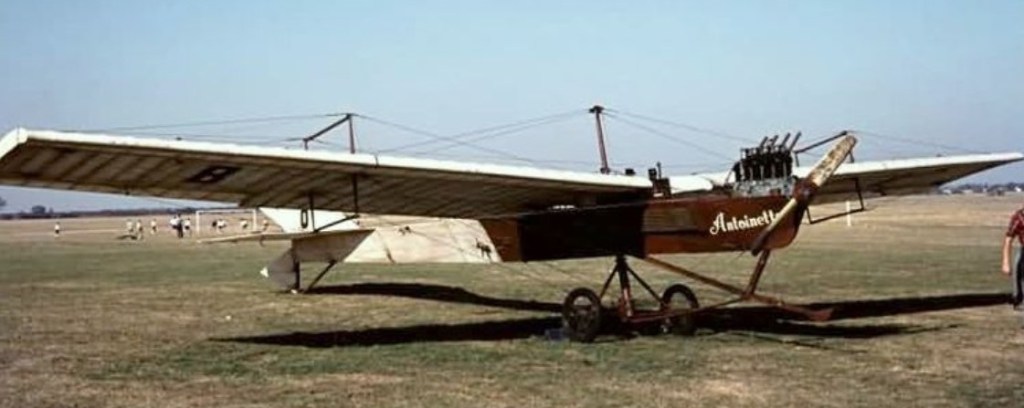
In 1964 Hants & Sussex Aviation was contracted to build three Levavasseur Antoinette IV monoplane replicas of 1910 vintage for the film ‘Those Magnificent Men in Their Flying Machines’. The Antoinette IV movie model closely replicated the slim, graceful monoplane that was very nearly the first aircraft to fly the English Channel, in the hands of Hubert Latham, and won several prizes in early competitions. When the Hants and Sussex Aviation Company from Portsmouth Aerodrome undertook its construction, the company followed the original structural specifications carefully, although an out-of-period de Havilland Gypsy I engine was used.
They were built in wood but the Antoinette’s wing structure proved, however, to be dangerously flexible, and lateral control was very poor, even after the wing bracing was reinforced with extra wires, and the original wing-warping was replaced with “modern” ailerons (hinged on the rear spar rather than from the trailing edge, as in the “real” Antoinette). The final configuration was still considered marginal in terms of stability and lateral control.
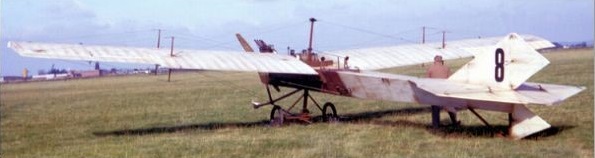
Both of the flying examples (one was static only) are thought to still exist. The first machine was noted in a hanger at Fairoaks in 1972 and the second machine was undergoing a rebuild in Geneva, Switzerland.
Hants and Sussex Aviation / HAS Herald
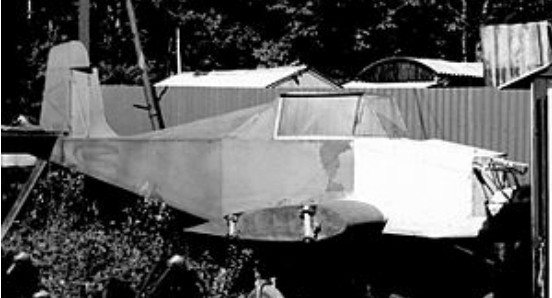
Hants and Sussex Aviation Ltd was an aircraft manufacturer based at Portsmouth Airport, Hampshire, England. It is still in business in the aircraft components industry.
In 1953, HSA designed its first aircraft. This was the H&S Herald. The Herald was a single-seat ultra-light aircraft with a fixed tricycle undercarriage and powered by a 40 h.p. Aeronca-JAP J-99 piston engine.
Aircraft Registration: G-ALYA
Construction Number: HA/AC/001
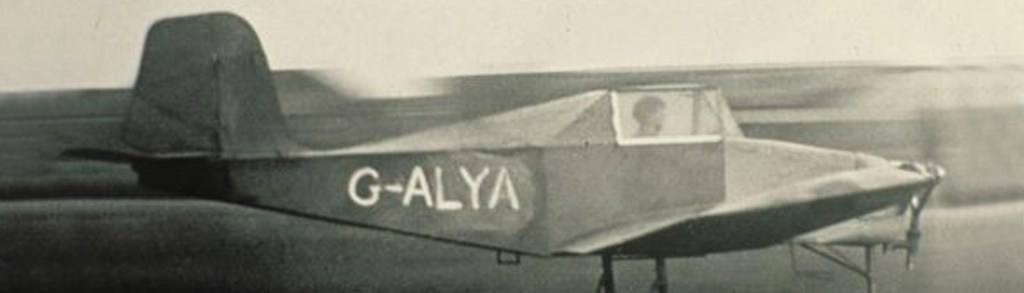
The Herald made flight tests at Portsmouth Airport in 1953, but these revealed that it had a poor performance and the aircraft was grounded and dismantled in 1955.
Powerplant: 1 × Aeronca-JAP J-99, 40 hp (30 kW)
Wingspan: 29 ft 0 in (8.84 m)
Length: 21 ft 6 in (6.55 m)
Empty weight: 580 lb (263 kg)
Gross weight: 900 lb (408 kg)
Maximum speed: 92 mph (148 km/h, 80 kn)
Cruise speed: 82 mph (132 km/h, 71 kn)
Crew: 1
Hanson WH-1 Thunderchicken / Sump’n Else
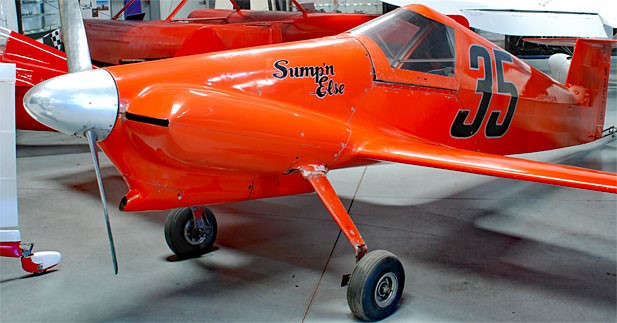
William Hanson’s WH-1 Formula 1 racer N35TS, Race 35, began life with the name of “Thunderchicken.” The fuselage is of welded tubular steel construction, with the cockpit and engine areas covered with sheet aluminum, and the area aft of the cockpit covered with fabric. The tail surfaces were constructed similarly to the aft fuselage. The wings were made of wood spars and ribs with plywood covering.
The aircraft, wearing the name “Thunderchicken,” qualified at the Cleveland Air Races in 1972, flown by Ken Haas. However, due to failure of the windshield, the aircraft failed to place. The same year, Tom Cooney flew finished in fifth place in the Formula 1 Silver Race at Reno, with a speed of 202.74 mph.
The WH-1 was renamed “Sump’n Else,” retaining race number 35, and repainted for the 1974 Reno Air Races, but did not qualify. In 1975, Thomas Summers flew “Sump’n Else” to a third-place finish in the Silver Race at Reno with a speed of 204.69 mph.
Engine: Continental 0-200
Span: 18 ft. 8 in
Length: 18 ft. 3 in
Height: 6 ft. 2 in
Maximum Speed: 225 mph
Crew: 1
Hanson Woodwind
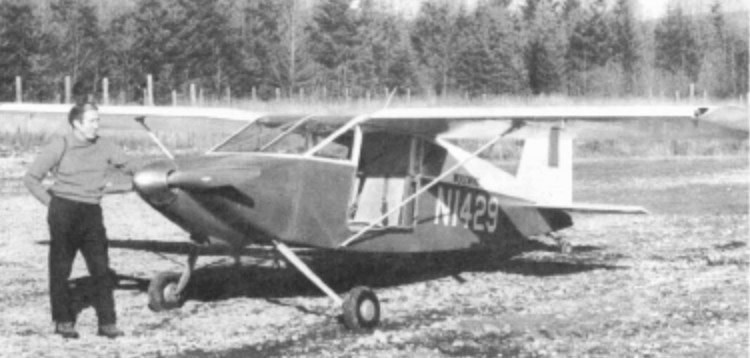
The Hanson Woodwind is an all-wooden homebuilt aircraft with a fiberglass wing designed by Carl Hansen.
The Woodwind is a two seat side-by-side configuration, strut-braced, high-wing aircraft with conventional landing gear and Plexiglas doors. Some construction elements were adapted from the all-wood Bowers Fly Baby. The Woodwind was a homebuilt copy of the Wittman Tailwind using all-wood construction, rather than welded steel tube and aircraft fabric covering for the fuselage. The Wittman design uses plywood covering for its wings, while the Woodwind uses fiberglass. The fuselage sides and tail surfaces are built flat on a table at the same time and covered with aircraft grade plywood. The wings are covered in fiberglass with stainless steel torque tubes for aileron control. The fuel tanks and cowling are also made from fiberglass. The prototype used a moose-hide interior.
The prototype first flew on 20 June 1969. The aircraft was written off in an non-fatal accident on 5 June 1976 after hitting a large rock.
Engine: 1 × Lycoming O-235-C, 100 hp (75 kW)
Propeller: 2-bladed variable-pitch Sensenich “Skyblade”
Capacity: 2
Empty weight: 851 lb (386 kg)
Gross weight: 1,425 lb (646 kg)
Fuel capacity: 32 U.S. gallons (120 L; 27 imp gal)
Maximum speed: 126 kt / 233 km/h (145 mph)
Cruise speed: 122 kt / 225 km/h (140 mph)
Stall speed: 52 kt / 97 km/h (60 mph)

