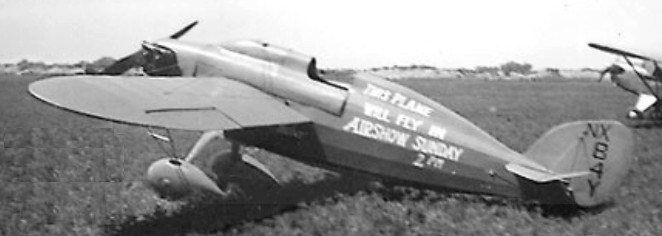
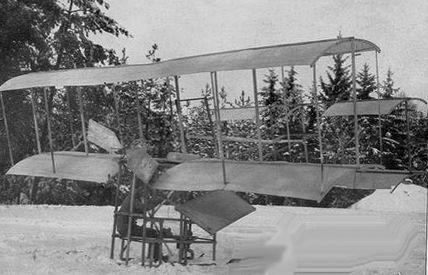
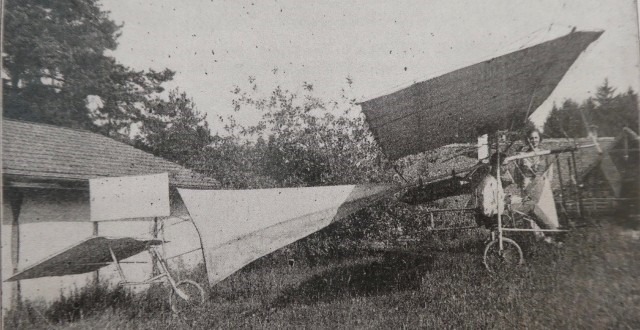
Three Hansen racers were built. The first a modified Heath Baby Bullet as Baby Bullet [11351]. The second, from a Heath 115, with 40hp Continental A-40 (span: 16’6″) as Baby Bullet II for 1932 Nationals [NR282W] (piloted by Art Davis and Walt Bagnick). The third as Baby Bullet III for 1934 Nationals [NR84Y] (piloted by Art Davis), and rebuilt in 1947 as Francis-Angell midget racer.
Baby Bullet I Engine: Wright-Morehouse, 29hp Wingspan: 20’0″ Seats: 1
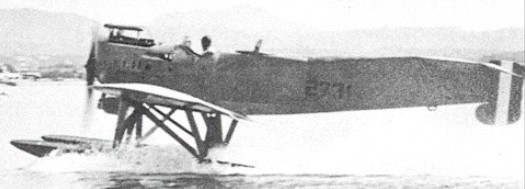
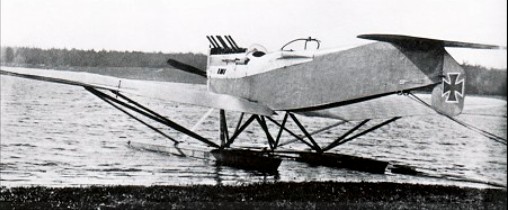
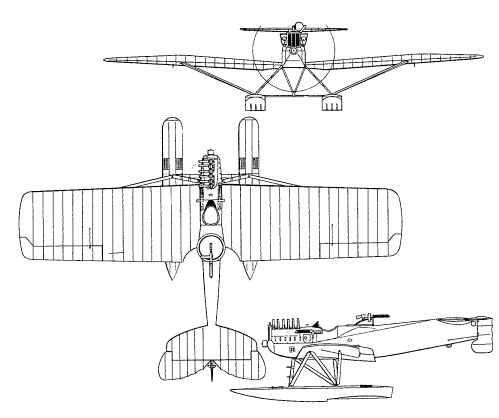
Continuing the line of two-seat patrol fighter monoplanes initiated with the W.29, the W.34 was the final WWI development of the series of float seaplanes designed for the Hansa- und Brandenburgische Flugzeug- Werke by Ernst Heinkel and Hans Klemm. Essentially a scaled-up W.33 intended for the 300hp Basse und Selve BuS IVa six-cylinder water-cooled engine, only one prototype of the W.34 had been completed by the end of the War. Additional examples powered by the 300hp Fiat A 12bis engine were built after the termination of hostilities.
Max take-off weight: 2270 kg / 5005 lb Empty weight: 1534 kg / 3382 lb Wingspan: 16.60 m / 54 ft 6 in Length: 11.10 m / 36 ft 5 in Wing area: 49.0 sq.m / 527.43 sq ft Max. speed: 175 km/h / 109 mph
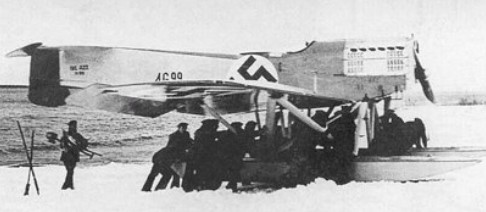
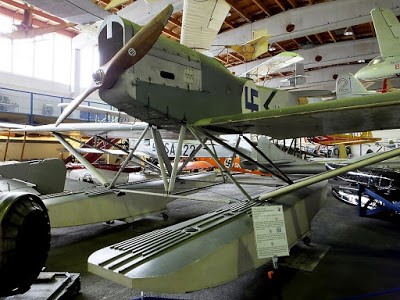
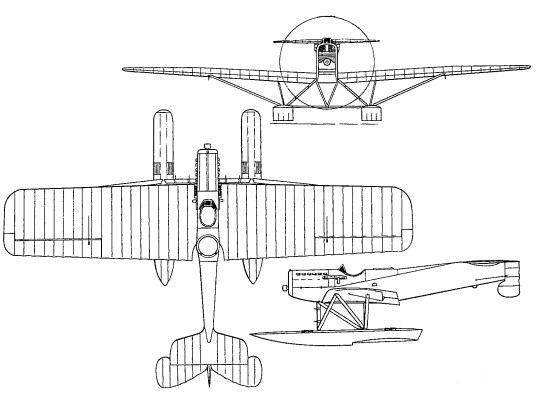
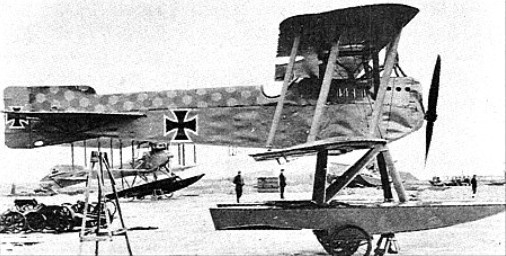
Ordered in April 1918, the W.33 was basically a larger and more powerful development of the W.29 and, augmenting the smaller fighter seaplane, saw service from North Sea air stations during the closing months of World War I.
The W.33 was powered by a 260hp Mb IVa six-cylinder inline water-cooled engine and armament normally comprised two forward-firing 7.62mm LMG 08/15 machine guns and one Parabellum in the rear cockpit. One aircraft was experimentally fitted with a 20mm Becker cannon in the rear cockpit, and several aircraft were fitted with radio and had one of the LMGs removed.
At least six of an initial order of 26 W.33s had been taken into the German Navy’s inventory when hostilities terminated, but the Norwegian Naval Flying Boat Factory built 30 under licence and the Norwegian Army Aircraft Factory built a further 11.
Kjeller Aircraft Factory license built Hansa-Brandenburg W.33 as the F.F.8 Måke (Seagull).
I.V.L. A22
The Finnish Aviation Force’s Aircraft Factory assembled two W.33s as pattern aircraft in 1922, and licence-manufactured a further 120 during 1923-26. Two were sold to Latvia. Finnish manufactured planes were powered by 300 hp Fiat A-12bis motors.
W.33 Engine: 1 x 183kW Maybach Mb.IV Wingspan: 15.85 m (52 ft) Length: 11.10 m (36 ft 5 in) Height: 3.37 m / 11 ft 1 in Wing area: 44.0 sq.m / 473.61 sq ft Max take off weight: 2050 kg (4510 lb) Empty weight: 1420 kg / 3131 lb Maxi¬mum speed: 173 km/h (107 mph) Ceiling: 5000 m / 16400 ft Armament: 2-3 x 7.92mm machine guns Crew: 2
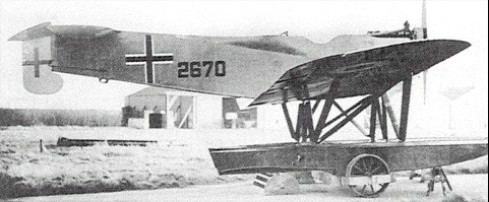
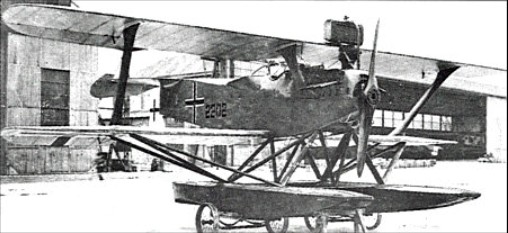
Evolved from the W.12 two-seat patrol fighter biplane in parallel with the W.27, the W.29 was essentially a monoplane derivative powered, in prototype form, by the 195hp Benz Bz IIIbo eight-cylinder Vee engine. The span and chord of the monoplane wing approximated in area to the biplane wings of the W.12, and the wing itself was a two-spar wooden structure with fabric skinning. The 150hp Benz Bz III six-cylinder inline water-cooled engine was standardised for the production model of the W.29, which began operations with the German Navy in April 1918. Over 150 W.29s are known to have been delivered to that service in two basic versions, one equipped with radio and fitted with a single synchronised 7.92mm LMG 08/15 machine gun plus a Parabellum on a flexible mount in the rear cockpit, and the other having two forward-firing LMGs and lacking radio equipment. The W.29, operating from Zeebrugge, Borkum and Norderney, achieved considerable operational success during the closing stages of World War I. In 1921, licence production of the W.29 was initiated by the Danish naval dockyard, 15 being built and these continuing in Danish Navy service until 1931.
W.29 Engine: 1 x 112kW Benz Bz III Span: 13.50 m (44 ft 3.5 in) Length: 9.35 m (30 ft 8.5 in) Wing area: 32.2 sq.m / 346.60 sq ft Max take-off weight: 1494 kg / 3294 lb Empty weight: 1000 kg / 2205 lb Maximum speed: 176 km/h (109 mph) Crew: 2 Armament: 2-3 x 7.92mm machine guns
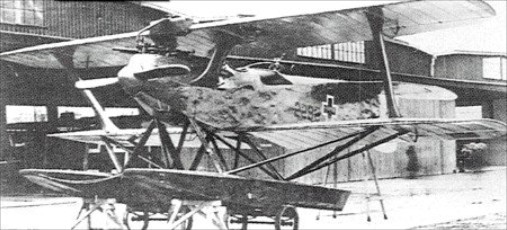
Early in 1918, it was suggested to Ernst Heinkel that a successor to the W.12 two-seat fighter would soon be required if the German Navy was to maintain its superiority over Allied types being encountered over the North Sea. To conserve valuable time, Heinkel installed the new 195hp Benz Bz IIIbo eight-cylinder Vee engine in a modified W.12 airframe and a 160hp Mercedes D IIIa in a second W.12. Wing span and gap were reduced, stagger was increased to improve visibility, and aerofoil- section I-type interplane struts were adopted. Armament comprised two synchronised 7.92mm LMG 08/15 machine guns and one 7.92mm Parabellum on a flexible mount in the rear cockpit. The Benz-engined prototype received the designation W.27 while that powered by the Mercedes engine became the W.32, but both were found inferior to the W.29 monoplane and no further development was undertaken.
W.32
W 27 Max take-off weight: 1619 kg / 3569 lb Empty weight: 1109 kg / 2445 lb Wingspan: 11.20 m / 37 ft 9 in Length: 9.23 m / 30 ft 3 in Height: 3.06 m / 10 ft 0 in Wing area: 36.06 sq.m / 388.15 sq ft Max. speed: 170 km/h / 106 mph
The last of the Heinkel-designed single-seat fighter float seaplanes built by the Hansa- und Brandenburgische Flugzeug-Werke, the W.25, produced as a single prototype late in 1917, was the final development of the KDW. Reverting to the 150hp Benz Bz III engine used by the prototype and pre-production KDWs, the W.25 possessed an essentially similar fuselage, but discarded the “star” interplane strut arrangement in favour of normal strut bracing. Initially the prototype flew with ailerons on the upper wing only, but these were subsequently added to the lower wing, each pair being joined at the wingtip.by link struts. Armament comprised two synchronised 7.92mm LMG 08/15 machine guns. Having by this time lost interest in single-seat fighter floatplanes, the German Navy did not foster further development of the W.25.
Max take-off weight: 1182 kg / 2606 lb Empty weight: 918 kg / 2024 lb Wingspan: 10.40 m / 34 ft 1 in Length: 8.80 m / 29 ft 10 in Height: 3.45 m / 11 ft 4 in Wing area: 36.53 sq.m / 393.21 sq ft Max. speed: 160 km/h / 99 mph