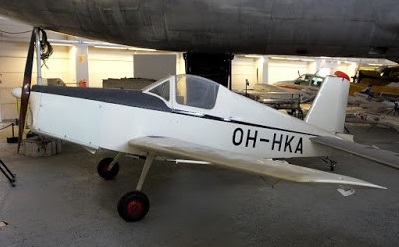
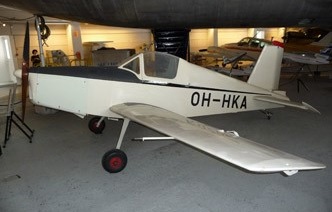
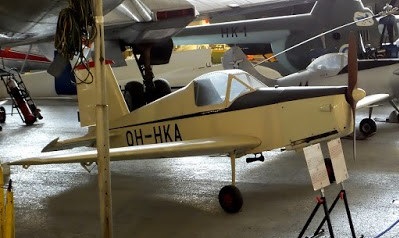
Heinonen HK-1 Keltiänen

The HK-1 Keltiänen was designed and built by engineer Juhani Heinonen in 1954, registered OH-HKA.

The only Finnish aircraft which has achieved a world’s record. plane He made the record long distance flight on 10 July 1957, from Madrid to Turku nonstop, 2844 km in 17 hours 1 minute. This constituted a world’s record in category C-1.A; single-engine land planes with take-off weight max 500 kilos. The record stayed with this aircraft until 1974.

The aircraft was in use from 1954 – 1978.

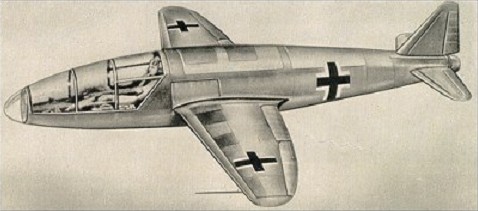
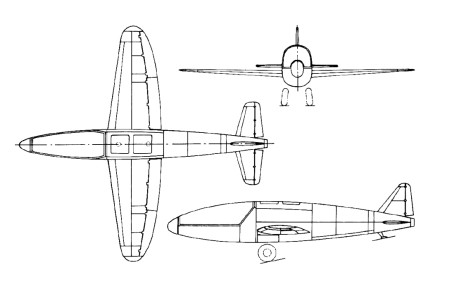
Heinkl He 178

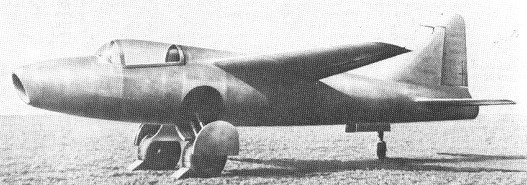
The first step in the development of this aeroplane was taken in March 1936 when Ernst Heinkel engaged the services of the German gas turbine pioneer Dr Hans Pabst von Ohain and his assistant Max Hahn. The first demonstration turbojet, the hydrogen-fuelled HeS 1, was bench running by September 1937, and a development of this engine, the HeS 3, was flight tested suspended beneath a Heinkel He 118 in 1938, using petrol as fuel, developing about 4.89kW.

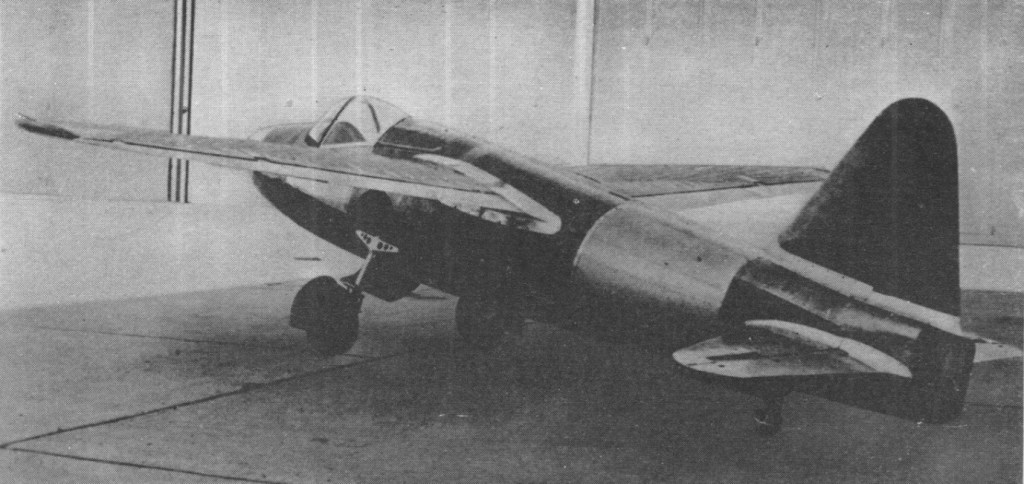
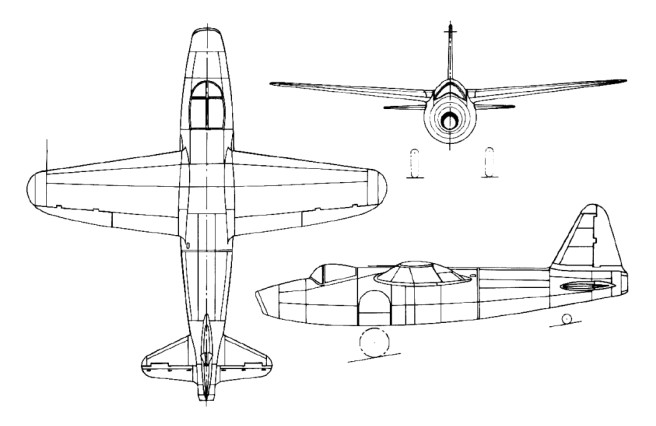
By 1939, it had been decided to install a new version, the HeS 3b, in a special aircraft, the He 178, which commenced building that year; it was a shoulder wing aircraft with wings made largely of wood but with a semi-monocoque metal fuselage with fully retracting and faired in undercarriage. Tailwheel landing gear was incorporated, and the engine drew its air from an inlet in the nose and exhausted through a long jet pipe which extended to the extreme tail.

Heinkel He 178 Article

The first flight test of a jet powered aircraft took place in the morning of 27 August 1939. The Heinkel He 178 lifted off Marienche aerodrome by Flugkapitan Erich Warsitz under jet power. The jet engine: Hans von Ohain’s third prototype, the HeS 3B. In the cockpit sat Heinkel’s test pilot, Erich Warsitz. The He 178’s landing gear wasn’t retracted, so Warsitz had to keep speed down to about 200 mph. The 178 was damaged on its first flight when the engine ingested a bird which caused it to flame out, but the aircraft made a safe landing. The He 178 touched gently and rolled to stop before taxiing to where Hans and Ernst Heinkel were waiting. Hans immediately began an engine check. Heinkel watched and then announced that once the checks were complete the He 178 was to be left untouched. Heinkel’s reasoning was that the first flight was a success and, if nothing was disturbed, he’d have a functional prototype to ‘sell’ to the Berlin Air Ministry bureaucrats. The big sedan reappeared and the first jet aeroplane was towed away to storage. Then Heinkel brought out the champagne. The Heinkel flew one more time in the November of 1939 with a 590 kg (1,301 lb) thrust HeS 6 engine, but a number of airframe defects limited the speed to about 600 km/h (373 mph). It was next put in a museum in Berlin where it (and its engine) was destroyed during a bombing raid in 1943.
Although two prototypes were built only the first (the V1) ever flew.
Features of the design were the wooden wing (which limited high speed runs) and the angular intake (which injested FOD at a high rate from the grass at rpm above idle).
Only one He 178 was built.

He-178 V1
Engine: One Heinkel HE S3B centrifugal flow turbojet, 992lb (450kg) thrust, later improved to 1,102 lb (500kg)
Wing Span: 7.2m / 23 ft 7 in
Length: 7.48m / 24 ft 7 in
Height: 2.1 m / 6 ft 11 in
Wing area: 9.1 sq.m / 97.95 sq ft
Empty Weight: 1,560 kg / 3,439 lb
Loaded Weight: 1950 kg / 4,400 lb
Max Speed: 435 mph / 700 kph
Cruise speed: 580 km/h / 360 mph
Landing speed 165 km/h / 103 mph
Crew: 1

Heinkl He 176

Ernst Heinkel initiated as a private venture the He 176, which was designed by Siegfried and Walter Gunter specifically for rocket propulsion. The span and area apply to the open cockpit, fixed undercarriage first prototype as originally designed; larger wings were fitted before the first flight. The speed and endurance of approx 171 mph (275 kph) and 50 sec. are those achieved on the first flight on 20 June 1939 powered by a 5.89kN Walter HWK-R1 203 liquid fuel rocket motor, although much better performances were achieved later.
The He 176 was demonstrated before senior German officials early in July 1939. They remained unconvinced of the potential of rockets for aircraft propulsion. The more advanced second prototype, with enclosed cockpit and retractable landing gear was never built.

Engine: One Walter HWK R 1 203 rocket, 1,323 lb (600 kg) thrust.
Wing span: 16 ft 4.75 in (5.00 m)
Length: 17 ft 0.75 in (5.20 m).
Height: 1.4 m / 4 ft 7 in
Wing area: 58.12 sq.ft (5.40 sq.m)
Gross weight: approx 3,530 lb (1600 kg).
Empty weight: 900 kg / 1984 lb
Max. speed: 750 km/h / 466 mph
Cruise speed: 700 km/h / 435 mph
Ceiling: 9000 m / 29550 ft
Range: 95 km / 59 miles
Crew: 1.

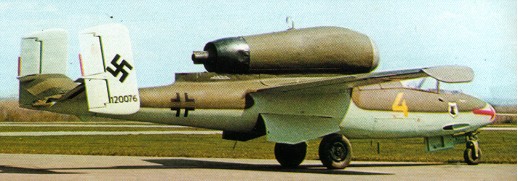
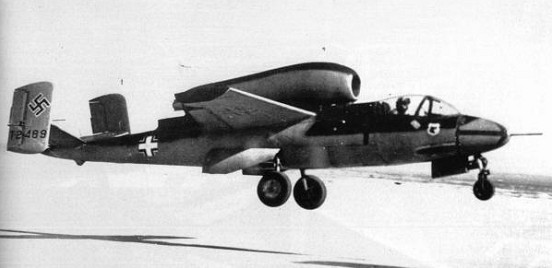
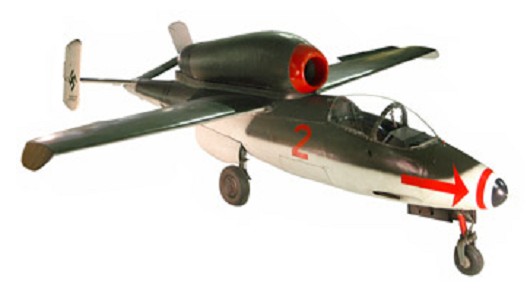
Heinkel He 162

Originally scheduled for production in September, 1944, the Heinkel 162 was test flown for the first time just three months later. In such a desperate period it took just sixty nine days from the start of design work to its first flight.

Heinkel He 162 Article

The brief for the concept underlying the He 162 came from the Reichskriegsministerium (Ministry of War) who wanted fast, quantity production of a simple and effective jet interceptor as a last ditch air defence of the German homeland. Who originated the idea for what became known as the Volksjager (people’s fighter) is not clear. Albert Speer, the armament minister, is alleged to have been one of the promoters of the project, but Speer himself has said, somewhat evasively, that a proposal to establish an underground plant for the production of jet aircraft came from Fritz Sauckel, the gauleiter of Thuringen.
On September 8, 1944, the brief for the Volksjager was issued to the Arado, Blohm und Voss, Fieseler, Focke Wulf, Heinkel, Messerschmitt and Junkers companies. Strong opposition to the project was voiced by aircraft designers Willi Messerschmitt and Kurt Tank and General der Jagdflieger (general of fighters) Adolf Galland. In the opinion of these critics the construction specifications and conditions were unrealistic, but despite the protests the submission date for the draft projects was brought forward by approximately a week.
The specification stated that the design “had to make use of existing aircraft components, only the barest essentials to be carried in the way of equipment. The power to be supplied by a BMW 003 turbojet rated at 800 kg (1760 lb) st. Top speed to be 750 km/h (466 mph). Endurance of not less than 20 minutes at sea level. Gross weight not more than 2000 kg (4410 lb). Wing loading not more than 200 kg/sq m (41 lb/sq ft)”. These requirements were to be fulfilled with the use of readily available and, if possible, non essential mate¬rials. Unskilled and semiskilled labour was to be used on the production line. It is some indication of the desperation felt at this stage of the war that Hermann Goring, as commander in chief of the Luftwaffe, considered using Hitlerjugend (Hitler youth) members as pilots for the aircraft. Their initial flying training was to have been carried out on gliders before they converted to the jets.

A conference was held on September 15 to evaluate the submissions made by the aircraft manufacturers. Messerschmitt had refused to make a proposal, and of the others Arado’s was rejected, Focke Wulf’s was considered unrealistic (their participation had been for information purposes only), but the Blohm und Voss project was considered one of the best put forward. The Heinkel proposal was found deficient in five respects: it offered a sea level flight endurance of only 20 minutes; the unusual positioning of the engine would result in maintenance problems; the stipulated takeoff requirement had not been met; dismantling of the aircraft prior to rail transportation would take too long; and the 30 mm (1.18 in) armament specified in the brief had been changed to a 20 mm (0.79 in) cannon. After further conferences and discussions, one of which ended in a fierce quarrel between two of the participants, Heinkel were eventually authorized to produce the Volksjager and received the backing of Otto Saur, head of the war ministry’s Jagerstab (fighter staff), and Hermann Goring.
Since the early summer of 1944, Siegfried Gunter and Karl Schwarzler of Heinkel had been working on a project similar to the Volksjdger a small and simple jet fighter nicknamed Spatz (sparrow). Heinkel’s qualifications for producing the He 162, or Projekt 1073 as it was initially called, were further reinforced by their work in 1939 on the He 178 experimental jet and, a little later, on the He 280.

While some of the other companies barely had time to perform basic calculations for their designs, Heinkel had been working roughly along the same lines during the summer of 1944 and had test performance data on the BMW-003, along with a full scale mock-up of their concept.
There are allegations that Dr. Karl Frydag, head of the commission for airframe production and also a Heinkel company official, had not only sold the concept to Karl Saur, head of the Fighter Staff, but also may have let Heinkel know ahead of time of the upcoming specification.
A curious light is thrown on the situation by a document detailing a POW interview with a Flugbaumeister Halz of the Fl.-E-2 section of the Air Ministry that purports that when the decisive report on the Volksjäger concept was being sold to Göring, certain technical documents required to support their case were lacking and Halz was ordered to have faked photos of the He-162 with the help of a cinema expert, showing an He-162 prototype executing a roll above the clouds before a prototype was even built.

Construction of the He 162 began on September 24, 1944, with parallel work on the detailed drawings taking place. By September 30, Projekt 1073 had been ordered into quantity production with a pro¬posed monthly output of 500 to the Luftwaffe during the first thirty days of production, and eventually 1000 aircraft every month. When the drawings were completed on October 29, the first prototypes had already reached the advanced assembly stage. For the first time in aviation history, development, pre-production and series production of an aircraft occurred simultaneously.
The He 162 fuselage was of light metal flush-riveted monocoque construction, and was fitted with a moulded plywood nose cap. The single piece wing was made of wood and had a plywood skin, with detachable metal wing tips. The space between the wooden spars accommodated 40-gallon fuel cells. Four bolts held the wing to the fuselage mainframes. The metal flaps, which extend along the tapered trailing edge from the fuselage to the ailerons, have a maximum depression of 45 degrees with hydraulic motivation. Tailplanes, elevators and rudder were of light metal, but the fins were wooden. The narrow track tricycle landing gear was retracted hydraulically and lowered by springs. The aircraft was powered by a BMW 003 Sturm turbojet which was attached directly to the top of the fuselage immediately behind the cockpit by two vertical bolts at the forward end, and one horizontal bolt at the rear. The cockpit was equipped with an ejection seat designed by Heinkel.
The fuselage permits stowage of 168 gallons of fuel in the tail cone.
After October 30, 1944, all development and factory testing had to stop and effort was concentrated on full scale production. The first flight of the prototype took place on December 6, 1944. Although a main wheel door was torn off by the slipstream, the flight was in other respects considered successful. However, at an official demonstration four days later, the pilot was killed after the starboard wing broke up in mid air. Defective bonding of the wooden components was revealed as the cause. Nevertheless, pressure was put on the company for work to continue, and up to ten prototypes (He 162A 0s) and about 20 production aircraft were tested during December 1944 February 1945. The new aircraft, which was continually compared with the Me 262, was found deficient in many respects, including bad lateral stability, sluggish controls and a high roll to yaw ratio. Enlarging the fin area alleviated the first and third problems, and although the He 162 continued to suffer from a tendency to stall, this was eventually cured by applying a pronounced anhedral to the wingtips.
The facilities available for He 162 production were extraordinary, to say the least, varying from small carpentry workshops and chalk and salt mines to the renowned Sea Grotto near Vienna. There was only one main variant of the original design: the He 162A 2, armed with two 20 mm (0.79 in) MG 151 cannon positioned one on each side of the nosewheel well. The He 162A 3, like the A 1, mounted the heavier 30 mm (1.18 in) Mk 108 cannon originally specified, but this had to be abandoned since it caused too much vibration. Many other schemes included multibarrel projectile launch systems in the SGseries.

Despite the enormous numbers originally ordered, total production did not amount to more than about 275 aircraft and, so far as is known, I/JG1 was the only group to be fully equipped with the He 162 by the time Germany surrendered in 1945. During two weeks of flying ops, JG 1 (the main user of the He-162) were losing an average of one aircraft every two days due to flying accidents, pilot error, mechanical and structural failures. Operational testing had been carried out by Erprobungskorn¬mando (test detachment) 162 based at Rechlin, which after amalgamation with Adolf Galland’s famous Me 262 unit JV 44 in April 1945 was transferred to Salzburg/Maxglarn, where it was captured by the Americans on May 3. Other groups were partially equipped with the He 162 but because of lack of fuel and supplies it is unlikely that they saw any combat.
The production rate for the He 162 was to be 135 per day; Rostock Marienehe and Bernburg were each to deliver 1,000 per month and the vast underground Nordhausen Mittelwerke a further 2,000. Giant salt-mines were tooled up to make the BMW 003A turbojet, which was bolted above the light alloy fuselage of streamline profile, while the woodworking industry was harnessed to make the very small high mounted wing, only the down turned tips being metal. Armament was to be two 30 mm MK 108 cannon, but because of vibration these were replaced in production by two 20 mm MG 151s.
Development of the Heinkel He 162 led to the He 162C, with wing swept at 38 degrees and a butterfly tail. The He 162D was similar but featured a swept-forward wing. Neither version was built, but a model was found under construction with interchangeable wings when Schwechat was occupied by the Allies.
Many variants with different powerplants and equipment were tested by Heinkel in a desperate and futile effort to produce aircraft for the defence of the Third Reich in its last days. One of the most interesting was the Mistel 5 system in which the He 162 mothercraft was to carry a jettisonable Arado ¬powered bomb beneath the fuselage but this, like the others, did not come to fruition.
Only 140 had been completed by the end of the war.
Only two victories were claimed for the type during its short service life and both were unconfirmed.
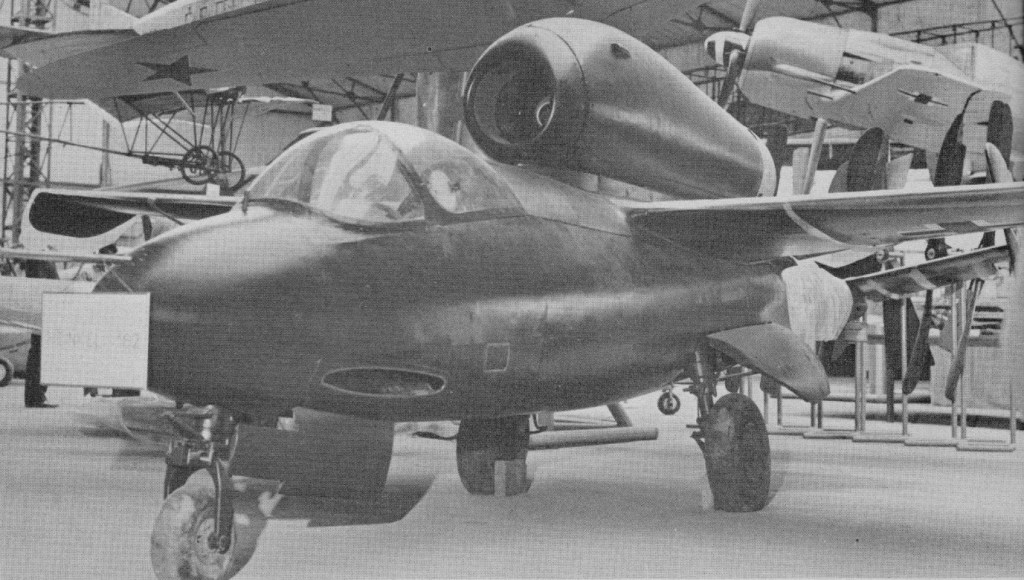
After the end of the Second World War, He 162s were taken to Britain for study and evaluation, in the course of which another pilot lost his life in a crash landing at Farnborough. Three went to the US, and one to France where it is on display at the Musee de l’Air in Paris.

Musee de l’Air in Paris

Gallery

He 162 Salamander
Engine: One 1,760 lb. (800 kg.) thrust BMW 003A turbojet.
Wing span: 23 ft 7.75 in (7.2 m)
Length: 29 ft 8.5 in (9 m)
Height: 8 ft 4.5 in (2.55 m)
Max TO wt: 5953 lb (2700 kg)
Max level speed: 522 mph (835 kph) at 19,700 ft
Ceiling 39,500 ft. (12,000 m.)
Climb rate 4,200 fpm at sea level
Fully loaded Range 410 miles (660 km.)
Endurance: 45 min
Armament 2 x 30 mm MK-108 or MG-151 cannon.
Take off distance 875 yards
Take off distance JATO 415 yards

He 162A 2
Engine: one 800 kg (1,764 1b) thrust BMW 109 003E 1 or E 2 turbojet.
Max speed: 835 km/h (519 mph) at 6000 m (19,685 ft)
Initial climb rate 1290 m (4,230 ft) per minute
Service ceiling about 11000m (36,090ft)
Max range 1000 km (621 miles)
Empty wt: 1750kg (3,8581b)
MTOW: 2700 kg (6, 952 lb)
Wing span 7.20 m (23 ft 7.5 in)
Length 9,05 m (29 ft 8.5 in)
Height 2.55 m (8 ft 43/8 in)
Wing area 11.15sq.m (120.0 sq.ft)
Armament: two 30 mm MK 108 or two 20 mm MG 151 cannon in nose.

He 162 A-2 Salamander / Volksjäger
Engine : BMW 003 E-1, 7848 N
Length : 29.659 ft / 9.04 m
Height : 8.497 ft / 2.59 m
Wingspan : 23.622 ft / 7.2 m
Wing area : 120.557 sq.ft / 11.2 sq.m
Max take off weight : 5931.5 lb / 2690.0 kg
Weight empty : 4520.3 lb / 2050.0 kg
Max. speed : 452 kt / 838 km/h
Service ceiling : 39370 ft / 12000 m
Wing load : 49.2 lb/sq.ft / 240.0 kg/sq.m
Range : 526 nm / 975 km
Endurance : 1 h
Crew : 1
Armament : 2 MG 151 20mm

Heinkel He 119

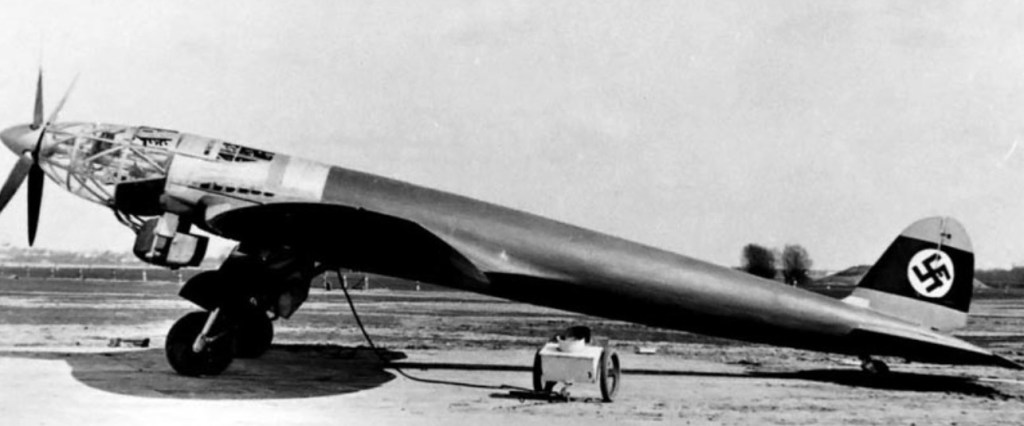
The He 119, by Ernst Heinkel A.G., was one of the designs to come out of the pre-war period: its streamlined fuselage was mated to a tandem engine arrangement promising considerable speed gains in the process. The aircraft was briefly considered for high-speed reconnaissance and bombing roles within the Luftwaffe but the project only matured as far as eight prototypes serving as experimental platforms.

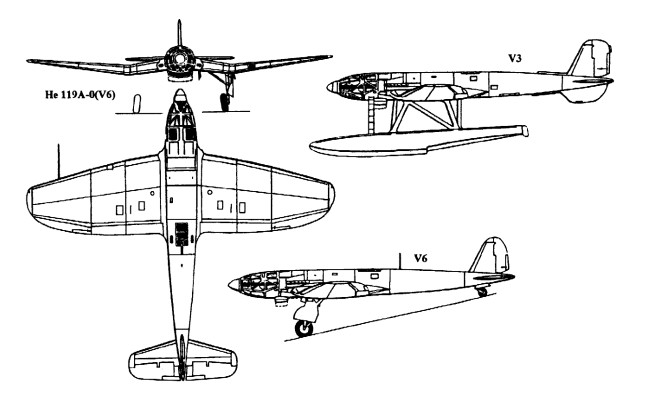
A two-seat aircraft, design work on the type began in 1936 and engineers selected the slimmest of profiles with no obvious physical protrusions to be had along the fuselage. This allowed the airframe to benefit from streamlining as even the cockpit was integrated into the clean lines of this aircraft, its position given away by heavy glazing near the nose and aft of the propeller spinner. To fit the twin engine arrangement, the powerplants were coupled aft of the cockpit and powered the nose-mounted propeller by way of a drive shaft. The propeller was a four-bladed design. The drive shaft ran between the two crewmembers. The engine of choice was the Daimler-Benz DB601 which, when coupled, formed the DB606A-2, a 24-cylinder, liquid-cooled inverted V12 monster outputting 2,350 horsepower. To streamline the aircraft even more, it used surface radiator cooling instead of conventional radiators.

The wing mainplanes were elliptical and the aircraft relied on a single, curved rudder with low-set horizontal planes. The undercarriage was of a retractable tricycle arrangement.

A first-flight by way of the V1 prototype was recorded during mid-1937 and the V2 followed with an experimental radiator fit. V3 was the same design though reworked as a seaplane and still able to retain the aircraft’s performance. V4 was set aside for speed trials and managed a record in 1937 of 314 miles per hour while carrying a load of 2,205lb over 621 miles.

Prototypes V5 through V8, added in 1938, were intended to serve as production-minded prototypes for operational reconnaissance and bomber aircraft (two of each form). These designs were all given a three-man crew and an MG15 machine gun fitted to a dorsal position (strictly for self-defense). The proposed bomber design was to carry up to 2,205lb of conventional drop stores.

While the He 119 never materialized into an operational combat aircraft, V7 and V8 went on to see extended testing in the hands of Japanese engineers as the pair were sold off to the German ally.

German propaganda designated the He 119 as the “He 111U”. The “He 519” was a related proposal of 1944 intended as a high-speed bomber. It was developed as a private venture by the company and was to rely on the DB613 engine (a larger version of the DB601). The end of the war in 1945 ended the He 519 in full.

Late in 1938, the Heinkel He 119 experimental high-speed reconnaissance aircraft was shown to a Japanese Naval delegation visiting Germany. The Japanese liked the speed and range of the He 119, and overall, were impressed by the aircraft. Based on the positive initial interest, the Japanese sent a group of technicians from the Yokosuka Naval Air Technical Arsenal (Yokosuka, also known as Kaigun Koku Gijutsusho or Kugisho) to Germany for a closer examination of the He 119. Eventually, Commander Hideo Tsukada was able to purchase two He 119 prototypes and a license to manufacture the aircraft in Japan.

The two He 119 prototypes were delivered via ship to Japan in 1941 (some say 1940). The aircraft were reassembled at Kasumigaura Air Field, and flight tests occurred at Yokosuka Naval Base. During an early test flight, one of the He 119s was badly damaged in a landing accident, and it is believed the other He 119 suffered a similar fate. Plans to produce the He 119 never moved forward, but the Japanese were still interested in a high-speed reconnaissance aircraft and felt the general configuration of the He 119 held promise.

Four were completed. Total production: 8 prototypes.

He 119 V1
Engines: 1 x Daimler-Benz DB660A-2, 2,350 hp
Propeller: metal three-bladed variable pitch
Overall Length: 48.56 feet (14.8 meters)
Overall Width: 52.17 feet (15.90 meters)
Overall Height: 17.72 feet (5.40 meters)
Empty weight: 5200 kg
Max weight: 7585 kg
Power loading: 3,227 kg/hp
Range: 3120 km.
Maximum Speed: 367 mph (590 kph; 319 knots)
Maximum Range: 1,942 miles (3,125 km)
Service Ceiling: 27,887 feet (8,500 meters)
Rate-of-Climb: 1,840 feet-per-minute (561 m/min)

He 119 V2
Equipped with standard radiator.
Engines: 1 x Daimler-Benz DB660A-2, 2,350 hp
Overall Length: 48.56 feet (14.8 meters)
Overall Width: 52.17 feet (15.90 meters)
Overall Height: 17.72 feet (5.40 meters)
Maximum Speed: 367 mph (590 kph; 319 knots)
Maximum Range: 1,942 miles (3,125 km)
Service Ceiling: 27,887 feet (8,500 meters)
Rate-of-Climb: 1,840 feet-per-minute (561 m/min)

He 119 V3
Two catamaran floats.
Engines: 1 x Daimler-Benz DB660A-2, 2,350 hp
Overall Length: 48.56 feet (14.8 meters)
Overall Width: 52.17 feet (15.90 meters)
Overall Height: 17.72 feet (5.40 meters)
Max speed: 570 km/h
Maximum Range: 1,942 miles (3,125 km)
Service Ceiling: 27,887 feet (8,500 meters)
Rate-of-Climb: 1,840 feet-per-minute (561 m/min)

He 119 V4
Destroyed after a flight achieving more than 595 km/h.
Engines: 1 x Daimler-Benz DB660A-2, 2,350 hp
Overall Length: 48.56 feet (14.8 meters)
Overall Width: 52.17 feet (15.90 meters)
Overall Height: 17.72 feet (5.40 meters)
Maximum Speed: 367 mph (590 kph; 319 knots)
Maximum Range: 1,942 miles (3,125 km)
Service Ceiling: 27,887 feet (8,500 meters)
Rate-of-Climb: 1,840 feet-per-minute (561 m/min)

He 119 V5
Reconnaissance prototype; three-man crew; 1 x MG15 machine gun armament.
Engines: 1 x Daimler-Benz DB660A-2, 2,350 hp
Overall Length: 48.56 feet (14.8 meters)
Overall Width: 52.17 feet (15.90 meters)
Overall Height: 17.72 feet (5.40 meters)
Maximum Speed: 367 mph (590 kph; 319 knots)
Maximum Range: 1,942 miles (3,125 km)
Service Ceiling: 27,887 feet (8,500 meters)
Rate-of-Climb: 1,840 feet-per-minute (561 m/min)

He 119 V6
Reconnaissance prototype; three-man crew; 1 x MG15 machine gun armament.
Engines: 1 x Daimler-Benz DB660A-2, 2,350 hp
Overall Length: 48.56 feet (14.8 meters)
Overall Width: 52.17 feet (15.90 meters)
Overall Height: 17.72 feet (5.40 meters)
Max spped: 367 mph
Empty weight: 11,465lb
Loaded weight: 16,678lb
Range: 1,940 miles
Altitude: near 15,000 ft
Maximum Speed: 367 mph (590 kph; 319 knots)
Maximum Range: 1,942 miles (3,125 km)
Service Ceiling: 27,887 feet (8,500 meters)
Rate-of-Climb: 1,840 feet-per-minute (561 m/min)

He 119 V7
Bomber prototype; three-man crew; 1 x MG15 machine gun armament; 2,205lb bomb load. Not completed.

He 119 V8
Bomber prototype; three-man crew; 1 x MG15 machine gun armament 2,205lb bomb load. Not completed.
Heinkel He 118

Two-seat monoplane dive bomber, with a quasi-elliptical wing. The He 118 was larger and more refined than its competitors, with an internal bomb bay and retractable landing gear. First flown in the summer of 1937, the He 118 could not safely exceed a diving angle of about 50 degrees, while the Ju 87 could be dived vertically.
Total production was 15 examples including 2 of the 4 prototypes, (V4 and V5), provided to Japan.
By early 1938 the Japanese Navy had also acquired the German He 118 V4 two-seat dive bomber aircraft, along with its production rights. This aircraft was powered by the DB 601A. The Heinkel’s spectacular performance impressed the IJN Naval Staff so much that the design of the Yokosuka D4Y Suisei (Allied reporting name “Judy”) carrier based dive bomber evolved from it.

Ten examples of the production He 118A-0 were built.
250 kg of bombs were carried internally or 500 kgs of bombs internal when flown solo.
The He 118 is best known for its role in the testing of jet engines.

He 118 V 1
Engine: 1 x Rolls-Royce Buzzard, 825 hp
Propeller: metal four-bladed variable pitch
Wingspan: 15,09 m
Length: 11,80 m
Height: 4,18 m

He 118 V2
Engine:1 x Daimler Benz dB 600C, 910 hp

He 118 V5
Engine: 1 x Daimler Benz dB 600C, 910 hp

He 118A-0
Engine: Daimler Benz dB 600C, 910 hp
Propeller: four-bladed metal variable pitch
Wingspan: 15,09 m
Length: 11,80 m
Height: 4,18 m
Empty weight: 2700 kg
Max weight: 4120 kg
Power loading: 4,527 kg/hp
Max speed: 385 kmh
Range: 1050 km
Armament: 2 MT MG 17 of 7,92 mm, 1 MT, 250 or 500 kgs bombs internal

He118 V-1

Heinkel He 114

He 114A

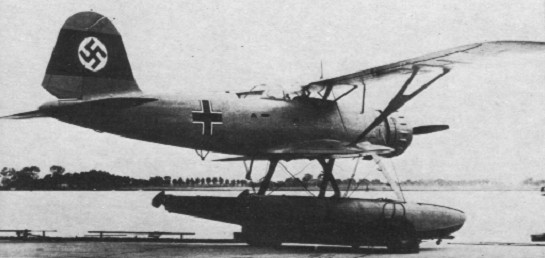
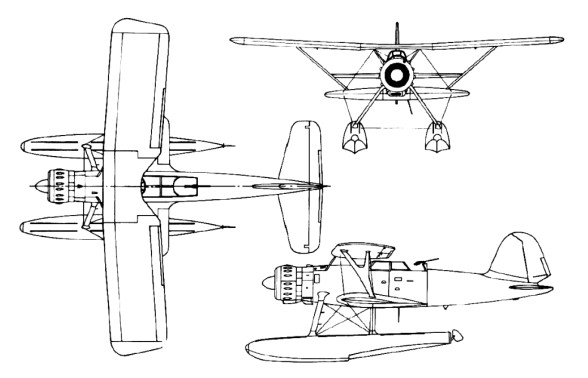
Begun by Heinkel under Luftwaffe contract at the beginning of 1936, the first of five variously ¬powered prototypes flew in the late spring of that year. It was a two seat, all metal two float seaplane of sesquiplane configuration, fitted with a 960 hp DB 600A engine driving a three blade wooden propeller.

The five prototypes, flown in 1936 and 1937, were powered by a variety of engines, including the 716kW Daimler-Benz DB 600, the 477kW Junkers Jumo 210, the 656kW BMW 132Dc and the 716kW BMW 132K.

These five, and the first of ten pre-production He 114A-0s, were delivered to the Luftwaffe during 1937, with the BMW 132Dc engine, which was adopted also for the 33 He 114A-1 trainers, though they were neither armed nor fitted with catapult hooks. Thirty three 865-hp BMW-132N engined A 1s were built as trainers by Weser.
Earlier that year the German aviation ministry accepted the V9 (D IHDG) as prototype for the He 114A 2 series, which were powered by an uprated (960 hp) BMW 132K engine driving a three blade constant speed propeller and fitted with catapult gear. It flew for the first time on February 16, 1937 and a small batch of A 2s, again built by Weser, were delivered to the Luftwaffe later in the year. The He 114A-2 was the first operational version, armed with a fixed forward-firing 7.92mm MG 17 machine-gun and an identical weapon mounted in the observer’s cockpit.

They were equipped with catapult points and could carry two 50 kg (110 lb) bombs. The Luftwaffe pilots found their handling on the water and in the air to be somewhat unstable, and the He 114 never superseded the He 60 in service. The prewar A 2s were later converted by Weser for export to Sweden (14 as He 114B 1s) and Romania (six He 114B-2 aircraft, three with DB 600 engines and three with Jumo 210s). Romania also bought 12 He 114B-2S with BMW 132K engines.
14 He 114A-2s were exported to Sweden as the He 114B-1.
Fourteen He 114C 1s were used by the Luftwaffe as commerce raiders, and four unarmed C 2s were delivered for use as trainers in December 1939, having the 865 hp BMW 132N engine. At the outbreak of the Second World War, the C l s and some other models were equipped with one or two additional MG 17 machine guns in the pilot’s cockpit, firing past the propeller. Some He 114s carried four 50 kg (110 lb) bombs for antisubmarine duties (only two when additional machine gun armament was carried). The He 114 was phased out during the first two years of the war, after limited Luftwaffe service.
Production ceased in 1939.

He 114A 2
Engine: 1 x BMW 132K, 610kW
Wingspan: 13.6 m (44 ft 7.5 in)
Length: 11.65 m (38 ft 2.75 in)
Height: 5.2 m / 17 ft 1 in
Wing area: 42.3 sq.m / 455.31 sq ft
Max take-off weight: 3420 kg / 7540 lb
Empty weight: 2314 kg / 5102 lb
Max. speed: 292 km/h / 181 mph
Cruise speed: 265 km/h / 165 mph
Ceiling: 4800 m / 15750 ft
Range w/max.fuel: 1050 km / 652 miles
Range w/max.payload: 910 km / 565 miles
Armament: 1 x 7.92mm machine-guns
Crew: 2

He 114

Heinkel He 112 / He 113

He 112B

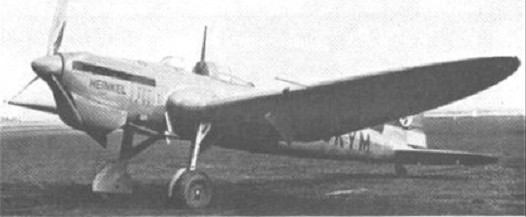
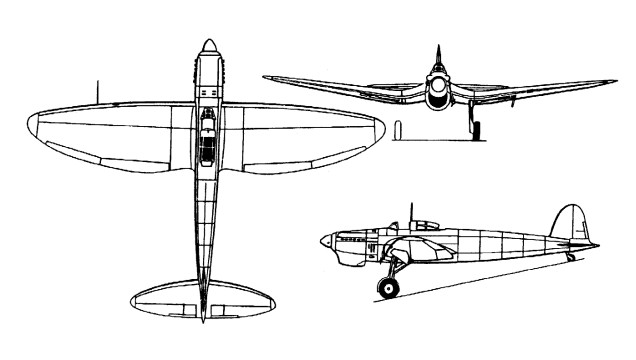
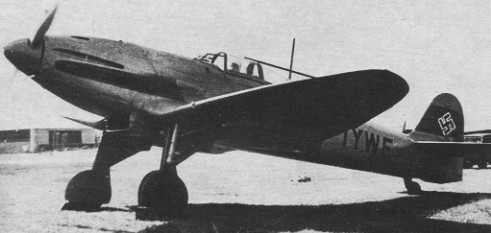
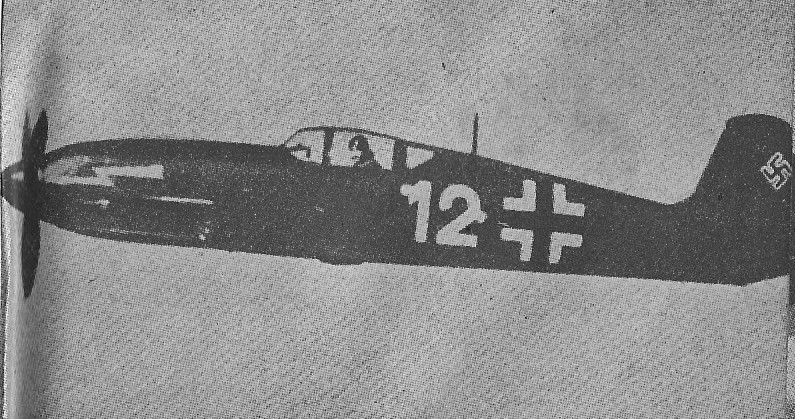
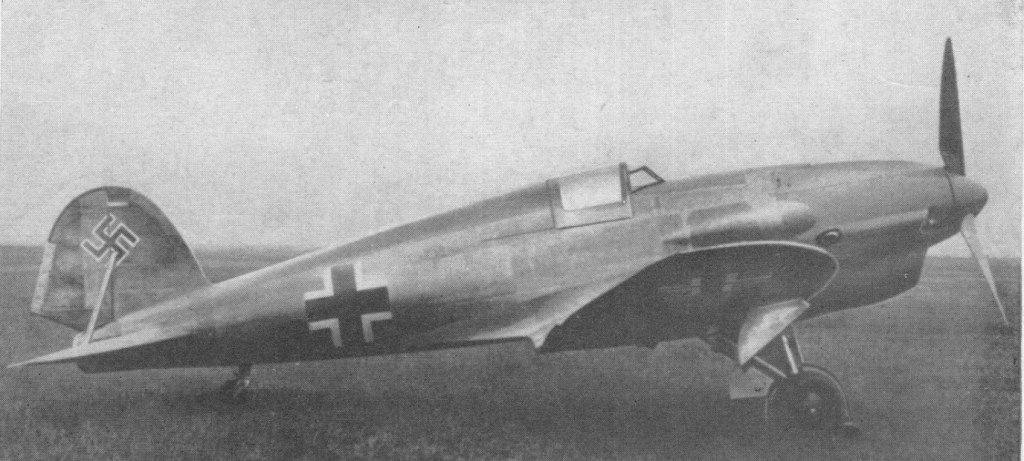
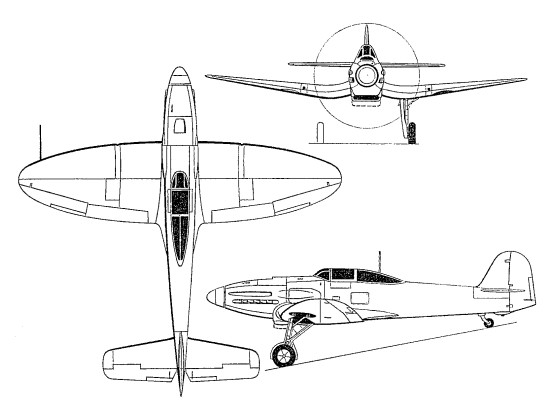
Shortly after the Nazi party came to power in Germany in 1933 a requirement was issued for an up to date single seat monoplane successor to the He 51 and Arado Ar 68 biplanes. Heinkel’s designers chose the comparatively easy task of refining the He 70 configuration to produce the He 112, which had an open cockpit, all metal fuselage and elliptical wings. The prototype VI (D IADO) was powered by a 518kW / 695 hp Rolls Royce Kestrel V engine and flew for the first time in late summer 1935. It was flown to Travernfinde for official tests in October that year, competing with the Arado Ar 80, Focke Wulf Fw 159 and Messerschmitt Bf 109.

Both it and Messerschmitt’s Bf 109 received orders for 10 aircraft.

November and December 1935 saw the appearance of second and third prototypes (V2 and V3), both later having the wing span reduced by 1 m (3 ft 3 in) and powered by 447kW / 600 hp Junkers Jumo 210C engines. The V3 was armed with two 7.9 mm (0.311 in) MG 17 guns mounted over the nose, and had an enclosed cockpit.

The He 112 V4, V5, V6 and V8 were built as prototypes for the projected He 112A production series.

The fourth prototype, He 113, with a new, smaller, elliptical wing, was evaluated operationally with the Legion Condor in Spain in 1936, and was shown at the July 1937 Zurich International Flying Meeting.

He 113

The V8 was tried with a 1000 hp DB 600Aa powerplant, but no A series production order was received although the aircraft was well liked by its pilots.
The proposed He 112A production aircraft was not adopted by the Luftwaffe, which received the Bf 109 instead, but work continued on the structurally-redesigned He 112B, the 507kW Jumo 210Ea-powered production prototype which flew in July 1937.

A batch of 43 He 112B 0s was, however, produced, based on the much modified V7 and V9 prototypes. Armament comprised two MG 17s, which were now fitted in the fuselage sides, plus two wing mounted 20¬mm (0.79 in) MG FF cannon. Powerplant was the 680 hp Junkers Jumo 210Ea 12-cylinder liquid cooled engine. In spring 1938 Japanese naval aviation had also received 12 of 30 He 112B 0s ordered in the spring of 1938 but pilots were not enthusiastic and the aircraft were used mainly for ground instruction; their Japanese designation was A7He1. They received the allied code name ‘Jerry’ although this was dropped when not met in combat.

A7He1

The next 12 were impressed for Luftwaffe use, although 11 of these and the final six were supplied later to the Spanish Nationalist air force in November 1938. Deliveries of 12 to the Luftwaffe commenced in mid 1938 for service trials, and later that year 17 flew with the rebel Spanish Nationalist forces in Spain. Fifteen survived the civil war to serve with the new Spanish air force in Morocco.

Hungary acquired the V9 and three B Is for evaluation in the spring of 1939, and the only other buyer for the He 112 was Romania, which ordered 24 (13 13 0s and 11 B 1s) , the order being completed in September 1939. They served briefly during the Second World War, the only He 112s to do so.
In the fighter bomber role the aircraft could be fitted with underwing racks to carry six 10 kg (22 lb) antipersonnel bombs. Two further prototypes, the V10 and V11 with DB 601Aa and Junkers Jumo 210G engines respectively, were produced in the hope of encouraging further export orders, but none were forthcoming and Heinkel decided to use its workforce on producing types acceptable to the Luftwaffe.
In 1937 one He 112 was fitted with an experimental 2200-lb thrust liquid-fuel rocket motor in its tail. This led to the He 176 of 1938.

Rocket powered He 112

He 112B
Span: 9.1 m (29 ft 10.25 in)
Length: 9.3 m (30 ft 6 in)
Gross weight: 2250 kg (4960 lb)
Maximum speed: 510 km/h (317 mph)
Armament: 2 x 20mm MG FF cannon, 2 x 7.92mm MG 17 machine-guns

He-112B-1
Engine: 1 x Jumo 210G, 490kW
Max take-off weight: 2250 kg / 4960 lb
Empty weight: 1850 kg / 4079 lb
Wingspan: 9.1 m / 29 ft 10 in
Length: 9.3 m / 30 ft 6 in
Height: 3.9 m / 12 ft 10 in
Wing area: 17.0 sq.m / 182.99 sq ft
Max. speed: 510 km/h / 317 mph
Cruise speed: 475 km/h / 295 mph
Ceiling: 9500 m / 31150 ft
Range w/max.fuel: 950 km / 590 miles
Range w/max.payload; 850 km / 528 miles
Armament: Armament: 2 x 20mm MG FF cannon, 2 x 7.92mm MG 17 machine-guns
Crew: 1

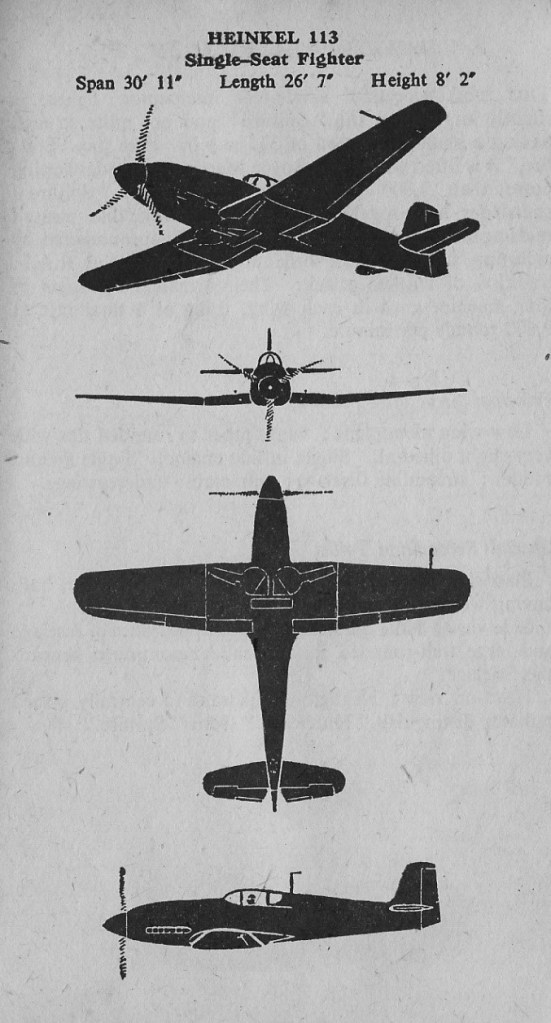
He 113
Engine: Mercedes-Benz DB601, 1200 hp
Span: 30 ft 11 in
Length: 26 ft 7 in
Height: 8 ft 2 in
Max speed: 375 mph
Armament: 1 x cannon, 2 x mg

He 112