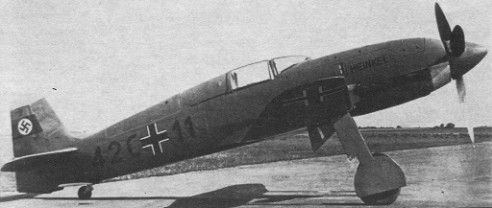
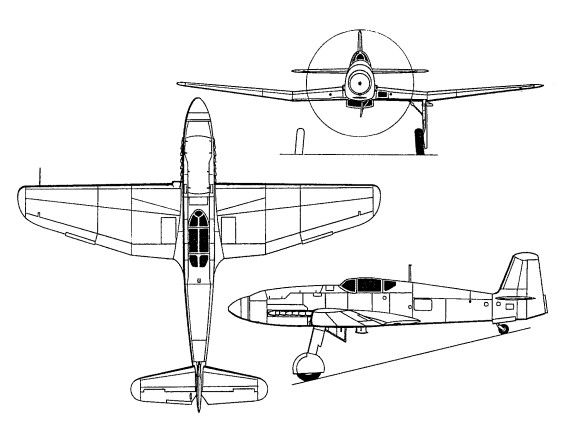
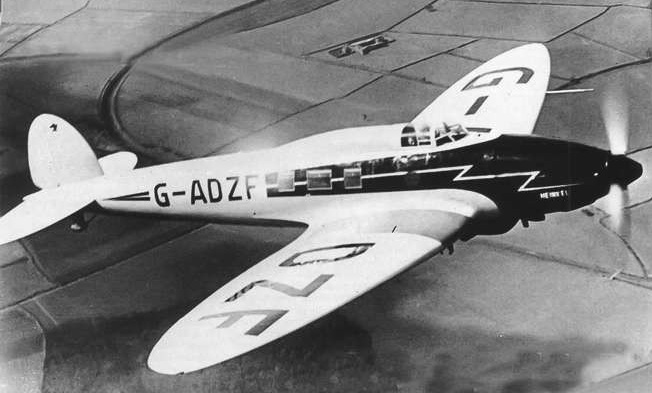
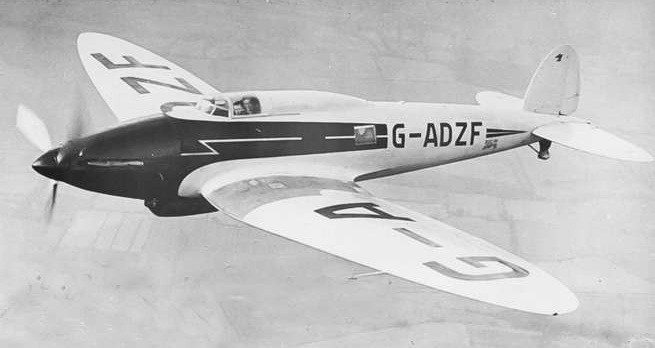
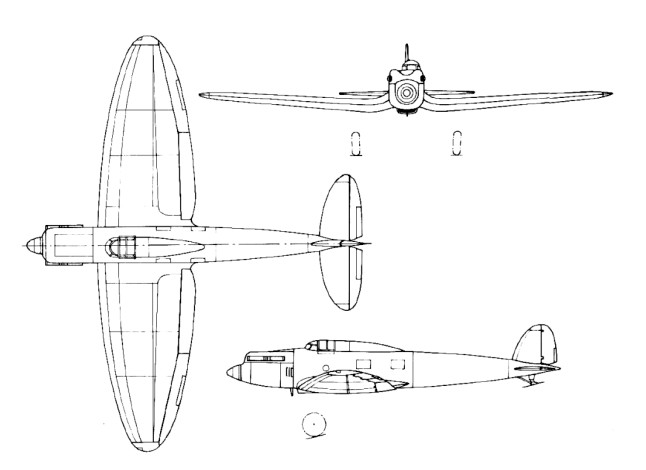
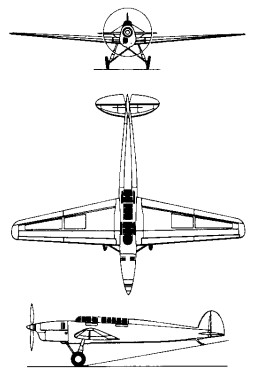
Ten prototypes were produced of the He 100, from designs by Siegfried Gunter and Heinrich Hertel, in an effort to produce a fighter which would replace the Messerschmitt Bf 109. Beginning as a private venture in 1937, the V I first prototype was powered by an 1100 hp DB 601A engine, and flew for the first time on January 22, 1938. On June 6 that year General Ernst Udet flew the V3, which had a boosted DB 601 and short span wings of 7.6 m (24 ft 1l.25 in) to an international 100 km (62 mile) closed circuit speed record of 643.7 km/h (400 mph). On 30 March 1939 He 100V8 set a new world absolute speed record of 746.604km/h (463.9 mph) at the hands of Flugkapitan Hans Dieterle. Despite these and other impressive performances the German authorities refused to select the He 100 as the successor to the Messerschmitt Bf 109. The only other examples built were three pre-production He 100D-0s and 12 production D Is which were completed by September 1939, preparatory to tests for the Russians for their own evaluation; Japan bought the three D 0s, and these aircraft did fly with Japanese naval aviation, designated AXHe1. Heinkel retained the 12 He 100B 1s for defence of its factory at Rostock Marienehe.
He 100D 1 Engine: 1 x Daimler-Benz DB 601M, 876kW Max take-off weight: 2500 kg / 5512 lb Empty weight: 2070 kg / 4564 lb Wingspan: 9.42 m / 30 ft 11 in Length: 8.19 m / 26 ft 10 in Height: 2.50 m / 8 ft 2 in Wing area: 14.50 sq.m / 156.08 sq ft Max. speed: 670 km/h / 416 mph Ceiling: 9890 m / 32450 ft Range: 1005 km / 624 miles Armament: 1 x 20mm cannon, 2 x 7.92mm machine-guns Seats: 1
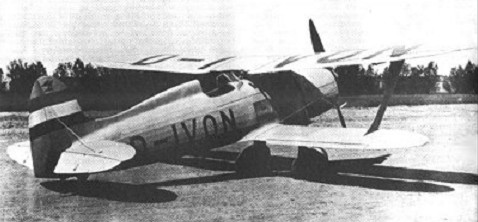
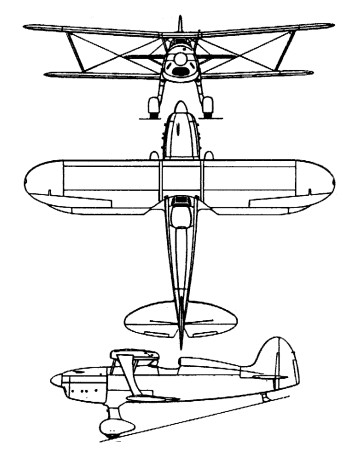
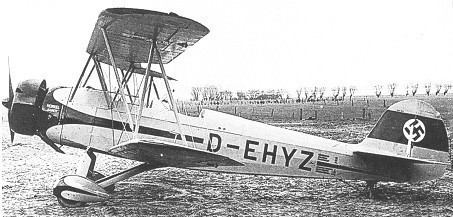
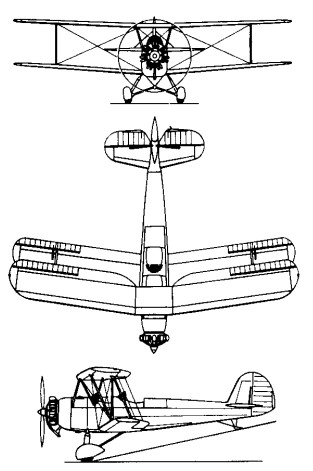
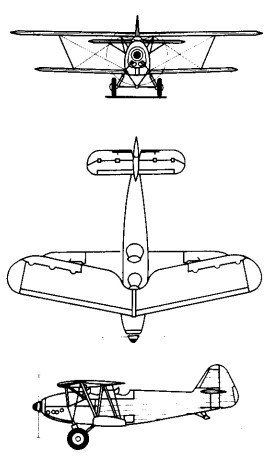
Scaled-down version of the He 51 biplane, intended as an advanced trainer and home defence fighter. The Fw 56 was selected for this requirement. Only three were built.
The Kadett (cadet) was a thoroughly conventional fabric-covered biplane trainer and liaison aeroplane of its period, and first flew in 1933 with the As 8B engine and nicely spatted main landing gear units. The type entered official service first with the training schools of the National Socialist Flying Corps, and then with the Luftwaffe. Comparatively large numbers were built, the production variants being the He 72A with the 104-kW (140-hp) Argus As 8B or later the 112-kW (150-hp) As 85 inlines, the He 72B major variant with a radial engine, and the He 72BW twin-float seaplane. Some 30 civil aircraft were built with the designation He 72B-2 Edelkadett (honour cadet), and there was a single He 172 with a NACA-cowled engine. Some aircraft were supplied to Slovakia during World War II, and these were even used as tactical reconnaissance machines during 1945.
He 72A Engine: Argus As 8B or As 8R, 104-kW (140-hp) or 112-kW (150-hp).
He 72B Engine: 1 x Siemens Sh 14A, 119kW / 160 hp Wingspan: 9.0 m / 29 ft 6 in Length: 7.50 m / 24 ft 7 in Height: 2.70 m / 8 ft 10 in Wing area: 20.70 sq.m / 222.81 sq ft Max take-off weight: 865 kg / 1907 lb Empty weight: 540 kg / 1191 lb Max. payload weight: 130.1 lb / 59.0 kg Fuel capacity: 27 gal / 101 lt Wing loading: 8.82 lb/sq.ft / 43.00 kg/sq.m Max. speed: 100 kts / 185 km/h / 115 mph Landing speed: 43 kts / 80 kph Cruising speed: 85 kts / 158 kph Take off distance: 591 ft / 180 m Service ceiling: 13780 ft / 4200 m Initial climb rate: 826.77 ft/min / 4.2 m/s Operational range: 295 miles / 475 km Maximum range: 443 nm / 820 km Armament: none. Seats: 2
In February 1932 design work was begun at the Heinkel factory on a high speed mailplane which could also carry four pas¬sengers. A top speed of 285 km/h (177 mph) was required by Deutsche Lufthansa who issued the specification. The Heinkel team, were inspired into setting their sights higher by the appearance in May that year of the Lockheed Orion, operated by Swissair. Maximum speed now required to compete with this aircraft was 322 km/h (200 mph).
The result was a low wing monoplane, tapered in chord and thickness and were of spruce construction, planked with plywood, having a retractable undercarriage, and it flew for the first time on December 1, 1932. It had an all metal oval semi monocoque fuselage, elliptical wings of wooden construction, and small rounded tail surfaces. The powerplant was a 469.5kW / 637hp BMW VI liquid cooled engine. When the Blitz was officially presented at Tempelhof field its speed of 362 kilometers per hour – made it not only the fastest commercial airplane of the time, but also faster than contemporary foreign fighters. An immediate production batch was ordered and 14 aircraft went into service with Lufthansa on domestic express routes during 1932 33 accommodating a pilot, navigator and four passengers.
Early in 1933 the aircraft also captured a number of international speed records. Further commercial developments of this model were the He 70B and the G 1, with lengthened fuselage; some variants were fitted with a 559kW / 750 hp BMW VI engine. Actual production of the passenger-carrying variants was 28.
The military potential of the He 70 was recognized by the embryonic Luftwaffe, and nine He 70B 0s, and an initial production batch of D Is, were delivered for high speed military communication and liaison duties. They retained the shorter fuselage, but were fitted with the uprated engine. The three-seat E 1 light bomber, developed from the D series, could carry up to 300 kg (660 lb) of bombs and was armed with one rear mounted MG 15 machine gun. Only limited E 1 production took place before the appearance of the three-seat F 1, F 2 and F 3 series long range reconnaissance bombers. Eighteen He 70F 2s were used by the Legion Kondor in Spain from late 1936. An additional 12 were transferred to the Spanish Nationalist forces.
The production total of nearly 300 military He 70 included 18 He 170A exported to Hungary during 1937-38, each of these powered by a 678kW Gnome-Rhone 14K Mistral Major radial engine and armed with two 7.8mm Gebauer machine-guns for defence.
He 70D 1
He-70D Crew: 1-2 Passengers: 4-5 Engine: 1 x BMW VI 7.3, 559kW Max take-off weight: 3640 kg / 8025 lb Empty weight: 2530 kg / 5578 lb Wingspan: 14.80 m / 48 ft 7 in Length: 11.70 m / 38 ft 5 in Height: 3.25 m / 10 ft 8 in Wing area: 36.51 sq.m / 392.99 sq ft Max. speed: 360 km/h / 224 mph Ceiling: 5485 m / 18000 ft Range: 1250 km / 777 miles
He 70F 2 Span: 14.8 m (48 ft 61 in) Length: 12 m (39 ft 41 in) Gross weight: 3460 kg (7630 lb) Maximum speed: 360 kmlh (224 mph).
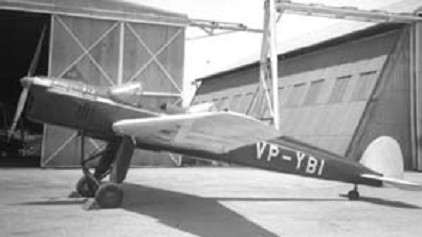
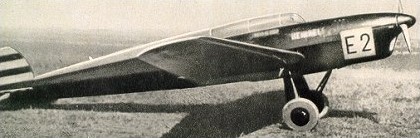
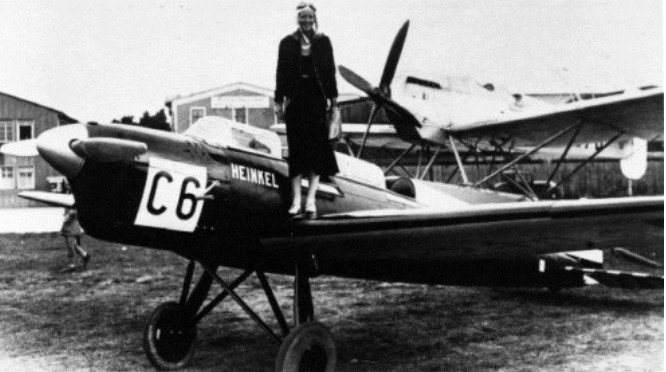
Two-seat sporting and training monoplane designed by twins Siegfried and Walter Gunter, and powered by a 112kW Argus As 8R inverted engine. Both cockpits were completely enclosed by a glazed coupe top. A small number were built.
He-64B Engine: 1 x As-8a, 110kW Max take-off weight: 780 kg / 1720 lb Empty weight: 470 kg / 1036 lb Wingspan: 9.8 m / 32 ft 2 in Length: 8.3 m / 27 ft 3 in Height: 2.1 m / 6 ft 11 in Wing area: 14.4 sq.m / 155.00 sq ft Max. speed: 245 km/h / 152 mph Cruise speed: 222 km/h / 138 mph Ceiling: 6000 m / 19700 ft Range: 1500 km / 932 miles Seats: 2
The first prototype flew in 1932. There were two variants: the land based He-63L and the float plane He-63W.
He-63 Engine: 1 x As-10Ca, 160kW Wingspan: 10.8/8.0 m / 35 ft 5 in / 26 ft 3 in Length: 8.2 m / 26 ft 11 in Height: 2.7 m / 8 ft 10 in Wing area: 24.4 sq.m / 262.64 sq ft Max. Speed: 200 km/h / 124 mph Cruise speed: 190 km/h / 118 mph Ceiling: 3900 m / 12800 ft Range w/max.fuel: 1100 km / 684 miles Armament: 1 machine-gun Crew: 2
The prototype He 60a (D 2325) first flew in 1933. It was designed by Reinhold Mewes, who had also been responsible for the He 59. The prototype was fitted with a 492kW / 660 hp BMW VI V type engine and a twin float undercarriage, and was used primarily for testing the floats. A second prototype, the He 60b, was powered by an uprated 750 hp engine, but this proved to be little more effective than the previous powerplant and the 660 hp version was reinstated in the third prototype and all subsequent production aircraft. The third prototype, the He 60c, was used for shipboard catapult launching trials and was the first post 1919 aircraft to be delivered to the German navy. In April 1933 the first of the initial pre-production batch of 21 He 60A machines was flown. They were to be used as land based trainers, but two were later modified with the addition of catapult equipment. Still considered by the Heinkel company capable of carrying greater weights if given a more powerful engine, one He 60 was fitted with a 900 hp Daimler Benz DB 600, which increased the top speed by 45 km/h (28 mph), and was given the designation He 60B 3. Many trials were made with this aircraft but production never materialized. The main He 60C series were delivered to the German navy from late 1934 onwards. They were fitted with catapult hooks and armed with one movable 7.9 mm (0.311 in) MG 15 machine¬gun in the observer’s rear cockpit. Two were kept by Heinkel as test aircraft and eventually went to a training school. The D series which followed were fitted with improved radio and a forward firing 7.9 mm (0.311 in) MG 17 gun, but were later converted to unarmed trainers. All production C and D series (totalling 200 aircraft) were built by the Arado and Weser companies. Following Heinkel practice the airframe was of steel tube and wood construction with fabric covering. Floats and engine cowling were of aluminium. A crew of two was carried in tandem open cockpits. Before the Second World War, He 60s were deployed aboard every major warship of the German navy, but by 1939 had been replaced in the shipboard role by the Arado Ar 196. They were retained in shore based service in the North Sea, Baltic and Eastern Mediterranean until as late as 1943, and were eventually used for communication and training.
He-60 Engine: 2 x BMW VI 6.0 ZU, 485kW Span: 12.9 m / 42ft 3.75 in Length: 11.5 m / 37 ft 8.75 in Max take-off weight: 3400 kg / 7496 lb Empty weight: 2730 kg / 6019 lb Max. speed: 225 km/h / 140 mph Cruise speed: 215 km/h / 134 mph Ceiling: 5000 m / 16400 ft Range w/max.fuel: 900 km / 559 miles Crew: 2 Armament: 1 x 7.92mm machine-guns
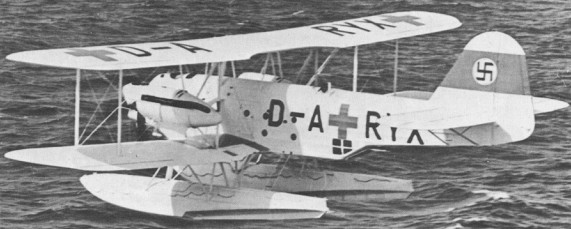
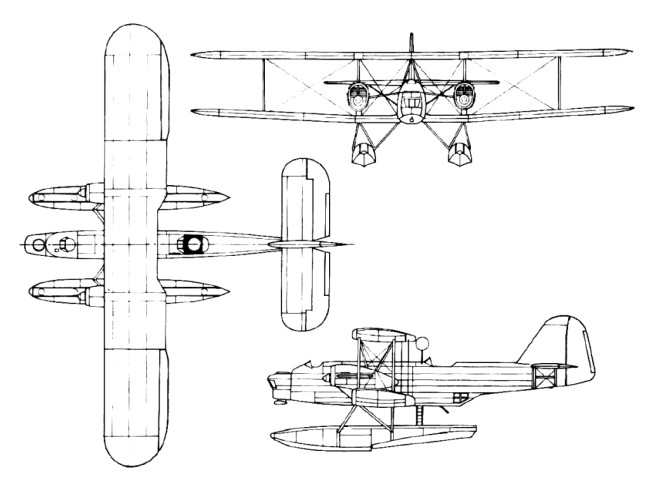
The design project for this large fuselage torpedo bomber/reconnaissance biplane was begun in 1930 by Reinhold Mewes of the Heinkel company, and was the largest of the company’s designs up to that time. The first prototype to fly, the He 59A (D 2215), was of sturdy appearance with a faired in wheeled undercarriage and was powered by two 492kW / 660 hp BMW VI liquid cooled engines. The airframe comprised a welded steel tube fuselage, with wooden frame wings, all of which were fabric covered.
As its intended role was for overwater reconnaissance, all production models and the He 59B first prototype (which was the second example to fly) were fitted with twin float undercarriages. After service trials of the He 59A, production began in spring 1932 with a pre series batch of 16 armed He 59B-1s. It is fairly certain that these were built by Heinkel, but the next production orders, for 140 He 59B 2s and B 3s, were executed by the Arado Flugzeugwerke. The B series differed basically in internal equipment only. The B 1s were equipped with a 7.9 mm (0.311 in) ring mounted MG 15 machine gun in the extreme nose. Two additional MG 15s were fitted on the He 5913 2, in the dorsal and ventral positions. A crew of four was carried. A long range reconnaissance version, the He 59B 3, carried extra fuel in place of one of the guns.
In 1936 10 He 59B 2s were sent to Spain to join the Legion Condor, their floats prompting the nickname “Zapatones,” or “Big Shoes,” three of the planes being transferred to Franco when the Germans returned home. The He 59C-1, used for training, had additional maritime navigation equipment installed and all armament deleted. The He 59C 2 was used for air sea rescue duties and it too was unarmed, carrying instead six dinghies plus additional radio equipment. Other variants included the He 59D 1 for air sea rescue and training, with a rounded, all metal ‘solid’ nose; the He 59E 1 torpedo trainer; and the He 59E 2 photographic reconnaissance trainer model. All of the C, D and E models were converted for their various roles from He 59B aircraft of the original order by the Walter Bachmann Flugzeugbau. The He 59N was a Bachmann conversion from the He 59D 1 for specialized navigation training duties, and was equipped to carry a practice torpedo plus smoke bombs. Although more or less obsolescent when it entered service with the Luftwaffe in 1934, the He 59 was to remain in production for four more years and in service for about a decade, not disappearing finally from active duty until the middle of the Second World War. Its long service was due chiefly to the versatility of its roomy fuselage, virtually all of which was available for crew and payload since fuel was carried in the floats. In the maritime bomber role, this meant the ability to carry two 500 kg (1100 lb), four 250 kg (550 lb) or 12 50 kg (110 lb) bombs internally; or, alternatively, one or two 700 kg (1540 lb) or 1000 kg (2200 lb) externally slung torpedoes. The He 59 was ‘blooded’ in the latter part of 1936 in the Spanish Civil War as part of the Luftwaffe’s Legion Kondor, operating both in the maritime role and as a night bomber. Some examples were fitted with a 20 mm (0.79 in) MG FF cannon for attacks on shipping. At the start of the Second World War there were still about 30 He 59s on the strength of the Kustenfliegergruppe (coastal aviation group) covering the North Sea area. In addition to the majority by then employed in various training roles, the He 59 continued in Luftwaffe service until as late as 1943 on air sea rescue, mine-laying, convoy-shadowing and coastal reconnaissance duties, latterly in the somewhat less dangerous waters of the Mediterranean, Aegean and Black Seas. It was important as an electronic-warfare platform and as a special trials aircraft.
He 59B 2 Engine: 2 x BMW VI 6.0 ZU, 485kW Max take-off weight: 9100 kg / 20,100 lb Empty weight: 5440 kg / 11993 lb Wingspan: 23.7 m / 77 ft 9 in Length: 17.4 m / 57 ft 1 in Height: 7.1 m / 23 ft 4 in Wing area: 153.4 sq.m / 1651.18 sq ft Max. speed: 240 km/h / 149 mph Cruise speed: 205 km/h / 127 mph Range w/max.fuel: 800 km / 497 miles Crew: 4 Armament: 1-2 7.92mm machine-guns 15 or 1 x 20mm machine-guns FF cannon
He 58 D-1919 Bremen Atlantic being loaded onto the catapult on SS Europa
The concept was hit upon after Norddeutscher Lloyd (NDL) had carried a Junkers F.13 seaplane aboard the Lutzow during 1927 to provide joyrides for passengers when the liner was in port. NDL officials realised that a seaplane based on a liner could have a more practical commercial application, taking off with the liner’s airmail while still a long distance from port, therefore drastically cutting down time taken for the mail to arrive. Heinkel designed a catapult, which NDL planned to install on its new liners, the Bremen and Europa, and an aircraft to carry the mail. Since the crew of Lutzow had trouble providing the necessary maintenance for the F 13, Deutsche Luft Hansa agreed to provide the operational support for the venture, and when Bremen departed on her maiden voyage in 1929, a single HE 12 (D-1717) was carried aboard.
A second aircraft, (D-1919, Atlantik), was built for flying from Europa, sister-ship of the Bremen. Designated He 58, the second aircraft was slightly larger overall than the He 12, with increased payload and accommodation for the crew in a side-by-side open cockpit. Power was supplied by a 370 kW (500 hp) BMW Hornet A, initially un-cowled, but later fitted with a full long-chord cowling with cooling slits in the forward face.
The He 58, (D-1919, Atlantik), continued in service on Europa until replaced by Junkers Ju 46 floatplanes.
He 58 Engine: 70 kW (500 hp) BMW Hornet A Wingspan: 17.2022 m (56 ft 5.25 in) Wing area: 49.4 m2 (532 sq ft) Length: 11.7793 m (38 ft 7.75 in) Height: 4.70 m (15 ft 5 in) Empty weight: 1,850 kg (4,078 lb) Gross weight: 3,140 kg (6,922 lb) Payload: 200 kg (440 lb) of mail Maximum speed: 204 km/h (127 mph) Cruise speed: 159 km/h (99 mph) Service ceiling: 3,800 m (12,500 ft) Crew: Two, pilot and radio operator