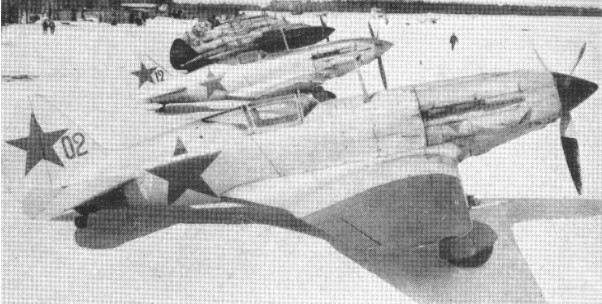
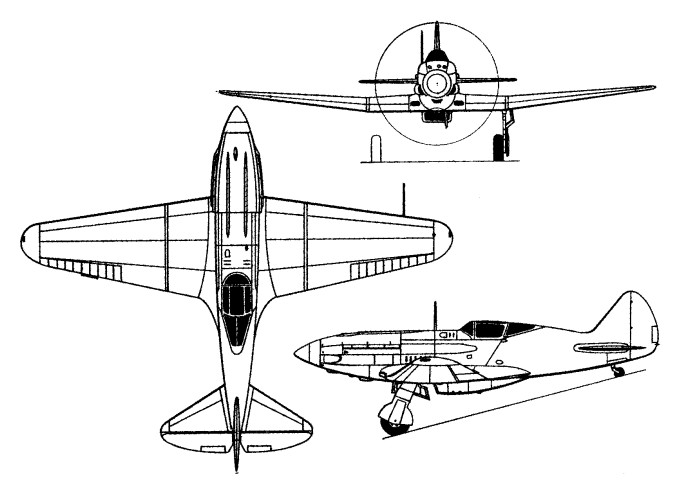
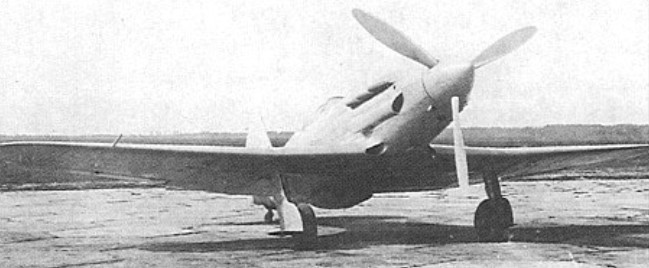
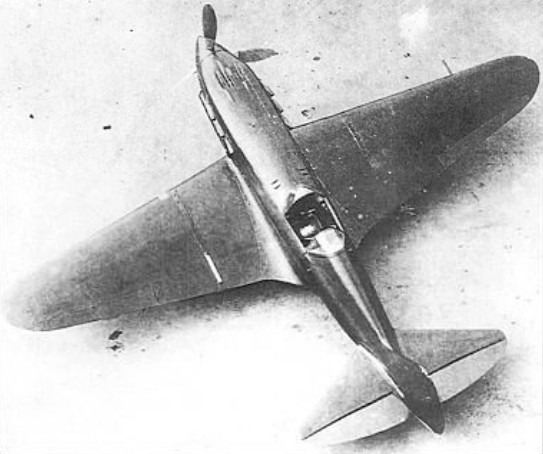
Lacking the time for a redesign of the MiG-1 to eradicate the fighter’s less acceptable characteristics, a series of ‘fixes’ were applied to the basic design to result in the MiG-3. Power plant and (initially) armament remained unchanged, but some structural simplification and strengthening was introduced. The engine was moved forward 10cm and dihedral of the outer wing panels was increased by one degree. A 250 lt supplementary fuel tank was introduced beneath the pilot’s seat, the aft fuselage decking was cut down, and the radiator bath fairing was enlarged and extended forward. The supercharger intakes were revised; 9mm seat armour was provided, together with radio, and four wing hardpoints were introduced for a maximum external load of 220kg.
The first MiG-3 left the factory in December 1940, 11 being completed by the end of the month. 140 were produced in January 1941, and, by June, production had peaked at 25 aircraft every 24 hours. The first MiG-3 was delivered to a VVS regiment in April 1941, simultaneously with the MiG-1, and production continued until 23 December 1941 with approximately 3,120 built, but 50 more were completed from component stocks in the early summer of 1942.
Some MiG-3s had a supplementary pair of 12.7mm BK machine guns under the wings, raising take-off weight to 3510kg, and others were fitted with two 12.7mm UBK guns in the wings.
Tests were also performed with two fuselage-mounted 20mm ShVAK cannon.
Engine: Mikulin AM-35A, 1200 hp. Wingspan: 10.20 m / 33 ft 6 in Length: 8.25 m / 27 ft 1 in Height: 2.65 m / 8 ft 8 in Wing area: 17.44 sq.m / 187.72 sq ft Max take-off weight: 3350 kg / 7386 lb Empty weight: 2699 kg / 5950 lb Max. speed: 360 mph Range: 820 km / 510 miles Armament: 2 x 50 mg, 2 x .30 mg
The first design to achieve production status of an OKB (Experimental Construction Bureau) headed by Artem I Mikoyan and Mikhail Y Gurevich, the MiG-1 was conceived as a high-altitude interceptor under the OKB’s Izdeliye (Product) designation Kh.
Also assigned the initial military designation I-200, the first of three prototypes was flown on 5 April 1940, attaining 648.5km/h at 6900m on the following 24 May. Second and third prototypes flew on 9 May and 6 June 1940 respectively, factory and state testing being performed in parallel, with the factory testing completed on 25 August and the state testing on 12 September 1940.
The MiG-1 was powered by a 1350hp Mikulin AM-35A and carried an armament of one 12.7mm UBS and two 7.62mm ShKAS guns. Manoeuvrability and handling were considered inadequate, longitudinal stability and control responses were poor, and a programme of peripheral redesign paralleled manufacture of an initial batch of 100 aircraft, the last of which was completed in December 1940. The first eight MiG-1s had non-jettisonable side-hinged cockpit canopies, the remainder having jettisonable aft-sliding canopies.
The first MiG-1 was delivered to a VVS regiment in April 1941, by which time this fighter had been supplanted in production by the MiG-3.
MiG-1 Engine: 1350hp Mikulin AM-35A Max take-off weight: 3099 kg / 6832 lb Empty weight: 2602 kg / 5736 lb Wingspan: 10.20 m / 33 ft 6 in Length: 8.16 m / 26 ft 9 in Height: 2.62 m / 8 ft 7 in Wing area: 17.44 sq.m / 187.72 sq ft Max. speed: 628 km/h / 390 mph Range: 580 km / 360 miles
The MU-4 (Russian: Михельсон/Никитин МУ-4) amphibious flying boat was designed and built by NG Mijelson at Leningrad Factory No.23. The initials MU correspond to Morskaya Uchebnaya or Marine Trainer.
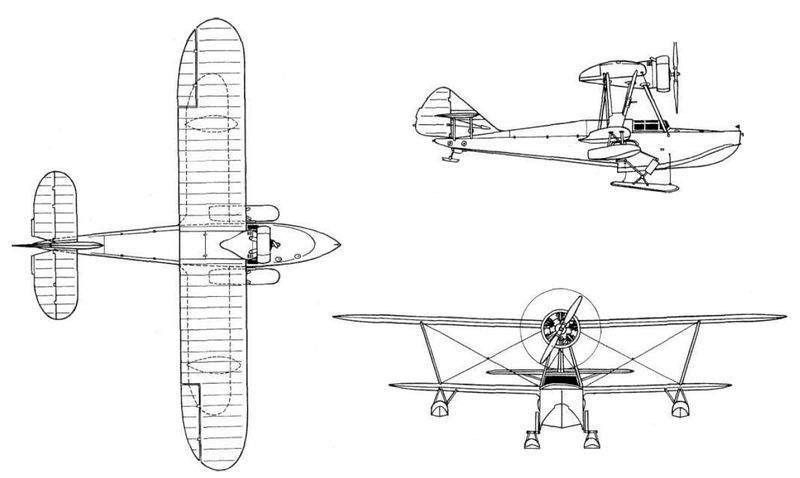
The MU-4 was designed as a flying-boat with a single hull and amphibious capacity. The hull was made entirely of wood and was made up of five watertight departments.
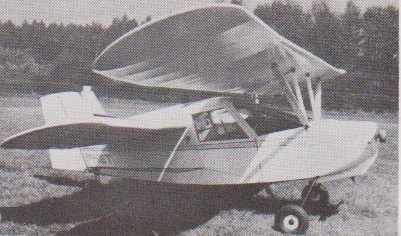
The wing configuration was sesquiplanar with the wing box braced by V-shaped struts made of duralumin. The wooden wing featured a double spar structure with a slim profile and constant chord. The covering was fabric. The lower plane was inserted into the fuselage, while the upper one was located high above the cabin, from where the engine supports started. The drop-shaped stabilization floats were located in the lower wing.
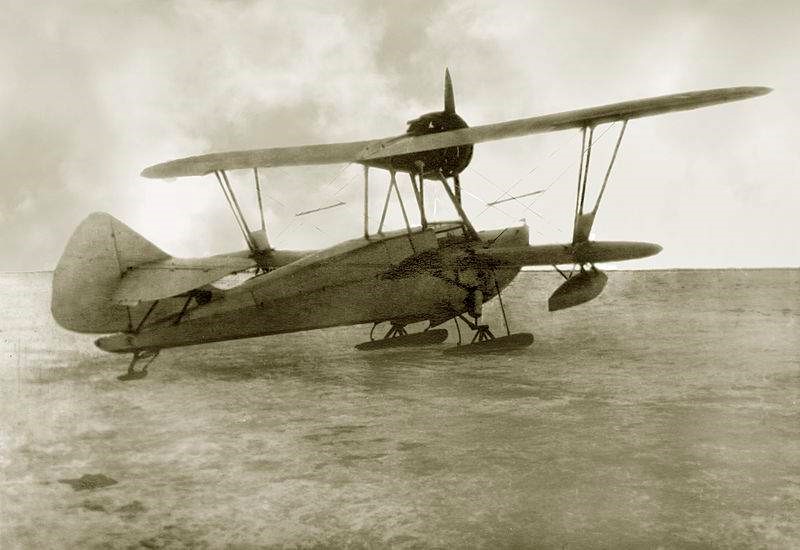
For operations on land, the MU-4 had a conventional landing gear with oleo-pneumatic shock absorbers and a tail skid. The main units retracted forward on the sides of the hull by means of a manual drive system. To allow winter operations the wheels could be replaced by skis.
The MU-4 tested with skis in the winter of 1937 – 1938.
The tail unit was of the conventional monoplane type with the stabilizers located high on the empennage and fixed by parallel struts in its lower part.
The MG-11F engine was installed on the upper wing in a tractor configuration protected by a Townend ring hood and moving a two-blade propeller. For winter, a special “winter” cowl was designed.
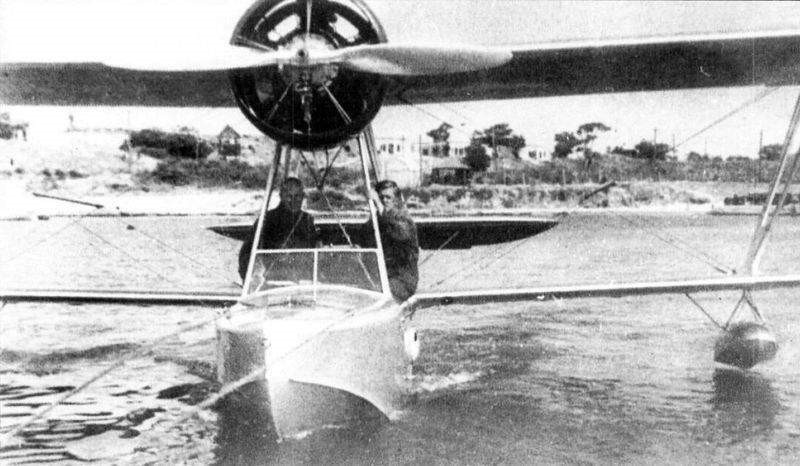
The MU-4 could carry two people, seated side by side in an enclosed, dual-control, glazed cabin.
The first prototype was finished in August 1937. Tests showed that the plane had good flight characteristics and could perform aerobatics. During the manufacturing tests this example was destroyed due to a construction defect. The engine fixing brackets to the gunwales were glued with a poor quality glue that ended up coming off. A short time later Mijelson would be imprisoned so the responsibility for further development passed to VV Nikitin.
Mijelson MU-4/2 at Factory No.23.
The second prototype was submitted for testing in May 1938. Model tests were carried out at the NII GVF hydrostation located in Konstantinovska Bay in Sevastopol. The flights were carried out by test pilot GI Sergueyev. The MU-4 was presented as a simple plane to fly and capable of taking off and landing in small aquatic spaces.
MU-4/2 during factory tests in 1938.
It was proposed to build a series of 30 examples at Factory No.23, but after Mijelson ‘s conviction this decision was reversed. The Shavrov Sh-2 was produced in series, covering the same needs.
MU-4 Powerplant: 1 x 190 hp MG-11F Wingspan of upper plane: 12.00 m Wingspan of lower plane: 9.00 m Wing area: 33.00 m² Length: 8.70m Height: 3.70m Empty weight: 989 kg Normal takeoff weight: 1255 kg Wing loading: 36.4 kg/m² Power load: 4.2 kg/hp Fuel + lubricant capacity: 80 + 20 kg Top speed: 173km/h Cruising speed: 154 km/h Service ceiling: 3400 m Accommodation: 2
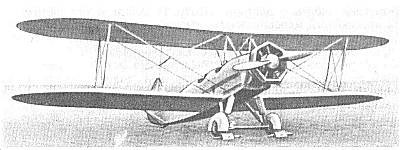
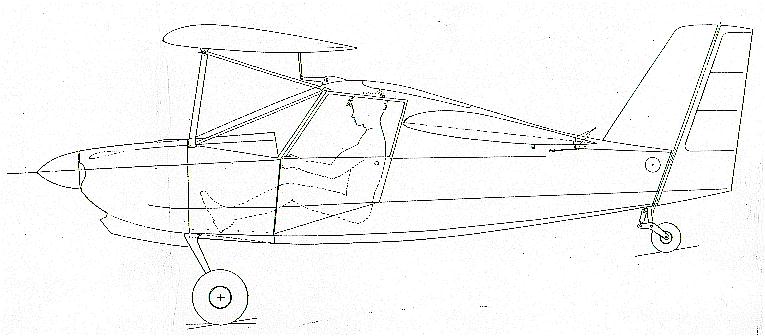
In the mid 1930’s Leningrad Factory No.23 was producing versions of the Polikarpov U-2 trainer. In parallel with the development of the serial versions U-2, AP and others, NG Mijelson and AI Morschijin proposed in 1934 the development of a version with a similar layout, but with larger dimensions and a more powerful M-48 engine of 200hp. The objective of this model was to obtain a medium training aircraft in which the students could continue after finishing the initial classes with the U-2.
Construction of the U-3 (Russian: Михельсон/Морщихин У-3) included a number of bolted duralumin aggregates. These aggregates were generally lighter. This, together with some decrease in the reserves of structural resistance, lightened the model. Other minor modifications were introduced with a view to improving performance.
The M-48 engine was protected by a hexagonal-shaped Townend cowling constructed of “Enerzh-6” stainless steel.
The U-3 was tested in 1935 but the results obtained were not much higher than those of the U-2, and the M-48 engine was not produced in series.
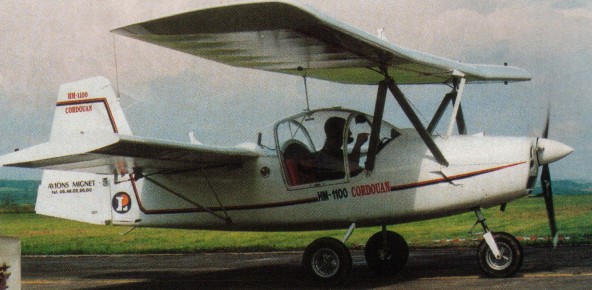
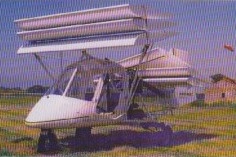
Avions Henri Mignet HM.1100 Cordouan first flew in 1998.
The type was not intended to be sold as a kit, but it meets the French ULM or ultralight category, having a maximum take-off weight under 1000 lb.
The fuselage is steel tube framed with a composite shell, and it seats two, side by side. It has a nose wheel undercarriage and although retaining the tandem wings (which traditionally do away with the need for ailerons) Mignet has incorporated ailerons on the rear wing, giving a classic three-axis control via rudder pedals and a single central control stick. If requested a two control model can be made.
Fitted with a Rotax 912, the prototype maximum speed is 117 mph and normal cruise 93 mph. It won’t stall, and it can take off fully loaded from a 260 ft grass strip, and land even shorter. Rate of climb is about 900 fpm.
The Cordouan’s forward wing is entirely free of pitch, control being effected through aerodynamic compensator. The ailerons are on the trailing edge of the rear wing. The fuselage is moulded in composite.
Mignet Aviation HM 1100 Cordouan Engine: Rotax 912, 80 hp Wing span: 7.30 m Wing area: 18.50 sq.m MAUW: 450 kg Empty weight: 260 kg Fuel capacity: 50 lt Max speed: 190 kph Cruise speed: 160 kph Minimum speed: 65 kph Climb rate: 5 m/s Seats: 2 Fuel consumption: 14 lt/hr Price (1998): 260 000 Fht
Used by the French military for surveillance. By 1998, 130 had been sold, including 25 to the French Army.
Mignet Aviation HM 1000 Balerit
Mignet Aviation produced the HM 1000 Balerit two seat side-by-side pusher entirely in dural, with the fuselage of welded tube and the wings in riveted sheet. The wings fold up for transport.
Mignet Aviation HM 1000 Balerit Empty weight: 174 kg Wing span: 8.55 m Wing area: 19.25 sq.m Fuel capacity: 42 lt Certification: BCAR S Engine: Rotax 582, 64 hp MAUW: 450 kg Seats: 2 Max speed: 150 kph Cruise speed: 110 kph Minimum speed: 60 kph Climb rate: 4 m/s Fuel consumption: 14 lt/hr Price (1998): £23,265
Mignet Do Brasil was formed early 1950s to build Mignet H.M.310 Estafette two-seat modernised version of the designer’s earlier Pou-du- Ciel light aircraft. A new development flown 1951 with Continental A90 engine.
The HM 360 is a single seater with very detailed plans in French, and English translation manuals supplied. The HM 380 is a two seater side-by-side, with a wood fuselage. It is supplemental to the HM 360 set, redrawn in English, with added detail.
Options include Cosandey flap, ailerons, swept fin & rudder, tricycle gear and HIPEC® covering.
The HM380L is a set of plans in English for a steel tube fuselage version of the 380. Instructions are on plans. Flap plans included (Cosandey flap not required). Set is very complete showing engine installation, fuel system, wiring diagram, exhausts, engine mount, full size wing ribs, tailwheel, main undercarriage (Wittman type), etc. Hardware is AN standard. Materials are SAE and US standard. The Ladybug 380L ia a 2 seat side by side tandem wing aircraft that is great for training and familiarization for these type of aircraft.
The two seaters are flown from the front.
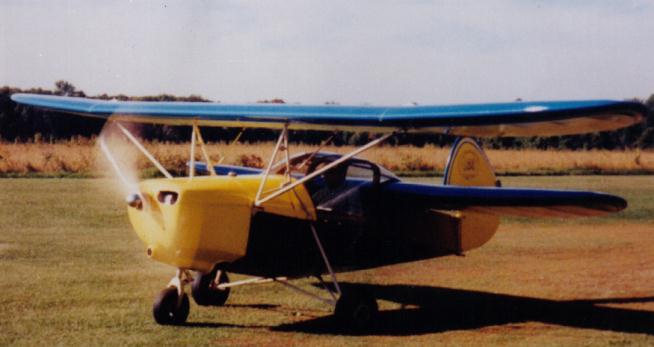
A considerably modified version of the two-seat HM.380 was developed by Mr Lederlin in France as the Lederlin HM.380L Ladybug. The prototype of this version on 14 September 1965, powered by a Continental C90.
Prototype Lederlin HM.380L Ladybug, Old Warden 1973.
Falconar Mignet HM 360 plans cost US$150 in 2010, with the 380 supplemental plans and additional US$50. Falconar 380L Ladybug plans sold for US$175 in 2010.
On June 30, 2019, Falconar Avia Inc closed for business and assets dissolved. The Master Sets (Original Drawings, Plans, Info Kits, Documentation) were available for sale and full transfer of rights included the MIGNET HM 360, HM 380, and 380 L for $2500 USD.
Mignet HM 360 Engine: 60 hp Continental or similar Cruise speed: 80mph Empty weight: 390 lbs Wing Span: 21 feet Gross weight: 700 lbs Wing span folded: 8 feet
HM 360 Engine: Continental, 65 hp. HP range: 65-100. Length: 13 ft. Wing span: 21 ft. Wing area: 138 sq.ft. Weight empty: 390 lbs. Gross: 700 lbs. Fuel cap: 14 USG. Cruise: 95 mph. Range: 330 sm. Stall: 28 mph. ROC: 1500 fpm. Take-off dist: 130 ft. Landing dist: 130 ft. Seats: 1. Landing gear: nose or tail wheel.
HM360 Engine: Continental C-65, 65 hp HP range: 65-100 Height: 6 ft Length: 13 ft Wing span: 21 ft Wing area: 138 sq.ft Empty weight: 390 lb Gross weight: 700 lb Fuel capacity: 14 USG Top speed: 124 mph Cruise: 95 mph Stall: 28 mph Range: 330 sm Rate of climb: 1000 fpm Takeoff dist: 130 ft Landing dist: 130 ft Seats: 1-2 Landing gear: nose or tail
Mignet HM 360 Engine: 100 hp Continental or similar Cruise speed: 100 mph Empty weight: 390 lbs Wing Span: 21 feet Gross weight: 700 lbs Wing span folded: 8 feet
Mignet HM 380 Engine: 60 hp Continental or similar Cruise speed: 80mph Empty weight: 580 lbs Wing Span: 27 feet Gross weight: 1100 lbs Wing span folded: 10 feet
HM380 Engine: Continental C-65, 65 hp HP range: 65-100 Height: 6 ft Length: 13 ft Wing span: 21 ft Wing area: 138 sq.ft Empty weight: 390 lb Gross weight: 700 lb Fuel capacity: 14 USG Top speed: 124 mph Cruise: 95 mph Stall: 28 mph Range: 330 sm Rate of climb: 1000 fpm Takeoff dist: 130 ft Landing dist: 130 ft Seats: 1-2 Landing gear: nose or tail
HM 380 Engine: Continental C-90, 90hp.
Mignet HM 380 Engine: 100 hp Continental or similar Cruise speed: 100 mph Empty weight: 580 lbs Wing Span: 27 feet Gross weight: 1100 lbs Wing span folded: 10 feet
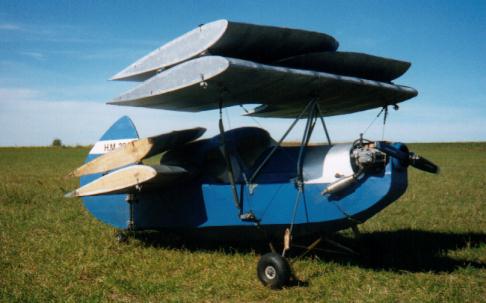
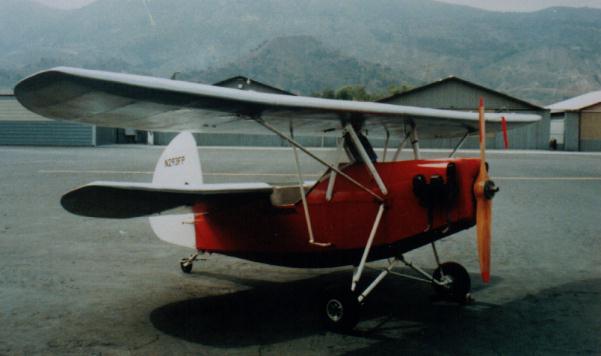
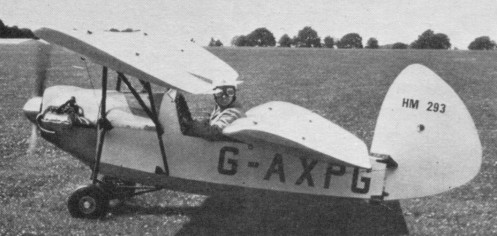
Development has continued since World War 2, the basic post war single seat version being the HM-290 with a 25 hp Poinsard engine.
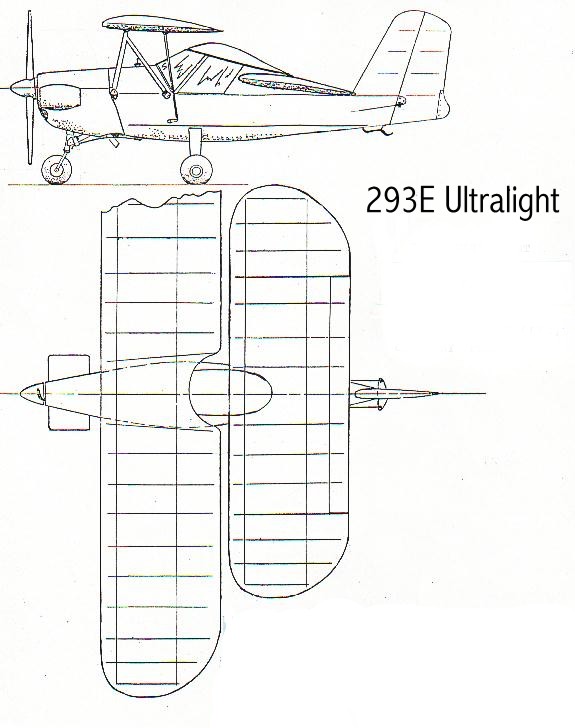
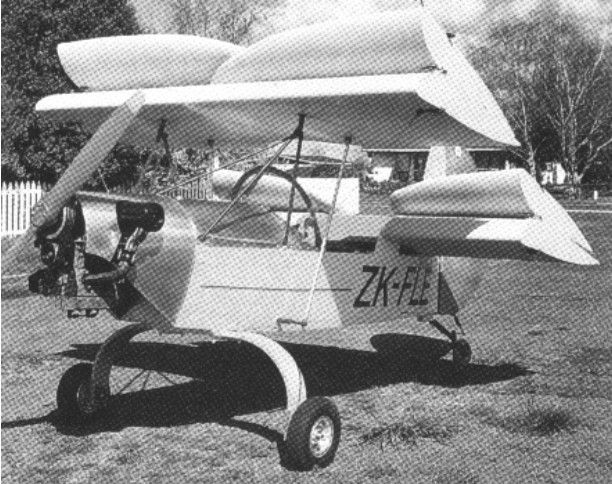
The HM 290 Series included: F293E ultralight model- for medium size pilot F295E ultralight model- for medium size pilot (with simplifications) HM290 amateur built model – for small pilot HM293 amateur built model – for medium size pilot
HM293
These tandem wing aircraft feature a large speed range, stall resistant, and spin proof. Both wings lift and being small size, minimal space is needed to build. Landing gear arrangement: tail dragger or tri-gear. Options include swept fin and rudder.
Falconar devised design changes for easier construction, modern materials, Delrin bearings, tri-gear and HIPEC® covering.
Rodolphe Grunberg has redrawn the 1940s HM.293 plans, updated them for 1990s materials, and fitted new light weight engines. Over 40 Grunberg HM.293s were reported either flying or close to completition in France in 1998.
Rodolphe Grunberg HM 293
In 2010 Falconar MIGNET “Flying Flea” plans cost: HM290E, HM293E, HM290, HM293 cost US$65. Falconar Avia produced kits as an LSA.
HM 293
On June 30, 2019, Falconar Avia Inc closed for business and assets dissolved. The Master Sets (Original Drawings, Plans, Info Kits, Documentation) were available for sale and full transfer of rights included the MIGNET “Flying Flea” HM 290/293, 290/293 E, F295 E, and 295 F for $4500 USD.
“Flying Flea” HM 290E/293E ULTRA LIGHT Engine: 25/30 hp Hirth or Rotax Cruise speed: 60 mph Length: 13 ft Empty weight: 246 lb Gross weight: 476 lb Wing span: 20 ft
HM290/HM293 amateur built Engine: 50/60 hp Little Demon (VW) or similar Cruise speed: 90 mph Length: 12-13 ft Empty weight: 360 lb Gross weight: 580 lb Wing span: 18-20 ft
HM290/293 Engine: VW, 60 hp HP range: 50-60 Height: 5.5 ft Length: 13 ft Wing span: 20 ft Wing area: 113 sq.ft Cruise: 90 mph Stall: 28 mph Range: 300 sm Rate of climb: 800 fpm Takeoff dist: 150 ft Landing dist: 150 ft Fuel capacity: 10 USG Empty weight: 350 lb Gross weight: 600 lb Seats: 1 Landing gear: nose or tail
HM 293 Engine: VW, 60 hp Speed max: 110 mph Cruise: 90 mph Range: 300 sm Stall: 28 mph ROC: 1400 fpm Take-off dist: 150 ft Landing dist: 150 ft Fuel cap: 10 USG Weight empty: 350 lbs Gross: 600 lbs Height: 5.5 ft Length: 13 ft Wing span: 20 ft Wing area: 113 sq.ft Seats: 1 Landing gear: nose or tail wheel.
Falconar Avia 290E/293E Engine: Kawasaki, 30 hp HP range: 25-35 Length: 13 ft Wing span: 20 ft Wing area: 117 sq.ft Empty weight: 246 lb Gross weight: 476 lb Fuel capacity: 5 USG Cruise: 55 mph Stall: 28 mph Range: 290 sm Rate of climb: 500 fpm Takeoff dist: 180 ft Landing dist: 150 ft Cockpit width: 23 in Landing gear: nose or tail
Rodolphe Grunberg HM 293 Engine: 30-40 hp Wing span: 6.10 m Wing area: 12 sq.m MAUW: 250 kg Empty weight: 117 kg Fuel capacity: 30 lt Max speed: 130 kph Cruise speed: 90 kph Minimum speed: 30 kph Seats: 1 Plan price (1998): 295 Fnc
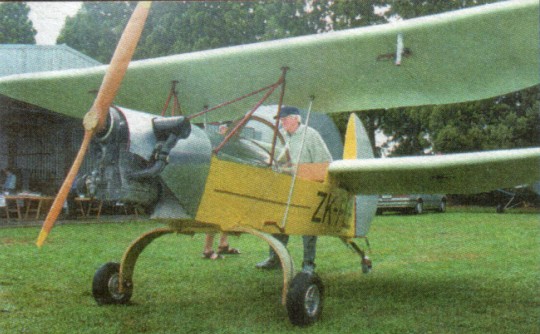
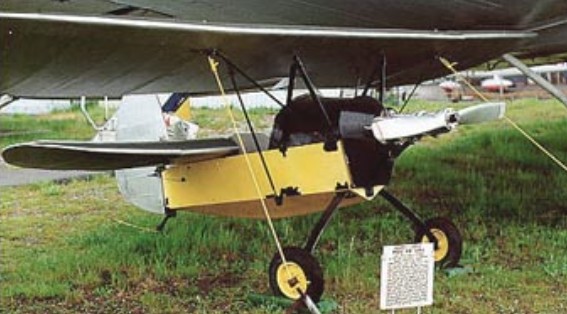
The first Flying Flea took to the air back in 1933 and quickly earned a reputation for being temperamental. Mignet was a furniture manufacturer, and named his creation “Le Pou de del,” or Louse of the Sky. It started out to be Everyman’s Airplane, something you could build for $500, complete, in the Depression years. Mignet’s Flea carried a 17-hp engine and had a speed range from 25 to 62 mph.
The Pou de Ciel (Flying Flea) was introduced to the public during the Paris Aero Salon in 1935.
For simplicity the top wing pivoted about the front spar and was tilted up and down for longitudinal control. There were no ailerons, turns being made by the rudder alone. Mignet’s Pou and his book Le Sport de l’Air started a craze for do it yourself aircraft in the 1930s. Translated to English by the British Air League which did not include a true and correct C of G situation. This resulted in numerous crashes. Flea fever swept France, Britain and America. In 1935 some 600 Flying Fleas were under construction in the British Isles alone. Most stayed firmly on the ground. Ignorant of the ways of aircraft, they built their Fleas too heavy, or used unsuitable engines, so that the machines would do little more than tear around re¬fusing even to hop like their namesakes. Most were fitted with the 25 hp Scott or Douglas engine. It was a blessing in disguise, for the Pou du Ciel had an inherent design fault. The trouble lay in Mignet’s tan-dem wing configuration: the rear wing was fixed while the incidence of front surface could be varied to give control in pitch. If the front wing was allowed to stall, the nose would drop and because of an obscure inter¬ference effect between the two wings the aircraft would dive ever steeper until it either became stabilized in an inverted posi¬tion from which recovery was impossible, or struck the ground. Accidents showed that the aircraft became uncontrollable if the wing incidence exceeded 15 degrees, and British Fleas were promptly grounded. It became illegal to fly unmodified Flying Fleas after June 1937.
Mignet fixed the problem and continued to build and develop Poux until his death in 1965.
Douglas developed an engine model specifically for aircraft, with longitudinal finning; the Scott company brought out their 750cc inline model A.25; and Sir John Carden set up in production with a modified version of the reliable Ford 10 engine.
E.D.Abbott Ltd coachbuilders of Wrecclesham, Farnham, Surrey, UK, set up production of kits (at £90) and complete aircraft (at £198). Flight test took place at Heston.
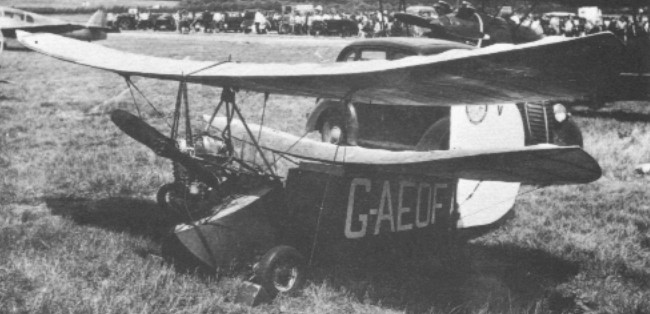
G-AEGD cn CP.1 was modified to ‘Cantilever Pou’ design of L.E.Baynes with strut-braced wings and fitted with an enclosed Carden-Ford engine. It was registered on 15 April 1936, sold in January 1936, and cancelled in February 1943. Following G-AEGD were G-AEJC cn CP.3 and G-AEJD cn CP.4. G-AEJC was registered on 27 July 1936 and cancelled in December 1937. G-AEJD was used for stall investigation.
Mignet HM 14 Pou de Ciel / Flying Flea Engine : Bristol, 35 hp Length : 11.483 ft / 3.5 m Height : 6.562 ft / 2.0 m Wingspan : 16.732 ft / 5.1 m Max take off weight : 441.0 lb / 200.0 kg Weight empty : 242.6 lb / 110.0 kg Max. speed : 65 kt / 120 km/h Crew : 1
Mignet Pou-du-Ciel (Flying Flea) Engine: 75 hp McCulloch horizontally opposed Maximum speed: 91 mph (146 km/h) Empty weight: 421 lb (191 kg) Maximum weight: 643 lb (292 kg) Span: 18 ft 2 in (5.5 m) Length: 12 ft 6 in (3.8 m) Height: 5 ft 8 in (1.7 m) Wing area: 108 sq ft (10 sq m)
Engine 22-38 hp. Gross Wt. 700 lb Weight empty 350 lb (160 kg.) Fuel capacity 12 USG Top speed 56 mph Stall 35 mph Climb rate 500-600 fpm Ceiling 16,400 ft Seats: 1 Length 13 ft. (3.96 m) Wing span 22 ft. (6.7 m) Max cruise 60 mph (96 kph) Range 200 miles (320 km)
Engine: ABC Scorpion, 35 hp Top speed: 80+ mph Cruise speed: 70 mph Landing /TO speed: 30 mph Landing dist: 150 ft TO dist: 200 ft Fuel capacity: 7 USG Range: 280 mi Empty wt: 316 lb