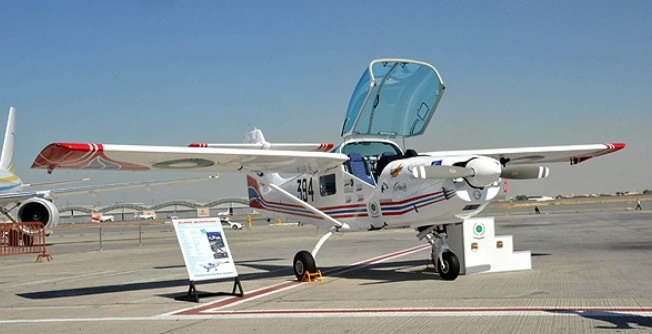
Pakistan Aeronautical Complex MFI-395 Super Mushshak

MFI-395 Super Mushshak

The MFI-395 Super Mushshak is a military trainer / light attack aircraft designed and manufactured by the Pakistan Aeronautical Complex (PAC) for the Pakistan Air Force (PAF) and the Royal Saudi Air Force (RSAF).

The development of the MFI-395 started in 1995. The aircraft was built by upgrading the MFI-17 with an advanced 260hp engine, electrical instruments, dual flight control systems and a Bendix RSA fuel injection system. PAC rolled out the improved version, the MFI-395 Super Mushshak aircraft in 1995.

The MFI-395 features a high wing monoplane design. It boasts two integral fuel tanks which carry 47 gallons of fuel. The large baggage compartment located aft of the cockpit can be easily accessed through a door on the rear side of the fuselage.

The Super Mushshak is equipped with a blind screen, which allows the aircraft to carry out instrument flying missions.

The spacious glass cockpit of the MFI-395 accommodates two flight crew members, a student pilot and a flight instructor. It is integrated with two ejection seats adjacent to each other, with an option for third seat at the rear side. It is enclosed by an oval shaped glass canopy which opens upwards to meliorate the visibility.
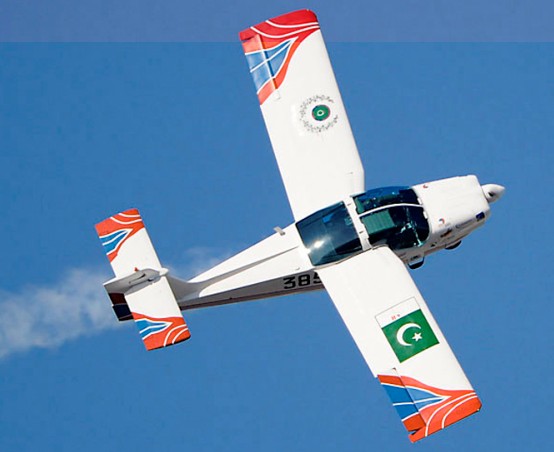
The cockpit is equipped with two multifunctional displays to exhibit data related to navigation, flight instrumentation, fuel and the engine. It is also equipped with an Enviro R-134 air conditioning system to sustain constant temperature.

The avionics suite incorporated in the MFI-395 includes instrument flight rules (IFR) capable electronic flight instrumentation system (EFIS), a global positioning system, instrument landing system, voice over recorder, UHF radio, automatic direction finder, distance measuring equipment and information friend or foe transponder.

The MFI-395 is fitted with six hardpoints under the wing pylons. The inner two stressed hardpoints can carry up to 150kg each. The remaining four carry rockets, gunpods and Bofor Bantam anti-tank missiles.

The MFI-395 was designed to provide primary flight training to the pilots of the PAF Academy situated at Risalpur. It was designed to suit both military and civilian missions. The aircraft’s design is compliant with the US FAR 23 certification standards in aerobatics and utility classes.

The tricycle type undercarriage allows the aircraft to operate from unprepared airstrips and rough airfields.

The maiden flight of the Super Mushshak took place in August 1996. The production aircraft was rolled out in November 2000. It entered service in May 2001 and was certified by the Pakistan Civil Aviation Authority in 2002.

It was displayed at the Dubai Air Show held in November 2011.

Approximately 300 MFI-395s were operational at the academies of the Pakistan Armed Forces.

Customer orders for the MFI-395 included: PAF (50), RSAF (20) and Royal Air Force of Oman (five).
The PAF received its first Super Mushshak in May 2001. Deliveries to the Royal Air Force of Oman were concluded in 2004.

Pakistan signed an agreement with Iraq for the supply of trainer aircraft to Iraqi Air Force, in what is billed as “major milestone” in the export of aviation products from the country.

The contract of sales of Super Mushshak Aircraft to Iraq was signed by General Anwer Hamad Ameen Ahmed, Commander Iraqi Air Force and Air Marshal Sohail Gul Khan, Chairman of the Pakistan Aeronautical Complex (PAC) Kamra.

In total two agreements were signed including the one for sale of the trainer aircraft. According to the first agreement Pakistan Air Force will provide Training, to Iraq Air Defence Force personnel, in all sphere of Modern Air Force concept pertaining to different field special Air Defence, and Air Crew.

Gallery

Pakistan Aeronautical Complex MFI-395 Super Mushshak
Engine: Lycoming IO-540 V4A5, 194kW (260hp)
Time between overhaul: 2,000 hours
Propeller: two-bladed Hartzell
Climb rate: 8.6m/s
Never exceed speed: 363km/h
Maximum speed: 268km/h
Cruise speed: 240km/h
Stall speed: 96km/h
Maximum range: 814km
Service ceiling: 6700m
Maximum endurance: 4 hr 15 min
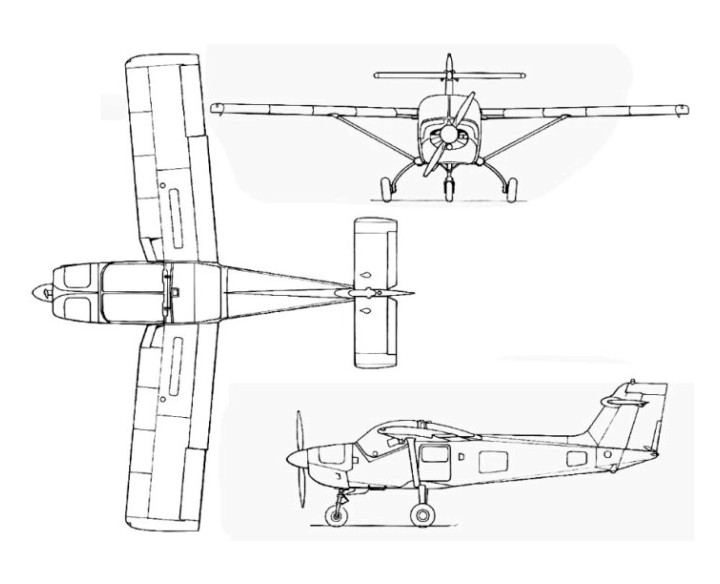
Pagotto Brako

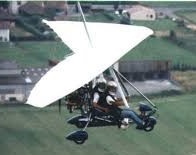
The Pagotto Brako is an Italian ultralight trike, designed by Enio Pagotto and produced by Carpenterie Pagotto of Pianzano.

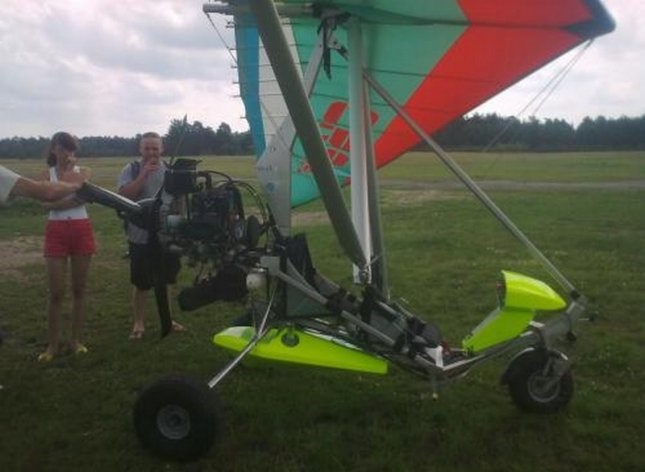
The aircraft was designed to comply with the Fédération Aéronautique Internationale microlight category, including the category’s maximum gross weight of 450 kg (992 lb). The aircraft has a maximum gross weight of 450 kg (992 lb). It features a cable-braced hang glider-style high wing, weight-shift controls, a two-seats-in-tandem open cockpit without a cockpit fairing, tricycle landing gear with wheel pants and a single engine in pusher configuration.

The aircraft is made from welded stainless steel tubing, with its single or double surface wing covered in Dacron sailcloth. The Brako is factory supplied only with Grif wings. With the Trainer wing it has a wingspan of 10.35 m (34.0 ft). The wing is supported by a single tube-type kingpost and uses an “A” frame weight-shift control bar. The powerplant is a twin-cylinder, air-cooled, two-stroke, dual-ignition 50 hp (37 kW) Rotax 503 engine, with a reconditioned four-cylinder, air- and liquid-cooled, four-stroke, dual-ignition 80 hp (60 kW) Rotax 912UL engine optional.

With the Rotax 503 engine and Grif Trainer wing the aircraft has an empty weight of 158 kg (348 lb) and a gross weight of 450 kg (992 lb), giving a useful load of 292 kg (644 lb). With full fuel of 42 litres (9.2 imp gal; 11 US gal) the payload is 261 kg (575 lb).

A number of different wings can be fitted to the basic carriage, including the beginner Grif Trainer, intermediate Grif Spyder and the higher performance Grif Corsair with wing areas of 12.8 sq.m (138 sq ft) and 13.7 sq.m (147 sq ft).

The aircraft was in production in 2013 and was supplied as a complete ready-to-fly-aircraft.

Brako / Grif Trainer wing
Engine: 1 × Rotax 503, 37 kW (50 hp)
Propeller: three-bladed composite
Wingspan: 10.35 m (33 ft 11 in)
Wing area: 16.0 m2 (172 sq ft)
Empty weight: 158 kg (348 lb)
Gross weight: 450 kg (992 lb)
Fuel capacity: 42 litres (9.2 imp gal; 11 US gal)
Maximum speed: 100 km/h (62 mph, 54 kn)
Cruise speed: 75 km/h (47 mph, 40 kn)
Stall speed: 45 km/h (28 mph, 24 kn)
Rate of climb: 2.8 m/s (550 ft/min)
Wing loading: 28.1 kg/m2 (5.8 lb/sq ft)
Crew: one
Capacity: one passenger

Pagé-Light Biplane

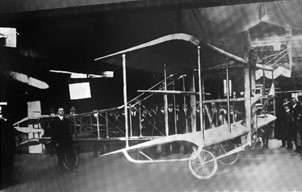
The 1909 single place Pagé-Light Biplane, loosely described as a Blériot XII copy with a lower biplane wing and interplane ailerons, was the work of Victor W Pagé and Oliver Light, both of Farmingdale, New York. At a February 1910 Boston aviation exhibition, the Pagé-Light was exhibited by the L.A.W. (League of American Wheelmen) Motors Company, and it was known under that name as well. The craft was powered by one of the company’s two-cycle Light rotary.

Packard-LePere LUSAC-21

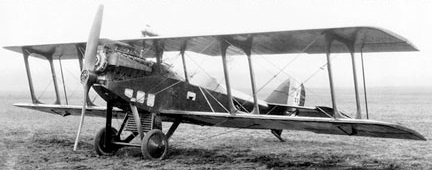
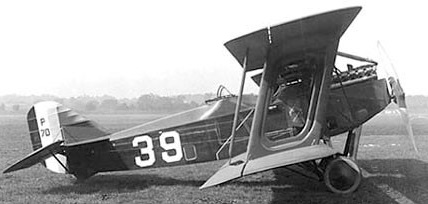
The LUSAC-21 (LUSAC = LePere US Army Combat) of 1919 was LUSAC-11 refitted with the 420hp Bugatti 16 engine. One prototype was converted: AS40023.

Thirty LUSAC-11s with Liberty engines and three LUSAC-21 s with Bugatti engines were built, but contracts for quantity production were cancelled at end of First World War.

Engine: 420hp Bugatti 16
Length: 27’1″
Gross wt: 4485 lb

Packard-Le Pere LUSAC-11 / LUSAGH-11

Packard-LePere LUSAC 11

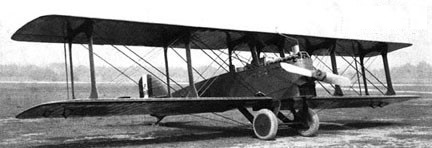
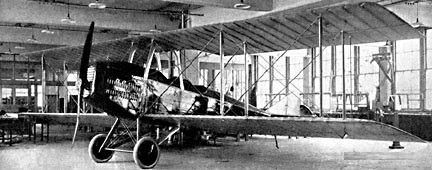
Captain Le Pere of the French Aviation mission to the USA, and Dwight Huntington designed a two-seat fighter, the LUSAC-11 (Le Pere United States Army Combat), which was built by the Packard Motor Car Company in 1918.

First flying in August 1918 piloted by Lt de Marmier, the LUSAC 11 (LUSAC = LePere US Army Combat) featured a plywood fuselage and box-type wing struts. It was the first US aircraft with a turbo-supercharger, and first to leave a vapor trail, on 27 February 1920.

Packard-LePere LUSAC 11

Two prototypes and 24 production LUSAC-11s with Liberty engines [AS40013/40023, AS42129/42142, AS42151] and three LUSAC-21s with Bugatti engines were built, but contracts for nearly 3,500 were cancelled at end of First World War.

AS40021 was modified as a single seat LUSAGH-11 with longer wings and a canopied cockpit at McCook Field. LUSAGH = LePere US Army Ground Harassment.

Packard-LePere LUSAGH 11 AS40021

Gallery

LUSAC-11
Engine: Liberty 12, 425hp
Wingspan: 41’7″ (?>39’0″)
Length: 25’3″ (?>25’5″)
Max speed: 133 mph
Cruise speed: 118 mph
Stall: 50
Range: 320 mi
Ceiling: 20,200′
Seats: 2

Packard A / 1-A

Packard A

Circa 1919, the two place open cockpit biplane Packard A was Packard’s entry, featuring a self-starter, was planned for a civil market that failed to develop.

Only one was built, registered cn 01, N707.

A two place open cockpit biplane with a 200hp Packard-Liberty 8 found in the registers might be this ship, but it was not specified as actually a Packard Co product. The registry shows several private owners in Mt Clemens and Saginaw.

Engine: 160hp Packard 8
Useful load: 647 lb
Speed: 102 mph
Ceiling: 19,500′
Seats: 2

Packard X-2775 / 1A-2775 / 2A-2775

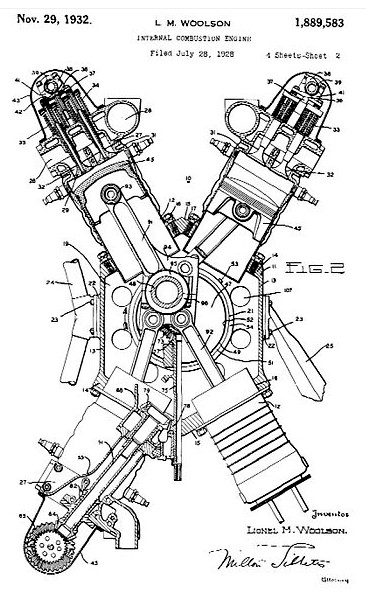
Packard 1A-2775 engine arrangement

Packard was founded in 1899 by two brothers, James Ward Packard (5 November 1863 – 20 March 1928) and William Doud Packard (November 3, 1861 – November 11, 1923) of Warren, Ohio who ran the Packard Electric Company. In 1926 about 20 New York business men, including James Packard, and a group of US Navy officers expressed an interest in building an airplane designed to break the standing air speed record. Navy officials agreed that they would finance the proposal when funds became available. The aircraft was to be completed in time to participate in the 1927 Schneider Trophy Race, which would be held in Italy.

The engine was designed by Navy Captain Lionel Melville Woolson, an aeronautical engineer at the Packard Motor Company of Detroit. The engine was an “X” configured design similar to one upright and one inverted V-12 engine mounted on the same crankshaft with a common crankcase. With 5.375 in (136.5 mm) bore and 5 in (130 mm) stroke, the resulting displacement was 2,775 cu in (45.47 l). The engineering involved in the design of the crankshaft, single piece crankcase and the master/slave rod system was very complex.

The connecting rods were a master-slave design similar to that used on a radial engine. This resulted in the 5 in stroke becoming slightly longer in three of four banks, and resulted in slightly more displacement than the theoretical 2,722.88 cu in (44.6200 l) produced by an engine of that bore and stroke. The engine produced 1,250 hp (930 kW) at 2,700 rpm and weighed 1,402 lb (636 kg).

The crank cheeks were used as main bearing journals, and were 7.75 in (197 mm) in diameter. This was necessary to keep the crankshaft length the same as the 1A-1500 engine so that 1A-1500 components could be used, and to keep the weight as low as possible. The single piece crankcase was designed to save weight and give maximum strength, but made assembly of the engine difficult. The engine was finished by August 1927.

Often called the Packard X-2775, Packard’s official designation for this engine was 1A-2775 in 1927 and 1928, and 2A-2775 in 1935.

The Navy’s Bureau of Aeronautics ordered a second supercharged engine under their original contract No. 3224. It was equipped with a special Roots-type supercharger. It was ordered with a supercharger when it was discovered that it would be necessary to supercharge the engine in order to equal the reported speeds of the other contestants.

The Bureau of Aeronautics analyzed the possibilities of the plane becoming a competitive race plane, and decided that the extra weight of the supercharger could be better put to use by installing an epicyclic reduction gear, for improved propeller efficiency, thereby providing greater improvement in performance than what the supercharged engine with a direct drive propeller could provide for the same weight.

It was further planned to increase the compression ratio of the engine, improving its performance with no increase in weight, but needed to secure dynamometer data on the supercharged engine to make a final decision. The dynomometer tests indicated the power output was only 1,300 hp (970 kW) @ 2,800 rpm due to the large impeller clearance that allowed only 7.7 in (200 mm) Hg boost. After reducing the impeller clearances, the supercharger then produced 9.6 in (240 mm) Hg of boost and the engine produced 1,500 hp (1,100 kW) at 2,700 rpm.

The first engine later received an epicyclic propeller reduction gear made by Allison, an increase in its compression ratio, a Scintilla magneto ignition, and the new design cylinder banks of the 3A-1500 inverted engines, a design that had both spark plugs on the outside for easier maintenance.
Official Packard photographs of this engine are marked “model 2A-2775”, and photographs of the earlier versions are marked “not to be released to the press — hereafter only 2A-2775 are to be released — per Capt. Woolson.” Most of the published photographs are of this engine. In spite of Captain Woolson’s note, it was identified as either a 1A-2775 or the “Packard X engine.”

The engine was advertised as being available “built-to-order” as late as September 1930 at $35,000 each. No orders were received, and because only two engines were built, both for the Navy as X-2775s, the Packard model designation of 2A-2775 never came into public use.

Engine No. 2 also received the new style cylinder banks and was tested both with and without the reduction gear. The direct drive and reduction gear units were interchangeable, and were switched between the two engines as needed.

Engine No. 1 in its most modified version, with high compression, reduction gear and late type cylinder banks, was used in the Naval Aircraft Factory Mercury racing plane with engine 1A-2775, Serial No. 1, Bureau No. 10960, as a U. S. entry in the 1929 Schneider Trophy.

Engine No. 1 is the only known 1A-2775 survivor and it was given by the Navy to the Smithsonian in 1971. It is in the same configuration as it was when used in the Mercury racer.

Packard apparently built a third engine some time after 1931 when the Navy had stopped testing its engines. No photographs of this engine have been found, but engineering data dated in early 1939 show a 2A-2775 with an output of 1,900 hp (1,400 kW) @ 2,800 rpm. BMEP was listed as 196 psi (1,350 kPa) indicating the engine was supercharged.

Variants:
1A-2775 No.1
rated at 1,200 hp (890 kW) at 2600 rpm and max of 1,250 hp (930 kW)at 2700 rpm, – Weight 1,513 lb (686 kg).

1A-2775 No.2
rated at 1,400 hp (1,000 kW) at 2600 rpm and max of 1,500 hp (1,100 kW) at 2700 rpm, – Weight: 1,635 lb (742 kg) – Supercharged (1928)

2A-2775 No.3
rated at 1,900 hp (1,400 kW) at 2800 rpm, – Weight: 1,722 lb (781 kg).- Supercharged (1935)

Applications:
Kirkham-Williams X
Naval Aircraft Factory SP (aka Mercury Racer)

Specifications:
1A-2775
Type: 24-cylinder, liquid-cooled, X-configured, piston engine
Bore: 5.375 in (136.5 mm)
Stroke: 4 in (100 mm)
Displacement: 2,723 cu in (44.62 l)
Dry weight: 1,635 lb (742 kg).
Valvetrain: 4-valve, overhead-cam
Supercharger: Gear-driven supercharger
Power output: 1,400 hp (1,000 kW) at 2600 rpm
Specific power: .50 hp/cu.in (22.753 kW/l)
Power-to-weight ratio: .85 hp/lb (1.397 kW/kg)