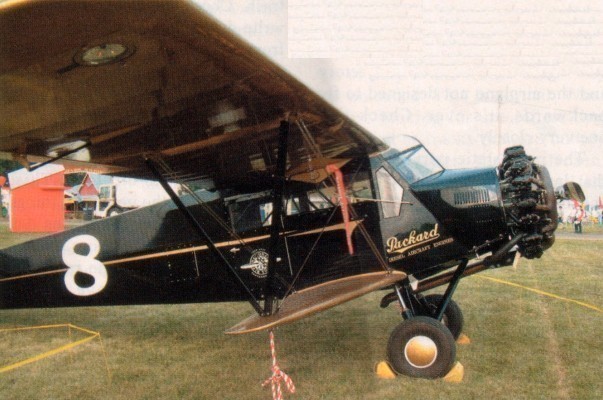
The 1929 Packard sesquiplane was powered by a radial Wright diesel engine.
The 1929 Packard sesquiplane was powered by a radial Wright diesel engine.
Built in 1959, the single place, low wing monoplane midget racer ‘Grey Ghost’, alias ‘Little A-Go-Go’, alias ‘Little Bit’, registered N211P, raced from 1959 to 1969. The fastest race speed achieved was 188 mph.
Engine: 85hp Continental C-85
Wingspan: 13’0″
Length: 16’0″
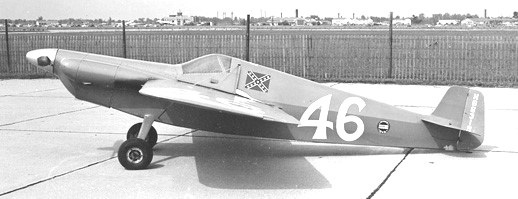
Built in 1950, the midget racer ‘Stars & Bars’ aka ‘Johnny Reb’ was piloted by Joe Magnano and Al Bennyworth. Registered N66319 it was damaged in mid-air collision during a 1950 race and rebuilt.
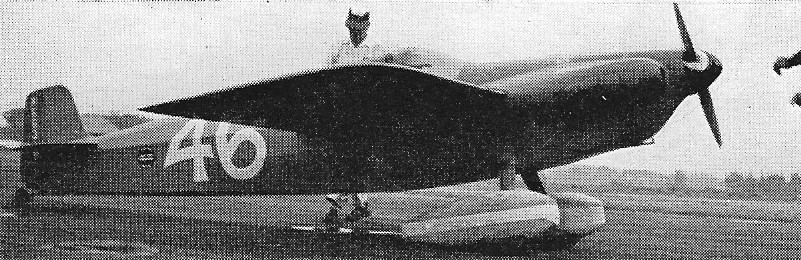
Engine: Continental C-85, 85hp
Wingspan: 14’8″
Length: 17’0″
Cruise speed: 175 mph
Seats: 1
Built in 1948, the single place, low wing monoplane midget racer ‘Li’l Rebel’ N66317 achieved a race average of 191 mph piloted by Jimmy Wilson.
Rebuilt as ‘Wilson Li’l Rebel’ after being damaged.
Engine: 85hp Continental C-85
Wingspan: 16’0″
Length: 16’10”
Built in 1948 as midget racer ‘Rebel Raider’ N97M the craft was destroyed on a test flight. Pilot Garland Pack was uninjured. The model B was a single place low wing monoplane.
Engine: Continental C-85, 85hp
Wing span: 13’0″
Length: 16’0”
Garland & Associates built the model A in 1948 as midget racer ‘Miss Nashville’. A single place low wing monoplane, registered NX66311 and piloted by Al Bennyworth, the fastest race was at 139.53 mph in 1948. Power was from an 85hp Continental C-85.
The craft was dismantled circa 1949 and parts were used in subsequent racers.
Built circa 1983 in Palmerston North, New Zealand.
Engine: 215 cc, (1987 onwards) Cuyuna 430 cc.
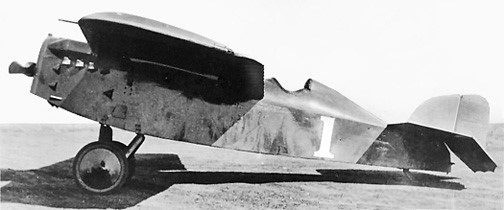
Designed by Otto Timm of the Pacific Airplane & Supply Co, the Model C-1 single-seat racing monoplane in 1921, was built by (John W) Rogers Aircraft Co with a 90 hp Curtiss OX-5 engine. Unrecognizable as being modified from a Standard J-1, it was flown by Emory Rogers until a fatal crash on 11/27/22. It did win the 1921 Curtiss Cup race.
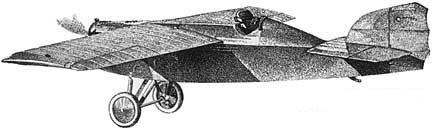
Pacific-Standard C-1 / Rogers C-1
Engine: 90hp Curtiss OX-5
Wingspan: 23’3″
Length: 19’6″
Cruise speed: 137 mph
Stall speed: 41 mph
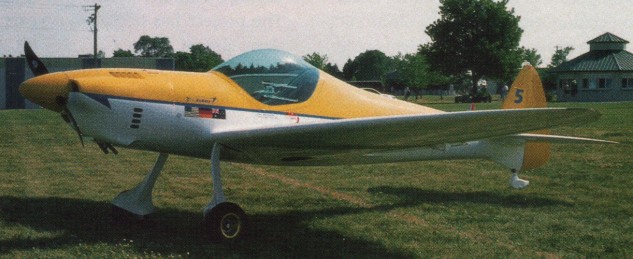
Engine: Jabiru 2200, 80 hp
HP range: 80-85
Length: 20.27 ft
Wing span: 24.6 ft
Wing area: 93.8 sq.ft
Empty weight: 560 lb
Gross weight: 880 lb
Fuel capacity: 19 USG
Cruise: 146 mph
Stall: 47 mph
Range: 810 sm
Rate of climb: 1275 fpm
Takeoff dist: 350 ft
Landing dist: 400 ft
Cockpit width: 27 in
Landing gear: tailwheel
Seats: 1
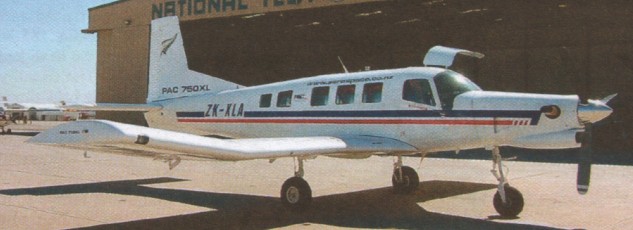
In 1999, representatives of the US skydiving market approached Pacific Aerospace wanting an enlarged version of the Cresco aircraft. This aircraft stemmed from a remark that it was a pity that the Cresco couldn’t be used for sky-diving. With the Cresco as a starting point the 750 XL resulted. After the development programme, little of the original Cresco remained. Wings, ailerons, flaps, fuel system, etc. have been either replaced or modified.
First flown on 5 September 2001, the ten seater utility received New Zealand type certification (NZ TC A-14) on 23 July 2003.
On March 10th, 2004, the US Federal Aviation Administration certified the PAC 750XL (since renamed the P-750 XSTOL) under the very latest revisions of Part 23. Taking the aircraft from initial drawings to FAA certification took about 52 months. The P-750 is Single Pilot IFR Certified (FAA) and in 2012 gained certification against ICAO Annex 6 for Single Engine IFR Passenger Transport Operations.
While initially developed for the skydiving market, the attributes of the P-750 XSTOL also made it ideal for other market segments for which it is in wide use around the world particularly freight, passenger and aerial survey work.
The P-750 XSTOL can take off and landing in less than 800 ft (244m), even when it is hot and high. Operate off semi-prepared airstrips in all types of terrain. Carry a load of more than 4,000 lb even in hot and high conditions. The rugged construction has a low 150-hour airframe/engine inspection interval and 39,000 hours before any scheduled airframe maintenance requirement.
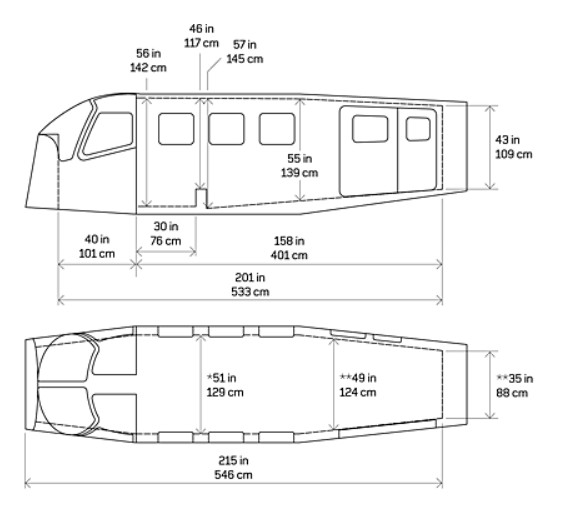
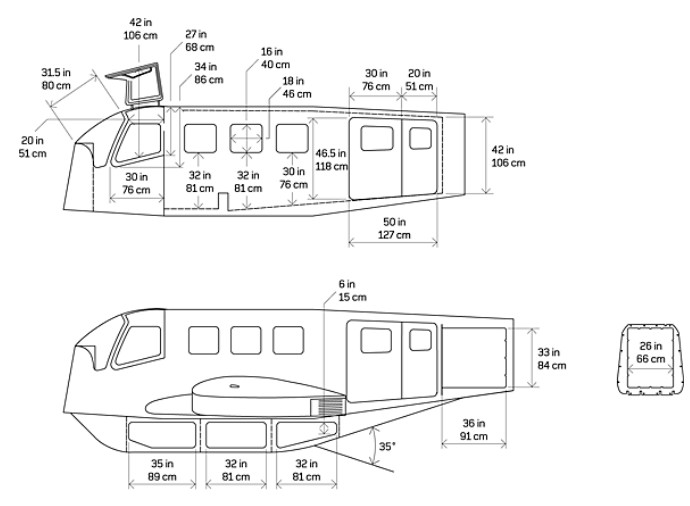
The P-750 XSTOL Utility has a 240 cu ft cabin complemented by an optional 70 cu ft cargo pod and 18 cu ft rear storage compartment. It has the ability to carry passengers on one leg then in 30 minutes have the seats removed and stored in the rear compartment making the full cabin and cargo pod available for carrying freight on the return leg. The large single compartment cargo pod with 1,000 lb (454 kg) capacity has no impact on aircraft cruise speed and loading access is via three side doors and one large rear ramp.
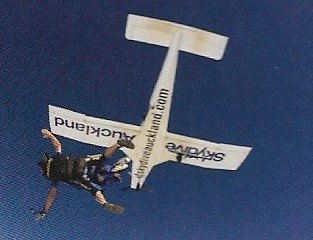
For skydiving the P-750 XSTOL has the ability to climb rapidly to jump height (e.g. sea level to 12,000 ft in ten minutes) and then be back at the air strip ready for another load before the jumpers land, enabling the aircraft to average four loads per hour. Able to carry seventeen skydivers or six tandem teams, the wide centre of gravity range making it a very stable jump platform. Able to carry 17 skydivers to altitude and return to the point of departure in approximately 15 to 16 minutes. The climb and descent profile is about half the horizontal airspace of most other jump planes, assisting operation in noise-sensitive areas. Factory installed skydiving modification that can be operated by the pilot ensuring no open-door speed restrictions on descent.
For aerial survey factory-approved modifications support easy installation of camera holes in the floor of the aircraft and side wall mounted track for the attachment of equipment. The P-750 XSTOL is an electrically quiet aircraft with minimal electro-magnetic interference (EMI) and all major control systems mechanical rather than electric. The aircraft structure serves as an effective faraday cage blocking out external static electric fields and can be readily customer-modified for geophysical survey work.
For Crop Dusting, Spraying or Fire Fighting the P-750 XSTOL Agriculture is able to carry a 4,888lb (2,272 kg) hopper load. Operators commonly complete up to 17 cycles (load, take-off, dispense, land) per hour. The hopper can be removed without affecting the airframe, allowing versatility in the roles of the aircraft. The aircraft can be converted to another factory-approved configuration maximising its useful life and resale value.
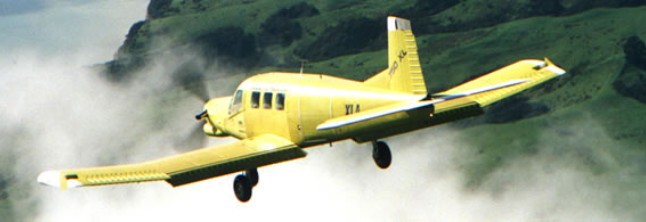
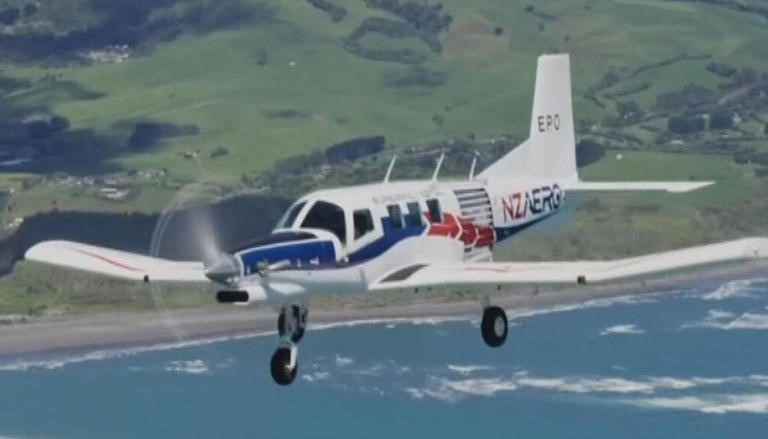
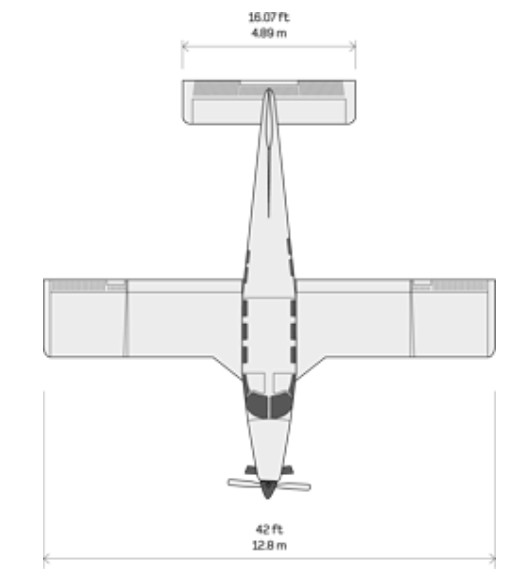
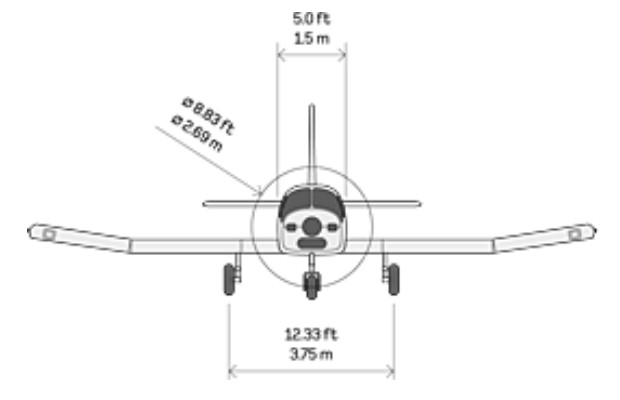
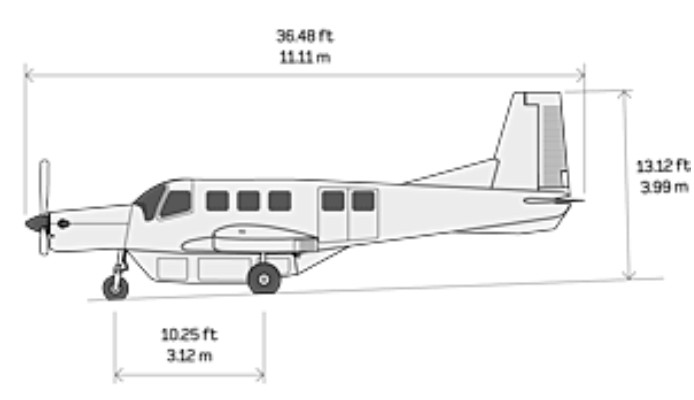
750XL / XLSTOL 750
Engine: Pratt & Whitney PT6-34 turboprop, 750 hp
Gross Wing Area: 305.00 sq. ft / 28.34 sq.m
Nett Wing Area: 267.80 sq.ft / 24.88 sq.m
Basic empty weight (Standard IFR): 3,300 lb / 1,497 kg
Max. Ramp Weight: 7,540 lb / 3,420 kg
Max. Take-Off Weight: 7,500 lb / 3,402 kg
Max. Landing Weight: 7,125 lb / 3,232 kg
Max. Useful Load: 4,200 lb / 1,905 kg
C of G range: 102.8 to 124.6 inches aft of datum
Never Exceed Speed (Vne): 170 Knots / 315 KPH
Design Cruising Speed (Vc): 140 Knots / 259 KPH
Max. Manoeuvring Speed (Va): 131 Knots / 243 KPH
Max. Flap Extended Speed (Vfe): 120 Knots / 222 KPH
Stall Speed (Idle Power) With Flaps Down (Vs): 58 Knots / 107 KPH
Max. Range At Opt Speed, 45 min Res 16,000 ft: 1,179 nm / 2,183 KM
Endurance At Opt Speed, 45 min Res: 8 HRS
Average Fuel Consumption: 50 US GAL/H / 192 lt/hr
Fuel Capacity, Useable: 331.8 US GAL / 1,256 lt
Take-Off Ground Roll SL, ISA: 721 ft / 220 m
Take-Off Distance To 15 M (50 FT) ISA: 1,196 ft / 364 m
Landing Ground Roll At Sea Level: 543 ft / 166 m
Landing Distance From 15 M (50 FT): 950 ft / 289 m
Max. Rate Of Climb SL MAUW: 1,067 fpm / 325 m/min
Max. Rate Of Climb at 8,000 ft MAUW: 951 fpm / 290 m/min
Climb To 12,000 ft From Brakes Release: 12 min
Max. Operating Altitude: 20,000 ft / 6,096 m
Service Ceiling (At Max. Weight): 20,000 ft / 6,096 m
Max. Positive G: +3.5 G
Max. Negative G: -1.4 G
Wing Loading: 120.07 kg/sq.m / 24.59 lb/sq.ft
Power Loading: 10.0 lb/shp / 4.5 kg/shp
Flap area: 31.74 sq.ft / 2.95 sq.m
Aileron area: 21.94 sq.ft / 2.04 sq.m
Tailplane area: 33.64 sq.ft / 3.13 sq.m
Elevator area: 27.92 sq.ft / 2.59 sq.m
Fin area: 19.40 sq.ft / 1.80 sq.m
Rudder area: 11.70 sq.ft / 1.09 sq.m