Russian Gyroplanes Gyros-1 Farmer

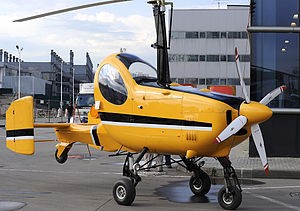
Russian Gyroplanes designed the Gyros-1 Farmer autogyro for aerial work use, including aerial application, courier, forestry patrol, search and rescue and geological survey.

It features a single main rotor, a single-seat enclosed cockpit accessed by a door, tricycle landing gear, plus a tailwheel and a 200 hp (149 kW) Eggenfellner E6 Suburu-based, automotive conversion, six cylinder, four-stroke, horizontally-opposed, liquid-cooled, gasoline engine in tractor configuration.

Russian designed and produced by Russian Gyroplanes of Zhukovsky, Moscow Oblast, the Gyros-1 is supplied complete and ready-to-fly.
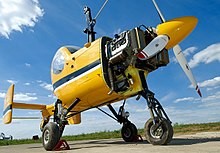
The aircraft fuselage includes a baggage compartment or application hopper between the cockpit and the nose-mounted engine. It has a two-bladed rotor and a four-bladed propeller. The aircraft also fits an optional Racket 120 single-cylinder, two-stroke auxiliary engine for running the agricultural equipment, when installed.

Gyros-1 Farmer
Powerplant: 1 × Eggenfellner E6, 150 kW (200 hp)
Aux powerplant: 1 × Racket 120, 10 kW (13 hp)
Propeller: 4-bladed ground adjustable
Empty weight: 610 kg (1,345 lb)
Gross weight: 750 kg (1,653 lb)
Useful load: 140 kg (309 lb)
Fuel capacity: 100 litres (22 imp gal; 26 US gal)
Payload w/full fuel: 68 kg (150 lb)
Cruise speed: 130 km/h (81 mph; 70 kn)
Range: 800 km (497 mi; 432 nmi)
Rate of climb: 3.1 m/s (610 ft/min)
Crew: one
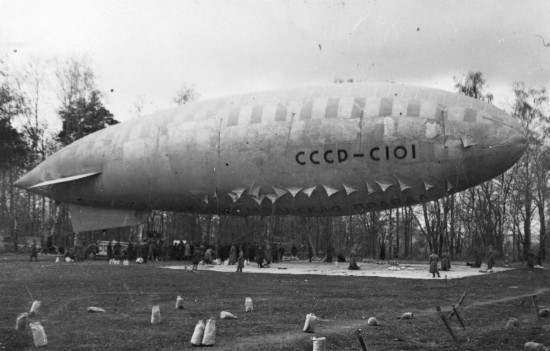
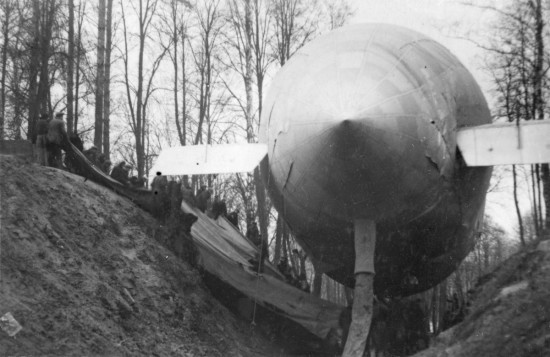
Russian Empire airship Komsomolskaya Pravda

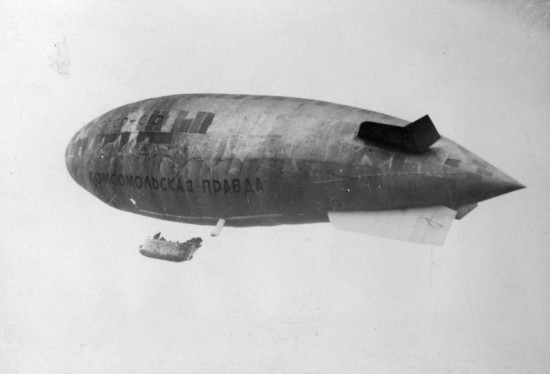
For the decade of the 1920s the Soviet state refrained from building airships. Neither the Red Army neither the Soviet Navy wished to order an airship for military purpose, nor was there interest by any civilian agency. With the decommissioning of the airship MHR the newspaper “Komsomolskaya Pravda” began raising money to build a new airship. Some 12,000 Soviet rubles were raised from Soviet and foreign donors to fund the construction. “Komsomol’skaya Pravda” — literally “Komsomol Truth” — was an official countrywide newspaper of Komsomol, the All-Union Leninist Young Communist League. The airship was named after the newspaper as its editorial board was a fundraiser for her construction and the majority of donations were received from the Komsomol members.

Work on its production were conducted by the students of the aeromechanical High School, under N. Fomin. The new airship was named the “Komsomolskaya Pravda”.

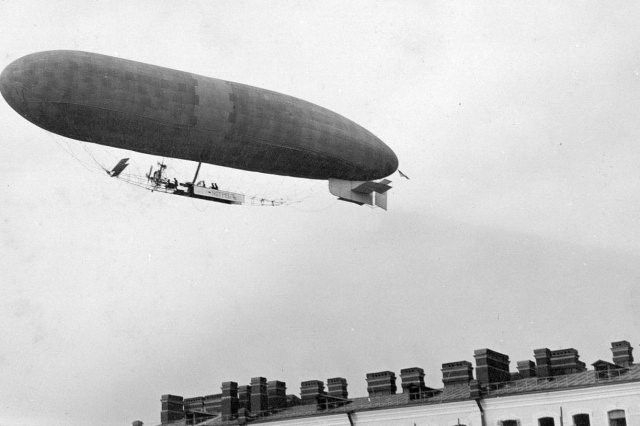
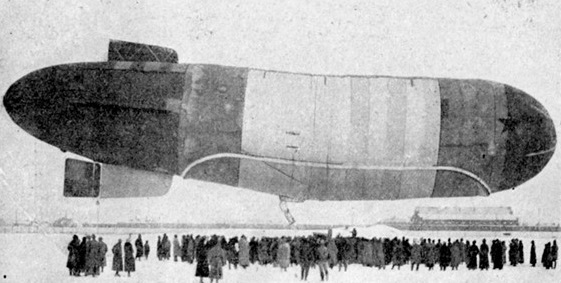
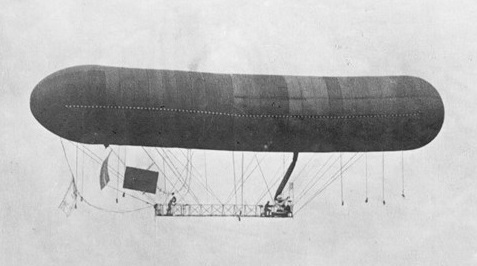
Komsomol’skaya Pravda was a simple non-rigid airship with a volume of 2500 cubic meters of hydrogen and a length of 46 meters. The ship carried one 185 hp BMW aircraft engine. The envelope was made of the fabric remaining from old Russian WWI observation balloons of the Parseval type, and a metal open car was rope-hanged beneath the envelope.

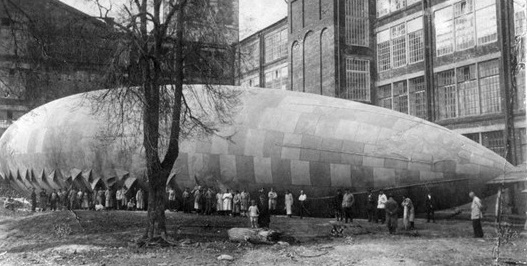
As there were no airship hangars around Moscow at the time, the Komsomolskaya Pravda’s units were fabricated in a former church building. The entire airship was finally assembled and filled with gas outdoor in a natural trough. The same place was used as a mooring in 1930 and 1931.

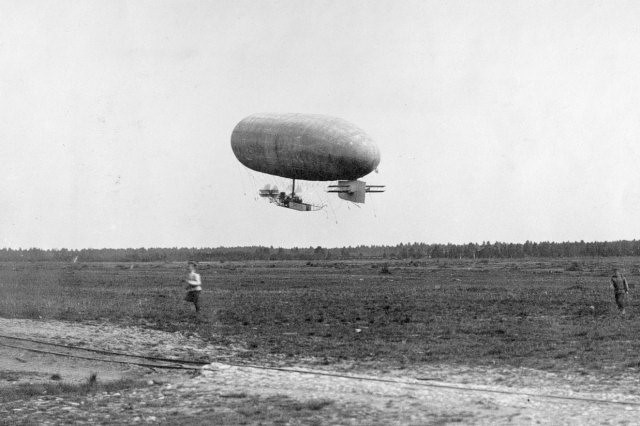
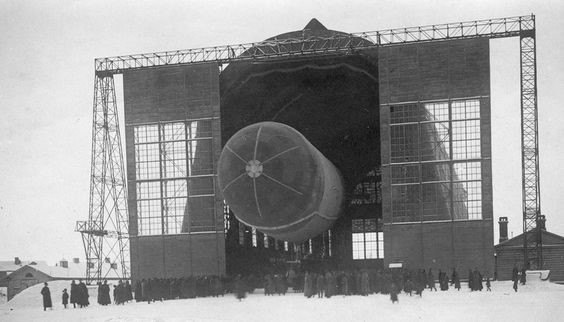
On July 25, 1930 the airship was filled with gas and on 29 August 1930, near Moscow, the Soviet airship “Komsomolskaya Pravda” (Комсомольская Правда) took off for her maiden flight. After a one-hour flight over Moscow she successfully landed.

Komsomolskaya Pravda’s first test flight.

The commander of the ship became E.M. Oppman and on 31 August 1930 “Komsomolskaya Pravda” flew over Moscow. In 1930 they made 30 flights, and the next year another 25.

Komsomolskaya Pravda was used as a training airship by aeronautics students as well as for propaganda flights. During 1930 and 1931, Komsomolskaya Pravda made 55 flights and covered 3555 km. She was sent for total reconstruction because of deterioration in 1932.

Komsomolskaya Pravda, 1930

In 1934, Komsomolskaya Pravda burnt after being struck with a lightning in the boathouse where it was kept together with its modernized versions.

Russian Empire airship Moscow chemist rezinschik / MHR

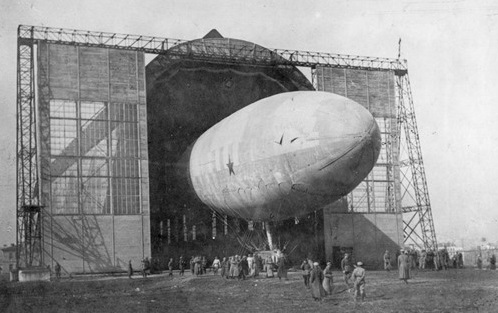
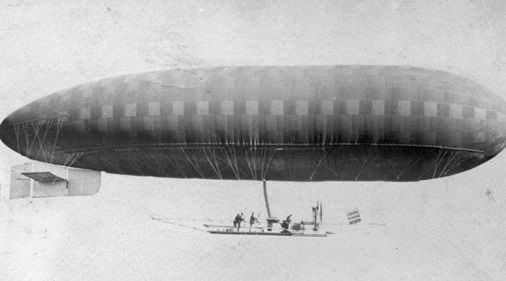
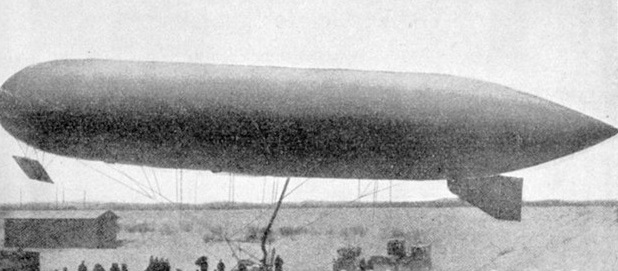
In the autumn of 1924 Vozduhsektsiyu Osoaviahima USSR completed the construction of another Myagenko airship named “Moscow chemist rezinschik” (MHR) under N. Fomin. It was made by voluntary contributions of chemical industry workers in and around Moscow.

The first flight of the airship was made On June 16, 1925, under the control of VL Nizhevskogo, in the air for 2 hours 5 minutes.

Flying from Leningrad to Moscow, it was mistakingly shot down by guards of a military factory in Tver.

Moskovsky Khimik-rezinschik airship, Gatchina, the Leningrad Region, 1928.

After its reconstruction, it had another crash and was disassembled.

This airship was operated until 1928, upgraded a couple of times and rebuilt. In total “Moscow chemist rezinschik” made 21 flights totaling 43 hours and 29 minutes.

Engine: 77 kW
Envelope volume: 2,458 cu.m
Length: 45.4 m
Width: 10.3 m
Maximum speed: 62 km / h
Payload: 900 kg

Russian Empire airship Hawk / Yastreb

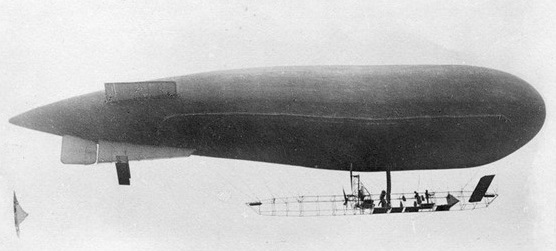
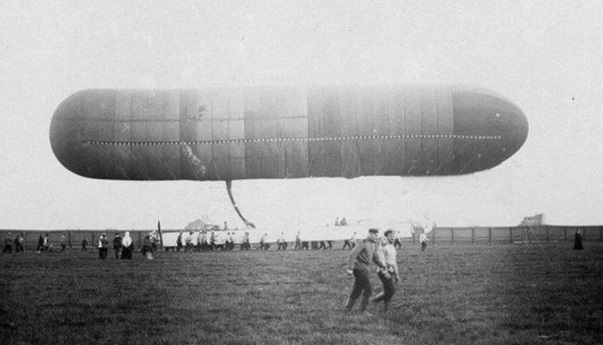
The dirigible “Hawk” (“Yastreb”), designed by A.I. Shabskiy, was constructed in Russia in 1910 in Moscow by “Dooks” Ltd.

At some point there were alterations. Differences include no annular insert in the shell, and a slightly different design of the stabilizer.

Before WW1 in Russia there were 3 small non-rigid dirigible including the 1910 Jastreb (Hawk). These ships had arms, but were out-of-date. Their ceiling and speed did not meet the requirements, for a military dirigible. They were used for training.

Volume: 2,700 cu.m
Length: 46 m
Width: 10 m
Max speed: 47 km/h
Engine: 1 x 63 hp

Russian Empire airship VI Oktyabr

Designed by General Nobile, the second Russian airship was “VI October”, which was built of makeshift materials in 1923 by students of higher forces aeronautical school located in St. Petersburg. The envelope of 1,700 cubic meters was sewn from old tethered balloons. The total length of the airship was 39.2 m and width 8,2 m. The engine was 77 kW.

The first flight of the airship was on November 27, 1923, lasting for about 30 minutes. A second flight, on 29 November lasted 1 hour and 20 minutes and reached a height of 900 meters. After that flying was stopped because of the very high gas permeability of the membrane.

Russian Empire airship Forsman

The airship “Forsman” was purchased in Sweden by order of the Russian military. This airship was the smallest in the world. Planned acquisition was for a series of small airships for the intelligence service in the Russian army.

It is unclear if the airship was delivered in Russia. Due to the small volume of the airship there was no gondola, but a board for the pilot’s seat and mechanics. The 28 hp motor weight was 38 kg.

Engine: 28 hp
Length: 36 m
Width: 6 m
Envelope volume: 800 cu.m
Maximum speed: 43 kph

Russian Empire airship Training / Uchebnyi

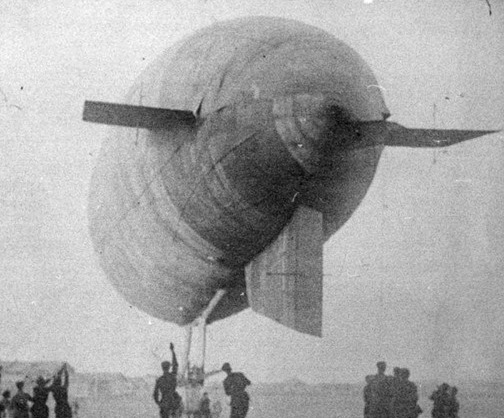
Built in 1908 in Russia the very first Russian airship titled “Training.” The shell was made from two old “Parseval” airships.

This machine was a test board for airship design and operation. “Training” had a solid rate of climb, overtaking the characteristics of the “Zeppelin” and very often used for training crews.

The non-rigid airship was demolished in 1909 due to the dilapidated shell.

Length: 60 m
Width: 6.55 m
Envelope volume: 1200 cu.m (later 1500 cu.m)
Maximum speed: 21 km / h
Engine: 1 x 16 hp (later 25 hp)

Russell Comet

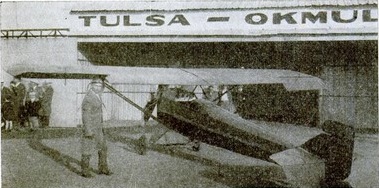
In 1930 Jack Russell of Oklahoma built a high-wing monoplane, designed for beginners, named Comet.

All fuselage members are welded steel tubing, including the tail group. The wing is of spruce.

A speed test over 78 miles took 38 minutes, using 1 USG and 3 qts of fuel and less than a pint of oil.

The 1930 price of the Comet was $1750 with 35 hp engine, and $1000 without motor.

Engine: 35 hp
Wing span: 24 ft
Wing chord: 5 ft
Length: 21 ft
Empty weight: 407 lb
Fuel capacity: 12 USG
Oil capacity: 2 USG
ROC: 700 fpm
Top speed: 100 mph
Landing speed: 24-26 mph
Landing distance: 100 ft
Endurance: 4 hr 30 min

Russell Light Monoplane

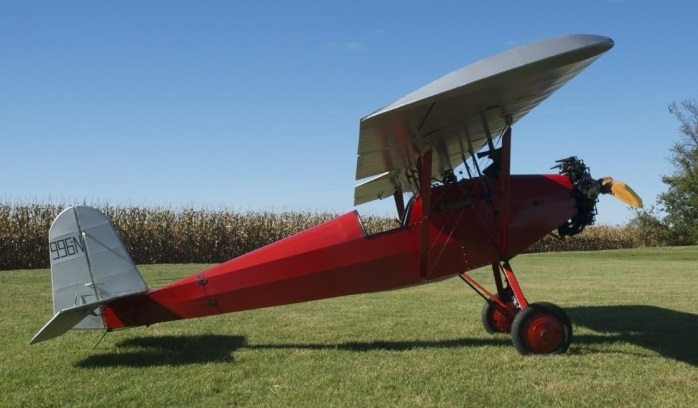
Salmson powered Russell

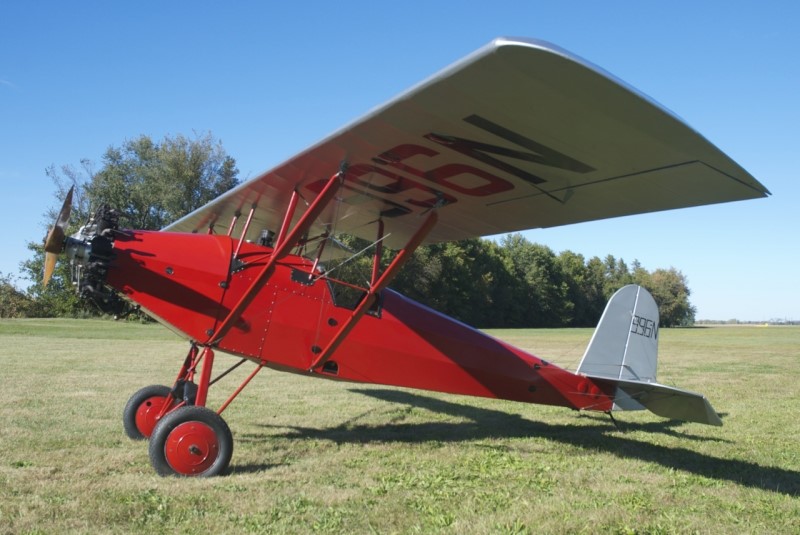
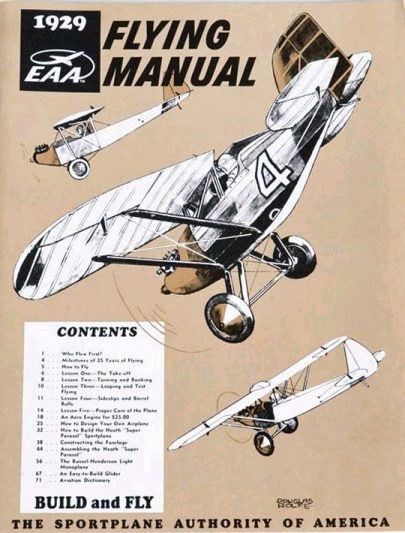
The Russell Light Monoplane is a plans-built design dating to 1929, when the plans could be obtained through Flying & Glider Manual, The Sportplane Authority of America and other publications.

Salmson powered Russell

It was intended to use a converted 4-cylinder Henderson motorcycle engine for power and built of wood with wire bracing. Covered with fabric, the Russell was relatively easy and inexpensive to build though it was never intended for tall people to fly it as it is really small.

1929 Flying & Glider Manual. The Russell-Henderson Light Monoplane is shown lower right on the cover.
Salmson powered Russell