Rutan 27 / 32 VariViggen

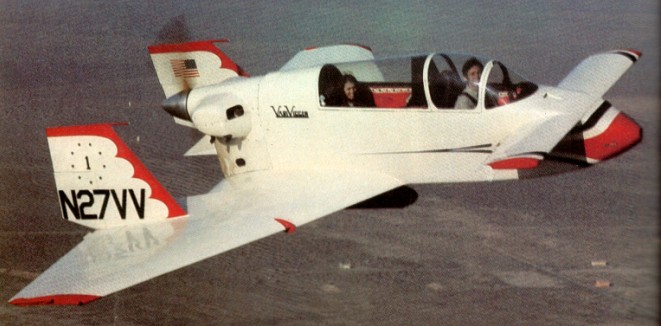
In 1968 Rutan began the design of his Model 27, which first flew on 27 February 1972 and then became the VariViggen canard lightplane for the homebuilder market. The VariViggen is a tandem two- or four-seat lightplane of canard layout with a cropped delta main wing, and the 150 hp (112 kW) of its Avco Lycoming 0-320-A2A flat-four piston engine provides a sea-level maximum speed of 163 mph (262 km/h) at a maximum take-off weight of 1700 lb (771 kg), together with a range of 400 miles (644 km) on 35 US gal (132 litres) of fuel. The VariViggen is an application of the low speed aerodynamics of the Viggen ca-nard arrangement, with various changes, to a general aviation purpose: a tandem two seat pusher with a 150 hp Lycoming engine and a fixed pitch wood propeller. It is an old proj¬ect; Rutan started developing the configura¬tion when he was still at Cal Poly. He tested models on a “car top wind tunnel” of his own invention, flew Styrofoam gliders and an 18¬percent scale, radio controlled model to in¬vestigate his design’s flying qualities and fi¬nally completed the full size prototype at Lan¬caster, California. It flew almost exactly as his scale tests had predicted it would.

Optimized for low-¬speed maneuverability, it is not a particularly fast airplane 130 knots cruise on 113 hp ¬and its climb performance is only just ade¬quate, because its low aspect ratio lifting sur¬faces produce a lot of drag at high lift coeffi¬cients. What makes the VariViggen unique is its low speed handling, in which it has little in common with conventional airplanes.

On the face of it, it appears that what makes the VariViggen a slow climber and mediocre cruiser is simply its short span. The canard, which is only eight feet across, car¬ries a quarter of the airplane’s weight while the main wing, carrying the rest, has a span of 19 feet. The aspect ratios of the fore and main-planes are 3.5 and three, respectively. The wing loading is 14.3 lb/sq.ft. and the power loading is 11.31 lb/hp. The weighted average of spans (weighted in proportion to surface loading) is only 16.25 ft. giving a linear span loading of more than 100 lb/ft.

The VariViggen is not stressed for aero¬batics in the RA’s limited definition of the term. The limit load factor is five. The air¬plane will roll nicely, Rutan says, but is too draggy for high G maneuvers like loops and is characteristically incapable of snapping or spinning.

Its cruising range is short: 326 nm, with no reserve on internal tankage. The cockpit is reasonably comforta¬ble (25 inches wide and amply long and high) and its noise level is moderate, at least partly thanks to the wooden structure and the placement of the engine and prop at the rear. There is a large baggage compartment be¬hind the back seat with a 180 pound capacity.

Approach and landing are quite conven¬tional, until the time comes to flare; then the airplane seems to give itself over completely to ground effect and to want to go on gliding forever, unless you simply drive it down onto the runway. Rutan is able to achieve remark¬able accuracy in his landings, and he wins all the spot landing contests he enters, because he can maneuver widely on final approach in order to position himself and can also land at any of a variety of speeds. The brakes are very powerful; Rutan gives the landing roll as 400 feet.

The VariViggen’s low speed maneuvera¬bility is of limited usefulness in everyday transportation flying as is obvious from the fact that most airplanes don’t have it, and one hardly even notices the lack. A gusty crosswind during landing is about the only normal circumstance in which low speed ma¬neuverability comes in handy; here the Vari¬Viggen’s high roll rate at low speed and its ability to turn and sidestep sharply give it the advantage over a conventional airplane.

The Model 27 version of the VariViggen proved incapable of stalling or spinning in the conventional sense of the words, though the stall was restored in the Model 32 version with revised outer wing panels (of urethane foam/unidirectional glassfibre rather than aluminium alloy construction) for higher performance.

The VariEze had well over 4000 sets of plans sold and in various stages of construction; some 400 are already flying in 1980.

Variants:
Microstar Variviggen

Gross Wt. 1700 lb
Empty Wt. 950 lb
Fuel capacity 25 USG
Wingspan 19’
Length 19’
Engine 150-hp Lycoming
Top speed 160 mph
Cruise 150 mph @ 7000 ft
Stall. 53 mph
Climb rate 800 fpm
Takeoff run 800 ft
Landing roll 500 ft
Range 400 sm
Russo-Baltic Waggon Works Sikorsky S-20

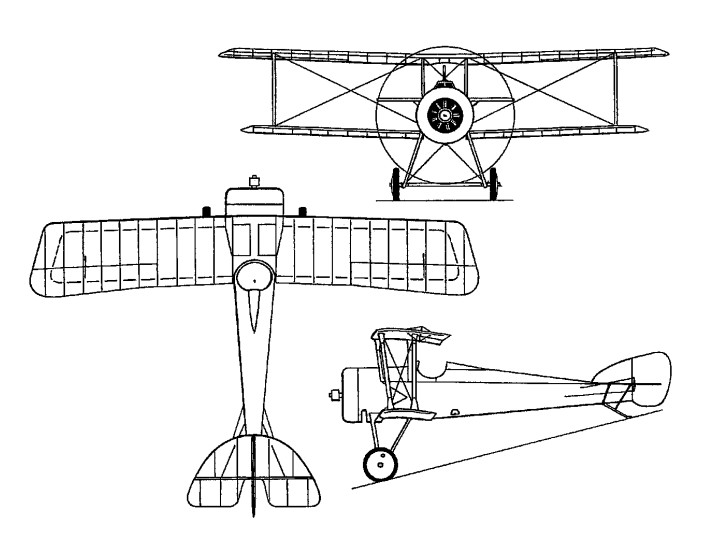
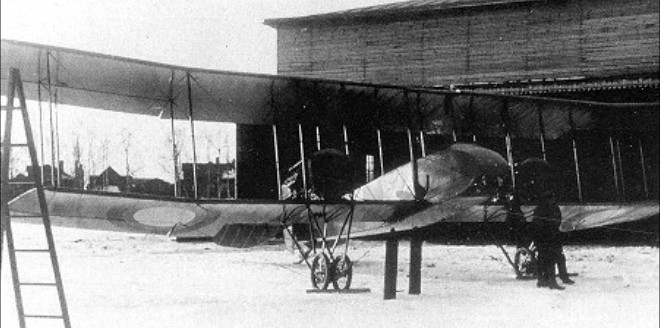
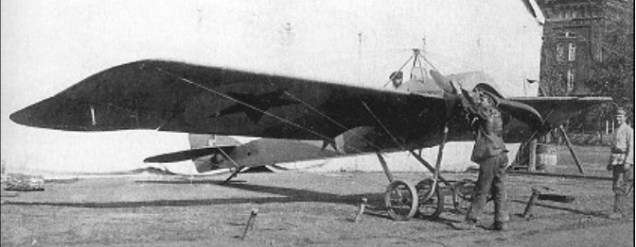
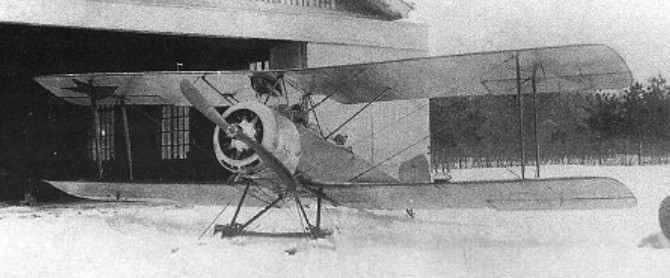
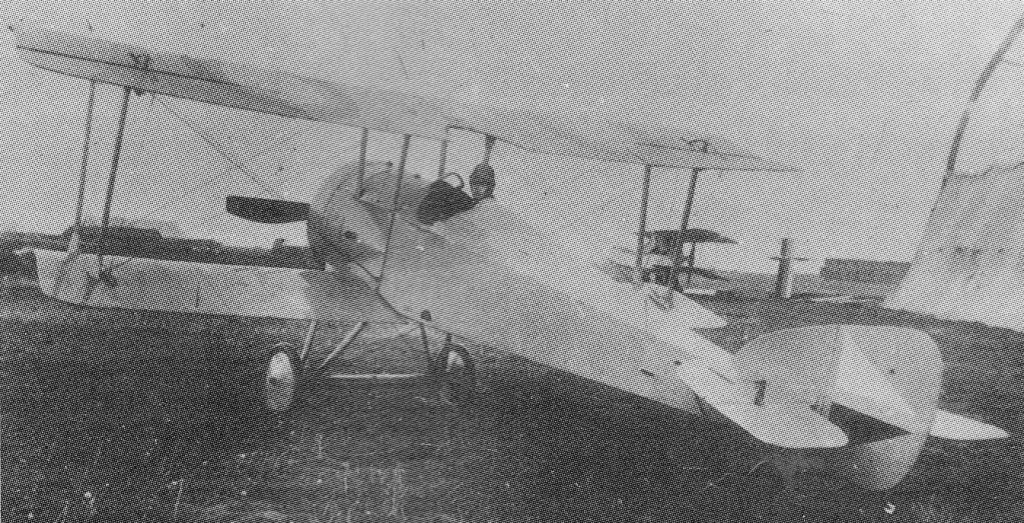
The last of the RBVZ’s First World War fighters, the S-20, embodied lessons learned from licence manufacture of the French Nieuport 17. The production version, with a 120hp Le Rhone engine, was said by its pilots to be faster than the Nieuport, with a top speed of 190km/h; but only five were ordered, leaving the RBVZ free to concentrate on production of its Ilya Mourometz bombers.

S-20 near Vinnitza in 1917

Russo-Baltic Waggon Works Sikorsky S-16

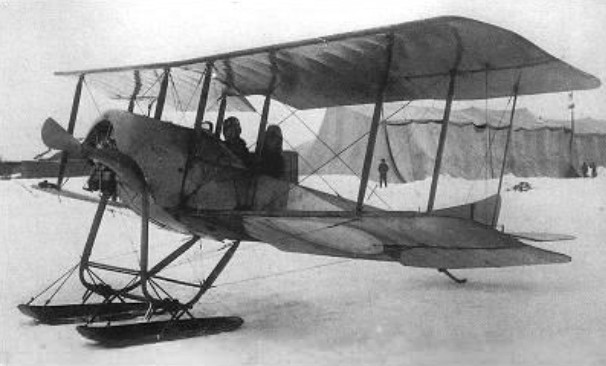
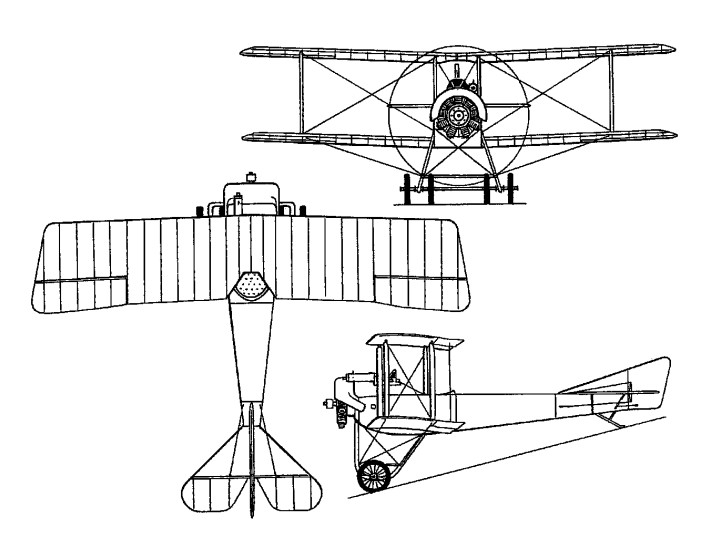
During the First World War most Russian squadrons flew French-designed aircraft, many of them built under licence. Sikorsky’s single-seat S-13 and S-14 biplanes were probably not completed. Three two-seat S-16s were built as trainers for bomber crews of the Squadron of Flying Ships in 1915, followed by about twenty-four more as two-seat S-16-2 and single-seat S-16-3 bomber escort and reconnaissance scouts with 80hp Gnome engines in 1916-17. A machine-gun was mounted under the top wing, firing clear of the propeller, until Engineer Lavrov invented an interrupter gear for a fuselage-mounted gun.

For winter operation, a number of S-16s were flown on skis in place of the standard four-wheel landing gear; at least one was fitted with twin floats in 1916. Contemporary accounts show that pilots enjoyed the stability, manoeuvrability and delicate controls of the S-16s, but they were outclassed by German fighters of the time.

Sikorsky S-16

Russo-Baltic Waggon Works Sikorsky S-12

The S-12 was built at the suggestion of George Yankovsky as a lighter, single-seat version of the S-11 with an 80hp Gnome. He looped it in September 1913, the first time a Russian aircraft had performed this manoeuvre, and set a Russian height record of 3680m shortly afterwards. Most of the dozen or so S-11s that were built survived the war, and served in the earliest Soviet Air Force units during the Revolution. Several were still operational in 1922, mostly with an 80hp Le Rhone engine.

Russo-Baltic Waggon Works Sikorsky S-11 Pulukrugliy

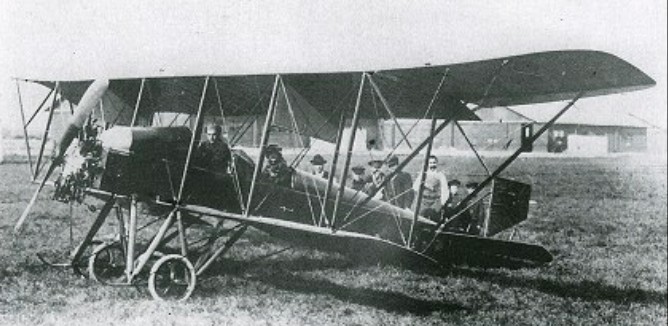
Developed from the larger and heavier S-9, the 1913 S-11 Polukroogly (half-round) had a conventional wooden fuselage and 100hp Gnome Monosoupape engine. It was initially equipped with ailerons that were operated by steel tubes inside the wing. Trials revealed that they were not efficient, so they were replaced by wing warping. The pilot and observer sat side-by-side, with controls only for the left seat. A top speed of 100km/h, stalling speed of 70km/h and take-off run of 75m were good enough to gain the S-11 second place in the 1913 military competition for a reconnaissance aircraft; but it was not ordered into production.

1913 Sikorsky S -11 “Pulukrugliy” (Half-Round)

Span: 38’1″
Length: 23′
Loaded Weight: 2215 lb
Speed: 63 mph

Russo-Baltic Waggon Works Sikorsky S-6 / S-10

Sikorsky S-6

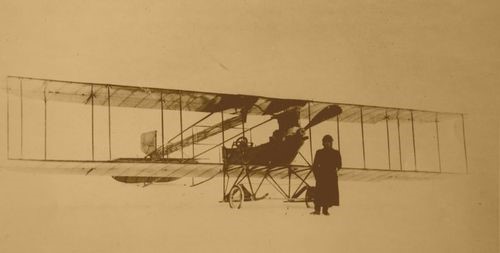
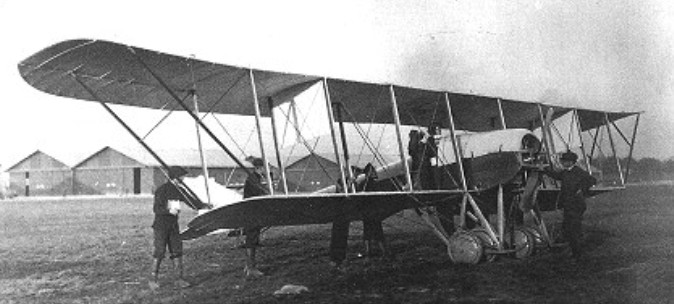
Constructed in Kiev, this 100 hp Argus-powered biplane was used by Igor Sikorsky to set new Russian flight records in November 1911, even setting a world-record with his design – a distance record with two passengers.

S-6A
S-10

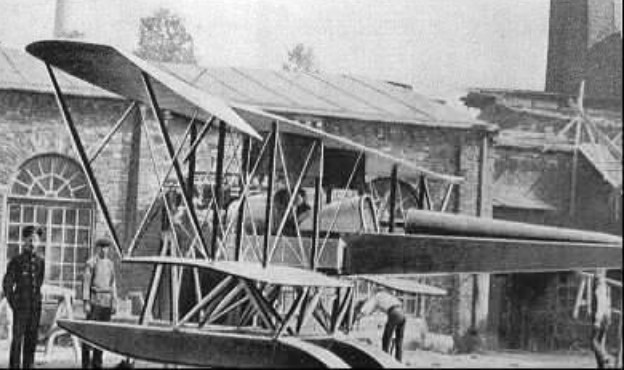
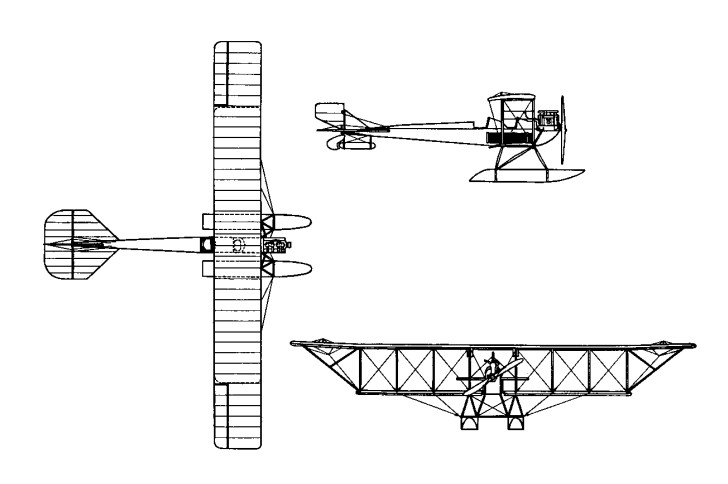
Under the designation S-10, about sixteen production versions of the S-6B were built by the RBVZ. The majority were delivered as twin-float seaplanes for service with the Baltic Fleet, from the summer of 1913 to 1915, with 100hp Argus or Gnome Monosoupape engines. Some were deployed on the world’s first operational seaplane carriers.

S-10

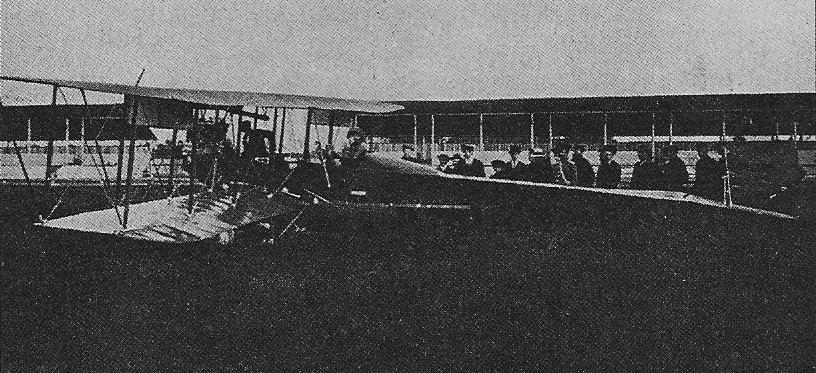
A special Competition S-10 landplane, with 80hp Gnome engine, was built for the 1913 military aircraft competition. The wing span was increased to 16.75m, with outer panels that could be folded for storage. The two seats were placed side-by-side, and the control wheel could be swung from pilot to co-pilot during flight. Production test pilot Alechnovich set a Russian record by flying it 500km in 4 hours 56 minutes, and it took first prize in the 1913 competition although it lacked the speed and manoeuvrability of the S-6B. After its span had been reduced to 13.70m and a 100hp Monosoupape installed, it served as a trainer with the Baltic Fleet.

S-10

The S-10A’s span of 13.7m and two seats in tandem set the standard for all S-10 seaplanes, and its 125hp (de-rated to l00hp) Anzani engine gave it better speed and rate of climb than the Competition S-10. Its flying characteristics were less good, preventing it from gaining first prize, but it set a new Russian height record of 3420m, piloted by Gleb Alechnovich. Modified to have a 100hp Monosoupape and floats, it was assigned to the Baltic Fleet.

Gallery

Engine: 1 x 100hp Argus
Wingspan: 16.9 m / 55 ft 5 in
Length: 8.0 m / 26 ft 3 in
Height: 4.1 m / 13 ft 5 in
Wing area: 45.0 sq.m / 484.38 sq ft
Max. speed: 90 km/h / 56 mph

S-10
Span: top 55’5″ bottom: 39’4″
Length: 26’3″
Loaded Weight: 2227 lb
Speed: 62 mph

S-10A
Span: 45′
Length: 34’6″
Speed: 56 mph

S-10

Russian Gyroplanes Gyros-2 Smartflier

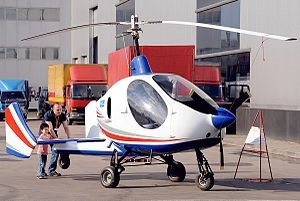
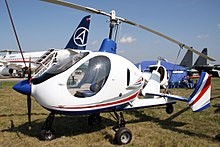
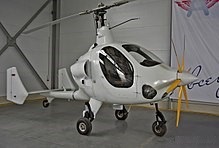
The Russian Gyroplanes Gyros-2 Smartflier autogyro was designed for a variety of roles, including aerial application, courier, forestry patrol, search and rescue, geological survey, air taxi and flight training. It features a single main rotor, a two seats in side-by-side configuration enclosed cockpit accessed by doors, tricycle landing gear, plus a tailwheel and a 200 hp (149 kW) Mistral 200 engine in tractor configuration.

Gyros-2 Smartflier

Russian designed and produced by Russian Gyroplanes of Zhukovsky, Moscow Oblast, the aircraft is supplied complete and ready-to-fly.

The autogyro has a two-bladed rotor and a three or six-bladed tractor propeller. The autogyro also fits an optional Racket 120 single-cylinder, two-stroke auxiliary engine for running the agricultural equipment, when it is installed.

Gyros-2 Smartflier with six-bladed propeller

Gyros-2
Powerplant: 1 × Mistral 200 gasoline engine, 150 kW (200 hp)
Aux powerplant: 1 × Racket 120, 10 kW (13 hp)
Propeller: 3-bladed ground adjustable
Empty weight: 610 kg (1,345 lb)
Gross weight: 750 kg (1,653 lb)
Fuel capacity: 100 litres (22 imp gal; 26 US gal)
Useful load: 140 kg (309 lb)
Payload w/ full fuel: 68 kg (150 lb)
Cruise speed: 130 km/h (81 mph; 70 kn)
Range: 800 km (497 mi; 432 nmi)
Rate of climb: 3.1 m/s (610 ft/min)
Crew: one
Capacity: one passenger