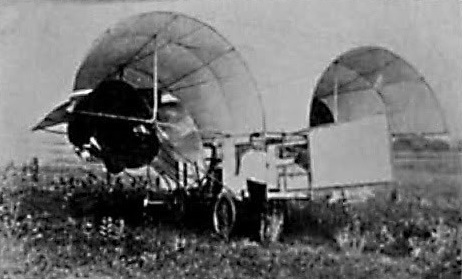
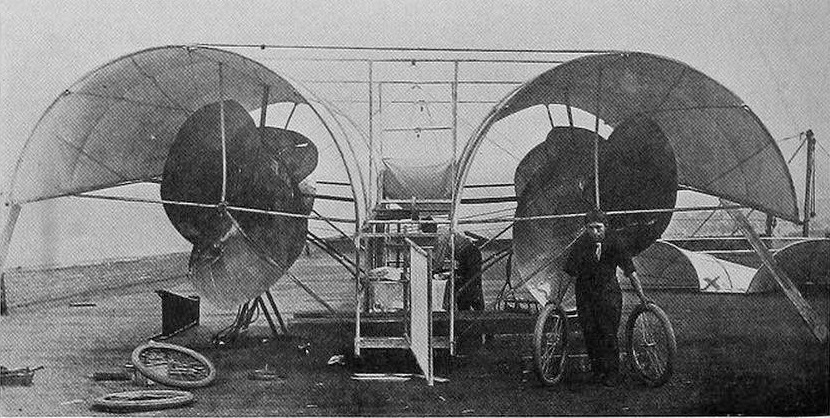
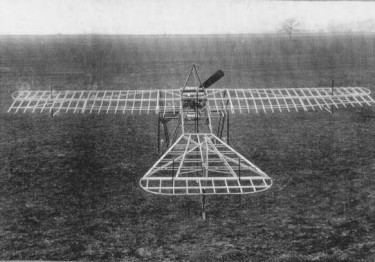
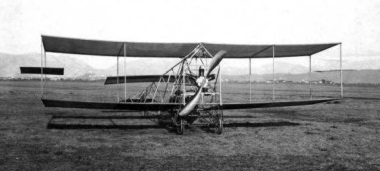
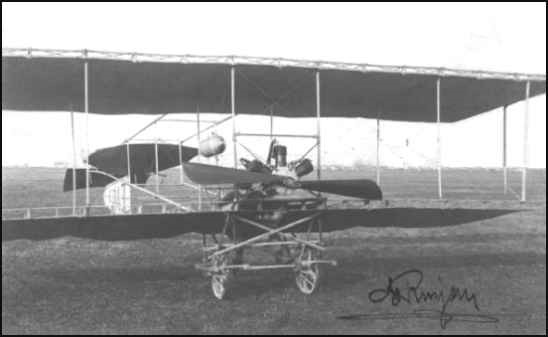
The Fritz Russ Flyer of 1910 was an American flying machine with wings in the form of half cylinders and immense helical spirals, or screws, set within them.
Aircraft” – October 1910 – page 296 “The Johnstown Aero Company, of Johnstown, Pa., have purchased the patent rights of the Fritz Russ flyer and are building men-carrying machines of that type. The ship is of novel design, being 39 feet long and 22 feet wide in rear and tapering to a point in front like a boy’s dart. It is constructed throughout of seamless steel tubing and is fitted with an Elbridge engine driving four spiral screw propellers.”
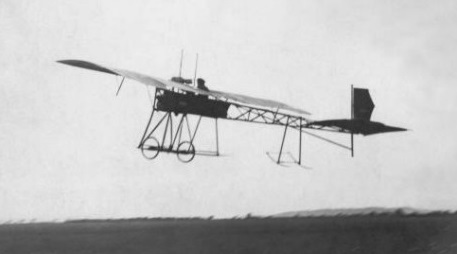
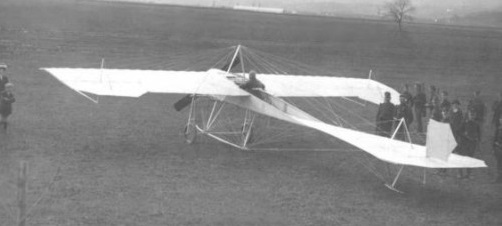
EDA VII was a monoplane with a small second wing, with which from August to the end of 1910, flew successfully several times.
With its construction, in the summer of 1910, the brothers Rusjan exhaust all their financial possibilities. Their savings and those of the father Franc were gone. They sort finance in France, Austria and Hungary but with little success.
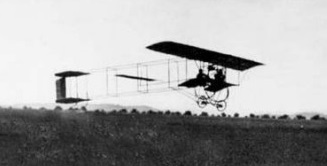
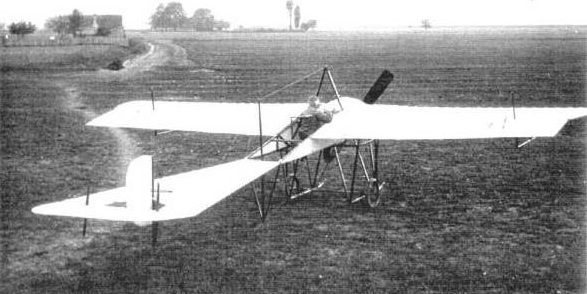
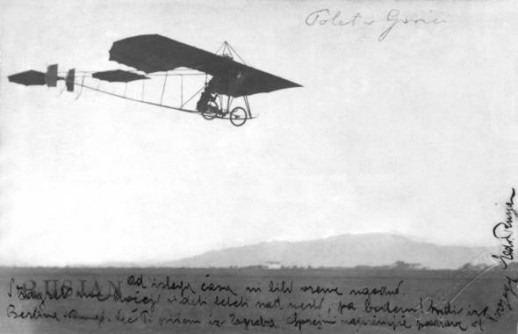
The EDA VI over Merna field, flying at an altitude of 40 meters. It was one of the best prototype
In the summer of 1910, a new and important phase of the Rusjan work began. During one of bicycle racing, events in Gorizia, Edvard and Josiph met Mihailo Mercep, an aviation enthusiast from Zagreb. The three agreed to a joint venture to built a new airplane and later make public flights and participate in air races. In August 1910, they went to Paris and bought the best 50-horsepower Gnome rotary engine available. They began work on the new airplane by the end of the month. They named the monoplane Mercep-Rusjan.
With enough financing and having a powerful enough engine, Edvard and Josiph had the opportunity to build an airplane that would achieve top performance. The airplane had a span of 14 meters. The framework was built of firewood and covered with rubber-treated fabrics. Controls for pitch and roll were moved by means of straps attached to the pilot’s body, a unique technique for keeping the hands free.
Built by the Rusjan brothers at the workshops of Mihajlo Merćep in Zagreb, construction of the airplane was completed in November 1910 and flight tests began. The prototype takes off in 28 meters (world record). Early in the program, Edvard reached altitudes of 100 meters. During a public demonstration, he made several successful flights that thrilled the Zagreb citizens. Spectators carried Edvard on their shoulders and honored him with eight-leaf wreaths, a high Yugoslavian honor.
After their successful flight demonstration with the Mercep-Rusjan, and in accord with the custom of the time, Edvard and Mercep organized a tour of European cities, the first stop being Belgrade.
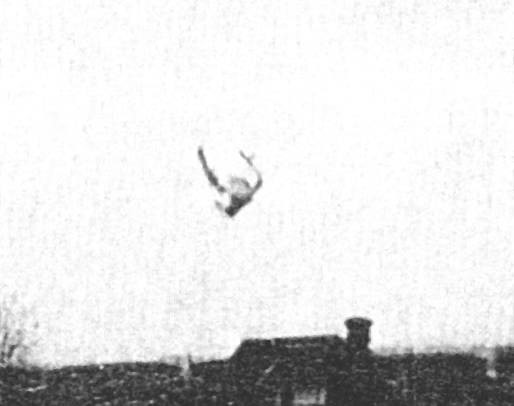
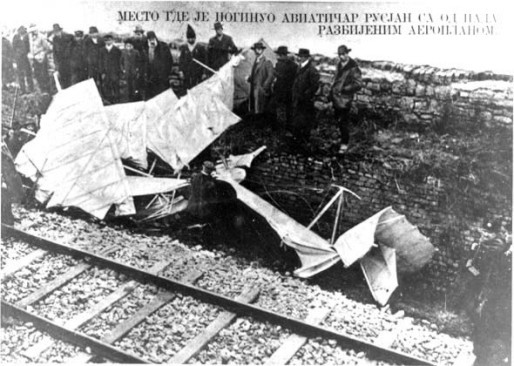
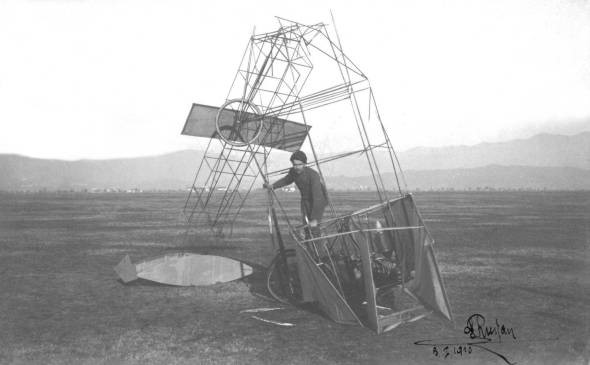
The first Serbian air meeting, which was organised on 9 January 1911, was fatal for Rusjan. In impossible weather conditions, Edvard demonstrated courageous flying to the Belgrade crowds, who had not until then seen such a thing. His takeoff and flight over the town and a railway bridge over the Sava River were uneventful but when he flew close to the Kalemegdan fortress, just before landing a strong gust of wind tore off the wing of his aircraft, at an approximate height of 20 meters.
The accident was fatal, Eduardo died on the way to the hospital, and at 25 years old he became the first victim of flying in Serbia and the 34th victim of motorised flying in the world.
Engine: Gnome 50 hp Wingspan: 14 m Ceiling: 400 m Take-off run: 28 m Landing run: 60-70 m
Since Rusjan could not realise the planned development of aircraft to commercial production in Slovene circumstances, in the middle of 1910 he concluded a partnership with the Serb, Mihailo Mercep, a well-known Zagreb photographer and cyclist, who planned the production of aircraft for the market. So the Mercep-Rusjan monoplane (a supplemented variant of EDA VI) was created in the first aircraft factory in Croatia, and it rose into the air after a record 28 metes flight. Edvard successfully flew over Zagreb with it at the end of 1910.
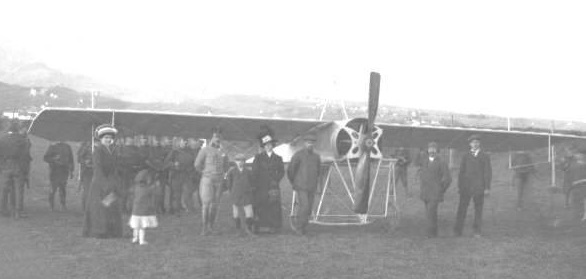
The EDA V monoplane proved the best performances.
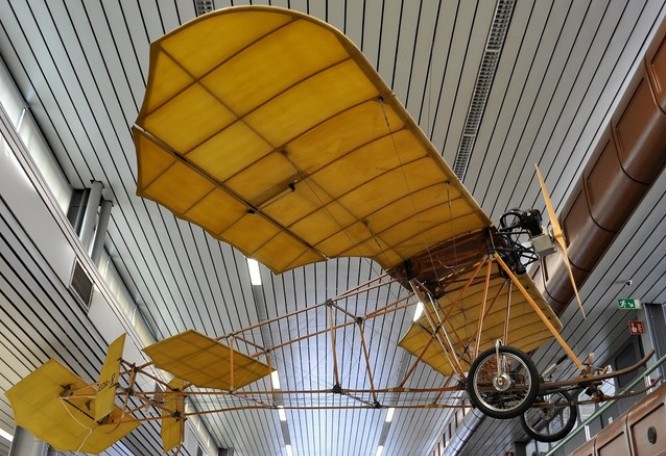
In 2000, a modern reconstruction of EDA V flew by Aidussina (Slovenia). Emil Novak was at the same time the designer and test pilot.
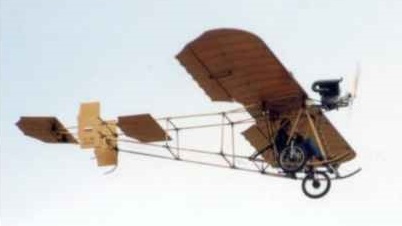
EDA V replica in flight at the Cerklje Airshow 2000
At the air meeting which was held in Cerklje ob Krki on 24 and 25 July 2000, the Slovenian President Milan Kucan baptised a copy of Edvard’s aircraft EDA V.
In September 1909, Edvard Rusjan visited an international air meeting in Brescia (Italy), where he examined the construction of the most successful aircraft and got to know the French airman, Louis Blériot. One airplane, built according to the Blériot design, made its first flight on June 25, 1910.
EDA IV was a small monoplane copy of the aircraft with which Blériot had flown the English Channel. Although he managed to fly to a height of 40 m, at a 2nd meeting in Gorica on 26 June 1910, where 10,000 viewers gathered, it did not succeed in flying.
EDA III was a biplane developed from the EDA I, with a similar flying capacity as EDA I.Edvard was able to perform maneuvers, and on March 28, 1910 made his first public flight for the citizens of Gorizia.
The brothers gained aeronautical knowledge rapidly and learned that the Anzani engine was not powerful enough for the biplane, so they decided to make only monoplanes in the future.
First in a series of new airplanes designed by the Rusjan brothers was the EDA 2 Triplane which incorporated progressive construction techniques that helped reduce its empty weight to 90 kilograms. With the EDA 2, the pair hoped to attain an altitude of 100 meters.
The triplane EDA II had the rudders beside the wings and the motor behind.
However, during the first flight on January 5, 1910, the airplane was damaged beyond repair.
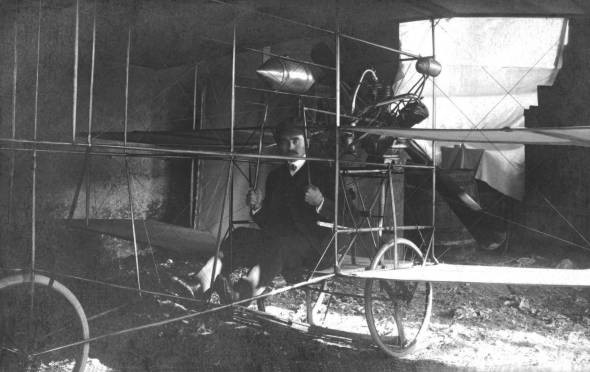
After returning to Gorica, with his brother’s help Edvard Rusjan built a motor biplane on the model of the Curtiss and Farman aircraft, which had been most successful in Brescia. In the fall of 1909, the Rusjan brothers began work on a powered airplane using a 3-cylinder, 25-horse-power. Anzani-model engine. The airplane was a canard-type biplane with paper covered wings, 8 m wingspan, with the larger part of the horizontal stabilizer forward of the wings.
Flight tests, however, fell short of expectations. By relocating the vertical stabilizer aft of the wings in what has evolved as the conventional configuration, they achieve success. On November 25, 1909, on the Mila Rojice Airfield in the neighborhood of Gorizia, Edvard made the first successful powered flight in Yugoslav Aviation history in his EDA 1 airplane.
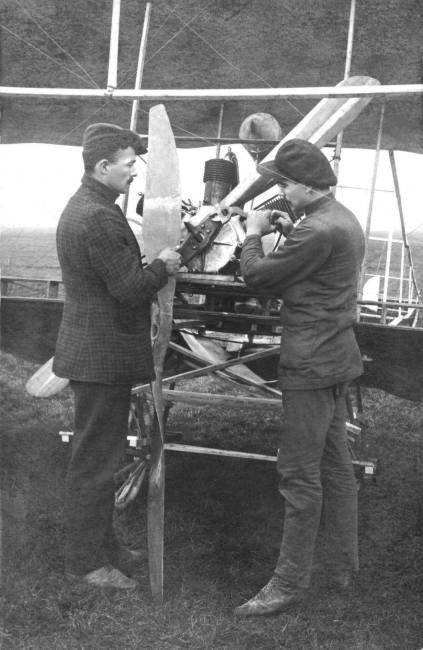
Giuseppe and Eduardo replacing the propeller of EDA I (1909)
The flight lasted about 10 seconds and Edvard traveled approximately 60 meters at a height of 2 meters. Four days later, he increased his distance to, 500 meters at a maximum altitude of 12 meters. Observers estimated that the airplane reached speeds between 50 and 60 kilometers per hours. It was a remarkable flight for Edvard – he was the first Yugoslavian to successfully fly an airplane.
After these two flights, all the Rusjan’s tests were transferred over a field called “Campagna Grande” (great meadow) by Merna.
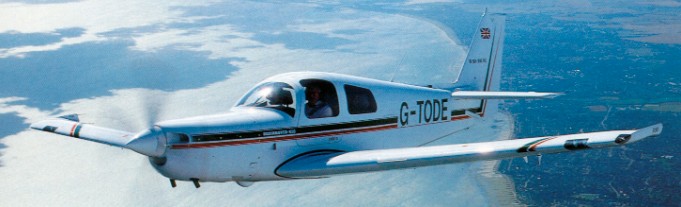
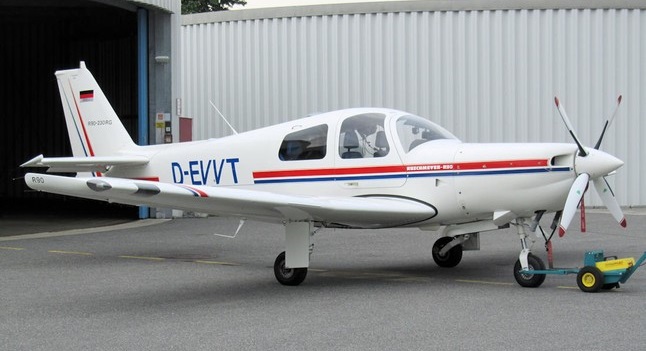
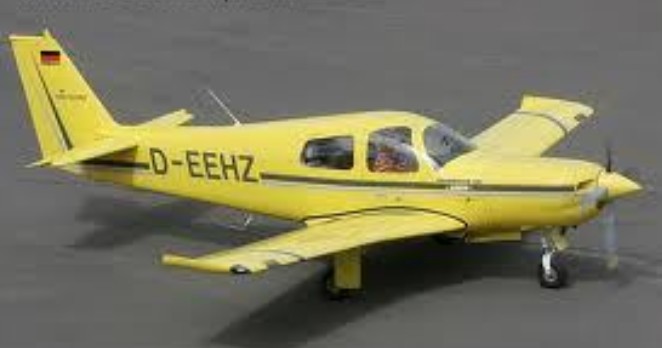
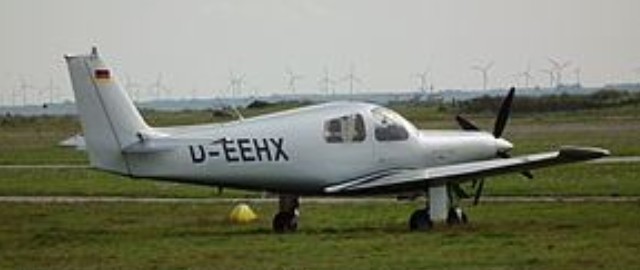
The R 90 was a new design based on the Ruschmeyer’s earlier MF85, making use of a range of modern technologies and materials. The MF85 series was powered by Porsche engines, but the unavailability of these powerplants led to the development of the Textron Lycoming powered R 90.
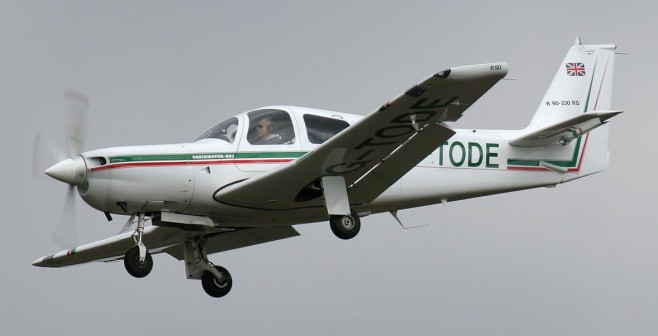
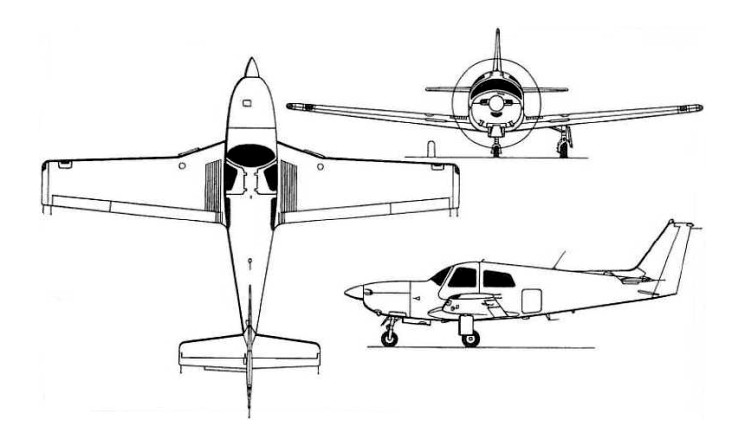
The Ruschmeyer R 90 possesses an aerodynamically clean airframe made possible by its glass fibre (with Rohacell core) construction. The advanced wing design features a `rain tolerant’ laminar flow aerofoil design, wet wing fuel tanks, upturned wingtips (for increased lateral stability, not drag reduction), small ailerons and inboard Fowler flaps.
A four-seat touring and IFR training monoplane first flown in 1991 and certificated 1992, the original R90-230 RG version with 230 hp engine and retractable undercarriage was to be joined by the R90-180 RG with a 180 hp engine and retractable undercarriage. Development of the definitive production version began in 1992 being followed by a production batch of 15 in the same year.
R-90-230RG
The initial R 90-230 RG production model was powered by a fuel injected Textron Lycoming IO540 flat six driving an advanced four blade composite construction propeller. A silencer on the engine, the four blade prop and the engine being derated to 170kW (230hp) from 195kW (260hp) combine to give low interior and exterior noise levels. Even though the engine has been derated, because of the R 90’s comparatively light structure its performance is quite strong.
All production R 90s were the high performance retractable undercarriage R 90-230 RG. This model first flew on August 8 1988 (as MF.85), with German certification awarded in June 1992.
Members of the planned R 90 family include the fixed gear, 175kW (235hp) O540J powered R 90230 FG and the fixed undercarriage 135kW (180hp) IO360 (flat rated to 150kW/200hp) powered R 90180 FG. The R 90350T RG, to be powered by a 185kW (250hp) turbocharged engine and capable of 435km/h (235kt) cruising speed, and the high performance five/six seat R 95 were also under development. An Allison 250B17 turboprop powered development, the R 90420 AT proof-of-concept model, was flown in 1993 and used only as a factory aircraft.
However Ruschmeyer was forced to file for bankruptcy in early 1996 and production has ceased. Twenty-two R 90-230 RGs were built before production ceased.
In 1999 Solaris Aviation was founded, and purchased the assets of Ruschmeyer. Solaris Aviation marketed the R90 as the Solaris Sigma.
R 90-230 RG Engine: 1 x Textron Lycoming IO-540-C4D5, 170kW (230hp) (derated from 195kW/260hp) Propeller: four blade constant speed Mühlbauer MTV-14-B composite. Wing span: 9.50m (31ft 2in) Length: 7.93m (26ft 0in) Height: 2.73m (8ft 11in) Wing area: 12.94 sq.m (139.3 sq ft). Standard empty: 898kg (1980lb) Max. takeoff weight: 1,350 kg (2,976 lb) Empty equipped: 920kg (2030lb) Fuel Capacity: 250 ltr Max takeoff: 1350kg (2976lb) Max speed: 324km/h (175kt, 200 mph) at 3,050 m (10,000 ft) Max cruising speed: 311km/h (168kt) Economical cruising speed: 267km/h (144kt) Stall speed: 108 km/h (58 knots, 67 mph) (landing configuration) Initial rate of climb: 1140ft/min / 5.8 m/s Service ceiling: 4,895 m (16,060 ft) Take Off Distance: 420 m Landing Distance: 480 m Max range with reserves: 1610km (870nm) Range: 2,740 km (1,479 nmi, 1,703 mi)(45% power at 915 m (3,000 ft)) Endurance: 7.8hr. Seating: four
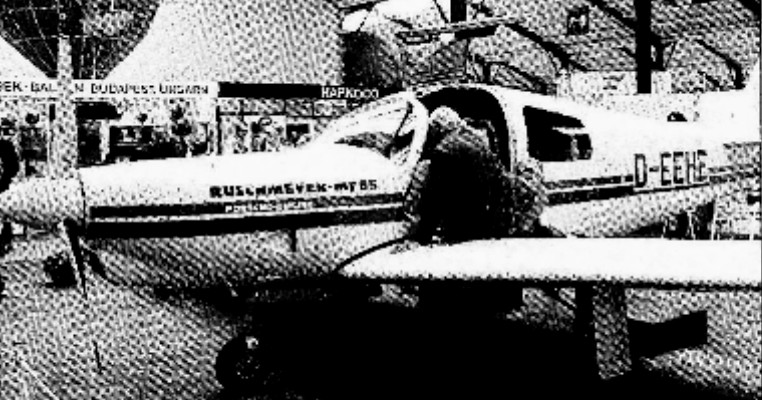
Debuted at Hannover 1987, the Ruschmeyer MF.85 prototype, D-EEHE, was built over three years by Horst Ruschmeyer’s fix based operation. The MF.85 is a composite four seat aircraft, planned to be offered with 180, 212, or 245 hp. Price was planned to be DM245,000 to DM325,000 (excluding avionics). The type could be specified as fixed undercarriage or retractable.
The prototype (V001 D-EEHE) flew with a 212 hp Porche PFM.3200N with a three bladed MTV.9 constant speed propeller engine on 8 August 1988, piloted by Horst Ruschmeyer.
V002 (D-EERO) flew on 23 September 1990, and V003 (D-EERH) on 12 February 1992.
The unavailability of the Porche PFM powerplants led to the development of the Textron Lycoming powered R 90.