Designed by Chance Vought and built by Schaap circa 1914, the Scout was a single-place open cockpit biplane powered by a 50hp Gnôme rotary engine.
1 engine
Scaramonga Flying car
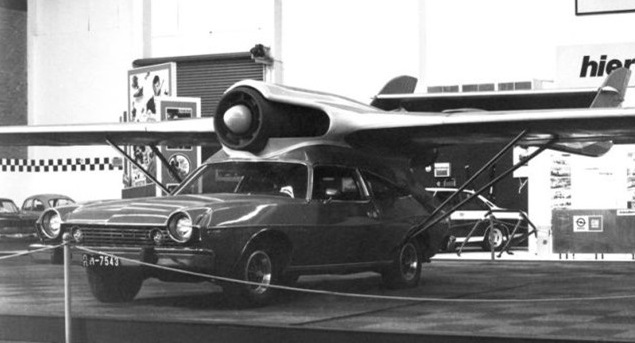
Reportedly a Mr. Scaramonga built and flew this flying car.
SCAN S.U.C.10 Courlis
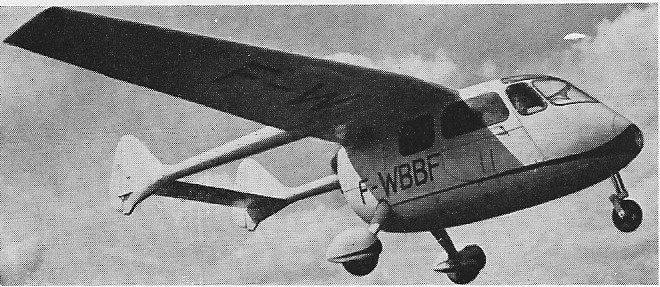
The Courlis is of all-metal construction, and the hinged entrance door allows the fitting of a stretcher or bulky freight.
First flown on 9 May 1946, the S.U.C.10 Courlis (Curlew) was manufactured by the Societe dd’Etudes et de Constuctions Aero-Navales. 135 being built.
Engine: 180 hp Mathis 8G or 175 hp Mathis 8G-40
Wingspan: 37 ft 8 in
Length: 26 ft 10 in
Height: 8 ft 9.5 in
Empty weight: 2180 lb
Loaded weight: 3386 lb
Max speed: 143 mph
Cruise: 124 mph
Service ceiling: 13,120 ft
Range: 621 mi
SCAN 20
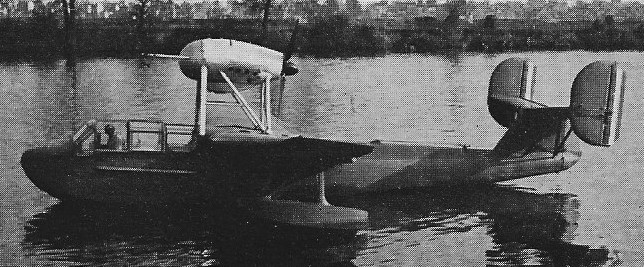
A light monoplane flying-boat designated SCAN 20, was built secretly in 1941 during the German occupation of France.
Powered by a 325 hp Bearn 6D, the SCAN 20 was fitted with dual controls. The instructor and pupil were side-by-side, with two additional seats behind.
First flying on 6 October 1945, the SCAN 20 was built by Societe de Constructions Aero Navale, with delivery of 23 to French Navy under way in 1951.
Engine: 325 hp Bearn 6D
Wingspan: 49 ft 2.5 in
Wing area: 344 sq.ft
Length: 38 ft 6 in
Height: 11 ft 10.5 in
Max loaded weight: 5511 lb
Max speed: 143 mph at 6560 ft
Cruise: 124 mph
Ceiling: 16.405 ft
Range: 621 mi
Scaled Composites 401 Son of Ares
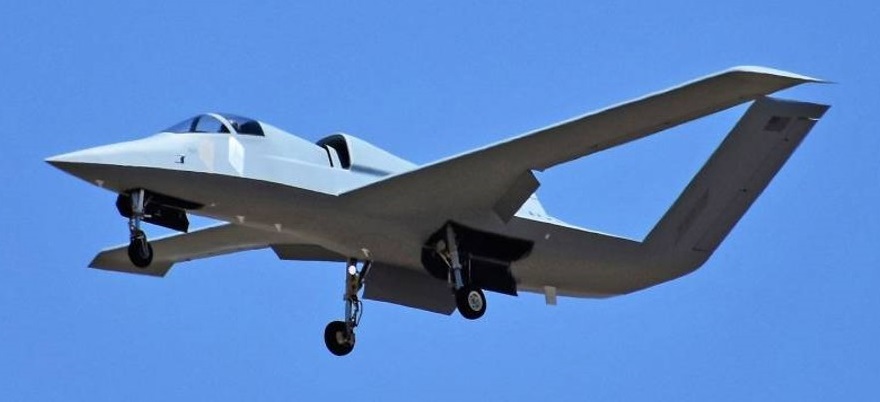
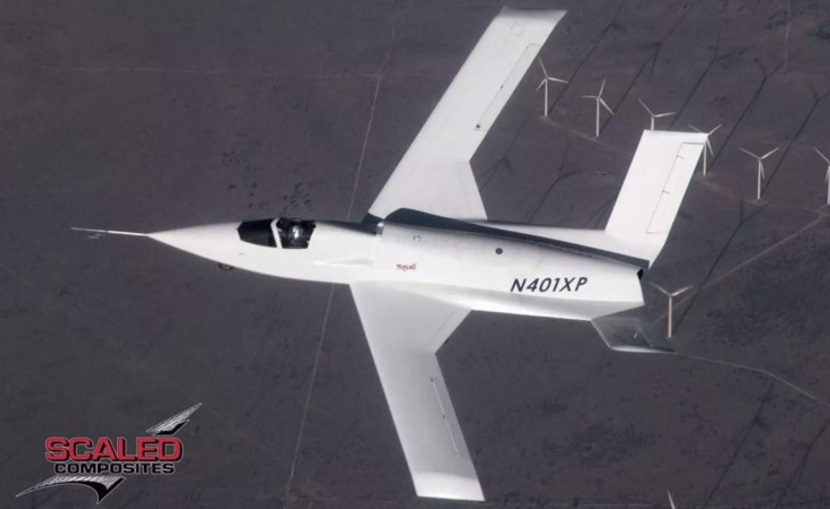
The Scaled Composites 401 Son of Ares single-seat aircraft empty mass is 1814 kilograms and the maximum take-off weight is 3629 kilograms. The wingspan and length are 11 meters. The power plant is a Pratt & Whitney JTD-15D-5D bypass turbojet engine with a maximum thrust of 1381 kilograms. The Model 401 is slow-moving: Mach 0,6 at an altitude of over 9 kilometers. In cruise mode, the Son of Ares can stay in the air for about 3 hours.
The plane took off for the first time on October 11, 2017.
The aircraft only occasionally appeared in the skies over the Mojave Desert in California. Son of Ares does not have installed weapon and even a place for it is not provided.
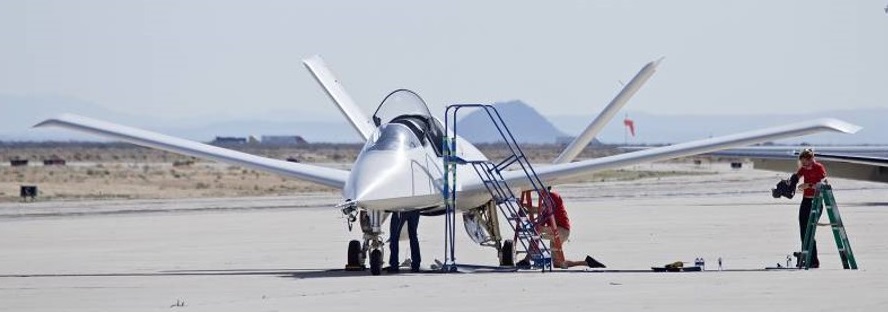
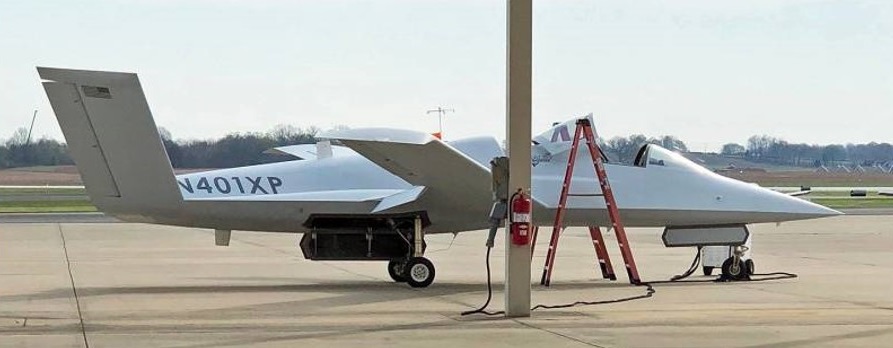
A couple of prototypes built by 2017 were named “Deimos” and “Phobos” (tail numbers: N401XD Deimos and N401XP Phobos). According to mythology, Deimos with Phobos were the sons of the god Ares. There is speculation that option D is a drone with an opaque dome instead of the cockpit.
On the second flight model of the Model 401, a matte gray finish could be seen. Given the prevalence and development of infrared guidance systems that can partially devalue stealth technology, it can be assumed that Scaled Composites were testing a new cloaking system.
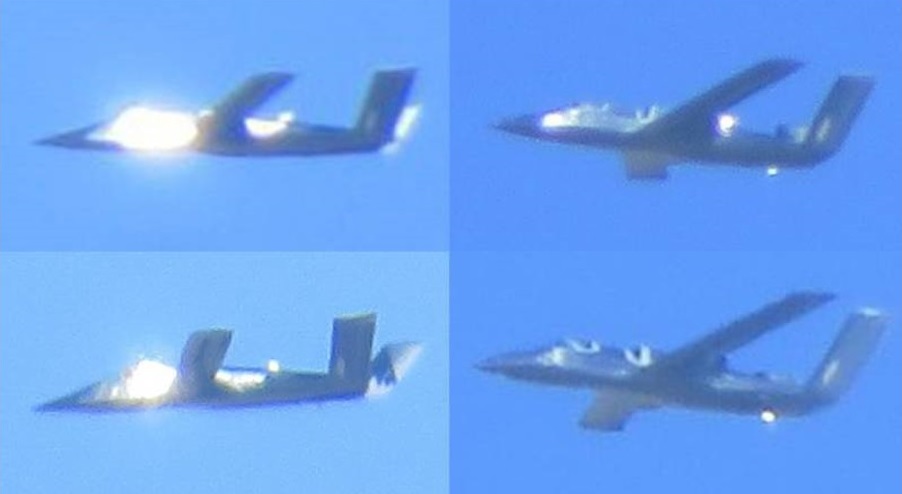
The first time the Model 401 seriously attracted attention was in the middle of 2020, when it took to the air, completely covered with mirror film. The flight of the mirror plane over the China Lake airbase was accompanied by the Proteus aircraft. The Proteus was carrying a container under the fuselage with signs of optical systems. The logic of those observing this couple was very simple: the specular coating of the experimental Son of Ares is necessary to reflect the rays, and they are clearly not solar. The working hypothesis was testing a secret coating designed to reflect combat lasers. Proteus in this story acts as the carrier of the container with laser weapons. Of course, the power of the emitter was artificially lowered: after all, a manned aircraft acted as a training target.
The use of a similar gray coating on aircraft is to scatter laser beams of guidance and destruction systems. On some flights of the mirrored and matt Model 401 aircraft, an F-15D Eagle acted as an escort. And under its fuselage was also seen a container with optical equipment. All indications are that the Son of Ares program is being considered by the military as a testing ground for technological innovations for the Air Force and Navy.
Son of Ares N401XP at the end of October 2020 had a mysterious hardware unit under the cockpit. The flights took place in the Mojave Desert and were accompanied by a completely traditional training T-39 Sabreliner. No specific equipment was seen on the escort plane. In this case, the Model 401 acted as a carrier of laser weapons, in flights they worked out the tactics of its use. The characteristic shape of the block probably indicates the need to cool the equipment hidden inside.

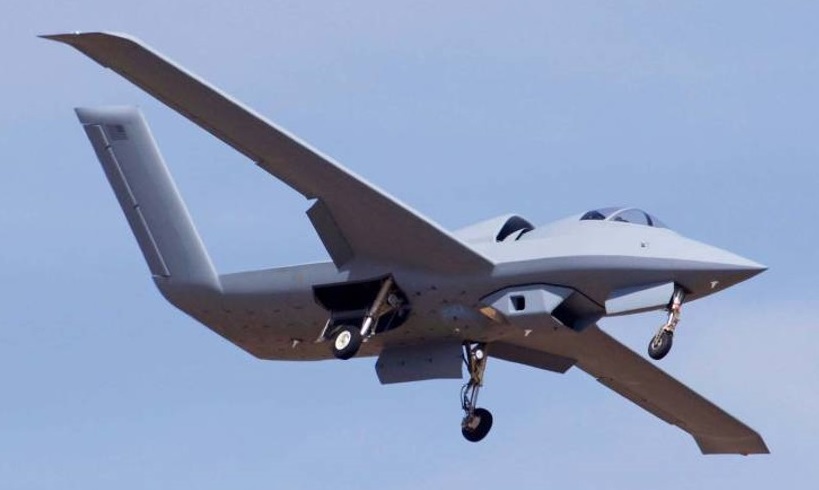
The uniqueness of the Model 401 program lies in its ambiguous secrecy. On the one hand, on the official website of Scaled Composites there is not a word about the experimental aircraft, and on the other hand, the aircraft is photographed by everyone who is not lazy. The reason for the creation of such an expensive aircraft with a carbon fiber fuselage, assembled according to the precepts of the Stealth technology, is not fully understood. It is too expensive to develop such an aircraft solely as a platform for testing new technologies – after all, you can use a lot of other aircraft. The double nature of the use of the experimental aircraft cannot be disregarded. Such “secret” PR can serve to attract the attention of potential investors to the Model 401 civilian use program.

Scaled Composites Triumph
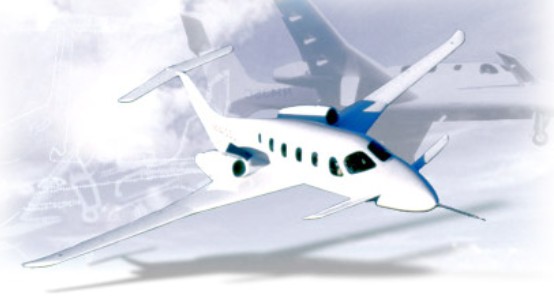
The all-composite Triumph, an 8500-lb, 41,000-ft capable, pressurized 8-seat corporate aircraft, was designed around the then-unflown Williams FJ-44 turbofan engine. In 1988, Scaled performed the first flight of the Triumph, which was also the first flight tests of the FJ-44. The subsequent test program, which consisted of over 100 hours of flight tests, confirmed the performance and operating characteristics of both the engines and the airplane. The Triumph was tested to over 41,000 ft, at speeds up to .69 Mach. Pressurization systems were developed, installed, and tested, basic handling qualities and performance tests were conducted, and a significant body of engine tests were performed.
Scaled Composites 151 Ares

The ARES, Scaled Model 151, was designed initially in response to a U.S. Army request for a Low Cost Battlefield Attack Aircraft. A design study was performed by Rutan Aircraft Factory in 1981 for such an aircraft. The original LCBAA design was for a pusher turboprop aircraft, of generally the same aerodynamic configuration you see here. It also was designed around a 30mm chain gun. Its mission goals were low-altitude, close air support, with long endurance, and with adequate field performance to operate from roads. Its structure and systems were simple enough to be maintained and repaired in the field.
Scaled followed up with the concept, and ultimately decided to build a demonstrator aircraft with internal funds. By the time construction started in 1986, the design had evolved to the current configuration: a single Pratt and Whitney Canada JT15D-5 turbofan engine (same as in the Beechjet / T-1A Jayhawk), and a GAU-12/U 25mm gatling gun.
The ARES first flew on February 19, 1990, with Scaled test pilot Doug Shane at the controls. Since that first flight, the ARES has flown more than 250 hours, and demonstrated all of its design performance and handling qualities goals, including departure-free handling at full aft stick. During November of 1991, under a contract from the U.S. Air Force, initial ground and flight (air-air and air-ground) tests of the GAU-12/U gun system installed in ARES were performed, with outstanding results.
Movie buffs may also remember the ARES villainously portraying the secret ME-263 jet in the screen classic Iron Eagle III.
SCAA Frégate
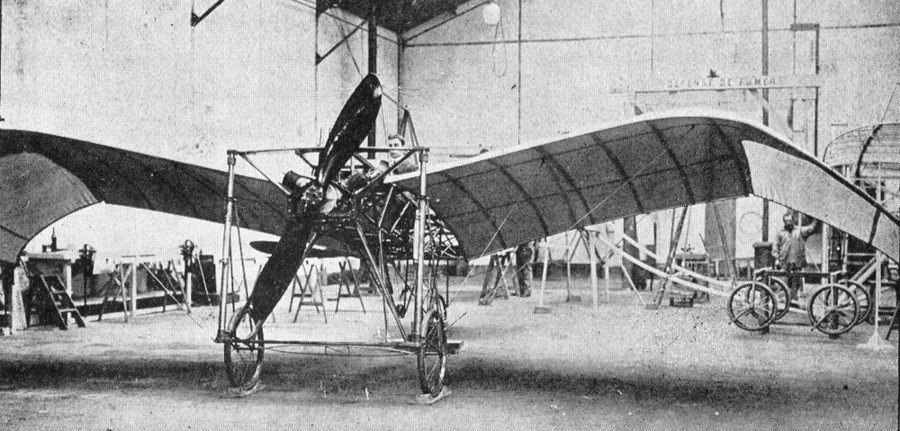
The SCAA (Société de Construction d’Appareils Aériens) produced in 1910 this monoplane for Robert de Lesseps. This monoplane – named the Frégate – had a characteristic gull wing construction. The undercarriage was along the lines of Blériot.
Span: 32’10”
Length: 21’4″
Weight: 506 lb
Speed: 40 mph
S.B.P.C.C. DS1 Papillon
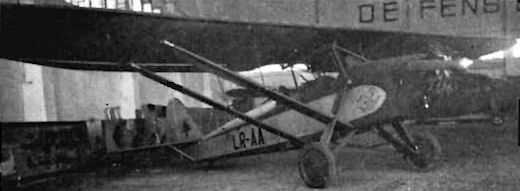
Air France personnel stationed in Damascus during the 1930s, mechanic at the Air France overhaul workshop in Damascus, and four of his work mates designed and built an amateur aircraft. Because of his five “fathers”, it was named S.B.P.C.C. DS1 “Papillon” (Moth).
The aircraft is a high-wing monoplane equipped with a 40 hp Salmson 9 Ad engine from a Klemm. The fuselage is made of molybdenum steel tubes, welded and crossed by piano strings with floor forming box. The front part is made of 0.6 mm duralumin and the rear part is clothed.
The wing is carried by a cabin in profiled and welded steel tubes and by nets in duralumin tubes profiled and covered. The wing is made of wood, consisting of a monospar forming a box with scythe spar to support the fins. The empennage is also made of wood. All the cover is in canvas.
The undercarriage is made of duralumin tubes triangulated by recoil legs. Bungee cords provide cushioning.
The tanks are made of sheet metal of welded aluminum and the controls in steel cables with torsion bar mounted on ball bearings. The aircraft is two-seater in tandem under an open cockpit.
Begun in September 1934, the aircraft flew on November 1, 1935 in Syria. It may never have been officially registered although there has been a pic sporting the S-YRIE registration.
After WW2 it may have gone to Lebanon as the DS-1 Papillon with 1947 registration LR-AAP. It was damaged in the same year.
Engine: 40hp Salmson
Wingspan: 10,00 m
Length: 6,50 m
Height: 2.05 m
Wing area: 14 sq.m
Weight: 320 kg
Max speed: 140 kph at SL
Stall: 45 kph
Saxon Association for Air Navigation Flight Drachenflieger-Radflieger
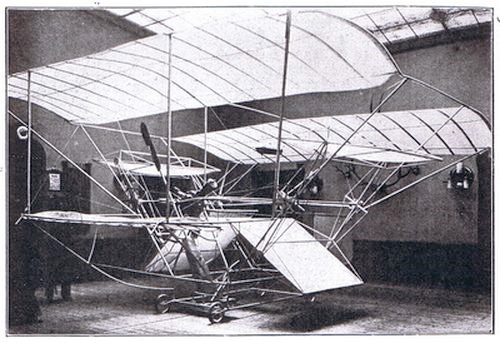
The Drachenflieger-Radflieger was designed by the Saxon Association for Air Navigation and actual construction was done by the “Maschinenfabrik von Hayn u. Leilich” in Chemnitz. The machine was powered by a 30 hp engine constructed by Fritz Hayn.

