Built in 1935 by Hugh S Sawyer, the Sawyer A single place open cockpit monoplane was registered N14846 c/n 3.
It crashed at Waukesha WI, USA, and the registration was cancelled on 20 October 1936.
Engine: 65hp Velie M-5
Seats: 1
Built in 1935 by Hugh S Sawyer, the Sawyer A single place open cockpit monoplane was registered N14846 c/n 3.
It crashed at Waukesha WI, USA, and the registration was cancelled on 20 October 1936.
Engine: 65hp Velie M-5
Seats: 1
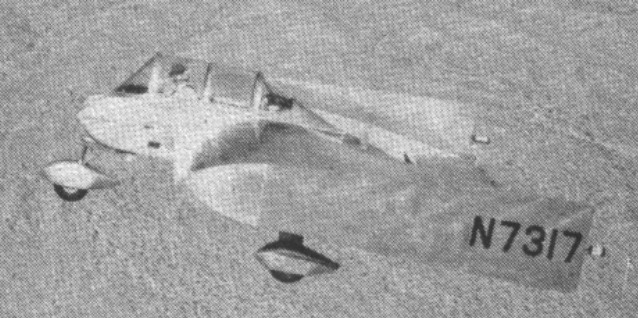
Sawyer’s objective for constructing this vehicle, N7317, was to prove the stability, controllability and capability of such a radical, low-aspect-ratio aircraft. The size for this type of aircraft is unlimited due to the nature of its lifting body design. The Skyjacker is cheap to build because there are no compound curves, highly stressed areas or complex control systems. The design will not stall or spin and has no rudders.
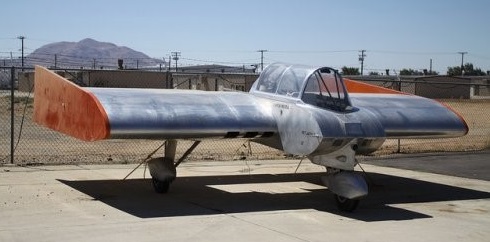
First flying on 3 July 1975, the Skyjacker was not marketed as a sporting aircraft, but is, a two-seat experimental research vehicle of all-metal construction.
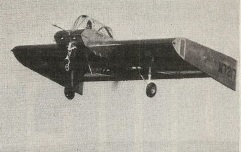
Engine Lycoming IO-360-A1B6D, 200-hp
Wingspan 18 ft
Length 17 ft 6 in
Gross Wt. 2250 lbs
Empty Wt. 1650 lb
Fuel capacity 50 USG
Top speed 130 mph
Cruise 105 mph
Stall 45 mph
Climb rate 400 fpm
Takeoff run 1200 ft
Landing roll 1000 ft
Range 525 sm
Seats: 2
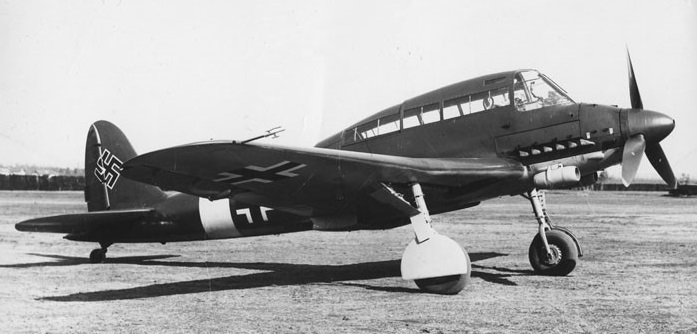
The SM-93 was an all-wood single-engined low-wing monoplane with retractable undercarriage. The fuselage had a monocoque structure, with a single fin and low-set tailplane. The crew of two were accommodated under a long greenhouse-style canopy, with the pilot lying in a prone position above the rear of the engine, a Daimler-Benz DB 605A liquid-cooled V12 engine, while the gunner/radio-operator sat facing rearwards on a conventional seat. The two-spar wings were in three parts with the inner wings sharply tapered to the join, outboard of the landing gear attachments, and the outer wings moderately tapered to the rounded wingtips. The prone position for the pilot was intended to enable the pilot to resist the onset of g-induced loss of consciousness, but the position was uncomfortable for normal flight and severely limited the rearwards view of the pilot.
The SM.93 made its maiden flight on 31 January 1944, and up to 29 March 1944 the SM-93 had made 16 test-flights with speeds up to 900 kilometres per hour (560 mph) achieved in a dive, demonstrating the low drag and clean aerodynamics.
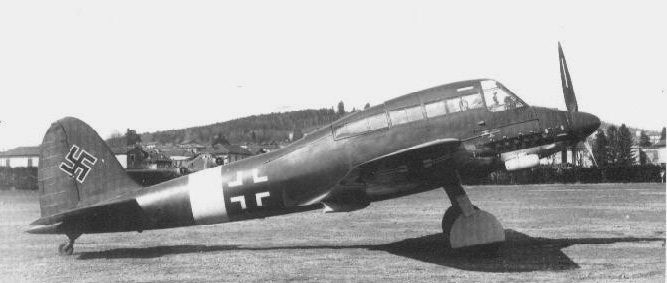
Flight testing was carried out under the aegis of the Luftwaffe and despite the good performance, the prone position was found to be unsatisfactory, being uncomfortable and restricting rearward vision. The programme was halted by the German control Commission that was running weapons production in the Repubblica Sociale Italiana – RSI after the 1943 armistice.
SM.93
Powerplant: 1 × Daimler-Benz DB 605A, 1,100 kW (1,475 hp)
Wingspan: 13.900 m (45 ft 7+1⁄4 in)
Wing area: 31.09 m2 (334.7 sq ft)
Length: 11.017 m (36 ft 1+3⁄4 in)
Height: 3.797 m (12 ft 5+1⁄2 in)
Empty weight: 3,544 kg (7,814 lb)
Gross weight: 5,500 kg (12,125 lb)
Maximum speed at 4,500 m (14,764 ft): 580 km/h (360 mph, 310 kn)
Maximum speed at 7,000 m (22,966 ft) with bombload: 542 km/h (337 mph)
Maximum speed at 7,000 m (22,966 ft) clean: 580 km/h (360 mph)
Cruise speed: 505 km/h (314 mph, 273 kn)
Never exceed speed: 950 km/h (590 mph, 510 kn)
Range: 1,600 km (994 mi, 864 nmi)
Service ceiling: 10,000 m (32,800 ft)
Time to 4,000 m (13,123 ft): 5 min 10 sec
Wing loading: 176.9 kg/m2 (36.2 lb/sq ft)
Power/mass: 0.2 kW/kg (0.122 hp/lb)
Crew: 2
Guns:
1 × 20 mm MG 151/20 cannon (150 rounds) firing through the propeller hub
2 × 12.7 mm (.50 in) Breda-SAFAT machine guns (with 350 rpg) in the wings
1 × 12.7 mm (.50 in) Breda-SAFAT machine gun on a flexible mounting in the rear cockpit
Bombs: Total 1,451.5 kg (3,200 lb)
816.5 kg (1,800 lb)1800 lb. below the fuselage
317.5 kg (700 lb)1400 lb. under each wing
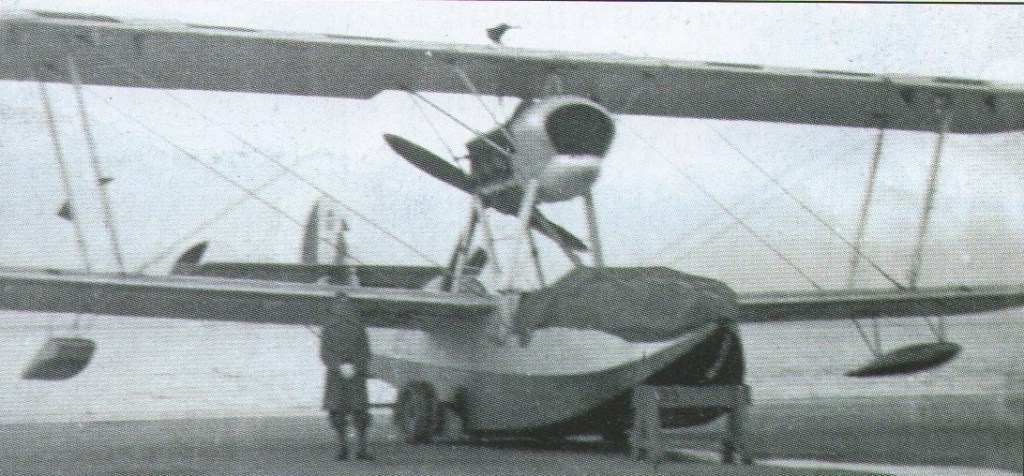
First flown in 1928, the type served with the two units and operated mainly as military flying-boats with the Regia Aeronautica, although commercial examples were produced, the initial S.62 and later S.62bis were powered by 372.6kW R1 and 559kW Isotta-Fraschini Asso engines respectively. As a three-seat reconnaissance aircraft, it was armed with Lewis machine-guns in the nose cockpit and two more in a midships cockpit. The S.62bis had the open midships position replaced by a twin-gun turret.
A four seat reconnaissance bomber and around 40 were built under licence in Spain with 600 h.p. Hispano-Suiza 121B engines.
The Savoia S-62 flying boat had entered service with the VVS RKKA under the designation MR-4, was successfully produced in the Russian Taganrog workshops.
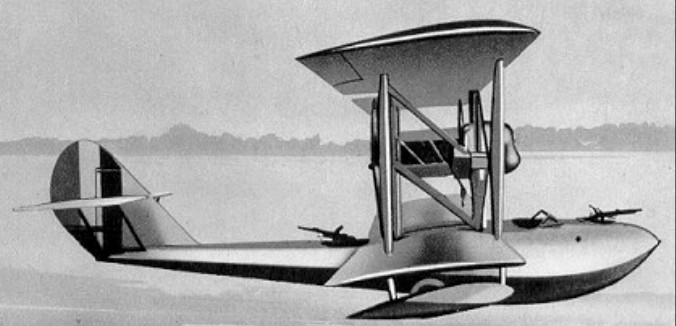
American Aeronautical Corp licence built one S-62 in 1928 c/n 6202. ATC 2-320 was issued in 1931. Equipped with a 500 hp engine it was configured for commercial operations with a seven place cabin.
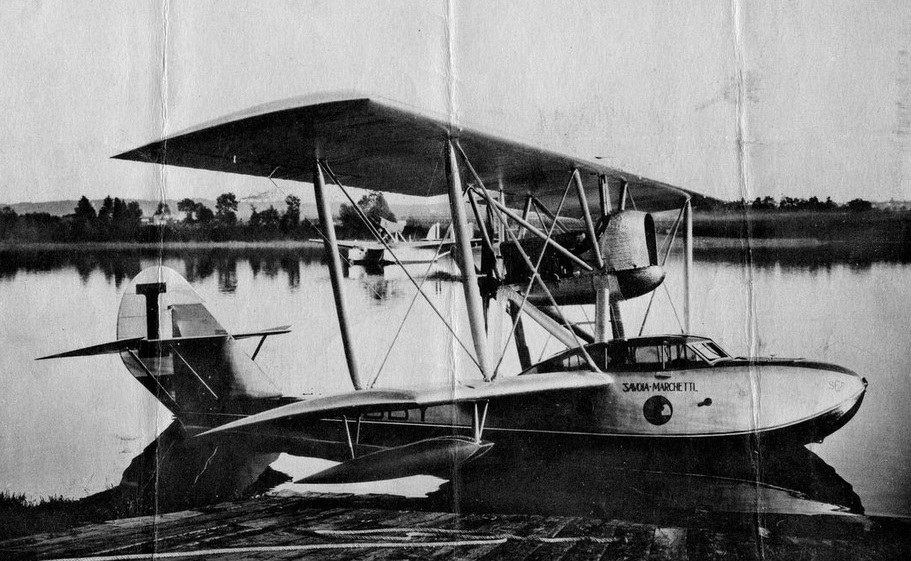
S.62
Engine: 1 x Isotta-Fraschini Asso 750, 634kW
Max take-off weight: 5030 kg / 11089 lb
Loaded weight: 2630 kg / 5798 lb
Wingspan: 16.66 m / 55 ft 8 in
Length: 12.26 m / 40 ft 3 in
Height: 4.19 m / 14 ft 9 in
Wing area: 69.5 sq.m / 748.09 sq ft
Max. speed: 220 km/h / 137 mph
Ceiling: 4900 m / 16100 ft
Range: 2000 km / 1243 miles
Armament: 4 x 7.7mm machine-guns, 600kg of bombs
American Marchetti S-62
1928
3 seat armed scout
One built in the US
Engine: Isotta-Fraschina, 500 hp
Prop: 2 blade wooden fixed pitch
Wingspan: 54 ft 8 in
Length: 40 ft 3 in
Wing area: 748 sq.ft
Empty weight: 5798 lb
Loaded weight: 11,089 lb
Useful load: 2530 lb
Max speed: 137 mph
Cruise: 118 mph
Stall: 49 mph
Ceiling: 16,100 ft
Range: 530 mi
Seats: 8
Armament: 3 x .30 Lewis machine guns

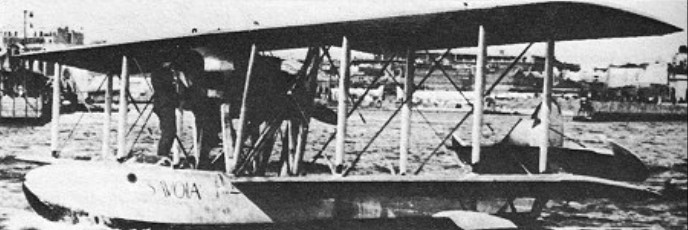
This 1925 biplane flying-boat was produced in two forms: the standard S.59 with a 298kW Lorraine-Dietrich engine and the S.59bis with a 372.6kW Isotta-Fraschini Asso 500Ri engine. Examples of both versions went into commercial and military service during the 1920s.
S.59bis
Max take-off weight: 2950 kg / 6504 lb
Loaded weight: 1950 kg / 4299 lb
Wingspan: 15.5 m / 51 ft 10 in
Length: 10.36 m / 34 ft 0 in
Height: 3.5 m / 12 ft 6 in
Wing area: 60 sq.m / 645.83 sq ft
Max. speed: 200 km/h / 124 mph
Ceiling: 4550 m / 14950 ft
Armament: 1 x 7.7mm machine-gun, 280kg of bombs
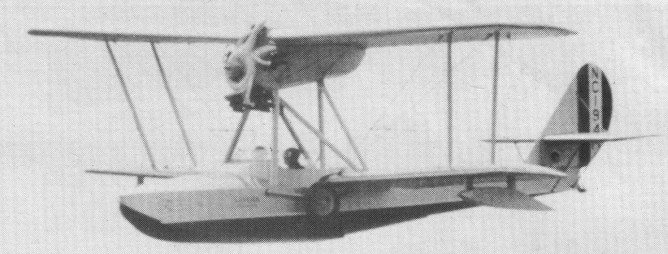
The Savoia-Marchetti S.56 of 1924, a three-seat trainer/tourer flying-boat, was an unequal-span biplane mainly of wooden construction. Pilot and co-pilot were seated side-by-side in separate cockpits equipped with dual controls, a third cockpit being located just behind them. Power was provided by a 52kW Anzani engine, but two S.56A boats built with 60kW Anzanis had a slight increase in wing span and were given amphibious capability by the introduction of manually-retracted wheel landing gear.
At least 12 S.56As were sold to private owners and clubs and four were used by the Regia Aeronautica for training; they were powered by a variety of engines, including the 86kW Fiat A.53, 101kW Fiat A.54, and Walter Venus radials.
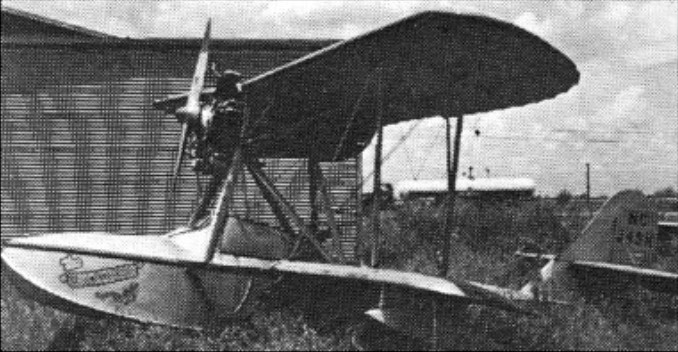
The American Aeronautical Corporation began licence-production of the three place S.56 in 1929 (ATC 287), powered by the 90 hp / 67kW Kinner K5 engine, and three two-seat machines were followed by at least 40 three-seater.
American Aeronautical Corp built an all-stainless-steel version of Savoia Marchetti S-56 powered by a 210hp Kinner, NX749N. It was exported to Italy.
The S-56 selling for $7,375 with starter and nav lights. Twenty-five were built on Long Island, New York including NC192/194M, NC324N/325N, NC349N, NC352N/356N, NC371N, NC378N, NC380N, NC382N/383N, NR898W, NC900V/906V, and NC908V, of which three were converted to S-56-B (ATC 2-95) and one to S-56-C (ATC 2-96) for initial production models.
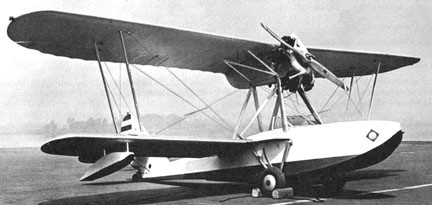
In 1930 the S.56B, powered by a 93kW Kinner B5, was flown in the USA. Sellong for $7,875, ten were built including NC67K, NC324N, NC351N, NC356N, NC386N, NC858W, NC898W, NC897V, NC900V, and NC906V, of which three were converted to S-56-31 (2-332) for two two-place modifications. One was built with an enclosed cockpit canopy and one, converted to single-seat capacity, with additional fuel tanks and redesignated S.56C, was used on a round-the-world trip by American businessman Zachery Reynolds.
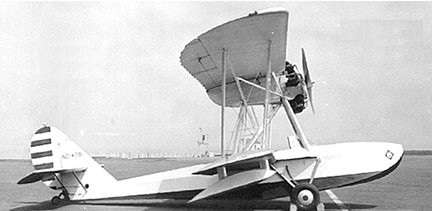
American Aeronautical Corp S-56-C, or S-56-31 conversions in 1930 were NC67K, NC858W, and NC898W plus NC14381 which wore an out-of-sequence c/n 55, with 100hp Kinner engines.
An all-metal version of the S.56 was built by the American Edwin Budd Corporation in 1932 and designated Budd BB-1.
S.56A
Max take-off weight: 975 kg / 2150 lb
Wingspan: 10.72 m / 35 ft 2 in
Length: 7.8 m / 26 ft 7 in
Height: 2.99 m / 10 ft 10 in
Wing area: 26.5 sq.m / 285.24 sq ft
Max. speed: 138 km/h / 86 mph
Ceiling: 1670 m / 5500 ft
American Aeronautical Corp S-56
Engine: Kinner K-5, 90hp
Wingspan: 34’1″
Length: 25’0″
Useful load: 699 lb
Max speed: 86 mph
Cruise speed: 75 mph
Stall: 40 mph
Range: 290 mi
Ceiling: 7000 ft
Seats: 3
American Marchetti S-56, BB-1 / American Aeronautical Corp S-56-B
1926
Engine: Kinner B-5, 125hp
Prop: 2 blade wooden fixed pitch
Wingspan: 31 ft 1 in
Length: 25 ft 7 in
Wing area: 285 sq.ft
Empty weight: 1350 lb
Loaded weight: 2150 lb
Useful load: 738 lb
Max speed: 95 mph
Cruise: 80 mph
Stall: 40 mph
Ceiling: 7000 ft
Range: 280 mi
2-3 seat civil transport/trainer
36-40 built in the USA
American Aeronautical Corp S-56-C / S-56-31
Engine: Kinner, 100hp
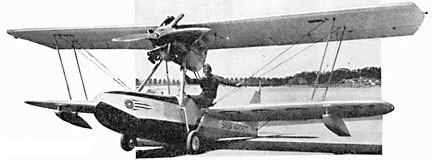
American Aeronautical Corp built the Savoia S-31 open cockpit amphibian biplane in 1926.
Engine: Kinner R-440, 125hp
Wingspan: 34’2″
Length: 25’0″
Useful load: 738 lb
Max speed: 98 mph
Cruise speed: 80 mph
Stall: 38 mph
Range: 320 mph
Seats: 3
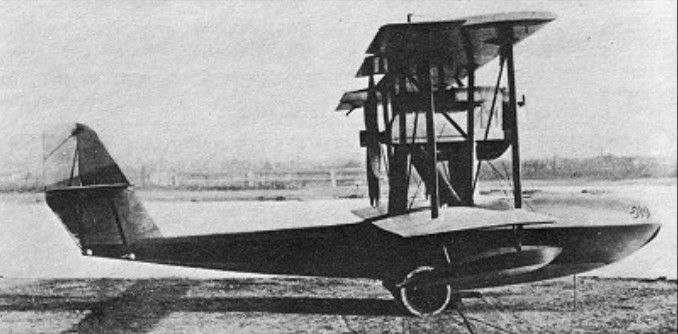
The aircraft was built for a 1920 Schneider Trophy races but failed to participate as the engine was not ready.
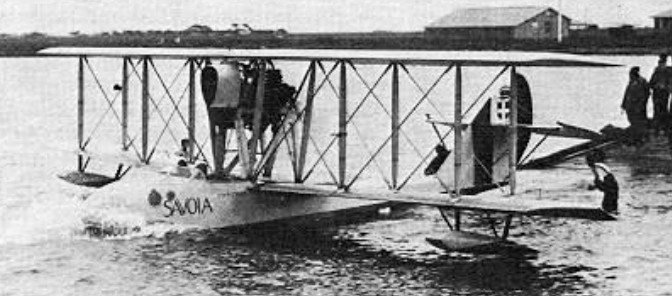
A 1916 five-seat biplane flying-boat powered by a single Fiat A.12bis or Lorraine engine. Several were operated commercially.
S.16ter
Max take-off weight: 2652 kg / 5847 lb
Empty weight: 1852 kg / 4083 lb
Wingspan: 15.5 m / 51 ft 10 in
Length: 9.89 m / 32 ft 5 in
Height: 3.67 m / 12 ft 0 in
Wing area: 52 sq.m / 559.72 sq ft
Max. speed: 194 km/h / 121 mph
Ceiling: 4000 m / 13100 ft
Range: 1000 km / 621 miles
Armament: 1 x 7.7mm machine-gun, 220kg of bombs
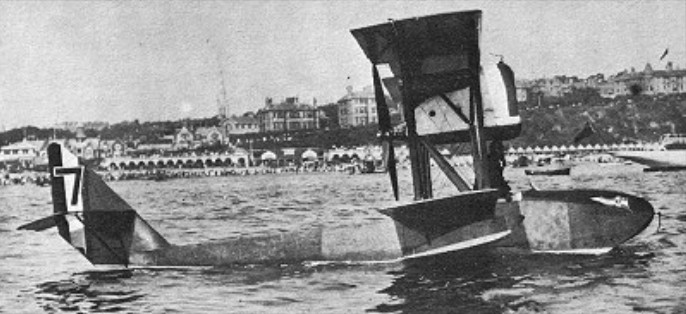
1919 Biplane flying-boat used for the Schneider Trophy races.
Max. speed: 197 km/h / 122 mph

