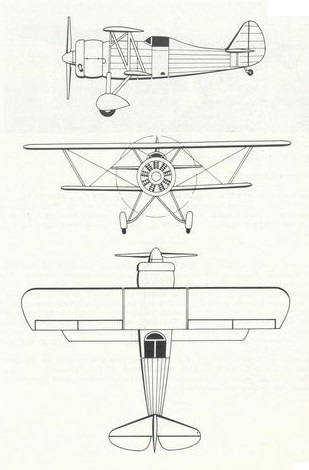
Seversky SEV-3 / BT-8

Built by EDO for refugee Russian WWI pilot Alexander de Seversky, the SEV 3 set several speed records in 1933. Seversky and fellow Russkies had formed an American corporation in 1931 but since they didn’t have a factory of their own at the time, the first airplane was built by EDO and given the SEV 3 classification, with the “3” standing for its three seat configuration. Seversky set amphibian speed records in the plane, powered by a 420 hp Wright Whirlwind, and then went after military business.

Designed by Michael Gregor and Alexander de Seversky, it was first flown in June 1933 as SEV-3, registered NX/NR2106 c/n 301, first with EDO wheeled floats for 1935 Thompson race, in which Lee Miles managed to place fifth at 196 mph.

The Army tested the Seversky but since it had no need for an amphibian at the time, the builder converted it into a landplane in 1934. Powered by a 350hp Wright R-975E with a faired landing gear it was re-designated SEV-3L
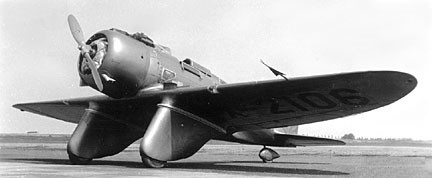
Seversky SEV-3L NX2106

This was the Army’s first monoplane training aircraft and its first all metal trainer built using modern construction techniques.

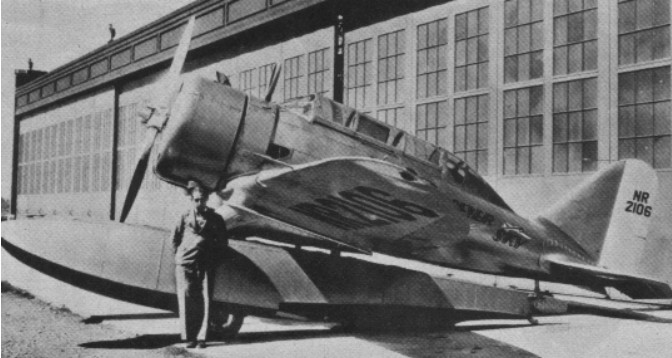
It became the SEV-3XAR to win the Air Corps’ 1935 BT-8 contract, then back to amphibious SEV-3M in 1935 with a 710hp Wright R-1820, to set a world speed record of 230.4 mph.
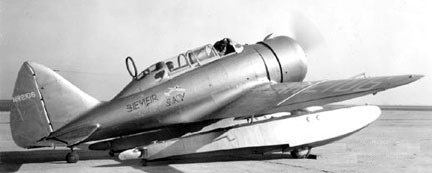
Seversky SEV-3XAR NR2106

The design, with wheels, became an Army BT-8 with 450hp P&W R-985. The basic aircraft evolved into the P 43, later, with a stretch of the fuselage and a 2,000 hp Pratt & Whitney R 2800 engine, it became the P 47 Thunderbolt.
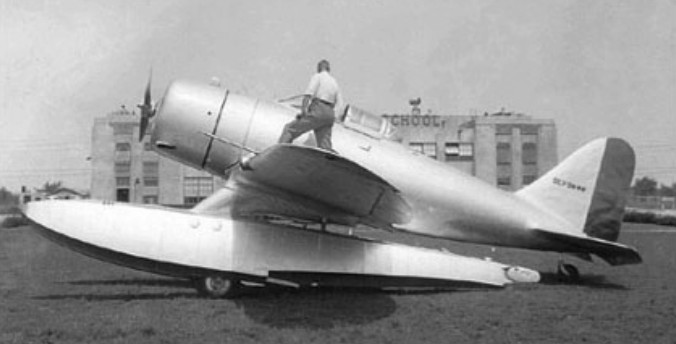
Seversky SEV-3M-WW

Seversky went on to build other versions of the plane. Six of the 1934 SEV-3M-WW export version (NX15391, NX15689, NX15928 c/ns 37 to 39, plus three unlicensed).

“In Sever the Sky we find [NX15391, NX15689, NX15928]; US Register shows c/ns as 1, 2, and 3, but were actually c/ns 3, 4, and 5 aircraft by factory.’ This seems logical since [X2106] was c/n 1 and [X18Y] c/n 2. Then came [X189M] as c/n 6, 30 BT-8s as c/ns 7/36, and 3 SEV-3M-WWs for Columbia’s second order as c/ns 37/39.”

The 1937 SEV-DS NX1291 c/n 42 was built for the Shell Oil Co and piloted by James Doolittle.

The 1934 BT-8 Basic trainer was the AAC’s first monoplane trainer and was based on the SEV-3XAR, with faired landing gear. Thirty were built.
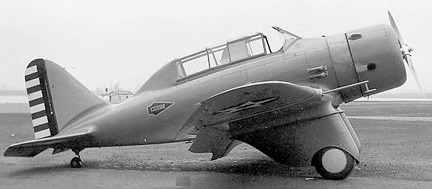
Seversky BT-8 at Wright Field

Gallery

SEV-3
Engine: 420hp Wright J-6
Undercarriage: floats

SEV-3L
Engine: 350hp Wright R-975E
Wingspan: 36’0″
Length: 24’4″
Max speed: 210 mph
Cruise: 185 mph
Undercarriage: wheels

SEV-3XAR

SEV-3M
Amphibious
Engine: 710hp Wright R-1820
Max speed: 230.4 mph

BT-8
450hp P&W R-985
Wingspan: 36’0″
Length: 24’4″
Useful load: 1033 lb
Speed: 175 mph
Undercarriage: wheels
Seats: 2

SEV-DS
Engine: 850hp Wright R-1820 Cyclone
Seats: 2
Undercarriage: retractable wheels
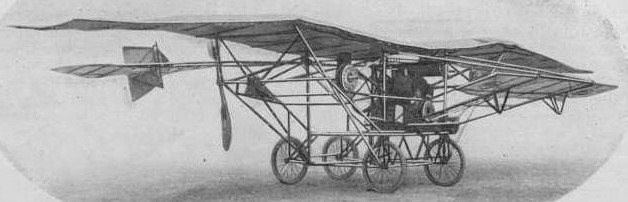
Seux 1907 Monoplane

second version

In the spring of 1907 Edmond Seux started development of a monoplane, which was tested on 15 May on a military parade ground. It first bounced on the uneven ground and one of the rear wheels broke. Later one of the two propellers hit the ground when the nose rose and damaged the wings. The plane was repaired and modified with bigger rear wheels and tested again in the end of May, but there are no reports of it flying and it was obviously abandoned. It was equipped with a 35 hp Anzani.

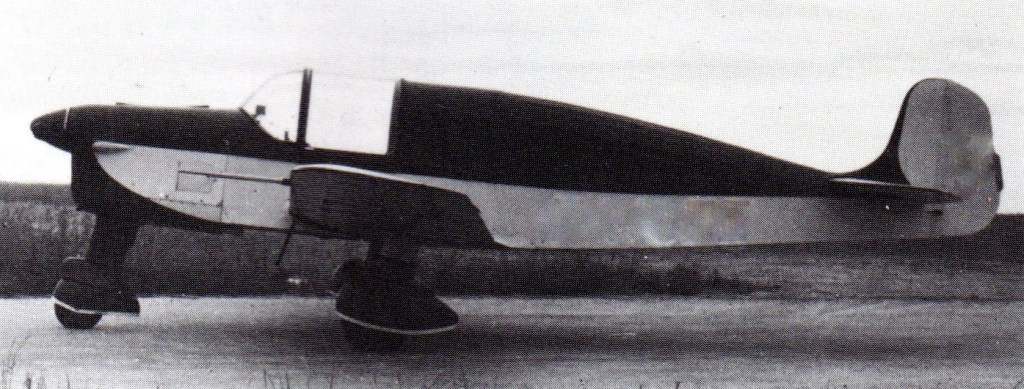
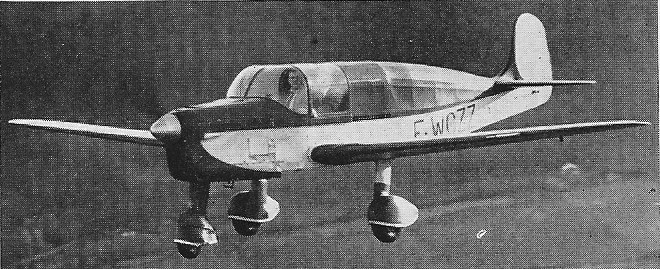
SETCA Milan

Designed and built by Laboureix and Lagrevol, the SETCA Milan was first flown in 1947, obtained its CNRA in August 1949, and in 1952 received a normal certificate de navigabilite.

A second prototype was built and flown. Of all-wood construction. The cabin seats two side-by-side, with dual controls.

The Milan was shelved since no buyers showed interest.

Engine: 90 hp Regnier 4-EO
Max speed: 122 mph
Cruise: 112 mph
Range: 434 mi
Empty weight: 1210 lb
Loaded weight: 1742 lb
Wingspan: 32 ft 9.5 in
Length: 24 ft 1.75 ln

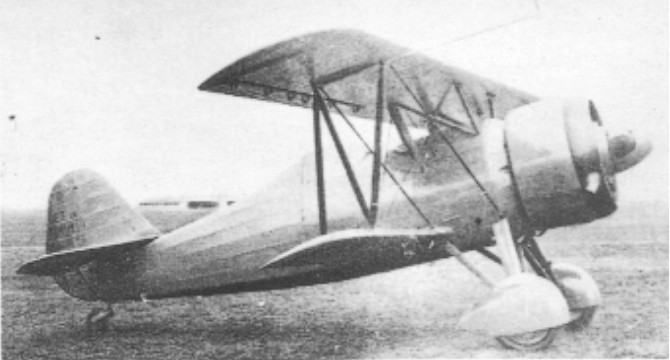
SET XV

The 1934 S.E.T. XV had a metal frame. /its equipment included oxygen and a complete radio set. The wing was an original S.E.T. profile with flaps.

The armament was two fixed machine guns firing through the propeller. They were under the engine cowling.

Engine: Gnome-hone 9 Krsd, 500 hp
Wingspan: 9.40 m
Length: 7.00 m
Height: 3.05 m
Wing area: 18.65 sq.m
Empty weight: 1150 kg
Max weight: 1550 kg
Max speed: 350 kph
Stall: 113 kph
Max ceiling: 9400 m
Climb to 2000m: 3 min 10 sec
Climb to 7000m: 15 min 30 sec

Servoplant Aerocraft

The Aerocraft is a tandem two seat biplane built around a welded steel spaceframe fuselage and wooden wings.

Engine: Rotax 582, 64 hp
Wing span: 7 m
Wing area: 17.50 sq.m
MAUW: 450 kg
Empty weight: 200 kg
Fuel capacity: 60 lt
Max speed: 160 kph
Cruise speed: 120 kph
Minimum speed: 60 kph
Climb rate: 4 m/s
Seats: 2
Fuel consumption: 15 lt/hr
Price (1998): US$25,000

Sequoia 300 / 302 Kodiak

Designed by David B Thurston, the Sequoia Aircraft Co 300 was a 2-4 place cabin, low-wing monoplane with retractable undercarriage. With composite and steel-tube fuselage, all metal wings and tail, it had aerobatic capability.

Kits and plans were available for home-builders, as well as the finished airplane.

The 302 Kodiak was powered by 235-300hp various turbocharged engines.

300
Engine: 235-300hp
Wingspan: 30’0″
Length: 25’0″
Useful load: 1000 lb
Cruise speed: 260 mph
Stall: 69 mph
Seats: 4

302 Kodiak
Engine: 235-300hp turbocharged
Wingspan: 30’0″
Length: 25’0″
Useful load: 1350 lb
Cruise speed: 255 mph
Stall: 72 mph
Seats: 4